
10 Unique Open Shelving in the Kitchen Ideas and Decor Tips

Look, I’m just going to say it—kitchen cabinets are overrated. There, I said it. After spending years opening and closing cabinet doors like some kind of repetitive robot, I finally took the plunge and installed open shelving in my kitchen.
Best decision ever? Absolutely. Did I stress about it for months beforehand? Also absolutely.
Here’s the thing: open shelving transforms your kitchen from a utilitarian cooking space into a personality-filled room that actually reflects who you are.
Whether you’re a minimalist who owns exactly three matching plates or a collector with vintage mugs from every state you’ve visited, open shelves let you show off your style. Plus, there’s something deeply satisfying about grabbing your favorite coffee mug without wrestling with a sticky cabinet door at 6 AM.
I’ve experimented with various open shelving styles over the years, and I’ve helped friends redesign their kitchens more times than I can count. So grab your measuring tape and let’s explore ten unique open shelving ideas that’ll completely revolutionize your kitchen space.
Minimalist Floating Shelves
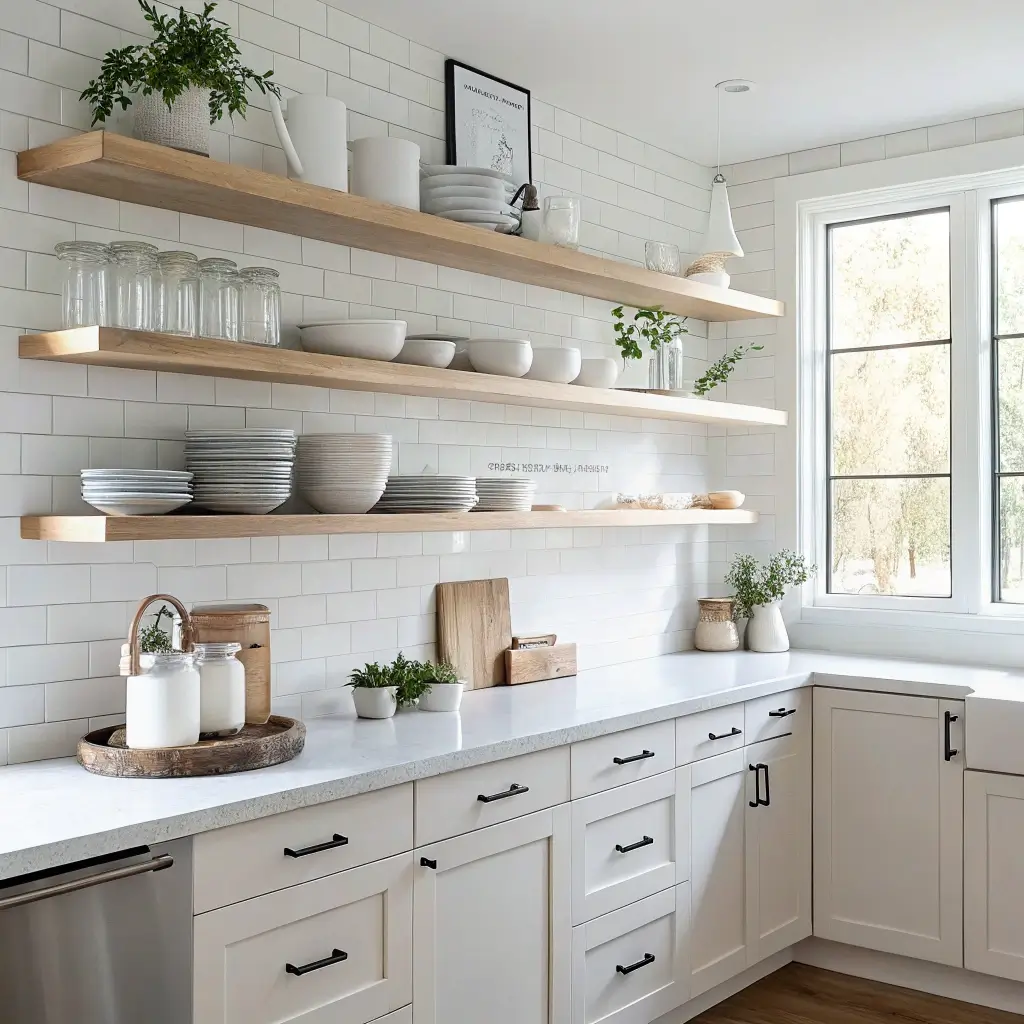
The Beauty of Less Is More
Floating shelves represent the ultimate expression of kitchen minimalism, and honestly? They’re kind of magic. These sleek, bracket-free shelves appear to hover against your wall, creating a clean aesthetic that makes Marie Kondo weep with joy. The hidden mounting hardware gives your kitchen an instantly modern, uncluttered look.
I installed white floating shelves in my kitchen last year, and visitors constantly ask how they stay up. The secret lies in heavy-duty concealed brackets that slide directly into the shelf’s hollow core. When mounted correctly into wall studs, these babies can hold serious weight—we’re talking stacks of ceramic dinner plates without breaking a sweat.
Styling Tips for Minimalist Floating Shelves
The key to nailing minimalist floating shelves comes down to restraint. I know, I know—you want to display everything you own. But trust me on this:
- Stick to a three-color palette maximum for displayed items
- Leave at least 30% of the shelf surface empty
- Group items in odd numbers (three small plants beat four every time)
- Choose functional items that double as decor—beautiful olive oil bottles, ceramic salt cellars, matching canisters
The magic happens when every item serves a purpose while looking intentional. IMO, nothing beats the satisfaction of a perfectly curated floating shelf that actually functions for daily cooking.
Material and Finish Considerations
For minimalist floating shelves, material choice matters enormously. Matte white shelves create a seamless look against white walls, while natural wood tones add warmth without visual clutter. I’d avoid high-gloss finishes—they show every fingerprint and dust particle, which defeats the whole effortless vibe you’re going for.
Rustic Wooden Open Shelves
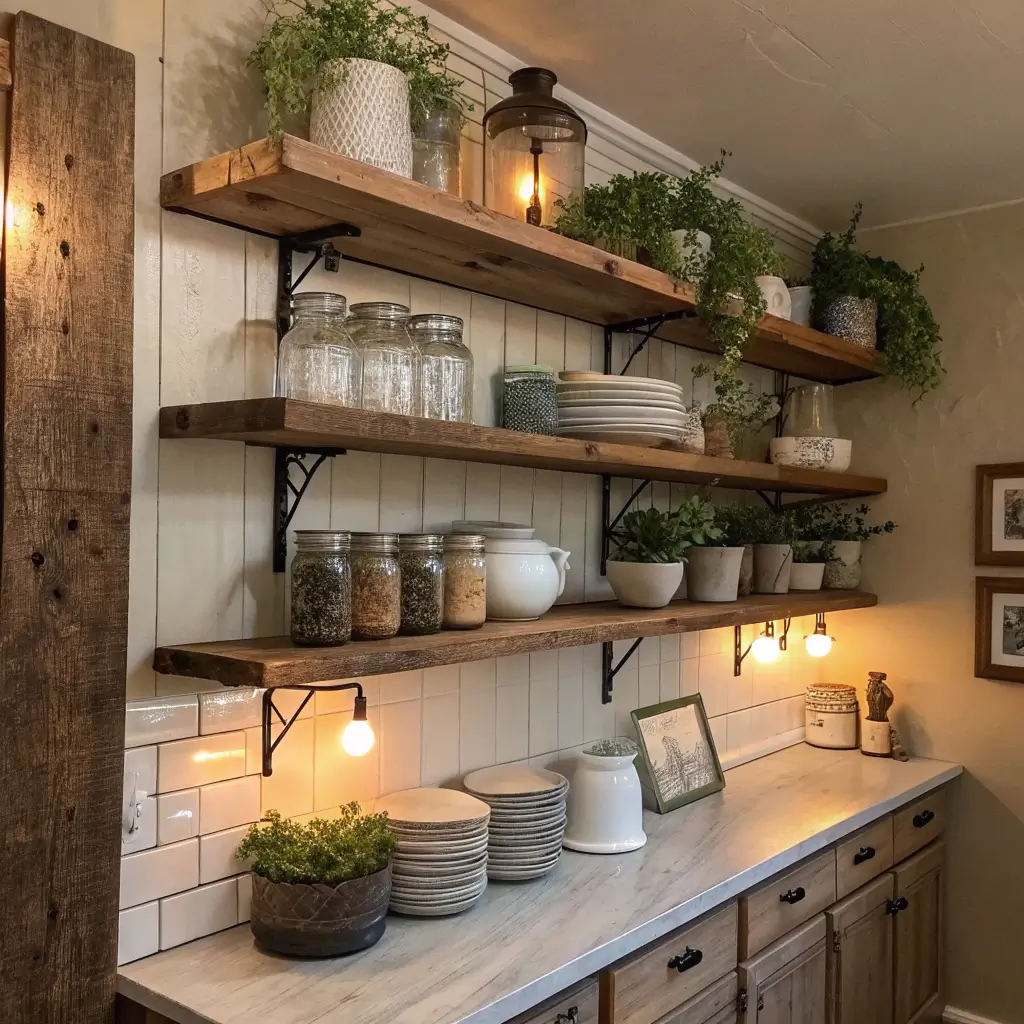
Embracing Imperfection
Ever walked into a farmhouse kitchen and immediately felt at home? That’s the power of rustic wooden shelving. These shelves celebrate natural imperfections—knots, grain variations, and slightly rough edges that mass-produced furniture manufacturers try desperately to hide.
I sourced my rustic shelves from a local salvage yard, and each piece tells a story. One shelf came from a demolished barn built in the 1920s. Another originated as scaffolding planks from a renovated church. These aren’t just shelves; they’re conversation starters with character you simply cannot manufacture.
Choosing the Right Wood
Not all rustic wood works equally well in kitchens. Here’s what I’ve learned through trial and error:
- Reclaimed barn wood offers incredible character but requires sealing to prevent moisture damage
- Live edge walnut creates stunning visual interest with natural bark edges intact
- Distressed pine provides rustic charm at a friendlier price point
- Antique oak delivers durability and beautiful grain patterns
Whatever wood you choose, seal it properly. Kitchens generate moisture, grease, and spills. An unsealed rustic shelf will absorb every cooking disaster you experience.
Bracket Options for Rustic Shelves
The bracket style dramatically affects your rustic shelf’s overall vibe. Wrought iron brackets with scrollwork create a vintage feel, while simple L-shaped metal brackets offer a more industrial-rustic hybrid. For an ultra-authentic look, consider using vintage cast iron brackets salvaged from old buildings. Just ensure they’re sturdy enough for your intended load—those beautiful antique brackets sometimes prioritize form over function.
Modern Black Metal Shelving
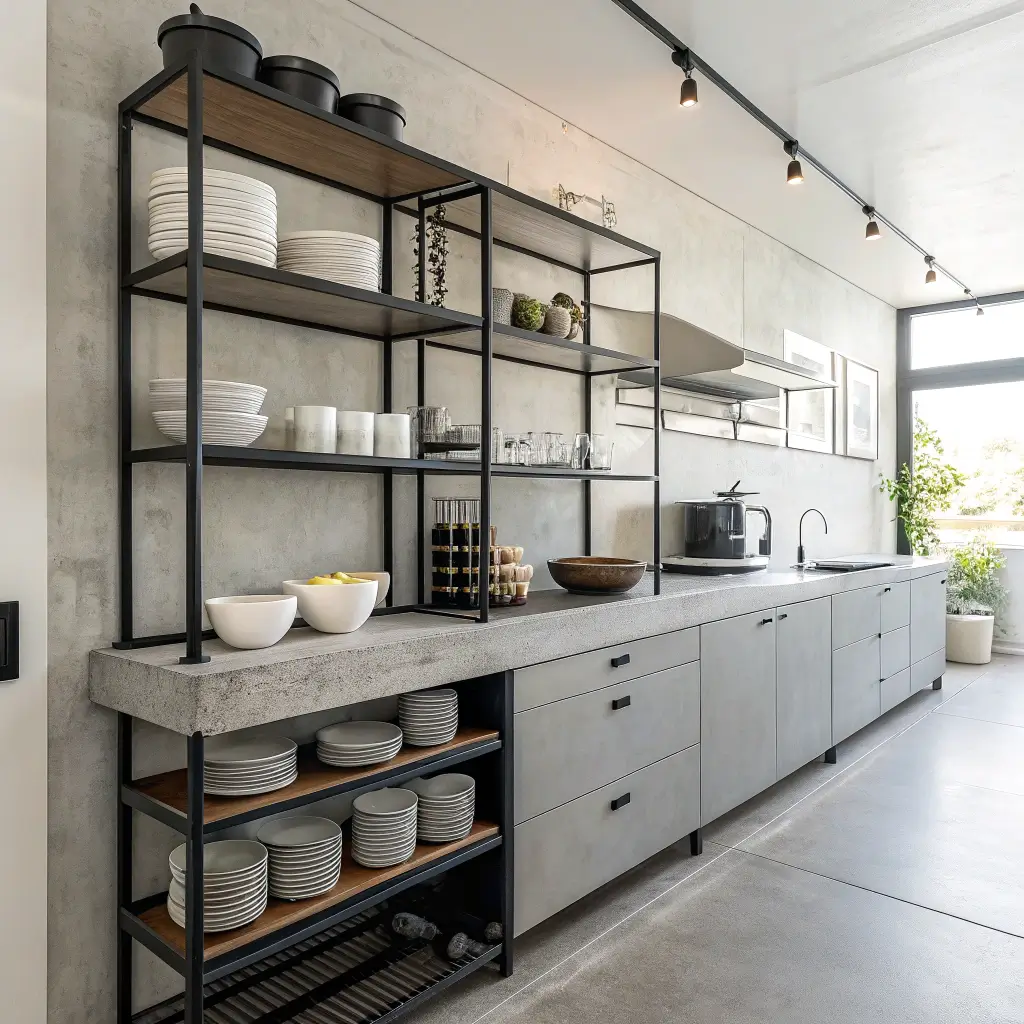
Industrial Chic That Actually Works
Black metal shelving brings serious industrial edge to any kitchen, and let me tell you—this trend shows zero signs of slowing down. The matte black finish creates bold visual contrast against light walls while remaining surprisingly versatile. These shelves work equally well in ultra-modern lofts and transitional suburban kitchens.
I initially worried black metal would feel cold or harsh, but the opposite proved true. Against my white subway tile backsplash, the black metal frames create architectural interest without overwhelming the space. The contrast actually makes the kitchen feel more dynamic and intentional.
Framework Styles to Consider
Modern black metal shelving comes in various framework configurations:
- Pipe-style frames deliver an authentic industrial aesthetic
- Thin metal bar frames offer a more refined, contemporary look
- Geometric frameworks add artistic flair with hexagonal or asymmetrical shapes
- Mixed black metal and wood combinations balance industrial edge with warmth
The framework you choose should complement your existing kitchen hardware. If you’ve got matte black cabinet pulls and faucets, matching metal shelving creates cohesive flow throughout the space.
Practical Considerations
Here’s something nobody tells you about black metal shelving: it shows dust like nobody’s business. That dramatic contrast works both ways. If you’re not the type to wipe down shelves weekly, maybe reconsider—or stick to busier patterns that hide dust better.
Also, check the weight capacity before loading up with heavy cast iron cookware. Some decorative metal shelves prioritize aesthetics over functionality, and the last thing you want is your Le Creuset collection crashing down at midnight.
Also Read: 12 Perfect Open Floor Plan Living Room and Kitchen Ideas for Homes
Colorful Kitchen Display Shelves
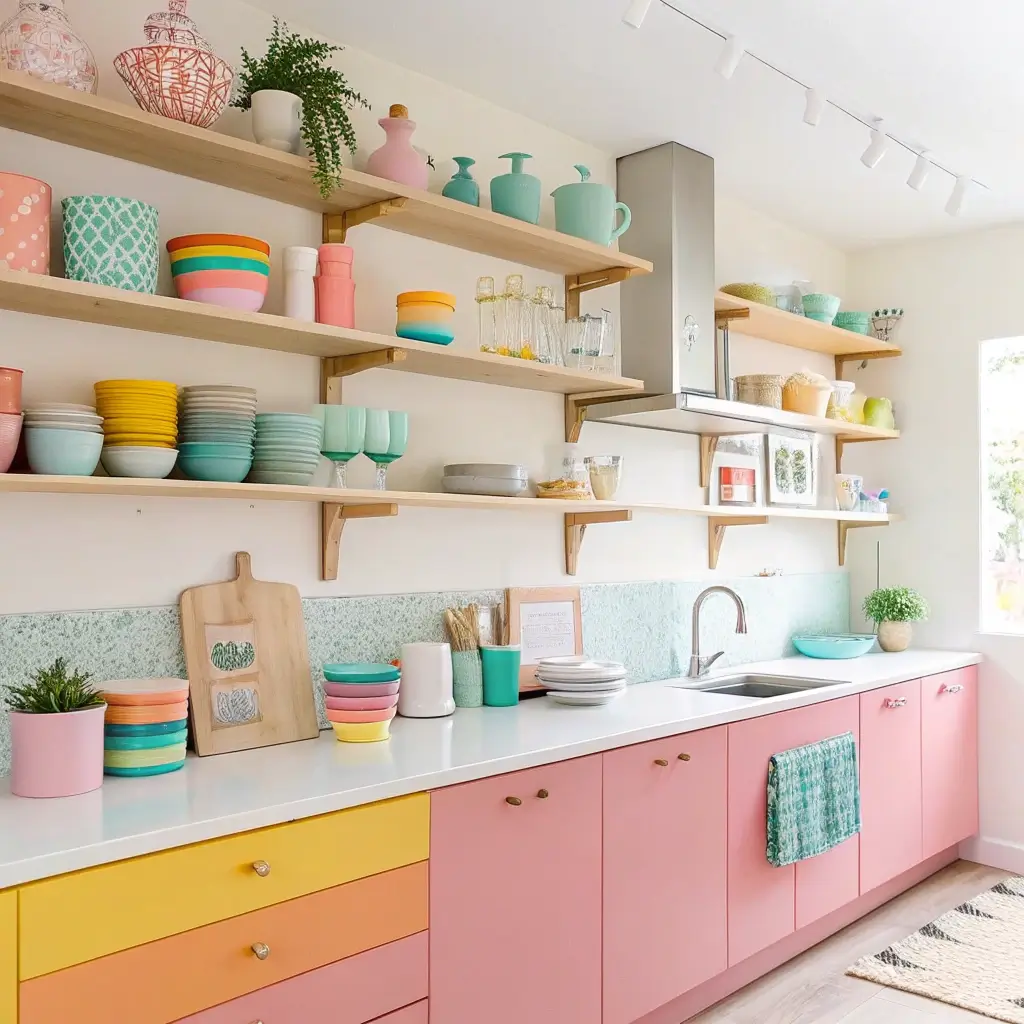
Breaking the Neutral Rules
Who decided kitchens must stick to whites, grays, and beiges? Colorful display shelves inject personality and joy into your cooking space, and frankly, we all need more joy in our kitchens. Imagine a vibrant teal shelf showcasing your grandmother’s yellow mixing bowls. That’s not just storage—that’s art.
I painted a single shelf bright coral in my otherwise neutral kitchen, and it completely transformed the room’s energy. That pop of unexpected color makes me smile every time I walk in. Sometimes breaking design “rules” creates the most memorable spaces.
Color Selection Strategies
Choosing the right shelf color requires considering your overall kitchen palette:
- Complementary colors create dynamic contrast (orange shelves against blue walls)
- Analogous colors produce harmonious, soothing combinations (green shelves with teal accents)
- Monochromatic bold makes a statement while remaining cohesive (deep navy shelves in a light blue kitchen)
- Accent color matching ties shelves to existing elements like appliances or dishware
Don’t forget to consider what you’ll display on colored shelves. White dishes pop dramatically against dark or vibrant shelf colors, while colorful collections might need neutral shelf backgrounds to avoid visual chaos.
DIY Painting Tips
FYI, painting shelves yourself saves serious money and lets you achieve exactly the color you envision. Here’s my process:
- Sand the surface lightly for better paint adhesion
- Apply a quality primer appropriate for your shelf material
- Use semi-gloss or satin finish paint for easy cleaning
- Apply thin, even coats—patience beats thick, drippy applications every time
- Seal with clear polyurethane for durability in moisture-prone kitchens
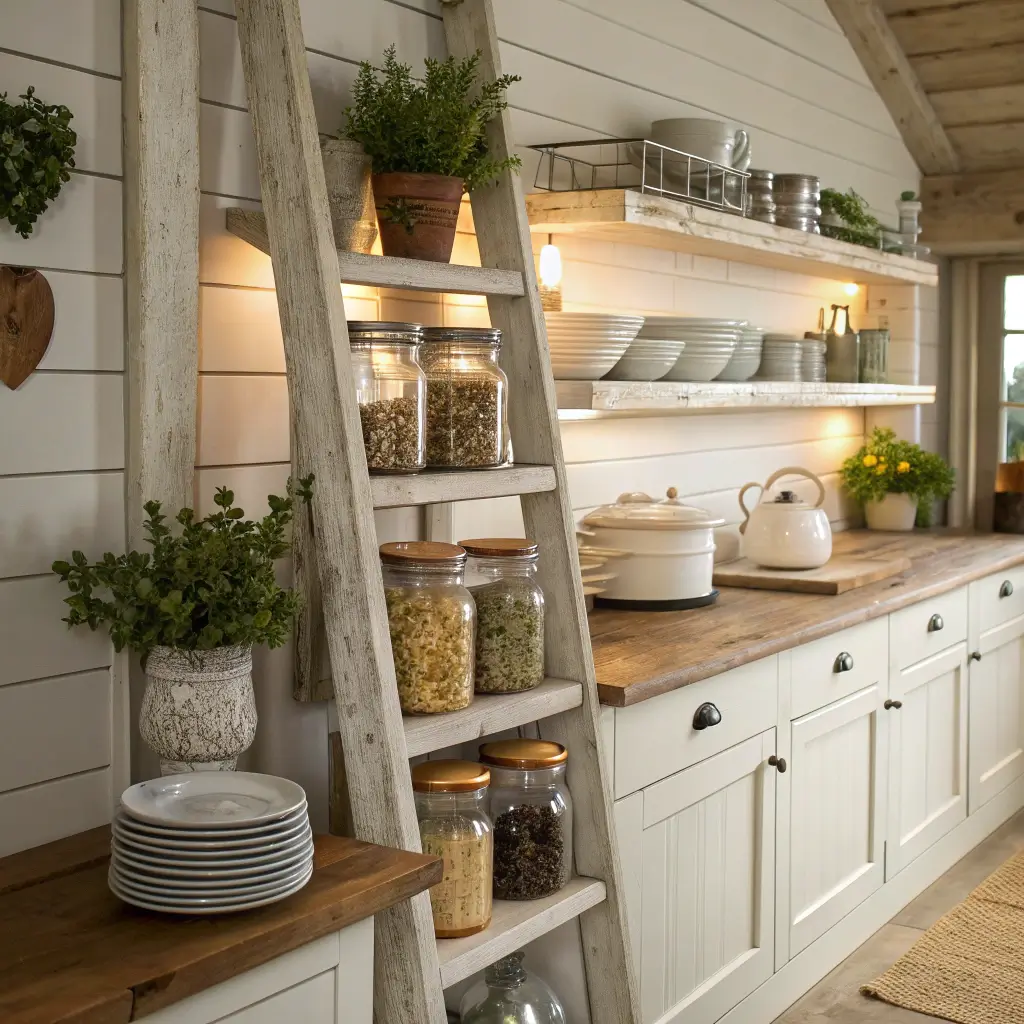
Farmhouse Ladder Shelves
Vertical Storage With Character
Ladder shelves bring farmhouse charm while solving a perpetual kitchen problem: limited wall space. These freestanding or wall-leaning units take advantage of vertical real estate while adding architectural interest. Plus, there’s something wonderfully nostalgic about the ladder shape—it evokes apple orchards and vintage barns without trying too hard.
My friend Sarah installed a reclaimed ladder shelf in her tiny apartment kitchen, and it single-handedly transformed the space from cramped to character-filled. The angled silhouette draws the eye upward, making her eight-foot ceilings feel taller.
Styling Farmhouse Ladder Shelves
The tiered nature of ladder shelves creates natural display hierarchy. Here’s how to maximize their visual impact:
- Place heavier, larger items on lower shelves for visual and physical stability
- Use upper shelves for lighter decorative items like small plants or candles
- Lean cutting boards, trays, or framed art against the back for layered depth
- Incorporate natural textures—woven baskets, wooden bowls, ceramic crocks
- Add greenery at varying heights to create organic visual flow
Freestanding vs. Wall-Mounted
Freestanding ladder shelves offer flexibility—you can move them whenever you rearrange. However, they require floor space and may feel precarious if not properly secured. Wall-mounted ladder shelving provides more stability and keeps floor space clear, but commits you to a permanent location.
For rental kitchens, freestanding options make sense. For owned homes where you’ve found the perfect spot, wall-mounting adds security and peace of mind.
Glass and Brass Shelves
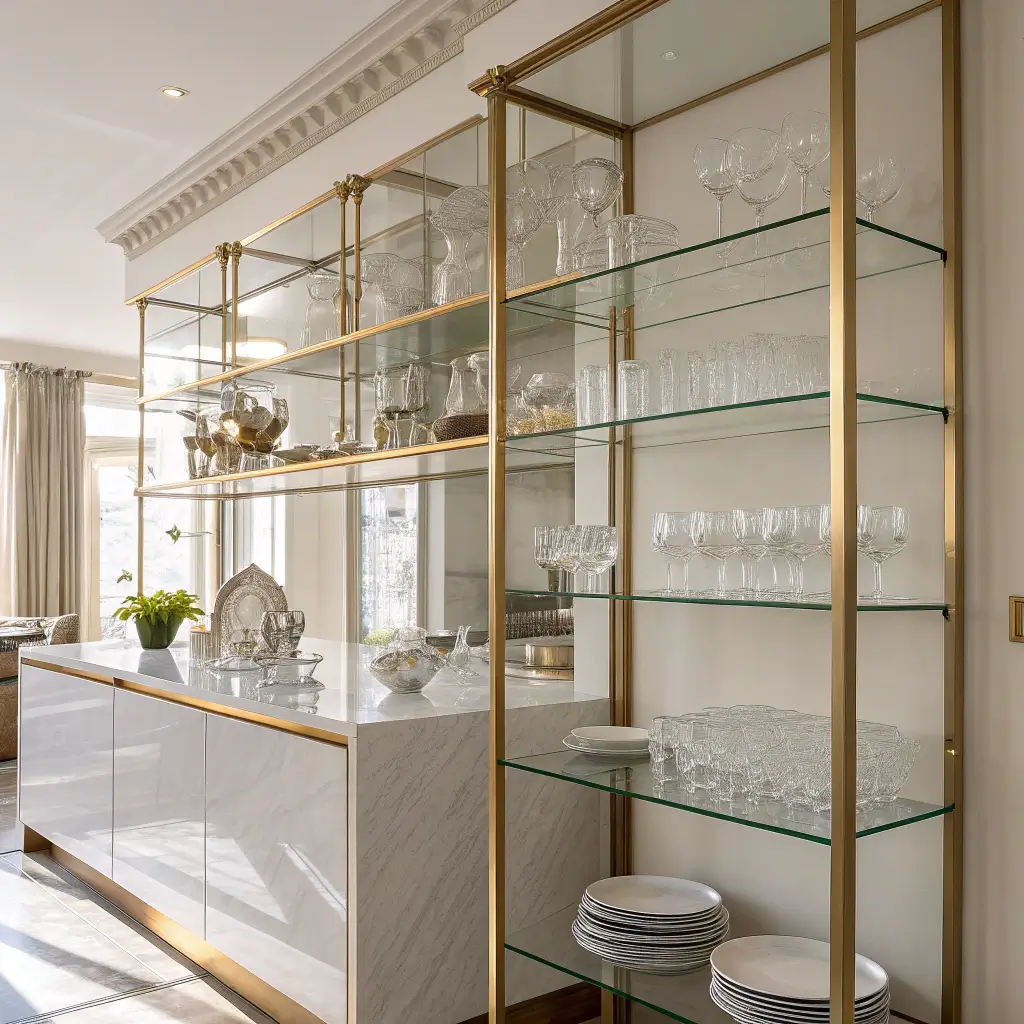
Sophisticated Elegance
Glass and brass shelving represents the intersection of glamour and functionality. These shelves add sophisticated sparkle without visual heaviness—the transparent glass maintains sightlines while brass hardware catches light beautifully. Ever wondered why luxury hotels love this combination? It’s because glass and brass whisper “expensive taste” without screaming about it.
I installed glass and brass shelving in a small galley kitchen renovation, and the transparency prevented the space from feeling closed-in. The brass brackets aged gracefully over time, developing a patina that only enhanced their character.
Glass Thickness and Safety
Not all glass shelving handles kitchen life equally well. Consider these specifications:
- Tempered glass (minimum ¼-inch thick) provides necessary safety and strength
- Thicker glass (⅜-inch) supports heavier items without flexing
- Frosted glass hides dust and fingerprints better than clear
- Tinted glass options add subtle color while maintaining transparency
Whatever you choose, ensure proper weight ratings. Glass shelves have weight limits that matter—exceeding them risks catastrophic failure. Nobody wants shattered glass mixed with their favorite dishes.
Brass Finish Variations
Modern brass comes in various finishes, each creating different moods:
- Polished brass delivers maximum shine and formal elegance
- Brushed brass offers softer gleam with better fingerprint resistance
- Antiqued brass provides vintage character from day one
- Unlacquered brass develops natural patina over time for living finish
I personally love unlacquered brass because it tells a story. Watching the finish evolve from bright gold to rich honey tones makes the shelves feel uniquely yours.
Corner Space Floating Shelves
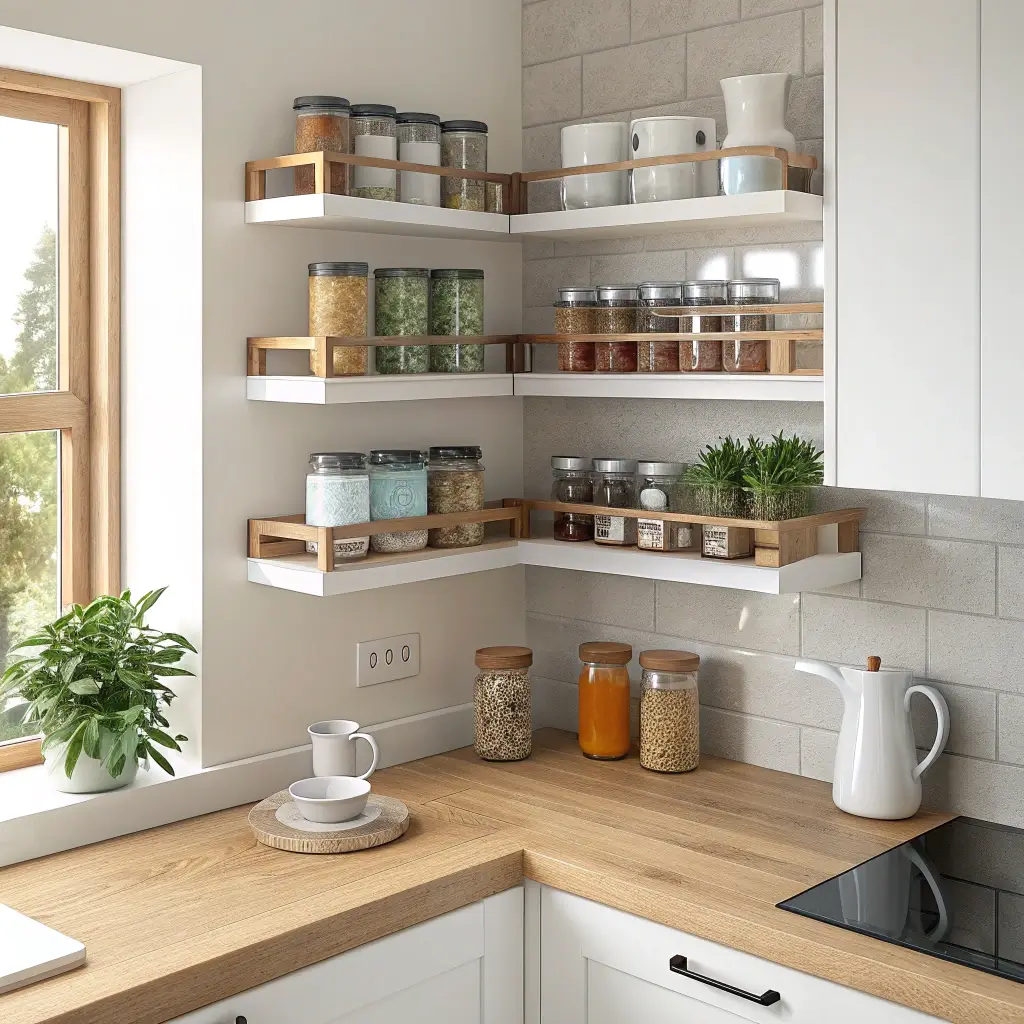
Conquering Awkward Angles
Corners present kitchen design challenges that most people simply ignore. Those awkward angles where walls meet often become dead space—until corner floating shelves enter the picture. These specialty shelves transform previously useless zones into prime display and storage territory.
I have a weird corner near my stove that drove me crazy for years. Regular shelving wouldn’t fit properly, leaving the space empty and awkward. Corner floating shelves solved everything. Now that formerly wasted zone holds my daily-use spices in adorable matching jars.
Design Options for Corner Shelves
Corner shelving comes in several configurations:
- Triangular floating shelves fit snugly into 90-degree corners
- Curved corner units soften angular transitions
- Wraparound L-shaped shelves extend along both walls from the corner point
- Graduated corner series stack multiple shelves of decreasing sizes
The right choice depends on your corner’s specific dimensions and what you plan to store. Triangular shelves work best for small decorative items, while wraparound designs accommodate larger kitchenware.
Installation Challenges
Fair warning: corner installation requires more precision than standard wall shelving. Both walls must be perfectly level relative to each other, and finding studs in corner positions gets tricky. I recommend using heavy-duty drywall anchors specifically rated for corner applications, or better yet, hiring a professional for the initial installation.
The effort pays off, though. A beautifully installed corner shelf system looks custom and intentional—like you planned that corner specifically for display purposes.
Also Read: 10 Cozy Open Concept Kitchen Dining Living Room Ideas & Layouts
Tiered Pantry Open Shelves
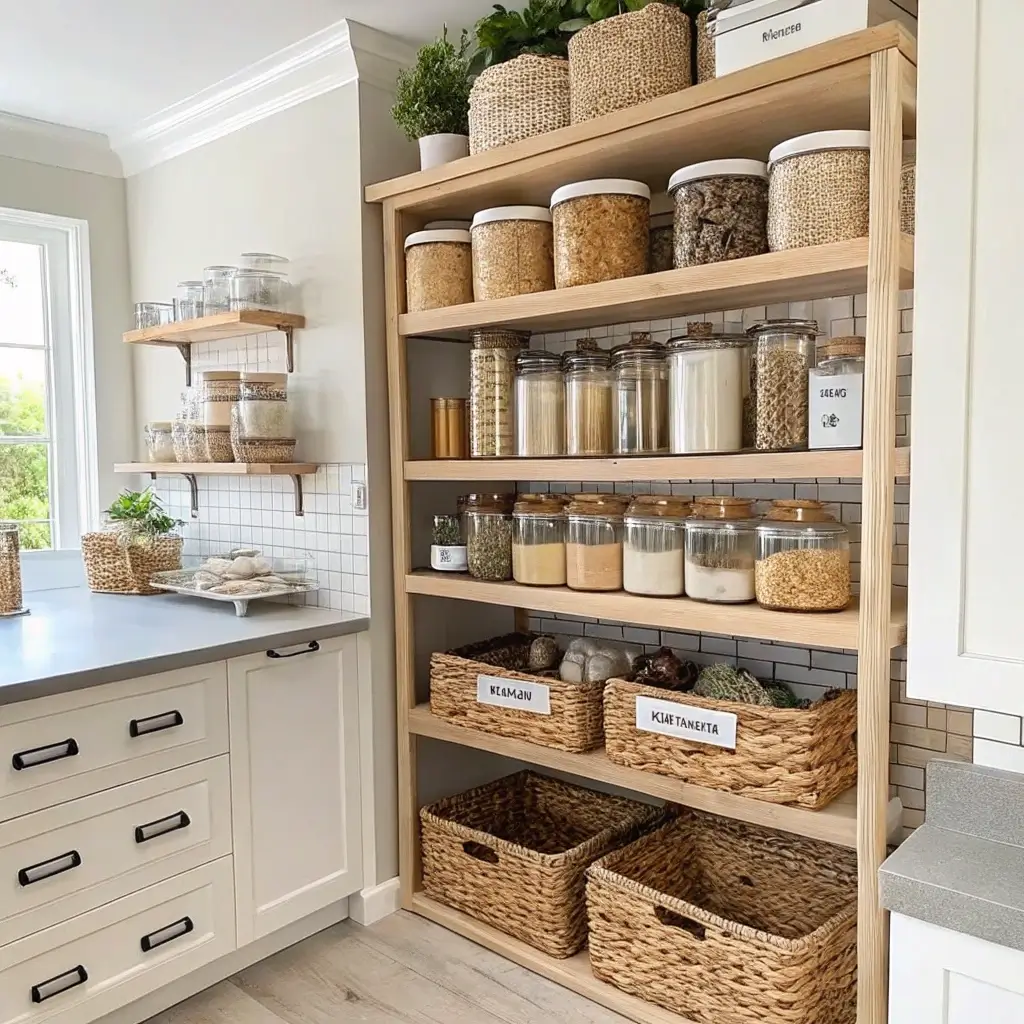
Organization Meets Accessibility
Tiered pantry shelving brings every ingredient into view, eliminating the “cabinet archaeology” experience of digging through dark depths searching for that one spice you definitely bought but can’t find. Multiple shelf levels at varying depths ensure nothing hides in forgotten corners.
After converting my traditional pantry to open tiered shelving, I stopped buying duplicate ingredients. Seriously—I discovered I owned four jars of cumin and three bags of the same pasta shape. Open visibility changed my grocery shopping habits entirely.
Creating Effective Tiers
Successful tiered pantry systems follow specific organizational principles:
- Place frequently used items at eye level for grab-and-go convenience
- Store heavy items (flour, sugar, oils) on lower shelves
- Use risers and small steps within shelves to create visibility layers
- Group categories together—all baking supplies in one zone, all grains in another
- Leave front shelf space open for items in current rotation
The goal involves creating a system where you can locate any ingredient within seconds. If you’re still searching and shuffling, the tiering needs adjustment.
Container Coordination
Open pantry shelving works best with uniform container systems. Mismatched original packaging creates visual chaos that makes open shelves feel messy rather than curated. Invest in:
- Clear airtight containers for dry goods
- Matching labeled jars for spices
- Stackable bins for snack items
- Woven baskets for items that don’t need visibility
Yes, decanting everything takes time initially. But the ongoing visual satisfaction and organizational ease absolutely justify the upfront effort 🙂
Hanging Pot Rack Shelves
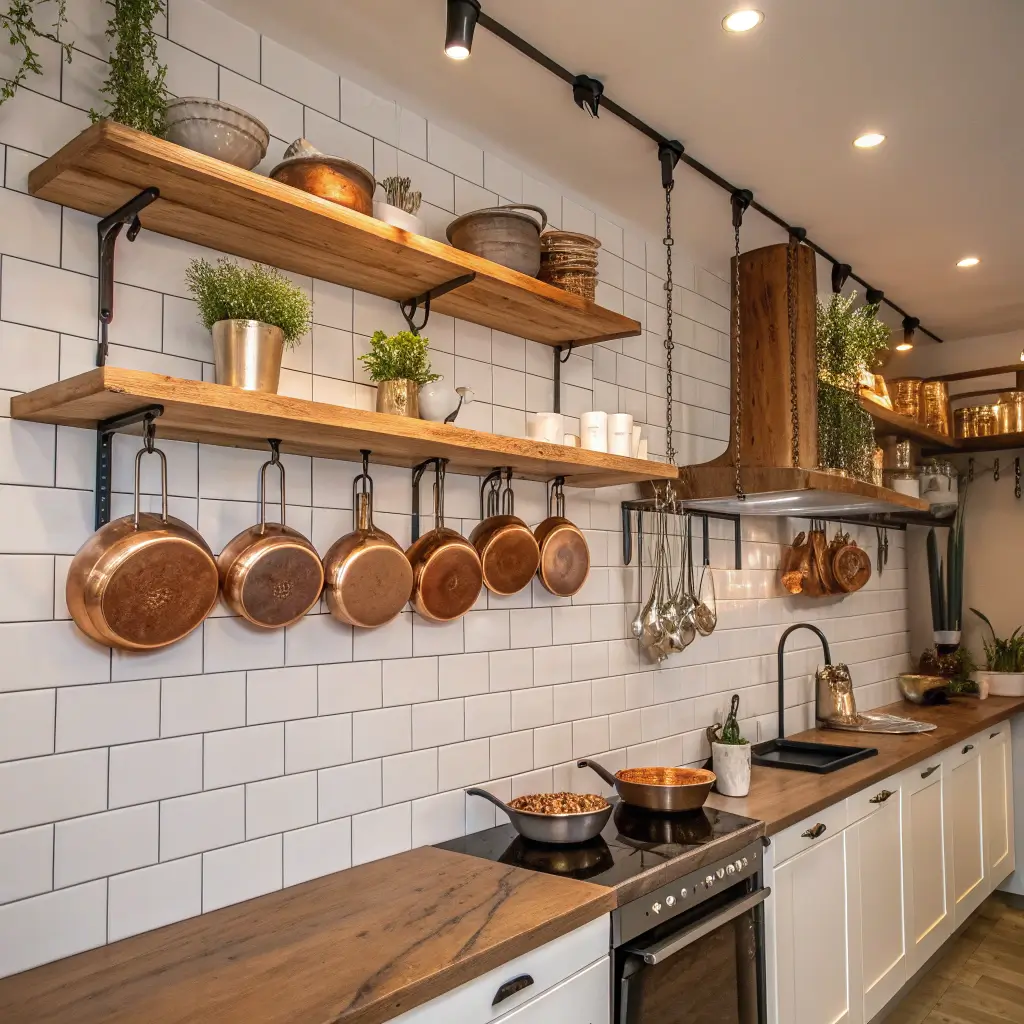
Dual-Purpose Design Excellence
Hanging pot rack shelves solve two kitchen challenges simultaneously: storing bulky cookware and providing additional shelf space. These overhead systems combine hooks for pots and pans with flat surfaces for lids, utensils, or decorative items. It’s like getting two storage solutions for the price of one installation.
I mounted a hanging pot rack shelf above my kitchen island, and it transformed both storage capacity and visual drama. My copper pots—previously buried in lower cabinets—now hang beautifully, creating functional art that impresses dinner guests.
Placement Considerations
Proper placement makes or breaks hanging pot rack functionality:
- Mount at least 40-48 inches above countertops for comfortable clearance
- Ensure you won’t bang your head during normal kitchen activities
- Center above islands or peninsulas for balanced visual weight
- Consider sightlines—racks can obstruct kitchen views if poorly positioned
- Verify ceiling structure can support combined weight of rack and cookware
If your ceiling can’t handle the load, wall-mounted alternatives offer similar benefits with different structural requirements.
Styling Your Hanging Rack
The cookware you display matters for aesthetic impact:
- Copper and brass pots create stunning visual warmth
- Matching sets of stainless steel look professional and cohesive
- Cast iron pieces add rustic weight and character
- Enameled cookware introduces color possibilities
Avoid hanging mismatched, scratched, or damaged pieces. The whole point involves showcasing beautiful functional items—not airing your kitchen’s dirty laundry (or cookware, as it were).
Mixed Material Statement Shelves
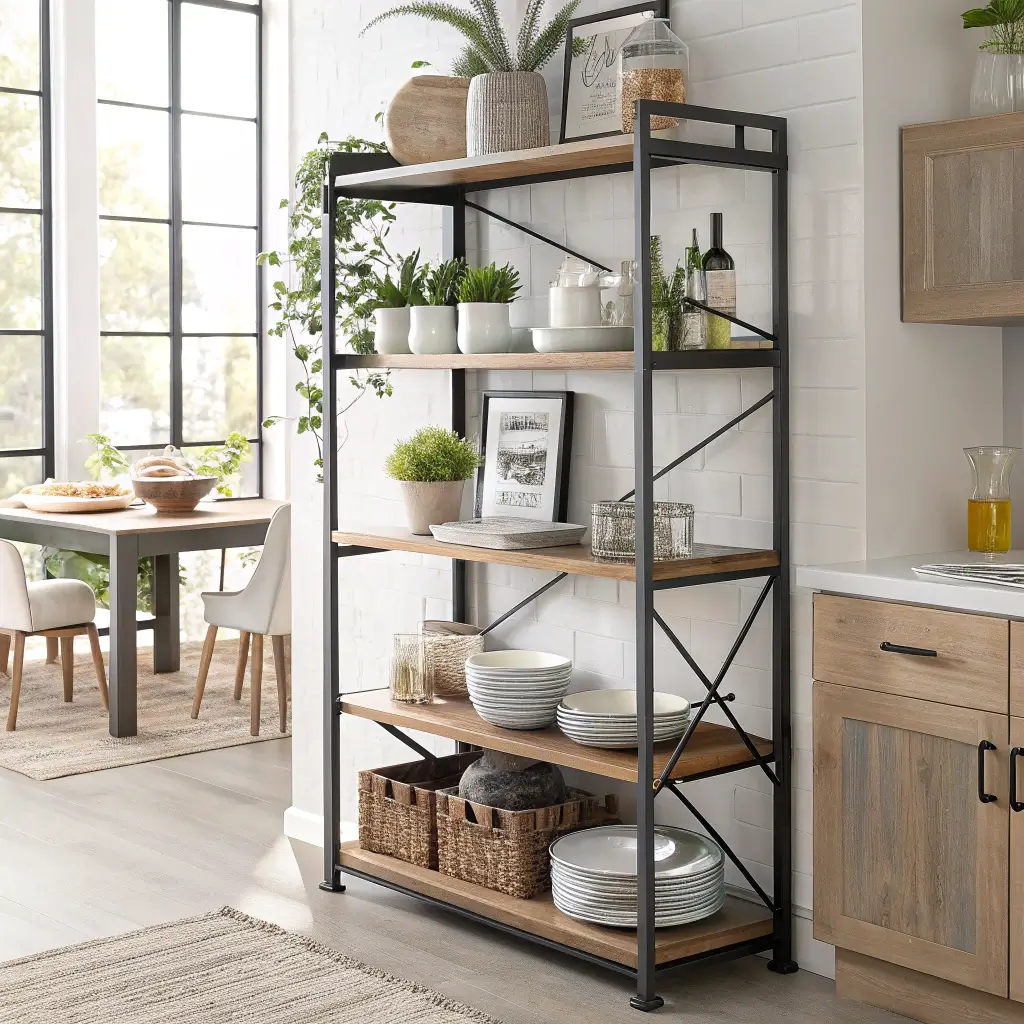
Combining Textures for Maximum Impact
Mixed material shelving represents the bold approach for those who refuse to choose just one style. These statement pieces combine wood, metal, glass, concrete, or other materials into cohesive designs that create instant focal points. Think industrial pipe brackets holding reclaimed wood planks, or brass-trimmed marble floating shelves.
My current kitchen features shelves combining blackened steel frames with light maple wood surfaces. The contrast between warm and cool, industrial and organic, creates visual tension that keeps the eye interested. Boring? Never heard of it.
Popular Material Combinations
Successful mixed material shelving often pairs contrasting elements:
- Raw wood + black pipe delivers industrial farmhouse vibes
- Marble + brass creates sophisticated luxury
- Concrete + warm wood balances modern edge with organic warmth
- Reclaimed timber + polished chrome bridges vintage and contemporary
- Rattan + matte black metal offers boho-industrial fusion
The key involves choosing materials that contrast while complementing. Each element should feel intentional, not random. When combinations work, they feel inevitable—like those materials were always meant for each other.
Creating Custom Mixed Material Pieces
If you can’t find exactly what you envision, consider custom or DIY approaches:
- Source individual materials from different suppliers
- Work with local metalworkers for custom bracket fabrication
- Use existing shelves and add decorative elements
- Combine vintage finds with modern components
The beauty of mixed material shelving lies in uniqueness. Your combination doesn’t exist in any catalog because you created it specifically for your space.
Also Read: 10 Modern Kitchen Living Room Open Concept Ideas and Layout Secrets
General Open Shelving Decor Tips
Balancing Function and Beauty
Successful open shelving walks the line between practical storage and visual appeal. Every item you display should either serve a daily function or bring you genuine joy—preferably both. That gorgeous ceramic bowl you never use? Keep it. That ugly plastic container holding your daily vitamins? Find a prettier alternative.
I operate on the “would I photograph this?” principle. If a displayed item wouldn’t look good in a kitchen magazine photo, it gets relocated to closed storage or replaced entirely.
Managing the Dust Reality
Let’s address the elephant in the kitchen: open shelves collect dust. This isn’t a design flaw—it’s physics. You have options:
- Accept weekly dusting as part of your routine
- Display items you use frequently (daily use prevents dust accumulation)
- Choose smooth, easily-wiped surfaces over textured pieces
- Place rarely-used display items higher where dust shows less
Personally, I rotate displayed items seasonally. This forces regular cleaning and keeps my shelves feeling fresh and intentional rather than neglected.
Lighting Considerations
Proper lighting elevates open shelving from functional to fabulous:
- Under-cabinet LED strips illuminate shelf contents beautifully
- Puck lights create focused spotlighting effects
- Natural light from nearby windows enhances morning shelf aesthetics
- Consider color temperature—warm light flatters food items and organic materials
Great lighting transforms everyday dishes into display-worthy objects. Your shelves deserve proper illumination.
Making Your Choice
Selecting the right open shelving style depends on your specific kitchen, your personal aesthetic, and your realistic maintenance commitment. Ask yourself: What items will you actually display? How often will you clean? What existing elements must your shelves complement?
Start with one shelf section if you’re nervous about the commitment. Living with open storage for a few months reveals whether it suits your lifestyle before you commit to a complete kitchen transformation.
Final Thoughts
Open shelving in the kitchen represents both a design choice and a lifestyle commitment. It forces you to curate your belongings, maintain tidiness, and actually appreciate the items you own. For me, that trade-off delivers daily satisfaction that closed cabinets never provided.
Whether you gravitate toward minimalist floating shelves, rustic reclaimed wood, or dramatic mixed-material statement pieces, the right open shelving transforms your kitchen into a space that reflects your personality. Start measuring, start dreaming, and start imagining those beautiful morning coffee moments reaching for your favorite mug displayed perfectly at eye level.
Your kitchen deserves to show off a little. Give it the open shelving it’s been waiting for.