

15 Charming Small Cozy Kitchen Ideas for Tiny Spaces

Let me guess—you’re standing in your tiny kitchen right now, wondering how on earth you’re supposed to make this shoebox feel like the heart of your home? Yeah, I’ve been there. Actually, I’m still there. My kitchen measures a whopping 60 square feet, and yet it’s become my favorite room in the entire apartment.
Here’s the thing nobody tells you about small kitchens: they have more potential for coziness than those sprawling chef’s kitchens you see on Pinterest. Seriously! There’s something incredibly intimate about a compact cooking space that just works. The trick is knowing how to maximize every single inch while creating an atmosphere that makes you actually want to spend time there.
I’ve spent the last three years obsessing over small kitchen design, testing countless ideas in my own space, and learning from way too many mistakes (RIP to that oversized butcher block that blocked my fridge for six months). So grab a cup of coffee, and let’s transform your tiny kitchen into the cozy haven you deserve.
Minimalist Small Kitchen Makeover

Ever noticed how the tiniest kitchens often feel the most cluttered? That’s because we try to cram everything we own onto those precious few countertops. The minimalist approach flips this completely on its head.
The golden rule of minimalist small kitchens: if you haven’t used it in three months, it doesn’t deserve counter space. I know, I know—that bread maker your aunt gave you for Christmas has sentimental value. But does it need to live next to your coffee maker? Probably not.
Start by ruthlessly editing your visible items. Keep only your daily essentials within arm’s reach:
- Your most-used cooking oils and spices
- One beautiful knife set
- A single cutting board
- Your coffee setup (because priorities, right?)
The magic happens when you embrace clean lines and neutral colors. Think white or light gray cabinets, simple hardware, and uncluttered surfaces. The visual breathing room makes your small kitchen feel twice its actual size.
Choosing the Right Minimalist Elements
Don’t confuse minimalism with boring. You can absolutely have personality in a minimalist kitchen—it just needs to be intentional. Pick one or two statement pieces that spark joy. Maybe it’s a gorgeous copper kettle or a vibrant piece of art. Let those items shine against your simplified backdrop.
I swapped my collection of mismatched dish towels for three identical white linen ones, and honestly? Game changer. Such a small shift made my entire kitchen feel more put-together.
Rustic Cozy Kitchen Corners

Now we’re talking about my absolute favorite aesthetic for small spaces. Rustic design was practically invented for tiny kitchens because it celebrates imperfection and warmth over sleek perfection.
The secret sauce here is texture. You want layers upon layers of natural materials that make your kitchen feel like a countryside cottage, even if you’re in a city apartment. Think reclaimed wood, woven baskets, ceramic crocks, and linen textiles.
For that authentic rustic vibe, focus on these elements:
- Exposed wood wherever possible—floating shelves, a wooden spoon holder, or even a small wooden step stool
- Vintage or vintage-inspired accessories like enamelware, mason jars, or antique scales
- Natural fiber accents such as jute rugs, cotton towels, or wicker storage baskets
- Warm metals like copper, brass, or oil-rubbed bronze
The beauty of rustic design in a small kitchen is that nothing needs to match perfectly. That slightly worn cutting board? Character. Those mismatched vintage plates? Charming. Your grandma’s old mixing bowls? Absolutely perfect.
Creating Your Cozy Corner
Even the tiniest kitchen has at least one corner that’s underutilized. Transform it into a dedicated cozy zone. Add a small wooden shelf with your favorite cookbooks, hang a vintage-style pendant light, and maybe include a tiny potted herb. This corner becomes your kitchen’s personality center.
Compact Kitchen Storage Hacks

Okay, let’s get practical for a minute. Storage in a small kitchen isn’t just about finding places to put stuff—it’s about creating systems that actually work for your daily life.
I used to think I needed a bigger kitchen. Turns out, I just needed smarter storage. Here are the hacks that completely transformed my tiny space:
Vertical is your best friend. Every inch of wall space is potential storage. Install narrow floating shelves above your sink, hang a magnetic knife strip, or mount a pegboard for your most-used tools. I added a slim rolling cart between my fridge and wall—it fits perfectly in that weird 4-inch gap and holds all my spices.
Inside your cabinets is where the real magic happens:
- Shelf risers double your storage instantly
- Over-the-door organizers work on cabinet doors, not just closets
- Lazy Susans make corner cabinets actually usable
- Tension rods create instant dividers for cutting boards and baking sheets
Don’t forget the ceiling. A pot rack might seem old-fashioned, but it frees up an entire cabinet. Plus, those hanging copper pots look incredibly cozy—very French countryside, if you ask me.
The One-In-One-Out Rule
Here’s the storage hack nobody talks about: discipline. Every time you bring a new kitchen item home, something else has to go. It sounds harsh, but it’s the only way to prevent small kitchen creep. Trust me, your future self will thank you.
Warm Lighting Ideas for Small Kitchens
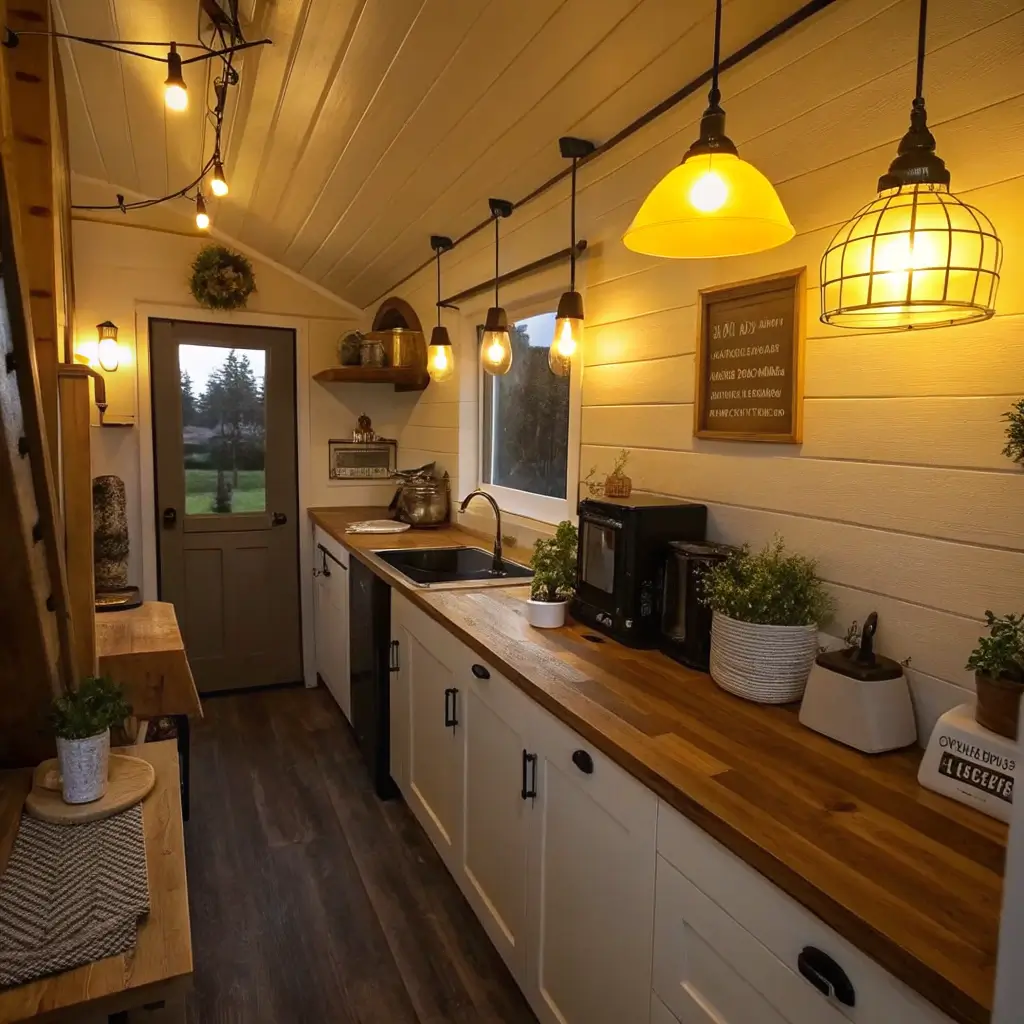
Want to know the fastest way to make any kitchen feel cozy? Lighting, lighting, lighting. And no, that harsh overhead fluorescent does not count.
The problem with most small kitchens is they rely on a single light source. This creates flat, unflattering light that makes your space feel clinical rather than comfortable. The solution is layered lighting—multiple sources at different heights and intensities.
Here’s my three-layer approach:
Ambient lighting sets the overall mood. Swap that builder-grade fixture for a warm pendant or flush mount with a dimmer switch. The dimmer is non-negotiable, FYI—it lets you adjust the vibe from “meal prep mode” to “romantic dinner” in seconds.
Task lighting helps you actually see what you’re cooking. Under-cabinet LED strips are affordable, easy to install, and make a massive difference. I installed mine for about $30, and suddenly I could actually read recipes without squinting.
Accent lighting adds that final cozy touch. Think small lamps on open shelves, candles during dinner, or fairy lights tucked into a corner. Yes, fairy lights in the kitchen. Don’t knock it until you’ve tried it.
The Color Temperature Secret
Pay attention to the Kelvin rating on your bulbs. Anything between 2700K-3000K gives you that warm, cozy glow. Higher numbers create cooler, bluer light—great for hospitals, terrible for cozy kitchens.
Tiny Kitchen with Open Shelving

Open shelving in a small kitchen is one of those controversial topics that really divides people. Some folks love the airy, accessible feel. Others can’t handle the dust and visual clutter. I’m firmly in the pro-open-shelving camp, and here’s why.
Open shelves make small kitchens feel larger by eliminating visual bulk. Those upper cabinets you have? They’re essentially walls that stop at eye level. Removing them (or even just one section) opens up sightlines and brings in more light.
But here’s the catch—open shelving only works if you’re strategic about it. You need to:
- Curate ruthlessly. Only display items that are both beautiful and functional
- Stick to a cohesive color palette. Mismatched dishes create chaos
- Accept some maintenance. You’ll dust more often, but it’s worth it
- Use every item regularly. Nothing should just sit there collecting grime
I replaced my upper cabinets with three floating wood shelves, and my kitchen instantly felt twice as big. I keep my everyday dishes, a few pretty jars of dry goods, and some small plants up there. Everything else lives behind closed doors.
Making Open Shelving Work Long-Term
The key to sustainable open shelving is creating a system you can maintain. If you’re not naturally tidy (no judgment—I’m barely hanging on myself), limit your open shelving to one wall or section. This gives you the visual benefit without committing to full-time curation.
Cozy Farmhouse Kitchen Inspiration

There’s a reason farmhouse kitchens dominate Pinterest boards everywhere. They’re warm, welcoming, and surprisingly achievable in small spaces. You don’t need a sprawling country estate to capture that farmhouse magic.
The farmhouse aesthetic works beautifully in tiny kitchens because it embraces practicality alongside beauty. Think apron-front sinks that actually hold your biggest pots, open shelving that keeps essentials at hand, and simple materials that age gracefully.
Key elements for a small farmhouse kitchen include:
- Shiplap or beadboard accents on one wall or your island base
- A farmhouse sink (yes, they make smaller versions!)
- Classic subway tile in white or cream
- Wood and white color combinations
- Vintage-inspired fixtures like schoolhouse lights or bin pulls
- Natural textiles including linen, cotton, and burlap
The beauty of farmhouse style is its flexibility. You can go full Joanna Gaines with shiplap everything, or you can just add a few farmhouse touches to your existing kitchen. Even swapping your hardware for simple cup pulls makes a difference.
Small-Scale Farmhouse Details
Don’t overlook the small stuff. A vintage bread box, an enamel flour canister, or a simple wooden bowl filled with fresh lemons—these details create the farmhouse feeling without requiring a renovation. I found an old milk glass collection at a flea market for $15, and it instantly farmhouse-ified my shelves.
Also Read: 15 Delightful Cozy Kitchen Aesthetic Ideas for Style Lovers
Space-Saving Kitchen Furniture Ideas
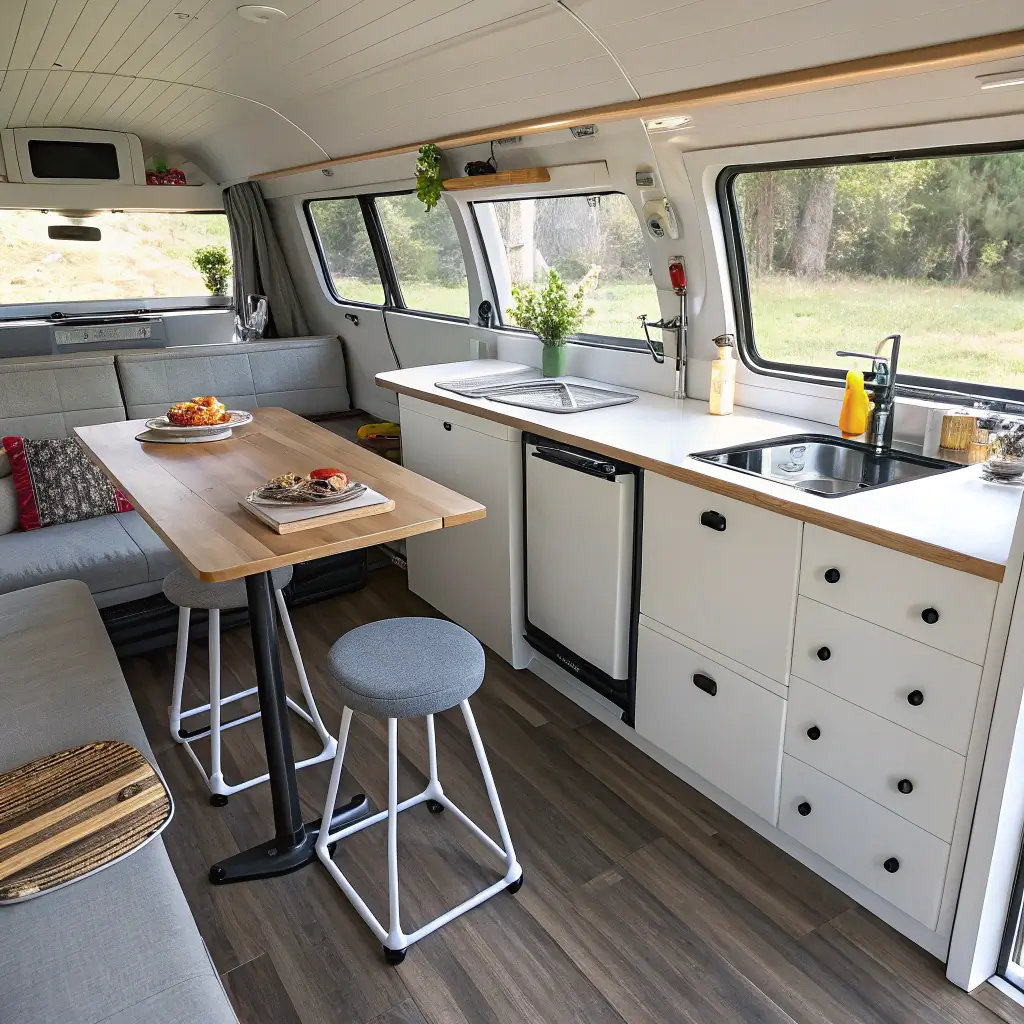
Furniture in a small kitchen requires a completely different mindset than in larger spaces. Every single piece needs to earn its footprint. If something doesn’t serve at least two purposes, it probably doesn’t belong.
The game-changer for my kitchen was discovering drop-leaf and fold-down furniture. I have a small drop-leaf table that functions as extra prep space when I’m cooking and transforms into a two-person dining spot when needed. When we’re not using it, one leaf goes down, and it tucks against the wall.
Other space-saving furniture winners include:
- Nesting tables or stools that stack when not in use
- Wall-mounted fold-down desks for recipe reading or homework
- Rolling carts that move where you need them
- Bar stools that tuck completely under counters
- Built-in banquettes with storage underneath
Here’s a controversial opinion: sometimes the best furniture decision is having less furniture. IMO, a small kitchen with one versatile piece works better than one crammed with “practical” items that create obstacle courses.
Multi-Purpose Magic
Look for furniture that does double or triple duty. A kitchen island with built-in storage, seating, and prep surface? That’s a triple threat. A stepladder stool that looks pretty enough to leave out? Practical and aesthetic. Think creatively about how each piece can serve multiple functions.
Small Kitchen Color Palette Tips
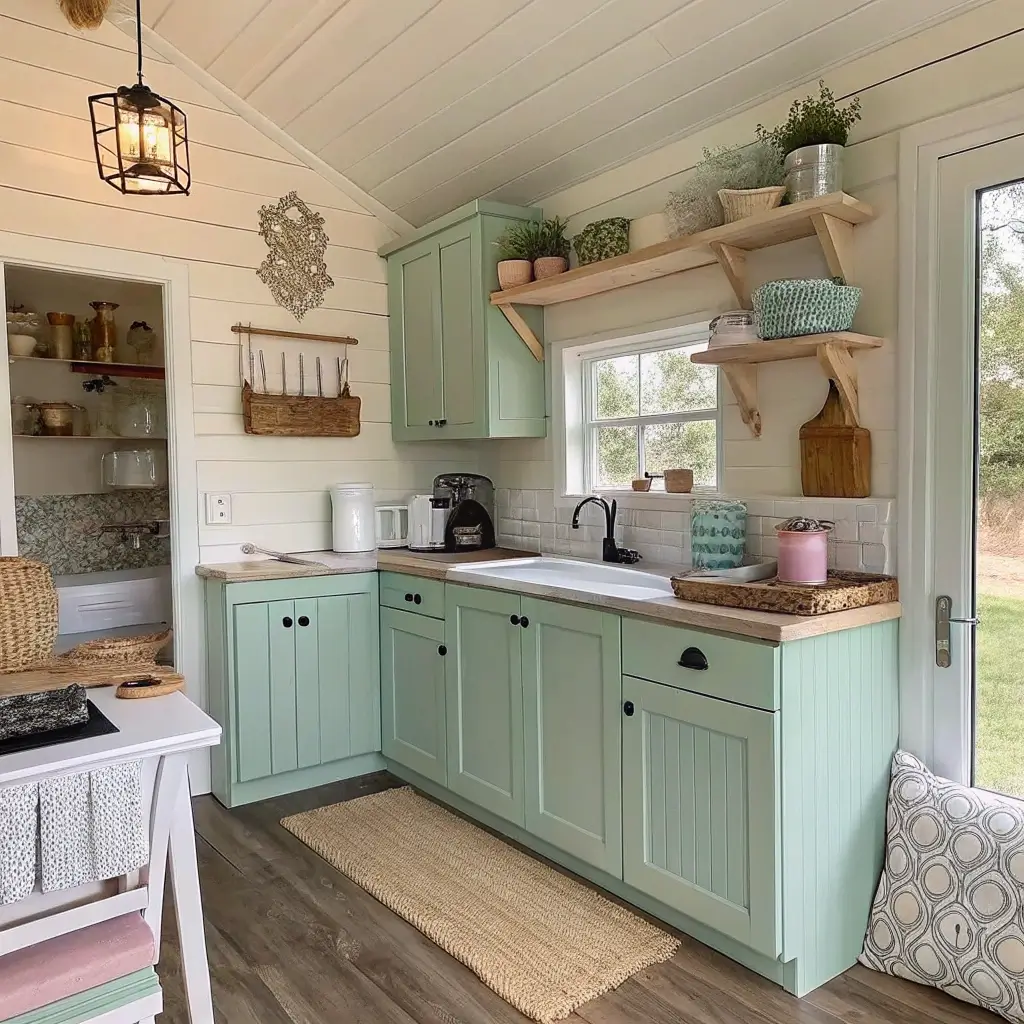
Color psychology is real, and it matters even more in small spaces. The right palette makes your tiny kitchen feel larger, warmer, and more inviting. The wrong one? Let’s just say I once painted my kitchen dark green, and it felt like cooking in a cave.
For small kitchens, you generally want to stick with lighter colors as your base. White, cream, soft gray, and pale wood tones reflect light and create that airy feeling. But here’s where it gets interesting—you absolutely need some warmth in there too.
An all-white kitchen can feel sterile and cold. Balance those light tones with:
- Warm wood accents through shelving, cutting boards, or butcher block
- Warm metallics like brass or copper hardware and fixtures
- Natural textures that add visual warmth without color
- One or two pops of color in accessories or small appliances
The safest approach? Choose a neutral base (white cabinets, light countertops) and layer in warmth through accessories you can easily change. This gives you flexibility without commitment.
Bold Color in Small Doses
Who says small kitchens can’t have personality? A bold-colored backsplash, a statement pendant light, or even a colorful runner can make your space feel custom and intentional. The key is limiting bold choices to one focal point while keeping everything else relatively neutral.
Charming Breakfast Nook Designs

Listen, I didn’t think I could fit a breakfast nook in my tiny kitchen. Turns out, I was thinking about it all wrong. A breakfast nook doesn’t require a dedicated room—it requires creative space planning.
Even a corner of your kitchen can become a cozy breakfast spot with the right setup. The key elements you need:
- A small table or surface (round tables work best in tight spaces)
- Comfortable seating that doesn’t overwhelm the room
- Good lighting to create ambiance
- Some cozy touches like a small plant or pretty dishes
I created my nook using a wall-mounted flip-down table, two small stools that slide underneath, and a pendant light directly above. It takes up zero floor space when not in use but gives us a proper eating spot for casual meals.
Built-In Brilliance
If you’re able to do a small renovation, built-in banquette seating is the ultimate space saver. The bench can incorporate storage underneath, and it uses corner space that often goes wasted anyway. Plus, there’s something incredibly cozy about sliding into a nook that feels like a hug. 🙂
Also Read: 15 Lovely Cozy Kitchen Ideas to Create a Warm Mood
Multifunctional Kitchen Island Ideas
“But I have a small kitchen—I can’t fit an island!” Wrong. You just need to rethink what an island looks like.
A kitchen island in a small space doesn’t need to be a massive permanent structure. Some of the best small kitchen islands are:
- Rolling carts you can move around or store elsewhere
- Narrow console tables that provide prep space without blocking traffic
- Fold-out islands that extend from your existing cabinetry
- Repurposed furniture like a small dresser or antique table
The key is ensuring your island serves multiple functions. At minimum, it should provide extra prep surface and storage. Ideally, it also offers seating, houses small appliances, or includes specialized storage like wine racks or spice drawers.
I use a narrow butcher block cart that lives against my wall. When I’m cooking, I roll it into the center of the kitchen for extra prep space. The lower shelf holds my most-used pots, and I hung hooks on the sides for utensils. Total footprint: about 2 feet by 18 inches.
Sizing Your Island Right
Here’s the rule I follow: you need at least 36 inches of clearance on all working sides of your island. If you can’t achieve that, your island is too big. A cramped kitchen with an island you’re constantly bumping into is worse than no island at all.
Petite Kitchen Pantry Organization
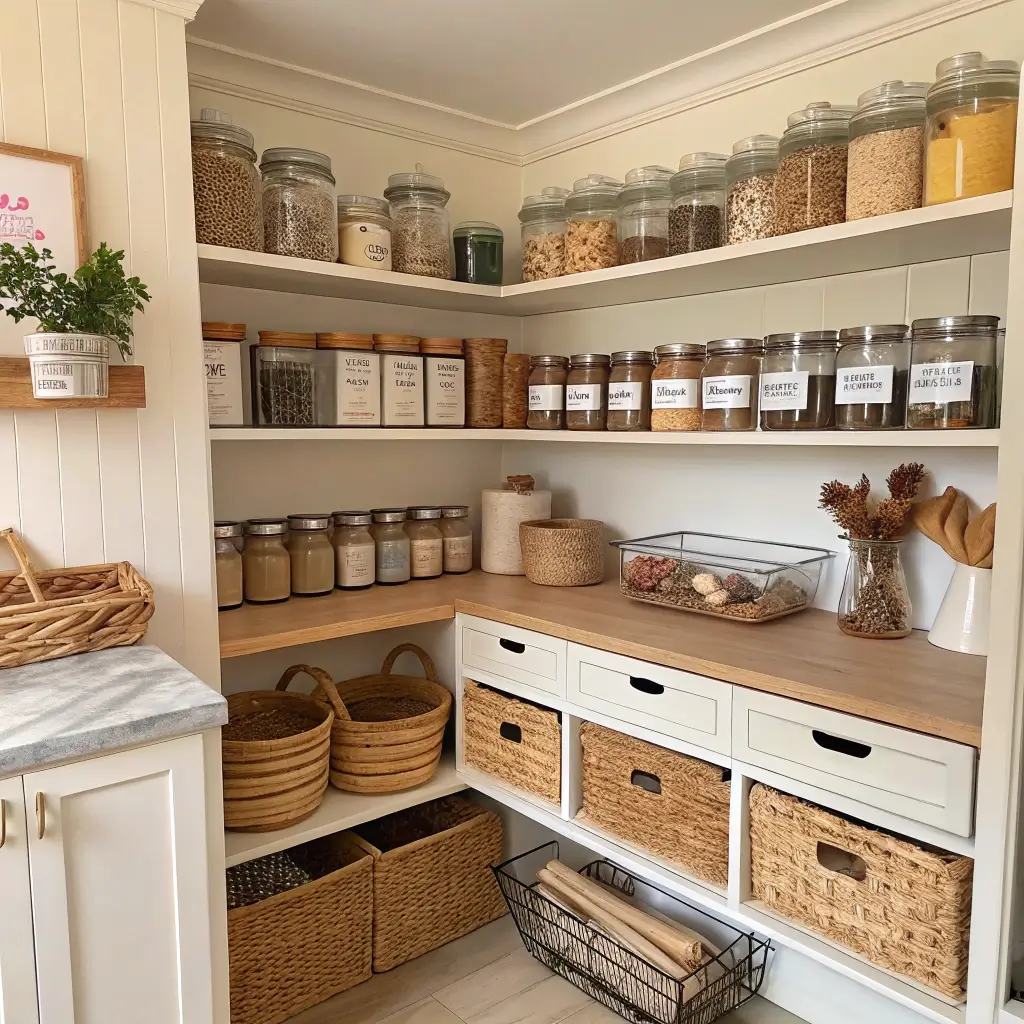
Not having a dedicated pantry room doesn’t mean living in food storage chaos. Your small kitchen pantry is wherever you decide it is. Maybe it’s one cabinet. Maybe it’s a slim rolling cart. Maybe it’s creative wall storage. All of these work.
The organizational principles that transform small pantry spaces:
Decant everything. Transfer dry goods into matching containers. This looks better, keeps food fresh, and actually saves space because you can stack and organize more efficiently. I know it seems extra, but it honestly makes a difference.
Use every vertical inch. Install risers, add shelf dividers, and maximize height. Most cabinet shelves have wasted space above items—claim it.
Group by category. Keep baking supplies together, breakfast items in one zone, snacks in another. This prevents the dreaded “I know we have pasta somewhere” cabinet archaeology.
Label everything. Especially if you decant into matching containers. Trust me, you don’t want to accidentally use powdered sugar when you needed flour. Not that I speak from experience or anything… :/
The Slim Pantry Solution
If you have a weird narrow gap anywhere in your kitchen—between the fridge and wall, next to the stove, wherever—a slim roll-out pantry might fit there. These narrow units (some as thin as 6 inches) slide out to reveal shelves of stored goods. It’s like magic storage appearing from nowhere.
Cozy Vintage Kitchen Décor
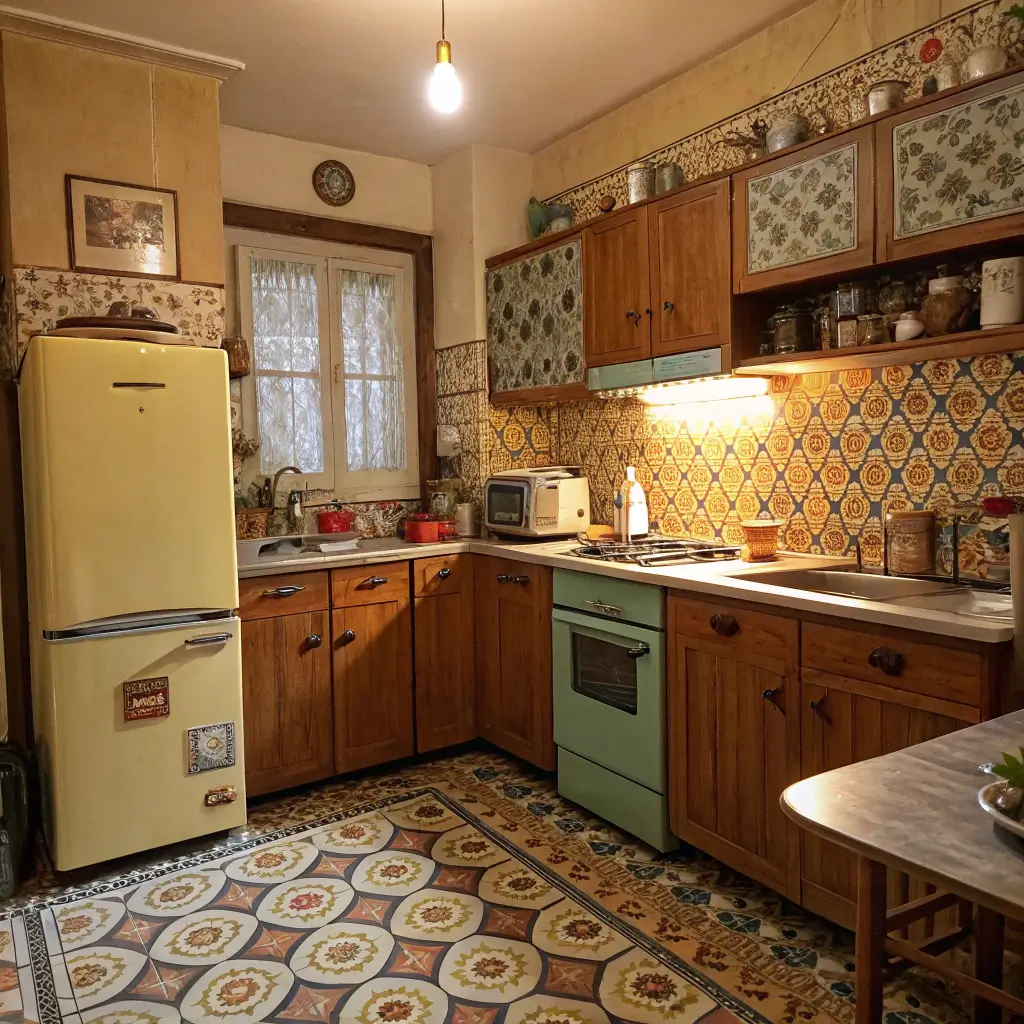
Vintage décor and small kitchens are a match made in heaven. Older homes had smaller kitchens, so vintage items were designed with compact spaces in mind. Plus, vintage pieces add character and warmth that new items struggle to match.
My favorite vintage additions for small cozy kitchens:
- Enamelware in white, cream, or soft pastels
- Milk glass vases and containers
- Vintage scales (functional or decorative)
- Old cookbooks with beautiful spines for display
- Antique utensils like wooden spoons or copper measuring cups
- Vintage linens including tea towels and tablecloths
- Retro small appliances (vintage-style toasters and kettles are widely available)
The hunt is half the fun. I’ve found amazing kitchen vintage at estate sales, thrift stores, antique malls, and even Facebook Marketplace. That gorgeous enamel colander that makes my open shelves look straight out of a magazine? Eight bucks at a garage sale.
Mixing Vintage and Modern
You don’t need an all-vintage kitchen—in fact, that might feel like a time capsule rather than a cozy home. Mix vintage pieces with modern functionality. Use a sleek modern faucet with a vintage farmhouse sink. Display antique dishes but cook with contemporary tools. The contrast creates visual interest and keeps things practical.
Also Read: 15 Perfect White Shaker Kitchen Cabinets Ideas and Decor Tips
Modern Small Kitchen Layouts

Sometimes the cozy factor isn’t about décor at all—it’s about how your kitchen flows. A well-designed layout makes cooking enjoyable, while a poorly planned one creates daily frustration.
For small kitchens, these layouts work best:
The galley kitchen features two parallel counters with a walkway between. It’s incredibly efficient because everything is within arm’s reach. My kitchen is a galley, and I can touch the stove, sink, and fridge without moving my feet.
The L-shaped kitchen uses two perpendicular walls, leaving the rest open. This layout allows for a small dining area or more floor space.
The one-wall kitchen puts everything along a single wall. It’s the most compact option and works well for studio apartments or converted spaces.
The U-shaped kitchen wraps around three walls, maximizing storage and counter space. It can feel closed-in, so consider open shelving on at least one wall.
The Work Triangle Principle
No matter your layout, try to position your sink, stove, and refrigerator in a triangle formation. This kitchen design principle ensures efficient movement during cooking. In small kitchens, your triangle will be compact, but it should still flow logically.
Small Kitchen Greenery & Plants
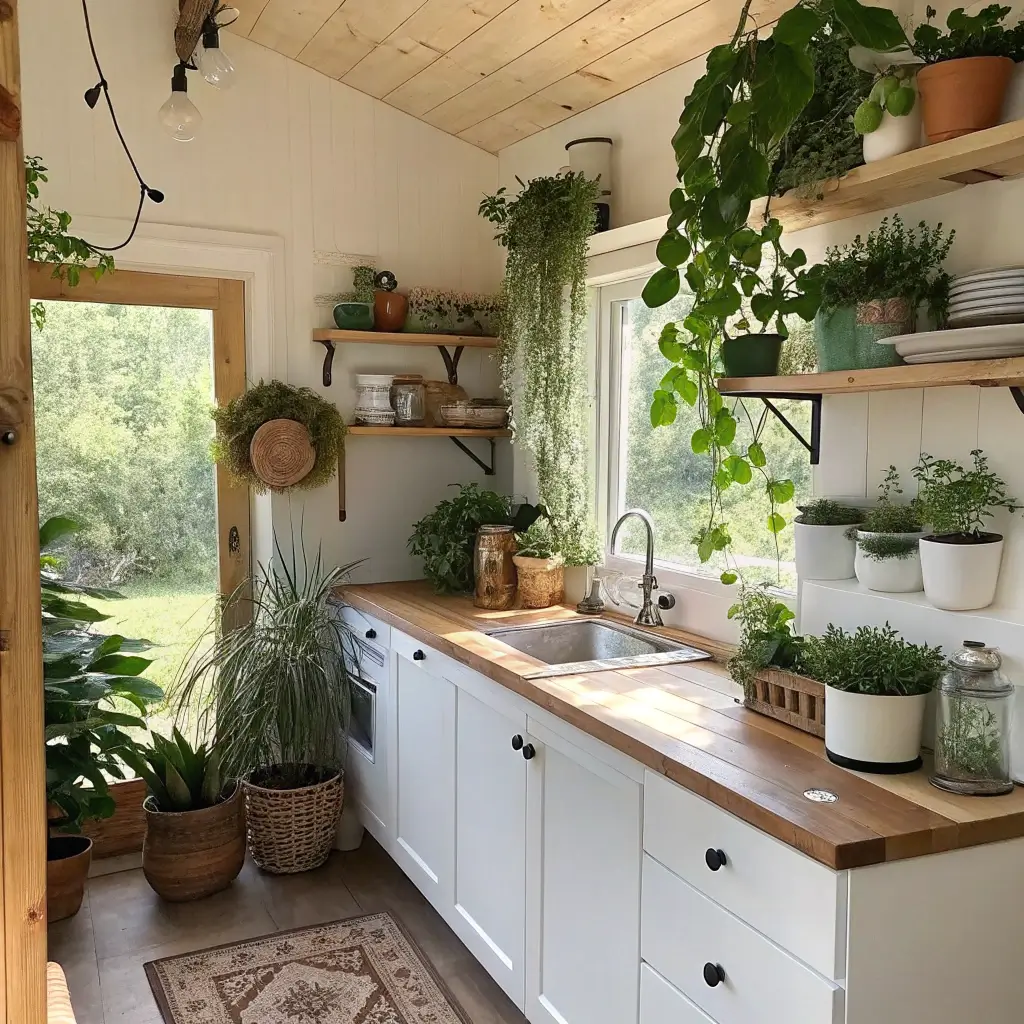
Nothing—and I mean nothing—makes a kitchen feel cozier faster than plants. Living greenery adds color, texture, freshness, and literal life to your cooking space.
The challenge in small kitchens is finding spots for plants that don’t eat up precious counter or storage space. Here’s where I’ve successfully squeezed in greenery:
- Windowsill herbs serve double duty as décor and ingredients
- Hanging planters draw the eye up without using surface space
- Shelf plants tucked among dishes and glasses
- Trailing plants on top of cabinets
- A single statement plant in an underutilized corner
For small kitchen plants, prioritize varieties that tolerate lower light and varying humidity levels. Pothos, philodendrons, and spider plants are nearly indestructible. Herbs like rosemary, thyme, and mint thrive near sunny windows and smell amazing.
Fake It If You Must
Okay, I’ll admit it—I have two fake plants in my kitchen. They’re high-quality faux succulents that live where real plants would struggle, and they still add that greenery vibe without any maintenance. No judgment here if you go the artificial route for tricky spots.
Budget-Friendly Cozy Kitchen Upgrades
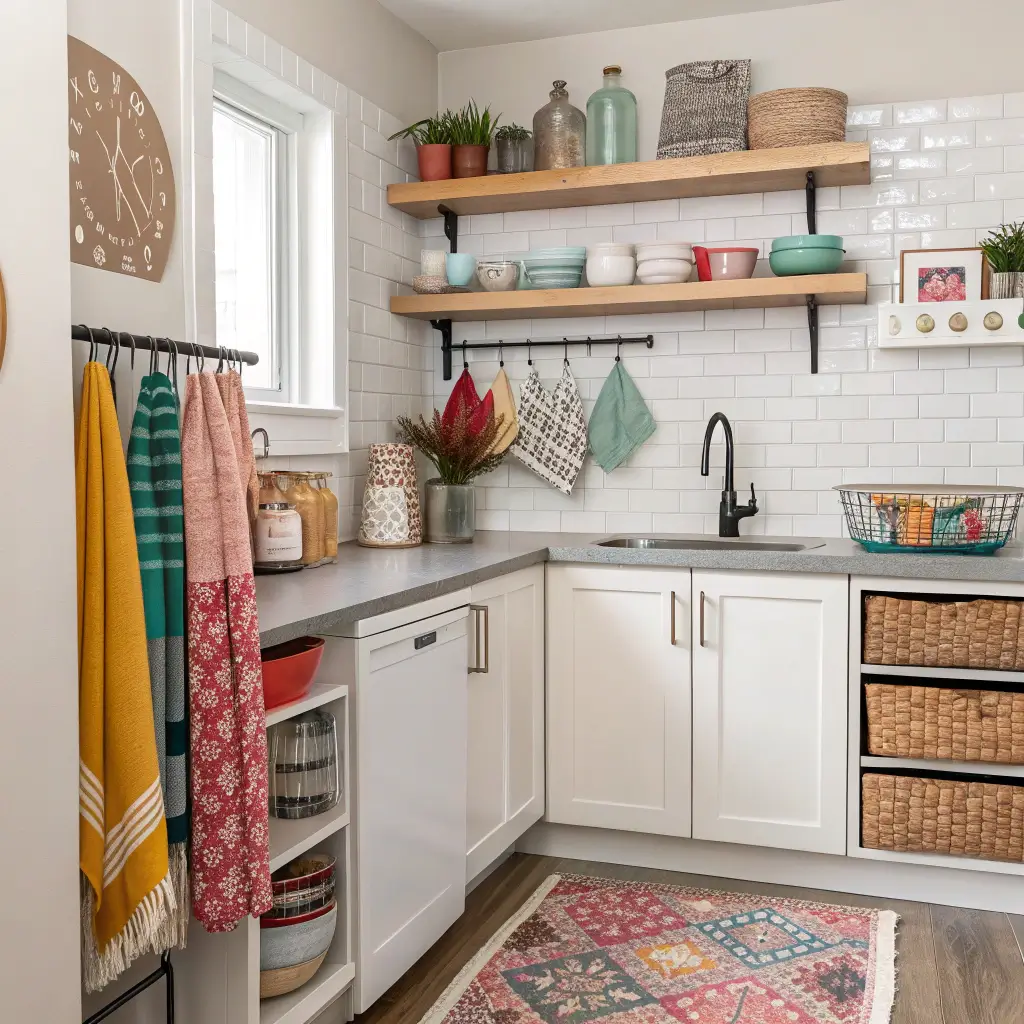
Let’s be real—not everyone has thousands to spend on kitchen renovations. Some of the coziest kitchens I’ve seen were created on shoestring budgets. It’s about smart choices, not big spending.
Here are the highest-impact, lowest-cost upgrades for a cozy small kitchen:
Under $25:
- New cabinet hardware (instant facelift)
- Fresh dish towels and pot holders in coordinating colors
- A pretty soap dispenser and dish brush
- LED puck lights for under cabinets
- A new welcome mat or small rug
Under $50:
- A cohesive set of matching containers
- New pendant light shade or fixture
- Fresh paint for one accent area
- Floating shelf for display
- Quality cutting board as countertop décor
Under $100:
- Cabinet paint (DIY for major transformation)
- Peel-and-stick backsplash tiles
- New faucet
- Rolling cart or utility shelving
- Set of matching dishes for open shelving
The secret to budget decorating is doing fewer things really well rather than many things cheaply. One beautiful wooden cutting board makes more impact than five random Dollar Store accessories.
The Power of Paint
If I had to pick just one budget upgrade, I’d choose paint every single time. Painted cabinets can completely transform a tired kitchen for under $100 (just the cost of paint, primer, and supplies). A painted accent wall adds personality for under $30. Even painting your ceiling a soft color creates unexpected coziness.
Wrapping It All Up
So there you have it—fifteen ways to transform your tiny kitchen from cramped chaos into cozy heaven. The beautiful thing about small kitchen design is that every choice matters more. Each item you display, each color you choose, each organizational system you implement has visible impact.
Remember this: the coziest kitchens aren’t the biggest ones. They’re the ones that feel intentional, personal, and warm. Your tiny space has just as much potential—probably more—than those cavernous designer kitchens you see in magazines.
Start with one idea from this list. Maybe you’ll tackle that open shelving this weekend, or finally invest in proper lighting, or hit the thrift store for some vintage charm. Whatever you choose, make it yours. Add your personality, your favorite colors, your grandmother’s old cookie jar.
The goal isn’t to create a perfect showroom kitchen. It’s to create a space where you actually want to cook, where morning coffee feels like a ritual, where friends naturally gather even though there’s barely room for two people. That’s the true magic of a cozy small kitchen—it brings people closer, literally and figuratively.
Now go make your tiny kitchen amazing. I believe in you. And hey, when you’re done, enjoy that first cup of coffee in your newly cozy space. You’ve earned it.