
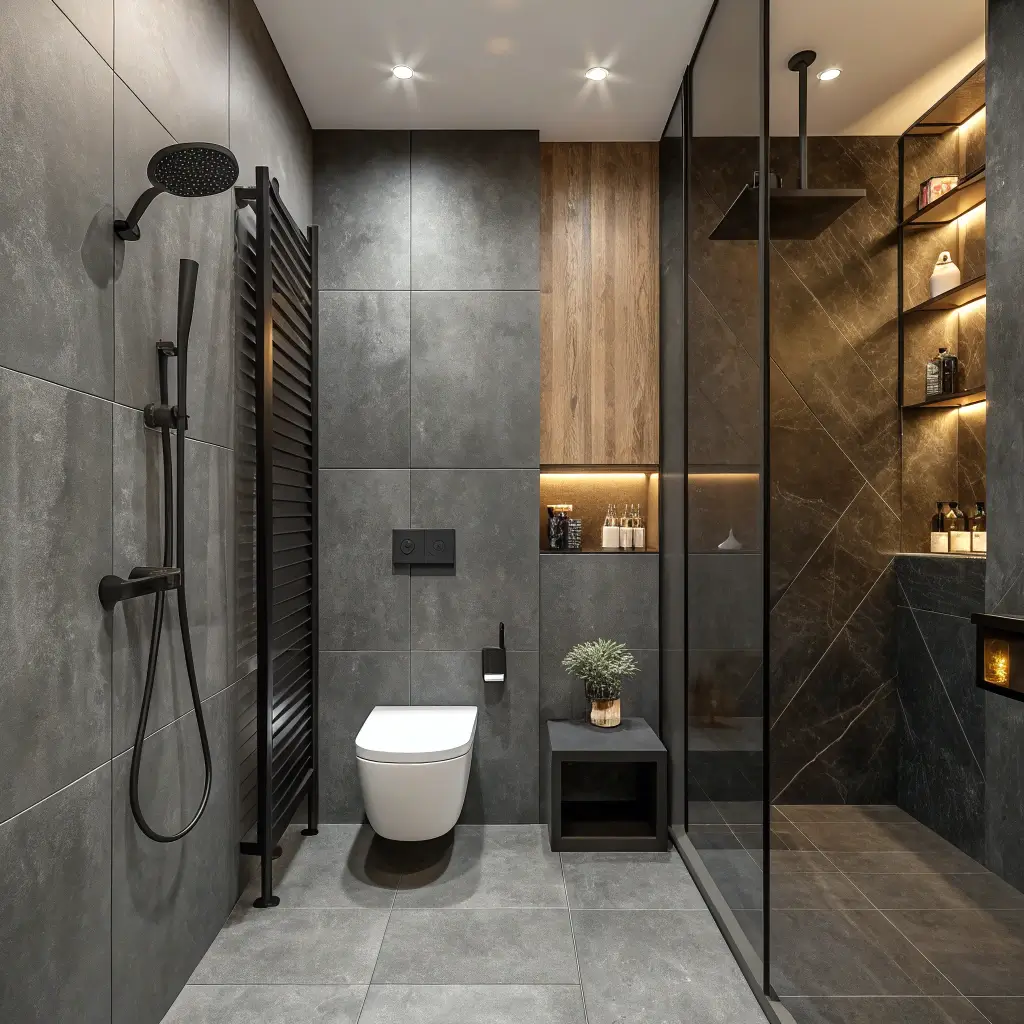
15 Elegant Small Bathroom Shower Ideas for Modern Homes

Let’s be honest—small bathrooms can feel like a cruel joke from the architecture gods. You’ve got dreams of a spa-like retreat, but reality hands you a space that barely fits you and your towel. Sound familiar? I’ve been there, staring at my tiny bathroom wondering if I’d ever escape the cramped, uninspiring shower situation that made mornings feel more like a punishment than a refresh.
But here’s the thing: small doesn’t have to mean boring, ugly, or impractical. After renovating two small bathrooms myself (and making some spectacular mistakes along the way), I’ve gathered a collection of shower ideas that prove limited square footage can still deliver maximum style.
These aren’t just Pinterest-pretty concepts—they’re real, functional solutions that work in actual homes where actual humans need to shower without bumping their elbows on the walls.
Whether you’re dealing with a postage-stamp-sized powder room or a slightly-less-ridiculous compact bath, these 15 ideas will help you transform your shower from “meh” to “magnificent.” Ready to make your small bathroom work harder? Let’s get into it.
1. Floating Corner Shower Designs
Ever looked at a corner and thought, “You know what would be perfect there? Absolutely nothing useful”? Yeah, neither have I. Corners are precious real estate in small bathrooms, and floating corner shower designs capitalize on every single inch.
The beauty of floating corner showers lies in their visual lightness. By mounting elements off the floor—think floating benches, wall-mounted fixtures, and elevated glass panels—you create the illusion of more floor space. Your eyes travel uninterrupted across the floor, making the room feel larger than it actually is.
Why Floating Designs Work So Well
The psychology here is simple but effective. When your brain sees continuous floor space, it registers “big room.” When it sees chunky barriers and floor-mounted obstacles, it thinks “cramped closet.” Floating designs exploit this visual trick brilliantly.
I installed a floating corner shower in my guest bathroom last year, and the difference stunned me. The room felt almost 30% larger, even though I hadn’t changed the actual dimensions by a single inch. Guests now compliment the “spacious” bathroom, and I just smile knowing it’s all smoke and mirrors—the good kind.
Key elements to consider:
- Wall-mounted shower panels with hidden drainage
- Floating corner seats (more on these later)
- Frameless glass enclosures that don’t interrupt sight lines
- Linear drains positioned along the wall rather than center-floor
2. Glass-Enclosed Walk-In Showers
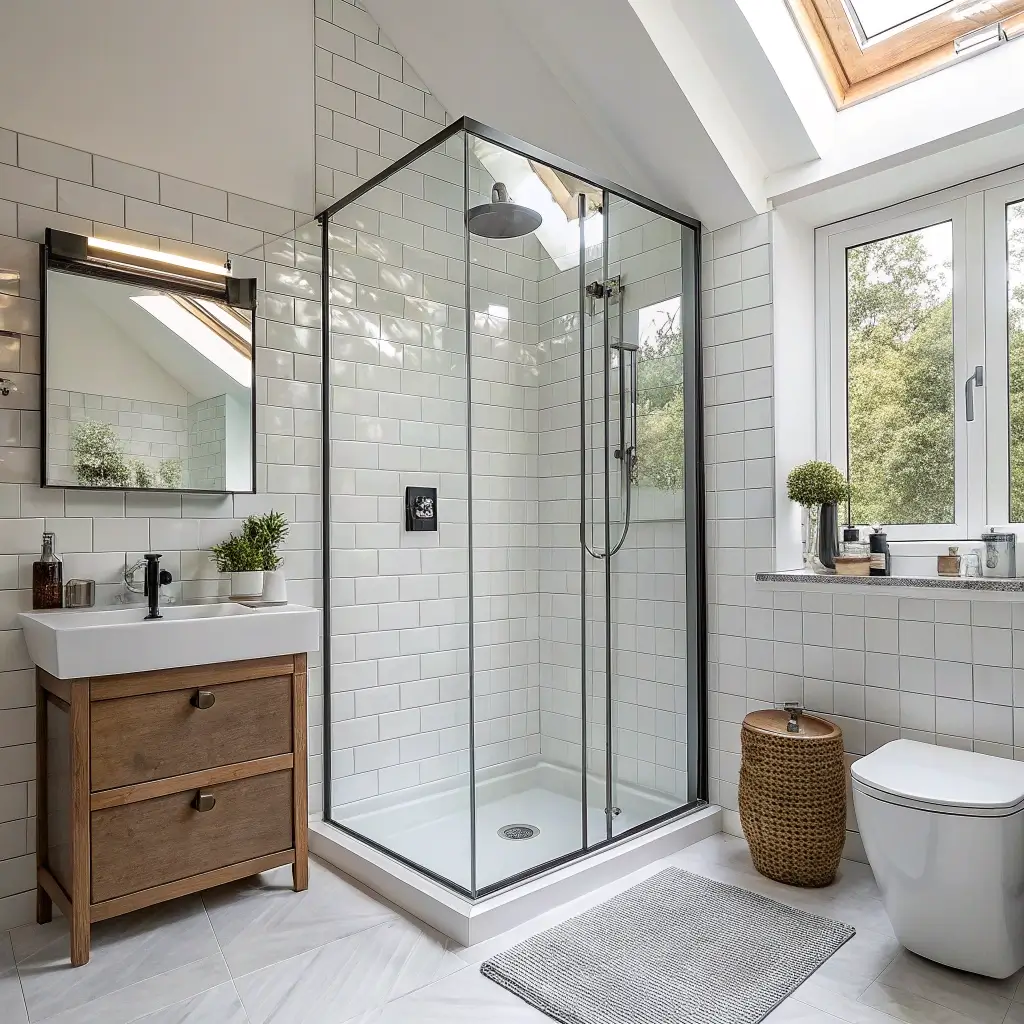
If floating corners are about visual trickery, glass-enclosed walk-in showers are about full transparency. Nothing opens up a small bathroom quite like eliminating visual barriers entirely.
Walk-in showers with glass enclosures create a seamless flow between the shower zone and the rest of your bathroom. No bulky curtains gathering mold. No opaque doors cutting your space in half. Just clear, beautiful glass that lets light dance through the entire room.
The Practical Benefits
Beyond aesthetics, glass enclosures offer serious practical advantages:
- Easier cleaning than shower curtains (no fabric to wash or replace)
- Better ventilation reduces moisture buildup
- Increased light flow means you can get away with fewer light fixtures
- Higher resale value because buyers absolutely love this look
Now, I’ll be real with you—glass shows water spots like nobody’s business. If you’re not willing to squeegee after each shower (or at least semi-regularly), you might find yourself frustrated. But IMO, that minor maintenance beats wrestling with a grimy shower curtain any day.
Choosing the Right Glass
Not all glass is created equal. For small spaces, consider:
- Low-iron glass for maximum clarity without that greenish tint
- Treated glass with water-repellent coatings
- Frosted sections if you share the bathroom and want some privacy without sacrificing all that lovely light
3. Minimalist Wall-Mounted Shower Fixtures
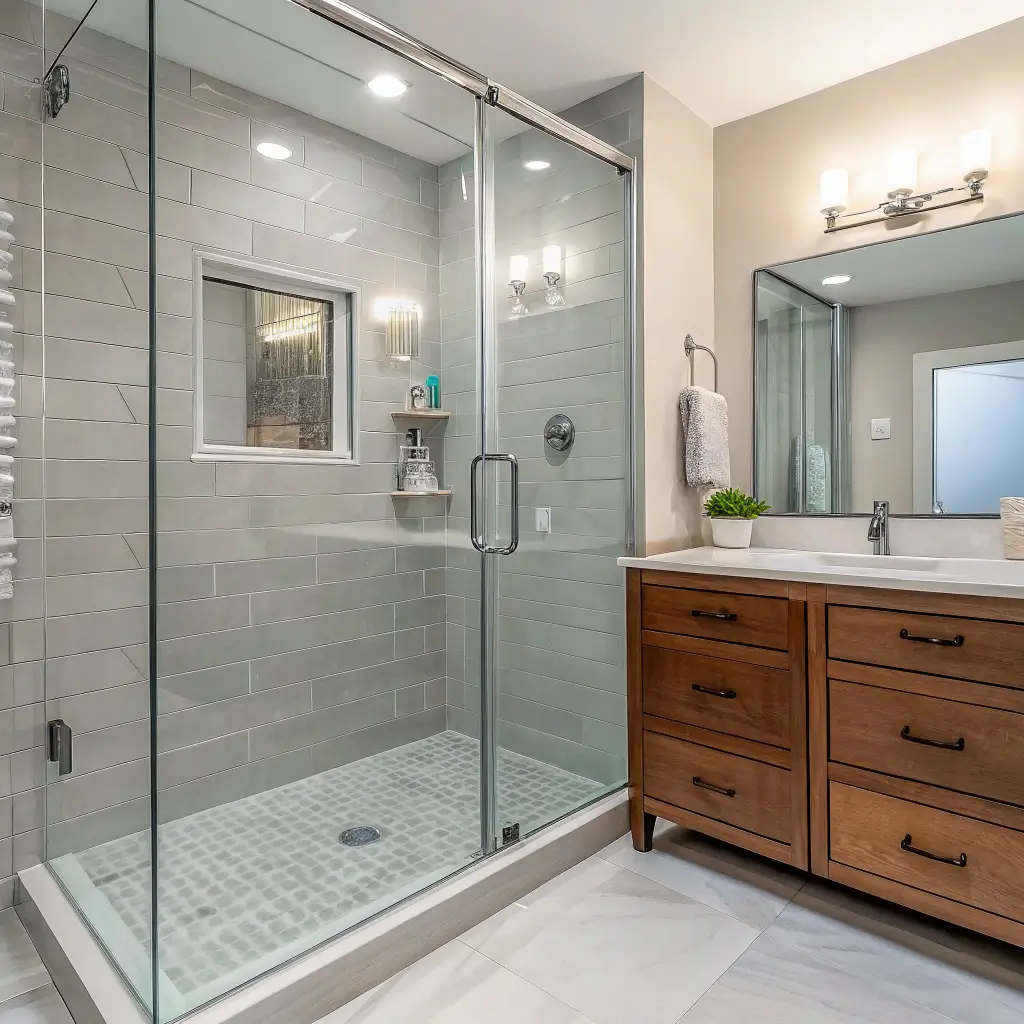
Here’s where I get a little passionate. Bulky shower fixtures are the enemy of small bathroom elegance. Those chunky faucet handles, protruding showerheads, and industrial-looking controls? They eat up visual space and make your shower feel cluttered before you’ve even added shampoo bottles.
Wall-mounted shower fixtures solve this problem beautifully. By embedding controls into the wall and choosing sleek, low-profile designs, you maximize actual showering space while maintaining a clean, modern aesthetic.
What to Look For
When shopping for minimalist fixtures, prioritize:
- Recessed or flush-mounted controls that sit nearly flat against the wall
- Single-lever mixing valves instead of separate hot/cold handles
- Slim-profile showerheads that don’t protrude dramatically
- Coordinated finishes across all fixtures for visual cohesion
I made the mistake in my first renovation of mixing a modern showerhead with vintage-style controls. The result? A confused-looking shower that couldn’t decide what decade it belonged to. Don’t be like past-me. Commit to a cohesive aesthetic.
Installation Considerations
Wall-mounted fixtures typically require in-wall plumbing work, which means this isn’t usually a simple weekend DIY project. Budget for a plumber unless you’re genuinely confident in your skills. Trust me, a flooded bathroom is nobody’s idea of a good time.
4. Compact L-Shaped Shower Layouts
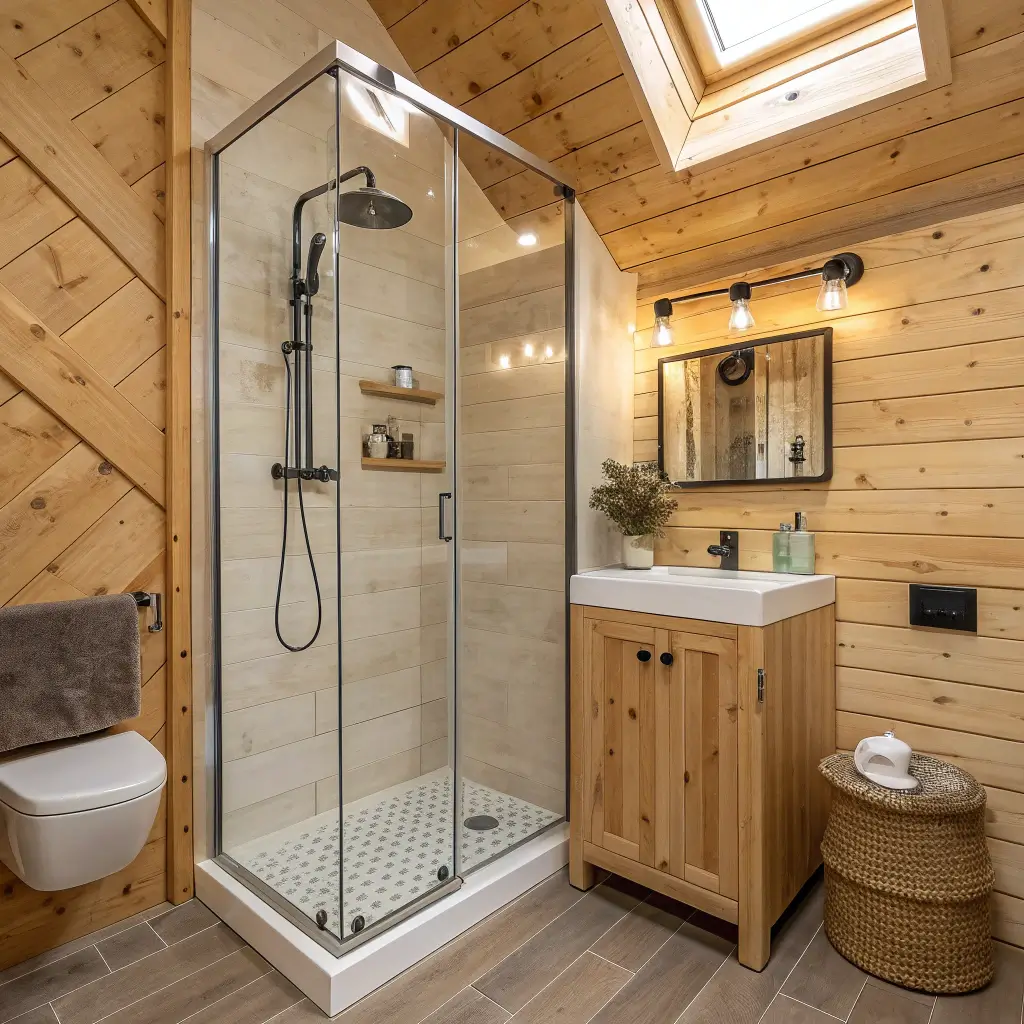
When you can’t go wide, go clever. L-shaped shower layouts make brilliant use of awkward corners and irregular floor plans that would otherwise waste space.
The L-shape configuration creates distinct zones within your shower area. You get a main showering zone plus a secondary area perfect for fixtures, storage, or even a small bench. It’s like having a two-room suite in the footprint of a studio apartment.
Making the L-Shape Work
The key to successful L-shaped showers lies in smart fixture placement:
- Position the showerhead at the interior corner for maximum spray coverage
- Use the outer arm of the L for controls and storage
- Install glass panels on the exposed sides while leaving the corner walls tiled
This layout also works wonderfully in bathrooms where doors, windows, or fixtures create obstacles. Rather than fighting against your bathroom’s existing architecture, the L-shape works with it.
Real-World Example
My sister’s 1920s bungalow had a tiny bathroom with a window positioned right where a normal shower would go. Instead of blocking the window (and losing precious natural light), she installed an L-shaped shower that wrapped around it. The window now gets frosted glass, provides ventilation, and makes morning showers feel surprisingly luxurious.
5. Frameless Shower Door Concepts
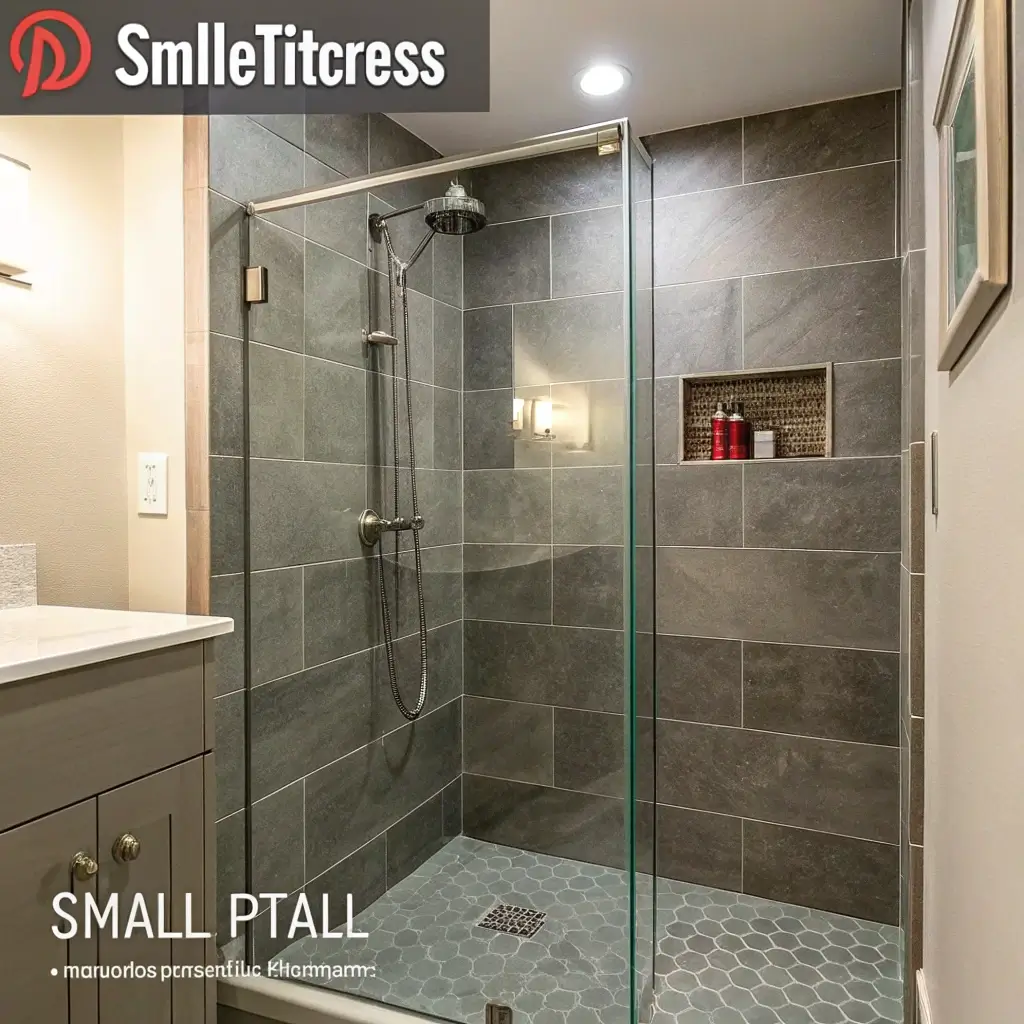
Frames are so last century. Okay, that’s a slight exaggeration, but frameless shower doors genuinely do revolutionize small bathroom aesthetics.
Traditional framed shower doors come with metal edges that create visual barriers. Even thin frames interrupt the eye’s journey across your bathroom. Frameless doors, however, appear to float—sheets of glass held in place by minimal hardware that nearly disappears.
The Elegance Factor
There’s something undeniably elegant about frameless glass. It reads as high-end, contemporary, and intentional. If you’re trying to create a spa-like atmosphere in a compact space, frameless doors get you there faster than almost any other single upgrade.
Considerations for frameless doors:
- Thicker glass is required (typically 3/8″ to 1/2″) for structural integrity
- Hardware quality matters enormously—don’t cheap out here
- Professional installation is usually recommended
- Expect to pay more upfront, but enjoy better longevity
Pivot vs. Swing
For small bathrooms, the door’s opening direction matters. Pivot doors rotate on a central point and can swing both ways, making them more flexible in tight spaces. Standard hinged doors swing one direction only, which can create clearance issues. Measure twice, order once.
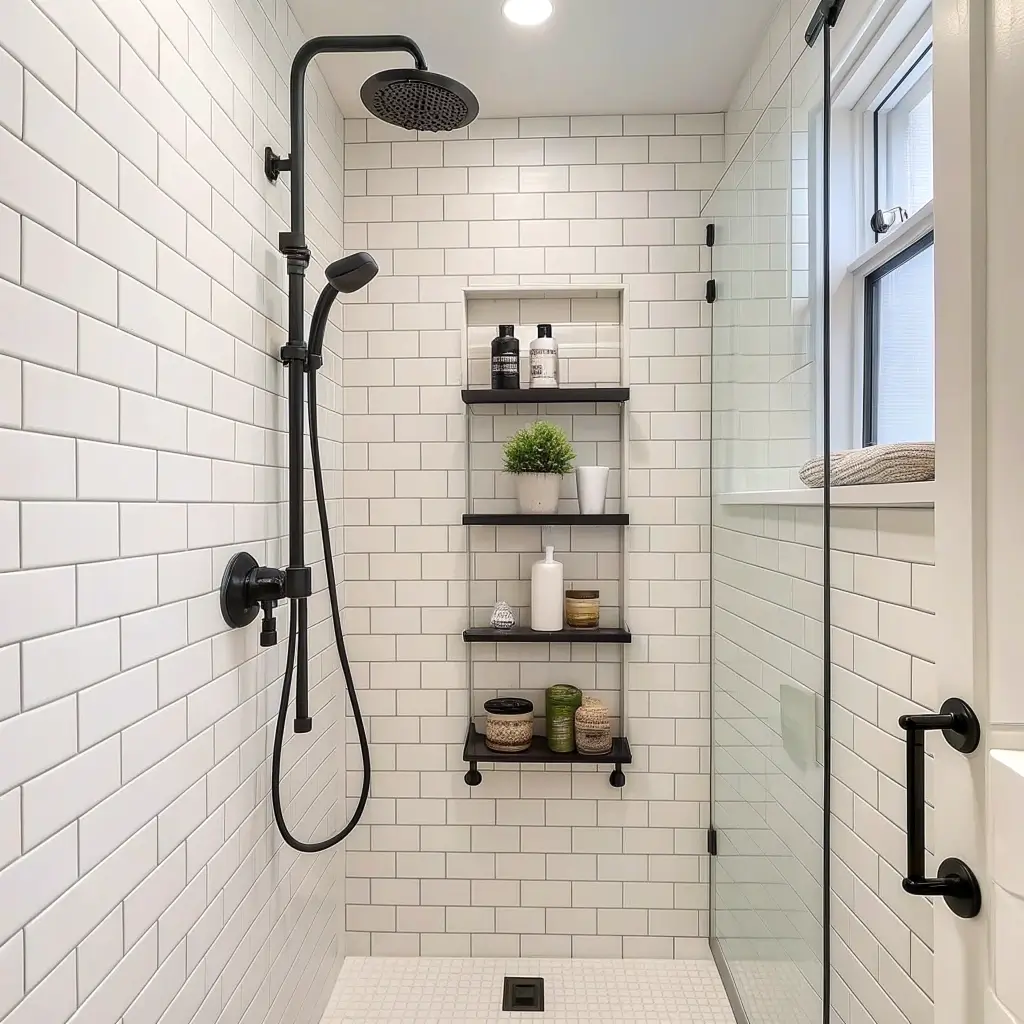
6. Shower Niches for Storage Optimization
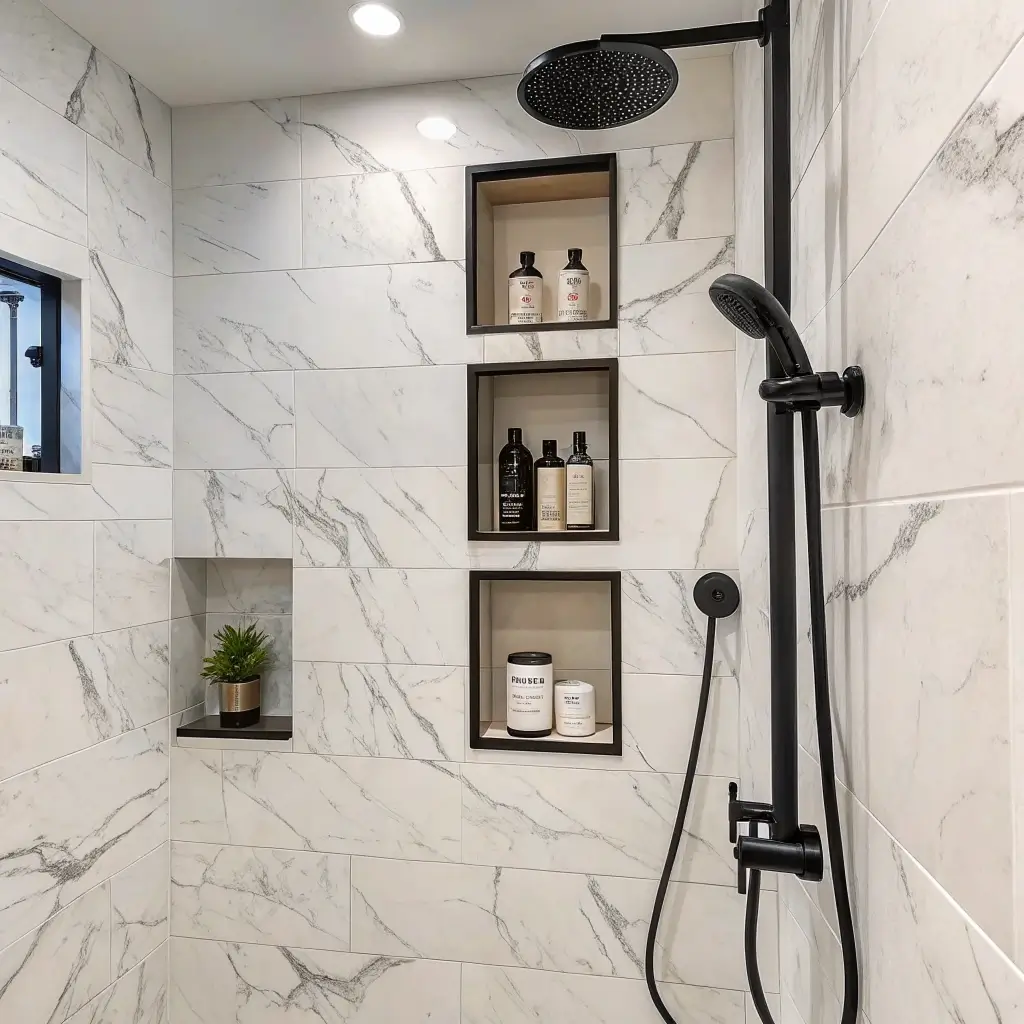
Can we talk about shower storage for a second? Because if your shower floor is covered in bottles balanced precariously against the wall, we have a problem. Shower niches are the sophisticated solution.
Recessed into the wall, shower niches provide storage without stealing any floor or interior shower space. Your shampoo, conditioner, body wash, and whatever other potions you collect can live neatly tucked away, visible but not intrusive.
Designing Effective Niches
The best niches share a few characteristics:
- Position between studs for easier installation (standard stud spacing gives you about 14.5″ of width)
- Tile inside the niche to match surrounding walls for a seamless look
- Include a slight slope on the bottom shelf for drainage
- Add accent tiles or lighting to transform functional storage into a design feature
I’ve seen niches ranging from simple single-shelf cutouts to elaborate multi-level installations with LED lighting. Your niche can be as basic or as fancy as your budget and ambition allow.
Avoid These Common Mistakes
- Placing niches too high (you shouldn’t need a ladder to reach your soap)
- Forgetting about waterproofing behind the niche
- Making niches too shallow for actual product bottles
- Ignoring the location of plumbing and wiring in the wall
FYI, those corner caddies that suction to the wall? They fall. They always fall. Eventually, dramatically, probably at 6 AM. Just build a proper niche.
Also Read: 10 Dreamy Small Coastal Bathroom Ideas for Modern Homes
7. Black Matte Small Shower Inspirations
Okay, I know what you’re thinking: “Black fixtures in a small space? Won’t that make it feel darker and smaller?” The short answer is no—when done right.
Black matte finishes create striking contrast and visual interest that actually draws the eye and defines the space. Rather than shrinking the room, bold black elements can make a small shower feel intentional and designed, not accidental.
The Psychology of Black Fixtures
Black works because it creates definition. In an all-white or light-colored bathroom, black fixtures become sculptural elements—art pieces, really—that give the eye something to focus on. This focus paradoxically makes the surrounding light space feel larger by comparison.
Pairing Black with Other Elements
The key to black fixtures in small spaces:
- Use white or light backgrounds to maintain brightness
- Keep black elements cohesive (don’t mix black and chrome)
- Balance black with warm woods or greenery to prevent coldness
- Consider black grout for a fully integrated look
Maintenance-wise, black matte shows water spots less than chrome but more than brushed nickel. It’s a trade-off, like everything in life.
Popular Black Fixtures for Small Showers
- Matte black showerheads (rainfall and handheld)
- Black drain covers and grates
- Black-framed glass enclosures (yes, some frames work beautifully)
- Black towel bars and hooks visible from the shower
8. Scandinavian-Style Small Showers
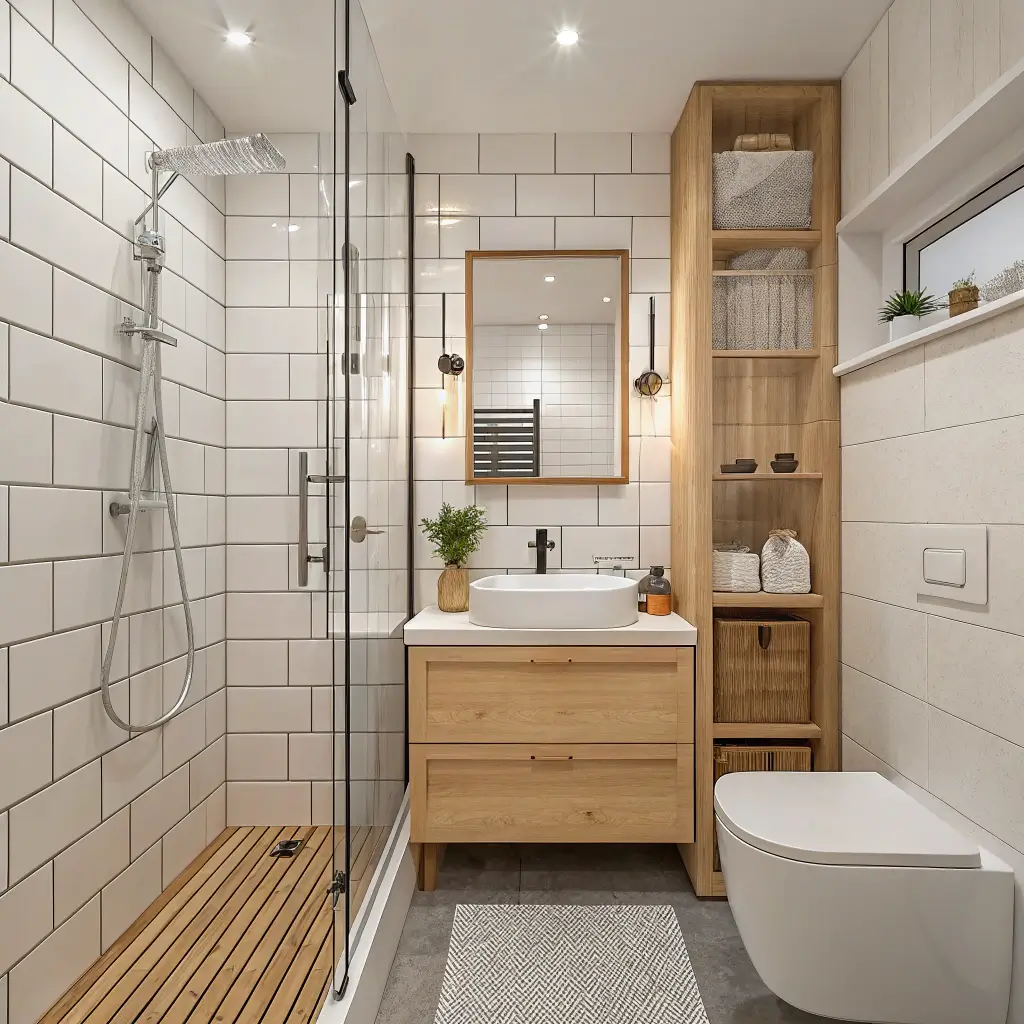
The Scandinavians figured out small-space living ages ago. When you spend half the year in darkness and cold, you learn to make interior spaces work. Scandinavian shower design emphasizes light, function, and natural materials.
Think blonde woods, clean white tiles, organic textures, and absolutely zero unnecessary clutter. This aesthetic isn’t about minimalism for minimalism’s sake—it’s about creating calm, purposeful spaces that feel restful rather than restrictive.
Core Scandinavian Design Elements
To achieve this look:
- Stick to a neutral palette: whites, grays, soft blues, natural wood tones
- Incorporate texture through materials: matte tiles, wooden accents, woven baskets
- Prioritize natural light: maximize windows, use light-reflecting surfaces
- Remove visual clutter: if it doesn’t serve a purpose, it doesn’t stay
Scandinavian Fixtures and Materials
The best fixtures for this aesthetic blend seamlessly into the design:
- Simple chrome or brushed nickel hardware
- White square or subway tiles
- Wooden shower mats or stools
- Plants (yes, plants in showers—it’s a thing, and it’s wonderful)
I added a small eucalyptus bundle to my showerhead last month, and honestly? It’s transformed my morning routine. The steam releases the oils, the bathroom smells like a spa, and I feel approximately 47% fancier than I probably am.
9. Mosaic Tile Accent Showers
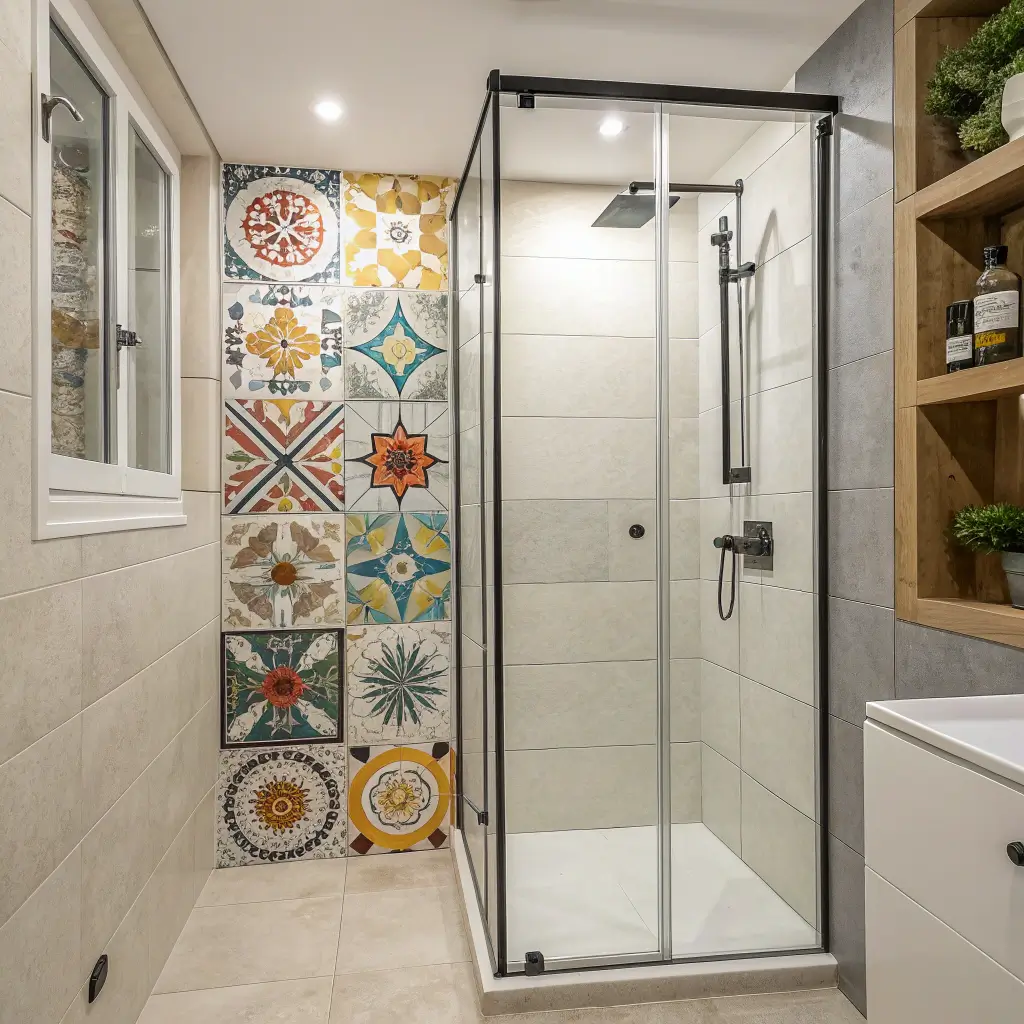
When you can’t expand your shower’s physical footprint, expand its visual interest. Mosaic tile accents add depth, pattern, and personality without taking up any extra space.
The beauty of mosaic tiles lies in their versatility. You can go geometric or organic, colorful or monochromatic, classic or contemporary. A single accent wall or stripe of mosaic tiles can transform a basic shower into a statement piece.
Strategic Mosaic Placement
In small showers, placement matters enormously:
- Vertical stripes draw the eye upward, making ceilings feel higher
- Horizontal bands can widen a narrow shower
- Full accent walls (usually the back wall) create focal points without overwhelming
- Niche interiors showcase mosaics without committing to large areas
Choosing the Right Mosaic
Consider both aesthetics and practicality:
- Glass mosaics reflect light beautifully but require careful installation
- Natural stone mosaics add organic texture but need more maintenance
- Ceramic mosaics offer durability and endless color options
- Mixed-material mosaics create interesting visual depth
One word of warning: tiny mosaic tiles mean more grout lines. More grout lines mean more cleaning. If you’re maintenance-averse, choose larger mosaic tiles or limit your mosaic areas to accent strips only.
Also Read: 15 Stunning Small Black Bathroom Ideas for Stylish Spaces
10. Sliding Door Shower Solutions
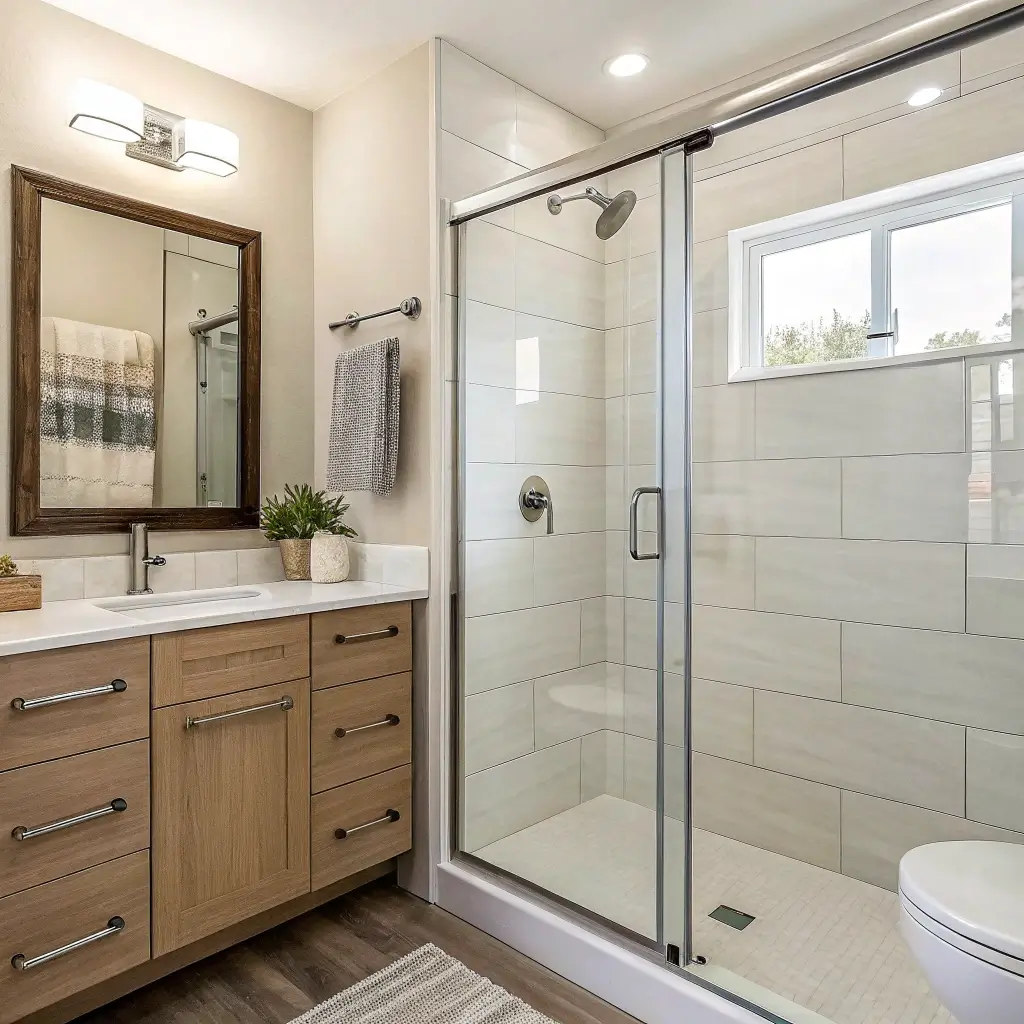
Remember what I said about door clearance being a small-bathroom nightmare? Sliding doors are your escape from that particular headache.
Unlike hinged doors that swing into the room (or into the shower), sliding doors glide along a track, requiring zero clearance space. This makes them perfect for bathrooms where every inch counts.
Types of Sliding Shower Doors
Several sliding options exist:
- Bypass doors: Two panels slide past each other, requiring at least double the width of your opening
- Single sliding doors: One panel slides along a fixed glass wall
- Barn-style doors: A single panel slides along an external track for a trendy, industrial look
Considerations for Small Spaces
For truly tight spaces, single sliding doors or barn-style options work best. Bypass systems, while functional, require wider openings to allow entry.
Hardware matters here, too. Cheap sliding door hardware sticks, squeaks, and eventually fails. Invest in quality rollers and tracks, and your future self will thank you during every smooth, silent slide.
Modern Sliding Door Aesthetics
Sliding doors have shed their dated, 1980s-motel reputation. Today’s options feature:
- Sleek, minimal hardware
- Frameless glass panels
- Black or brass accent tracks
- Soft-close mechanisms
11. Rainfall Showerheads for Tiny Spaces
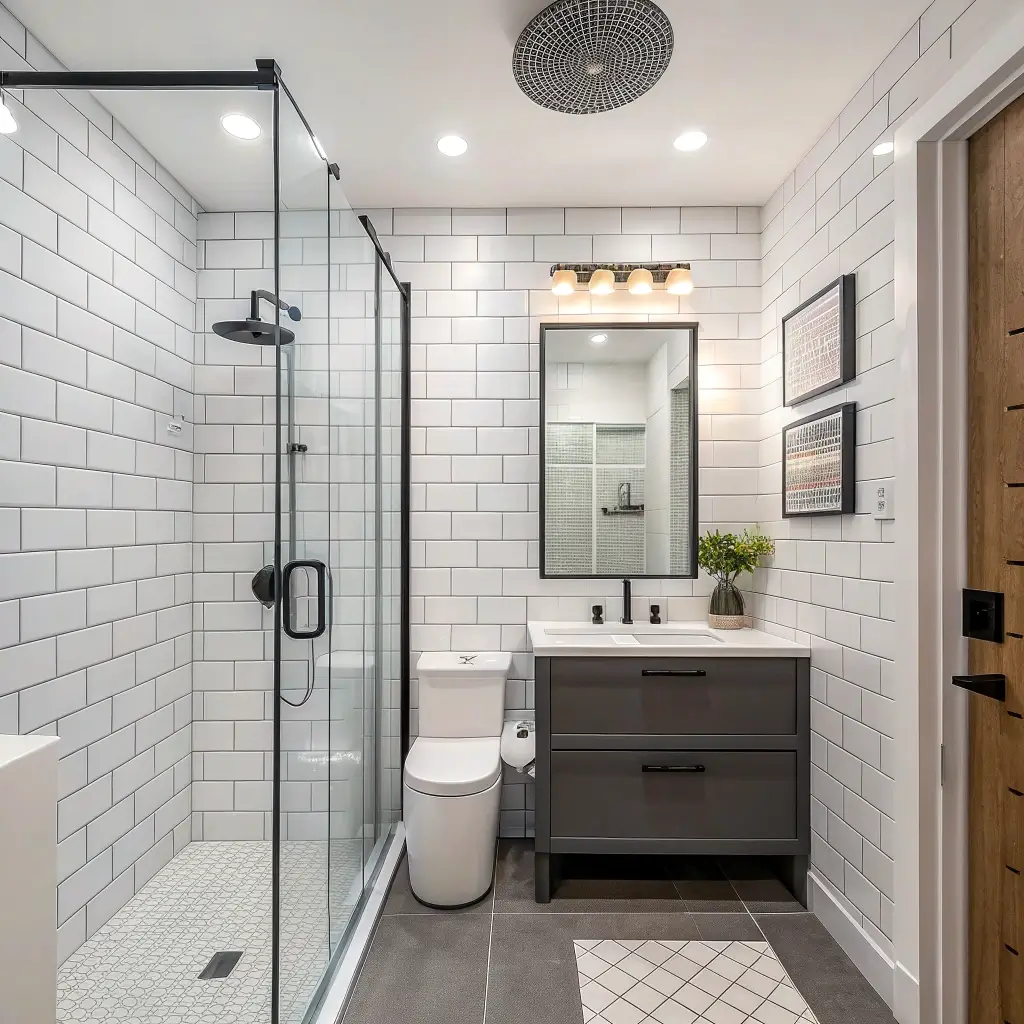
Here’s a surprise: rainfall showerheads can actually work beautifully in small showers. Many people assume these oversized heads belong exclusively in palatial master suites, but that’s simply not true.
Ceiling-mounted or low-profile wall-mounted rainfall heads deliver that luxurious, drenching experience without protruding into your limited shower space. You get the spa vibes without sacrificing elbow room.
Sizing Rainfall Heads for Small Showers
Not all rainfall heads are created equal:
- 8-10 inch heads work well in most small showers
- 6-inch heads suit very tight spaces while still delivering the effect
- Flush-mount options disappear into the ceiling for maximum headroom
Combining Rainfall with Handheld
In small showers, I recommend combining a rainfall head with a handheld wand. The rainfall provides ambiance and full-body coverage, while the handheld offers precision for rinsing, cleaning, and reaching tight spots. Best of both worlds. 🙂
Installation Height
For small showers (especially in homes with tall occupants), consider the mounting height carefully. Ceiling mounting works best when ceilings are at least 8 feet high. Lower ceilings might require wall-mounted options positioned at or just above head height.
12. Curved Corner Shower Designs
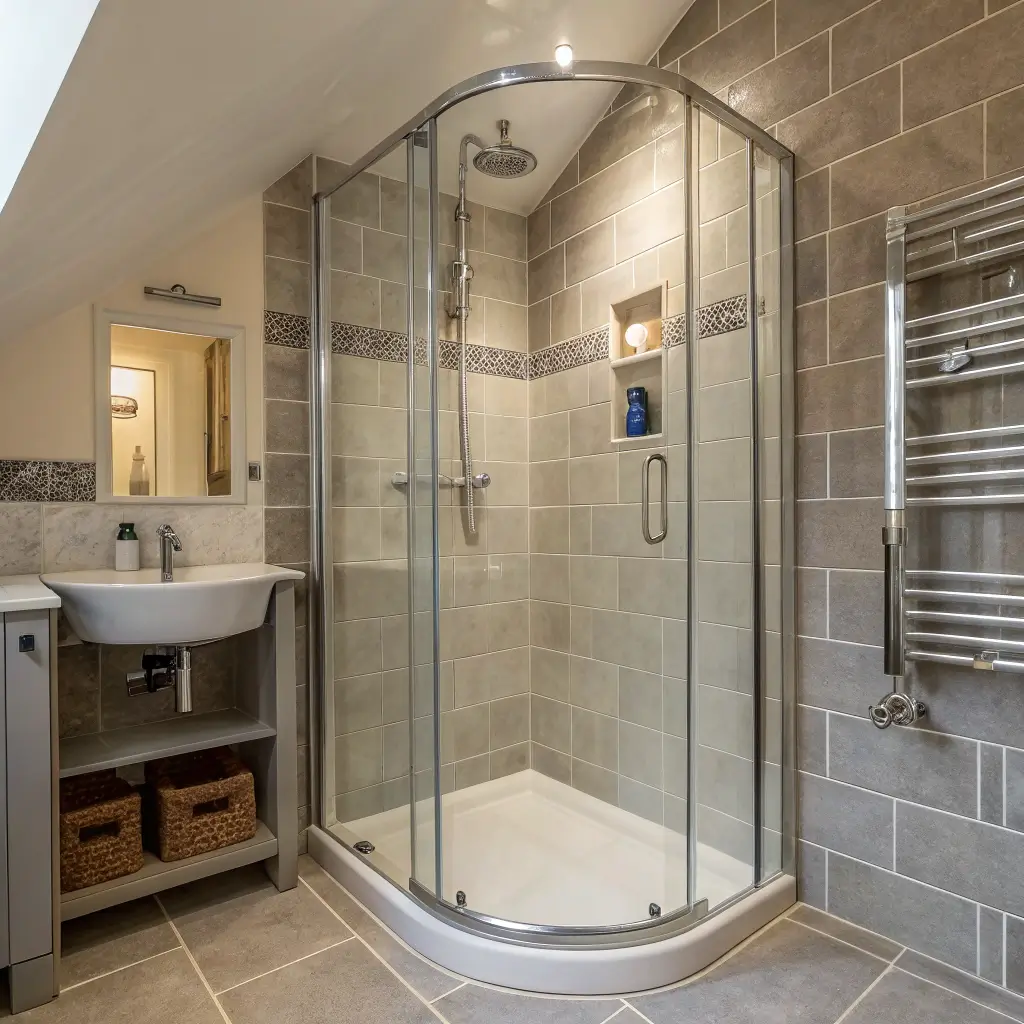
We’ve talked about corners already, but curved corner showers deserve their own spotlight. Unlike angular designs, curved showers feature rounded glass enclosures that soften the space and feel less boxed-in.
The curve creates a psychological sense of openness. Sharp angles feel constraining; gentle curves feel welcoming. It’s subtle, but it matters in tight quarters.
Practical Benefits of Curves
Beyond aesthetics:
- Curved doors slide along a track, eliminating swing clearance issues
- Rounded glass reflects light differently, creating interesting visual effects
- Curved designs feel larger than angular enclosures with identical square footage
- Softer aesthetics pair well with traditional and transitional designs
Sizing Curved Corner Showers
Standard curved corner showers typically measure 36″x36″ or 38″x38″—compact enough for small bathrooms while providing comfortable showering space. Custom curves can accommodate irregular corners or specific size requirements.
Matching Curves to Your Aesthetic
Curved showers work particularly well in:
- Traditional bathrooms with vintage influences
- Art Deco-inspired spaces
- Bathrooms with rounded mirrors or fixtures
- Soft, feminine aesthetic spaces
If your bathroom leans heavily modern or industrial, angular designs might suit better. Trust your gut.
Also Read: 15 Sophisticated Small Luxury Bathroom Ideas You’ll Love
13. Light-Colored Tile Small Showers
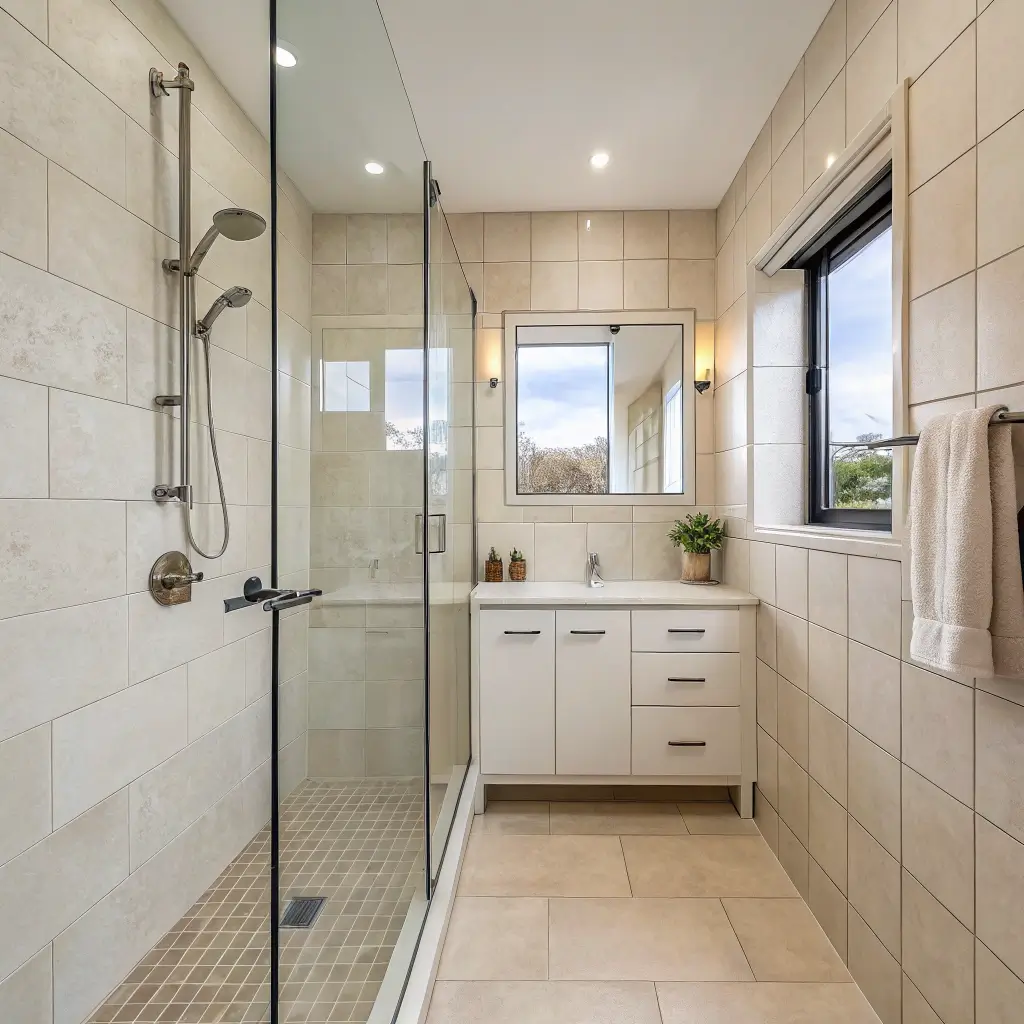
This one seems obvious, but it’s worth emphasizing: light colors expand spaces. In small showers, choosing white, cream, soft gray, or pale blue tiles maximizes the sense of openness.
Light colors reflect more light, making spaces feel brighter and larger. Dark colors absorb light, creating coziness that can tip into claustrophobia in truly tiny spaces.
Beyond Basic White
“Light-colored” doesn’t mean “boring.” Consider:
- Soft blush pinks for warmth
- Pale seafoam greens for spa vibes
- Warm creams and ivory for coziness without darkness
- Light gray with subtle veining (think Carrara marble look) for elegance
Texture Over Color
When working with a light palette, texture becomes your design tool. Consider:
- Three-dimensional tiles that create shadow patterns
- Matte finishes versus glossy
- Mixed tile sizes within the same color family
- Natural stone variations
I once visited a bathroom that used entirely white tiles but mixed matte and glossy finishes randomly throughout. The result was subtle, sophisticated, and far more interesting than it sounds on paper.
Practical Considerations
Light tiles show dirt less than you’d expect (dark tiles actually show water spots and soap residue more obviously). However, light grout will require more attention than dark grout. Consider a medium gray grout with light tiles for the best balance of aesthetics and maintenance.
14. Vintage-Style Compact Showers
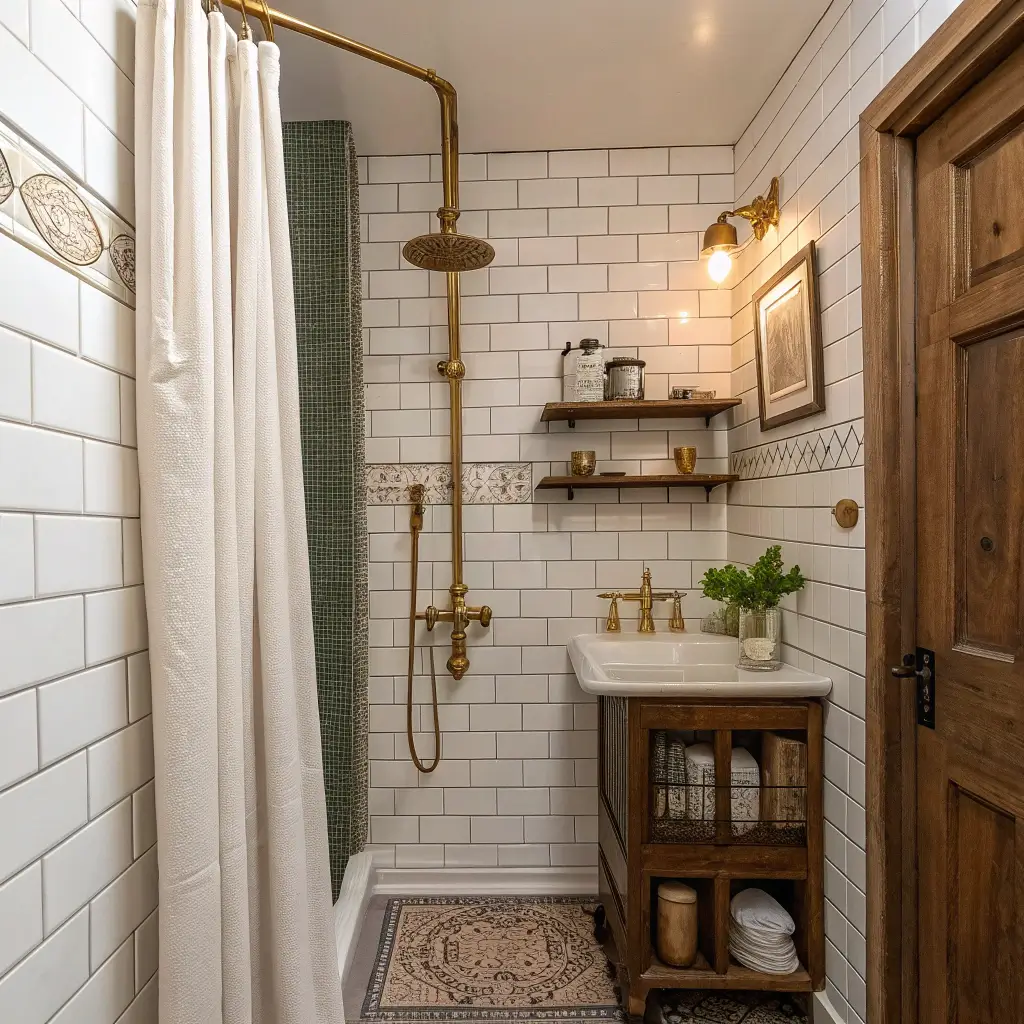
Who says small showers can’t have personality? Vintage-inspired design brings charm, character, and uniqueness to compact spaces that minimalism simply can’t match.
Think exposed pipe showers, subway tiles, cross-handle fixtures, and schoolhouse glass. These elements reference history while functioning perfectly for modern life.
Key Vintage Elements for Small Showers
To achieve authentic vintage vibes:
- Exposed thermostatic shower systems with visible pipes
- Classic 3×6 subway tiles in white or cream
- Cross-handle controls in chrome or unlacquered brass
- Penny round floor tiles in white or black-and-white patterns
- Simple, unfussy lines throughout
Balancing Vintage with Modern Convenience
The beauty of vintage-style showers lies in mixing old aesthetics with new performance. You can absolutely have a vintage-looking showerhead that delivers modern water pressure and temperature control. Don’t sacrifice function for form.
Avoiding “Costume” Design
The risk with vintage design is tipping into “costume” territory—where everything feels like a movie set rather than a real home. To keep it authentic:
- Mix vintage pieces with subtle modern elements
- Use genuine reclaimed hardware where possible
- Allow some imperfection (perfectly matching vintage feels fake)
- Focus on quality over quantity of vintage details
15. Space-Saving Shower Bench Ideas
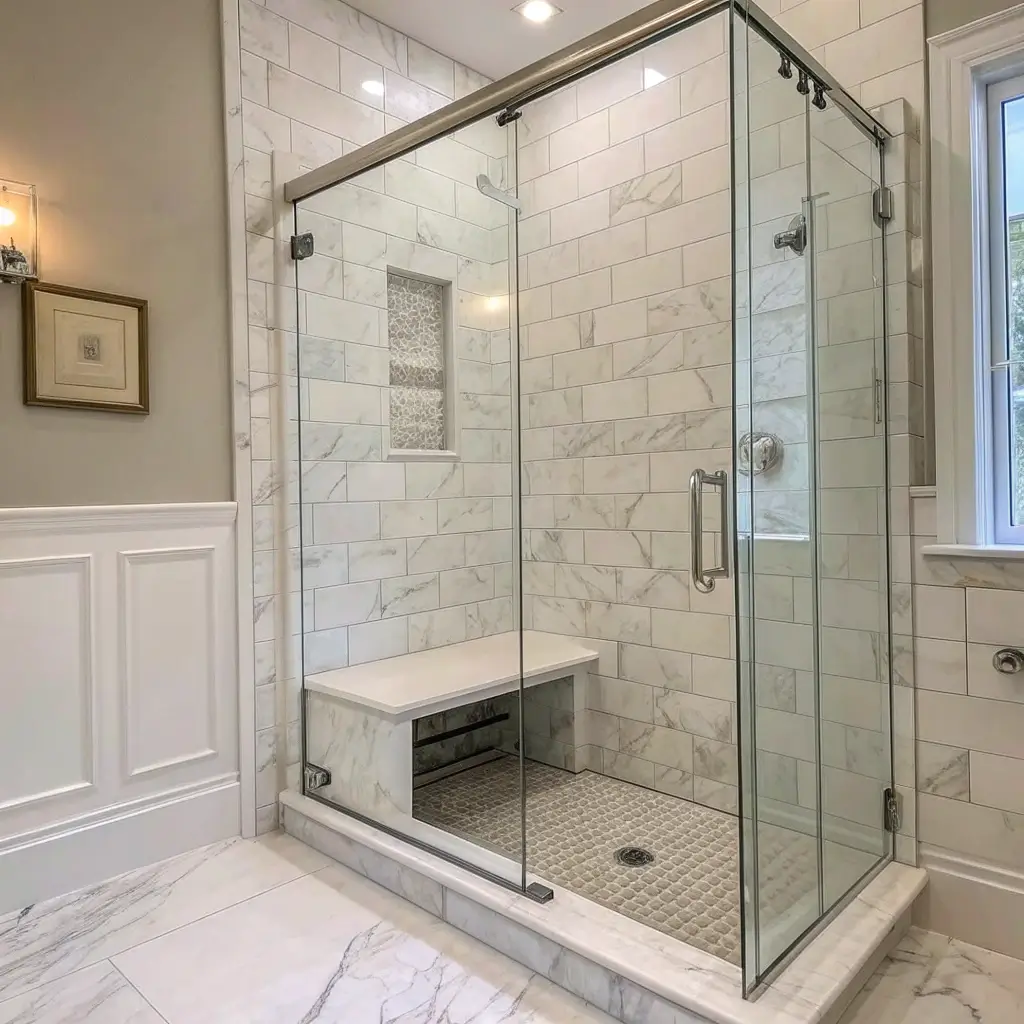
Finally, let’s address the most luxurious small-shower upgrade: a place to actually sit down.
Shower benches transform the shower experience from purely utilitarian to genuinely relaxing. But in small showers, traditional benches eat precious floor space. The solution? Space-saving designs that provide seating without sacrifice.
Types of Space-Saving Shower Benches
Several options work in tight spaces:
Fold-down benches: Wall-mounted seats that fold flat when not in use. These take up zero floor space when folded and provide full functionality when needed.
Corner benches: Triangular seats that tuck into corners, using space that would otherwise go unused. These can be built-in (tiled) or added as standalone teak stools.
Floating benches: Wall-mounted slab benches without visible supports create clean lines and don’t interfere with floor drainage.
Removable stools: Small teak or bamboo stools that can be moved in and out as needed. Not built-in, but incredibly practical.
Material Considerations
For wet environments, choose wisely:
- Teak: Naturally water-resistant, beautiful, durable, but pricey
- Solid surface: Seamless, easy to clean, works with modern aesthetics
- Tile-covered: Matches shower walls, feels integrated, but can be cold
- Bamboo: Sustainable, affordable, attractive, though less durable than teak
I added a fold-down teak bench to my own shower, and it’s become my favorite morning luxury. Five minutes sitting under warm water with a cup of coffee (yes, I’m that person) makes everything better. :/
Sizing and Placement
For space-saving benches:
- Aim for 12-15 inches deep for comfortable seating
- Mount at approximately 17-19 inches high (standard seat height)
- Position away from the main water stream unless you enjoy sitting in the direct spray
- Ensure adequate clearance for comfortable entry and exit
Wrapping It All Up
Small bathrooms don’t have to feel like punishment. With the right design choices, your compact shower can become a genuine highlight of your home—a space that feels intentional, elegant, and even luxurious.
From floating corners and glass enclosures to vintage charm and space-saving benches, the options for small shower design are far more extensive than most people realize. The key is understanding your specific constraints (dimensions, budget, existing architecture) and selecting elements that work within them.
My biggest piece of advice? Start with function, then layer in style. Figure out what you actually need from your shower—storage, seating, specific fixtures—before getting swept up in aesthetic trends. A beautiful shower that doesn’t work for your actual life will disappoint you every single morning.
And remember, small spaces force creativity. Some of the most stunning bathrooms I’ve ever encountered were compact by necessity and gorgeous by design. Your small bathroom isn’t a limitation—it’s an opportunity to prove that great design transcends square footage.
Now go forth and transform that tiny shower into something extraordinary. Your mornings will thank you.