
9 Creative Small Open Plan Kitchen Dining Living Ideas and Designs
Let me guess—you’ve got a compact space that needs to work overtime, and you’re tired of scrolling through Pinterest boards filled with mansions that have zero relevance to your actual square footage. Yeah, I’ve been there too.
When I first moved into my small apartment, I stared at my cramped kitchen-dining-living situation and thought, “How on earth am I supposed to make this work without it looking like a cluttered disaster?” Spoiler alert: I figured it out, and now I’m obsessed with helping others do the same.
Here’s the thing about small open plan spaces—they’re actually a blessing in disguise. Sure, you don’t have endless room to play with, but that limitation forces you to get creative.
And honestly? Some of the most stunning interiors I’ve ever seen are compact open plan layouts that pack serious design punch into every square inch.
So grab your coffee (or wine, no judgment here), and let’s explore ten killer ideas that’ll transform your small open plan kitchen dining living area into something genuinely impressive.
1. Minimalist Scandinavian Open Plan
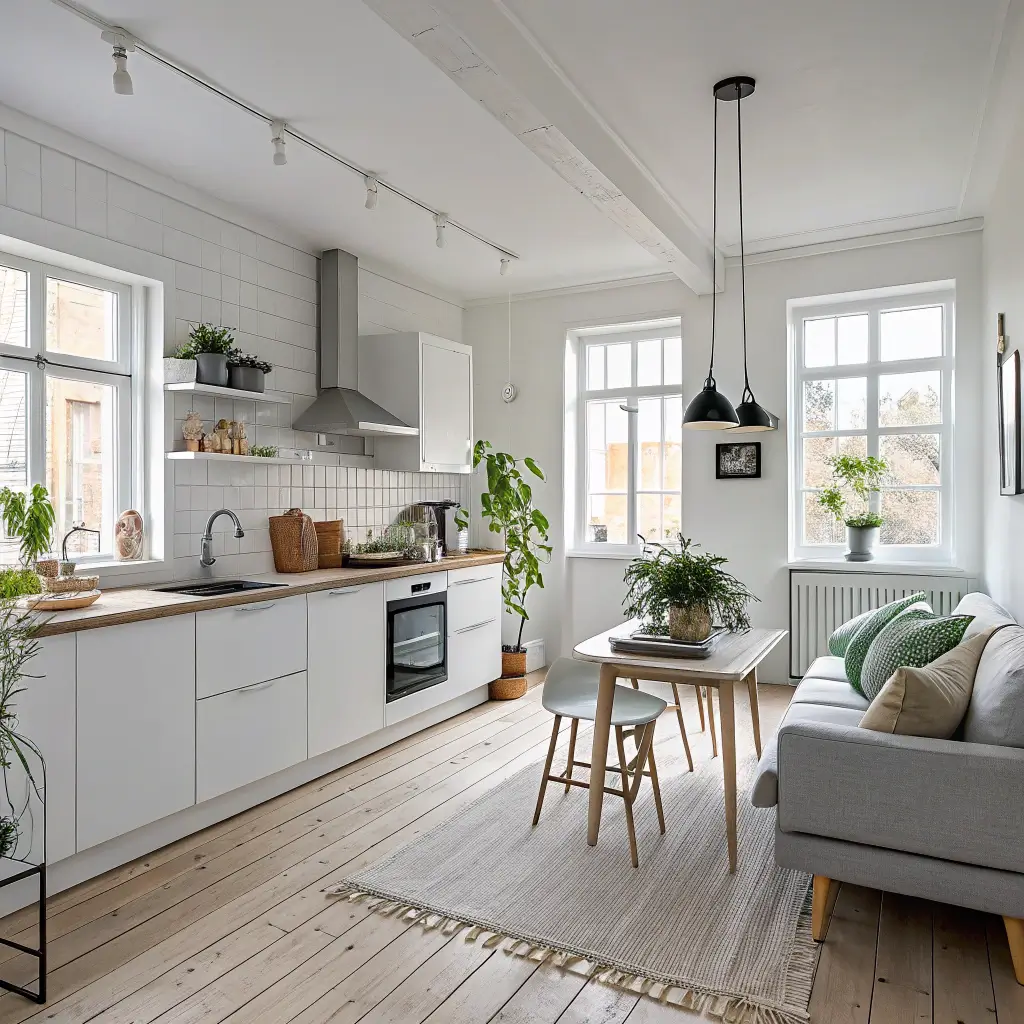
There’s a reason Scandinavian design has dominated the interior world for years—it just works, especially in small spaces. The Scandinavian approach strips everything back to essentials while somehow making every corner feel intentional and beautiful.
Why Scandinavian Design Thrives in Compact Spaces
The magic of Scandi style lies in its “less is more” philosophy. When you’re working with limited square footage, clutter becomes your worst enemy. Scandinavian design eliminates that problem by focusing on functionality wrapped in understated elegance.
Think clean lines, neutral color palettes, and furniture that serves a purpose. Nothing sits in a Scandinavian space just because it looks pretty—every piece earns its spot.
Key Elements to Incorporate
- Light wood tones (oak, birch, and ash are your best friends)
- White walls to maximize natural light reflection
- Minimal decorative items with high visual impact
- Cozy textiles like wool throws and linen curtains
- Functional storage solutions that double as design features
Making It Work in Your Space
I transformed my own living area using Scandinavian principles, and the difference was night and day. The trick? Invest in quality over quantity. Instead of filling my space with cheap furniture pieces, I saved up for a gorgeous oak dining table that seats four comfortably.
Pair your furniture with soft, muted colors—think warm whites, pale grays, and subtle blush tones. Add warmth through natural textures like jute rugs and ceramic vases. The result feels calm, collected, and surprisingly spacious.
2. Compact Modern Multifunctional Layout

Here’s where things get clever. Modern multifunctional layouts embrace the reality that your small open plan space needs to work harder than traditional rooms. And honestly? That’s where the fun begins.
The Art of Dual-Purpose Design
Ever wondered why some tiny apartments feel incredibly spacious while others feel cramped? The secret usually comes down to multifunctional furniture and smart layout planning.
Your dining table can double as a workspace. Your kitchen island can provide extra seating. Your living room sofa can hide storage compartments. When every piece serves multiple purposes, you essentially multiply your usable space without adding square footage.
Smart Furniture Choices
- Extendable dining tables that collapse when you need floor space
- Nesting coffee tables perfect for small gatherings
- Storage ottomans that hide blankets and games
- Bar carts that work as kitchen overflow and entertainment stations
- Wall-mounted desks that fold flat when not in use
Layout Tips That Actually Work
Start by identifying your traffic flow. People need clear pathways between zones without bumping into furniture corners (trust me, I learned this the hard way with a bruised shin and some choice words).
Position your largest furniture pieces first—usually the sofa and dining table—then work around them. Leave at least 36 inches of walking space in main traffic areas. Use area rugs to visually define different zones without physical barriers.
3. Cozy Neutral Toned Space
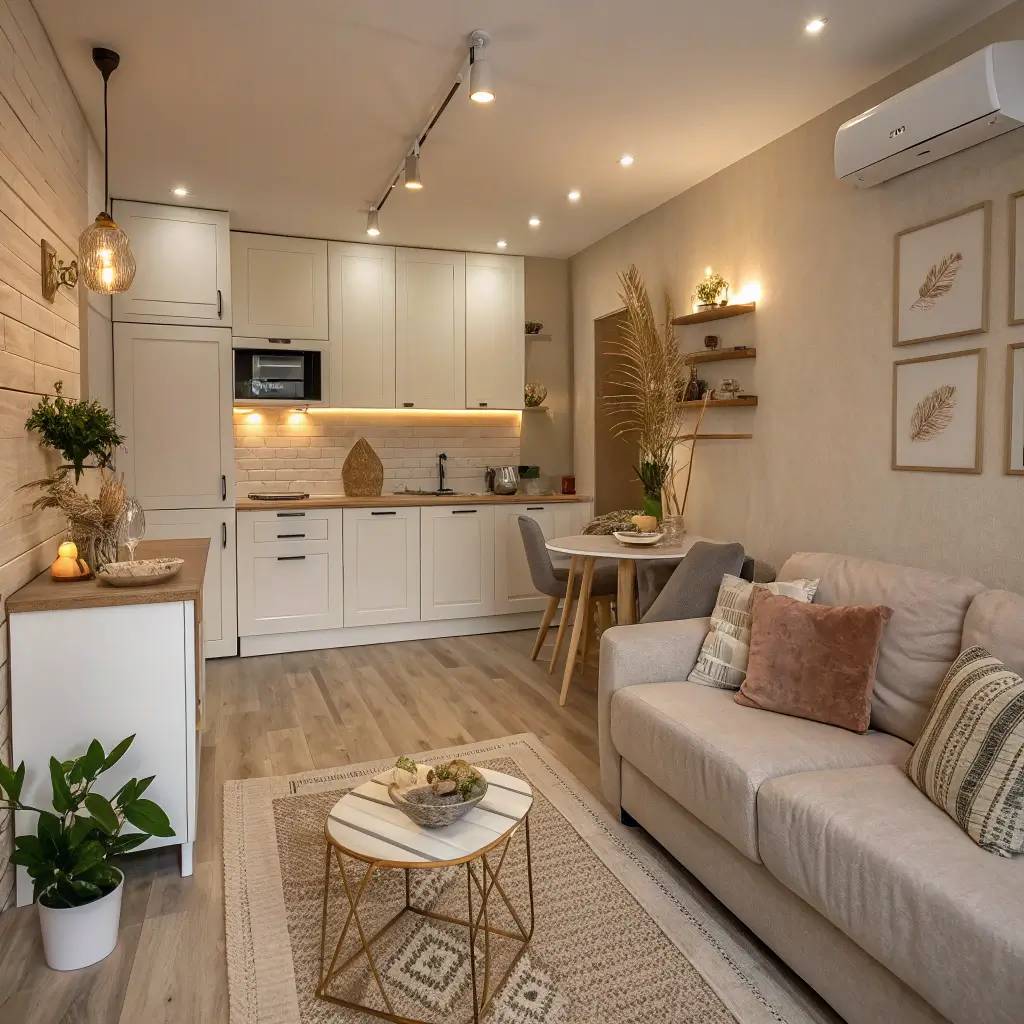
Some people crave bold colors and dramatic statements. Others—like myself on most days—want to come home to a space that feels like a warm hug. That’s where cozy neutral toned design shines.
Why Neutral Never Gets Boring
Let me debunk a myth right now: neutral doesn’t mean bland. A well-designed neutral space has layers, depth, and personality. The trick lies in mixing different shades, textures, and materials within your neutral palette.
Warm neutrals like cream, taupe, camel, and terracotta create inviting atmospheres that work year-round. Cool neutrals like dove gray and greige offer sophisticated backdrops for statement furniture pieces.
Building Your Cozy Neutral Foundation
Start with your walls—I recommend warm white or soft greige for maximum versatility. These shades bounce light beautifully while avoiding the sterile hospital vibe that pure white sometimes creates.
For furniture, mix different neutral tones to add visual interest:
- A cream linen sofa paired with taupe dining chairs
- Walnut wood dining table against lighter oak flooring
- Natural stone countertops complementing warm wood cabinetry
Texture Is Your Secret Weapon
Without bold colors, texture does the heavy lifting. Layer chunky knit throws over your sofa. Add woven baskets for storage. Choose bouclé or velvet upholstery for depth. Incorporate matte ceramic accessories alongside smooth glass pieces.
The combination of these textures creates a space that feels rich and intentional despite its restrained color palette.
Also Read: 12 Chic Open Floor Plan Kitchen Dining Living Ideas and Open Concept Magic
4. Industrial Chic Small Open Plan
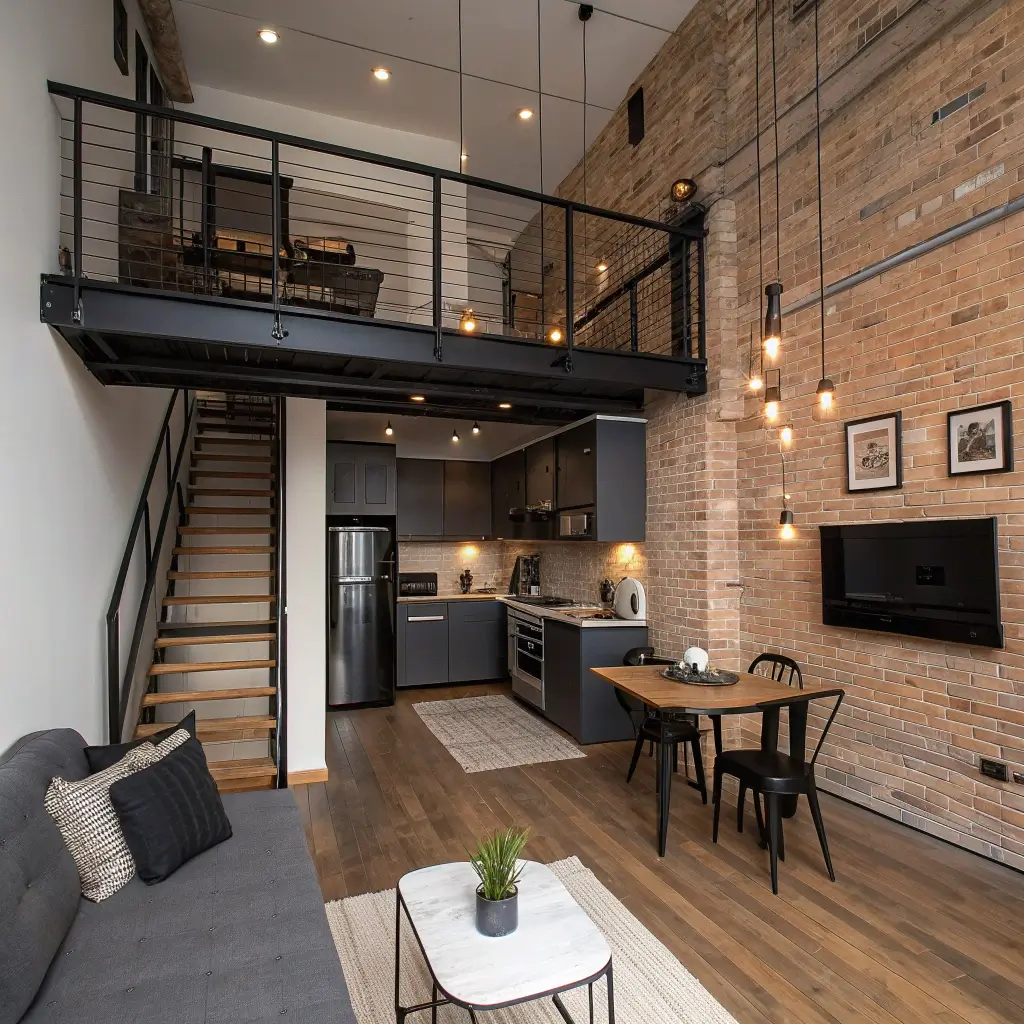
Ready for something with a bit more edge? Industrial chic design brings raw, urban energy into your home while maintaining that open, airy feeling small spaces desperately need.
The Industrial Appeal
Industrial style emerged from converted warehouses and factory spaces—environments where exposed structural elements became design features rather than flaws. This aesthetic translates beautifully to modern apartments because it embraces honesty in materials.
You’re not hiding pipes or ductwork; you’re celebrating them. You’re not covering brick walls; you’re showcasing them. This transparency creates visual interest without consuming precious floor space.
Essential Industrial Elements
- Exposed brick walls (or realistic brick wallpaper if you’re renting)
- Black metal fixtures and furniture frames
- Raw wood surfaces with visible grain
- Edison bulb or filament lighting
- Concrete accents or countertops
- Leather seating in cognac or black tones
Balancing Raw With Refined
Here’s where many people go wrong with industrial design—they commit too hard to the raw aesthetic and end up with a space that feels cold or unfinished. FYI, the secret to successful industrial chic is balancing hard materials with soft textures.
Pair that metal-framed dining table with comfortable upholstered chairs. Soften exposed brick with flowing linen curtains. Add warmth through plants, books, and personal objects that tell your story.
I once visited a friend’s industrial-style apartment that felt more like a construction site than a home. Don’t be that person. Industrial chic should feel intentional and livable, not abandoned.
5. Sleek White & Wood Combo

This combination has stood the test of time for good reason—it’s versatile, timeless, and incredibly effective at making small spaces feel larger than they are.
The Psychology Behind White & Wood
White expands visual boundaries. It reflects light, blurs edges, and tricks your brain into perceiving more space than actually exists. Wood adds warmth and prevents that all-white sterility from taking over.
Together, these elements create balanced environments that feel both spacious and inviting. It’s like having your cake and eating it too (and honestly, isn’t that the goal?).
Choosing Your Wood Tones
Different wood tones create dramatically different vibes:
- Light oak or ash maintains the airy, Scandinavian feel
- Walnut or teak adds sophistication and warmth
- Reclaimed or weathered wood brings character and sustainability
- Bamboo offers eco-friendly options with unique grain patterns
I personally lean toward mid-tone woods in small spaces—they’re warm enough to feel cozy but light enough not to visually weigh down the room.
Application Ideas
Consider a white kitchen with warm wood open shelving instead of upper cabinets. The wood adds visual interest while the open design maintains that spacious feeling.
For your dining area, try a natural wood table against white dining chairs—this combination works particularly well in light-filled spaces. In the living zone, wood accent walls behind white sofas create stunning focal points without overwhelming the room.
6. Color Pop Small Open Plan
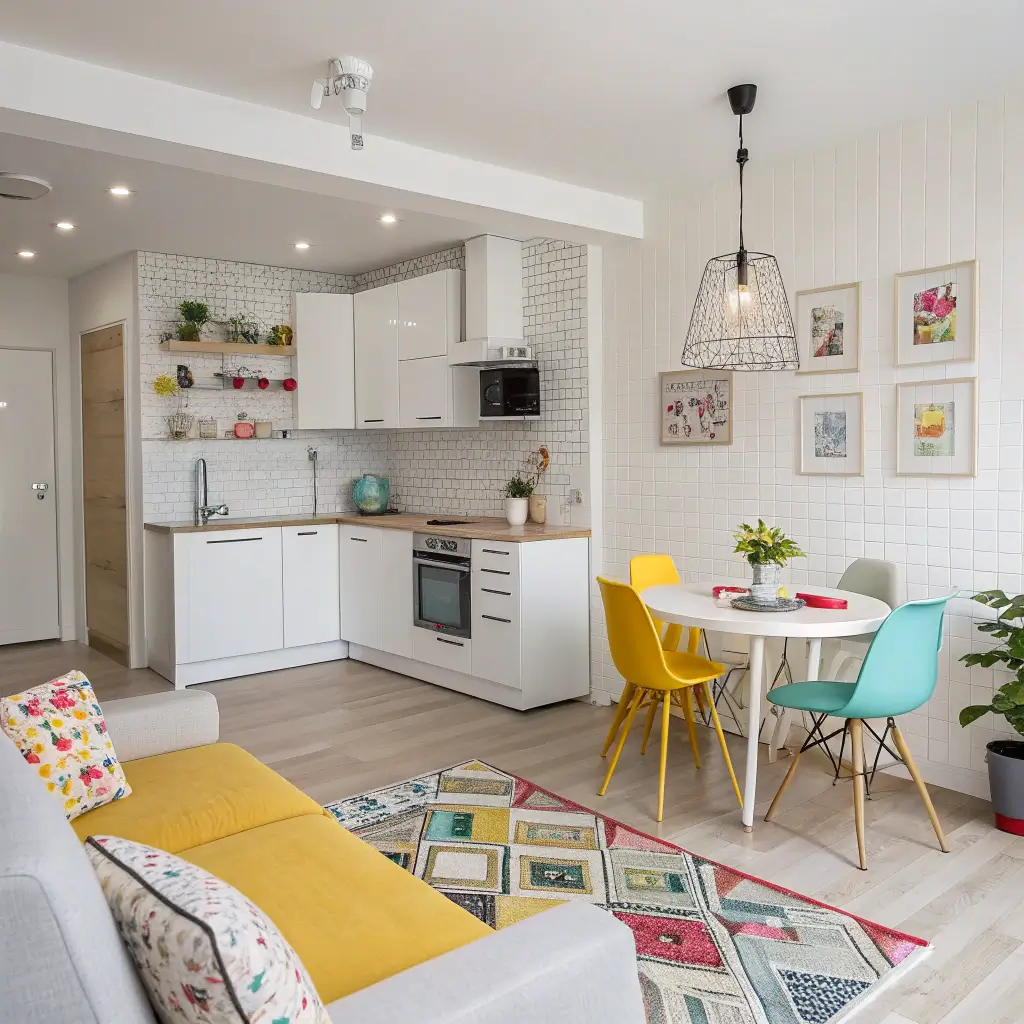
Okay, I know I just spent several sections praising neutrals and whites, but sometimes you need personality that punches you in the face (in the best way possible). Enter the color pop approach.
Strategic Color in Small Spaces
The key word here is strategic. You’re not painting every wall a different bold color—that would be chaotic and visually exhausting. Instead, you’re choosing one or two accent colors and deploying them thoughtfully throughout your space.
This approach lets you maintain that light, spacious base while injecting serious personality. Your space stays open and airy but also becomes uniquely yours.
Choosing Your Pop Colors
Consider these popular (and incredibly effective) options:
- Terracotta for earthy warmth with contemporary edge
- Deep teal for sophisticated moodiness
- Mustard yellow for cheerful energy
- Forest green for organic, grounding vibes
- Coral or blush for soft warmth with impact
Where to Add Color Without Overwhelming
- Feature walls behind dining areas or living room focal points
- Kitchen island painted in a bold contrasting shade
- Statement furniture like a colorful sofa or dining chairs
- Art and accessories that tie the color story together
- Cabinet fronts or open shelving interiors
IMO, the dining chair approach works brilliantly in small open plans. Six colorful chairs around a neutral table become an instant conversation piece without overwhelming your entire space. Plus, chairs are relatively easy to swap out when you inevitably get bored (because let’s be real, we all do eventually).
Also Read: 10 Practical Semi Open Kitchen Ideas with Smart Storage
7. Rustic Farmhouse Open Concept
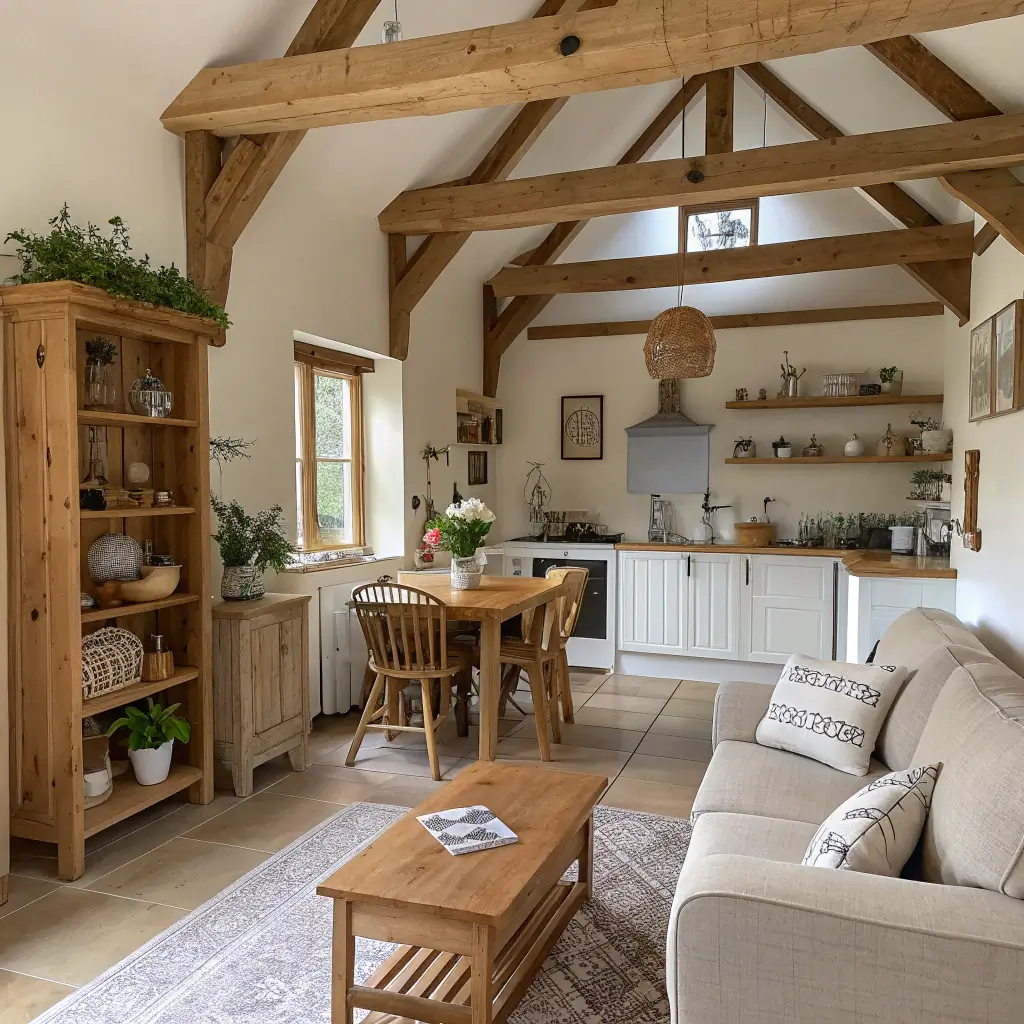
There’s something deeply comforting about farmhouse style—it feels lived-in, authentic, and welcoming in ways that more polished aesthetics sometimes miss.
Modern Farmhouse vs. Traditional Farmhouse
Let’s clarify something important: we’re talking modern farmhouse here, not your grandmother’s country kitchen (though that has its own charm). Modern farmhouse takes rustic elements and refines them for contemporary living.
You get the warmth and character of traditional farmhouse without the overwhelming busy-ness that can make small spaces feel cluttered.
Core Farmhouse Elements
- Shiplap or beadboard accent walls
- Apron-front sinks in the kitchen
- Distressed wood furniture and accents
- Metal fixtures in matte black or oil-rubbed bronze
- Open shelving with collected dishware
- Woven baskets and natural fiber textiles
- Fresh flowers and greenery
Making Farmhouse Work in Compact Spaces
The challenge with farmhouse style in small open plans is avoiding the “antique shop explosion” effect. Edit ruthlessly. Choose quality pieces that genuinely contribute to the farmhouse vibe rather than filling every surface with trinkets.
I recommend picking two or three signature farmhouse elements and letting them shine. Maybe that’s a gorgeous reclaimed wood dining table paired with simple white chairs and one statement pendant light. The restraint actually enhances the farmhouse feel because it allows each piece to breathe.
8. Space-Saving Modular Furniture Design
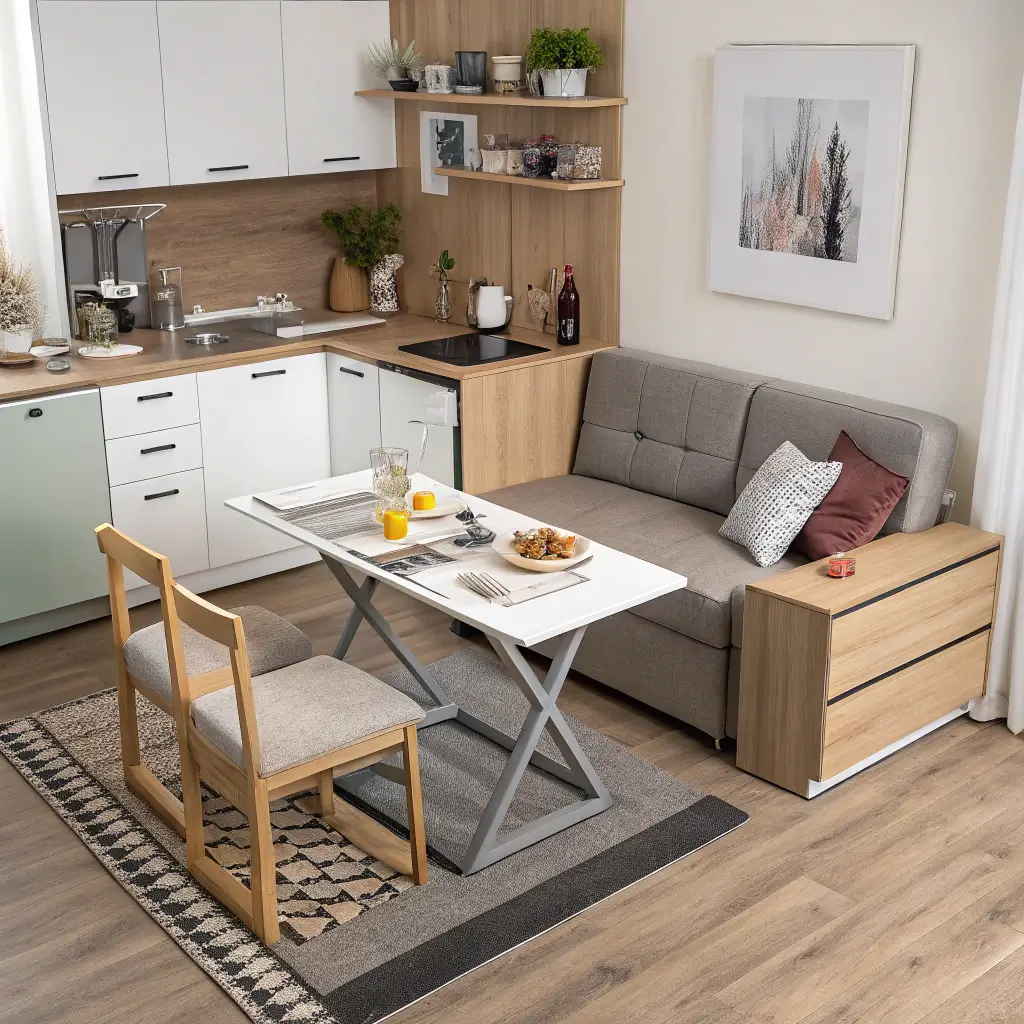
Now we’re getting into seriously smart territory. Modular furniture was practically invented for small open plan living, and the options available today are genuinely impressive.
What Makes Furniture Modular?
Modular furniture consists of individual components that you can arrange, rearrange, and configure to suit your changing needs. Think sectional sofas that break apart, shelving systems that expand, and dining sets that transform.
The beauty lies in flexibility. Your space can adapt to different activities—hosting dinner parties, working from home, or just lounging with Netflix—without requiring entirely different furniture sets.
Top Modular Picks for Open Plan Living
For the Living Area:
- Modular sectional sofas that reconfigure based on need
- Nesting tables that stack or spread out
- Modular shelving systems (like IKEA’s EKET or more premium options)
For the Dining Zone:
- Extending tables with hidden leaf mechanisms
- Stackable chairs that store compactly
- Benches with hidden storage compartments
For the Kitchen:
- Rolling kitchen islands that move where needed
- Magnetic knife strips and wall-mounted pot racks
- Modular drawer organizers that adapt to contents
Investment Considerations
Quality modular furniture often costs more upfront, but the cost-per-use over time makes it worthwhile. A modular sofa that lasts fifteen years and adapts to three different apartments beats buying new furniture every time you move.
Do your research before purchasing. Look for solid construction, easy-to-operate mechanisms, and styles that’ll age gracefully. Trendy modular pieces might seem appealing now but could feel dated within a few years.
9. Bright & Airy Open Plan
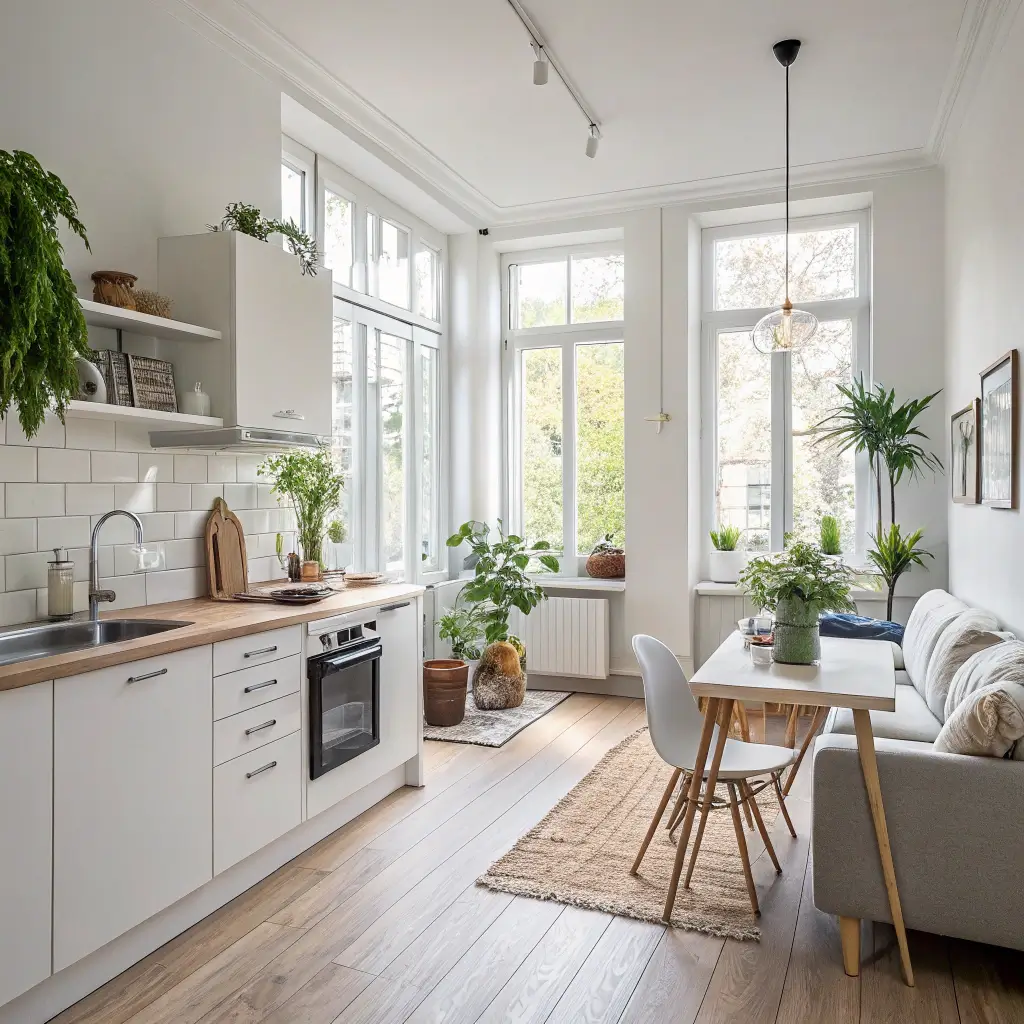
If your small space suffers from limited natural light (curse those north-facing windows), this approach prioritizes maximizing every ray of sunshine that enters your home.
Strategies for Enhancing Natural Light
Window treatments matter enormously. Heavy curtains that block light are out—lightweight sheers or no window treatments at all become your go-to. If privacy concerns exist, consider frosted window film on lower panes.
Mirrors strategically placed opposite windows bounce light deeper into your space. I positioned a large mirror directly across from my only living room window, and the difference genuinely surprised me. The room felt nearly twice as bright.
Color Choices That Amplify Light
- Bright white reflects the most light (obviously)
- Pale yellow or cream adds warmth while maintaining brightness
- Soft pastels work beautifully in light-filled spaces
- Light gray offers subtle sophistication without absorbing light
Avoid anything too dark on large surfaces—save those moody tones for small accents if you truly love them.
Furniture and Flooring Considerations
Choose furniture with visual lightness:
- Pieces with exposed legs (lifts the eye and reveals floor)
- Glass or acrylic coffee tables (nearly invisible)
- Light-colored upholstery
- Slender metal frames rather than chunky wood
For flooring, light-toned wood or tile keeps things airy. If you’ve inherited dark floors, strategically placed light-colored rugs can help enormously.
Also Read: 10 Chic Modern Kitchen Design Open Concept Ideas with Sleek Finishes
Bringing It All Together
So here we are—nine distinct approaches to transforming your small open plan kitchen dining living space into something genuinely special. The question now is: which direction speaks to you?
Maybe you’re drawn to the calm simplicity of Scandinavian minimalism. Perhaps the raw edge of industrial chic matches your personality. Or maybe you’re ready to commit to bold color pops that make your heart sing every time you walk through the door.
Here’s my honest advice after years of experimenting with small space design: don’t feel pressured to commit entirely to one style. The most interesting spaces often blend elements from different approaches. Take the functionality of modular furniture, mix it with farmhouse warmth, and add contemporary color choices—suddenly you’ve got something uniquely yours.
The beautiful thing about small open plan living is that changes are relatively affordable and manageable. Unlike renovating a massive home, updating your compact space doesn’t require selling a kidney. You can experiment, evolve, and refine your approach over time.
Start with your foundation—wall colors and major furniture pieces—then layer in personality through accessories, textiles, and art. Trust your instincts about what feels right. And remember, your home should work for YOUR life, not some imaginary lifestyle from a magazine spread.
Now go forth and design something amazing. Your small space is waiting to reach its full potential, and honestly? I’m a little jealous of the creative journey you’re about to begin.