
10 Modern Kitchen Living Room Open Concept Ideas and Layout Secrets
Okay, let’s talk about something that’s been absolutely dominating my Pinterest boards and honestly, my entire brain lately—open concept kitchen living room designs.
You know that feeling when you walk into someone’s home and the space just breathes? Where the kitchen flows seamlessly into the living area, and suddenly you’re not stuck behind a wall while everyone else has fun? Yeah, that’s the magic we’re chasing here.
I’ve spent the better part of three years renovating my own space, making every mistake in the book (seriously, don’t get me started on my first island placement disaster), and now I’m obsessed with helping others nail their open concept dreams without the headaches I endured.
Whether you’re working with a sprawling suburban home or a cozy city apartment, these ten ideas will spark something in you. Let’s get into it.
1. Minimalist Open Concept Kitchen Living Room
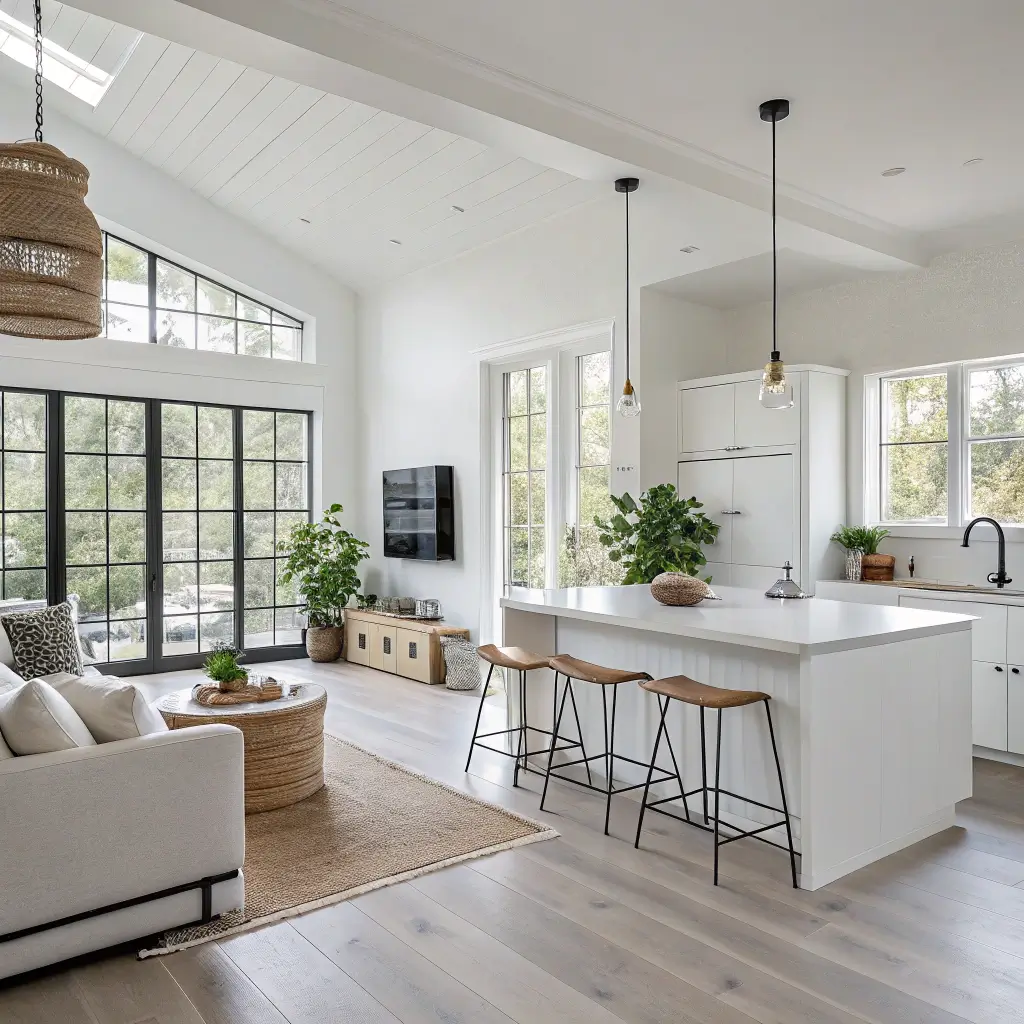
There’s something incredibly liberating about walking into a space where everything has a purpose and nothing screams for attention. Minimalist open concept designs strip away the noise and let you actually live in your home instead of constantly maintaining it.
The Core Philosophy
Minimalism isn’t about having less stuff—it’s about making room for what matters. In an open concept layout, this philosophy becomes even more critical because clutter in one zone visually pollutes the entire space. Your kitchen mess? Yeah, everyone on the couch can see it now.
The beauty here lies in clean lines, neutral palettes, and intentional negative space. Think white or light gray cabinetry, handleless drawers, and integrated appliances that disappear into the architecture. Your refrigerator shouldn’t be the focal point of your entire living space, right?
Making It Work
Here’s what I’ve learned about pulling off minimalist open concept successfully:
- Hidden storage is your best friend—invest in deep drawers, pull-out pantries, and closed cabinetry
- Choose one statement piece per zone (maybe a sculptural pendant light over the island)
- Stick to a maximum of three materials—perhaps white quartz, light oak, and matte black hardware
- Maintain consistent flooring throughout to unify the space visually
The secret sauce? Ruthless editing. Every item you bring into this space needs to earn its spot. That random collection of novelty mugs? Time for them to find a new home in a closed cabinet—or, you know, someone else’s house.
2. Rustic Farmhouse Open Concept Layout
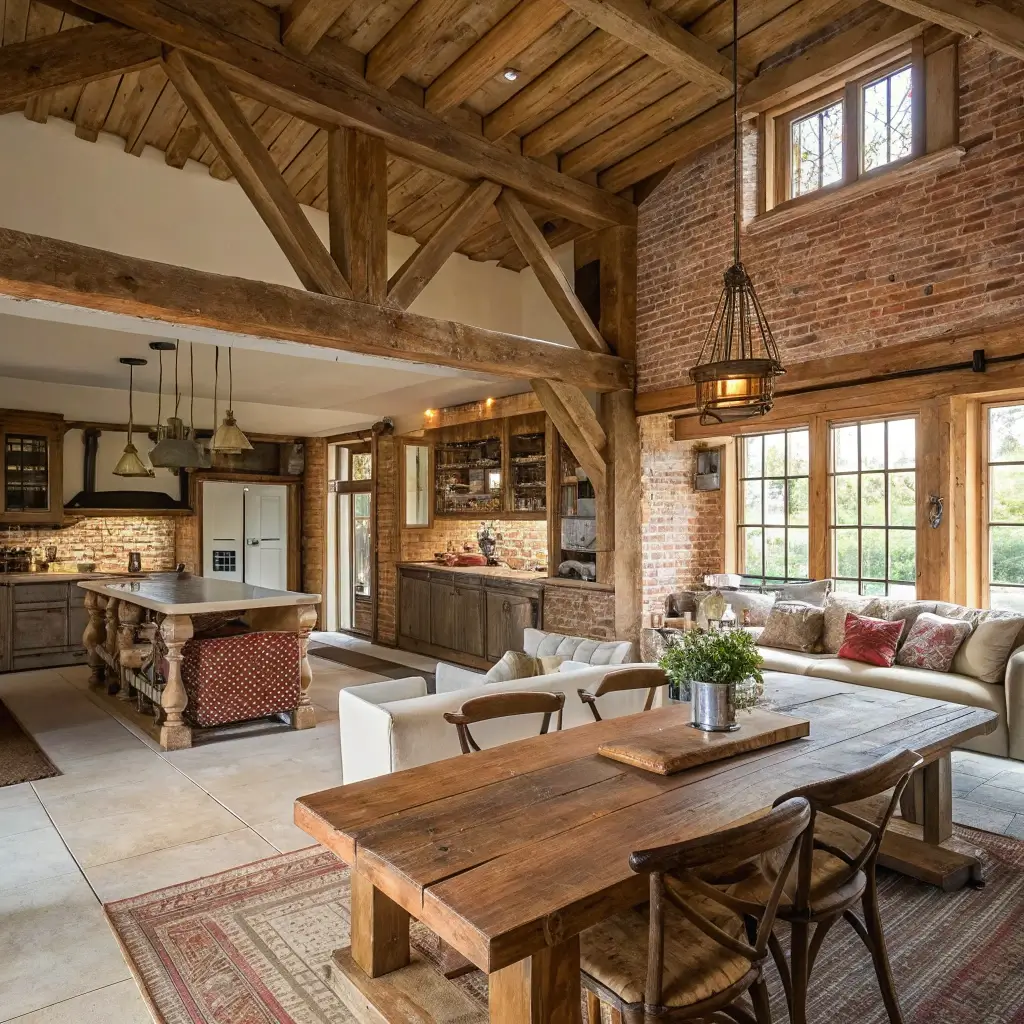
Now we’re swinging to the complete opposite end of the spectrum, and honestly? I’m here for it. Rustic farmhouse open concepts bring warmth, character, and that cozy “come sit down and stay awhile” energy that makes everyone feel immediately at home.
Creating Authentic Warmth
The farmhouse aesthetic works brilliantly in open layouts because it naturally creates visual interest without formal barriers. Think exposed wooden beams stretching across your ceiling, connecting the kitchen to the living area like a warm embrace.
Reclaimed wood is your hero material here. Whether it’s floating shelves in the kitchen, a barn door concealing your pantry, or a stunning live-edge dining table separating your cooking and lounging zones, wood brings soul to the space. And before you ask—yes, you can mix wood tones. In fact, you should. Life isn’t monochromatic, and neither should your farmhouse be.
Key Elements to Include
- Apron-front farmhouse sink visible from the living area (these beauties deserve to be seen)
- Open shelving displaying vintage dishes, copper pots, or collected antiques
- A substantial kitchen island with seating that doubles as a gathering spot
- Shiplap accent walls to add texture without overwhelming the space
- Vintage-inspired lighting—think iron chandeliers or industrial pendants
Here’s a pro tip from someone who learned the hard way: balance is everything. Too much rustic charm can veer into “themed restaurant” territory real quick. Pair those reclaimed wood shelves with sleek modern appliances and clean countertops to keep things feeling fresh rather than dated.
3. Modern Industrial Open Space Design
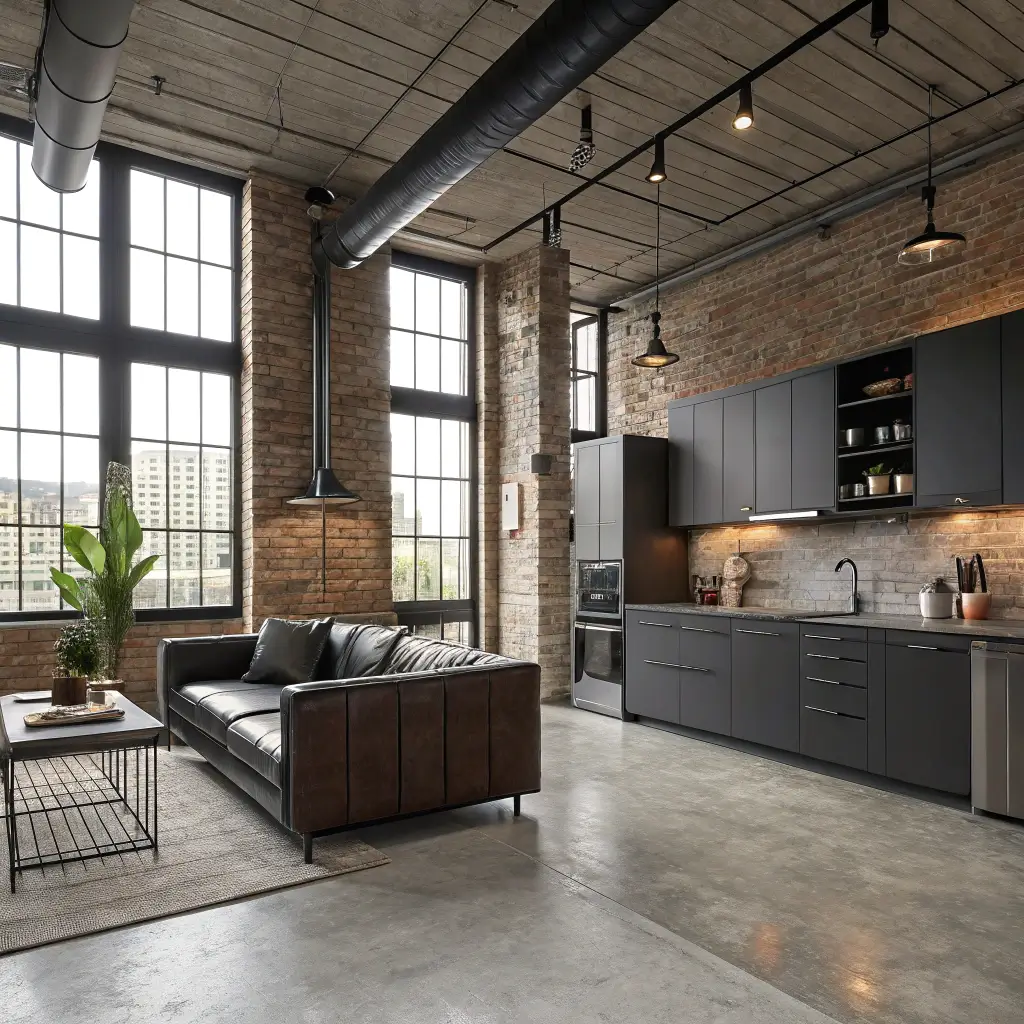
Ever walked into a converted loft and felt immediately cooler just by being there? That’s the modern industrial aesthetic working its magic, and it translates beautifully to open concept living.
Embracing Raw Beauty
Industrial design celebrates the bones of a space rather than hiding them. Exposed ductwork, concrete floors, metal fixtures, and visible brick walls become features rather than flaws. In an open concept layout, this approach creates incredible visual continuity because you’re essentially letting the architecture do the heavy lifting.
The kitchen becomes a functional workshop vibe—think stainless steel appliances, concrete or butcher block countertops, and metal pendant lights that look like they could’ve hung in a 1920s factory. The living area mirrors this with leather sofas, metal-framed furniture, and perhaps a bookshelf made from pipe fittings and reclaimed wood.
Softening the Edge
Here’s where people mess up with industrial design—they go too hard and end up living in what feels like a cold warehouse. Nobody wants to Netflix and chill in a space that echoes. You need to layer in warmth:
- Add plush textiles like chunky knit throws and oversized area rugs
- Incorporate plants generously (they love that natural light industrial spaces usually offer)
- Mix in wood elements to soften all that metal and concrete
- Choose warm-toned lighting instead of harsh cool whites
The golden ratio I follow: for every two hard industrial elements, add one soft or organic element. Metal shelving unit? Add a trailing pothos. Concrete countertop? Warm it up with wooden cutting boards and ceramic accessories.
Also Read: 12 Amazing Open Concept Kitchen Living Room Layout Ideas Revealed
4. Scandinavian Bright Open Concept Living
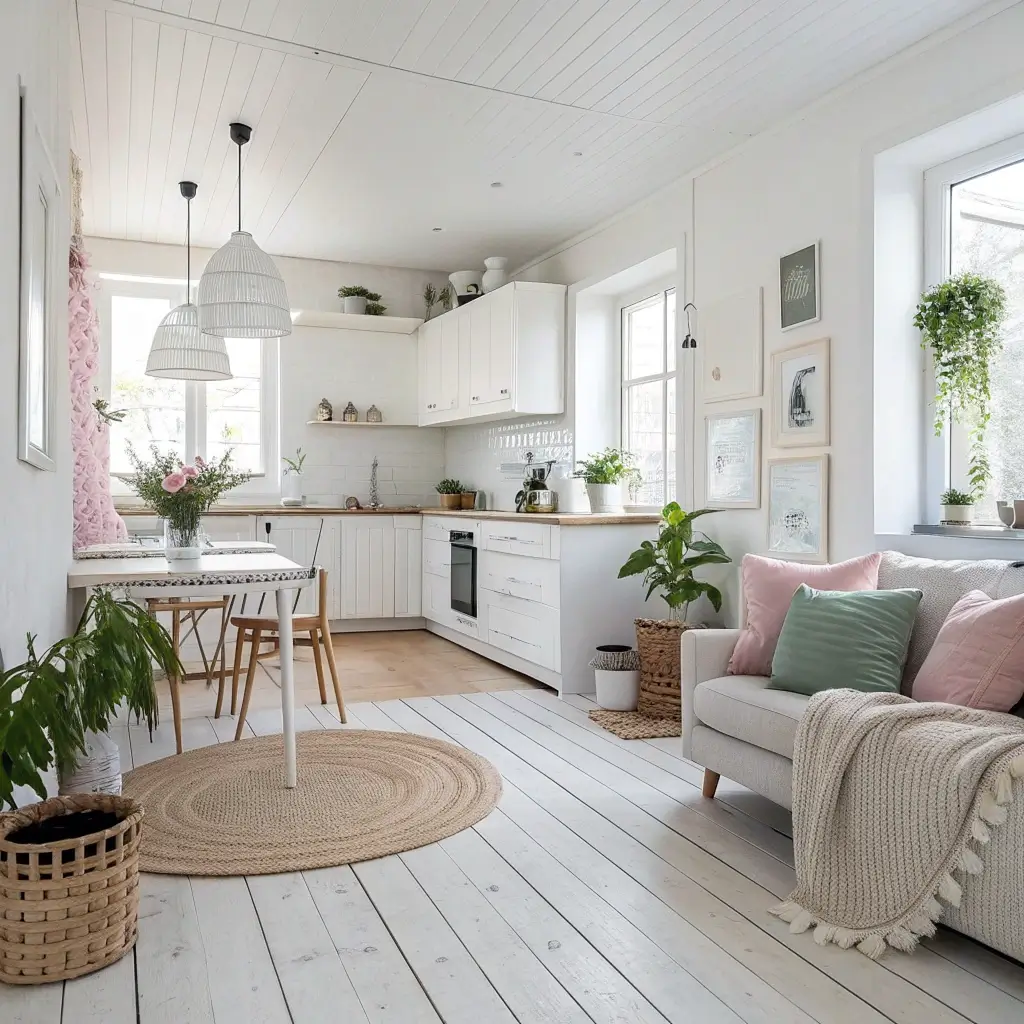
If minimalism and coziness had a baby, it would be Scandinavian design. This aesthetic has dominated interior design conversations for years, and for good reason—it just works, especially in open concept spaces.
Light as the Main Character
Scandinavian design obsesses over natural light, which makes total sense when you consider those long Nordic winters. In your open concept kitchen living room, this translates to maximizing every window, using light-reflective surfaces, and keeping color palettes predominantly white with warm neutral accents.
The magic happens when you combine this brightness with hygge—that Danish concept of cozy contentment. Your kitchen might feature white cabinets with light wood accents, while your living area wraps you in soft textiles and warm ambient lighting.
Pulling Off the Scandi Look
Essential elements for nailing this aesthetic:
- White or very light gray walls throughout the entire open space
- Light wood flooring (preferably oak in a natural or whitewashed finish)
- Simple, functional furniture with clean lines and tapered legs
- Layered textiles including sheepskin throws, linen curtains, and wool rugs
- Touches of black for contrast and grounding
- Plants everywhere—Scandinavians bring nature inside religiously
IMO, the biggest mistake people make with Scandinavian design is forgetting the warmth. A white kitchen with white cabinets and gray countertops can feel sterile without those cozy layers. Add a wooden cutting board on display, some ceramic vessels, and suddenly the space feels intentional rather than unfinished.
5. Cozy Warm-Toned Open Concept Kitchen
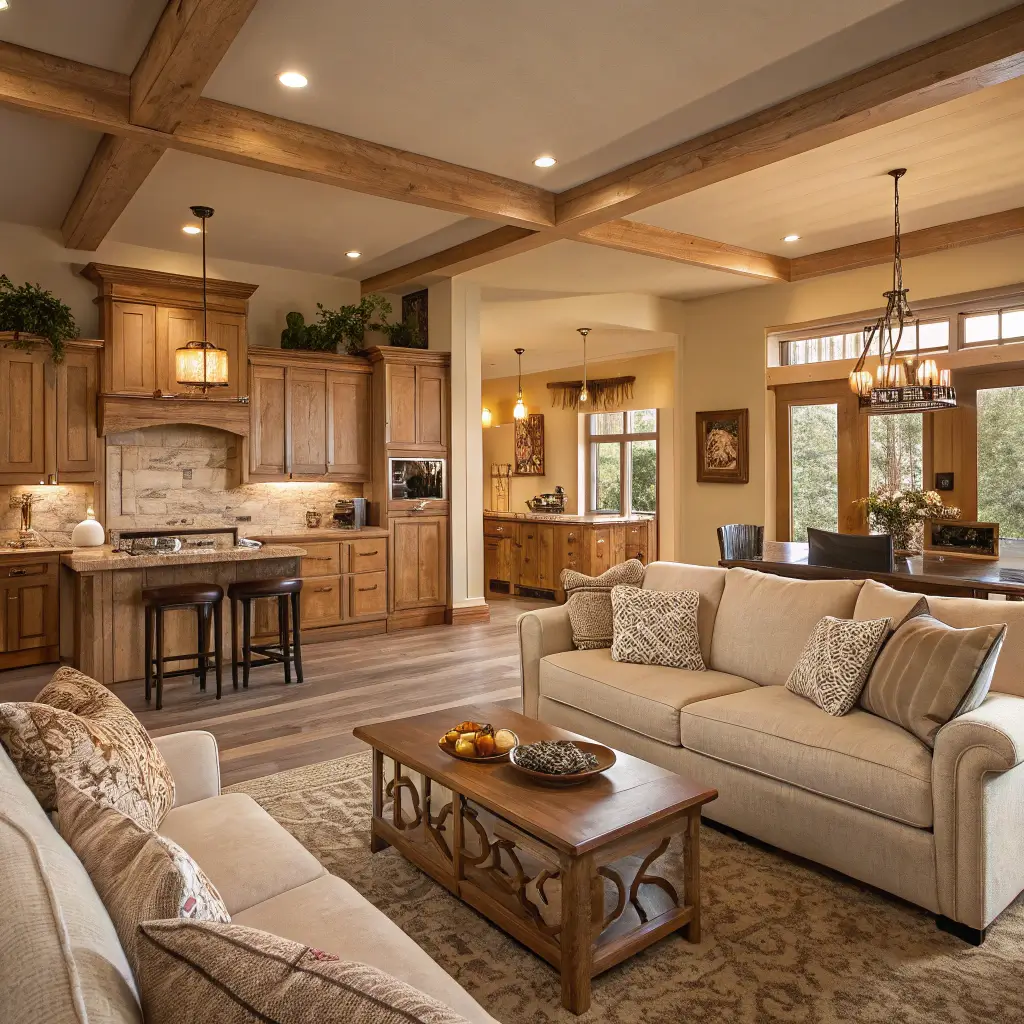
Speaking of warmth—let’s talk about designing an open concept space that wraps you in comfort the moment you enter. Warm-toned designs are making a massive comeback after years of gray-everything dominance, and honestly, it’s about time.
Building a Warm Foundation
The foundation of a cozy warm-toned space starts with your color palette. We’re talking terracotta, burnt orange, warm beige, caramel, rust, and golden yellows. These colors have an almost magical ability to make spaces feel inviting and lived-in.
In the kitchen zone, consider cabinetry in warm wood tones or even painted cabinets in muted terracotta or sage green with warm undertones. Countertops might feature warm-veined marble or butcher block. Your backsplash could introduce handmade terracotta tiles or a warm zellige tile that catches the light beautifully.
Creating Cohesion
Here’s how to carry the warmth throughout your entire open concept space:
- Choose undertones carefully—every color in your palette should share the same warm base
- Layer lighting generously—warm-toned bulbs (2700K or lower) are non-negotiable
- Incorporate natural materials like leather, wool, jute, and wood
- Add metallic accents in brass or copper rather than chrome or nickel
- Display collections of ceramics, books, and objects in your chosen color family
The living area can pick up these tones through your sofa (a caramel leather couch is chef’s kiss), throw pillows in complementary warm shades, and perhaps a vintage rug that ties everything together. The result feels like a permanent golden hour in your home. 🙂
6. Luxury Marble & Wood Open Concept
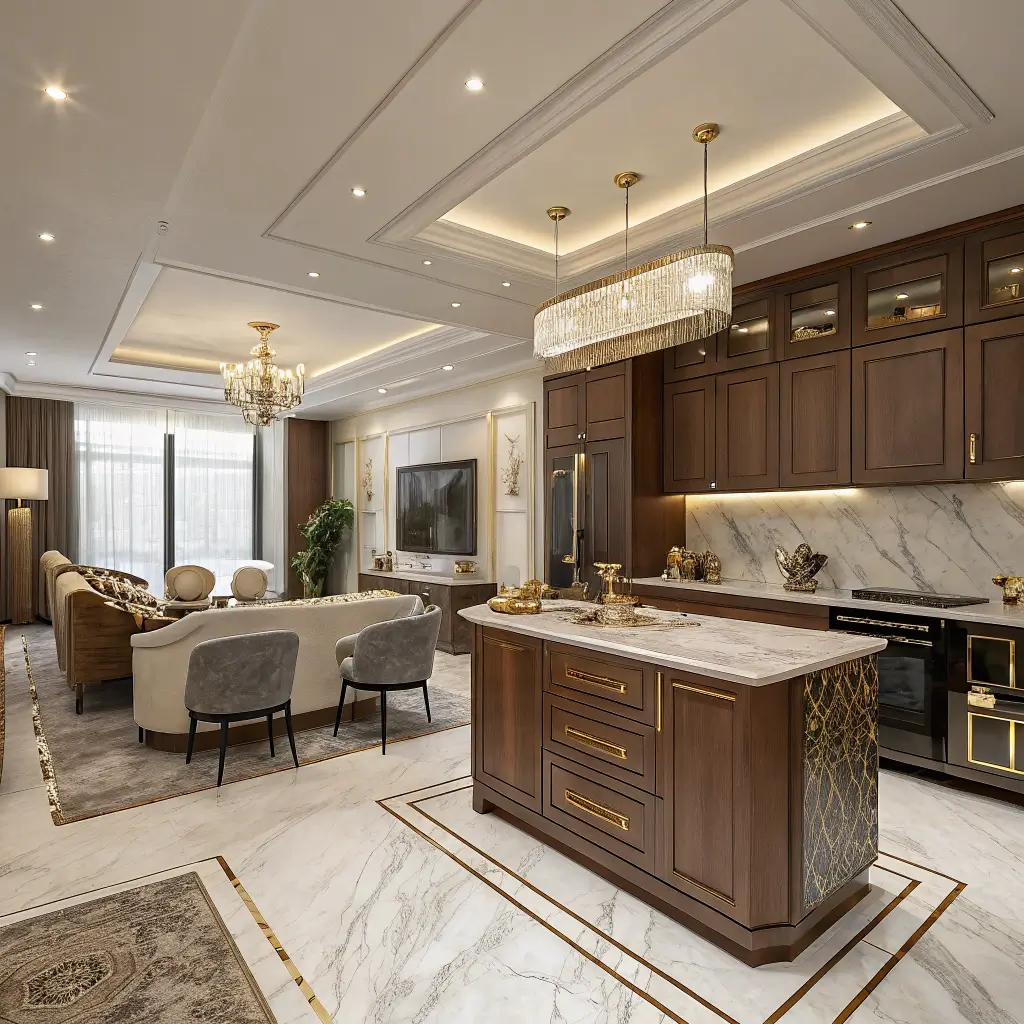
Want to walk into your home and feel like you’ve made it? The marble and wood combination delivers sophistication without feeling stuffy or untouchable. This pairing works phenomenally in open concept layouts because both materials photograph well from every angle—and let’s be honest, that matters these days.
Balancing Luxury with Livability
The trick with luxury materials is using them strategically rather than covering every surface. A waterfall marble island becomes the stunning centerpiece of your kitchen, visible from the living area and serving as a natural gathering spot. Meanwhile, wood adds warmth and prevents the space from feeling like a hotel lobby.
Consider book-matched marble on your island and backsplash if the budget allows—this creates a dramatic focal point that looks intentional and curated. Pair it with rich wood tones in your flooring, open shelving, or a statement dining table.
Material Pairings That Work
- Calacatta marble paired with warm walnut for traditional luxury
- White Carrara marble with light oak for contemporary elegance
- Dramatic veined marble (like Nero Marquina) with blonde wood for high contrast
- Quartzite alternatives for marble lovers who want more durability
Real talk: marble requires maintenance. It stains, it etches, it needs sealing. If you’re someone who will have a meltdown over every water ring, consider quartzite or a high-quality marble-look porcelain instead. Your mental health is worth more than Instagram photos.
Also Read: 10 Stylish Open Space Living Room and Kitchen Ideas for Modern Homes
7. Small Space Open Concept Solutions
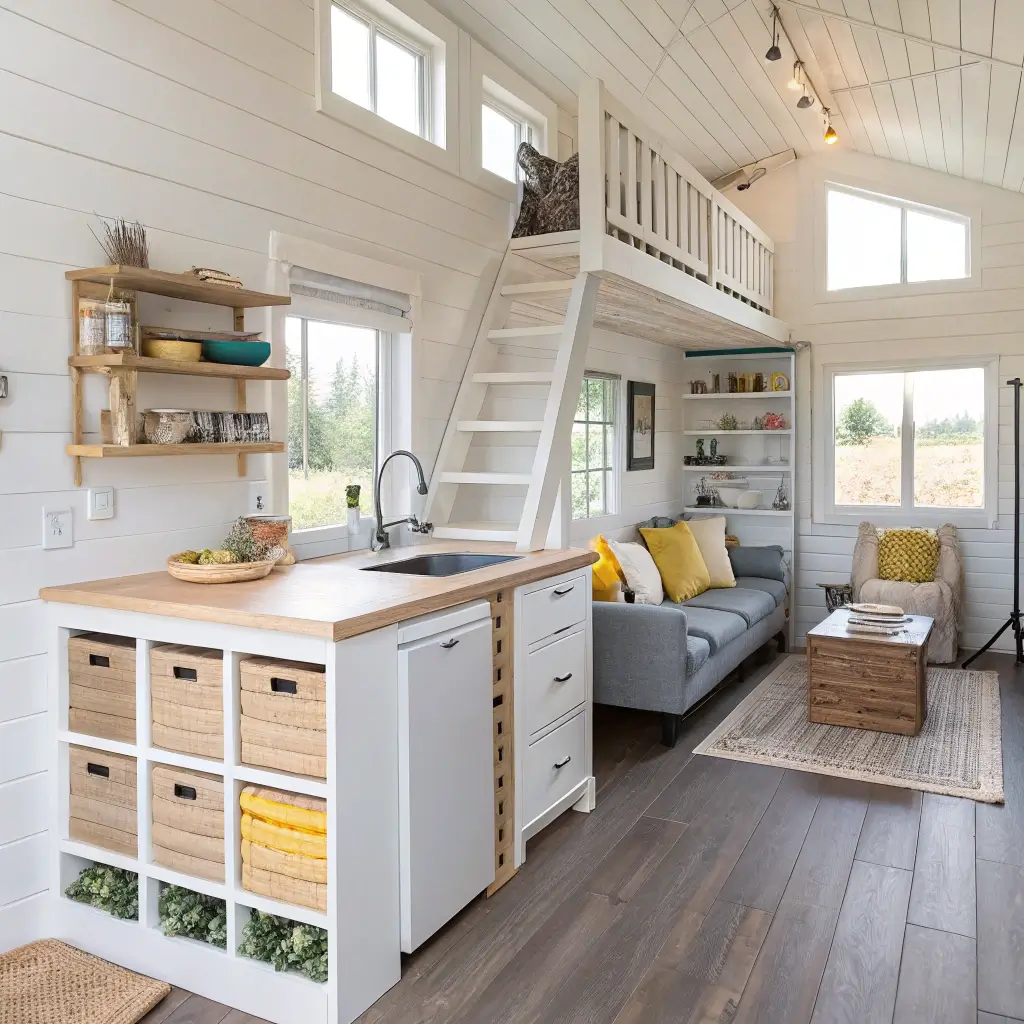
Here’s where things get interesting—and where I personally have the most experience. Not everyone works with generous square footage, but small spaces can still achieve open concept magic. You just need to be smarter about it.
Making Every Inch Count
In small open concept layouts, multifunctional elements become essential. Your kitchen island shouldn’t just be prep space—it should incorporate seating, storage, and potentially double as your dining table. That console table behind your sofa? It might house baskets for blankets and act as a breakfast bar.
Visual tricks matter enormously in compact spaces:
- Continuous flooring throughout eliminates visual breaks that make spaces feel smaller
- Consistent color palettes (generally lighter) help areas feel connected and expansive
- Strategic mirror placement reflects light and creates depth illusions
- Vertical storage solutions draw the eye upward and maximize wall space
Zone Definition Without Walls
The challenge in small open concepts is creating distinct zones without eating up precious square footage. Here’s what actually works:
- Area rugs to define the living space
- Pendant lighting to anchor the kitchen island or dining area
- Furniture arrangement that creates natural pathways and boundaries
- Changes in ceiling treatment (if possible) like a coffered ceiling over the kitchen
- A slim console table or open bookshelf as a subtle divider
FYI, scale is everything here. That oversized sectional might look amazing in the showroom, but it’ll swallow your small open concept whole. Measure twice, order once, and always leave at least 36 inches for traffic flow.
8. Bold Color Pop Open Concept Design
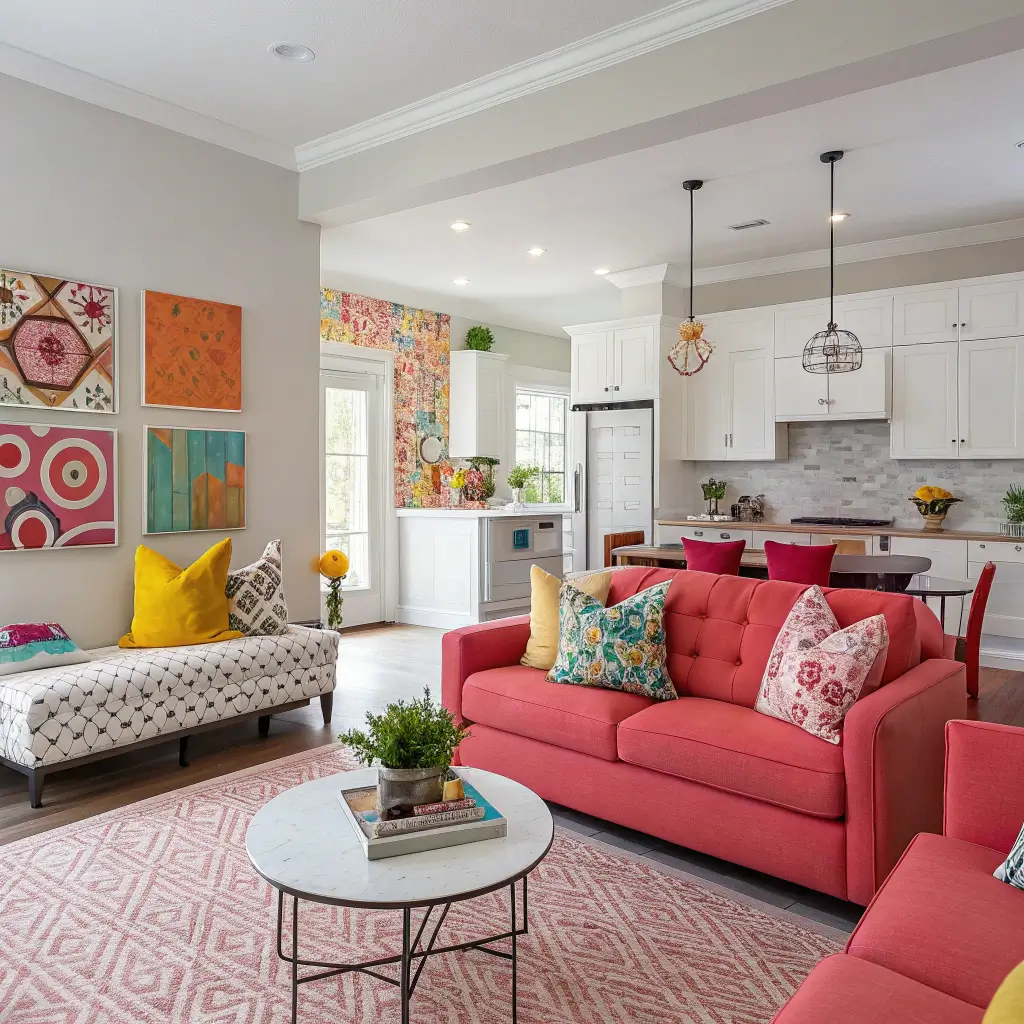
Okay, we’ve talked about neutrals and warm tones, but what if you want to make a statement? Bold color pop designs inject personality and energy into open concept spaces while still maintaining cohesion. This approach isn’t for the faint-hearted, but when done right? Absolutely stunning.
Strategic Color Placement
The key to bold color in open concept layouts is intentional placement and repetition. You don’t want random color bombs throughout—you want your chosen hue to create a visual journey through the space.
Maybe your kitchen features a stunning deep blue island that draws the eye from the living area. That blue then reappears in throw pillows on your living room sofa, a piece of artwork on the adjacent wall, and perhaps a stack of books on your coffee table. The color connects both zones without overwhelming either.
Color Strategies That Work
- The 60-30-10 rule: 60% neutral dominant color, 30% secondary color, 10% bold accent
- Colorful cabinets in the kitchen paired with neutral living room furniture
- A statement wall visible from both zones that anchors the entire space
- Colorful appliances (brands like SMEG offer gorgeous options) as functional art
- Bold lighting fixtures that serve as sculptural color additions
Pro tip: test your bold colors at different times of day before committing. That gorgeous emerald green might look stunning in morning light but completely different under evening artificial lighting. Paint samples on large poster boards and move them around the space for at least a week before making decisions.
9. Transitional Classic-Modern Open Layout
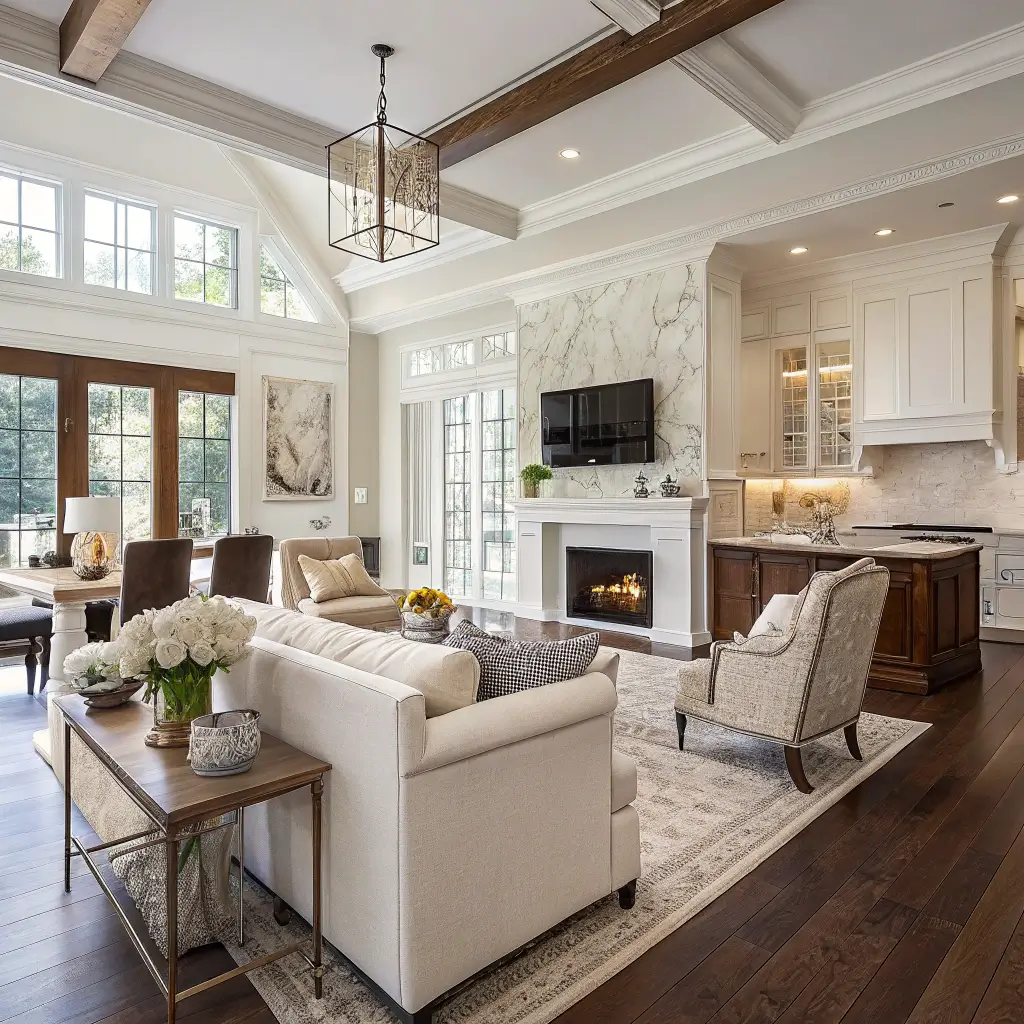
Can’t decide between traditional elegance and contemporary clean lines? Transitional design says you don’t have to choose. This approach blends the best of both worlds, creating spaces that feel timeless yet current—perfect for open concept layouts where visual cohesion matters.
Finding the Balance
Transitional design in open concepts means your kitchen might feature shaker-style cabinets (a classic profile) paired with modern hardware and waterfall countertops. Your living area could showcase a traditional tufted sofa alongside a minimalist coffee table. The magic happens in the mix.
The color palette typically stays neutral—creams, grays, soft blues, and warm wood tones. This creates a calm backdrop that lets both traditional and modern elements coexist peacefully.
Elements to Blend
From the traditional side:
- Crown molding and trim work
- Classic furniture silhouettes
- Symmetrical arrangements
- Rich wood tones
- Layered window treatments
From the modern side:
- Clean lines and minimal ornamentation
- Mixed metals in hardware and lighting
- Abstract or contemporary artwork
- Streamlined appliances
- Subtle textures rather than busy patterns
The secret to transitional success: edit ruthlessly. You can’t include every traditional element AND every modern element. Choose your favorites from each camp and let them shine together.
Also Read: 10 Smart Open Plan Kitchen Dining Living Ideas for Open Spaces
10. Indoor-Outdoor Flow Open Concept Living
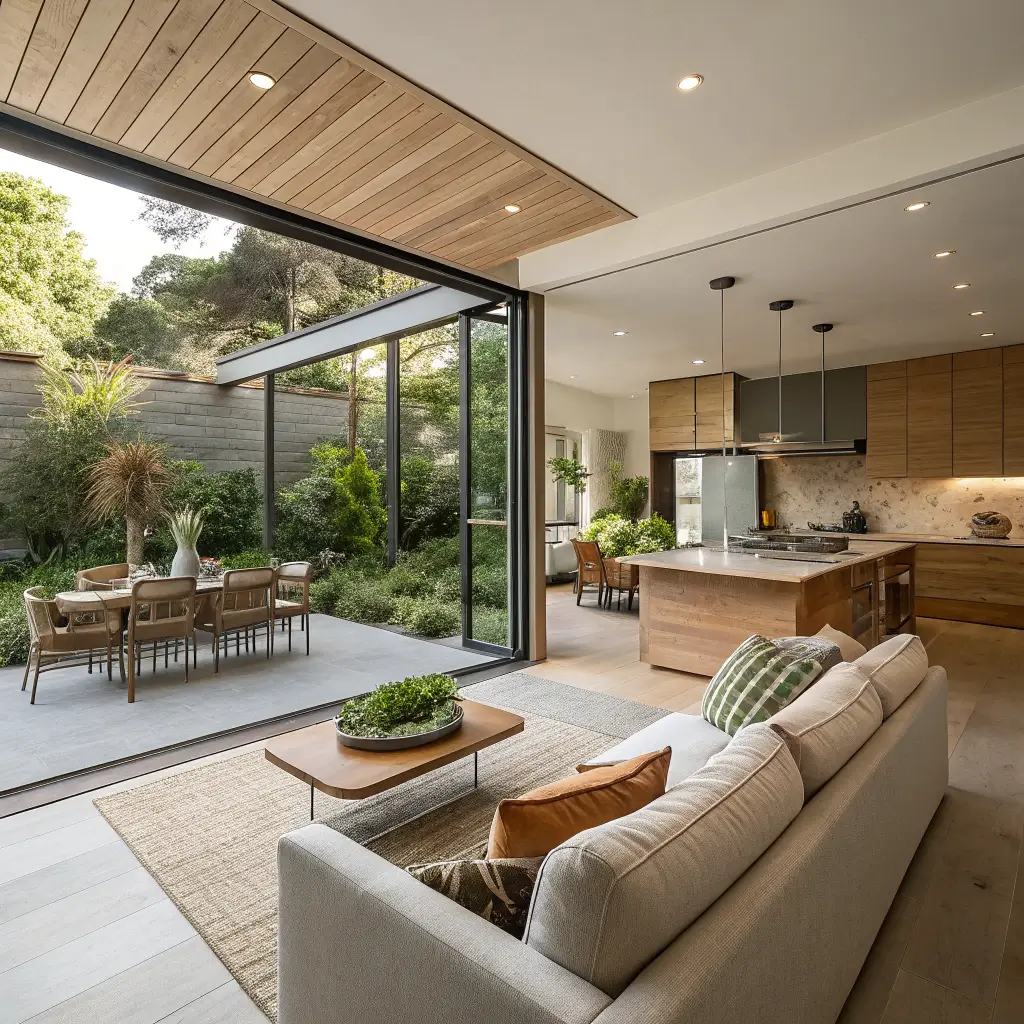
Here’s where open concept takes its ultimate form—blurring the boundaries between inside and outside. If you’re lucky enough to have outdoor access from your living space, this layout secret will absolutely transform how you use your home.
Breaking Down Barriers
The goal is making your outdoor space feel like a natural extension of your interior. This starts with large glass doors—sliding, folding, or pivot—that can open completely to merge spaces. When weather permits, your open concept kitchen living room effectively doubles in size.
Material continuity plays a huge role here. Consider flooring that transitions seamlessly (or nearly so) from interior to exterior. Your kitchen countertop material might extend to an outdoor grilling station. The same pendant light style hanging over your island could also hang over your outdoor dining table.
Creating Seamless Flow
Essential elements for indoor-outdoor open concept success:
- Low-threshold or flush door tracks for uninterrupted flooring appearance
- Extended roof lines or pergolas that provide weather protection and visual continuity
- Consistent material palettes between indoor and outdoor spaces
- Outdoor kitchens or grilling areas that function as extensions of your interior kitchen
- Weather-resistant versions of your interior furniture style for the outdoor living zone
- Integrated heating solutions (fire pits, outdoor heaters) that extend usability
This layout works phenomenally for entertainers. Imagine hosting a party where guests flow naturally from your kitchen island to the outdoor lounge, drinks in hand, never feeling bottlenecked by doors or walls. That’s the dream, right?
Layout Secrets That Apply to Every Design
Before we wrap up, let’s talk about universal layout principles that work regardless of which aesthetic speaks to you. These are the behind-the-scenes secrets that make any open concept kitchen living room actually function well.
The Work Triangle (Updated)
The classic kitchen work triangle between sink, stove, and refrigerator still matters, but in open concept layouts, you also need to consider sight lines. Position your stove so you’re not turning your back to guests in the living area. Place your sink where you can look up and engage in conversation while doing dishes. Your refrigerator should be accessible from the main entry point for easy grocery unloading.
Zone Definition Strategies
You need zones without walls, and here’s how to create them:
- Use different ceiling treatments (beams, lighting fixtures, ceiling height changes)
- Vary flooring materials subtly (wood in living, tile in kitchen) or use rugs
- Create furniture groupings that clearly communicate purpose
- Strategic lighting that illuminates each zone independently
- Color temperature shifts (warmer in living areas, brighter task lighting in kitchen)
Traffic Flow Matters
Leave at least 42 inches of clearance on all sides of your kitchen island for comfortable movement. Ensure there’s a clear path from your entry door through the space that doesn’t require weaving through furniture. Consider where people naturally want to walk and don’t put obstacles in those paths.
The Noise Factor
Open concept means open sound, and this catches people off-guard. Consider these sound-softening strategies:
- Plush area rugs and upholstered furniture absorb sound
- Fabric window treatments help more than hard blinds
- Acoustic panels can be disguised as artwork
- Quiet-rated appliances (dishwashers especially) become more important
- Consider a range hood that vents outside to reduce noise and cooking odors
Wrapping It All Up
So there you have it—ten distinct approaches to open concept kitchen living room design, plus the layout secrets that make any of them actually work in real life. Whether you’re drawn to the clean lines of minimalism, the warmth of farmhouse charm, or the sophistication of marble and wood, the fundamental principles remain the same: create intentional zones, maintain visual cohesion, and never forget that you actually have to live in this space.
My biggest piece of advice after all these years of obsessing over open concept design? Start with how you actually live. Do you cook elaborate meals while entertaining? Prioritize that kitchen island with tons of seating. Do you need a quiet reading corner within your open layout? Create it intentionally with a cozy chair tucked into a corner with great lighting. Design for your real life, not the Pinterest fantasy.
Open concept living genuinely changes how you experience your home. When done right, it creates spaces that feel generous, connected, and infinitely more sociable than traditional compartmentalized floor plans. When done wrong, it creates noisy, cluttered chaos with no escape.
Take your time with the planning. Mock up furniture arrangements with painter’s tape on your floor. Collect material samples and live with them for weeks before committing. And remember—you can always change paint colors and swap out accessories, but layout decisions stick around much longer.
Now go forth and create that dreamy open concept space you’ve been imagining. You’ve got this.