
15 Fun Cozy Cottage Kitchen Ideas and Charming Lighting Ideas
Let me tell you something—there’s nothing quite like walking into a kitchen that feels like a warm hug. You know that feeling, right? The one where you step into a space and immediately want to brew some tea, bake cookies, and stay forever? That’s the magic of a cozy cottage kitchen, and honestly, I’ve been obsessed with creating that vibe in my own home for years.
Whether you’re renovating a century-old farmhouse or trying to inject some cottage charm into your modern apartment, I’ve got you covered. These 15 ideas will transform your kitchen from “meh” to “oh my goodness, I never want to leave.” So grab your favorite mug, settle in, and let’s chat about how to make your kitchen the coziest room in your house.
Rustic Wooden Shelving Inspiration
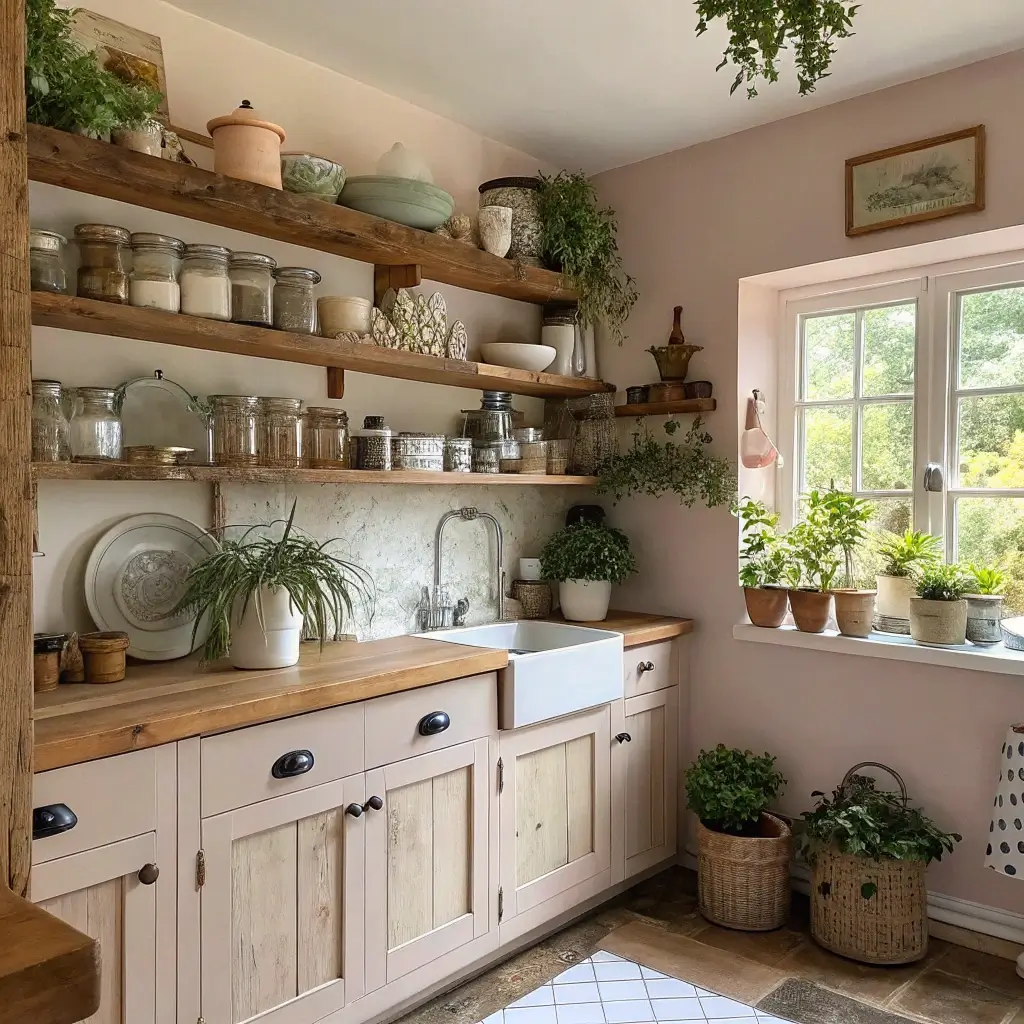
Can we talk about how wooden shelving changed my entire kitchen game? Seriously, I ripped out my boring builder-grade cabinets two years ago and replaced half of them with reclaimed wood shelves. Best decision ever.
Rustic wooden shelving does more than just store your dishes—it creates visual warmth and invites that lived-in cottage aesthetic we’re all chasing. The key here is choosing wood with character. Think:
- Reclaimed barn wood with visible nail holes and weathering
- Live edge shelving for that organic, natural feel
- Distressed pine or oak with a light whitewash finish
- Chunky floating shelves made from old beams
Now, here’s my honest opinion—open shelving isn’t for everyone. If you’re someone who leaves coffee cups unwashed for three days (no judgment, I’ve been there), maybe keep a few closed cabinets too. But strategically placing rustic wooden shelves near your sink or stove area? That’s where the magic happens.
Pro tip: Mix your everyday dishes with a few decorative pieces. A vintage pitcher here, a potted herb there, and suddenly your shelving looks like it belongs in a home magazine. IMO, the perfectly imperfect arrangement is what makes cottage style so appealing.
Vintage Farmhouse Cabinets
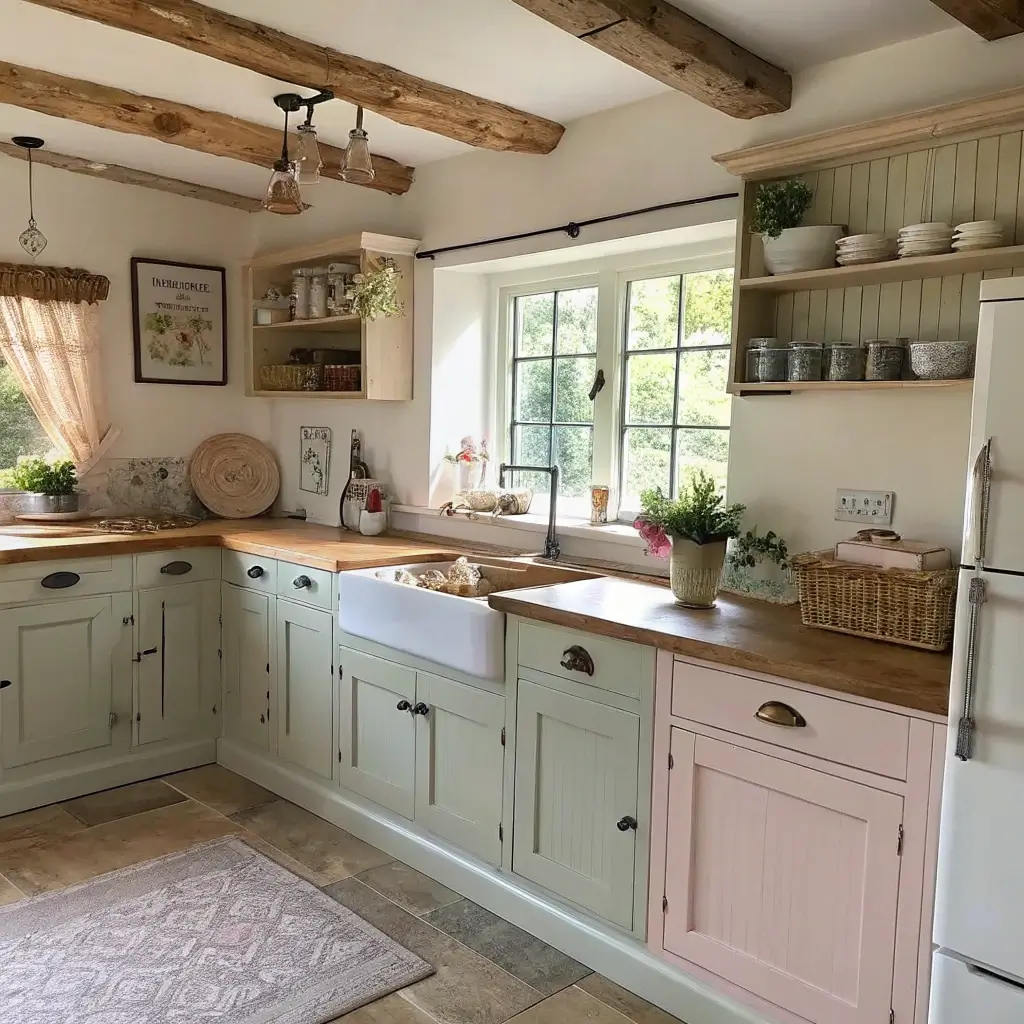
Alright, let’s get into the backbone of any cottage kitchen—those gorgeous vintage farmhouse cabinets. There’s something irresistible about cabinets that look like they’ve witnessed generations of Sunday dinners and pie-making sessions.
You’ve got a few routes here. You can hunt for authentic vintage cabinets at salvage yards and antique shops (which I absolutely love doing on weekends), or you can achieve that vintage look with some clever techniques:
- Chalk paint finishes in soft whites, sage greens, or powder blues
- Distressing edges where natural wear would occur
- Replacing hardware with antique brass or ceramic knobs
- Adding beadboard panels to cabinet doors
- Glass-front uppers to showcase your pretty dishware
The beauty of farmhouse cabinets lies in their imperfections. That slightly uneven paint job? Character. Those mismatched knobs? Intentional charm. Well, at least that’s what I tell myself about my own kitchen. 🙂
My personal favorite combination is cream-colored lower cabinets paired with open shelving or glass-front uppers. This keeps the space feeling light while still delivering that nostalgic farmhouse punch. And please, for the love of all things cozy, avoid anything too matchy-matchy. Cottage style thrives on collected-over-time vibes, not showroom perfection.
Pastel Cottage Color Palettes
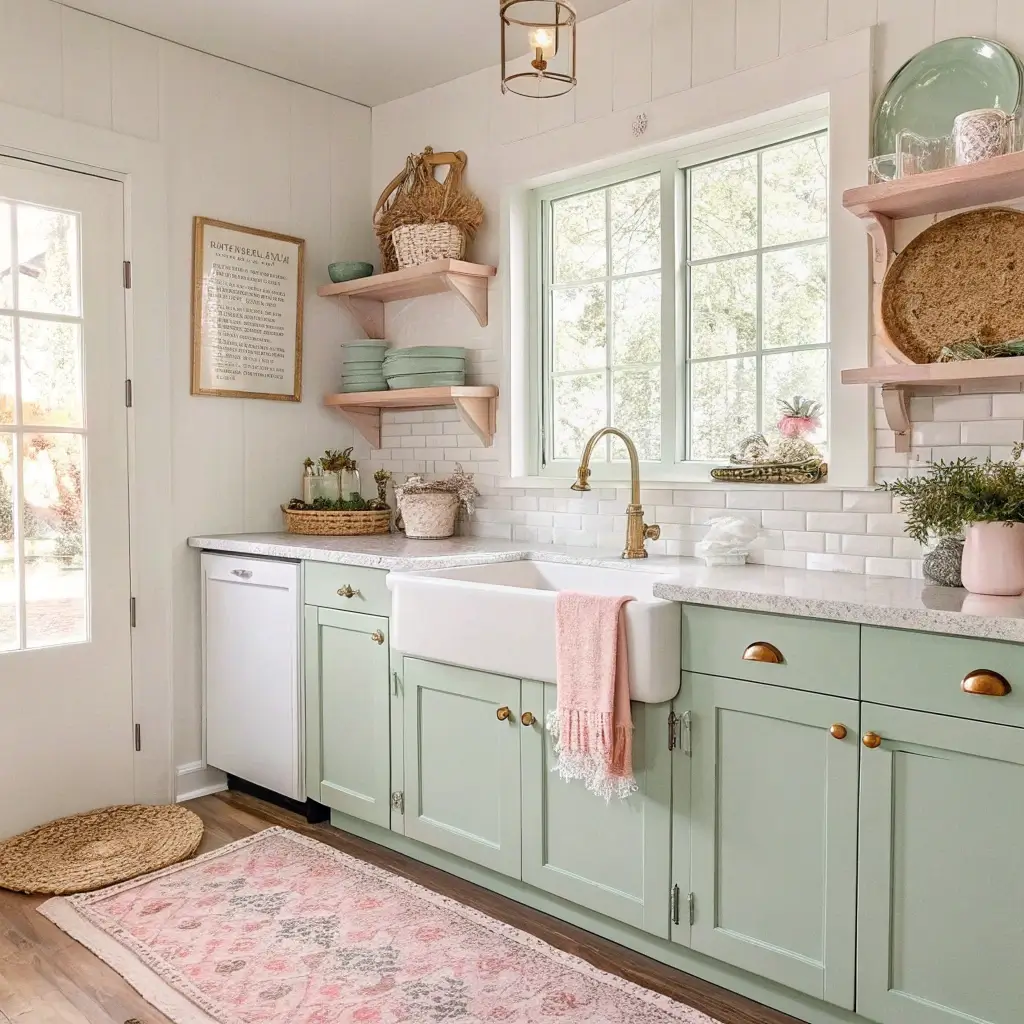
Ever walked into a kitchen that just felt happy? Chances are, the color palette had something to do with it. Pastel cottage colors create an atmosphere that’s simultaneously calming and cheerful—which, let’s be honest, is exactly what we need in the room where we caffeinate ourselves every morning.
Here’s the thing about cottage pastels—they’re not the same as nursery pastels. We’re talking about muted, slightly dusty versions that feel grown-up and sophisticated:
- Sage green – the undisputed champion of cottage kitchens
- Soft butter yellow – instant sunshine, even on gloomy days
- Powder blue – classic and utterly timeless
- Blush pink – surprisingly versatile and not at all too feminine
- Lavender – perfect for that English countryside vibe
- Warm cream – the neutral that plays nice with everything
I painted my kitchen cabinets a color called “morning mist” (basically a gray-green sage), and I cannot overstate how much it transformed the space. The trick is balancing your pastels with plenty of warm wood tones and crisp white accents.
Color placement matters too. Consider painting your island a different pastel than your perimeter cabinets, or try a bold pastel on your ceiling (yes, really) for an unexpected twist. And don’t sleep on pastel appliances—retro-style refrigerators in mint green or pale pink are having a serious moment right now.
Cozy Breakfast Nooks
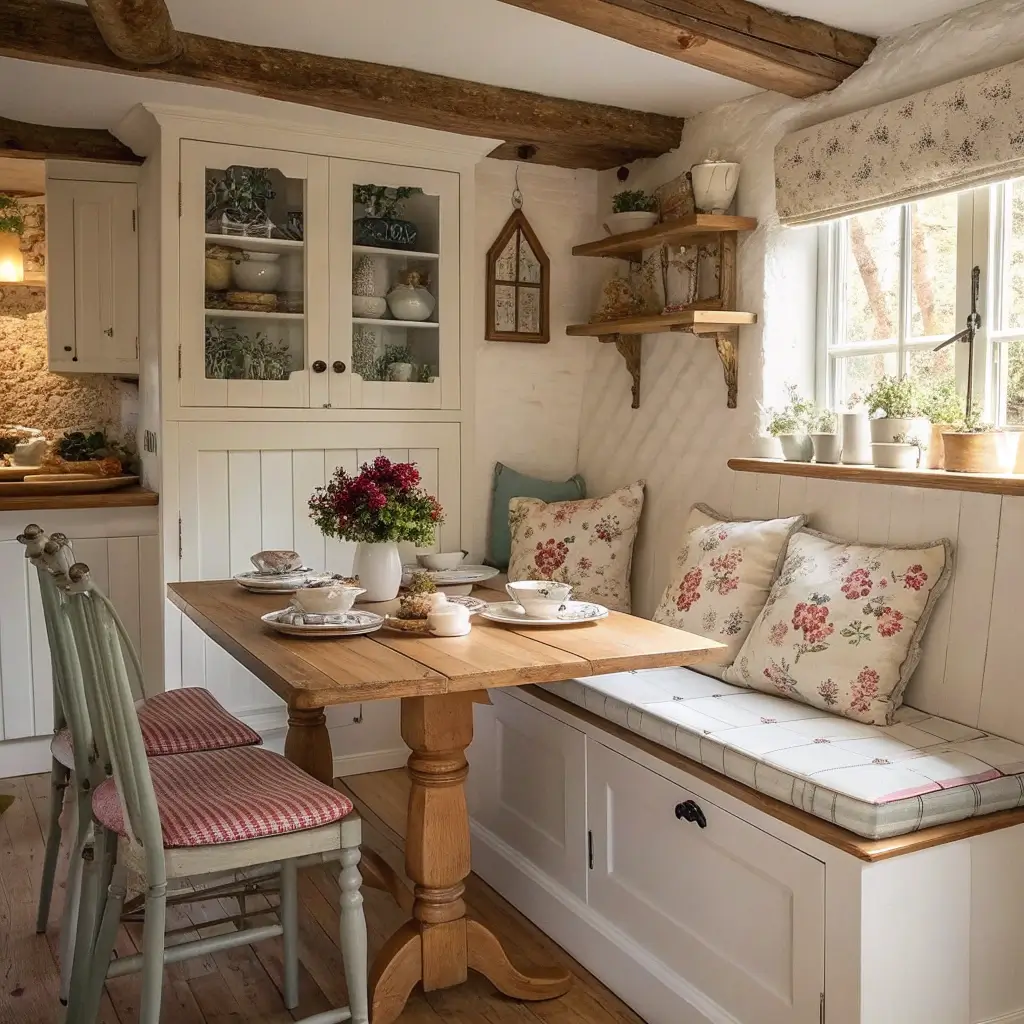
Why do breakfast nooks hit different? I’ve genuinely pondered this question while sipping coffee in my own little corner booth. There’s something about a dedicated, intimate eating space that makes every meal feel special—even if that meal is reheated pizza at 11 AM.
Creating a cozy breakfast nook in your cottage kitchen doesn’t require a ton of space. Here’s what you need:
- A corner or bay window area (natural light is your best friend)
- Built-in bench seating with storage underneath
- Plenty of cushions and throw pillows
- A small pedestal or farmhouse table
- Pendant lighting or a cute chandelier overhead
The built-in storage aspect is a game-changer, FYI. You can stash table linens, rarely-used appliances, or your secret candy stash in those bench seats. No one needs to know.
Styling your nook is where the fun really begins. Layer in patterned cushions, add a small vase of fresh flowers, and hang some vintage plates or artwork on the adjacent wall. I keep a stack of my favorite cookbooks in mine because nothing says “cozy morning” like flipping through recipes while eating toast.
If you’re working with a really tight space, consider a corner banquette with a round table. The curved seating maximizes the area while creating that snug, enveloping feel that breakfast nooks are famous for.
Open Shelving with Rustic Charm
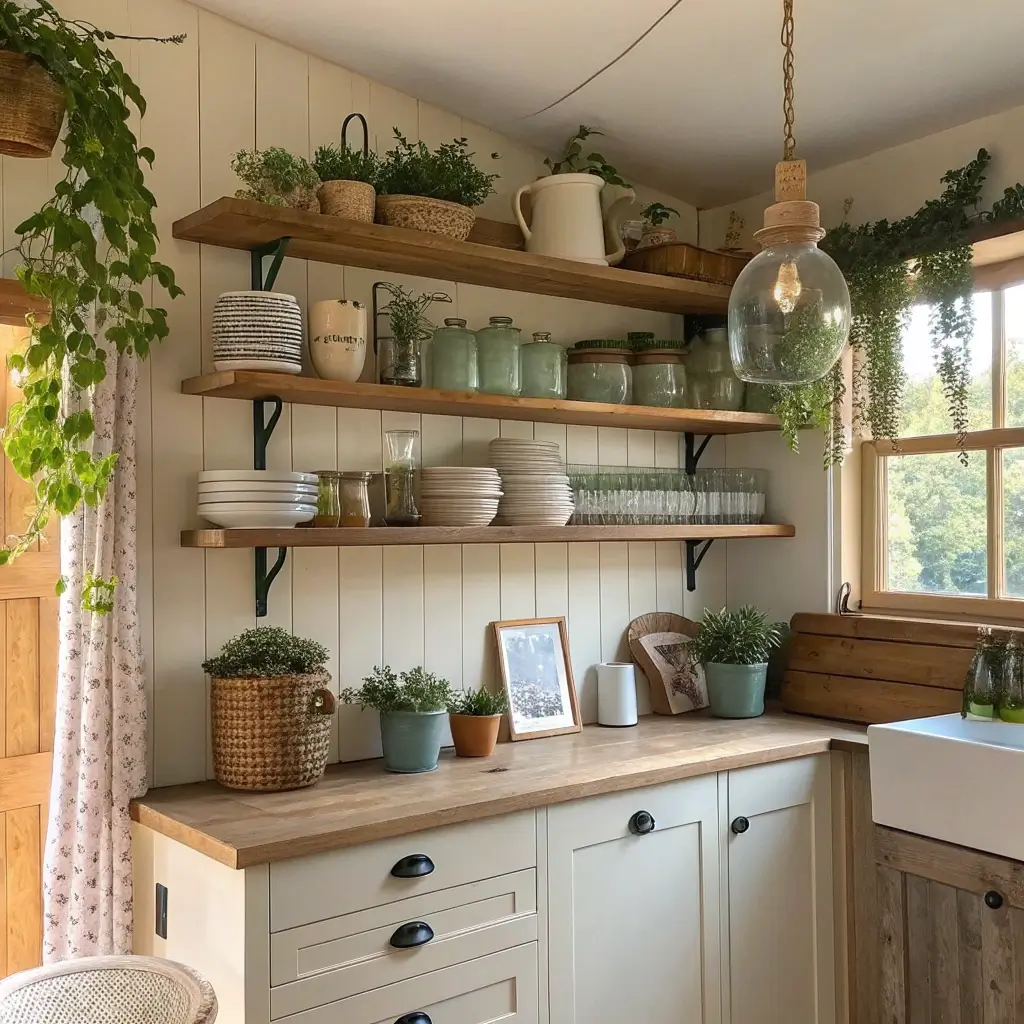
I know I mentioned shelving earlier, but open shelving with rustic charm deserves its own spotlight. This isn’t just about the shelves themselves—it’s about creating a curated display that feels organic and inviting.
Here’s my formula for styling open shelves like a cottage pro:
- Layer heights – stack plates, lean cutting boards, vary the visual rhythm
- Mix materials – wood, ceramic, glass, metal, and woven textures
- Include living elements – small plants, fresh herbs, or dried flowers
- Add meaningful pieces – grandmother’s pitcher, vintage finds, travel souvenirs
- Keep everyday items accessible – mugs, bowls, and frequently used dishes
The secret nobody tells you? Edit ruthlessly. Open shelving looks terrible when overcrowded. Leave breathing room between items and resist the urge to display every cute thing you own.
Bracket styles also make a huge difference in achieving that rustic charm. Forget sleek, modern hardware. Instead, look for:
- Cast iron supports with scrollwork
- Leather strap hangers
- Simple wooden corbels
- Industrial pipe brackets for a farmhouse-industrial blend
And here’s a controversial take—I actually think a little dust adds to the cottage vibe. Okay, maybe not actual dust, but you catch my drift. These shelves shouldn’t look staged by a professional. They should look loved and used.
Warm Lighting & Pendant Ideas
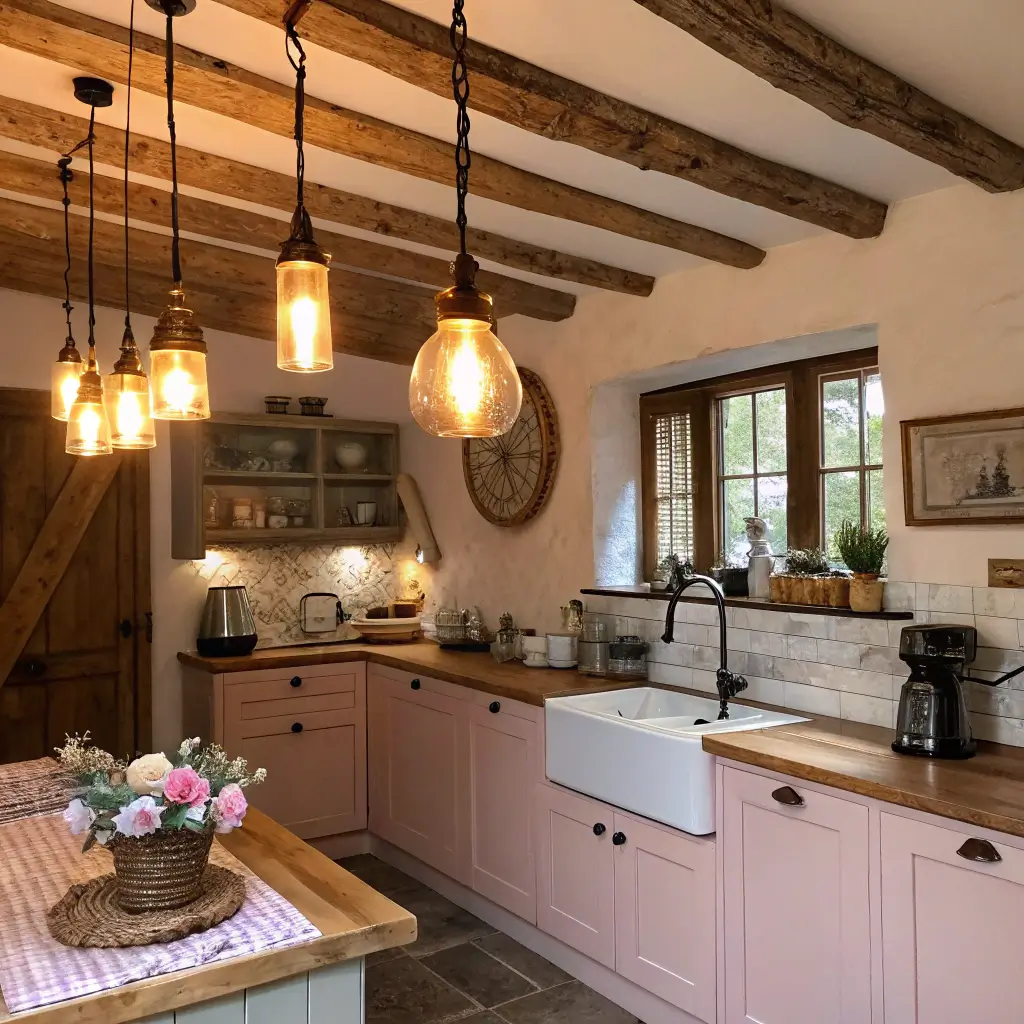
Lighting can make or break your cottage kitchen’s cozy factor. I cannot stress this enough. You could have the most beautiful cabinets and the perfect color palette, but if you’re relying on harsh overhead fluorescents, the whole vibe dies immediately.
Cottage kitchens need layered, warm lighting that mimics natural daylight and candlelight. Here’s how to achieve it:
Pendant Lighting Options:
- Wicker or rattan pendants – absolutely stunning over an island
- Glass schoolhouse fixtures – timeless cottage charm
- Lantern-style pendants – perfect for that farmhouse feel
- Ceramic or pottery fixtures – handmade pieces add character
- Brass or copper fixtures – warm metal tones are essential
Layering Strategy:
- Ambient lighting – overall room illumination from pendants or chandeliers
- Task lighting – under-cabinet strips for food prep areas
- Accent lighting – inside glass cabinets or on open shelving
The color temperature matters too. Stick with bulbs in the 2700K-3000K range for that warm, golden glow. Anything higher looks clinical and cold—basically the opposite of cottage cozy.
My personal obsession lately is vintage-reproduction Edison bulbs in simple pendant fixtures. They emit the most gorgeous amber light and look beautiful even when turned off. Hang three in a row over your island at varying heights for maximum impact.
Also Read: 15 Delightful Cozy Kitchen Aesthetic Ideas for Style Lovers
Cottage-Style Kitchen Islands
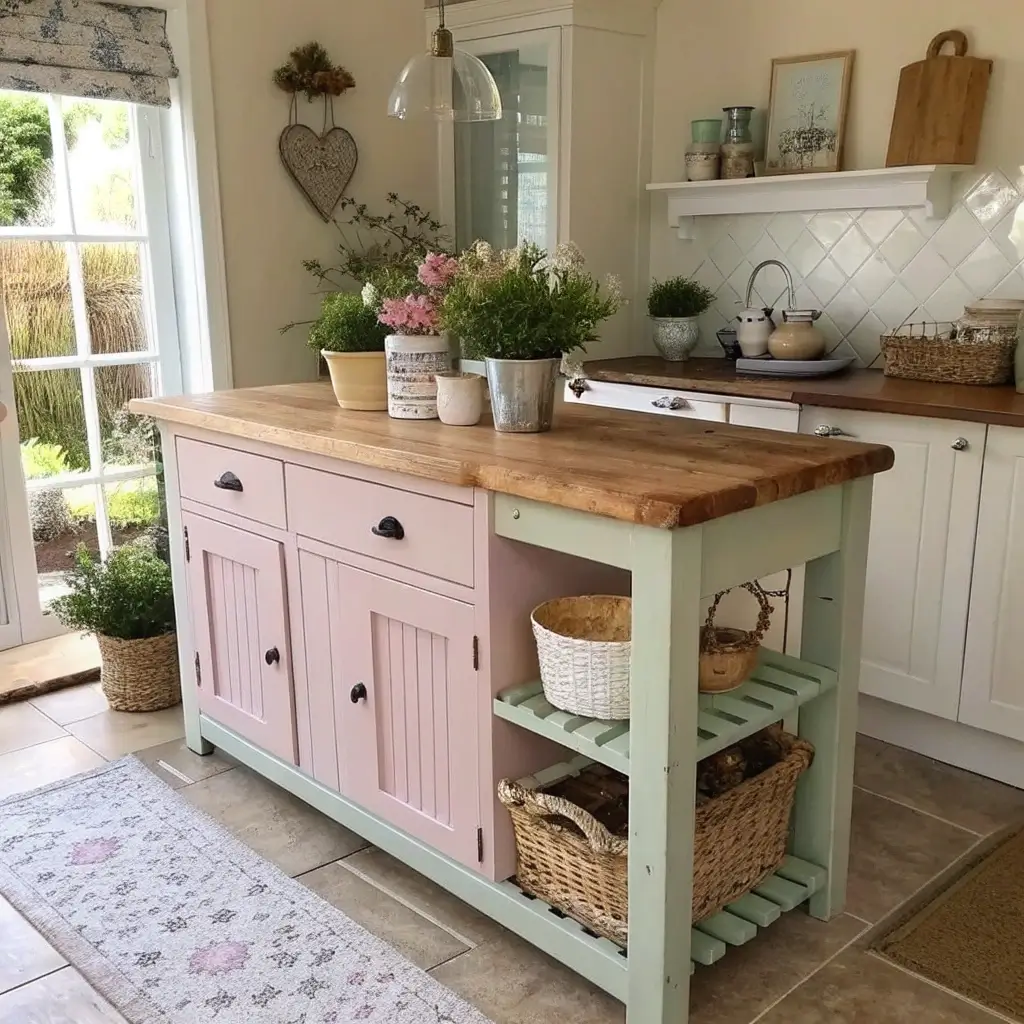
If your kitchen has room for an island, you’ve got a golden opportunity to anchor your cottage aesthetic. Kitchen islands in cottage-style homes aren’t just functional—they’re statement pieces that tie the entire room together.
What makes an island feel cottag-y versus contemporary?
- Furniture-style legs instead of a solid base
- Painted finish in a contrasting color to your cabinets
- Butcher block or reclaimed wood countertops
- Open shelving or wicker baskets below
- Decorative corbels or trim details
- Mixed materials – maybe a marble section for pastry work
I’ve seen people repurpose old farmhouse tables, antique dressers, and even store counters as kitchen islands. These unexpected pieces bring instant character that you simply cannot buy from a big-box store.
Seating matters too. Choose stools that complement your cottage vibe—think turned wood legs, woven rush seats, or painted ladder-backs. Skip the ultra-modern chrome and acrylic options. They’ll stick out like a sore thumb.
Here’s a thought: what if your island wasn’t an island at all? A large farmhouse table in the center of your kitchen serves the same purpose while looking infinitely more cottage-appropriate. Plus, you can pull chairs around all sides for big family gatherings.
Floral Backsplash Designs
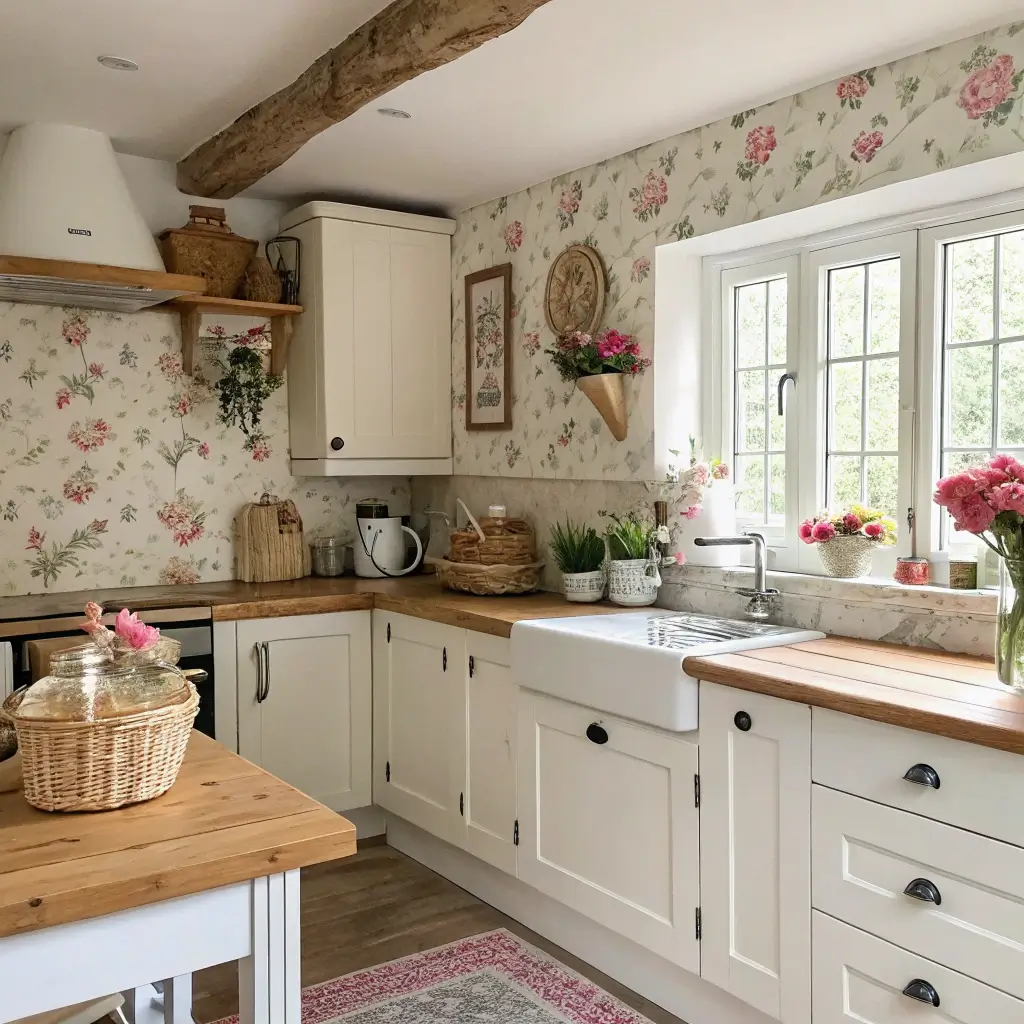
Florals in the kitchen might sound like a bold move, but hear me out—done right, they’re absolutely stunning and perfectly on-brand for cottage style. We’re not talking about your grandmother’s dated wallpaper (though honestly, some of those patterns are coming back in style).
Modern cottage floral backsplashes include:
- Hand-painted ceramic tiles with delicate flower motifs
- Watercolor-style wallpaper (yes, it can work in kitchens with proper protection)
- Pressed botanical tiles for a subtle, textured effect
- Classic Delft-style blue and white floral patterns
- Victorian-inspired William Morris designs
The key is choosing florals that feel organic and slightly muted rather than cartoonish or overly bright. You want the pattern to add warmth and interest without overwhelming the space.
Placement considerations:
- Behind the stove for a dramatic focal point
- Above the sink where you’ll see it while doing dishes
- On a small section between cabinets for a pop of pattern
- Extending up the wall behind open shelving
If committing to a floral backsplash feels scary, start small. A decorative tile mural above your cooktop achieves the same effect without covering every surface. You can always expand later once you fall in love with it—which you will.
Mix of Modern & Vintage Appliances
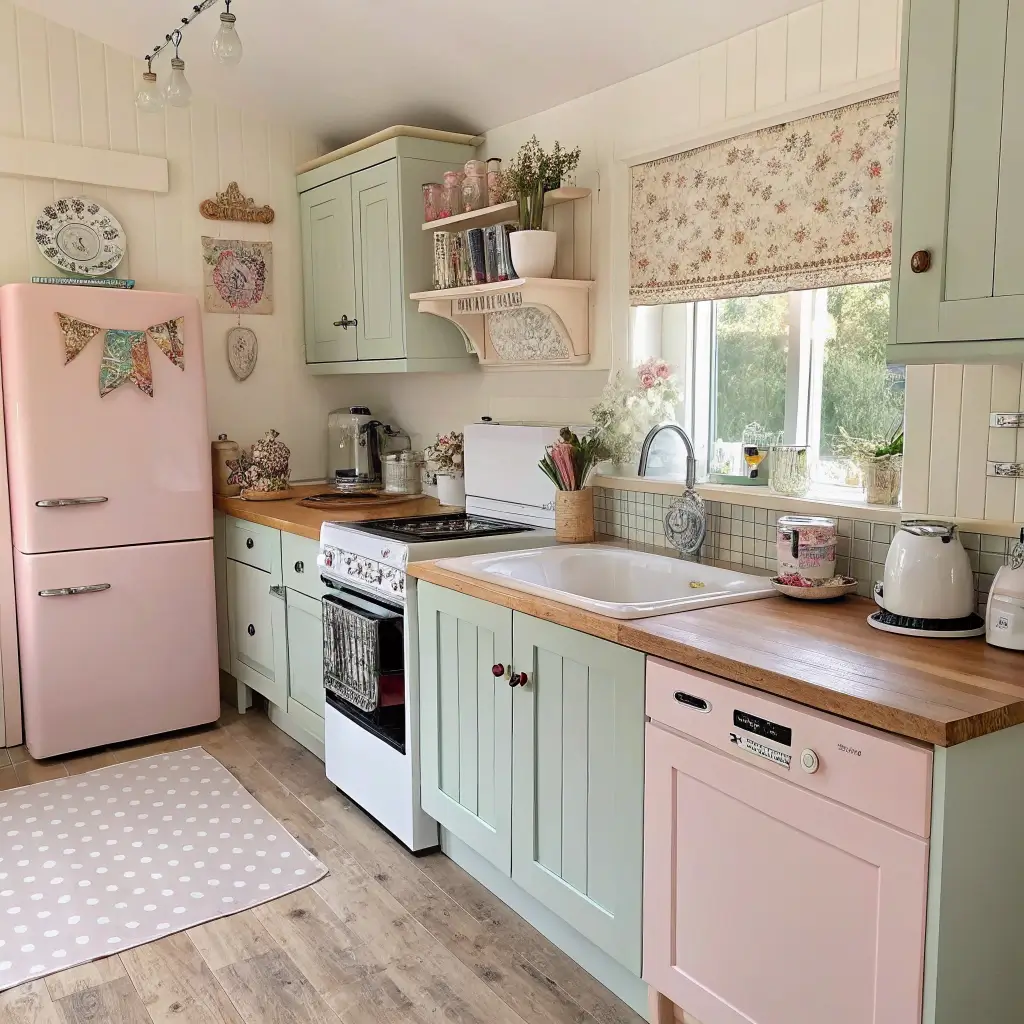
Here’s where cottage kitchens get really fun. Mixing modern and vintage appliances creates visual interest and practical functionality while maintaining that collected-over-time aesthetic.
The trick is being intentional about what’s modern and what’s vintage-inspired:
Go Retro-Style:
- Refrigerators (SMEG, Big Chill, and similar brands nail this)
- Stand mixers (KitchenAid’s classic design is timeless)
- Toasters and kettles in vintage colors
- Range hoods with decorative covers
Keep Modern and Hidden:
- Dishwashers (panel-ready to blend with cabinets)
- Microwaves (tucked in an appliance garage or drawer-style)
- High-performance range tops (function over form here)
I personally own a mint green retro-style refrigerator, and it brings me joy every single time I open it. Is it the most energy-efficient model on the market? Probably not. Do I care? Absolutely not. Some things are worth it for the aesthetic. :/
The farmhouse sink deserves special mention. Nothing says cottage kitchen like a big, beautiful apron-front sink. Fireclay and cast iron versions are the most authentic, though stainless steel options exist for tighter budgets. Pair it with a bridge faucet in unlacquered brass for perfection.
Also Read: 15 Lovely Cozy Kitchen Ideas to Create a Warm Mood
Woven Basket Storage Solutions
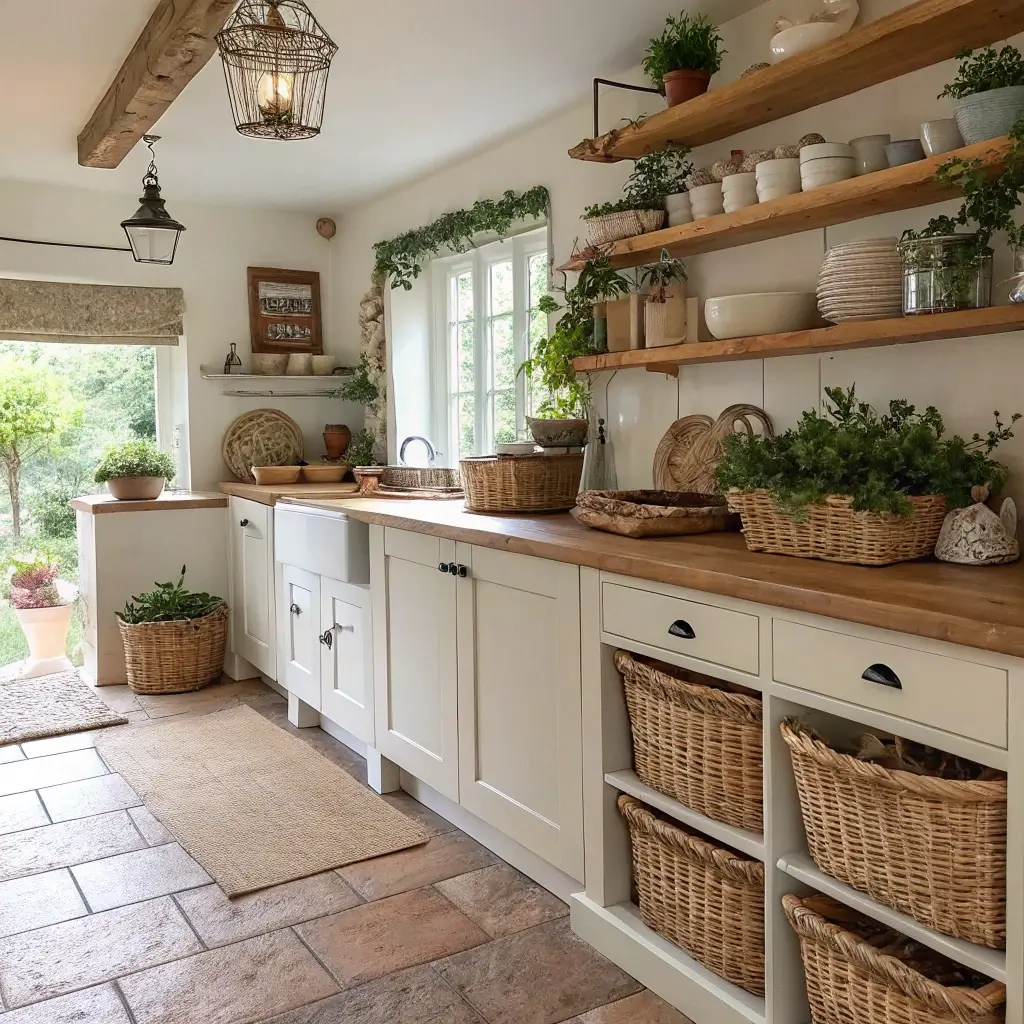
Can we appreciate how woven baskets solve literally every storage problem while looking adorable? Because they do. In a cottage kitchen, baskets aren’t just functional—they’re decorative elements that add texture and warmth.
Where to use baskets in your cottage kitchen:
- Under open shelving for a rustic alternative to cabinet doors
- In pantry spaces for corralling dry goods and snacks
- On top of cabinets for decorative storage of rarely-used items
- As fruit and vegetable holders on countertops
- Inside drawers as organizers for utensils and linens
Different basket styles serve different purposes:
- Tight-weave baskets – ideal for small items that might fall through
- Open-weave baskets – great for produce that needs airflow
- Lidded baskets – perfect for hiding less-pretty essentials
- Wire baskets – farmhouse-industrial hybrid that works beautifully
- Wicker trays – corral oils and spices near the stove
Material matters for longevity. Natural rattan, seagrass, and willow are gorgeous but can be delicate. For high-traffic areas like under-counter storage, consider wire baskets with natural liner inserts that you can easily remove and wash.
I’ve collected baskets from thrift stores, estate sales, and even Target’s home section. Mixing different tones and weave patterns actually looks more authentic than perfectly matched sets. Embrace the variety!
Shiplap Wall Accents
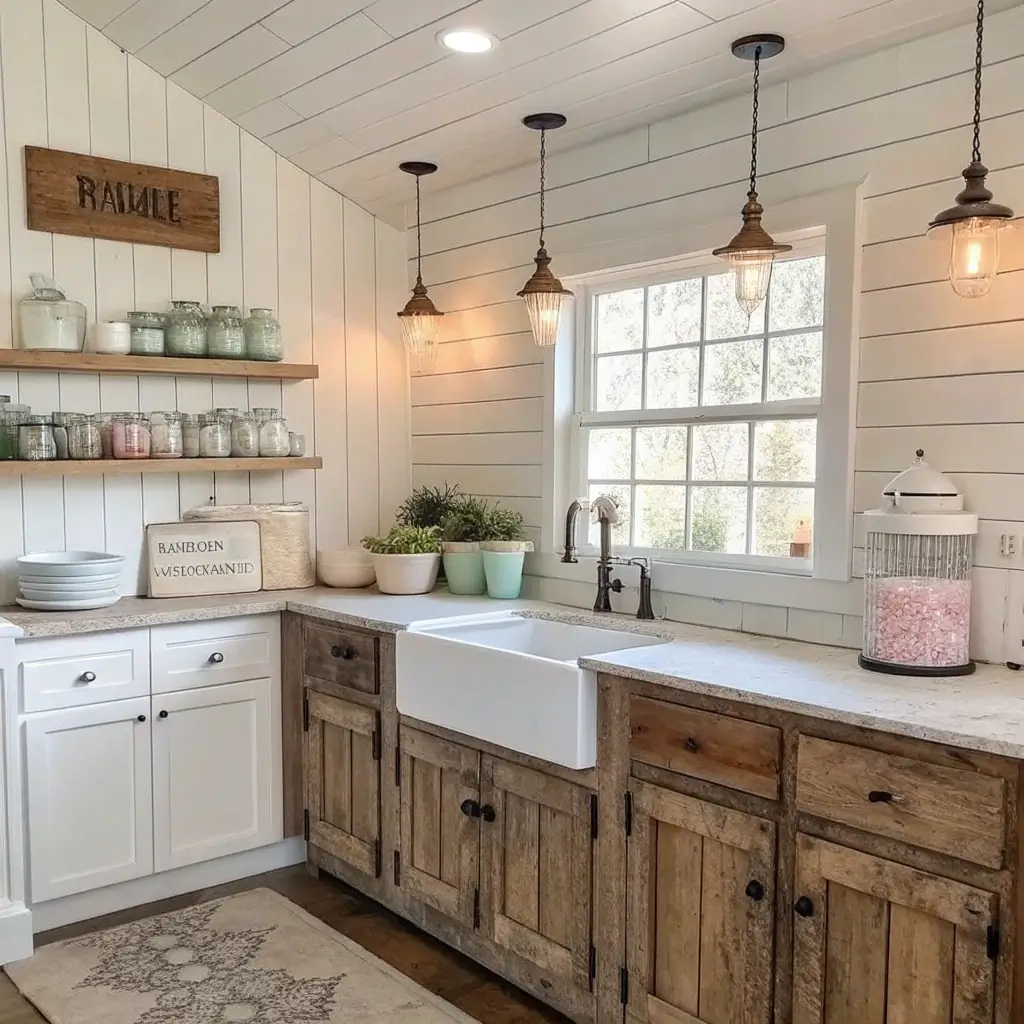
Shiplap had its moment, and you know what? I’m declaring that moment isn’t over. Despite what trend forecasters say, shiplap remains a staple of cottage and farmhouse kitchens when done thoughtfully.
The key is using shiplap as an accent rather than plastering it on every surface. Less is more, friends. Consider shiplap for:
- A single accent wall behind open shelving
- The backsplash area (with proper sealing for moisture)
- Inside a breakfast nook for a cozy enclosure
- On a ceiling for unexpected visual interest
- Behind a range hood as a dramatic backdrop
Orientation options:
- Horizontal (classic and most common)
- Vertical (makes ceilings feel higher)
- Diagonal (bold and modern cottage)
Color choices extend beyond white, though white remains beautiful. Consider:
- Soft gray for a sophisticated take
- Pale sage or blue for subtle color
- Natural unstained wood for rustic warmth
- Black shiplap (yes, really) for dramatic contrast
Installation tip: If you’re DIY-ing your shiplap, don’t stress about perfect spacing between boards. Those small gaps are actually part of the charm and allow the wood to expand naturally with humidity changes. My husband and I installed shiplap in our kitchen nook last spring, and the “imperfections” make it look authentically aged.
Cozy Textiles & Kitchen Rugs
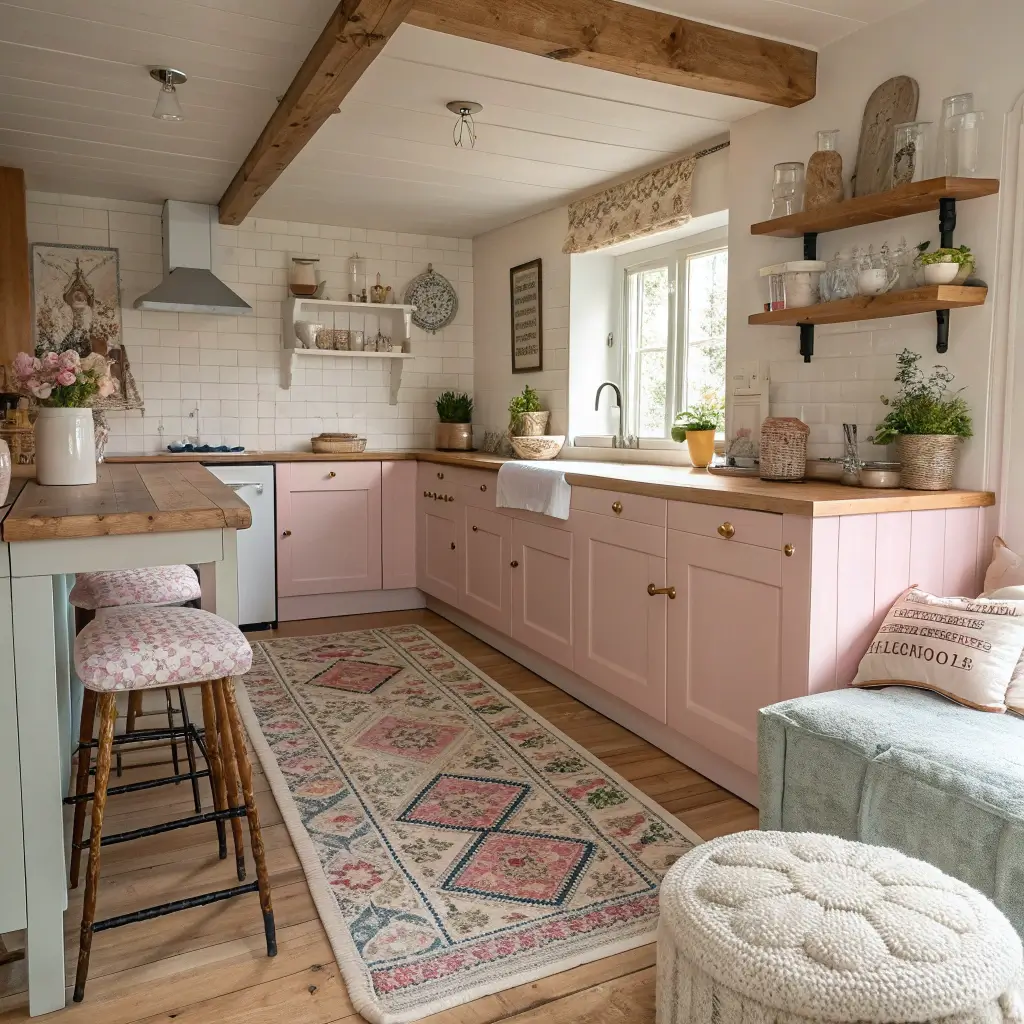
Kitchens don’t usually get the textile treatment that living rooms and bedrooms do, but cottage kitchens break that rule beautifully. Layering soft, inviting textiles throughout your kitchen space creates warmth and visual comfort.
Essential textiles for cottage kitchens:
- Runner rugs in front of the sink and stove
- Layered vintage rugs for an eclectic, collected look
- Cloth napkins displayed in baskets or rolled in rings
- Tea towels in pretty patterns hanging from hooks
- Cushions and throws in breakfast nook seating
- Curtains or Roman shades in natural fabrics
When choosing kitchen rugs, prioritize washability and durability. I love the look of vintage Turkish rugs, but my practical side appreciates machine-washable options from brands like Ruggable that mimic that aesthetic.
Pattern mixing is encouraged in cottage style. Don’t be afraid to combine florals with stripes, plaids with toile, or geometric prints with botanical motifs. The secret is sticking to a cohesive color palette that ties everything together.
Natural materials reign supreme:
- Linen for curtains and napkins
- Cotton for everyday textiles
- Jute or sisal for rugs
- Wool for accent throws
One of my favorite cottage kitchen moves is hanging a collection of vintage tea towels on decorative hooks instead of hiding them in a drawer. They’re functional, pretty, and easy to swap out seasonally.
Also Read: 15 Charming Small Cozy Kitchen Ideas for Tiny Spaces
Mason Jar & Glass Storage Ideas
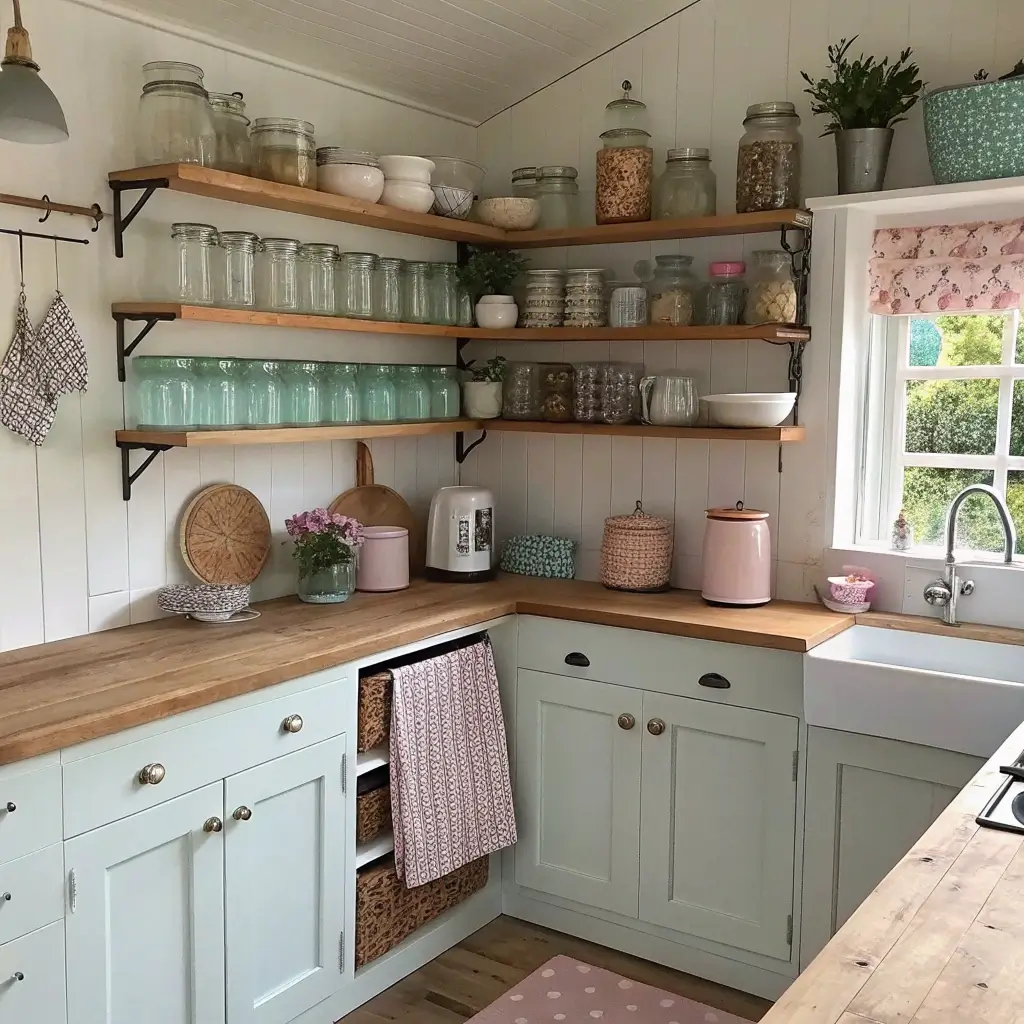
Mason jars are the cottage kitchen’s best friend. There, I said it. And I’m not ashamed. These humble glass containers have been storing kitchen staples for over a century, and their charm hasn’t diminished one bit.
Creative ways to use mason jars and glass storage:
- Dry goods display – flour, sugar, rice, pasta, beans
- Spice storage – especially with chalkboard labels
- Fresh flower vases – because obviously
- Utensil holders on the counter
- Drinking glasses – why not?
- Light fixtures – pendant lights made from jars are adorable
- Herb gardens – wall-mounted jar planters
Beyond mason jars, consider other vintage glass storage options:
- Apothecary jars with glass lids
- French Weck canning jars
- Vintage cookie jars as treat containers
- Glass cloches for covering baked goods
- Antique bottles displayed decoratively
Styling tips for glass storage:
Arrange jars by height for visual rhythm. Use uniform containers for a cohesive look, or mix different shapes for eclectic charm. Clear glass shows contents beautifully, but tinted glass (amber, green, blue) adds color and protects light-sensitive items.
I keep my most photogenic dry goods in jars on open shelving and hide the ugly stuff (looking at you, protein powder) in closed cabinets. Strategic storage is the cottage way!
Wooden Beams & Ceiling Details
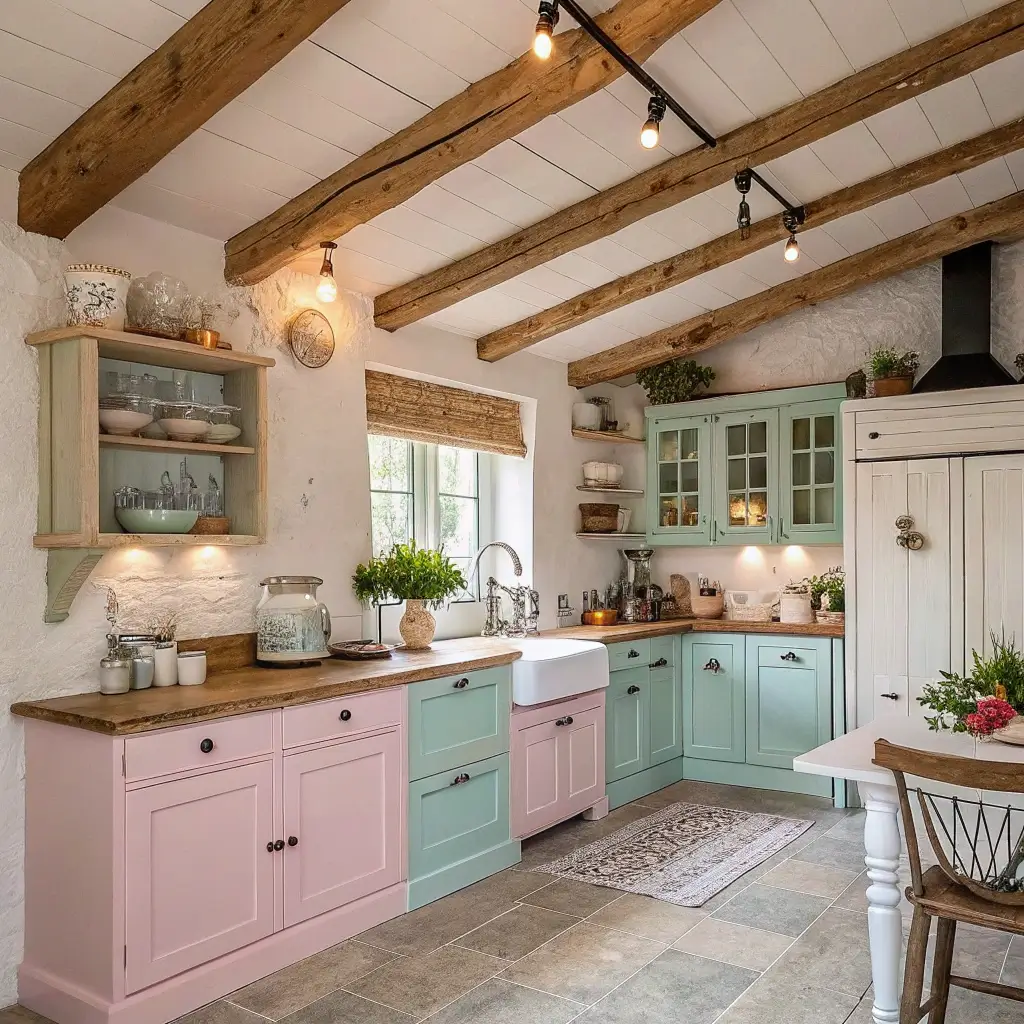
Look up! Your ceiling is prime real estate for cottage character, and nothing delivers quite like exposed wooden beams. Whether original to your home or added for effect, beams create instant architectural interest and that coveted old-world charm.
Options for ceiling details:
- Exposed structural beams – the holy grail if your home has them
- Decorative faux beams – lightweight and surprisingly convincing
- Reclaimed wood planking – covers entire ceiling for drama
- Box beams – hollow structures that look substantial
- Painted beams – white or cream for a lighter cottage feel
Beam placement strategies:
- Parallel beams running the length of the room
- Grid patterns for coffered-style ceilings
- Single statement beam over an island
- Beams framing a light fixture installation
If adding beams feels too ambitious, consider other ceiling details:
- Beadboard planking in white or painted colors
- Pressed tin tiles for vintage character
- A bold paint color that draws the eye upward
- Decorative medallions around light fixtures
Real talk: I installed three faux beams in my kitchen using lightweight foam products, and guests constantly ask if they’re original to the house. With proper staining and distressing techniques, even budget-friendly options look completely authentic. The before-and-after difference was genuinely shocking.
Cottage Garden Herb Corners
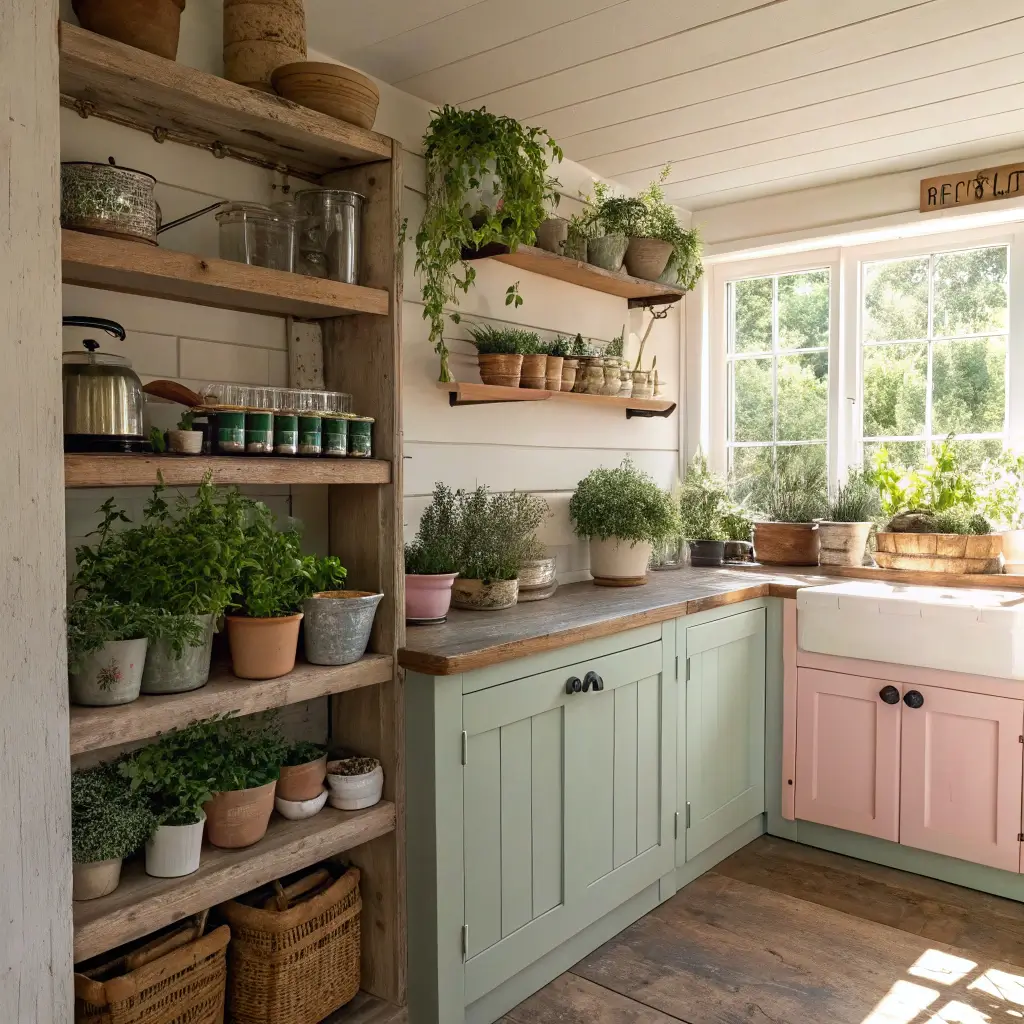
Finally, let’s talk about bringing the outdoors inside with a cottage garden herb corner. Nothing captures the cottage spirit quite like fresh herbs within arm’s reach while you’re cooking. It’s practical, beautiful, and smells absolutely divine.
Ways to create your herb corner:
- Windowsill planters in terracotta or ceramic pots
- Hanging herb gardens from ceiling or wall hooks
- Tiered plant stands in a sunny kitchen corner
- Built-in herb boxes below windows
- Mason jar wall planters for vertical gardens
- Repurposed vintage containers as herb pots
Best herbs for indoor cottage gardens:
- Basil (needs lots of sun)
- Mint (grows like crazy, keep it contained)
- Rosemary (drought-tolerant and fragrant)
- Thyme (compact and pretty)
- Parsley (both flat and curly varieties)
- Chives (edible flowers are a bonus!)
Styling beyond herbs:
Mix in small flowering plants, trailing ivy, or even tiny potted roses for variety. Display on a vintage wooden crate or ladder shelf. Add hand-lettered plant markers made from painted rocks or wooden stakes.
The cottage garden aesthetic extends to floral arrangements on your countertops and table too. Keep a vintage pitcher filled with whatever flowers are blooming—garden roses, wildflowers, grocery store bouquets. The casualness is the point.
My personal system: I rotate herbs seasonally and keep a small compost container nearby (hidden in a cute ceramic crock, of course). This way, my herb corner stays healthy and productive year-round.
Wrapping It All Up
So there you have it—fifteen ways to transform your kitchen into the cozy cottage sanctuary you’ve been dreaming about. From rustic wooden shelving to fresh herb corners, every element works together to create a space that feels warm, inviting, and authentically yours.
The beauty of cottage style lies in its imperfection. This isn’t about creating a showroom-perfect kitchen—it’s about crafting a space that tells your story, welcomes your people, and makes cooking feel like less of a chore and more of a pleasure.
Start with one or two ideas that resonate most with you. Maybe it’s finally installing that pendant lighting you’ve bookmarked, or perhaps it’s as simple as gathering some woven baskets and mason jars. Small changes compound into big transformations.
And remember—your cottage kitchen doesn’t need to happen overnight. Some of my favorite pieces took years to find at estate sales and antique markets. That collected-over-time quality is exactly what makes cottage kitchens feel so special and personal.
Now go make yourself a cup of tea, flip through some inspiration photos, and start dreaming about your coziest kitchen ever. You’ve got this! 🙂