
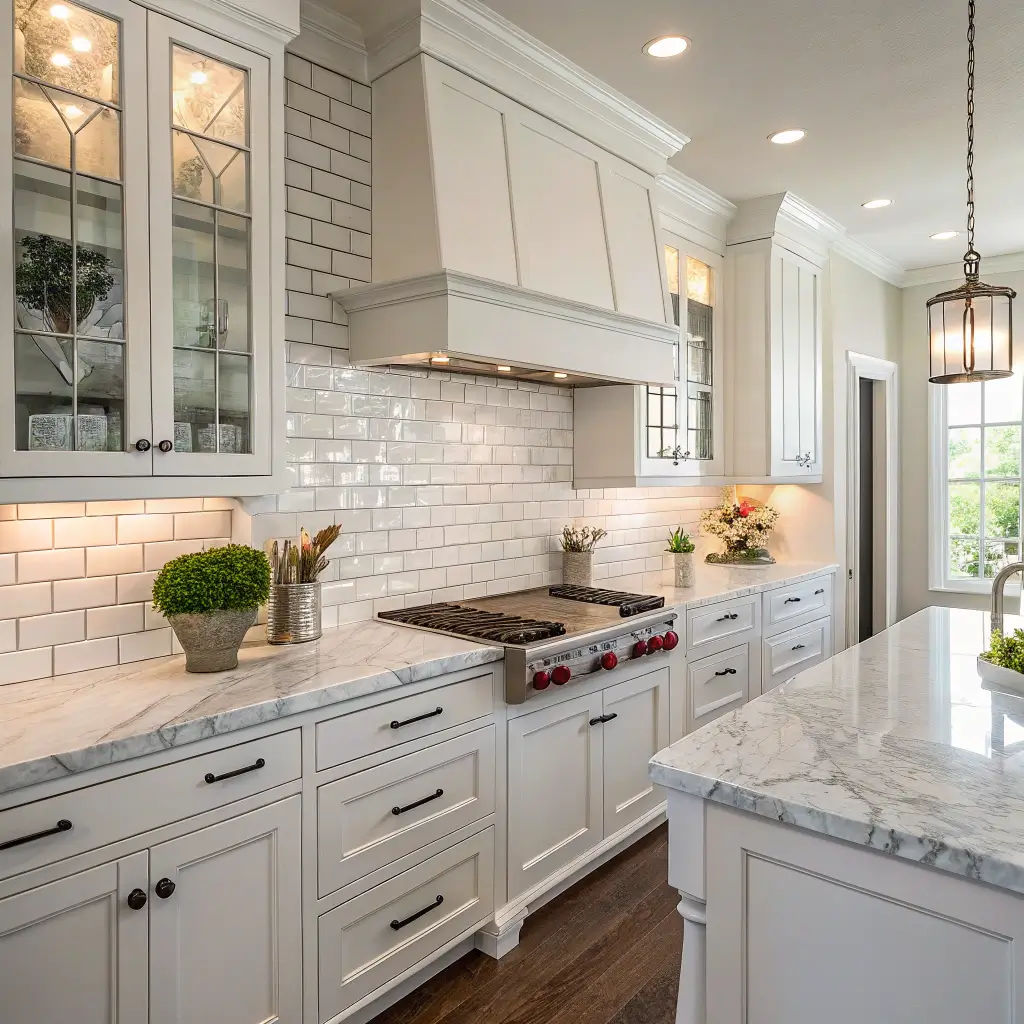
15 Minimalist White Subway Tile Kitchen Backsplash Inspirations

Look, I get it. You’ve been scrolling through Pinterest for hours, saving every gorgeous kitchen photo you stumble across, and somehow you keep coming back to the same thing—white subway tile. There’s something almost magnetic about those clean, simple rectangles that makes your heart skip a beat. And honestly? You’re onto something brilliant.
I remember standing in my own kitchen about three years ago, staring at the dated backsplash that the previous homeowner had installed (we’re talking some questionable 90s terracotta situation), and I knew exactly what I wanted.
White subway tile. It felt almost too simple, too obvious. But here’s the thing—sometimes the classics earn their status for a reason.
Whether you’re renovating your forever home, flipping a property, or just desperately trying to make your rental kitchen look less depressing, white subway tile offers that perfect blend of timeless elegance and minimalist charm.
And the best part? There are way more creative directions you can take with this seemingly simple tile than you might realize.
So grab your coffee (or wine, I don’t judge), and let’s explore fifteen stunning ways to incorporate white subway tile into your kitchen backsplash. Trust me, by the end of this, you’ll have enough inspiration to finally make that decision you’ve been putting off.
Classic White Subway Tile Kitchen Backsplash Ideas
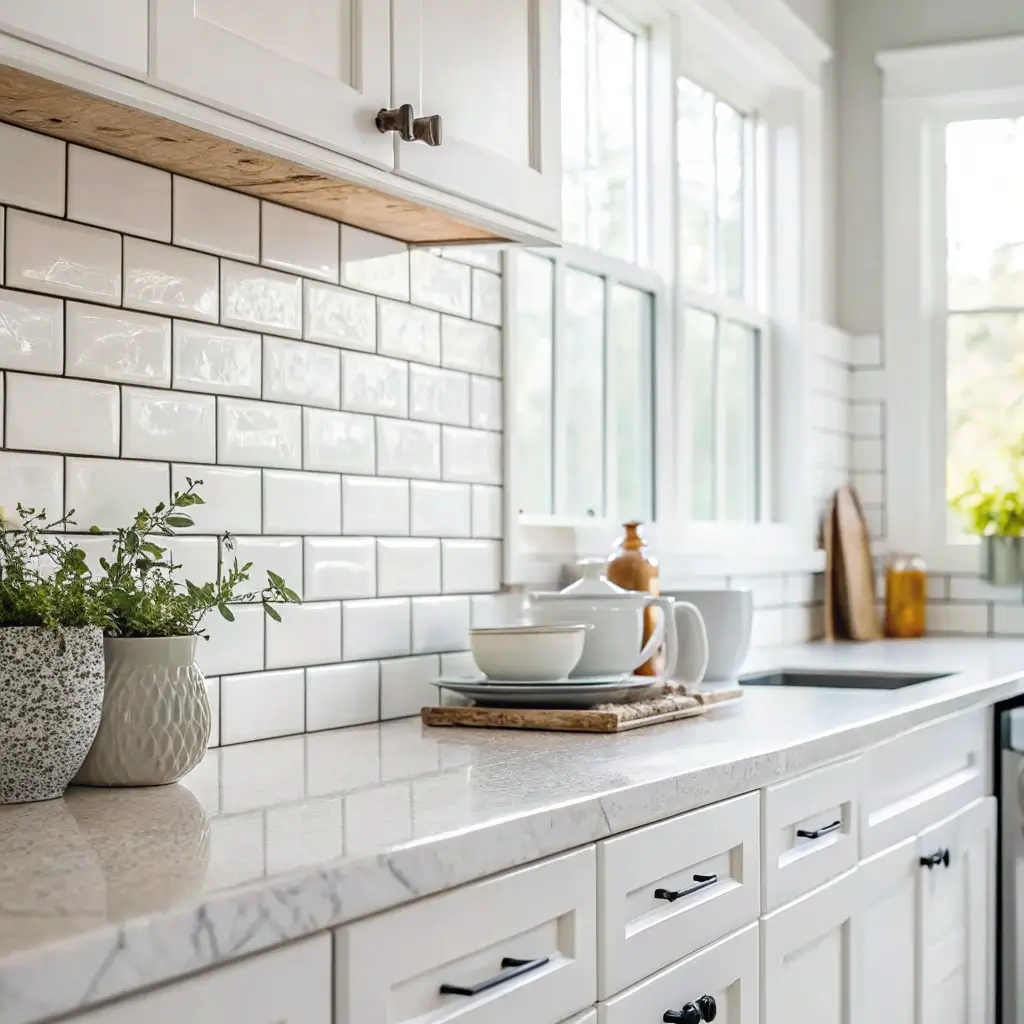
Let’s start with the OG—the classic white subway tile layout that started this whole obsession. We’re talking about that traditional 3×6 inch tile laid in a running bond pattern (that’s the fancy term for the staggered brick-like arrangement, FYI).
Why Classic Never Gets Old
There’s a reason this pattern has been around since the early 1900s when it first appeared in New York City subway stations. It works. It just works. The horizontal lines create a sense of movement and width, making even the tiniest galley kitchen feel more spacious.
When I installed classic subway tile in my first apartment’s kitchen, I went with a simple white tile and matching white grout. The result? A seamless, clean look that made the space feel like it had doubled in size. Plus, it photographed beautifully for my real estate listing when I sold the place—just saying.
Key Elements for Nailing the Classic Look
- Tile size: Stick with the traditional 3×6 inches for authenticity
- Grout color: White or off-white for a seamless appearance
- Grout width: Keep it thin (1/16 inch) for a refined finish
- Height: Extend from countertop to upper cabinets for maximum impact
The beauty of the classic approach lies in its versatility. It pairs equally well with shaker cabinets, modern flat-front doors, or even vintage-inspired designs. You literally cannot go wrong here.
Modern Minimalist White Subway Tile Backsplash Designs
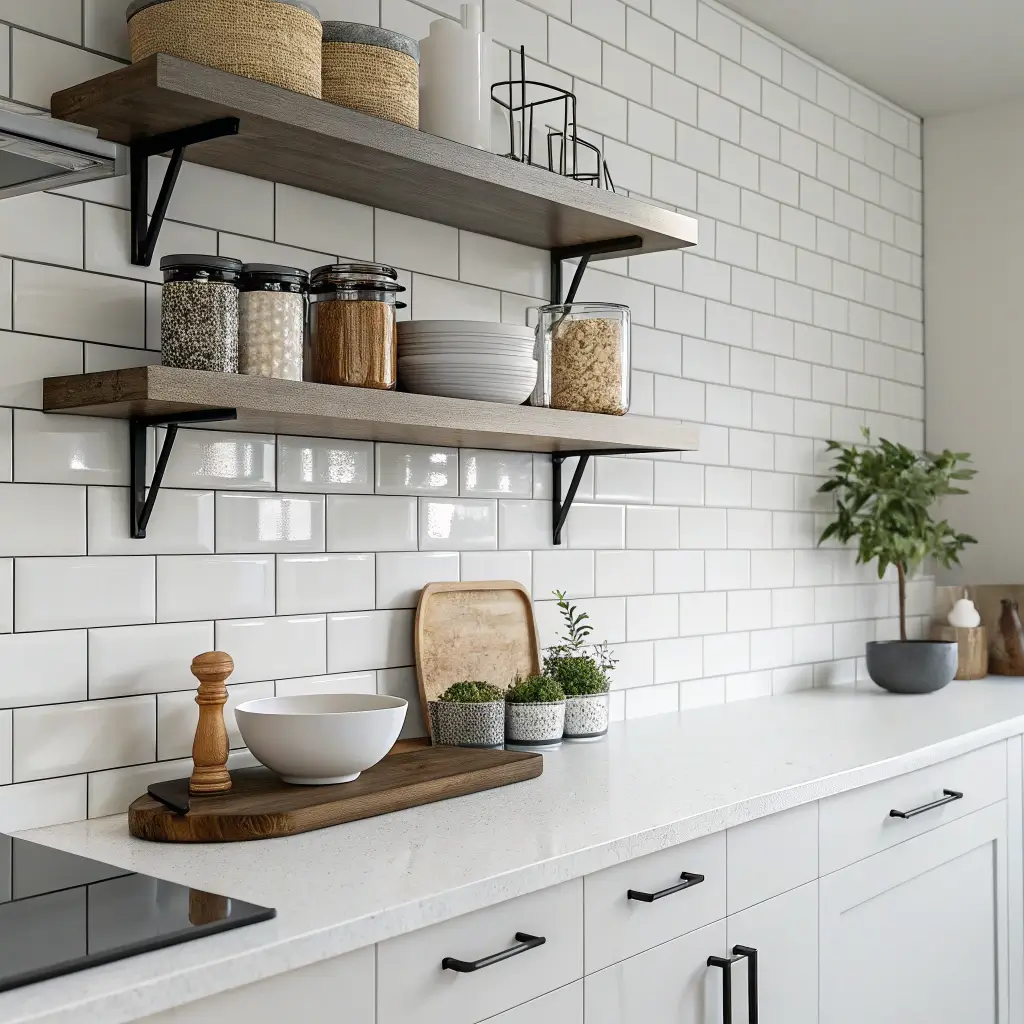
Now, if you’re the type who gets excited about clean lines, negative space, and the phrase “less is more,” this section is your happy place. Modern minimalist takes the classic subway tile and strips away any unnecessary elements.
The Art of Restraint
Modern minimalist design isn’t about being boring—it’s about being intentional. Every element in your kitchen should earn its place. When applying this philosophy to your subway tile backsplash, consider extending the tile from counter to ceiling without interruption. No decorative trim, no accent tiles, just pure, unbroken white.
I’ve seen this approach absolutely transform kitchens. One of my friends recently renovated her condo kitchen using large-format subway tiles (4×12 inches) instead of the traditional size. The larger tiles mean fewer grout lines, which creates that ultra-sleek, almost commercial kitchen vibe she was going for. And honestly? It looks incredible.
Features of Modern Minimalist Subway Tile
- Larger tile formats reduce visual clutter
- Matte or satin finishes over glossy for a sophisticated look
- Rectified edges for perfectly uniform grout lines
- Minimal accessories on countertops to let the tile shine
The trick with minimalism is ensuring your tile work is absolutely flawless. There’s nowhere to hide imperfections when your design is this stripped back. So if you’re going DIY (more on that later), practice your technique before tackling the main event.
Farmhouse Style White Subway Tile Kitchen Inspiration
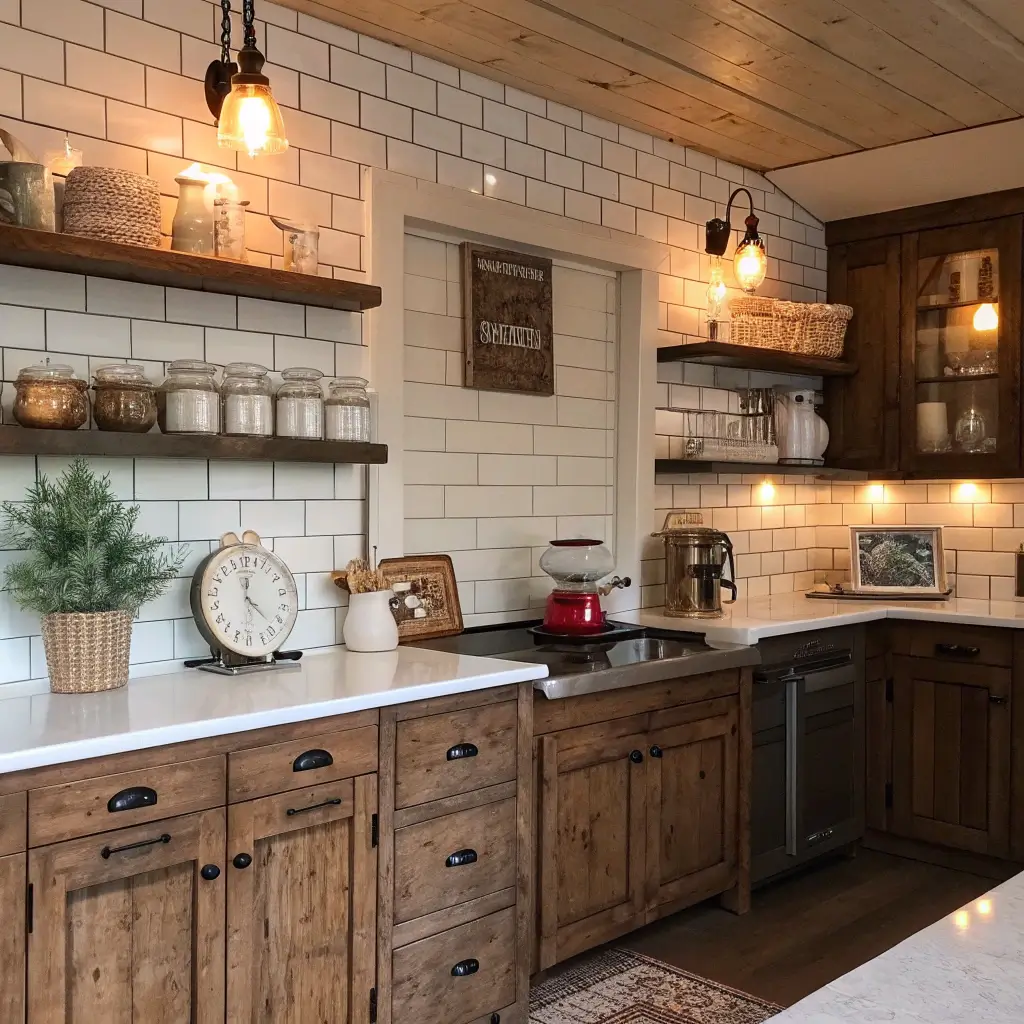
Ah, farmhouse style. Some people have declared it dead, but I’m here to tell you those people are wrong. When done right—and I emphasize right—farmhouse kitchens with white subway tile create the kind of warm, inviting spaces that make people want to linger over coffee.
Balancing Rustic and Refined
The key to farmhouse subway tile success lies in the supporting cast. Your white tile provides the clean backdrop, but it’s the other elements that bring the rustic charm. Think warm wood floating shelves, vintage-inspired hardware, and maybe a farmhouse sink that’s seen some things.
Have you ever walked into a farmhouse kitchen that just feels like a hug? That’s what we’re going for here. The white subway tile keeps everything feeling fresh and clean while the wood tones and vintage elements add soul and character.
Farmhouse Subway Tile Must-Haves
- Handmade or slightly irregular tiles for that imperfect charm
- Visible grout lines in white or light gray
- Open shelving displaying collected ceramics
- Apron-front sink as a focal point
- Butcher block or wood countertops to warm things up
I’ll be honest—I went through a hardcore farmhouse phase around 2018, and while I’ve toned it down since then, the bones of that aesthetic still speak to me. There’s something genuinely comforting about it.
White Subway Tile with Contrasting Grout Ideas
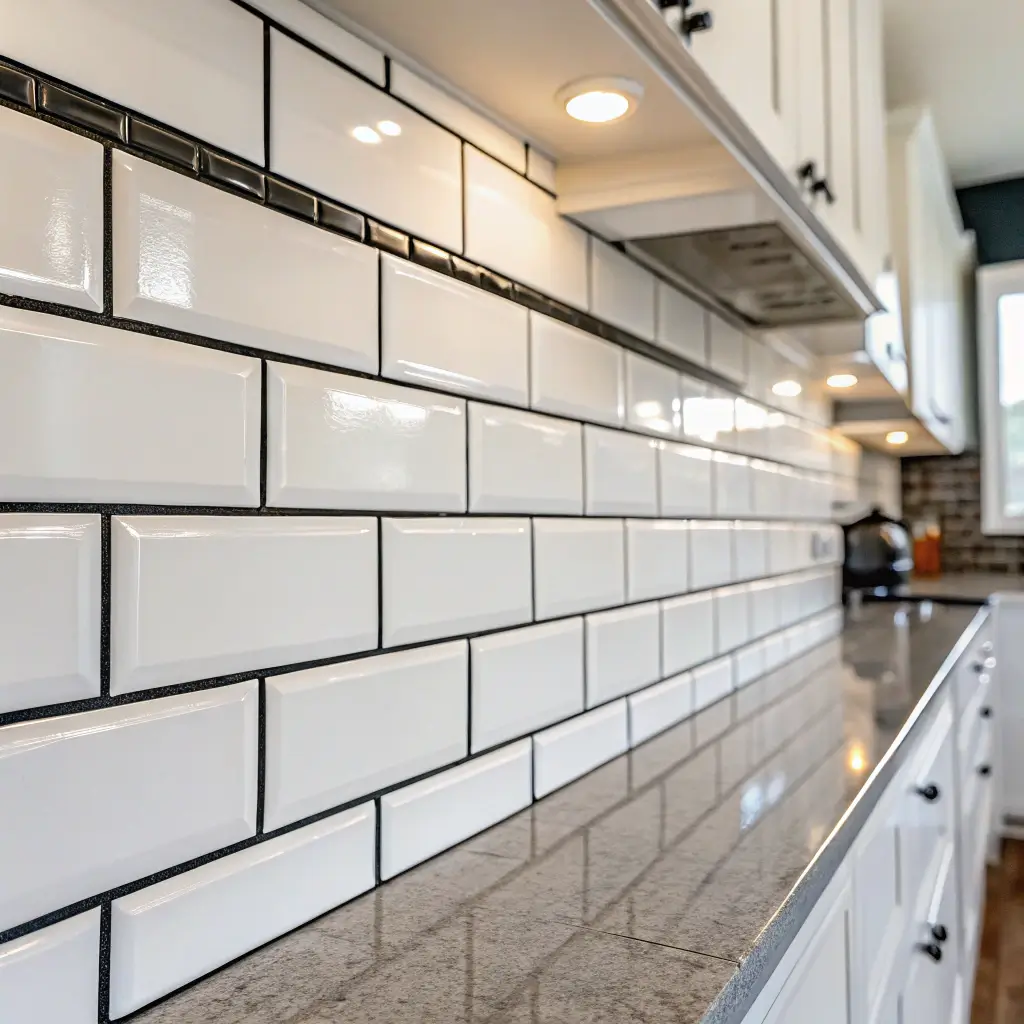
Okay, this is where things start to get really fun. Using contrasting grout with your white subway tile is like adding eyeliner to your kitchen—it defines the features and makes everything pop.
The Grout Makes the Statement
Black grout with white subway tile creates a bold, graphic look that’s been trending hard for the past few years. And you know what? It’s not going anywhere. This combination highlights each individual tile, turning your backsplash into more of an art piece than just a functional surface.
But black isn’t your only option. Gray grout offers a softer contrast that’s easier to maintain (hiding dirt better than white while still being visible against the tile). I’ve even seen navy blue grout that looked surprisingly sophisticated in the right setting.
Contrasting Grout Options Ranked
- Black grout: Maximum drama, modern edge, shows every tile
- Dark gray grout: Balanced contrast, easier maintenance, versatile style
- Charcoal grout: Subtle definition without overwhelming the space
- Warm gray grout: Perfect for transitional kitchens wanting gentle contrast
One thing I learned the hard way—contrasting grout requires impeccable tile installation. Every slightly crooked tile or uneven spacing becomes glaringly obvious. So unless you’re confident in your skills, this might be a job for the professionals.
Small Kitchen White Subway Tile Backsplash Solutions
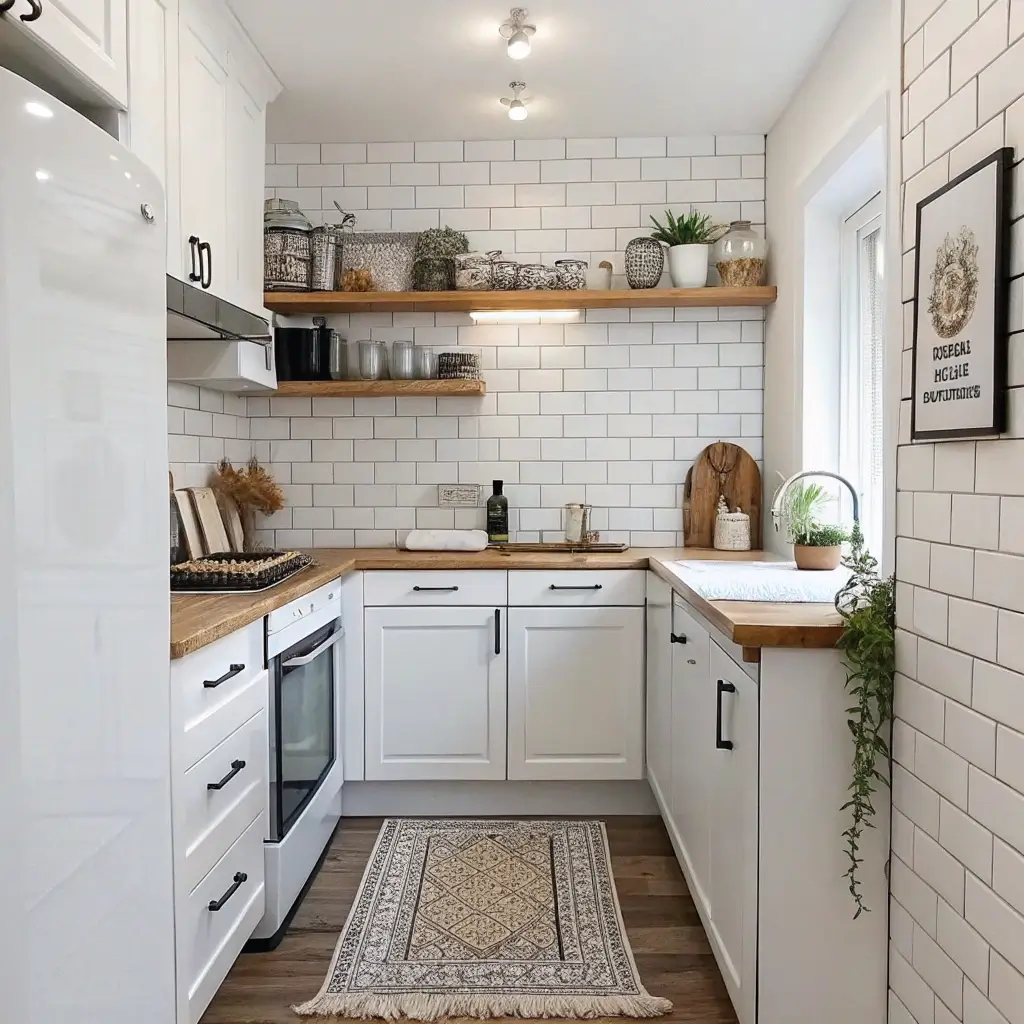
Got a kitchen the size of a closet? Welcome to the club. Small kitchens present unique challenges, but white subway tile is actually one of your greatest allies in making that compact space work harder.
Maximizing Visual Space
White reflects light (revolutionary observation, I know), and when you cover your walls in reflective white tile, you’re essentially creating a surface that bounces light around your kitchen. This makes the space feel brighter and, consequently, larger.
Glossy finishes amplify this effect even more. In small kitchens, I always recommend going with a high-gloss or polished subway tile. The reflective surface catches light from windows, under-cabinet fixtures, and overhead lighting, distributing it throughout the room.
Small Kitchen Subway Tile Strategies
- Extend tile to the ceiling to draw the eye upward
- Use vertical stack layouts to create the illusion of height
- Choose glossy finishes for maximum light reflection
- Keep grout color consistent with tile for a seamless look
- Avoid busy patterns that can overwhelm limited space
I once helped a friend tile her tiny apartment kitchen—we’re talking maybe 50 square feet of actual workspace. We ran white subway tile from the counters all the way up, wrapped it around the window, and suddenly the kitchen felt twice as big. The transformation was genuinely shocking.
Elegant White Subway Tile Backsplash for Luxury Kitchens
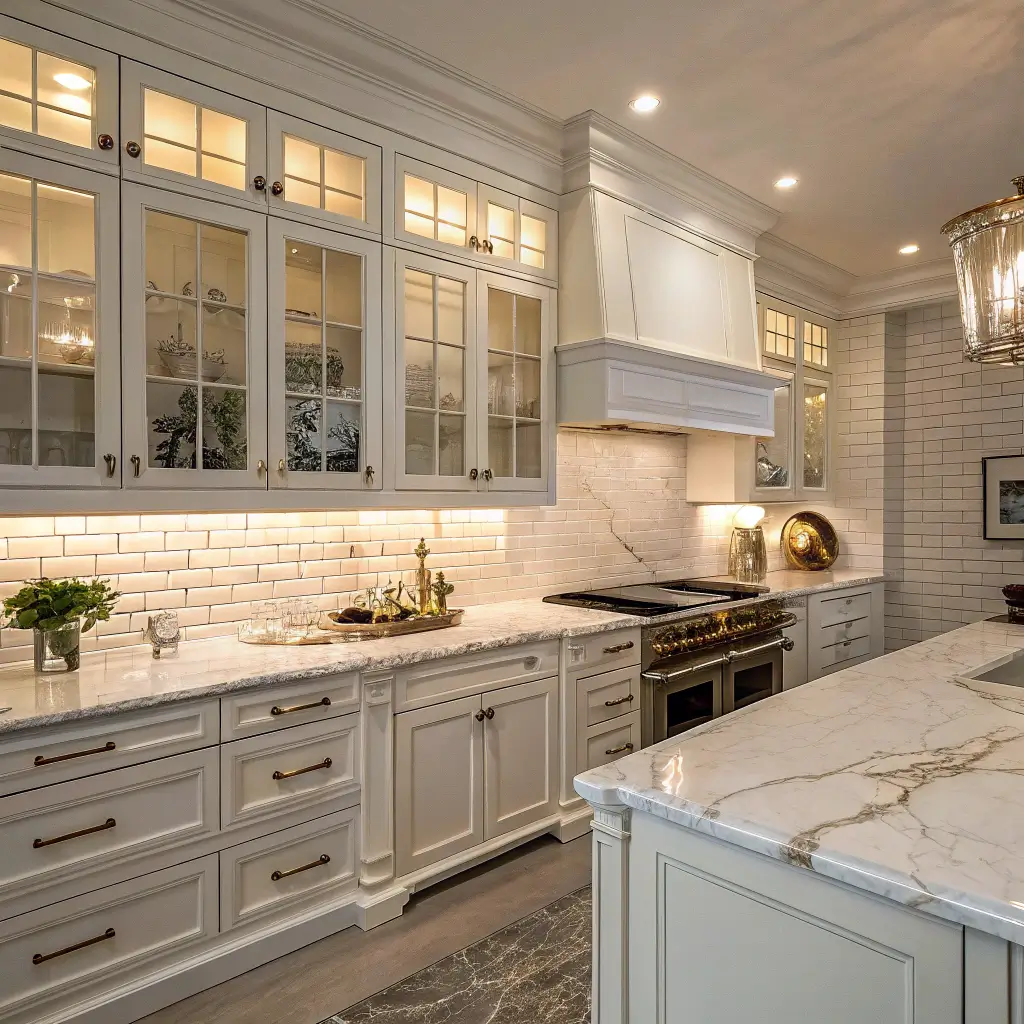
Who says subway tile is only for casual spaces? When executed with the right materials and details, white subway tile can look downright luxurious. We’re talking the kind of kitchen that belongs in an architectural magazine.
Elevating the Everyday
The secret to luxury subway tile lies in the details. Beveled edges add depth and dimension, creating shadows that give the tile presence and weight. Handmade tiles with slight variations in color and texture read as artisanal and high-end rather than mass-produced.
Consider your tile finish carefully too. A crackle glaze subway tile offers that old-world elegance that screams expensive taste. These tiles feature a network of fine cracks in the glaze that catch light differently throughout the day, adding visual interest and sophistication.
Luxury Subway Tile Elements
- Beveled or handmade tiles for dimensional interest
- Crackle or pearl finishes for unique character
- Polished nickel or brass hardware to complement the tile
- Marble countertops as the perfect pairing
- Decorative trim pieces at edges and corners
IMO, the biggest mistake people make when trying to achieve a luxury look is cheaping out on installation. Hire someone who knows what they’re doing. Those perfectly aligned grout lines and flawless corners make all the difference between “nice tile” and “wow, this kitchen is stunning.”
Also Read: 15 Fabulous White Countertops Kitchen Ideas for Every Style
White Subway Tile with Patterned Layout Inspirations
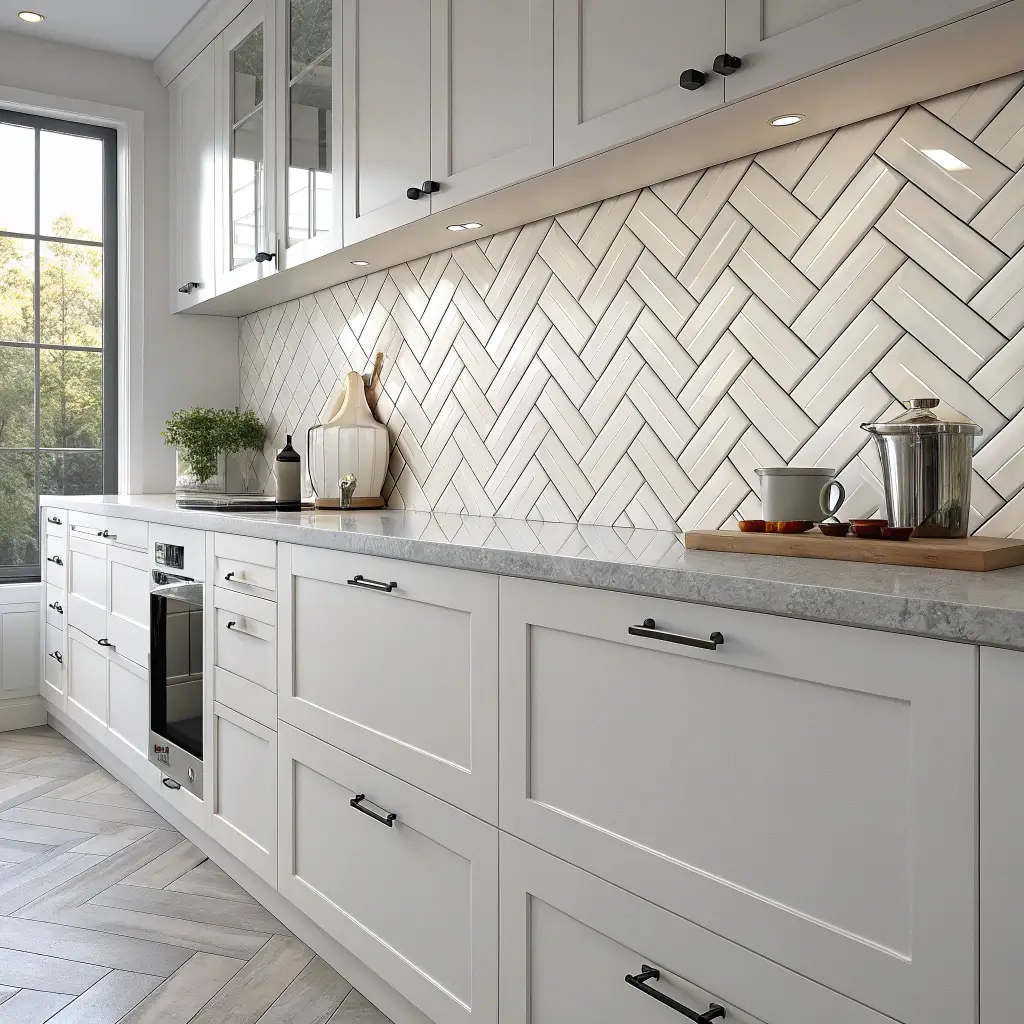
Here’s where we break free from the running bond and get creative. Different tile layouts can completely transform the personality of your backsplash while using the exact same materials.
Beyond the Basic Brick Pattern
The herringbone pattern has become incredibly popular, and for good reason. It adds movement and visual interest while maintaining that clean, minimalist aesthetic. Laying subway tiles at 45-degree angles to each other creates a zigzag pattern that’s sophisticated and dynamic.
Then there’s the vertical stack—tiles arranged in straight columns rather than staggered rows. This layout feels decidedly more modern and can make low ceilings appear higher. It’s a small change that makes a big impact.
Popular Subway Tile Patterns
- Herringbone: Dynamic, elegant, and eye-catching
- Vertical stack: Modern, clean, and height-enhancing
- Horizontal stack: Contemporary and grid-like
- Diagonal: Adds energy and unexpected visual interest
- Basket weave: Traditional with textural appeal
- Chevron: Similar to herringbone but with tiles cut at angles
Ever wondered why some kitchens feel more interesting than others, even when using the same materials? Pattern choice is often the answer. A simple switch from running bond to herringbone can take your kitchen from “nice” to “how did you do that?”
Budget-Friendly White Subway Tile Kitchen Ideas
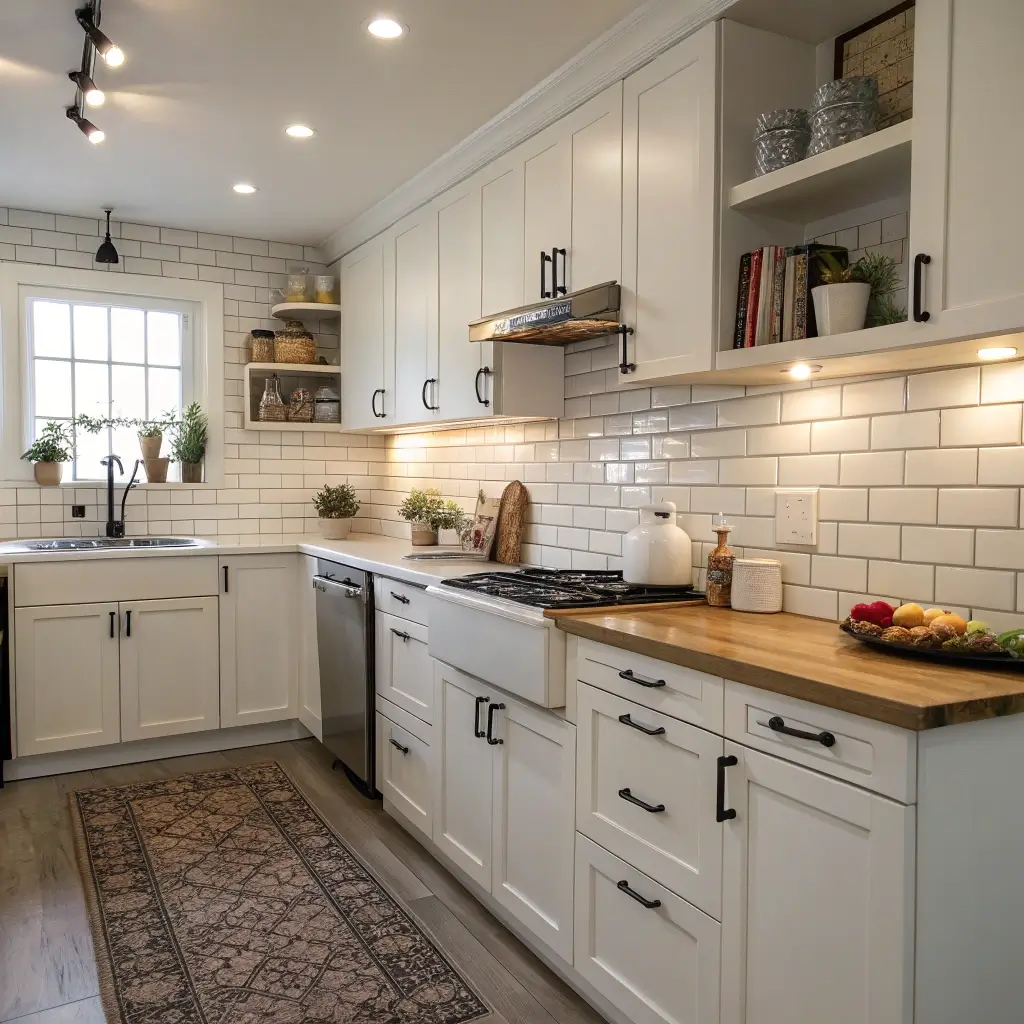
Let’s talk money, because not everyone has an unlimited renovation budget (shocking, I know). The good news? White subway tile is one of the most affordable backsplash options out there, and it doesn’t look cheap. That’s a rare combination.
Getting the Look for Less
Basic white ceramic subway tile can cost as little as $2-5 per square foot. Compare that to natural stone, glass, or designer tiles that run $15-50+ per square foot, and you’re looking at serious savings. Those savings can go toward better countertops, nicer hardware, or that fancy faucet you’ve been eyeing.
I renovated my last kitchen on a seriously tight budget, and the white subway tile backsplash looked like it cost three times what I actually spent. The secret? I splurged on quality grout and took my time with installation. Cheap materials with excellent execution beat expensive materials with sloppy work every single time.
Budget-Saving Tips
- Buy tiles in bulk from home improvement stores during sales
- DIY the installation if you’re handy (see our DIY section below)
- Skip decorative trim and use bullnose edges minimally
- Choose ceramic over porcelain for cost savings
- Purchase extra tiles during the sale to avoid costly small orders later
Remember, a beautiful backsplash doesn’t require a beautiful budget. It requires patience, planning, and a willingness to do some of the work yourself.
White Subway Tile Backsplash with Open Shelving Designs
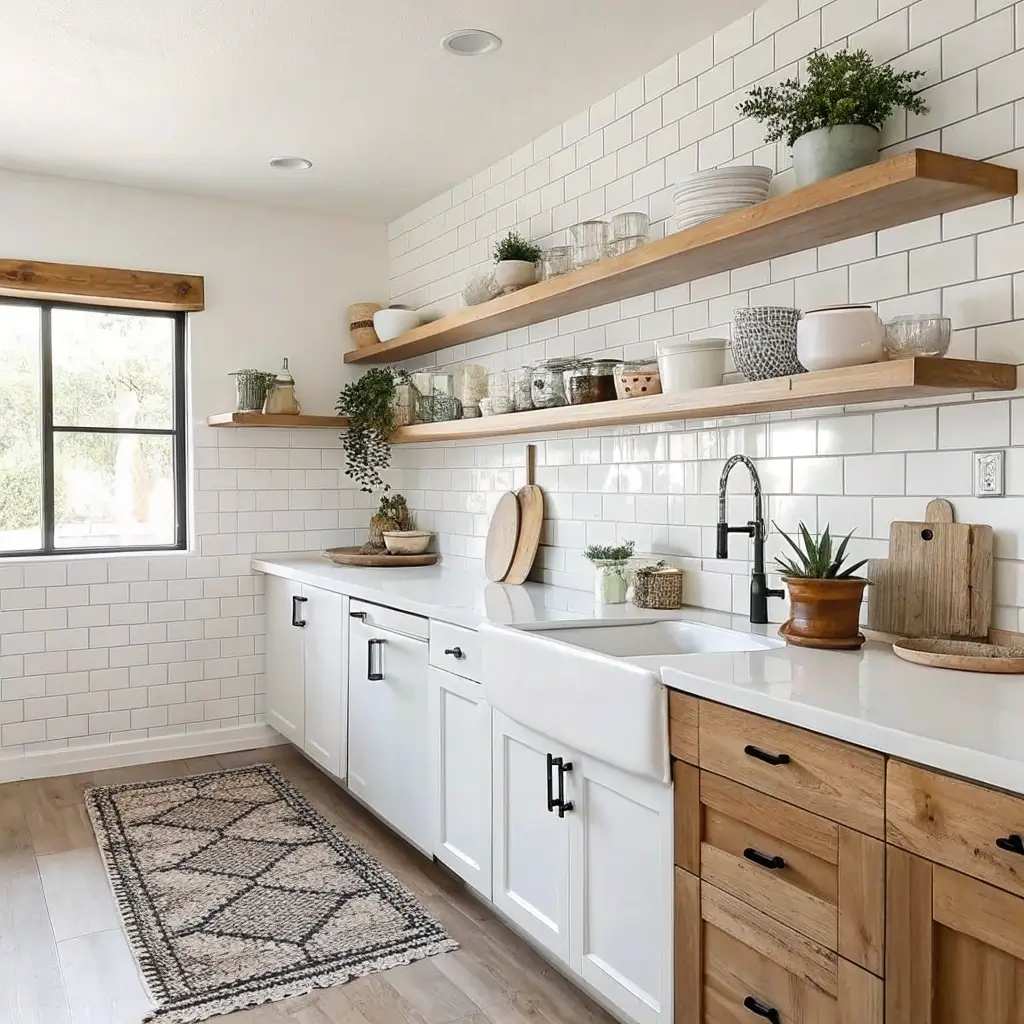
Open shelving and white subway tile go together like peanut butter and jelly. The tile provides the perfect backdrop for displaying your carefully curated collection of dishes, cookbooks, and those matching ceramic canisters you definitely bought for aesthetic purposes.
Creating the Perfect Display
When combining open shelving with subway tile, the tile essentially becomes a gallery wall for your kitchen items. This means you need to extend the tile behind where your shelves will mount. It sounds obvious, but I’ve seen people make this mistake—don’t end your tile right at the shelf brackets.
The contrast between the uniform tile grid and the varied shapes of displayed items creates visual tension in the best possible way. Your grandmother’s vintage mixing bowls pop against the clean white background. Your collection of copper measuring cups becomes a design feature rather than just cookware.
Open Shelving Considerations
- Tile first, then install shelves for the cleanest result
- Floating shelves maintain the minimalist aesthetic
- Wood tones warm up all that white
- Edit your displays ruthlessly—this isn’t storage, it’s styling
- Consider lighting to highlight both tile and objects
One warning: open shelving requires commitment to keeping things organized. If you’re the type whose kitchen descends into chaos after one busy week, maybe reconsider this option. There’s no hiding behind closed cabinet doors here. 🙂
Also Read: 15 Trendy White and Gold Kitchen Ideas for Perfect Decor
White Subway Tile with Colorful Accents Inspiration
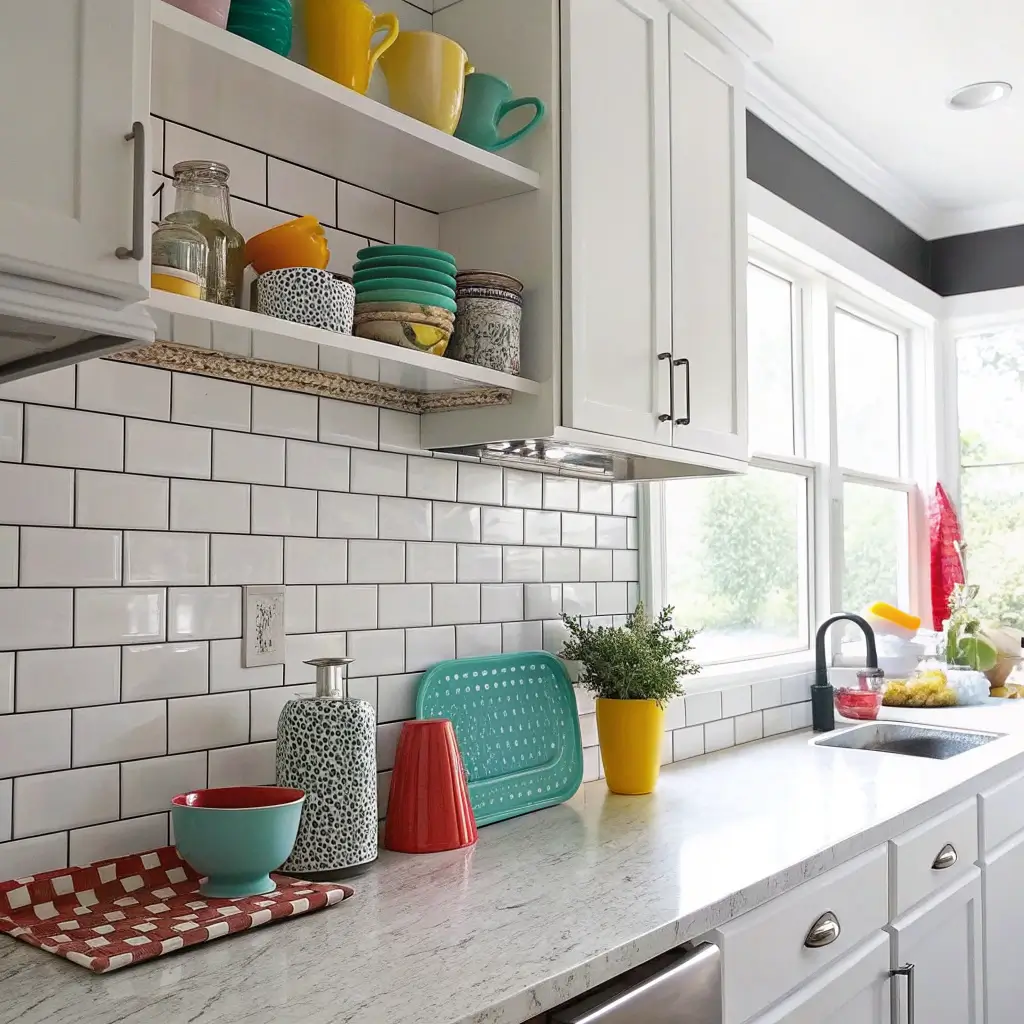
All white everything can feel a little… sterile. If you love the clean base that subway tile provides but want to inject some personality, colorful accents are your answer.
Adding Life to the Neutral Base
The beauty of a white subway tile backsplash is that it serves as a blank canvas. Want to swap out your accent colors seasonally? Go for it. Obsessed with teal this year but might be over it by next spring? No problem. The white tile adapts to whatever you throw at it.
I’ve seen stunning kitchens with white subway tile backgrounds and cobalt blue pendant lights that make the whole space sing. Others incorporate colorful small appliances, vibrant dish towels, or a single strip of patterned accent tile that breaks up the white.
Ways to Add Color
- Colorful grout: Yes, it exists, and it’s bold
- Accent tile strips: Incorporate a row of colored tiles
- Painted walls above tile: Let color show where tile ends
- Colorful hardware: Swap pulls and knobs for statement pieces
- Vibrant accessories: The easiest and most flexible option
The key is restraint. Pick one or two accent colors and commit to them throughout the space. A kitchen rainbow sounds fun in theory but usually translates to visual chaos in practice.
Sleek Contemporary White Subway Tile Kitchen Ideas
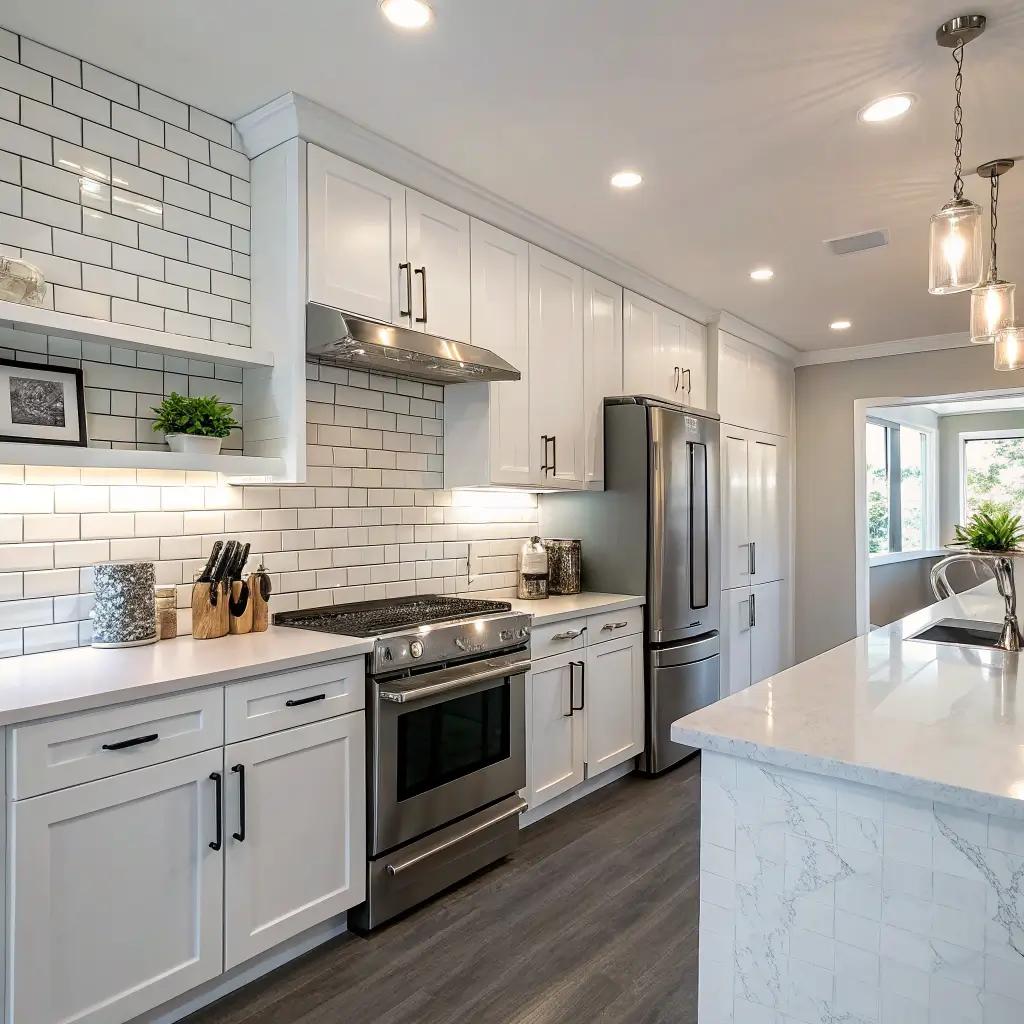
Contemporary design favors innovation, clean lines, and an overall sense of “now.” When applying this aesthetic to subway tile, think about pushing boundaries while maintaining that essential simplicity.
The Contemporary Edge
Contemporary kitchens often feature handleless cabinets, integrated appliances, and minimal ornamentation. Your subway tile should complement this restraint. Consider extra-long format tiles (like 4×16 or even 2×18) for a stretched, horizontal emphasis that reads as decidedly current.
Matte finishes feel more contemporary than glossy ones right now. There’s something about the velvet-like quality of a matte white tile that reads as luxurious and intentional. It absorbs light rather than reflecting it, creating a softer, more sophisticated appearance.
Contemporary Tile Features
- Extended format tiles for fewer grout lines
- Matte or satin finishes for understated elegance
- Minimal grout lines with large-format tiles
- Edge-to-edge installation without decorative trim
- Integrated with waterfall countertops for seamless design
Contemporary style moves fast. What feels cutting-edge today might feel dated in five years. The good news? White subway tile is neutral enough to adapt as trends evolve. Swap your accessories and hardware, and suddenly your contemporary kitchen feels fresh again.
White Subway Tile with Marble Countertop Pairings
This is the combination that launches a thousand Pinterest boards. White subway tile with marble countertops creates that classic, elegant kitchen that never goes out of style. It’s the little black dress of kitchen design.
A Match Made in Design Heaven
The simplicity of subway tile actually highlights the natural beauty of marble. The tile provides a clean, uniform backdrop that lets the marble’s veining and character take center stage. It’s a supporting role that subway tile plays perfectly.
When I was choosing materials for my current kitchen, I knew I wanted Calacatta marble countertops. The question was what to pair them with. After considering everything from Moroccan zellige to geometric patterns, I kept coming back to white subway tile. Why? Because I didn’t want anything to compete with my gorgeous marble.
Making This Pairing Work
- Match undertones: Ensure your white tile complements the marble’s veining
- Consider grout carefully: White grout keeps focus on the marble
- Let marble be the star: Keep tile layout simple
- Balance warm and cool: Match tile temperature to marble tones
- Extend tile behind range: Creates a full visual connection
One tip: bring home tile samples and lay them against your marble selection before committing. White isn’t just white—there are warm whites, cool whites, and everything in between. The wrong undertone can make your marble look dingy or your tile look out of place.
Also Read: 15 Beautiful White and Grey Kitchen Ideas for Every Style
DIY White Subway Tile Kitchen Backsplash Ideas
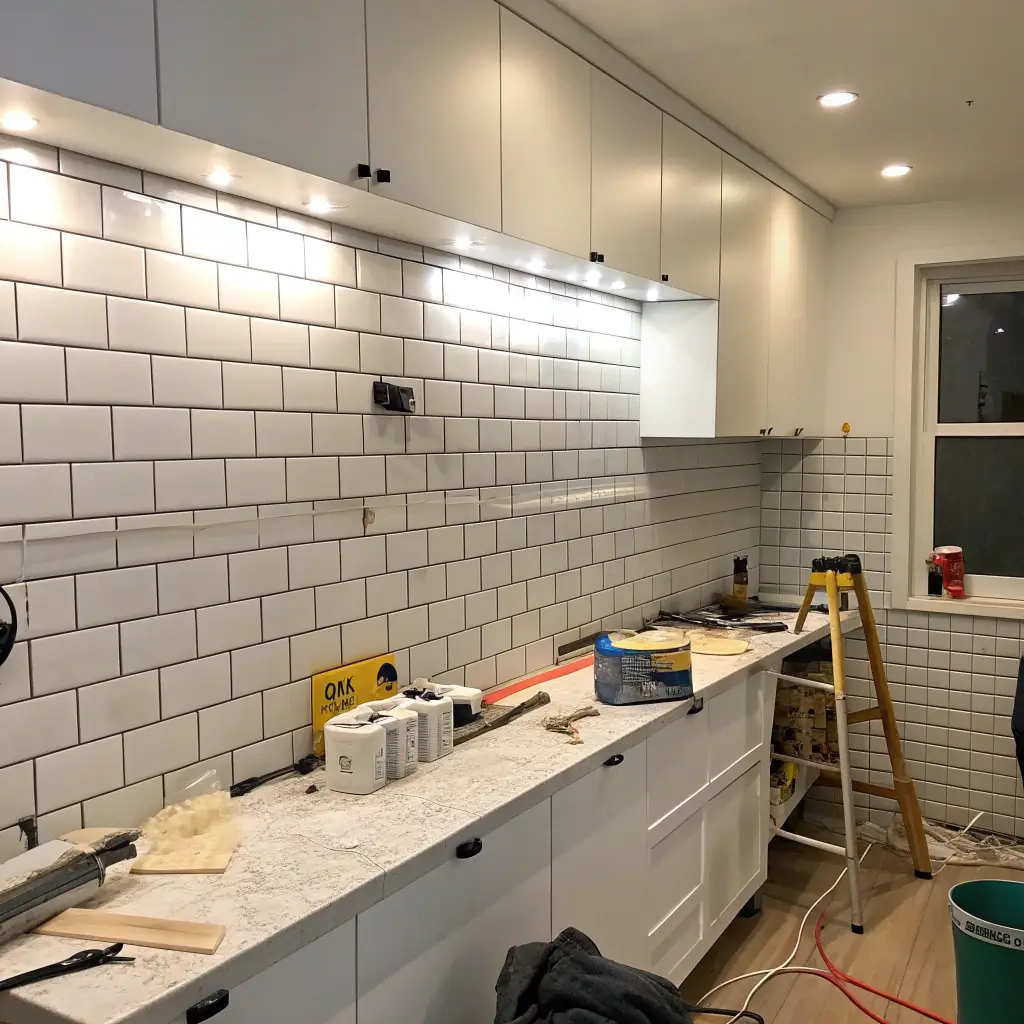
Feeling handy? Installing subway tile yourself can save you hundreds (sometimes thousands) of dollars. Plus, there’s something deeply satisfying about stepping back and admiring a backsplash you installed with your own two hands.
What You’re Getting Into
Let me be real with you—tiling isn’t rocket science, but it does require patience, precision, and a tolerance for standing on your feet for hours. If you’re reasonably handy and willing to do your homework, DIY subway tile installation is absolutely achievable.
I’ve done it myself twice now. The first time was terrifying and took about three times longer than I expected. The second time? Much smoother. Like anything else, practice makes progress.
DIY Essentials Checklist
- Tile saw or wet saw: For clean cuts around outlets and corners
- Tile spacers: Ensures consistent grout lines
- Notched trowel: For spreading thin-set mortar evenly
- Level: Your new best friend
- Grout float: For pressing grout into joints
- Patience: Cannot be purchased but absolutely required
Tips for First-Time Tilers
Start with a plan. Dry-lay your tiles first to figure out your pattern and identify where cuts need to happen. The goal is to avoid small tile slivers at edges—they’re hard to cut and look unprofessional.
Begin tiling in the most visible area and work toward corners and edges where imperfections are less noticeable. And please, please let your thin-set cure completely before grouting. Rushing this step is how backsplashes fail.
White Subway Tile with Black Cabinet Accents
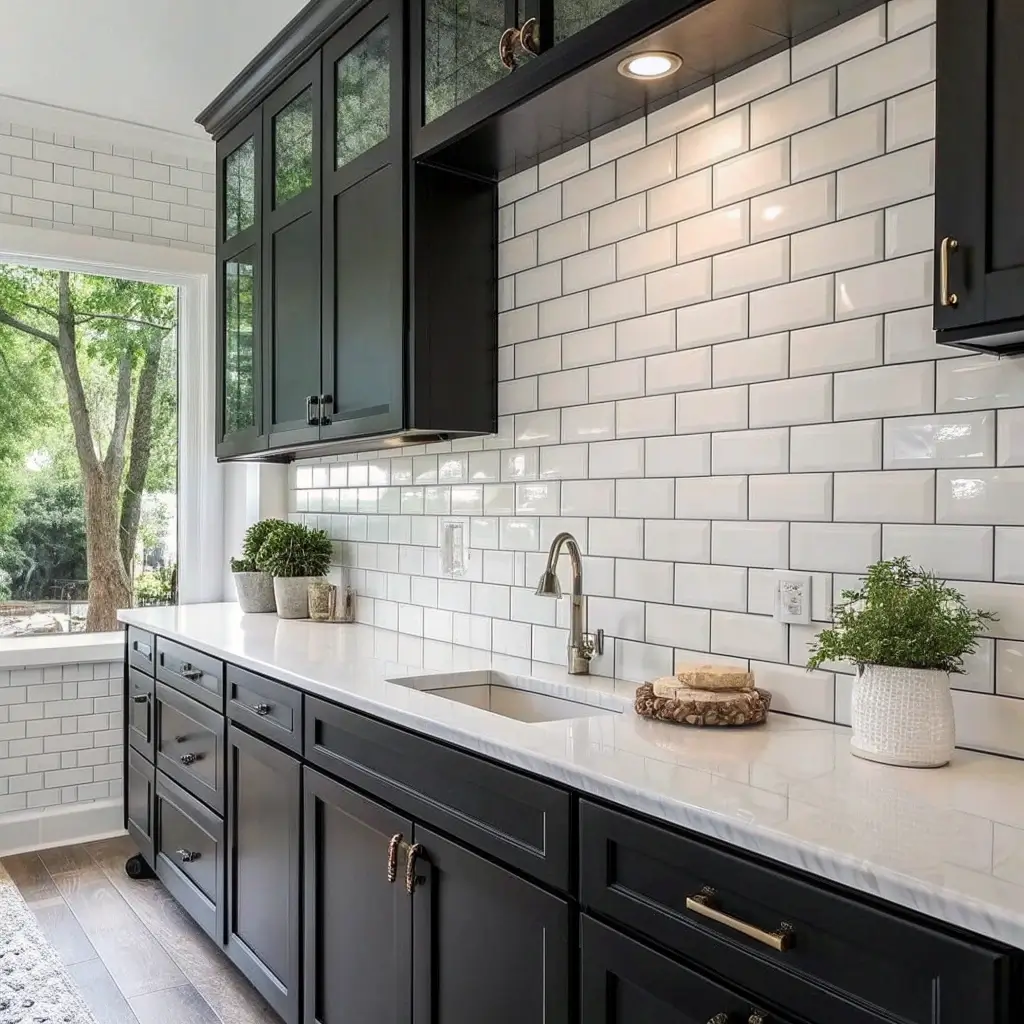
The black and white kitchen has achieved icon status, and for good reason. This high-contrast combination delivers drama without gimmicks, sophistication without stuffiness.
Bold Contrast Done Right
When pairing white subway tile with black cabinets, you’re creating a visual statement. The tile becomes more prominent against the dark cabinetry, each rectangle standing out in sharp relief. It’s graphic, it’s bold, and it’s absolutely stunning when executed properly.
I recently visited a friend’s renovated kitchen featuring matte black lower cabinets, white uppers, and white subway tile throughout. The effect was striking without feeling cold. The key? She added warm brass hardware and wood cutting boards that broke up the stark contrast just enough.
Black and White Kitchen Elements
- Consider mixed cabinet colors: Black lowers, white uppers
- Add metallic warmth: Brass or gold hardware and fixtures
- Incorporate wood tones: Cutting boards, floating shelves, or butcher block
- Choose your black carefully: Matte vs. gloss changes the mood
- Keep countertops neutral: White, gray, or marble prevents overwhelm
This combination photographs incredibly well, in case your Instagram feed is a consideration (no judgment, mine definitely is).
White Subway Tile Backsplash for Bright and Airy Kitchens
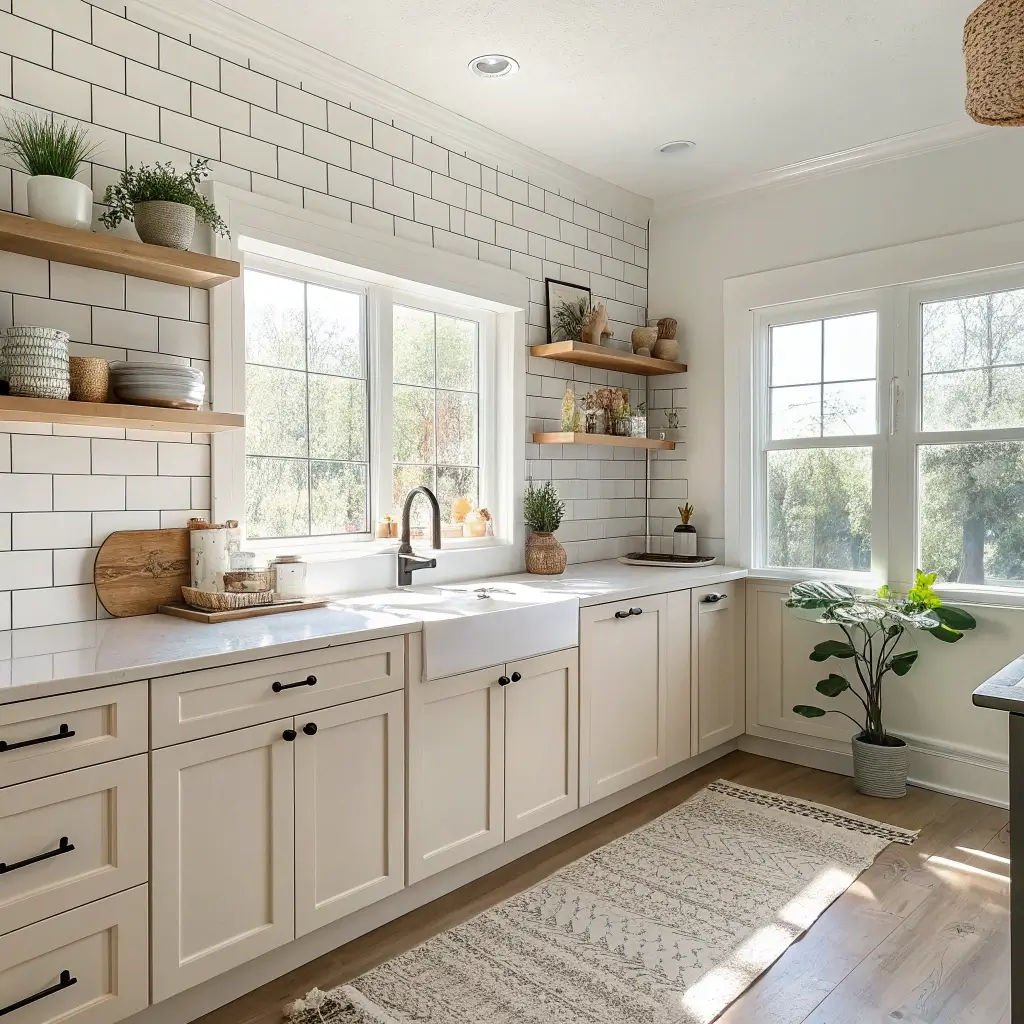
Finally, let’s talk about creating that light-filled, breezy kitchen that feels like a perpetual sunny morning. White subway tile is fundamental to achieving this aesthetic, working in concert with other design elements to maximize brightness.
Capturing and Multiplying Light
Natural light is a kitchen’s best accessory, and white subway tile amplifies it beautifully. The reflective surface catches light from windows and bounces it deeper into the space, making even north-facing kitchens feel sunnier.
To really maximize this effect, extend your tile work generously. Don’t stop at the standard height between counters and upper cabinets—consider going all the way up or wrapping around windows. The more reflective surface you create, the brighter your kitchen will feel.
Maximizing Brightness
- Glossy tile finishes reflect more light than matte
- White or light grout maintains the airy feeling
- Open shelving lets light pass through
- Light countertops continue the bright theme
- Minimal window treatments or sheer options only
- Under-cabinet lighting bounces off tile at night
I genuinely believe a bright kitchen makes you a happier cook. There’s something about standing in a light-filled space that makes even chopping onions feel more pleasant. Or maybe that’s just me?
Bringing It All Together
So there you have it—fifteen ways to make white subway tile work for your kitchen, from classic applications to contemporary twists. The beautiful thing about this humble tile is its incredible versatility. It’s affordable enough for tight budgets, elegant enough for luxury renovations, and timeless enough to outlast trend cycles that would leave other materials looking dated.
Whether you’re drawn to the farmhouse warmth of handmade tiles on open shelving or the sleek drama of matte white against black cabinets, there’s a subway tile approach that fits your style. The key is identifying what matters most to you—budget, maintenance, drama, simplicity—and designing accordingly.
Here’s my final advice after years of obsessing over this stuff: don’t overthink it. White subway tile is forgiving. It works with virtually everything. The worst decision you can make is no decision at all, leaving your kitchen stuck in renovation limbo indefinitely.
Pick a style from this list that speaks to you, buy some tiles, and just start. You might nail it on the first try, or you might learn some lessons along the way. Either way, you’ll end up with a backsplash that looks timeless, feels intentional, and makes you happy every time you walk into your kitchen.
And isn’t that really what we’re all after?