
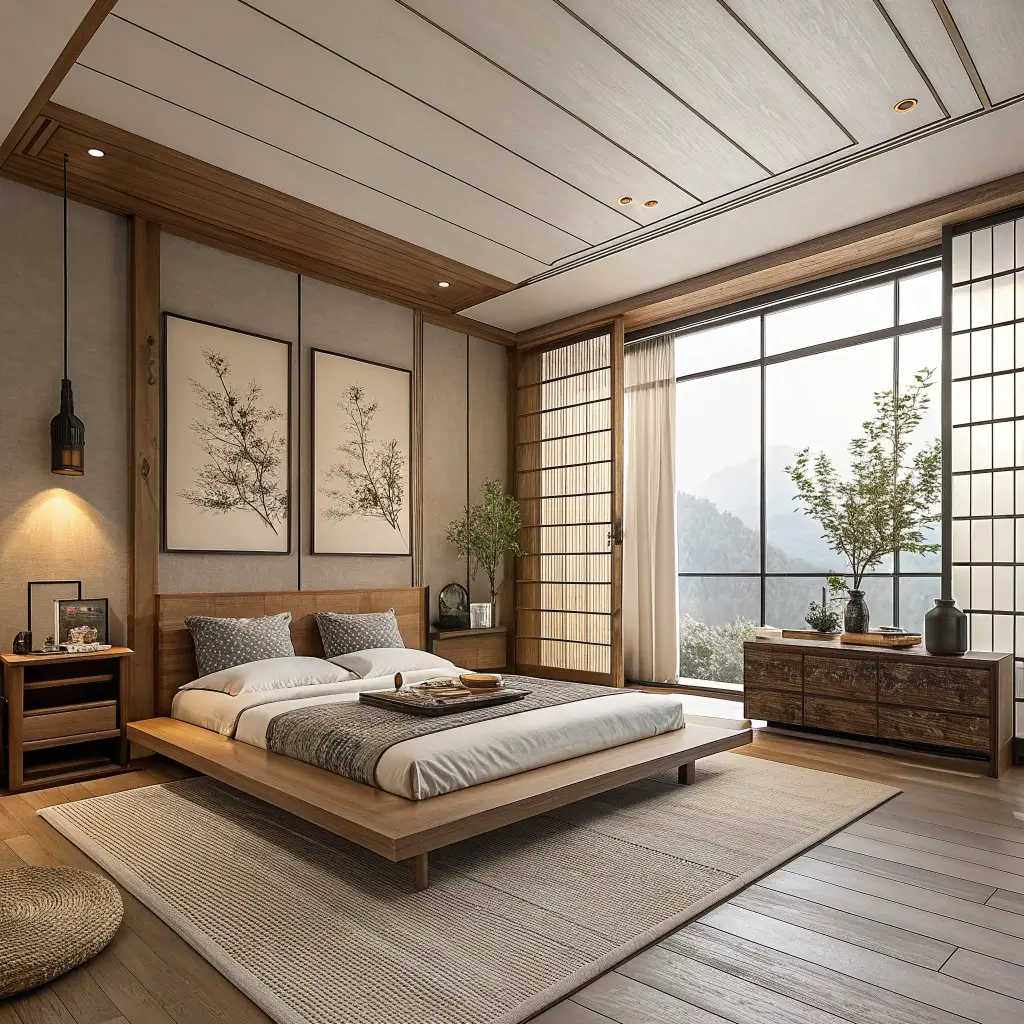
15 Inspiring Japanese Bedroom Aesthetic Ideas for Minimalist Homes

So you’ve been scrolling through Pinterest at 2 AM, haven’t you? Staring at those impossibly serene Japanese bedrooms with their clean lines, muted colors, and that almost magical sense of calm. I’ve been there—trust me.
Three years ago, I found myself completely obsessed with transforming my cluttered, chaotic bedroom into something that actually felt peaceful. The Japanese aesthetic called to me like a siren song, and honestly? It changed everything about how I approach my living space.
Here’s the thing about Japanese bedroom design that most articles won’t tell you upfront: it’s not just about buying bamboo furniture and calling it a day.
This aesthetic runs deeper than surface-level decorating. It’s rooted in principles like “Ma” (negative space), “Wabi-sabi” (finding beauty in imperfection), and a genuine respect for simplicity. And the best part? You don’t need to gut your entire home or spend thousands of dollars to achieve this look.
Whether you’re working with a spacious master bedroom or a tiny apartment that barely fits a bed, I’ve got you covered. Let’s explore 15 Japanese bedroom aesthetic ideas that will transform your space into the minimalist sanctuary you’ve been dreaming about.
1. Minimalist Japanese Zen Bedroom
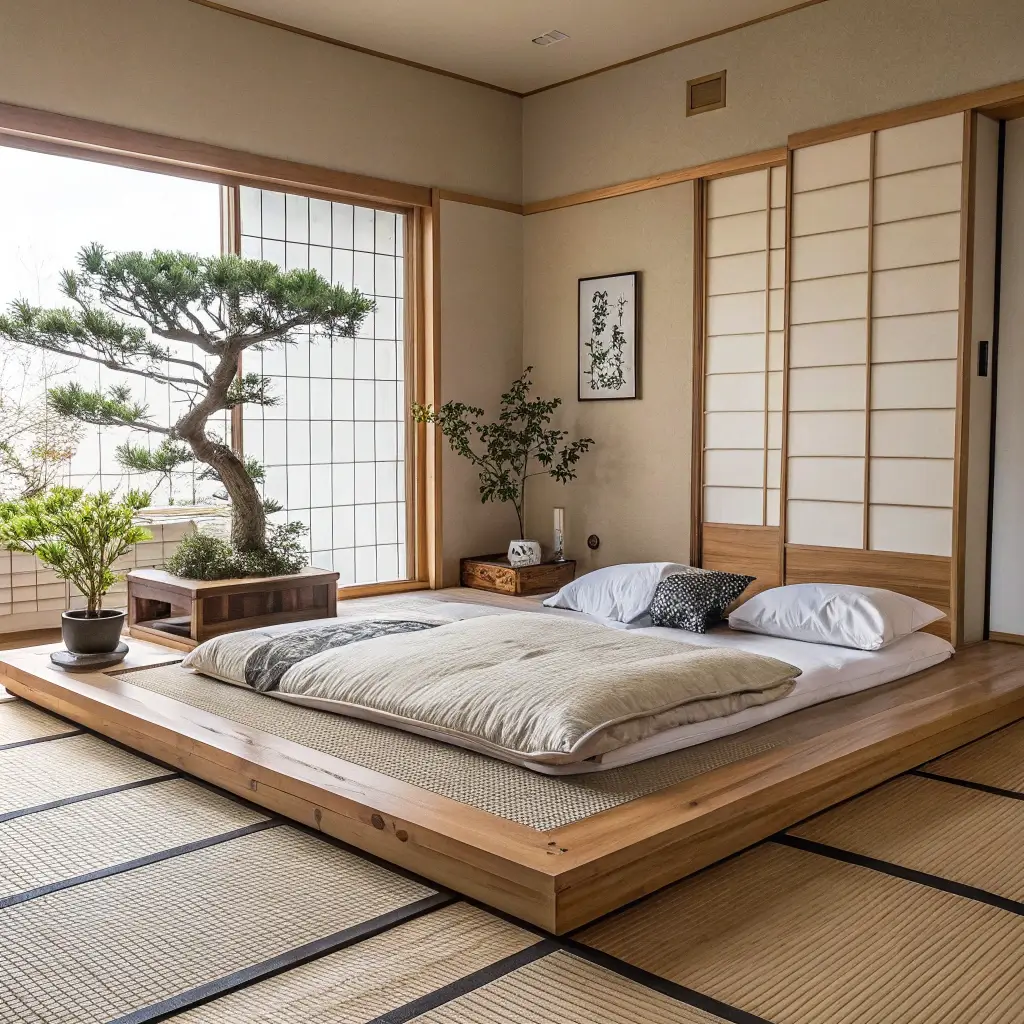
Let’s start with the foundation of everything we’re going to discuss—the Zen bedroom concept. This isn’t just a design style; it’s practically a philosophy wrapped in interior design clothing.
A true Zen bedroom strips away everything unnecessary. I’m talking about that pile of books you’ve been meaning to read for two years, the exercise equipment collecting dust in the corner, and yes, even that cute throw pillow collection that’s gotten slightly out of hand. When I first attempted this in my own space, I removed about 60% of what I owned in my bedroom. Dramatic? Maybe. Life-changing? Absolutely.
The Core Elements You Need
The beauty of a Zen bedroom lies in its restraint. Here’s what you should focus on:
- A low platform bed or sleeping directly on a futon
- Neutral color palette dominated by whites, beiges, soft grays, and natural wood tones
- Minimal furniture—think one nightstand instead of two, or maybe none at all
- Natural materials like wood, cotton, linen, and bamboo
- Empty wall space—resist the urge to fill every inch
The key here is intentionality. Every single item in your Zen bedroom should earn its place. Ask yourself: does this serve a purpose, or does it bring me genuine joy? If the answer to both is no, it’s time to let it go.
2. Cozy Tatami Mat Bedroom Setup
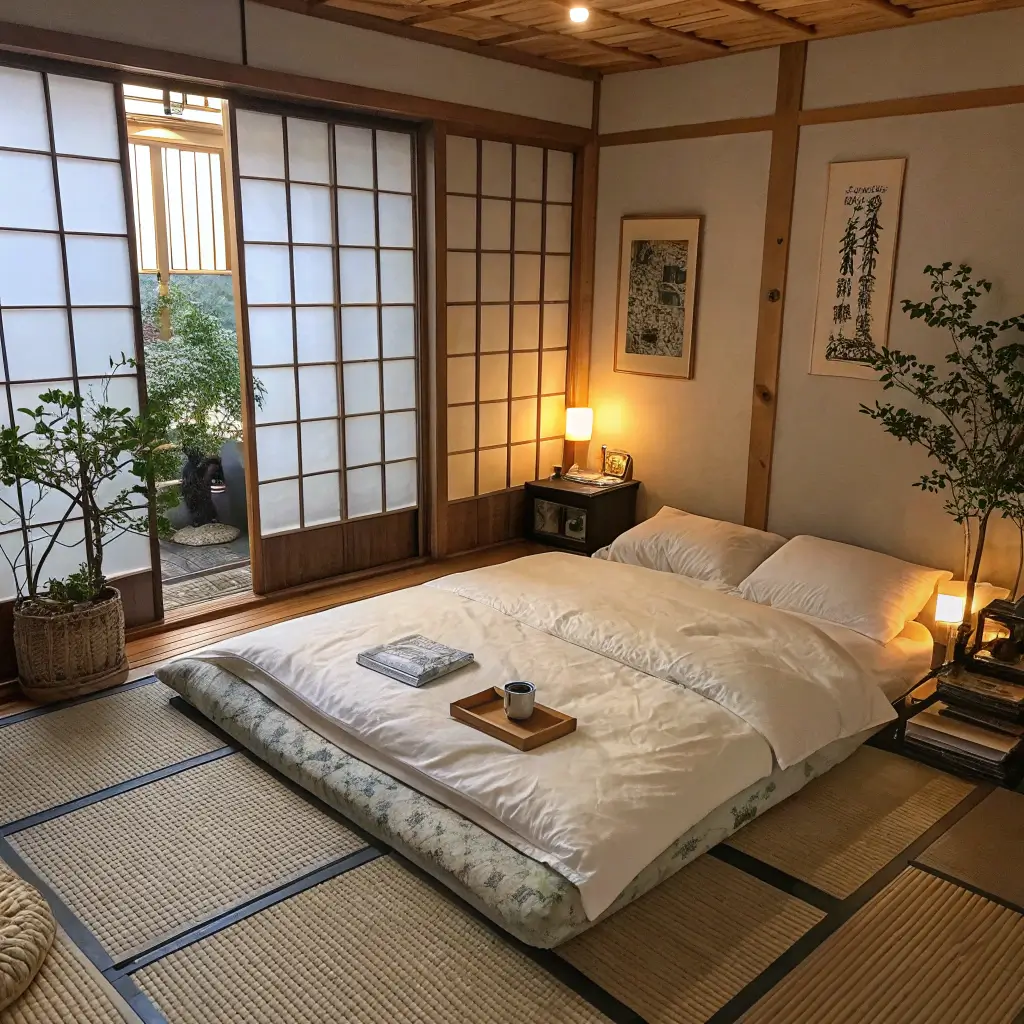
Ever walked into a traditional Japanese room and noticed how the floor itself feels different? That’s the magic of tatami mats, and honestly, incorporating them into a Western bedroom might be one of the best decisions I’ve ever made.
Tatami mats are woven from rush grass over a rice straw core, and they’ve been used in Japanese homes for centuries. They’re slightly soft underfoot, naturally regulate humidity, and release a subtle, fresh scent that’s incredibly calming. Plus, they define your sleeping area without requiring permanent modifications to your space.
How to Incorporate Tatami Without Going Full Traditional
You don’t need to cover your entire floor in tatami—though you absolutely can if that’s your vibe. Here are some practical approaches:
- Tatami bed frames come with built-in mats, giving you the aesthetic without floor modifications
- Modular tatami sections can be placed under and around your bed area
- Tatami-style area rugs offer a similar look for renters or those on a budget
- Half-room coverage works great if you want to define a sleeping zone versus a lounging area
One word of caution from personal experience: tatami requires some maintenance. You’ll want to vacuum them regularly and air them out occasionally. They’re not fans of heavy furniture or high heels, so treat them gently.
3. Modern Japanese Low-Bed Design
Here’s where things get really interesting. The low-bed design is probably the most impactful single change you can make to achieve a Japanese bedroom aesthetic. There’s something about lowering your sleeping surface that instantly transforms the energy of a room.
Why do the Japanese traditionally sleep low to the ground? It’s partly practical—in a country prone to earthquakes, lower furniture is safer. But it’s also philosophical. Sleeping closer to the earth creates a sense of grounding and humility. Plus, low beds make ceilings appear higher and rooms feel more spacious. It’s basically an optical illusion that works in your favor.
Choosing Your Perfect Low Bed
Modern furniture designers have embraced this concept, so you’ve got plenty of options:
- Platform beds sitting just 6-12 inches off the ground
- Tatami platform beds combining both elements we’ve discussed
- Simple wooden frames with clean lines and minimal ornamentation
- Floating platform beds that create a dramatic visual effect
FYI, if you’re over 40 or have mobility issues, a super-low bed might not be ideal. Look for platform beds in the 12-18 inch range that offer the aesthetic without requiring you to practically perform a squat every morning.
4. Traditional Shoji Screen Bedroom
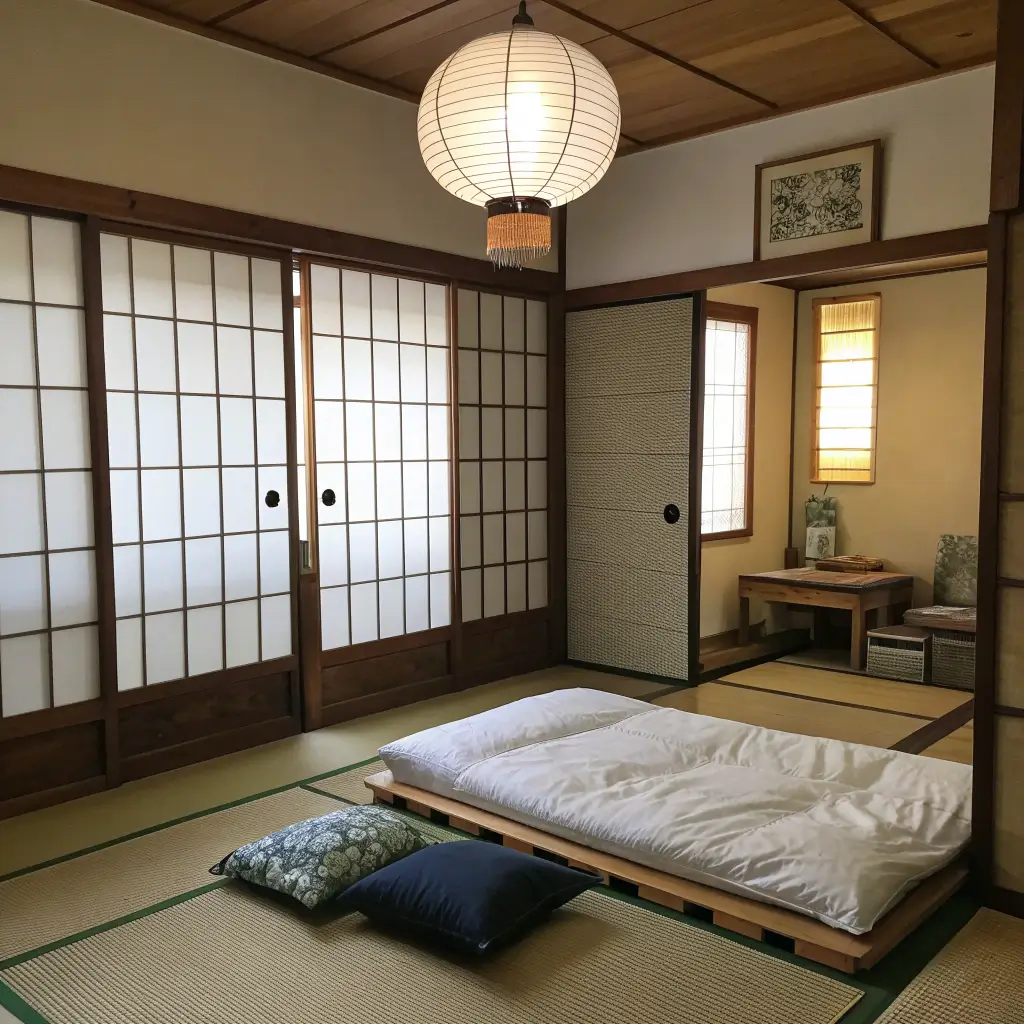
Okay, can we talk about shoji screens for a minute? Because these translucent paper-and-wood panels are basically the multitasking heroes of Japanese design. They work as room dividers, closet doors, window coverings, and decorative elements all at once.
The magic of shoji screens lies in their ability to filter light beautifully. Unlike solid doors or heavy curtains, they allow a soft, diffused glow to pass through. This creates that dreamy, ethereal quality you see in traditional Japanese interiors. It’s like having perpetual golden hour in your bedroom.
Creative Ways to Use Shoji Screens
You don’t need an authentic Japanese sliding door setup to enjoy shoji. Get creative:
- Freestanding shoji screens work as elegant room dividers in studio apartments
- Shoji-style closet doors replace clunky traditional closets with something far more graceful
- Window shoji panels filter harsh sunlight while maintaining privacy
- Headboard alternatives—a shoji panel behind your bed creates a stunning focal point
- Ceiling-mounted track systems allow shoji panels to slide and transform your space
I installed shoji-style closet doors two years ago, and the difference still surprises me. My bedroom went from feeling like a typical American room to having this distinctly Japanese character almost overnight.
5. Serene Neutral Toned Japanese Room
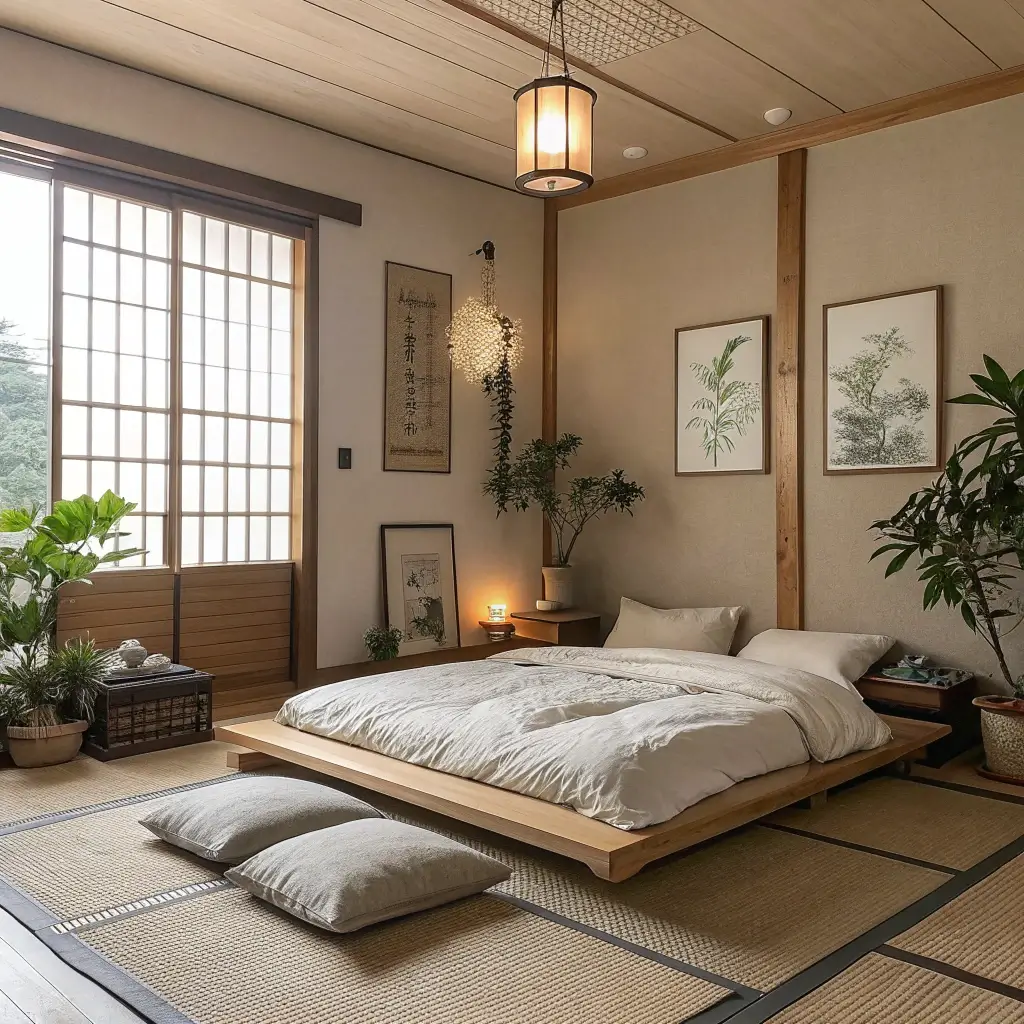
Let’s talk color—or rather, the strategic absence of it. Neutral tones form the backbone of Japanese bedroom aesthetics, but this doesn’t mean your space has to feel bland or boring. Far from it.
The Japanese color philosophy emphasizes harmony with nature. Think about the colors you’d encounter in a peaceful forest or a quiet beach at dawn. We’re talking warm whites, soft creams, gentle taupes, muted grays, and plenty of natural wood tones. These colors don’t compete for attention; they work together to create a cohesive, calming environment.
Building Your Neutral Palette
Here’s how to approach your color scheme without ending up with something that looks like a hospital waiting room:
- Layer different neutrals rather than using just one shade throughout
- Incorporate texture to add visual interest without adding color
- Use natural materials whose inherent colors add warmth—wood grain, woven textiles, stone
- Add very subtle accent colors if needed—think sage green, dusty blue, or soft terracotta
- Consider your lighting because neutrals shift dramatically between natural and artificial light
The mistake most people make? Choosing cool grays and stark whites that feel cold and uninviting. Japanese neutrals lean warm. Think of them as colors with a “lived-in” quality—the shade of aged paper, weathered wood, or unbleached linen.
6. Small Space Japanese Bedroom Hacks

Here’s some irony for you: Japanese design principles actually originated from necessity in small spaces, so they’re perfect for those of us who aren’t blessed with sprawling bedrooms. If you’re working with limited square footage, Japanese aesthetics might be your secret weapon.
I once had to make a 10×10 bedroom feel livable, and Japanese design principles saved me. The focus on minimalism, vertical storage, and multi-functional furniture meant I could create a space that felt calm rather than cramped.
Space-Maximizing Strategies
Small bedroom? No problem. Try these approaches:
- Futons that fold and store free up floor space during the day
- Wall-mounted shelving keeps surfaces clear while providing storage
- Built-in storage beneath platform beds utilizes otherwise dead space
- Vertical organization draws the eye upward and makes ceilings feel higher
- Mirrors placed strategically reflect light and create illusion of depth
- Consistent color palette throughout makes the space feel unified and larger
The key principle here is “one in, one out.” In a small space operating on Japanese aesthetics, every item needs to justify its existence. It sounds harsh, but it’s actually liberating. You stop accumulating random stuff and start curating your environment intentionally.
Also Read: 15 Charming Vintage Princess Aesthetic Bedroom Ideas with Antique Touches
7. Japanese-Inspired Boho Bedroom
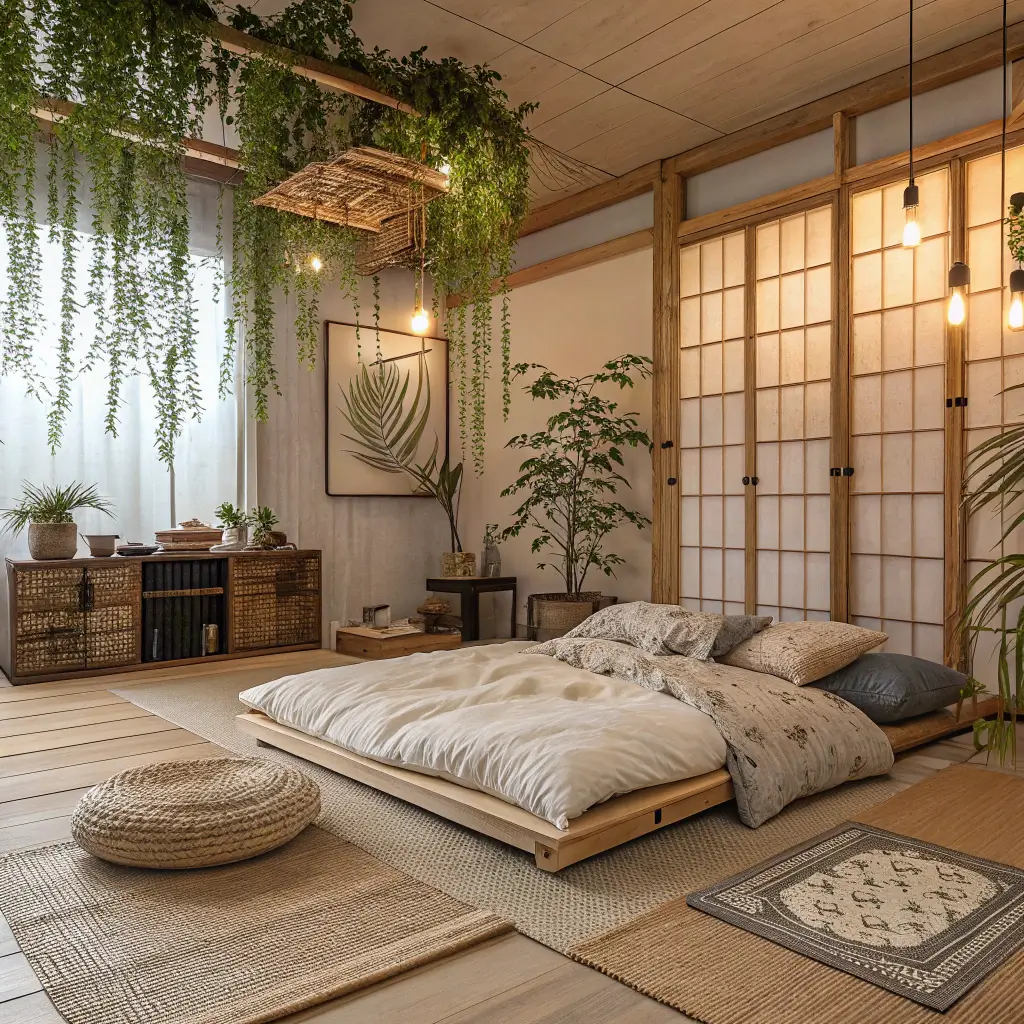
Now, some of you might be thinking, “I love the Japanese aesthetic, but I also love texture and warmth and maybe a houseplant or twelve.” Good news—you can absolutely blend Japanese minimalism with bohemian elements for something unique and personal.
This fusion works because both styles share some core values: a love of natural materials, handcrafted items, and creating spaces that feel organic rather than sterile. The trick is finding the balance between boho’s maximalist tendencies and Japanese restraint.
Finding the Sweet Spot
Here’s how to merge these aesthetics without creating visual chaos:
- Keep the bones Japanese—low furniture, clean lines, minimal color palette
- Add boho through textiles—a macramé wall hanging, woven throw blankets, textured pillows
- Incorporate plants thoughtfully—a few statement plants rather than a jungle
- Choose handcrafted elements that honor both traditions—Japanese ceramics, artisan textiles
- Maintain negative space even while adding boho touches
IMO, this fusion works best when you lean about 70% Japanese, 30% boho. Let the Japanese principles guide your foundation, then layer in carefully chosen bohemian elements for warmth and personality.
8. Futon and Floor Cushion Bedroom Layout
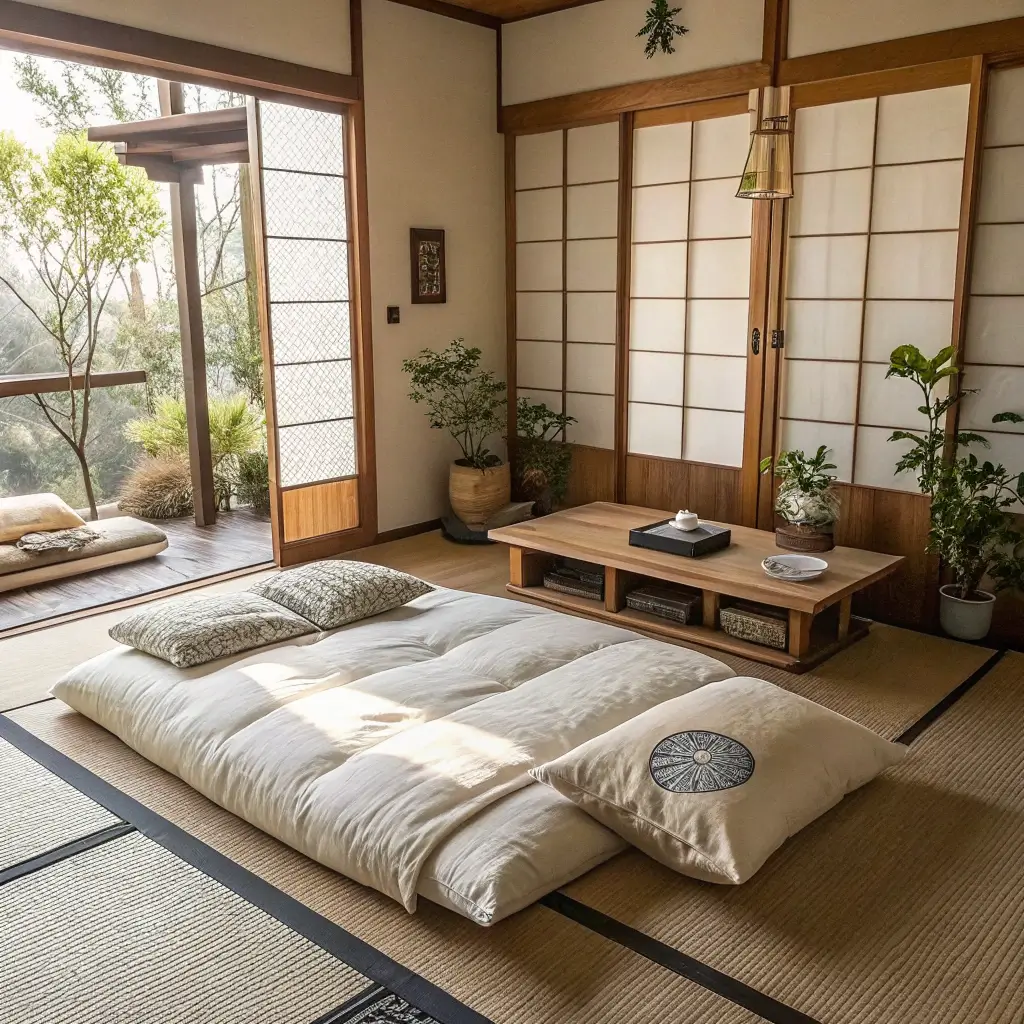
Let’s get back to basics with a true Japanese futon setup. And no, I’m not talking about those college dorm “futon couches” that pretend to be beds. Real Japanese futons are thin, foldable mattresses designed to be rolled up and stored during the day.
Why would anyone choose to sleep on what’s essentially a fancy mattress on the floor? The benefits are actually compelling. Futons promote better posture and spinal alignment. They keep you cool in summer (heat rises, after all). They’re easy to air out and keep fresh. And most importantly for our purposes, they create an incredibly versatile living space.
Creating a Complete Floor-Level Setup
If you’re committing to the futon life, complement it properly:
- A quality shikibuton (the actual futon mattress) should be at least 3 inches thick for comfort
- Zabuton floor cushions provide seating throughout the day
- Low tables work for everything from morning coffee to evening reading
- Tatami or a large natural fiber rug beneath the sleeping area
- Storage for bedding since you’ll fold and store your futon daily
Fair warning: this lifestyle requires daily commitment. You can’t just leave your futon on the floor—that leads to moisture problems and mildew. But if you’re disciplined about the fold-and-store routine, this setup offers unmatched flexibility and authentic Japanese vibes.
9. Japanese Minimalist Lighting Ideas
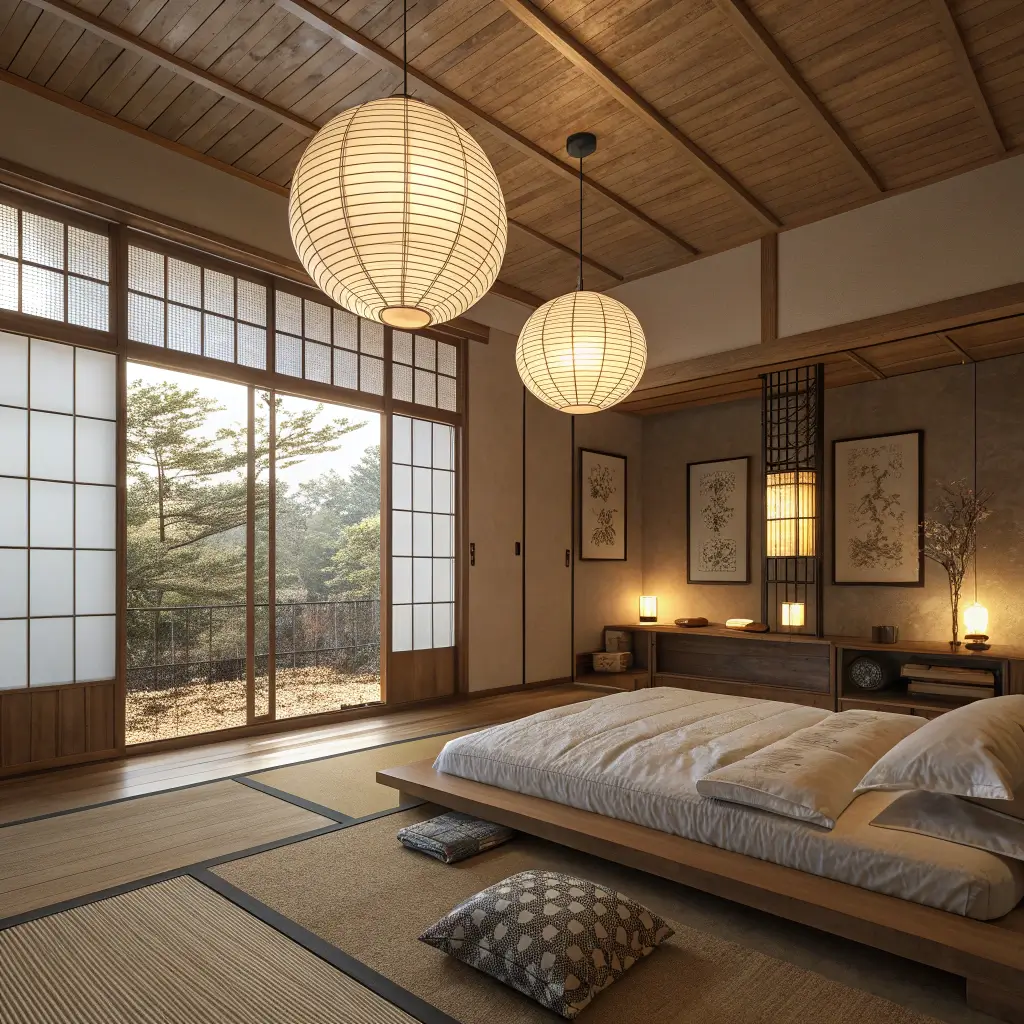
Ever noticed how lighting can make or break a room’s mood? Japanese bedrooms approach illumination with the same intentionality they apply to everything else. Forget harsh overhead lights—we’re going for something much more sophisticated.
The Japanese concept of “Hotaru” (firefly) describes lighting that’s gentle, warm, and almost alive. Think about how candlelight or a lantern creates pockets of warm illumination rather than flooding a space with uniform brightness. That’s the vibe we’re pursuing.
Lighting Strategies That Actually Work
Transform your bedroom lighting with these approaches:
- Paper lanterns (Akari-style) diffuse light beautifully and create soft shadows
- Floor lamps in corners provide ambient light without overwhelming the space
- Hidden LED strips behind headboards or under platform beds create drama
- Adjustable task lighting at bedside for reading without disturbing the overall mood
- Candles or LED candles for evening ambiance
- Natural light through shoji screens or linen curtains during the day
The biggest mistake I see? Relying solely on a single overhead ceiling light. That one fixture fighting to illuminate everything creates harsh shadows and zero atmosphere. Layer your lighting sources, and invest in dimmer switches wherever possible.
Also Read: 15 Modern French Bedroom Aesthetic Ideas for Perfect Comfort
10. Nature-Inspired Japanese Bedroom Decor
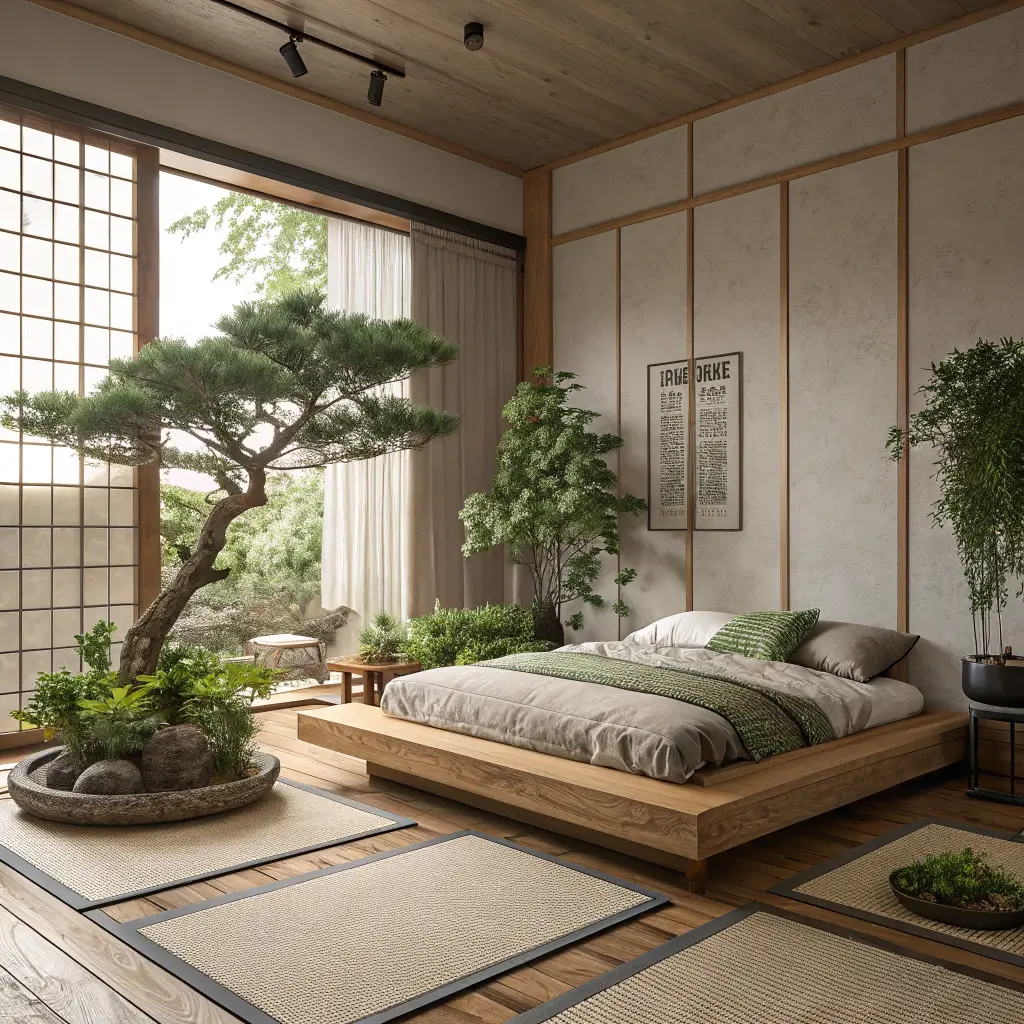
The Japanese design philosophy of bringing nature indoors isn’t just about throwing some plants in a corner. It’s about creating a genuine connection between your interior space and the natural world outside. This concept, sometimes called “biophilic design,” runs deep in Japanese aesthetics.
Think about traditional Japanese art—paintings of mountains, branches of cherry blossoms, flowing water, birds in flight. Nature isn’t just appreciated; it’s considered essential for psychological well-being. Your bedroom can embody this same reverence.
Incorporating Nature Thoughtfully
Here’s how to bring the outside in without creating a greenhouse:
- Living plants chosen carefully—bonsai, bamboo, peace lilies, or a single dramatic fiddle leaf fig
- Natural materials everywhere—wood, stone, cotton, linen, clay
- Botanical artwork in the Japanese sumi-e style or simple botanical prints
- Views of nature through windows kept unobstructed whenever possible
- Water elements like a small tabletop fountain for gentle sound
- Natural scents through subtle essential oils like hinoki cypress or cedarwood
The key word here is restraint. A single bonsai on a wooden stand makes a statement. Twenty succulents crowding every surface does not. Let each natural element breathe and be appreciated individually.
11. Japanese Rustic Wood Bedroom Vibes

There’s a specific Japanese aesthetic called “Wabi-sabi” that celebrates the beauty of imperfection, and nowhere does this shine more than in the use of rustic wood elements. We’re not talking about polished, perfect furniture here—we’re embracing grain patterns, knots, and natural variations.
Japanese woodworking traditions are legendary, but the aesthetic often values wood in its more natural state. Live-edge furniture, reclaimed timber, and pieces that show their history are all welcome in this approach.
Bringing Rustic Wood Into Your Space
Consider these wood-focused elements:
- Live-edge headboards that showcase the natural tree shape
- Reclaimed wood platform beds with visible character marks
- Natural wooden nightstands with minimal finish
- Exposed ceiling beams if your architecture allows
- Wooden accent walls in light, natural tones
- Handcrafted wooden accessories like trays, boxes, or sculpture
Pro tip: stick to lighter woods like oak, ash, or light walnut to maintain that airy Japanese feel. Dark, heavy woods can make a space feel more Western cabin than Japanese sanctuary. And whatever wood you choose, let its natural beauty shine—avoid heavy stains or glossy finishes that mask the material’s character.
12. Contemporary Japanese Monochrome Room

Want something more modern and dramatic? A monochrome Japanese bedroom takes minimalism to its stylish extreme. This approach typically works in black and white or various shades of a single color, creating a bold yet serene statement.
Contemporary Japanese designers have embraced monochrome aesthetics as an evolution of traditional principles. The reduction of color to its simplest form is, in many ways, the ultimate expression of minimalism. It’s striking, it’s sophisticated, and when done right, it’s incredibly peaceful.
Executing Monochrome Successfully
Here’s how to nail this look without making your bedroom feel cold or harsh:
- Layer textures obsessively—without color variation, texture becomes everything
- Choose your dominant color wisely—white creates airiness, black creates drama, gray offers versatility
- Incorporate natural materials to prevent sterility—wood adds warmth to any monochrome scheme
- Use lighting strategically to create depth and visual interest
- Allow one or two small color accents if needed—a single green plant or a wooden element
- Focus on high-quality basics because in monochrome, quality becomes very visible
The danger with monochrome is creating something that feels more like a hotel room than a personal sanctuary. Combat this by ensuring everything in the space reflects your personality, even if the color palette remains strict. 🙂
Also Read: 15 Stunning Earthy Bedroom Aesthetic Ideas for Cozy Vibes
13. Japanese Bedroom with Sliding Doors
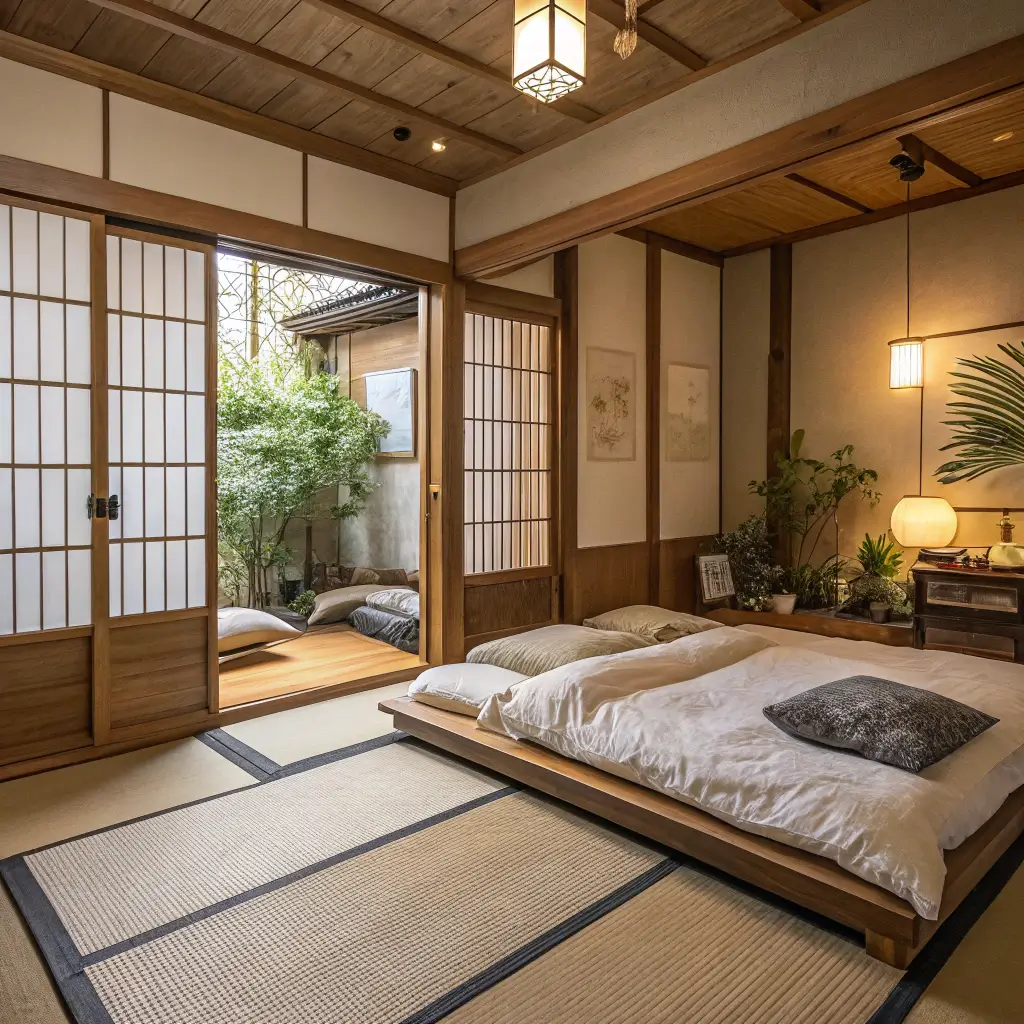
If I could recommend just one architectural element to transform your bedroom, it would be sliding doors. Traditional Japanese sliding doors (fusuma) and their shoji counterparts represent one of the most distinctive features of Japanese interior design.
Sliding doors don’t just save space—they fundamentally change how a room feels. They create flexibility, allowing you to open spaces up or create privacy as needed. They eliminate the swing space required by hinged doors. And they add an unmistakably Japanese character to any space.
Options for Every Budget and Situation
You don’t need a major renovation to incorporate sliding doors:
- Replace closet doors with sliding shoji or frosted glass panels
- Install barn-door style tracks for larger doorways
- Use freestanding sliding screen systems if modifications aren’t possible
- Create room dividers with track-mounted panels
- Replace bathroom doors (if ensuite) with sliding alternatives
The key is choosing materials that complement your overall aesthetic. Frosted glass panels offer a modern interpretation, while traditional shoji screens with wooden frames feel more authentic. Even simple white sliding panels without the grid pattern can evoke Japanese design principles.
14. Minimalist Japanese Storage Solutions
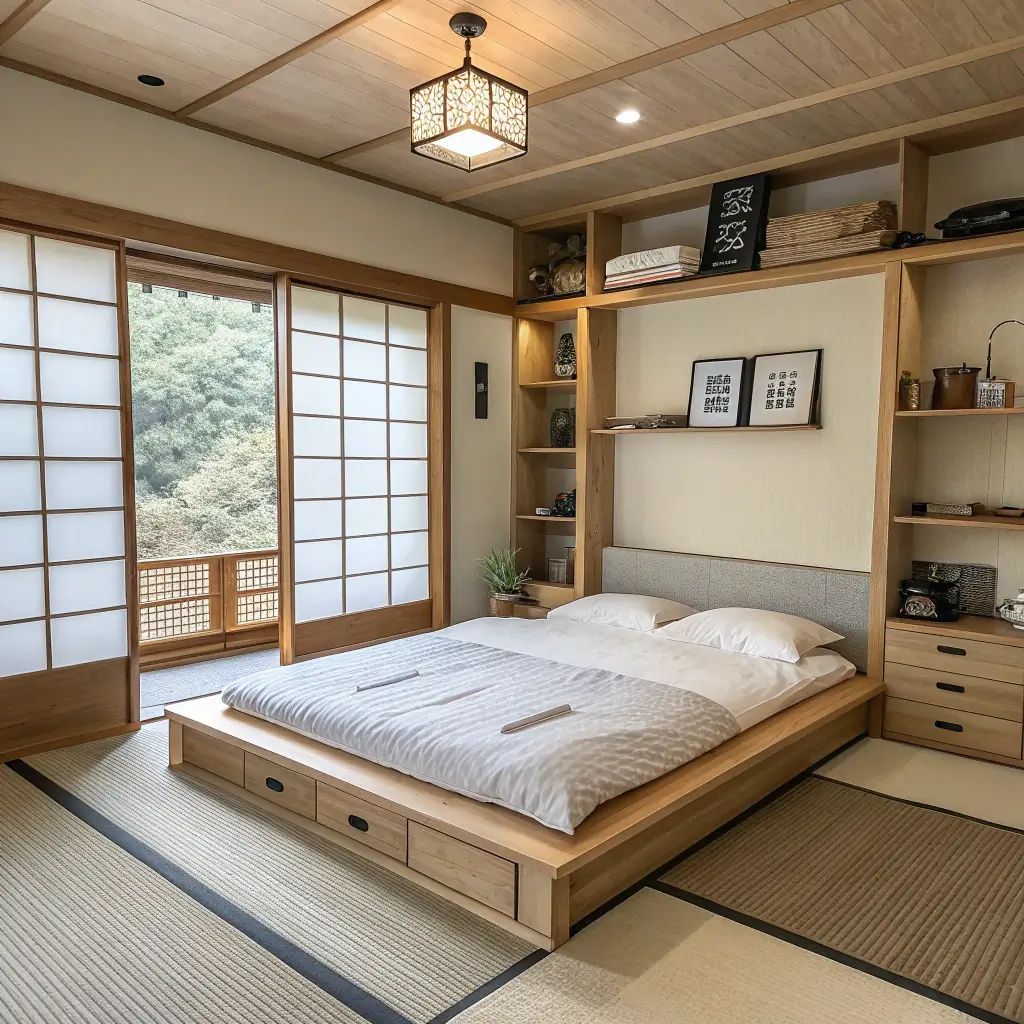
Let’s address the elephant in the room: where does all your stuff go in a minimalist Japanese bedroom? The answer lies in clever, hidden storage solutions that keep clutter out of sight while maintaining that clean aesthetic.
Japanese homes often incorporate built-in storage that seems to disappear into walls and furniture. The goal is creating the illusion that you own almost nothing while actually having everything you need within arm’s reach.
Storage Strategies That Preserve Your Aesthetic
Here are practical solutions for hiding the necessities:
- Platform beds with built-in drawers utilize otherwise wasted space
- Wall-mounted floating shelves display minimal items while storing others
- Concealed closet systems behind sliding doors or fabric curtains
- Under-bed storage boxes in matching neutral colors
- Multi-functional furniture like ottomans with interior storage
- Vertical storage systems that reach toward ceilings
The Japanese approach to storage also involves owning less. I know that sounds obvious, but it’s worth emphasizing. Before investing in storage solutions, genuinely evaluate what you need to store. The Japanese concept of “danshari” (decluttering) suggests we should refuse unnecessary items, throw away excess, and detach from material possessions.
15. Tranquil Japanese Bedroom Meditation Corner
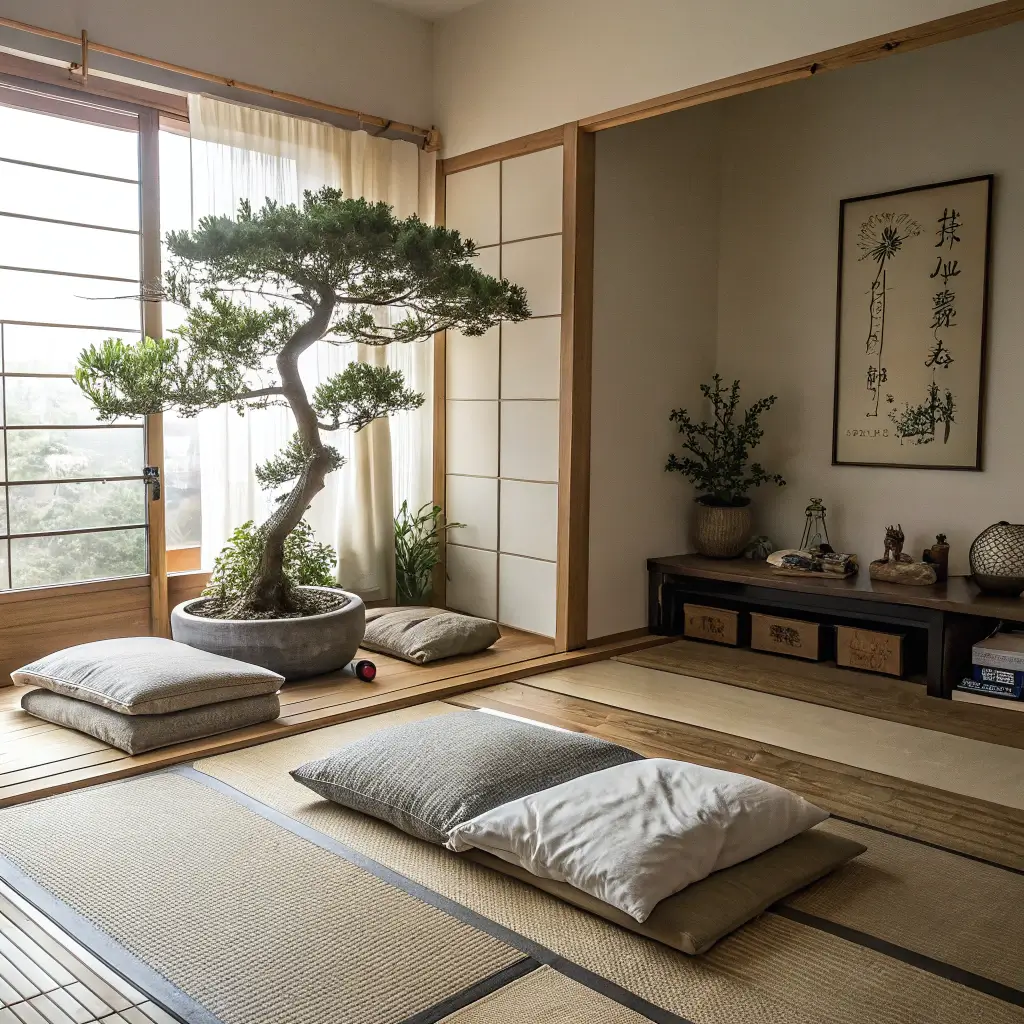
Finally, let’s create a dedicated meditation or quiet reflection space within your bedroom. This is where Japanese aesthetics truly shine, transforming a corner of your room into a personal sanctuary within a sanctuary.
Even if you don’t have a formal meditation practice, a designated quiet corner changes how you use your bedroom. It becomes a space not just for sleeping, but for reading, breathing, thinking, or simply being. In our constantly connected, always-busy world, having a physical space that invites stillness is revolutionary.
Designing Your Meditation Corner
Create your tranquil corner with these elements:
- A zafu meditation cushion or simple floor cushion in neutral tones
- A small, low table for a candle, incense holder, or single meaningful object
- Minimal decoration—perhaps one piece of meaningful artwork or a small plant
- Natural textures underfoot—a small tatami mat or natural fiber rug
- Subdued lighting from a paper lantern or candle
- Clear sightlines so the space feels open even if it’s small
The placement matters too. Choose a corner near natural light if possible, away from the door and any technology. This corner should feel like a refuge from everything else—including the rest of your bedroom.
Bringing It All Together
Here’s what I’ve learned from years of refining my own Japanese-inspired bedroom: you don’t have to implement all 15 ideas to transform your space. Start with what resonates most with you. Maybe it’s swapping to a low platform bed, or introducing shoji screens, or simply committing to a neutral color palette and serious decluttering.
The magic of Japanese bedroom aesthetics lies not in any single element but in the underlying philosophy. Every choice should be intentional. Every object should earn its place. Negative space is just as important as the things you include. And above all, your bedroom should serve as a sanctuary—a place where you can truly rest and restore yourself.
I’ll leave you with this thought: the Japanese have spent centuries perfecting the art of creating peaceful living spaces. They’ve figured out that less really is more, that nature belongs indoors, and that simplicity isn’t boring—it’s liberating. Your bedroom doesn’t need to look exactly like a traditional Japanese room. It needs to feel calm, intentional, and unmistakably yours.
So start somewhere. Remove that pile of clutter that’s been bothering you. Lower your bed closer to the ground. Let more natural light in. Pay attention to how each change makes you feel. The perfect Japanese-inspired bedroom isn’t built in a day—it’s cultivated over time, one intentional choice at a time.
Now if you’ll excuse me, I need to go rearrange my meditation corner. Again. 🙂