

10 Chic Modern Kitchen Design Open Concept Ideas with Sleek Finishes

Let me guess—you’ve been scrolling through Pinterest for hours, saving kitchen designs that make your current cooking space look like it belongs in a completely different century. Been there, done that, bought the overpriced subway tile.
The open concept kitchen craze isn’t going anywhere, and honestly, why would it? There’s something magical about cooking dinner while still being part of the conversation happening in the living room.
I’ve spent the better part of three years renovating, researching, and obsessing over kitchen designs. My own kitchen renovation nearly drove me to the edge of sanity (who knew picking a cabinet color could cause an existential crisis?), but I emerged with some serious knowledge about what works and what absolutely doesn’t.
So grab your coffee, and let’s talk about ten stunning open concept kitchen designs that’ll transform your space from meh to magazine-worthy.
Minimalist Monochrome Kitchen

The Art of Doing More with Less
Ever walked into someone’s kitchen and felt immediately calm? That’s the magic of minimalist monochrome design. This style strips away everything unnecessary and leaves you with a space that practically whispers “relaxation” every time you enter.
The beauty of a monochrome kitchen lies in its restraint. We’re talking one color family—usually whites, grays, or soft beiges—applied consistently throughout the entire space. The result? A cohesive, sophisticated look that makes your kitchen feel larger than it actually is.
Key Elements That Make It Work
When designing a minimalist monochrome kitchen, focus on these essential features:
- Handleless cabinets with push-to-open mechanisms for that seamless appearance
- Integrated appliances that disappear into the cabinetry
- Waterfall countertops that flow from surface to floor without interruption
- Recessed lighting or minimal pendant fixtures
- Hidden storage solutions that keep clutter completely out of sight
The trick here isn’t just picking one color—it’s playing with different textures and finishes within that color family. Matte cabinet fronts paired with glossy countertops create visual interest without introducing chaos. A textured backsplash in the same shade adds depth without screaming for attention.
Personal Take on Monochrome
I’ll be honest—when I first considered going monochrome, I worried it would feel cold and clinical. But after seeing a friend’s all-gray kitchen with varying textures of stone, wood grain (in gray tones), and brushed steel, I completely changed my mind. The space felt warm, inviting, and ridiculously elegant. Sometimes less really is more.
Industrial Loft-Style Kitchen

Raw Meets Refined
Picture exposed brick walls, concrete floors, metal fixtures, and a kitchen that looks like it belongs in a converted warehouse in Brooklyn. That’s industrial loft-style, and it’s absolutely perfect for open concept living because the design philosophy already embraces open, flowing spaces.
This style celebrates the beauty of raw materials. Instead of hiding structural elements, you showcase them. Exposed ductwork becomes a design feature. Concrete becomes your countertop material. Metal becomes your best friend.
Must-Have Industrial Elements
To nail the industrial loft aesthetic, incorporate these components:
- Exposed brick or concrete walls (or high-quality faux versions if you’re working with drywall)
- Metal-framed pendant lighting with Edison bulbs
- Open shelving made from reclaimed wood and iron pipes
- Stainless steel or matte black appliances prominently displayed
- Concrete or butcher block countertops for that utilitarian feel
- Metal bar stools at a central island
The open concept layout works brilliantly here because industrial design inherently rejects walls and barriers. Your kitchen flows naturally into living and dining areas, connected by consistent materials and that gorgeous, unfinished aesthetic.
Making Industrial Feel Cozy
Here’s where people often mess up—they go so industrial that the space feels like an actual factory. Nobody wants to eat dinner feeling like they should be wearing a hard hat. Balance those hard materials with warm wood tones, plush textiles in adjacent living spaces, and plenty of greenery. A few well-placed plants can transform an industrial kitchen from cold warehouse to trendy urban oasis.
Scandinavian White Open Kitchen
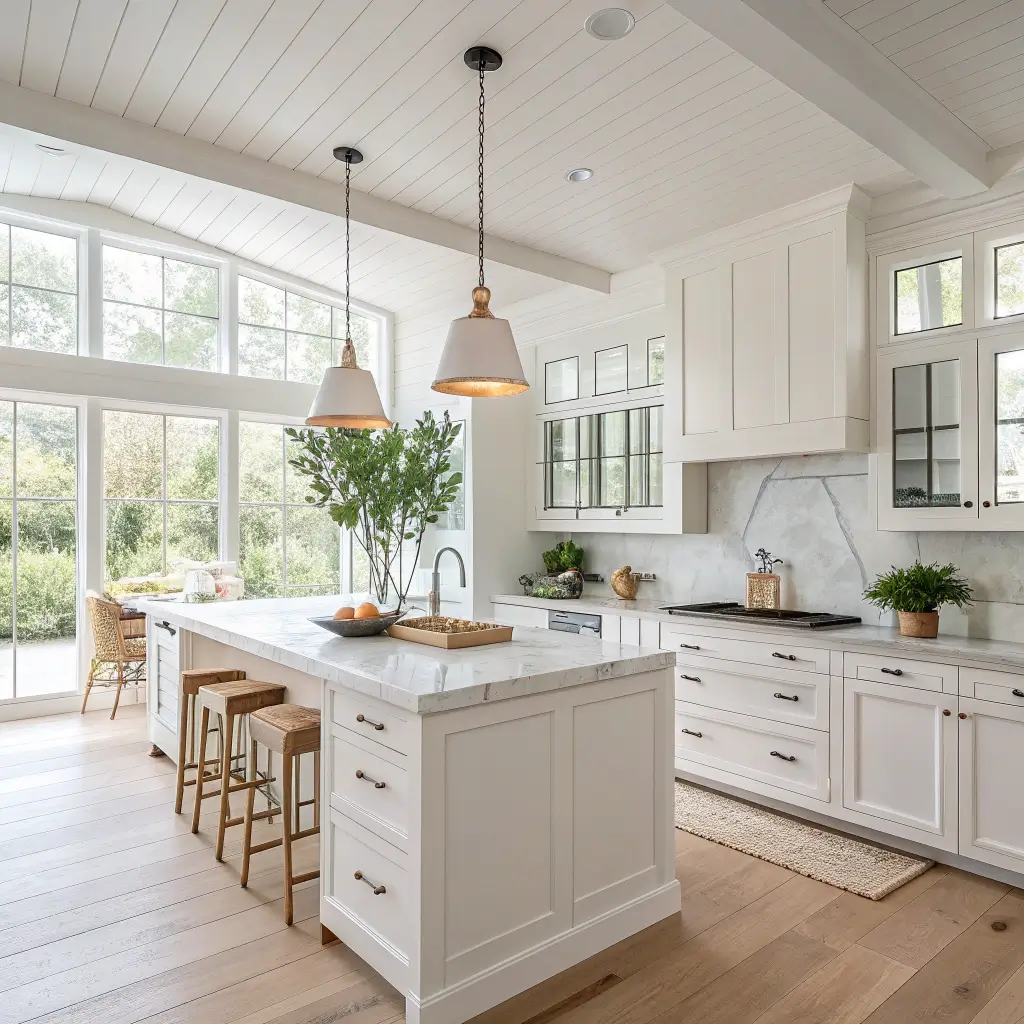
Bright, Airy, and Impossibly Chic
If hygge had a kitchen, it would look Scandinavian. This style combines functionality with warmth, creating spaces that feel both practical and cozy—a combination that shouldn’t work but absolutely does.
Scandinavian kitchens prioritize light above almost everything else. In countries where winter days last approximately twelve minutes (slight exaggeration, but you get it), maximizing natural light becomes essential. White walls, white cabinets, and light wood floors reflect every ray of sunshine that dares to enter.
The Scandinavian Formula
Creating an authentic Scandinavian kitchen requires attention to these details:
- White or very light gray cabinetry with simple, clean lines
- Natural light wood flooring extending throughout the open space
- Simple hardware in brushed brass or matte black
- Open shelving displaying carefully curated dishware
- Minimal window treatments to maximize natural light
- Functional decor that serves a purpose beyond looking pretty
- Natural materials like wood, leather, and linen incorporated throughout
The beauty of Scandinavian design lies in its honesty. Every object earns its place. That gorgeous ceramic vase on the counter? It holds your cooking utensils. Those baskets on the open shelves? They contain your dry goods. Form follows function, always.
Why Scandinavian Works for Open Concept
The Scandinavian approach naturally lends itself to open concept living because it treats the entire home as one cohesive space. The same light wood floors, the same white walls, the same design principles flow from kitchen to living room to dining area. There are no jarring transitions—just seamless, beautiful continuity.
Also Read: 12 Amazing Open Plan Kitchen Ideas and Seamless Living Flow
Rustic Modern Blend Kitchen

The Best of Both Worlds
Can’t decide between farmhouse charm and contemporary sleekness? Why not both? The rustic modern blend takes the warmth and character of rustic design and pairs it with the clean lines of modern aesthetics. The result is a kitchen that feels collected, intentional, and utterly unique.
This style celebrates contrast and tension between old and new. A reclaimed wood beam sits above a sleek, minimalist range hood. Rough-hewn flooring meets smooth quartz countertops. It’s controlled chaos, and it’s gorgeous.
Balancing Rustic and Modern Elements
Achieving the perfect rustic modern blend requires careful curation:
Rustic Elements to Include:
- Reclaimed wood accents (beams, shelving, or island base)
- Natural stone features
- Vintage or antique accessories
- Warm, earthy color palettes
- Handmade ceramics and textiles
Modern Elements to Balance:
- Sleek cabinet hardware
- Streamlined appliances
- Clean-lined fixtures
- Smooth countertop surfaces
- Contemporary lighting designs
The key is choosing your dominant style and using the other as an accent. If your cabinets and layout feel modern, add rustic touches through accessories and materials. If you’re starting with rustic bones, modernize with hardware and fixtures.
My Experience with This Style
FYI, this is probably my favorite style on this list. My aunt completely transformed her dated 1980s kitchen using this approach. She kept the original wood ceiling beams (thank goodness they didn’t tear those out in previous renovations), added sleek white cabinets, installed modern stainless appliances, and tied everything together with a stunning live-edge wood island top. The space honors the home’s history while feeling completely current.
Sleek Black and Gold Kitchen
Dramatic Elegance That Commands Attention
Ready to make a statement? A black and gold kitchen doesn’t whisper—it announces. This bold combination creates an atmosphere of luxury and sophistication that makes every meal feel like a special occasion.
Black cabinetry might sound intimidating (won’t it make the space feel small and dark?), but when executed properly with adequate lighting and strategic gold accents, it creates a kitchen that belongs in an architectural magazine.
Elements of Black and Gold Glamour
To achieve this luxurious look:
- Matte or semi-gloss black cabinetry as your foundation
- Brushed gold or brass hardware for warmth and contrast
- Gold-toned light fixtures that serve as jewelry for the room
- White or light marble countertops to prevent the space from feeling too dark
- Reflective surfaces strategically placed to bounce light
- Statement gold faucet as a focal point
The open concept layout actually helps this dramatic style feel less overwhelming. Instead of an enclosed dark box, your black and gold kitchen opens to lighter living spaces, creating a natural ebb and flow of visual weight.
Making Dark Kitchens Work
Here’s the secret nobody tells you about dark kitchens: lighting is everything. You need layers of light—ambient, task, and accent—to make the space functional and inviting. Under-cabinet lighting illuminates your work surfaces. Statement pendants add drama over islands. Recessed lighting provides overall brightness. Skimp on lighting in a dark kitchen, and you’ll regret every design choice you made.
Coastal Bright Open Kitchen
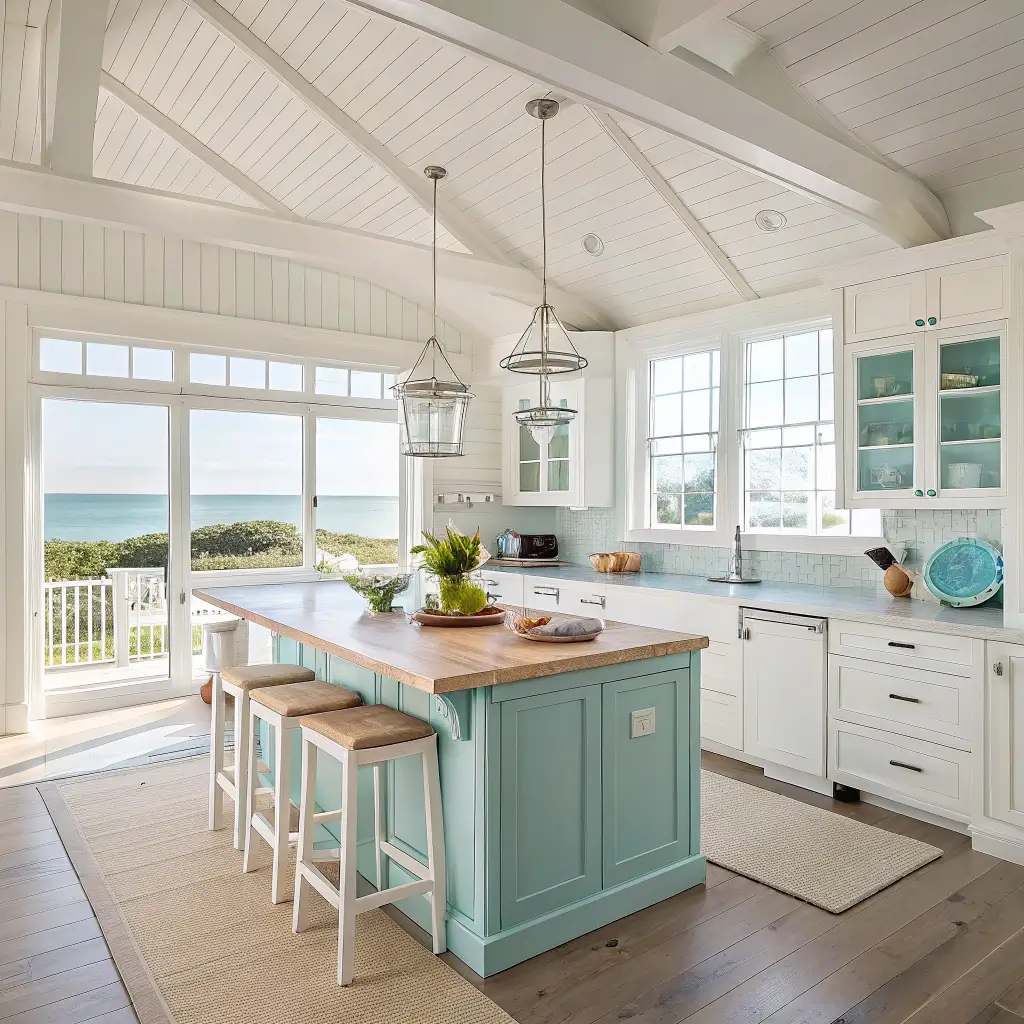
Beach House Vibes, Any Location
You don’t need oceanfront property to enjoy a coastal kitchen. This style brings the relaxed, sun-drenched aesthetic of beachside living to any home, whether you’re blocks from the shore or landlocked in the midwest.
Coastal design emphasizes light, air, and water. Think soft blues, sandy beiges, weathered whites, and textures that evoke driftwood and sea glass. It’s casual, inviting, and perpetually vacation-ready.
Coastal Kitchen Essentials
Build your coastal kitchen with these elements:
- White or light gray shaker cabinets for that classic beach cottage feel
- Light blue or soft aqua accents in backsplash or accessories
- Weathered wood details on islands, shelving, or ceiling beams
- Natural fiber materials like rattan, jute, or seagrass
- Plenty of white space to maintain that airy atmosphere
- Nautical-inspired hardware in chrome or nickel finishes
- Large windows (if possible) to flood the space with natural light
The open concept layout is practically mandatory for coastal design. Beach houses have always embraced open living—the breeze needs to flow, the light needs to move, and the space needs to breathe.
Avoiding Coastal Clichés
Here’s where I’ll get a little preachy: please, for the love of all things design, skip the anchor decorations and seashell-covered everything. Coastal design can be sophisticated and subtle. You’re going for beachside elegance, not seafood restaurant gift shop. Choose quality pieces that evoke the coast without literally screaming “THE BEACH!” at everyone who enters.
Also Read: 10 Practical Open Kitchen Partition Ideas and Budget-Friendly Tricks
Farmhouse Modern Open Kitchen
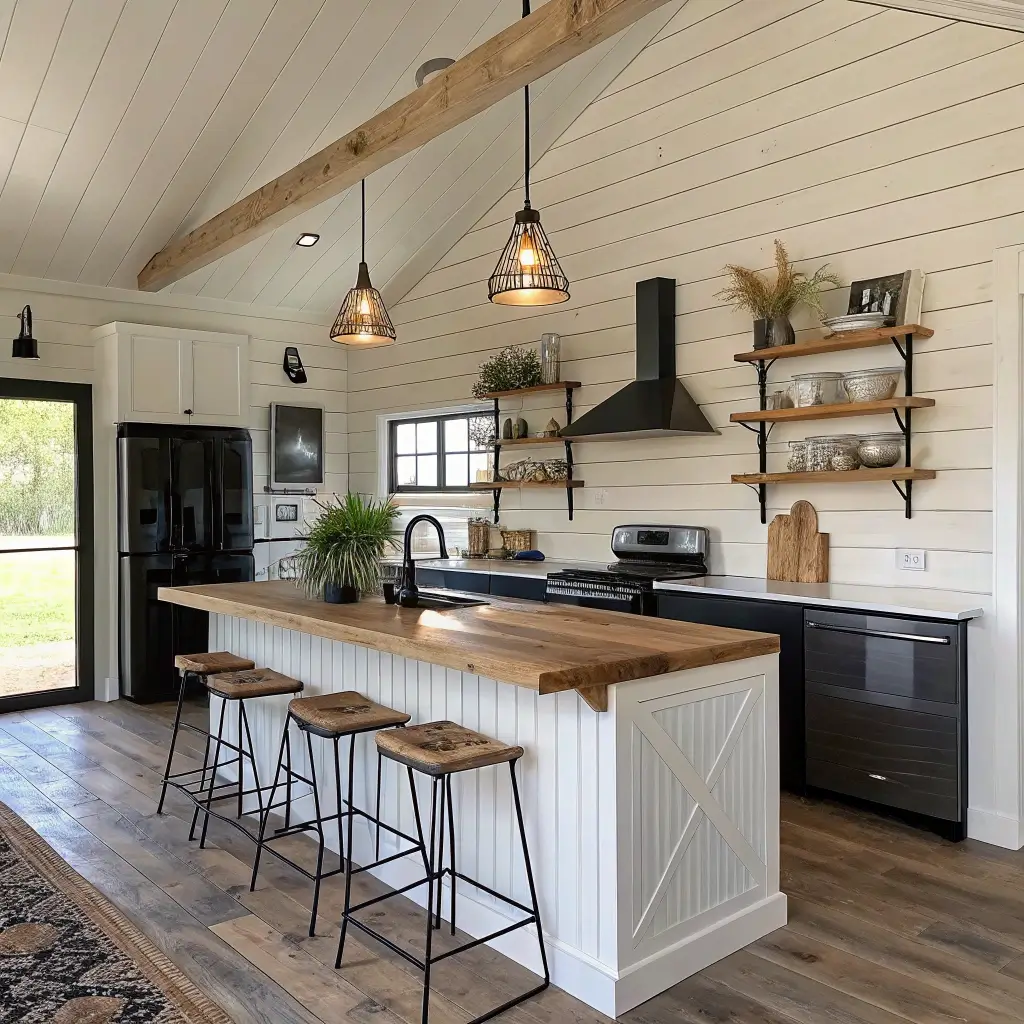
Joanna Gaines Was Onto Something
The farmhouse modern aesthetic has dominated design trends for years, and honestly, it’s earned its place. This style combines the warmth and nostalgia of traditional farmhouse design with contemporary updates that make it feel fresh and current.
When done right, a modern farmhouse kitchen feels collected rather than designed—like you carefully acquired pieces over years of living, not like you ordered everything from the same catalog page.
Modern Farmhouse Must-Haves
Create your modern farmhouse kitchen with these elements:
- Shaker-style cabinets in white, gray, or sage green
- Apron-front farmhouse sink as a functional focal point
- Mixed metals (a departure from traditional design that adds modern edge)
- Open shelving displaying vintage-inspired dishware
- Butcher block countertops or wood accents contrasting with stone
- Industrial or vintage-inspired lighting fixtures
- Tongue-and-groove or shiplap accent walls (used sparingly)
- Statement range or hood that anchors the cooking area
The open concept layout perfectly suits farmhouse design. Traditional farmhouses centered around the kitchen as the heart of the home, with family gathered around while meals were prepared. Open concept honors that tradition while updating it for contemporary living.
The Modern Part Matters
IMO, where people go wrong with farmhouse design is forgetting the “modern” half of the equation. You’re not recreating an 1890s kitchen—you’re interpreting those elements through a contemporary lens. That means cleaner lines, less clutter, and updated materials while maintaining the warmth and character that makes farmhouse design so appealing.
Contemporary Glass and Steel Kitchen
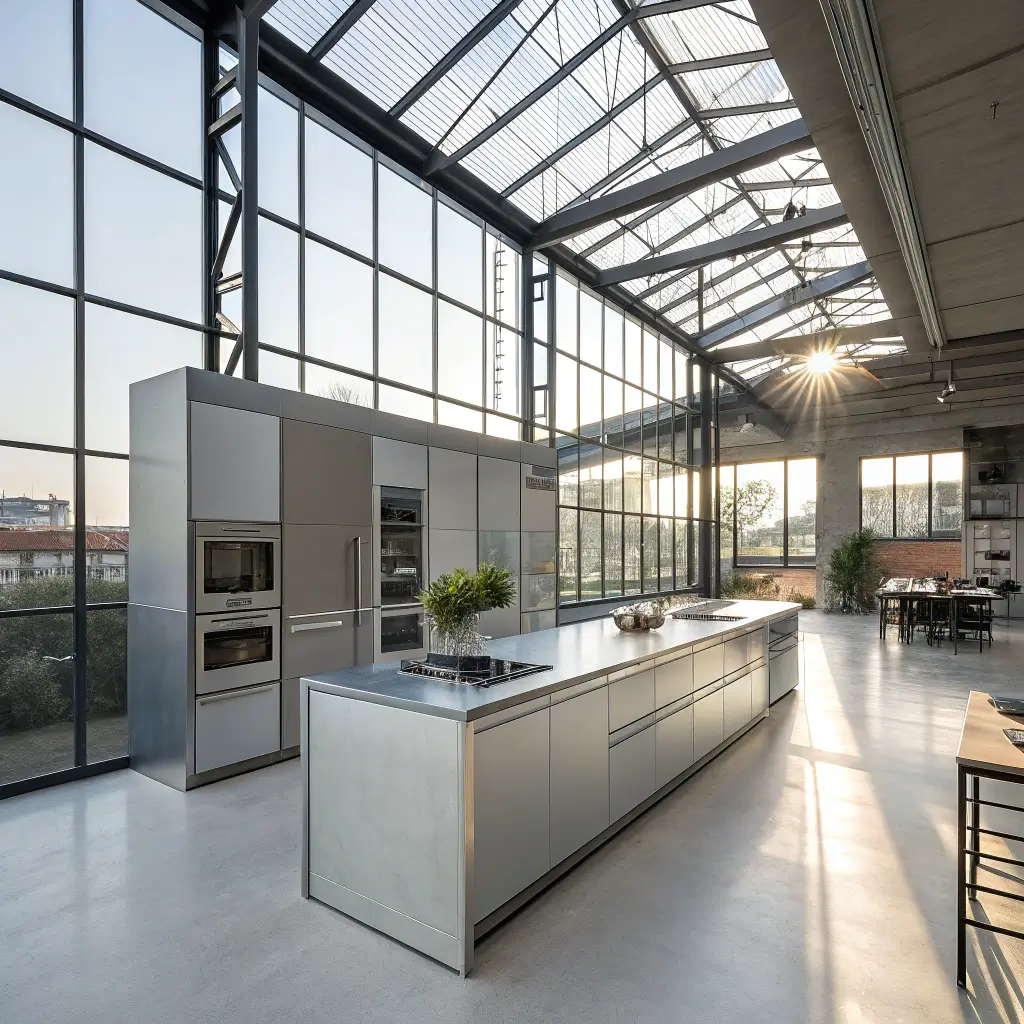
Ultra-Modern Sophistication
For those who want their kitchen to feel like it belongs in a high-end architectural showcase, the contemporary glass and steel aesthetic delivers. This style embraces transparency, reflection, and industrial materials to create spaces that feel cutting-edge and luxurious.
Glass-fronted cabinets, steel accents, and reflective surfaces define this look. It’s sleek, it’s polished, and it’s definitely not for anyone who struggles to keep things tidy (because everything is visible :/).
Glass and Steel Components
Build this ultra-modern kitchen with:
- Glass-fronted upper cabinets or completely open shelving
- Stainless steel countertops or backsplashes
- Minimalist steel-framed windows or glass partitions
- Handle-less cabinetry with integrated pulls
- High-gloss finishes on cabinets and surfaces
- Industrial-grade appliances proudly displayed
- Linear lighting designs in chrome or brushed steel
- Minimal decor allowing materials to speak for themselves
The open concept layout is essential here—glass and steel designs celebrate visibility and flow. Walls would interrupt the aesthetic completely.
Living with Glass and Steel
Full transparency (pun intended): this kitchen style requires serious commitment to cleanliness. Fingerprints show on steel. Dust shows on glass. Every smudge and spot becomes visible. If you’re considering this look, factor in the maintenance reality. It’s stunning, but it demands attention.
Bold Color Accent Kitchen
When Neutral Isn’t Your Thing
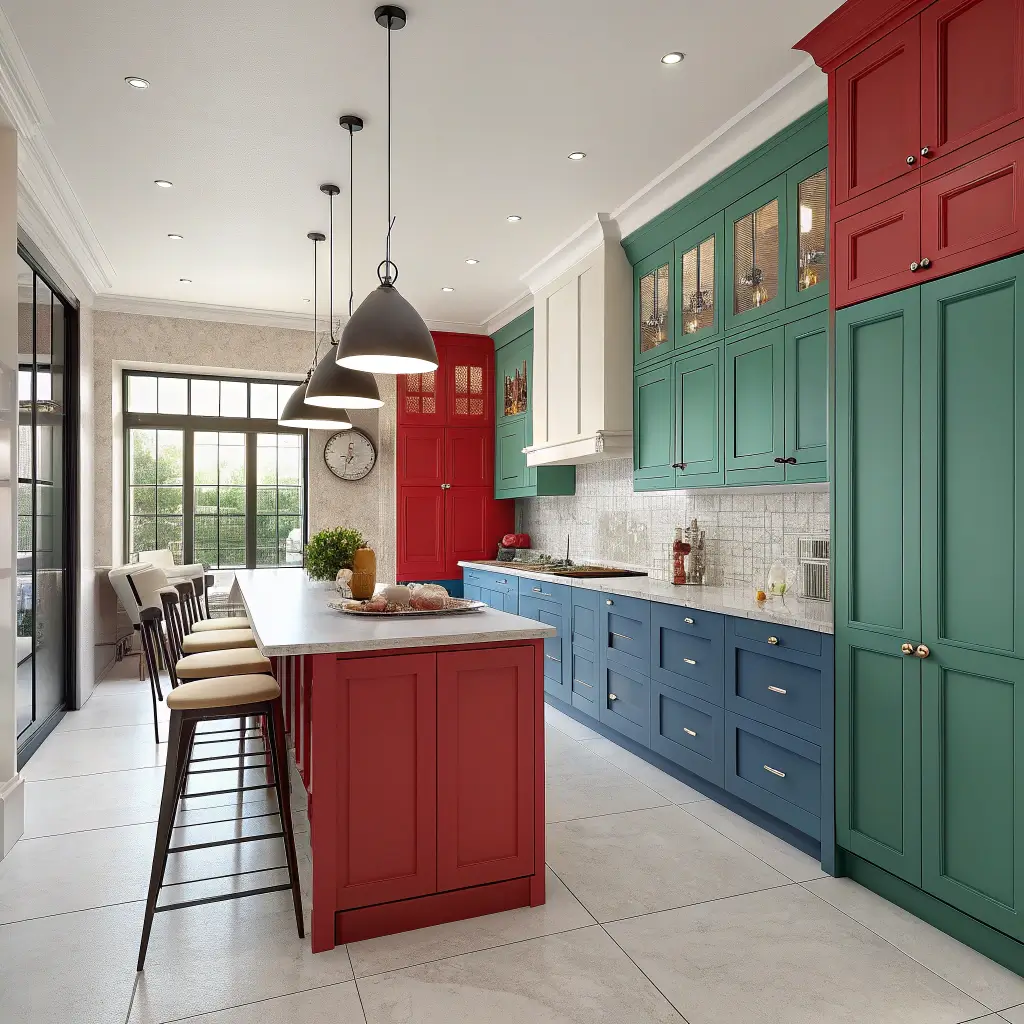
Who decided kitchens have to be white or gray? Bold color accent kitchens throw that rulebook out the window and embrace vibrant hues that reflect personality and create memorable spaces.
This approach typically uses a neutral foundation—white walls, simple flooring—and introduces one dramatic color through cabinetry, islands, or major fixtures. The result is a kitchen that makes a statement without descending into visual chaos.
Bold Color Strategies
Execute a bold color kitchen successfully with these approaches:
Popular Bold Color Choices:
- Deep emerald or forest green
- Rich navy blue
- Dramatic black (yes, black counts as bold)
- Warm terracotta or rust
- Vibrant cobalt blue
- Sophisticated burgundy or plum
Application Options:
- Color-blocked lower cabinets with white uppers
- A painted island contrasting with neutral surrounds
- Bold color on all cabinetry balanced by white walls and counters
- Accent wall behind open shelving
- Colorful range or refrigerator as statement appliance
The key is commitment and balance. Choose one bold color and stick with it. Don’t hedge your bets with multiple competing hues—that’s how kitchens become overwhelming.
Making Bold Work in Open Concept
Bold color in an open concept space requires careful consideration of adjacent areas. That gorgeous emerald green island will be visible from your living room, dining area, and possibly your entryway. Make sure your color choice works with the entire visible space, not just the kitchen itself.
I’ve seen bold color work beautifully when it becomes a throughline—emerald kitchen cabinets that echo throw pillows in the living room, navy kitchen walls that complement dining room curtains. Think of color as a thread weaving through your open space.
Also Read: 10 Unique Open Shelving in the Kitchen Ideas and Decor Tips
Smart Technology Integrated Kitchen
The Future Is Already Here
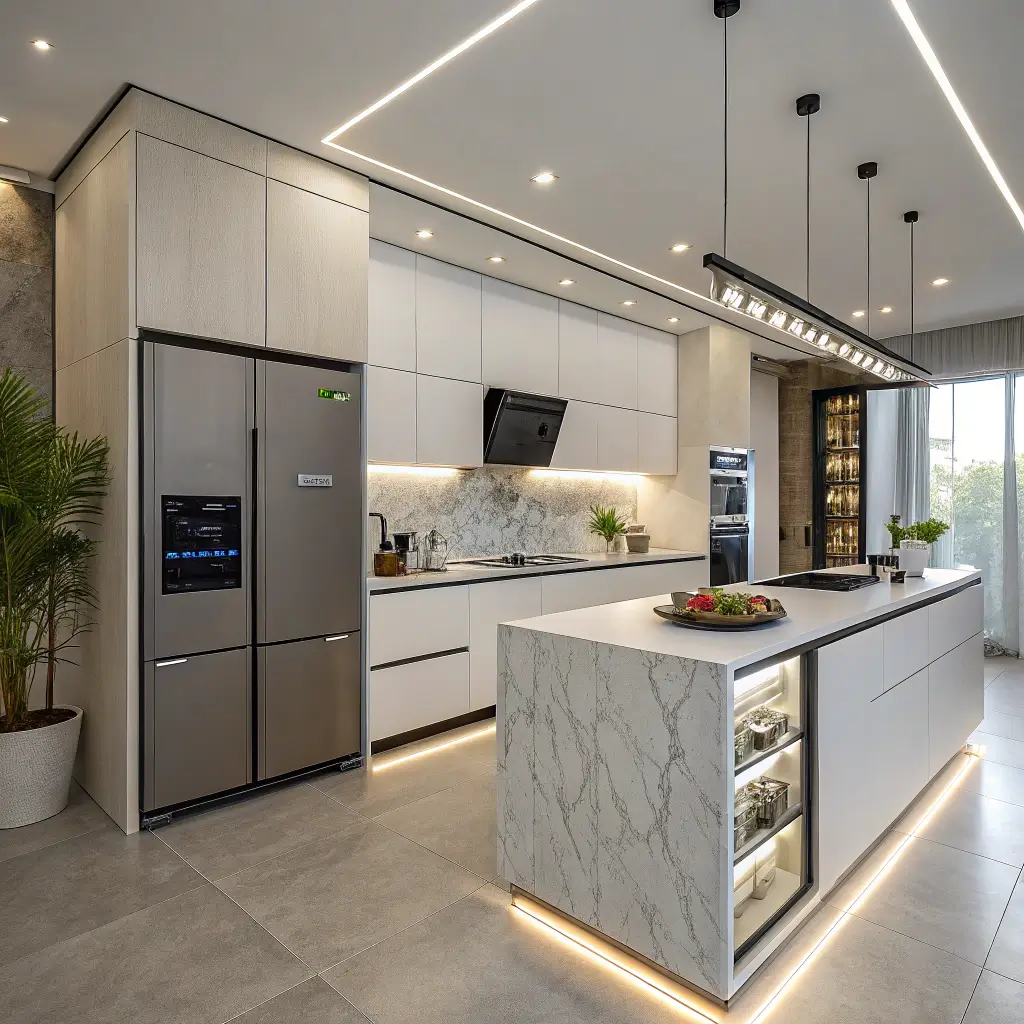
Remember when having a garbage disposal felt high-tech? Those days are long gone. Today’s smart technology integrated kitchens feature everything from voice-activated faucets to refrigerators that create shopping lists and ovens you control from your phone.
The best smart kitchens integrate technology seamlessly into beautiful design. The goal isn’t to look like a spaceship (unless that’s your thing)—it’s to enhance functionality while maintaining aesthetic appeal.
Smart Kitchen Must-Haves
Consider incorporating these smart features:
Essential Smart Appliances:
- Smart refrigerator with internal cameras and touchscreen interface
- WiFi-connected oven with remote monitoring and preset cooking modes
- Smart dishwasher that senses soil levels and adjusts accordingly
- Induction cooktop with precise temperature control and safety features
- Connected coffee maker that starts brewing before you’re even downstairs
Smart Infrastructure:
- Voice-controlled lighting with programmable scenes
- Touchless or voice-activated faucets for hands-free operation
- Built-in charging stations hidden in drawers or cabinets
- Smart ventilation that activates automatically when cooking
- Integrated sound systems throughout the kitchen and open living space
Convenience Features:
- Under-cabinet tablet mounts for recipes
- Smart cabinet lighting that activates when doors open
- Connected leak sensors under sinks and near appliances
- Motorized cabinet lifts for hard-to-reach storage
Designing for Technology
Here’s where many smart kitchens fail: they forget about aesthetics. All those charging cables, devices, and screens can quickly clutter an otherwise beautiful space. The best smart kitchens hide technology when it’s not in use. Tablet screens retract into counters. Charging stations live inside drawers. The technology serves you without dominating the visual landscape.
Open concept layouts benefit enormously from smart technology. One voice command can dim kitchen lights, start the living room speakers, and preheat the oven—all while you’re still on the couch. The connected living that open concept enables becomes even more seamless with smart home integration.
Tying It All Together: Universal Principles for Open Concept Success
Flow and Consistency
Regardless of which style speaks to you, successful open concept kitchens share certain principles:
- Consistent flooring that flows from kitchen through living spaces
- Cohesive color palettes that connect zones without requiring rigid matching
- Thoughtful transitions between cooking, dining, and living areas
- Strategic furniture placement that defines zones without walls
- Lighting layers that differentiate spaces while maintaining visual connection
The Island Question
In open concept kitchens, the island often becomes the hero piece—the visual anchor that defines the kitchen zone while providing functionality. Choose your island design carefully, considering:
- Size relative to the overall space (too big overwhelms; too small looks lost)
- Seating options that encourage gathering
- Storage capacity that reduces need for wall cabinets
- Surface material that makes a statement or complements surrounding finishes
- Lighting above that draws the eye and provides task illumination
Ventilation Matters More Than You Think
Here’s something nobody talks about enough: open concept kitchens have nowhere for cooking smells to go. That amazing garlic bread you’re making? Your living room furniture is absorbing every molecule. Invest in serious ventilation—a powerful range hood vented to the exterior, not a recirculating model that just pretends to work. Your sofa will thank you.
Final Thoughts
Choosing your open concept kitchen design ultimately comes down to how you actually live. Do you love clean lines and minimal clutter? Look toward Scandinavian, minimalist, or contemporary glass and steel options. Crave warmth and character? Rustic modern, farmhouse, or coastal designs might be your match. Want drama? Black and gold or bold color will deliver.
The most beautiful kitchen in the world means nothing if it doesn’t work for your life. Consider how you cook, how you entertain, and how you want to feel in your space. The right design will make you excited to be in your kitchen—whether you’re cooking elaborate dinners or just grabbing a midnight snack.
My own kitchen journey taught me that perfection isn’t the goal—creating a space that genuinely feels like home is what matters. So take these ideas, mix and match elements that speak to you, and create something uniquely yours. Your dream kitchen is waiting, and honestly, you deserve a space that makes you happy every time you walk in. Now go forth and renovate (or at least create an extremely detailed Pinterest board while you save up).