
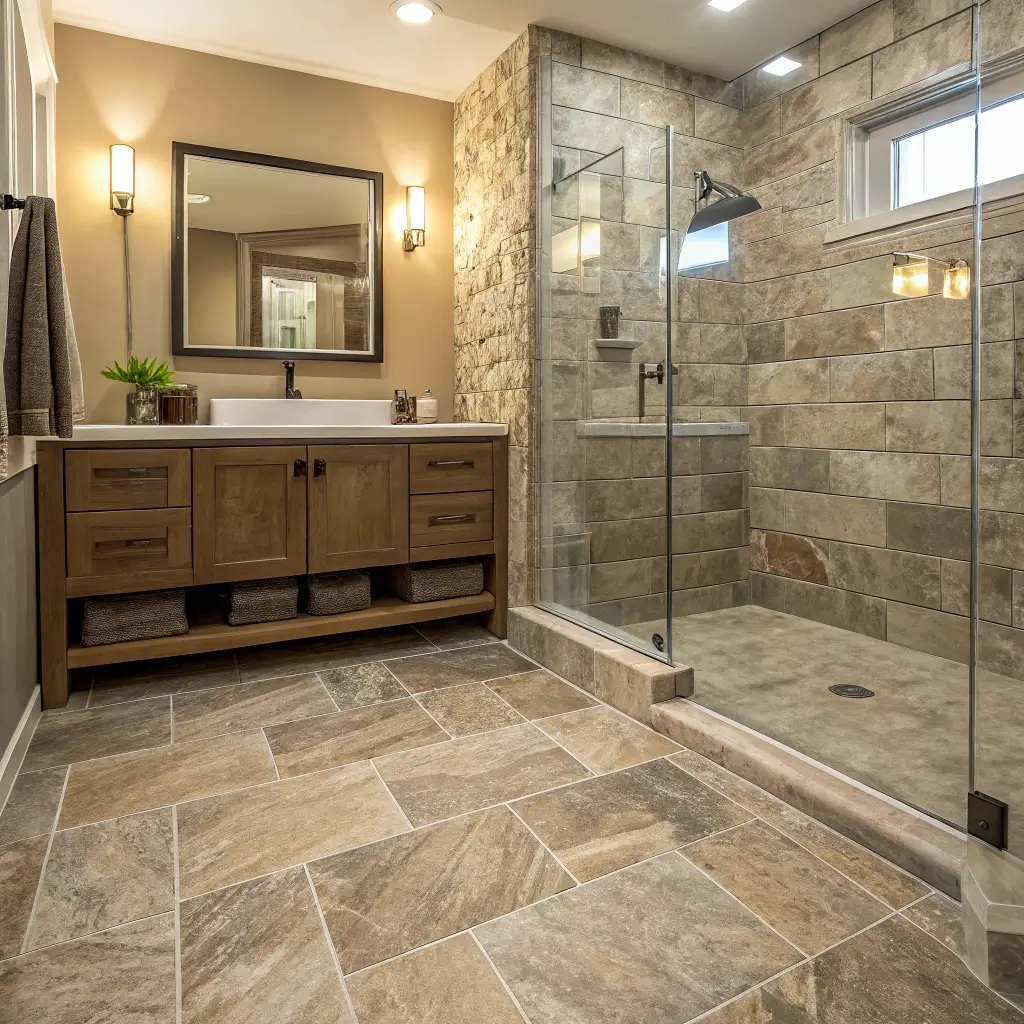
10 Inspiring Small Bathroom Flooring Ideas for Dream Designs

You know that feeling when you walk into your tiny bathroom and think, “This floor needs a serious glow-up”? Yeah, I’ve been there too.
My first apartment bathroom was so small, I could practically wash my hands while sitting on the toilet (not that I did, but you get the picture). The worst part? That dated, dingy flooring that made the whole space feel like a forgotten closet rather than a sanctuary.
Here’s the thing about small bathrooms – the floor is basically your canvas, and choosing the right design can transform your cramped quarters into something that actually feels intentional and stylish.
After renovating three small bathrooms over the years (and making plenty of mistakes along the way), I’ve discovered that the right flooring can make your bathroom feel twice its actual size. No joke.
Light-Colored Tiles for a Brighter Bathroom
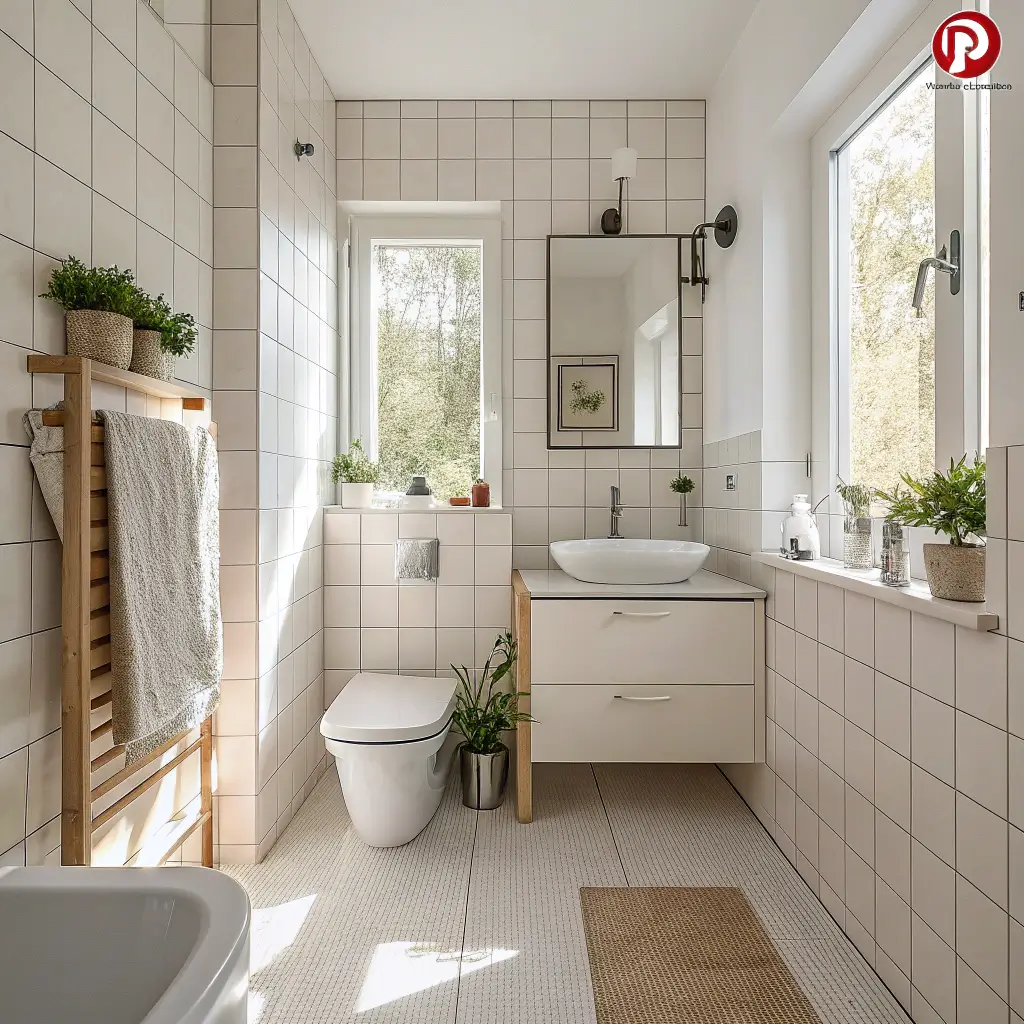
Let me start with the most game-changing trick I learned the hard way. Remember that first bathroom I mentioned? I initially went with dark grey tiles thinking they’d hide dirt better. Big mistake. Light-colored tiles are absolutely essential for small bathrooms – they reflect light like nobody’s business and instantly make your space feel larger.
White, cream, soft grey, or pale beige tiles work wonders because they bounce natural and artificial light around the room. You want that airy, open feeling? Light tiles deliver it on a silver platter. I recently helped my sister renovate her 35-square-foot powder room, and switching from muddy brown to crisp white ceramic tiles made it feel like we’d knocked down a wall.
Why Light Colors Actually Work
The science behind this is pretty straightforward – light colors reflect up to 80% of light, while dark colors absorb it. When you’re dealing with limited square footage, every bit of reflected light counts. Think of it like wearing a white shirt on a hot day versus a black one – same principle, different application.
Here’s what I’ve found works best:
- Pure white subway tiles for a timeless look
- Soft grey marble-look porcelain for subtle elegance
- Cream-colored limestone tiles for warmth without darkness
- Pale beige ceramic for hiding minor imperfections
Herringbone Pattern Flooring for Visual Depth
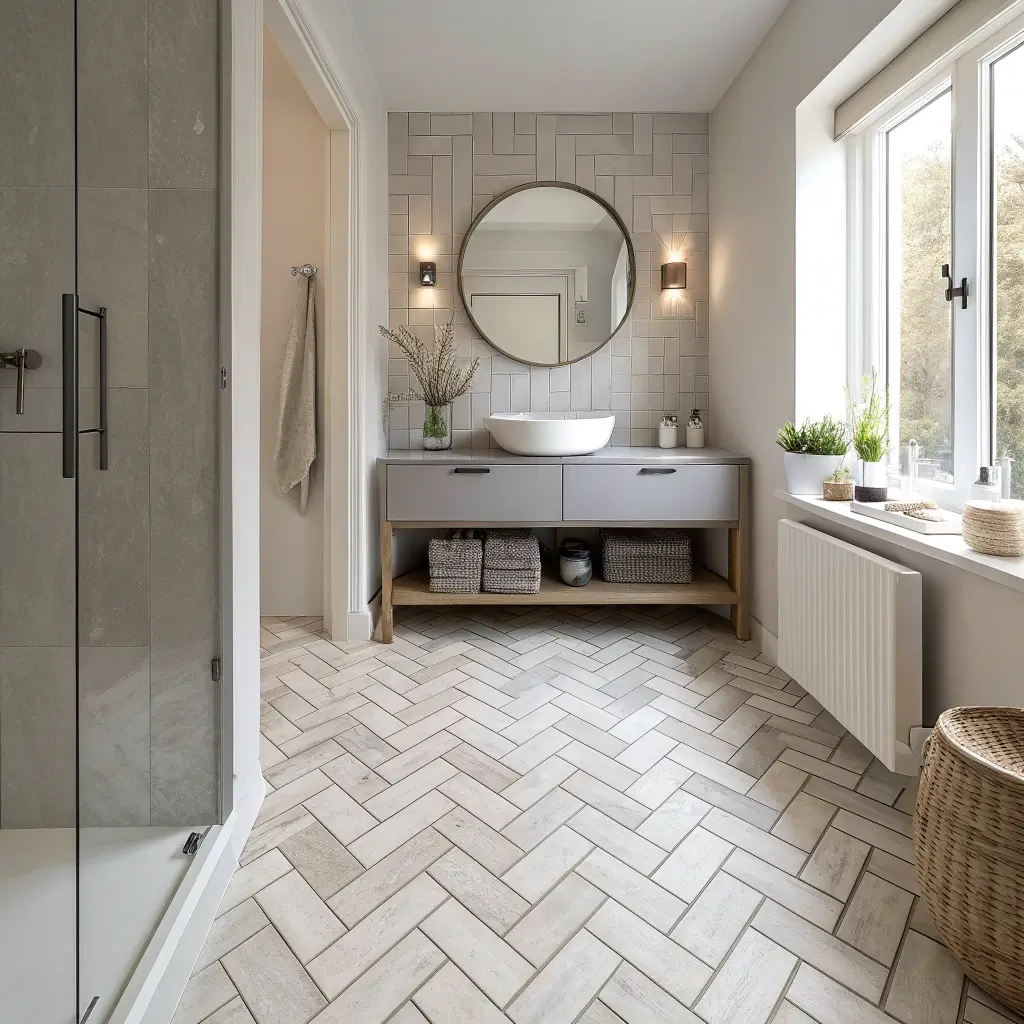
Now, if you really want to get fancy (and trust me, it’s worth it), consider laying your tiles in a herringbone pattern. This zigzag design creates incredible visual movement that tricks your eye into seeing more space than actually exists. It’s like an optical illusion for your floor.
I installed herringbone tiles in my current bathroom last year, and every single person who visits comments on how “spacious” it feels. The bathroom is literally 40 square feet. That’s the power of smart pattern placement, folks.
Making Herringbone Work in Tiny Spaces
The key to nailing herringbone in a small bathroom? Keep the individual tiles relatively small – think 2×8 inches or 3×12 inches max. Oversized herringbone can overwhelm a tiny space faster than you can say “renovation regret.”
You also want to consider the direction of your pattern. Running the herringbone pattern perpendicular to the door creates an immediate sense of width. Running it parallel? That elongates the room. Pick your priority based on your bathroom’s specific proportions.
Wood-Look Waterproof Vinyl for Cozy Vibes
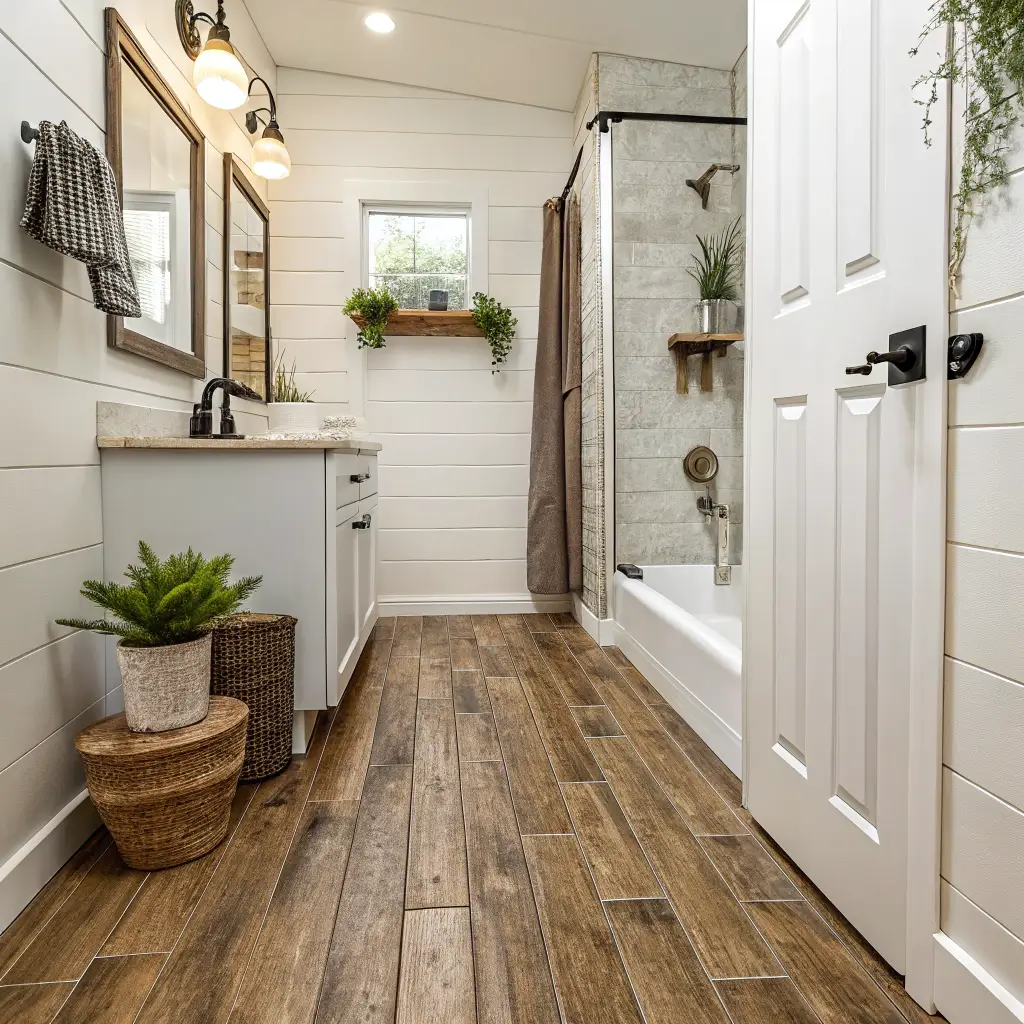
Okay, hear me out on this one. I know what you’re thinking – “Vinyl? Really?” But modern luxury vinyl planks (LVP) have come so far from those cheap peel-and-stick tiles your grandma used. Today’s wood-look vinyl is virtually indistinguishable from real hardwood, and IMO, it’s perfect for bathrooms.
The warmth of wood-look flooring instantly makes a small bathroom feel less clinical and more like an extension of your living space. Plus, unlike real wood, you don’t have to panic every time someone drips water after a shower. Waterproof vinyl laughs in the face of moisture 🙂
The Practical Benefits Nobody Talks About
Here’s something contractors won’t tell you – vinyl flooring is significantly warmer underfoot than tile. Ever stepped onto cold bathroom tiles at 2 AM? Not fun. Vinyl provides a bit of insulation that makes those midnight bathroom runs way more bearable.
Installation is also DIY-friendly if you’re handy. I installed vinyl planks in my guest bathroom over a weekend, and the click-lock system made it almost foolproof. Almost. (Let’s just say I learned the importance of leaving expansion gaps the hard way.)
Also Read: 15 Brilliant Small Modern Bedroom Ideas and Smart Storage Solutions
Large Format Tiles to Make Space Appear Bigger
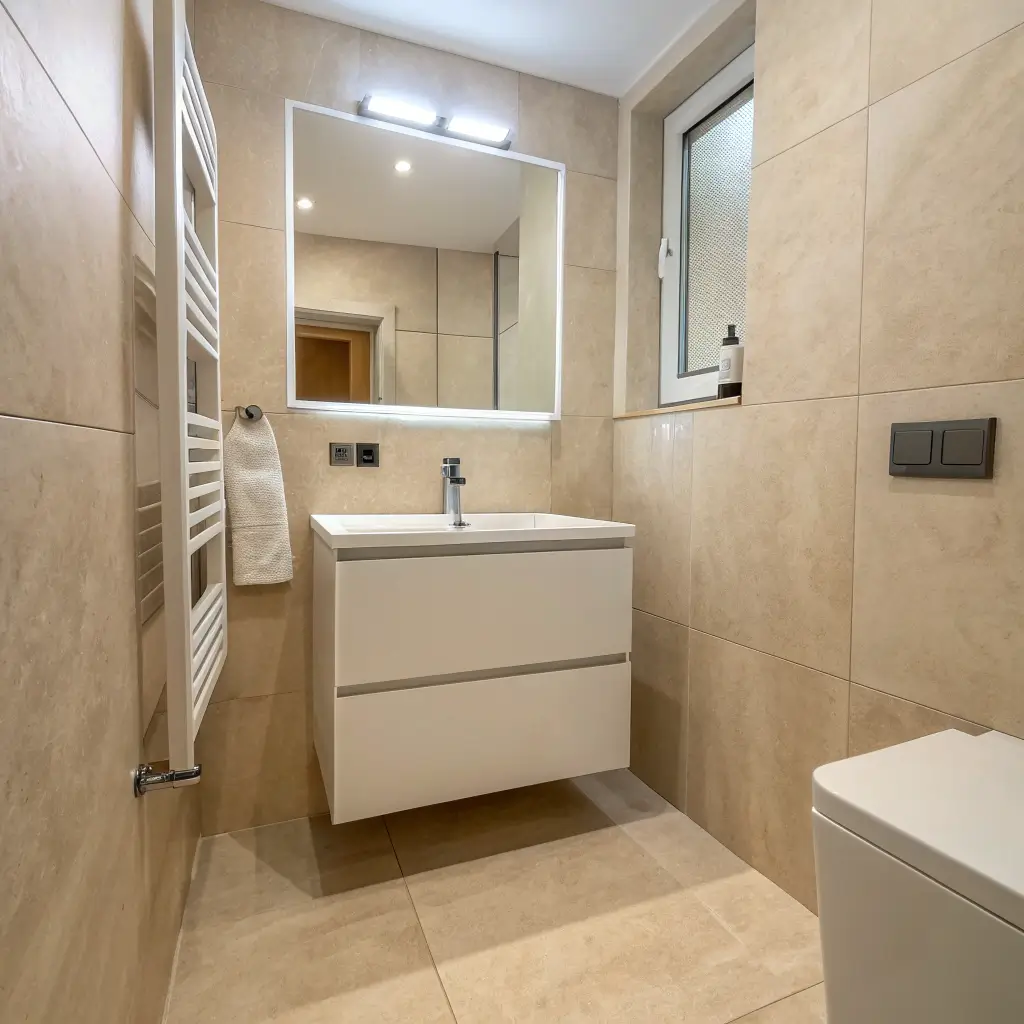
This might sound counterintuitive, but large format tiles in small bathrooms are absolutely brilliant. Fewer grout lines mean less visual clutter, which translates to a cleaner, more spacious appearance. Think 12×24 inches minimum, but I’ve seen 24×48 inch tiles work beautifully in bathrooms under 50 square feet.
When I first suggested large tiles for my friend’s tiny bathroom, she looked at me like I’d lost my mind. “Won’t huge tiles make it look smaller?” Nope. The exact opposite happened. Minimal grout lines create visual continuity that makes the floor appear as one cohesive surface rather than a choppy grid.
Strategic Placement Tips
The trick is strategic cutting and placement. You want to minimize small, awkward cuts at the edges. Start with a full tile at the most visible point (usually opposite the door) and work outward. Yes, this might mean more waste, but the visual payoff is worth the extra cost.
Consider these combinations:
- 24×24 inch tiles for square bathrooms
- 12×24 inch tiles laid lengthwise in narrow spaces
- 18×36 inch tiles for that ultra-modern look
- Large hexagons (8-10 inches) for a twist on the concept
Hexagonal Tiles for Modern Geometric Style
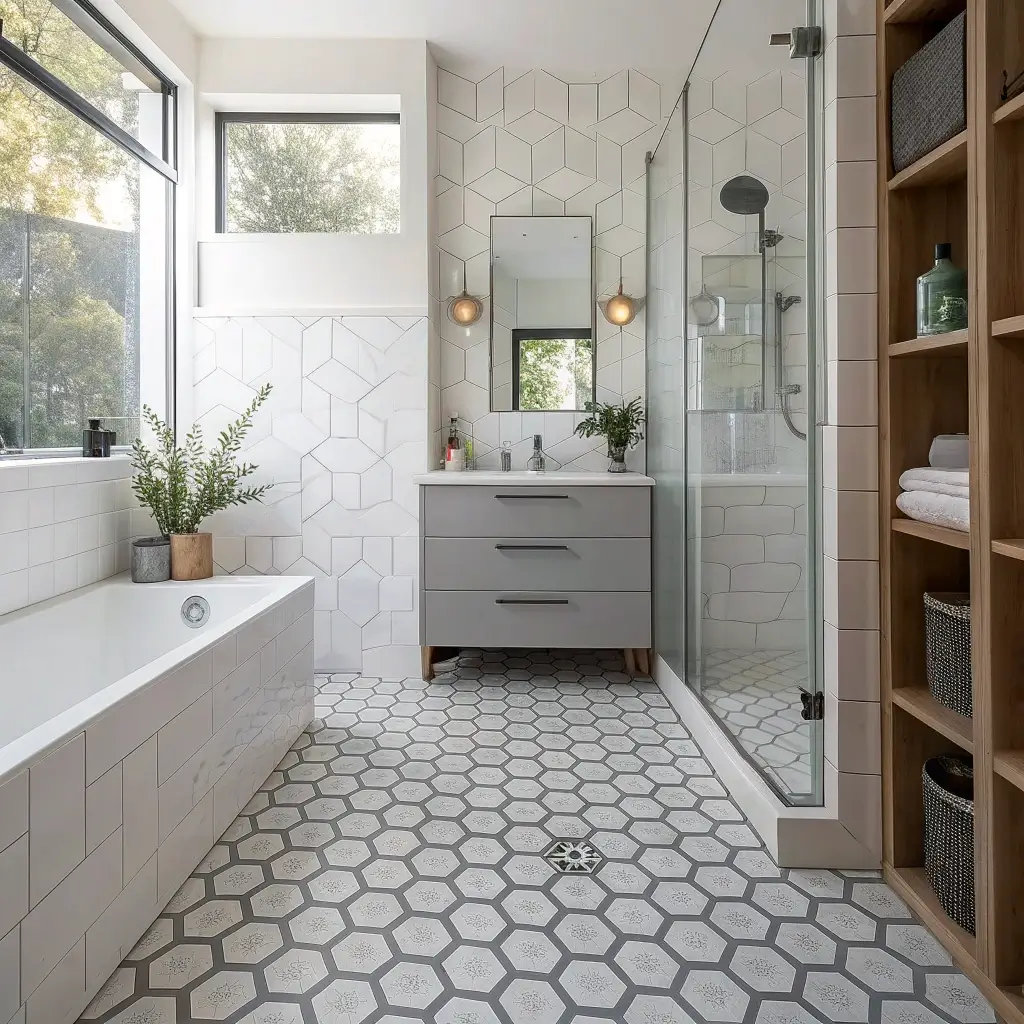
Speaking of hexagons, can we talk about how hexagonal tiles are having a serious moment? And for good reason. These six-sided beauties add instant personality while maintaining a clean, modern aesthetic that works perfectly in small spaces.
I fell in love with hex tiles after seeing them in a boutique hotel bathroom. The pattern creates movement without overwhelming the space, and the geometric shape feels fresh without being trendy. Classic hex tiles range from 1-inch mosaics to 8-inch statement pieces, giving you plenty of options to match your style.
Color and Size Considerations
For small bathrooms, I recommend sticking with hexagons between 3-6 inches. Any smaller and you risk the busy mosaic look (unless that’s your goal); any larger and you might struggle with awkward cuts around fixtures.
White or light grey hex tiles keep things bright and airy, but don’t be afraid of a little contrast. Black hex tiles with white grout create a stunning graphic effect that actually helps define the floor space, making the room feel more intentional and designed.
Diagonal Tile Layout for Illusion of Width
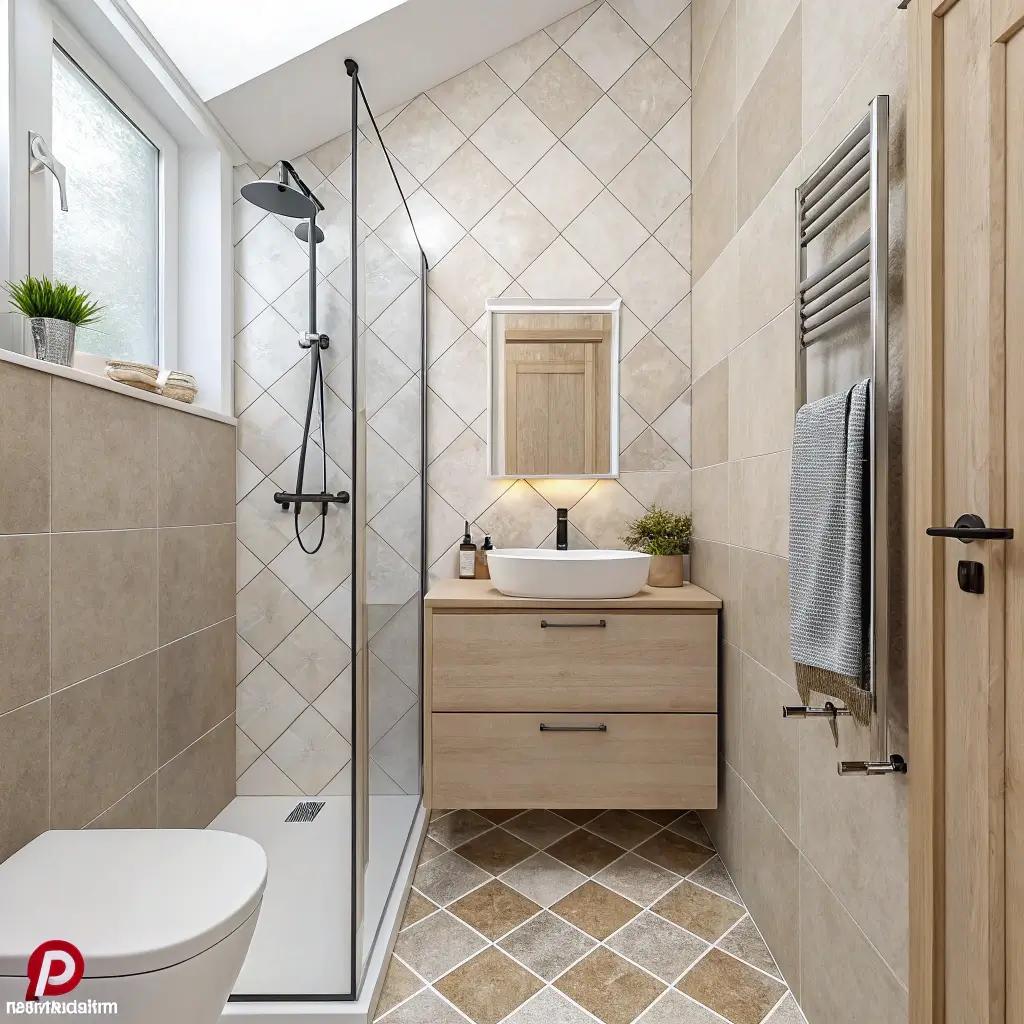
Want to know a designer secret that costs nothing extra? Laying square tiles diagonally instantly makes your bathroom appear wider. It’s all about those diagonal lines drawing your eye corner to corner, creating the longest possible sight lines in the space.
I discovered this trick accidentally when my contractor misunderstood my instructions for a bathroom renovation. Happy accident? Absolutely. The diagonal layout made my narrow galley bathroom feel significantly less tunnel-like.
Getting the Angle Right
The standard approach involves rotating your tiles 45 degrees, creating a diamond pattern. But here’s where it gets interesting – you can also try a modified diagonal at 30 or 60 degrees for a more subtle effect. This works particularly well with rectangular tiles.
Keep in mind that diagonal layouts require more cutting and generate more waste (usually 10-15% more than straight layouts). But honestly? The visual impact makes it worthwhile. Just factor in the extra materials when budgeting.
Also Read: 10 Dreamy Modern Organic Bedroom Ideas to Rejuvenate Your Room
Mosaic Accent Flooring for Tiny Bathrooms
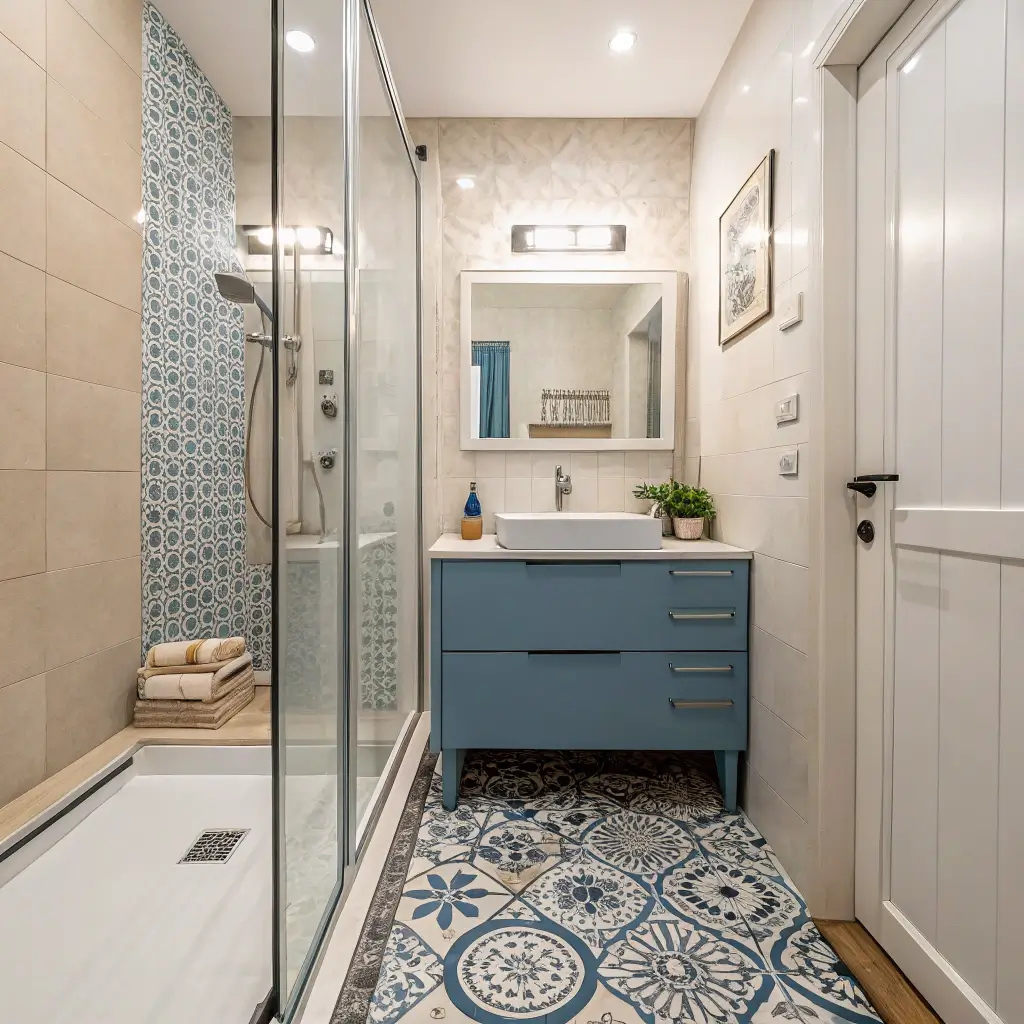
Sometimes you just want to go bold, and mosaic tiles let you create a genuine work of art on your bathroom floor. I’m talking about those gorgeous penny rounds, mini hexagons, or even custom patterns that turn your floor into the star of the show.
My neighbor installed white penny rounds with random black dots scattered throughout, and it looks like something straight out of a design magazine. The key with mosaics in small spaces? Keep the color palette limited to avoid visual chaos.
Creating Focal Points Without Overwhelming
Here’s how to make mosaics work:
- Use them as a border or accent strip rather than wall-to-wall
- Combine with larger, simpler tiles for balance
- Stick to two or three colors maximum
- Consider a gradient effect from light to dark
The beauty of mosaic tiles is that they come in mesh-backed sheets, making installation easier than you’d think. Though FYI, cutting these sheets around toilets and vanities requires patience and a steady hand.
Matte Finish Tiles for Sleek, Non-Slip Surfaces
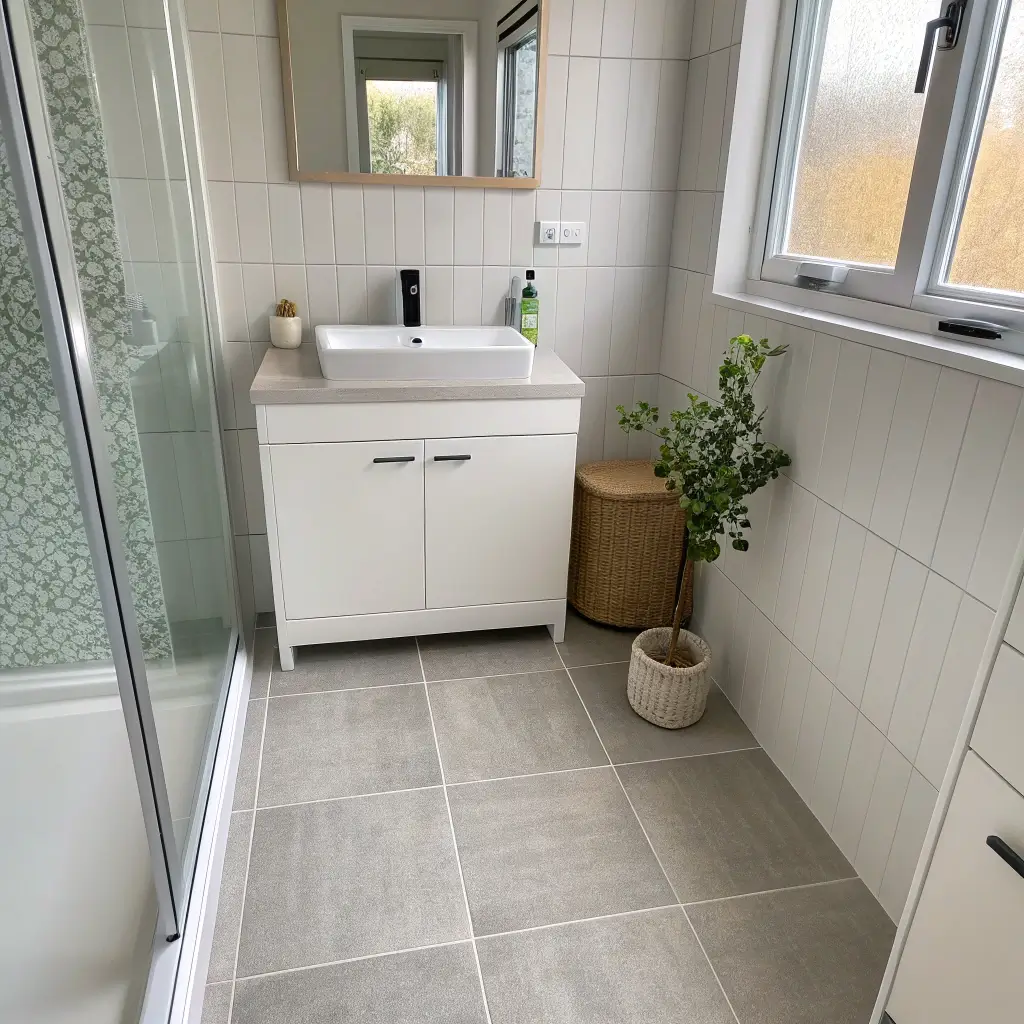
Let’s get practical for a minute. Matte finish tiles are the unsung heroes of bathroom flooring, especially in small spaces where every slip could mean a collision with a wall or fixture. They provide excellent grip when wet while maintaining a sophisticated, modern look.
I learned to appreciate matte tiles after my mom slipped on glossy tiles in her bathroom. Now I always recommend matte finishes, particularly for households with kids or elderly family members. Safety doesn’t have to mean sacrificing style.
The Aesthetic Benefits of Going Matte
Beyond safety, matte tiles hide water spots and footprints better than their glossy counterparts. Ever notice how shiny floors show every single droplet? Matte surfaces are way more forgiving, which means less time cleaning and more time enjoying your space.
Matte finishes also:
- Reduce glare from overhead lighting
- Create a more natural, stone-like appearance
- Provide better color depth and richness
- Offer a contemporary, understated elegance
Checkerboard Pattern for Classic Small Spaces
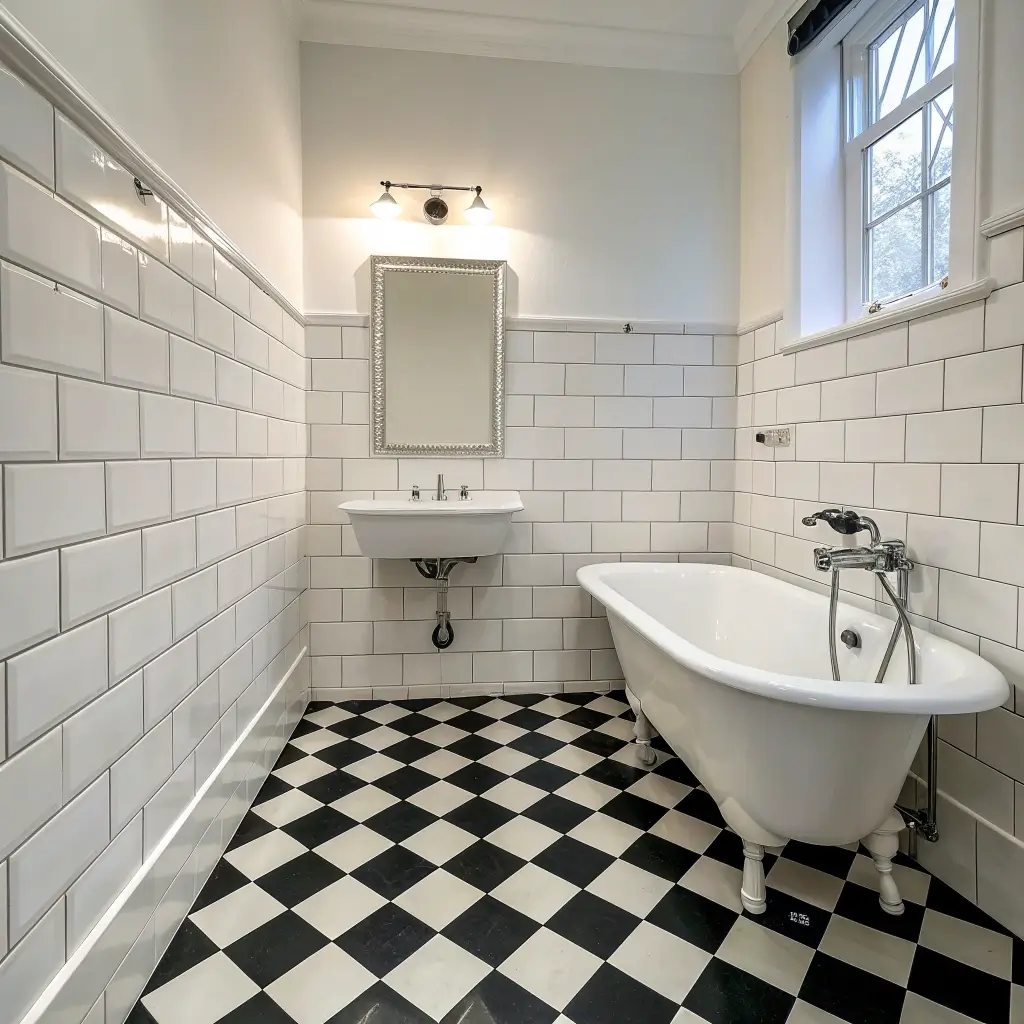
Call me old-fashioned, but there’s something timelessly charming about a classic black and white checkerboard floor. It works especially well in small bathrooms because the pattern is bold enough to be interesting but regular enough not to overwhelm.
I installed a checkerboard floor in my vintage-style powder room, and it’s become the most Instagrammed spot in my house. The pattern adds personality while the high contrast creates visual interest that distracts from the room’s limited size.
Modern Takes on the Classic Pattern
You don’t have to stick with traditional black and white (though it’s gorgeous). Consider these variations:
- Navy and white for a softer contrast
- Grey and cream for subtle sophistication
- Two shades of the same color for a tone-on-tone effect
- Different sized squares for an updated twist
Pro tip: Align your checkerboard pattern with the room’s architecture. Starting with a full tile at the door creates a cleaner entrance and makes the pattern feel intentional rather than random.
Also Read: 15 Inviting Modern Farmhouse Bedroom Ideas for Warm Atmosphere
Stone-Look Porcelain Tiles for Elegant Touch
Last but definitely not least, let’s talk about stone-look porcelain tiles – the perfect marriage of luxury and practicality. Real marble or travertine in a bathroom? Beautiful but high-maintenance and expensive. Porcelain that looks like stone? All the elegance, none of the headaches.
I splurged on marble-look porcelain for my master bathroom, and two years later, it still looks exactly like the day we installed it. No etching from cleaning products, no staining, no resealing required. Modern porcelain technology creates such realistic stone patterns that even contractors do double-takes.
Choosing the Right Stone Look
Different stone looks create different moods:
- Carrara marble patterns for timeless elegance
- Slate-look tiles for rustic charm
- Travertine patterns for Mediterranean warmth
- Granite-look options for dramatic veining
The best part about porcelain? You can get large format tiles that would be impossibly expensive (and heavy) in real stone. Those gorgeous 24×48 inch marble slabs you see in luxury hotels? Totally achievable with porcelain at a fraction of the cost.
Installation Considerations
Here’s something important – porcelain tiles require a perfectly level subfloor. Any imperfections will telegraph through and could cause cracking. Spend the extra time (or money) to properly prep your floor. Trust me, it’s worth it.
Also, porcelain is harder to cut than ceramic, so unless you have a quality wet saw, consider hiring a pro for installation. The results will look better, and you’ll save yourself the frustration of chipped edges and broken tiles.
Making Your Final Decision
So there you have it – ten flooring ideas that can transform your small bathroom from cramped afterthought to design destination. The truth is, any of these options can work brilliantly with the right execution. It really comes down to your personal style, budget, and how much effort you want to put into maintenance.
If you’re still feeling overwhelmed, here’s my advice: collect photos of bathrooms you love and look for patterns. You attracted to clean, minimal spaces? Large format tiles or light colors might be your jam. Love vintage charm? That checkerboard pattern is calling your name. Want something that’ll still look good in ten years? Stone-look porcelain is a safe bet :/
Remember, your bathroom floor isn’t just about looks – it needs to be practical for your lifestyle. Got kids who splash water everywhere? Skip the real wood. Hate cleaning grout? Large format tiles are your friend. The best bathroom floor is one that makes you smile every morning while standing up to your daily routine.
One final thought – don’t be afraid to mix and match these ideas. Some of the best small bathroom floors I’ve seen combine elements from multiple approaches. Maybe you use large format tiles with a herringbone accent strip, or pair light-colored hex tiles with a darker grout for definition. Your bathroom, your rules.
Whatever you choose, just remember that small bathrooms actually give you more freedom to go bold since you’re working with less square footage (and therefore less budget). That marble-look porcelain that seems too expensive? Way more doable when you only need 30 square feet. That intricate herringbone pattern that seems too labor-intensive? Much more manageable in a compact space.
Now get out there and create the bathroom floor of your dreams. Your morning routine will thank you for it!