
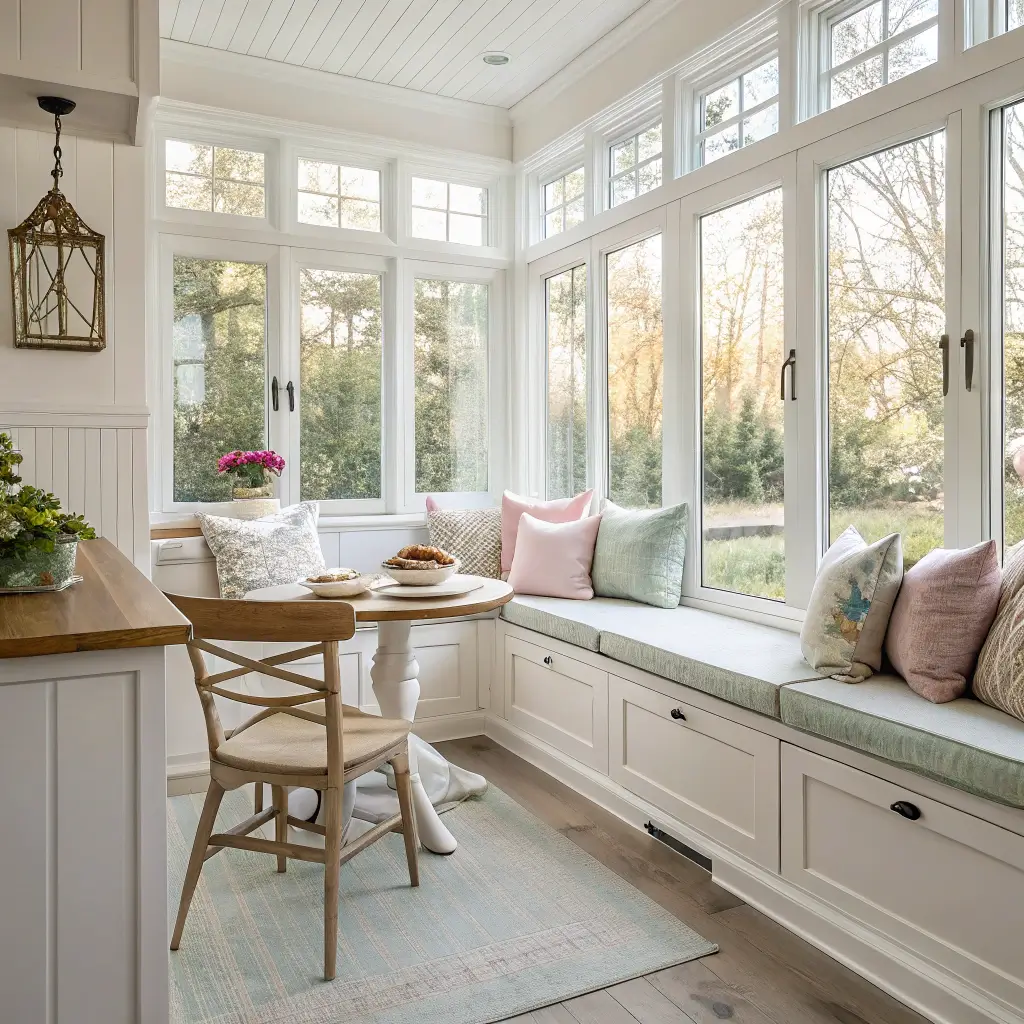
15 Modern Cozy Kitchen Nook Ideas for Stylish Kitchens

Let me paint you a picture. It’s Sunday morning, the coffee’s brewing, sunlight streams through the window, and you’re curled up in the most perfect little corner of your kitchen with a book and a croissant. Sounds dreamy, right? That’s the magic of a well-designed kitchen nook.
I’ve spent years obsessing over kitchen design—probably to an unhealthy degree, if I’m being honest. And if there’s one element that consistently transforms a functional kitchen into a truly livable space, it’s the humble kitchen nook. These cozy corners have become my absolute favorite design feature, and I’ve experimented with more styles than I care to admit.
Whether you’re working with a sprawling farmhouse kitchen or a tiny apartment galley, there’s a nook style waiting to become your new favorite spot in the house. So grab that coffee (or tea, I don’t judge), and let’s explore 15 modern cozy kitchen nook ideas that’ll make you wonder why you ever ate standing at the counter.
Rustic Corner Breakfast Nooks
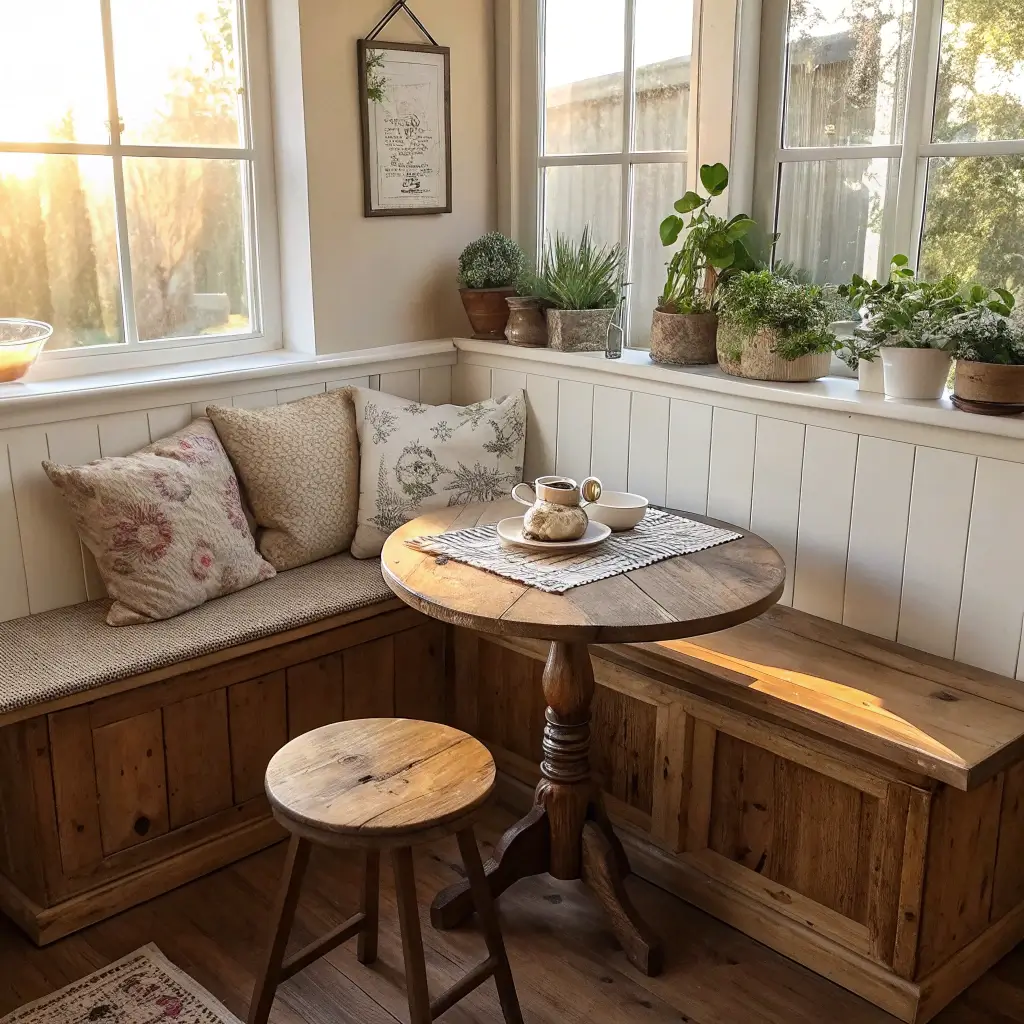
There’s something incredibly grounding about rustic design. Maybe it’s the natural materials, the imperfect textures, or the way it makes you feel like you’re in a countryside cottage—even if you’re smack in the middle of a city.
The Appeal of Rustic Charm
Rustic corner breakfast nooks embrace natural wood finishes, weathered textures, and earthy color palettes. Think reclaimed barn wood tables, distressed paint finishes, and vintage-inspired light fixtures. The corner placement maximizes space while creating an intimate dining experience.
I installed a rustic nook in my first home using salvaged wood from an old fence. Was it a lot of work? Absolutely. Was it worth every splinter? You bet.
Key Elements to Include
To nail the rustic look, focus on these essentials:
- Reclaimed wood benches or tables with visible grain and natural imperfections
- Wrought iron accents for lighting fixtures or table bases
- Woven textiles like burlap cushions or cotton throws
- Mason jar centerpieces or vintage crockery displays
- Exposed brick or shiplap walls as a backdrop
The beauty of rustic design lies in its forgiving nature. Those scratches and dents? They’re not flaws—they’re character. Perfect for families with kids who treat furniture like jungle gyms.
Window Seat Kitchen Nooks
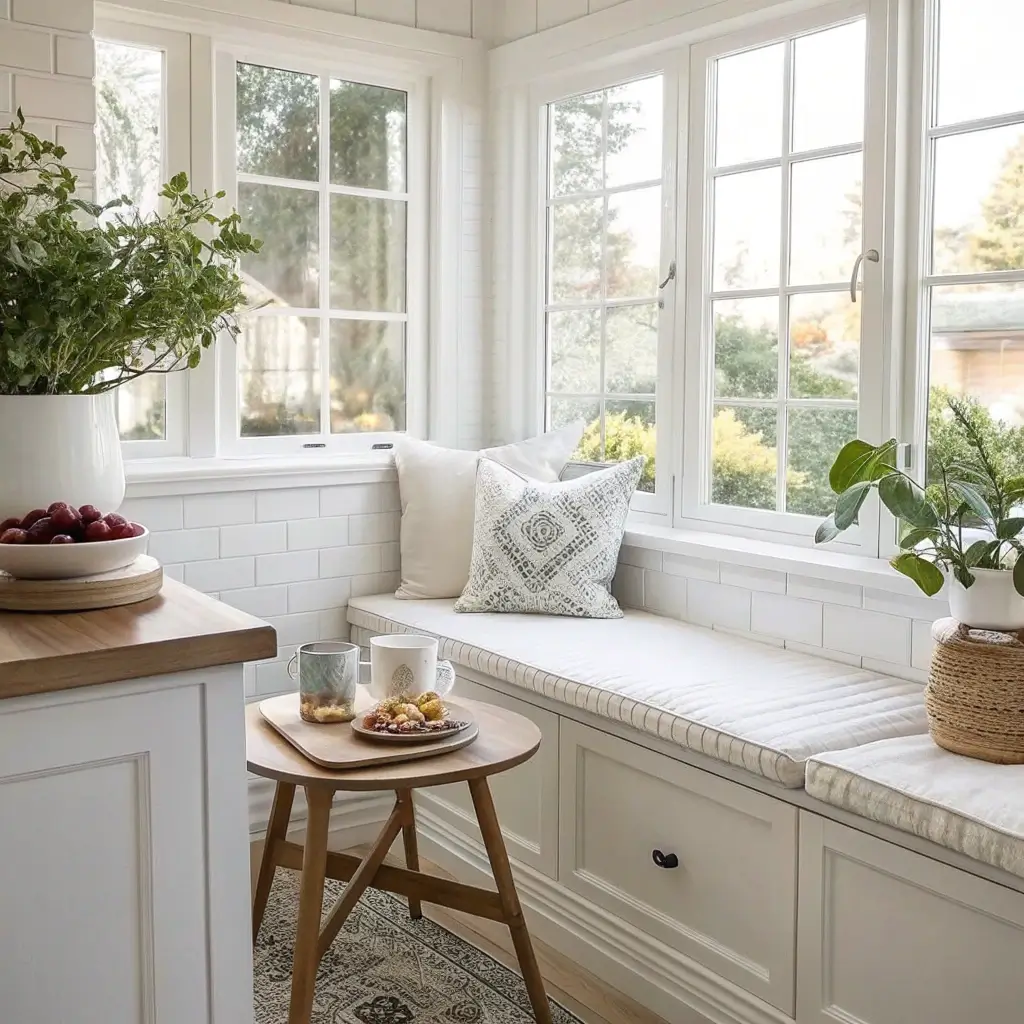
Ever noticed how cats always find the sunniest spot in the house? Turns out, they’re onto something. Window seat nooks combine natural lighting, comfortable seating, and prime real estate views into one irresistible package.
Maximizing Natural Light
Position your nook under the largest kitchen window you’ve got. The natural light creates an inviting atmosphere that artificial lighting simply can’t replicate. Plus, during winter months, that sunshine becomes absolutely precious.
Bay windows work exceptionally well for this design, as they naturally create a recessed space perfect for bench seating. Standard windows work too—you’ll just need to build out from the wall slightly.
Design Considerations
When planning a window seat nook, keep these factors in mind:
- Cushion thickness matters — aim for at least 4 inches of foam for comfortable seating
- UV-resistant fabrics prevent sun damage and fading
- Adjustable window treatments let you control light levels
- The view itself becomes part of your décor (so maybe address that neighbor’s questionable lawn ornament situation)
I once designed a window nook overlooking a garden, and honestly, it became the most fought-over seat in the house. Fair warning: you might create some family drama here.
Small Space L-Shaped Nooks
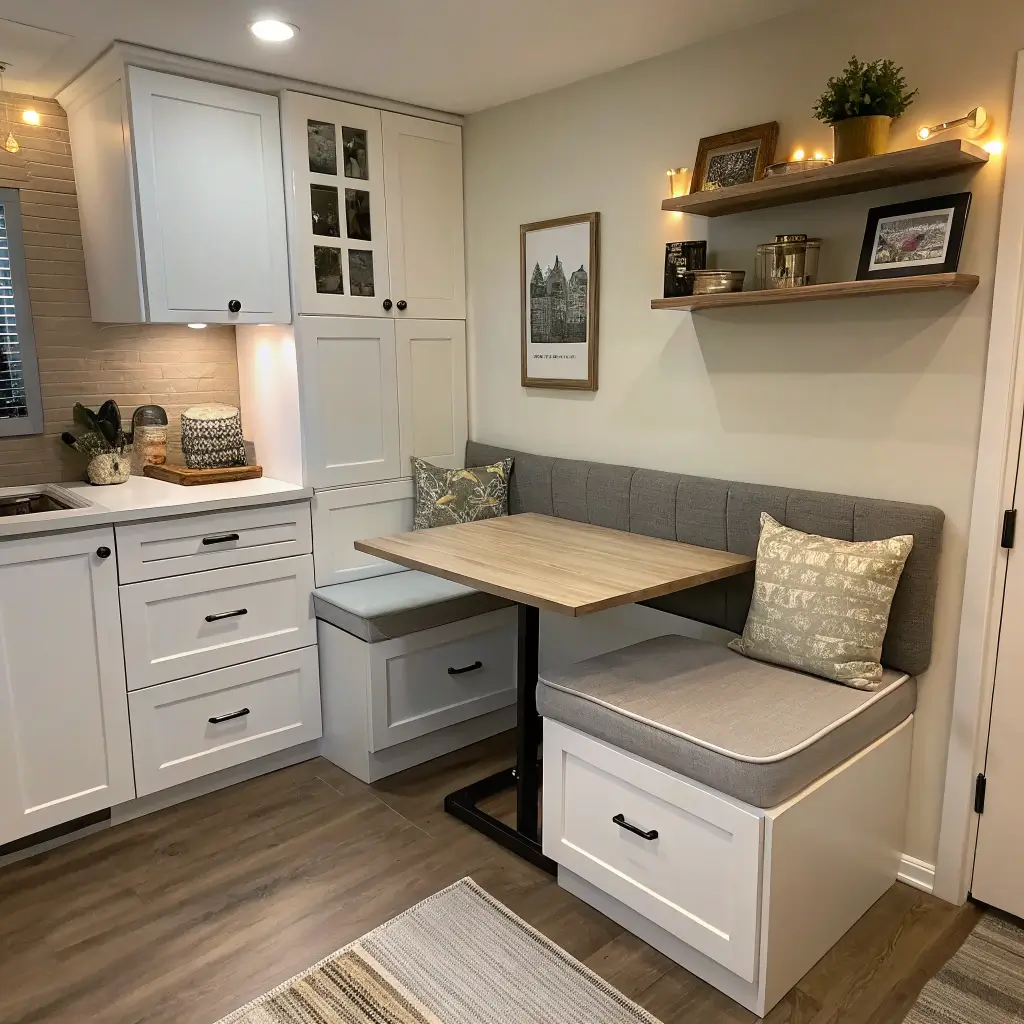
Living in a smaller space doesn’t mean sacrificing style or functionality. L-shaped nooks might be my favorite solution for tight kitchens because they maximize corner space that usually just collects dust bunnies and forgotten grocery bags.
Why L-Shapes Work
The L-configuration fits snugly into corners, leaving the rest of your kitchen floor plan open. This design typically accommodates 4-6 people without taking up the footprint of a traditional dining set. Pretty clever, right?
Making the Most of Limited Square Footage
Here’s how to optimize your L-shaped nook:
- Floating tables that attach to the wall eliminate bulky legs
- Backless benches maintain visual openness
- Light color palettes create the illusion of more space
- Mirrors strategically placed nearby reflect light and expand the perceived area
- Vertical storage above the nook for cookbooks or decorative items
I’ve seen L-shaped nooks work beautifully in kitchens as small as 80 square feet. The trick is scaling everything appropriately—oversized furniture in a tiny space just looks awkward.
Minimalist Scandinavian Nooks
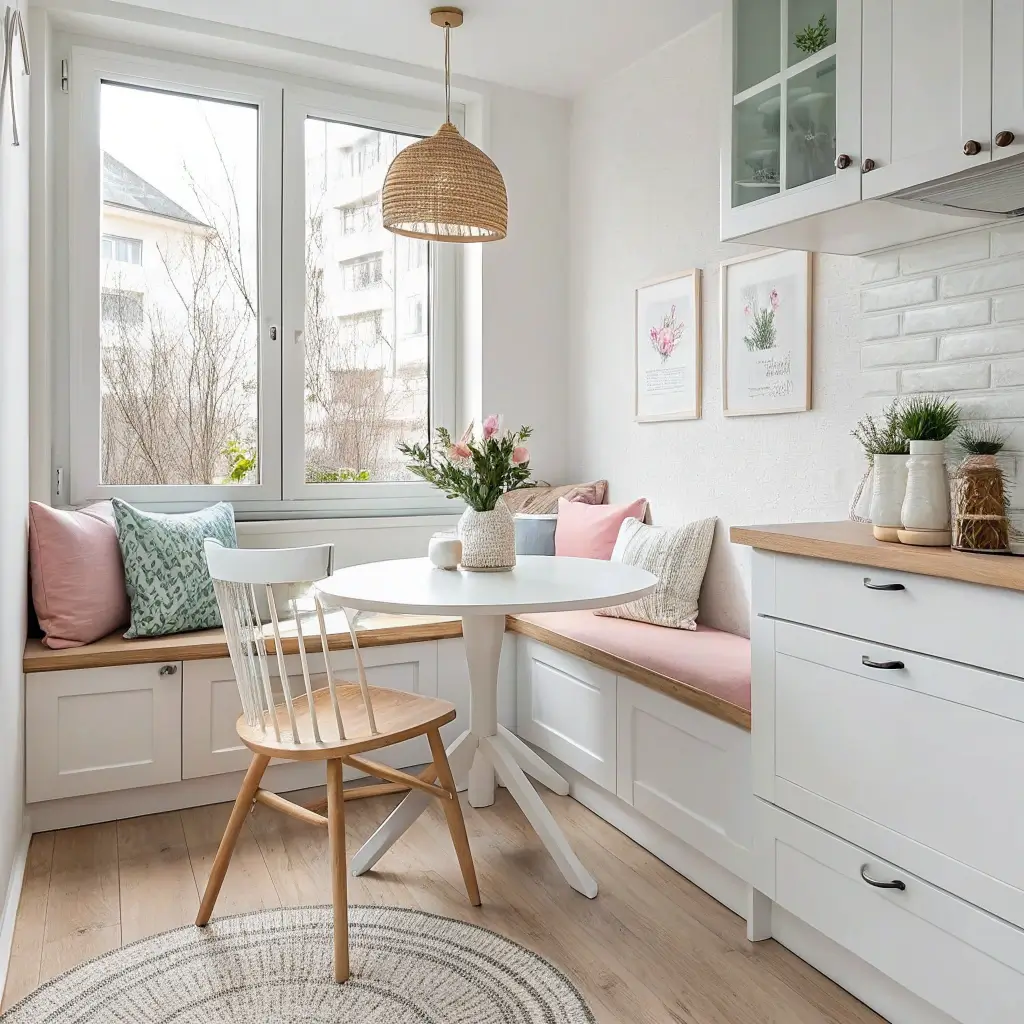
If cluttered spaces make you twitchy (same here, friend), Scandinavian design offers the perfect antidote. These nooks embrace the “less is more” philosophy with clean lines, neutral tones, and functional beauty.
The Scandi Aesthetic
Scandinavian design originated in Nordic countries where long, dark winters made bright, airy interiors a necessity. The result? Spaces that feel calm, organized, and effortlessly chic.
Hygge—that Danish concept of cozy contentment—sits at the heart of Scandinavian nook design. It’s about creating a space that feels warm and welcoming without visual chaos.
Essential Scandi Elements
To achieve that perfect Nordic vibe:
- White or light gray walls serve as your canvas
- Blonde wood tones for tables and benches (think birch, ash, or light oak)
- Simple geometric shapes in furniture design
- High-quality textiles in muted colors—cream, soft gray, pale blue
- One or two statement pieces like a designer pendant light or sculptural vase
- Plants because Scandinavians love bringing nature indoors
The minimalist approach requires discipline. Every item must earn its place. But the payoff? A space that feels sophisticated without trying too hard.
Farmhouse Style Cozy Nooks
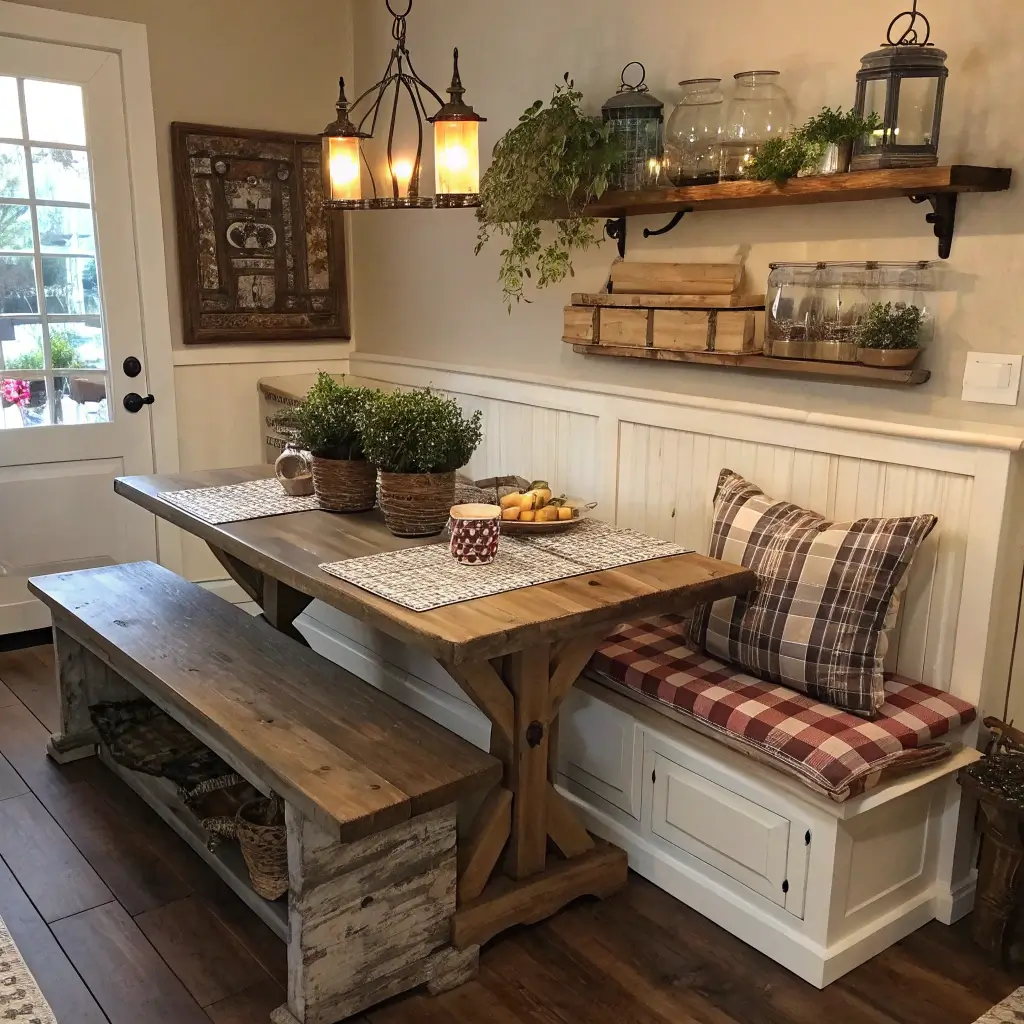
Farmhouse style has dominated interior design for years now, and honestly? I get it. There’s a warmth to farmhouse design that makes everyone feel instantly at home.
Modern Farmhouse vs. Traditional
Here’s the thing—farmhouse style has evolved. Modern farmhouse blends rustic elements with contemporary touches, avoiding that “antique store explosion” look that plagued early interpretations.
Think clean lines paired with vintage accessories. Sleek hardware alongside distressed wood. It’s the best of both worlds.
Creating Farmhouse Warmth
Your farmhouse nook should include:
- A sturdy wooden table preferably with a bit of history or handmade character
- Bench seating with plump cushions in natural fabrics like linen or cotton
- Shiplap or beadboard walls as a backdrop
- Vintage-inspired lighting like pendant lanterns or Edison bulb fixtures
- Fresh flowers or greenery in simple containers
- Neutral color palette with possible navy or sage accents
The key to farmhouse nooks is avoiding anything too precious or polished. This style welcomes fingerprints, crumbs, and the general chaos of daily life. FYI, that makes it perfect for actual families who actually use their kitchens.
Modern Boho Kitchen Nooks
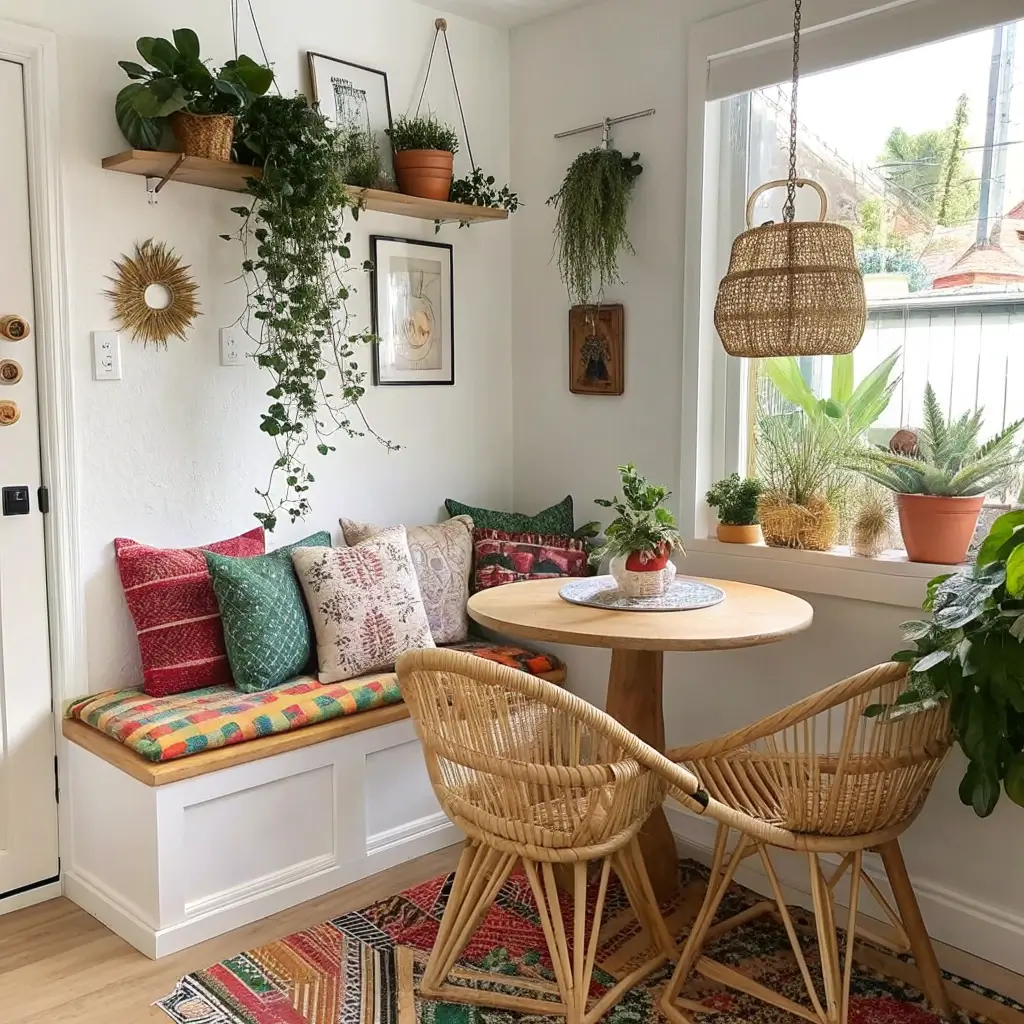
Bohemian style refuses to follow rules, which makes it both liberating and slightly terrifying to execute. Modern boho nooks combine global influences, eclectic patterns, and relaxed vibes into spaces that feel collected rather than decorated.
Embracing Eclectic Freedom
Boho design lets you mix patterns that “shouldn’t” work together, combine eras freely, and express your personality without restraint. The modern twist keeps things cohesive by anchoring the space with neutral foundations before layering in color and pattern.
Boho Must-Haves
Build your modern boho nook with:
- Rattan or wicker furniture for that natural, textured look
- Macramé wall hangings or plant holders
- Layered textiles — think throw pillows in various patterns, a cozy blanket, patterned cushions
- Moroccan or Turkish-inspired rugs underneath
- Plenty of plants in interesting pots
- Collected objects from travels or thrift stores
- Low seating options like floor cushions for casual meals
I went through a serious boho phase a few years back. My nook looked like a bazaar exploded in it—in the best possible way. Just remember: there’s a fine line between curated boho and chaotic mess. Edit thoughtfully.
Also Read: 15 Delightful Warm Cozy Kitchen Ideas and Practical Tips
Built-In Storage Nooks
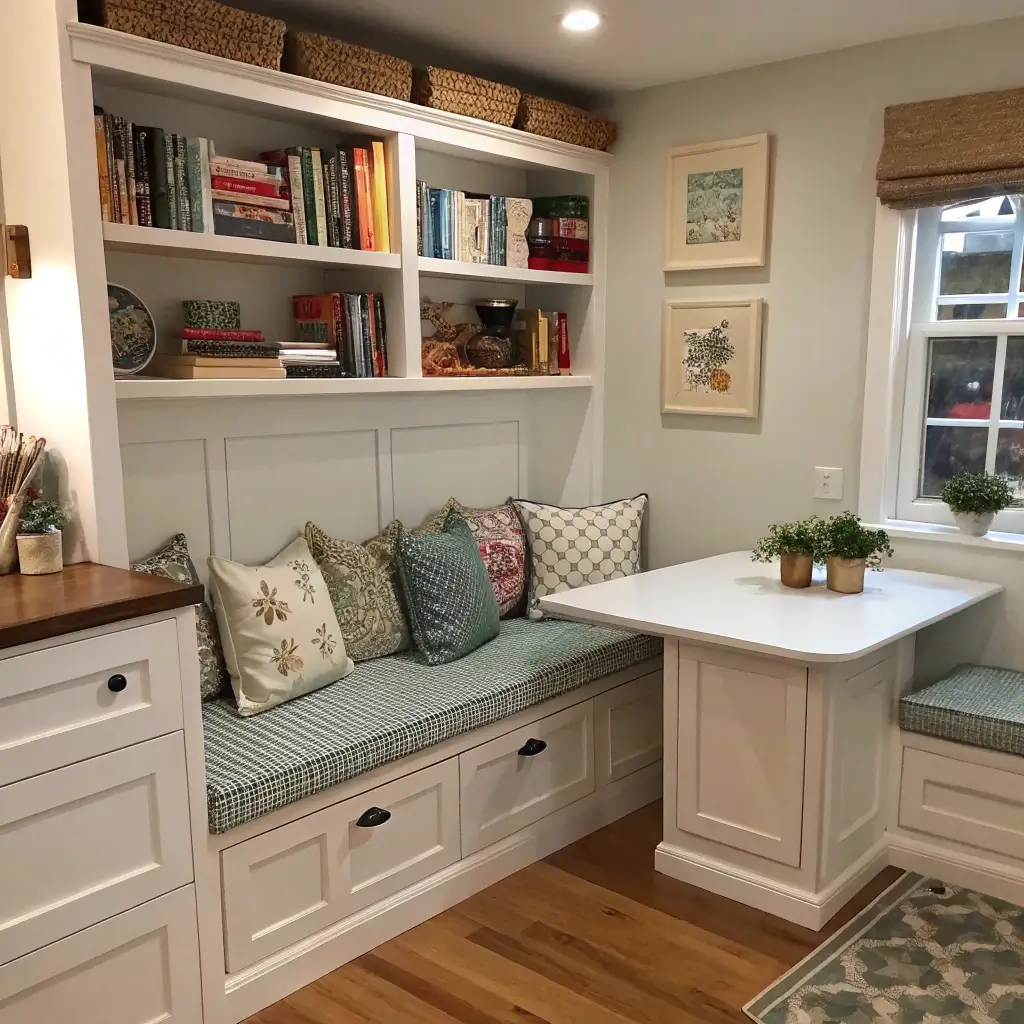
Okay, let’s get practical for a moment. Storage is everything, especially in kitchens where every inch counts. Built-in storage nooks combine seating with hidden compartments, solving two problems at once.
The Beauty of Dual-Purpose Design
Built-in benches with lift-up seats or drawer fronts provide substantial storage without sacrificing floor space. You’re essentially gaining a small closet’s worth of storage in an area that was just going to hold a table and chairs anyway. Genius, right?
Storage Solutions to Consider
Maximize your built-in nook’s functionality:
- Lift-up bench seats for storing table linens, seasonal items, or bulk groceries
- Drawer bases for easier access to frequently used items
- Cubby shelves above the nook for cookbooks or display pieces
- Hidden outlets built into the seating for charging devices
- Pull-out trash compartments integrated into the design
- Wine storage built into bench backs (because priorities)
The upfront investment for custom built-ins typically exceeds standard furniture costs. However, the long-term value in both functionality and home resale makes it worthwhile for many homeowners.
Compact Dining Nooks for Apartments
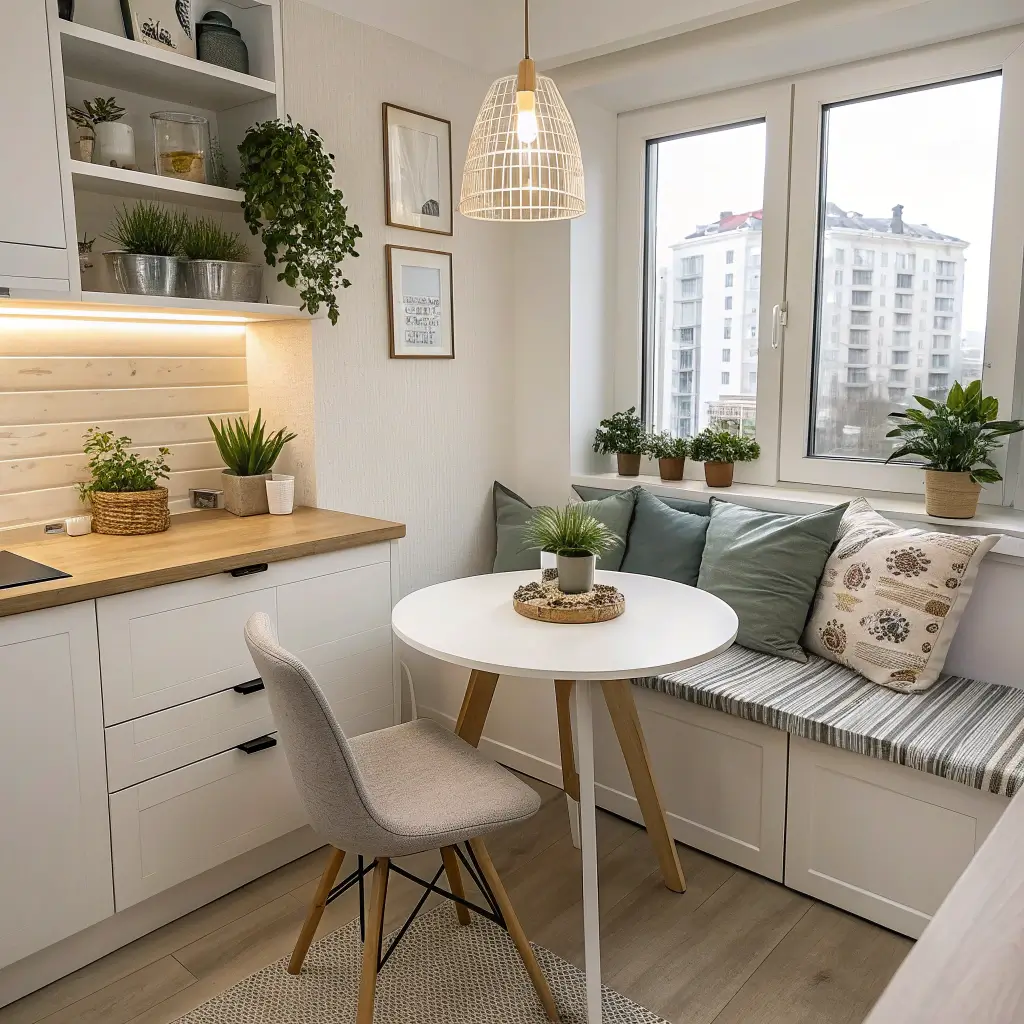
Apartment living demands creative solutions. When your kitchen barely fits a full-size refrigerator, carving out a dedicated dining area seems impossible. But it’s not—I promise.
Strategies for Tiny Spaces
The secret to apartment nooks lies in furniture that multitasks and visual tricks that expand perceived space. You’re not just designing a nook; you’re engineering efficiency.
Apartment-Friendly Ideas
Consider these space-saving approaches:
- Drop-leaf tables that fold flat against the wall when not in use
- Corner banquettes that utilize often-wasted corner space
- Transparent furniture like acrylic chairs that don’t visually clutter
- Wall-mounted fold-down benches that disappear completely
- Bar-height counters with stools as an alternative nook concept
- Nesting furniture that stacks away during non-meal times
IMO, apartment dwellers often become the most innovative designers because necessity forces creativity. Some of the most beautiful nooks I’ve seen occupied less than 20 square feet.
Corner Banquette Ideas
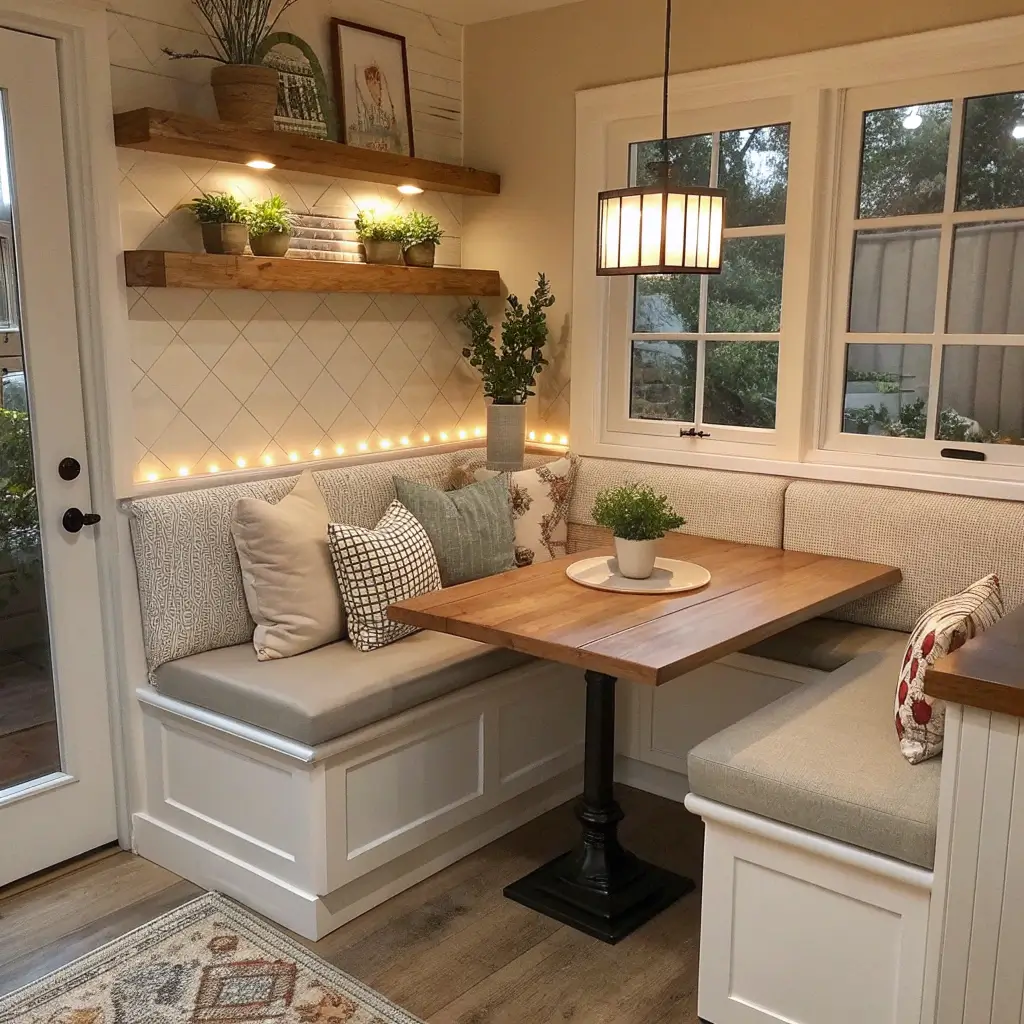
Banquettes bring a touch of restaurant sophistication to home kitchens. These upholstered bench seating arrangements wrap around corners, creating enclosed, intimate dining experiences.
Why Banquettes Feel Special
There’s something about sliding into a banquette that makes even Tuesday breakfast feel like an occasion. The enclosed design creates a cozy, almost cocoon-like atmosphere that freestanding chairs simply can’t match.
Banquette Design Options
Your banquette style options include:
- L-shaped configurations that fit into corners
- U-shaped designs that create booth-style seating
- Single bench banquettes along one wall paired with chairs opposite
- Curved banquettes for softer, more organic shapes
When choosing upholstery, prioritize performance fabrics that resist stains and clean easily. Velvet looks gorgeous until someone spills maple syrup on it. Learn from my mistakes.
Upholstery and Color Choices
Banquettes offer prime opportunities for color and pattern:
- Bold colors like emerald green or navy make strong statements
- Neutral tones with textured fabrics keep things versatile
- Patterned fabrics add visual interest but commit you to a specific look
- Leather or faux leather offers durability and easy cleaning
Also Read: 15 Fun Cozy Cottage Kitchen Ideas and Charming Lighting Ideas
Bright and Airy Kitchen Nooks
If your kitchen tends toward the dark side (not in a cool, moody way—just in a “why is it always gloomy in here” way), designing a bright and airy nook can transform the entire room’s energy.
Light as a Design Element
Natural light serves as the foundation for airy nooks, but you can enhance brightness even in windowless corners through strategic choices. The goal is creating a space that feels open, fresh, and uplifting.
Strategies for Maximum Brightness
Achieve that light-filled look with:
- White or cream paint on walls, ceilings, and trim
- Light wood tones or painted furniture in white
- Mirrors placed strategically to reflect available light
- Glass or lucite elements that don’t block sightlines
- Sheer window treatments if privacy permits
- Metallic accents in silver or gold that catch and reflect light
- Recessed lighting or slim pendant fixtures that illuminate without overwhelming
Fresh flowers and green plants add life without heaviness. The combination of white backgrounds with organic touches creates spaces that feel simultaneously clean and welcoming.
Industrial Chic Nooks
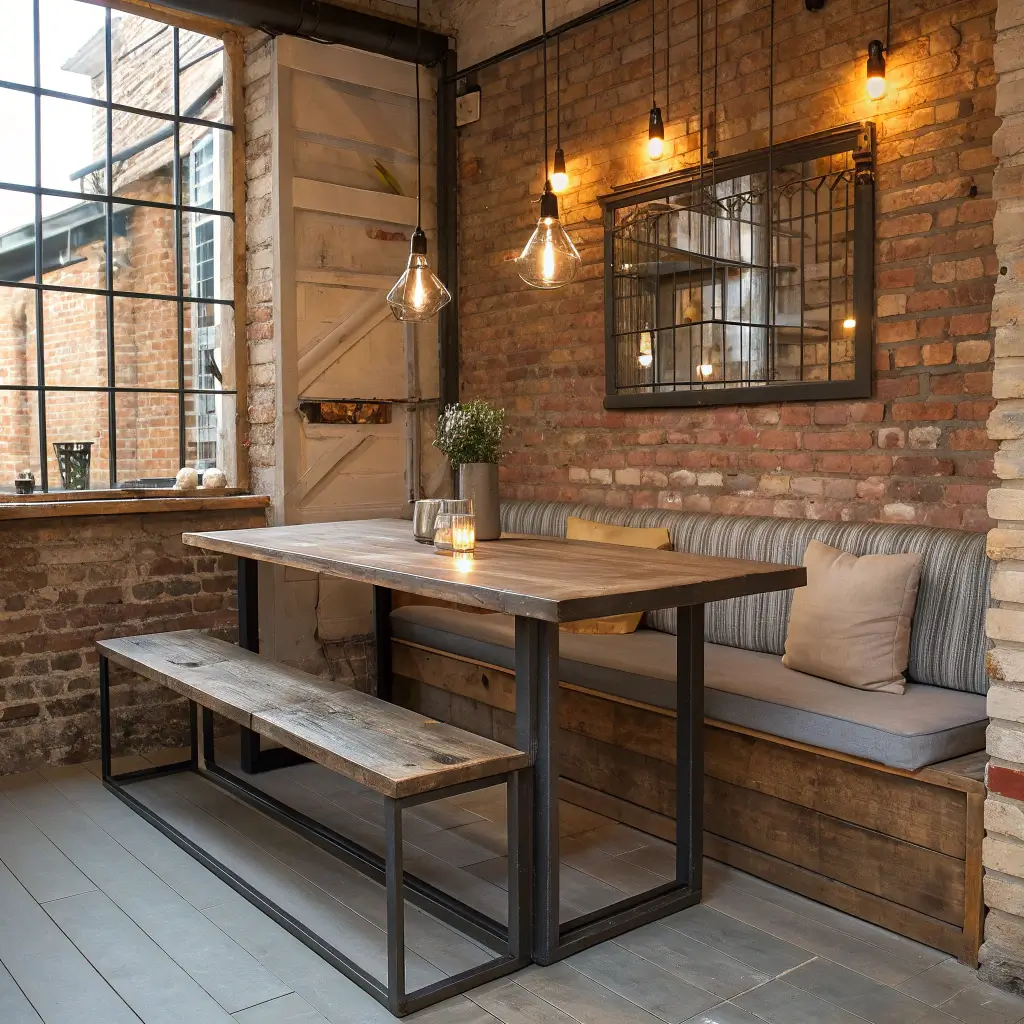
Industrial design takes elements typically hidden—pipes, ductwork, raw materials—and celebrates them as features. Industrial chic nooks bring warehouse-inspired edge to kitchen spaces.
Balancing Raw and Refined
The “chic” in industrial chic matters. Without refinement, you just have a construction site. The key involves pairing rough textures with polished elements to create sophisticated contrast.
Industrial Elements That Work
Build your industrial nook with:
- Metal framework for tables or bench supports
- Reclaimed wood with visible character marks
- Edison bulb lighting or vintage factory fixtures
- Exposed brick or concrete walls
- Black metal accents for hardware and fixtures
- Leather seating that softens the hard edges
- Vintage factory stools or metal chairs
The industrial aesthetic works particularly well in loft spaces, converted buildings, or modern homes with contemporary bones. In traditional architecture, go lighter on industrial elements to avoid stylistic clashing.
Cozy Reading Nooks in the Kitchen
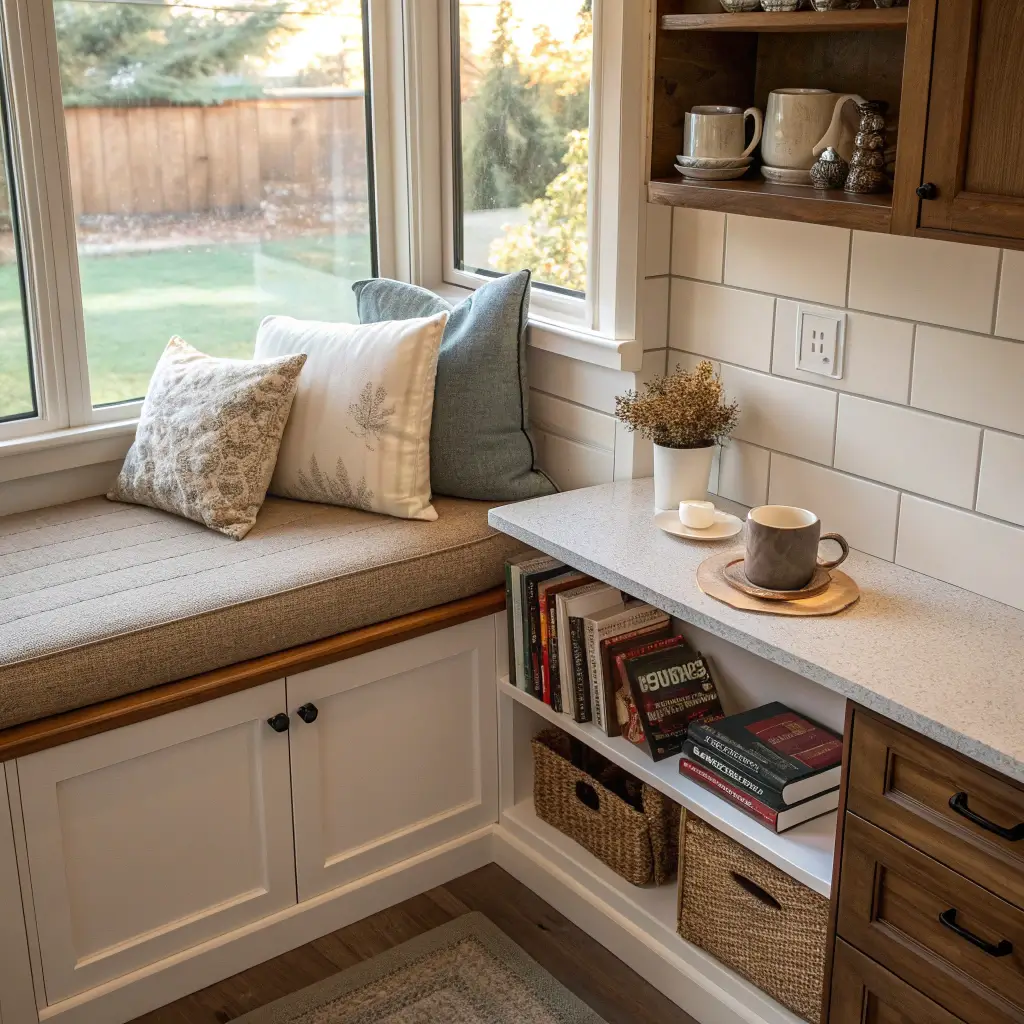
Who says kitchen nooks only serve dining purposes? Combining a reading spot with your kitchen makes perfect sense—you’re already there for coffee, why not settle in with a book?
The Kitchen-Library Hybrid
I’ve always loved the idea of multipurpose spaces. A kitchen reading nook creates a comfortable spot for:
- Morning coffee and newspaper (or phone scrolling, let’s be honest)
- Waiting for timers while something bakes
- Keeping the cook company without being underfoot
- Homework supervision while preparing dinner
- Quiet afternoon moments with a novel
Making It Work
Design a reading-friendly nook by ensuring:
- Exceptional lighting — both natural and task lighting for actual reading
- Extra comfortable cushioning since you’ll sit longer than meals require
- Book storage nearby — built-in shelves or a small bookcase
- A side table for beverages and snacks
- Outlets for charging e-readers or phones
- Cozy textiles like throws for chilly mornings
The reading nook approach particularly suits smaller households or anyone who values quiet moments. It transforms functional space into personal retreat territory. 🙂
Also Read: 15 Charming Small Cozy Kitchen Ideas for Tiny Spaces
DIY Budget-Friendly Nooks
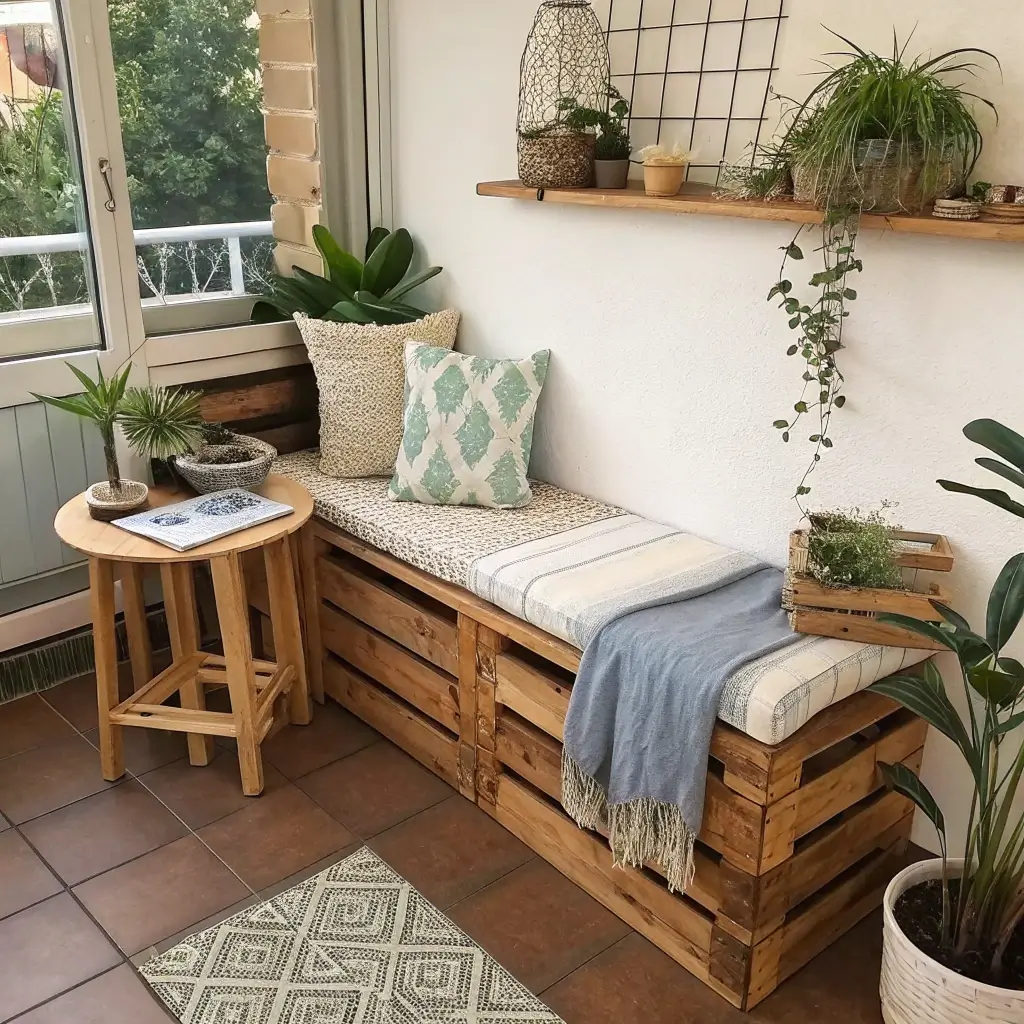
Here’s the truth about beautiful kitchen nooks: they don’t require massive budgets. Some of my favorite nook designs came together through creativity, thrift shopping, and a willingness to pick up tools.
Budget-Conscious Approaches
You can create a stunning nook without custom carpentry by:
- Repurposing furniture — old church pews, headboards as bench backs, or antique settees
- Using IKEA hacks — basic cabinets and benches transformed with paint and new hardware
- Building simple benches from dimensional lumber and basic plans
- Thrifting cushions and pillows then recovering them in new fabric
- Painting existing furniture rather than replacing it
DIY Projects Worth Tackling
Consider these manageable DIY elements:
- Bench building — straightforward for intermediate skill levels
- Cushion making — more time-consuming than difficult
- Painting furniture — requires patience but minimal skill
- Installing floating shelves — basic tools only needed
- Sewing throw pillow covers — beginner sewing machine project
- Creating gallery walls above your nook — instant personality for minimal cost
I once built an entire banquette nook for under $300 using pine boards, foam from Amazon, and clearance fabric. It wasn’t perfect, but it had soul. Sometimes imperfect and personal beats expensive and generic.
Colorful Eclectic Kitchen Nooks
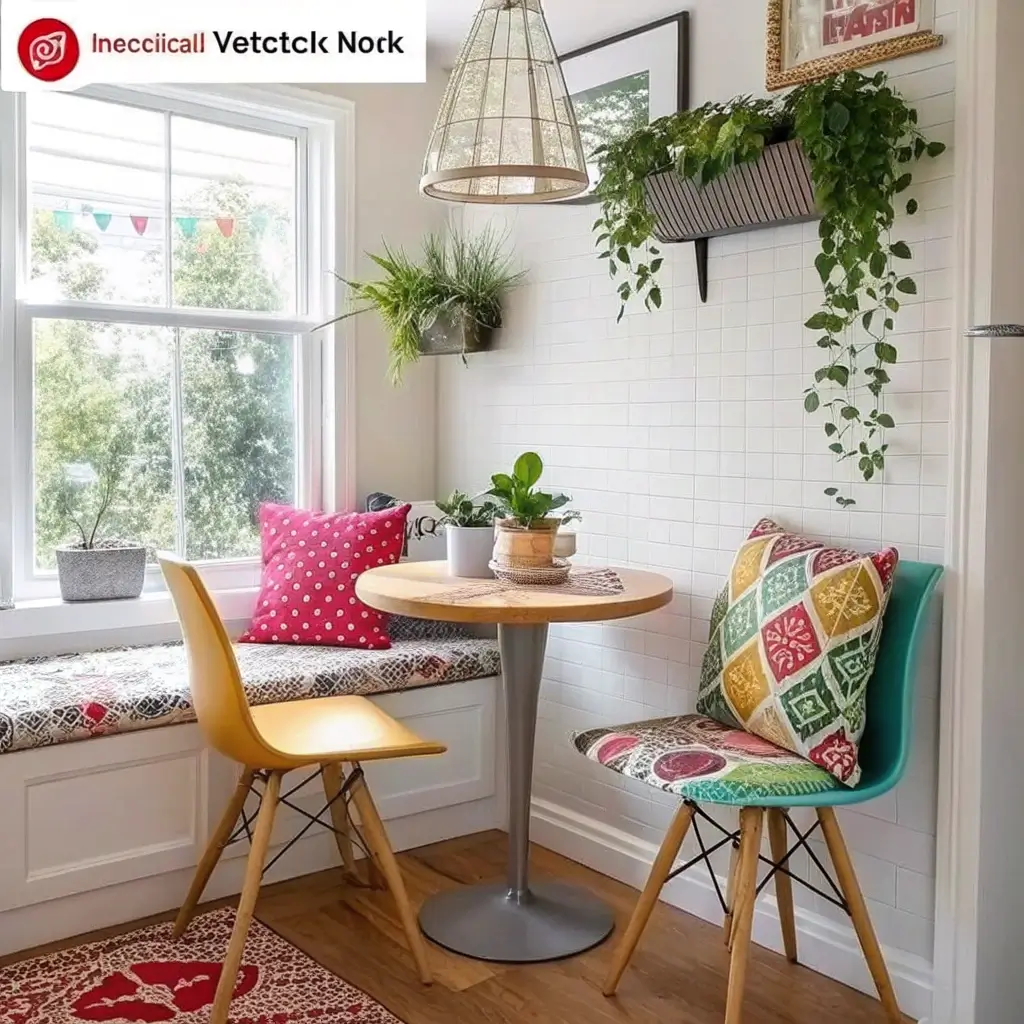
After all this talk of neutrals and minimalism, let’s swing in the opposite direction. Colorful eclectic nooks throw caution to the wind and embrace bold, joyful design choices.
Living in Full Color
Color affects mood—this isn’t just design speak, it’s science. Surrounding yourself with colors you love can genuinely improve your daily experience. So why play it safe if bold color brings you joy?
Going Bold Successfully
To pull off eclectic color without chaos:
- Choose one dominant color and build around it
- Mix patterns in varying scales — large prints with small, geometric with organic
- Include some neutral elements as visual rest stops
- Repeat colors throughout for cohesion even amid variety
- Trust your instincts about what makes you happy
Specific color combinations that work beautifully:
- Teal + coral + mustard
- Emerald green + pink + brass
- Navy + orange + cream
- Purple + yellow + charcoal
Eclectic style gives permission to display collections, incorporate vintage finds, and avoid matchy-matchy perfection. It’s the most personal approach to nook design, reflecting individual taste rather than trend compliance.
Pet-Friendly Kitchen Nook Designs
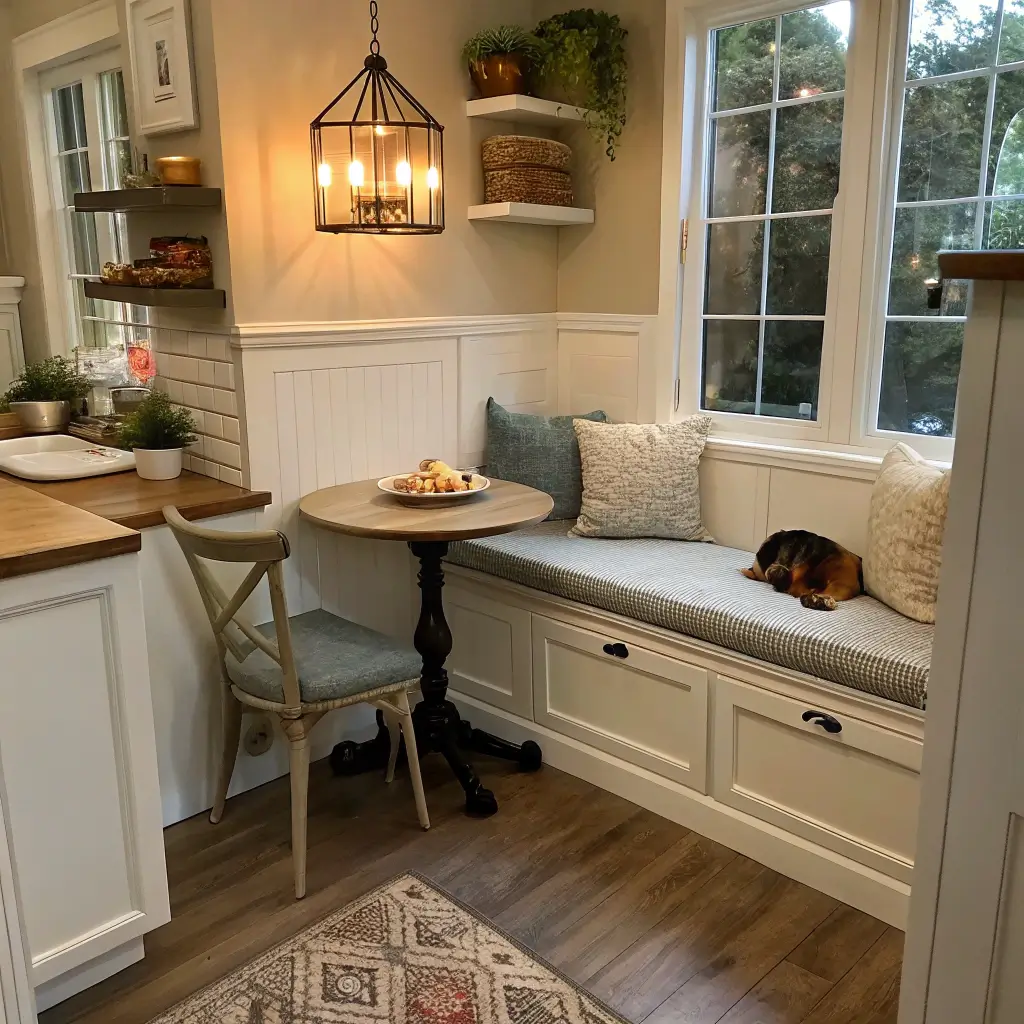
Last but absolutely not least—our furry family members. If you share your home with dogs or cats (or both, like this chaos household), designing with pets in mind prevents future frustrations.
Considerations for Pet Households
Pets add complications to furniture choices:
- They shed
- They occasionally have accidents
- They scratch, chew, and climb
- They want to be wherever you are
Fighting these realities leads to constant stress. Working with them creates happier homes for everyone—two-legged and four-legged alike.
Pet-Smart Design Choices
Build your pet-friendly nook with:
- Performance fabrics that resist stains and wash easily (Crypton, Sunbrella, or Revolution fabrics)
- Dark or patterned cushion covers that camouflage hair between cleanings
- Washable or wipeable rugs underneath the nook
- Rounded corners on tables to prevent injury during zoomies
- Durable materials that withstand scratching and wear
- Built-in pet beds under banquette seating
- Easy-clean flooring in the nook area
Some pet owners include dedicated pet feeding stations built into their nook designs, keeping food bowls accessible but out of the main traffic flow. Others add hooks for leashes near the nook entrance, creating a command center for the whole household.
I designed my current nook specifically around my two large dogs. The benches include hidden cubbies where they sleep during meals, keeping them nearby without tripping hazards. It took some planning, but peaceful dinners without begging makes it worthwhile.
Bringing Your Kitchen Nook Vision to Life
We’ve covered a lot of ground here—from rustic warmth to industrial edge, from tiny apartment solutions to luxurious banquettes. The “right” nook for your kitchen depends entirely on your space, your lifestyle, and your personal aesthetic preferences.
Here’s what I want you to remember:
Function must come first. A gorgeous nook that nobody actually uses represents wasted effort. Think about how you’ll really use the space—quick breakfasts? Lengthy dinners? Homework supervision? Design accordingly.
Personal style matters more than trends. Trends fade. Your taste, while it may evolve, remains fundamentally yours. Build a nook that makes YOU happy, regardless of what Pinterest suggests.
Budget constraints inspire creativity. Some of the best nooks emerge from limited budgets because constraints force innovation. Don’t wait until you can afford “perfect”—start now with what you have.
Comfort is non-negotiable. Skimp on cushion quality and you’ll regret it every time you sit down. Invest in comfortable seating, even if other elements stay simple.
Creating a kitchen nook transforms how you experience your home. It provides a designated spot for connection, for quiet moments, for the small rituals that turn houses into homes. Whether you build yours from salvaged materials on a shoestring budget or invest in custom built-ins, the result serves the same beautiful purpose: a cozy corner where life’s best moments happen over shared meals and morning coffee.
Now go measure that corner and start planning. Your perfect kitchen nook is waiting to exist. 🙂