
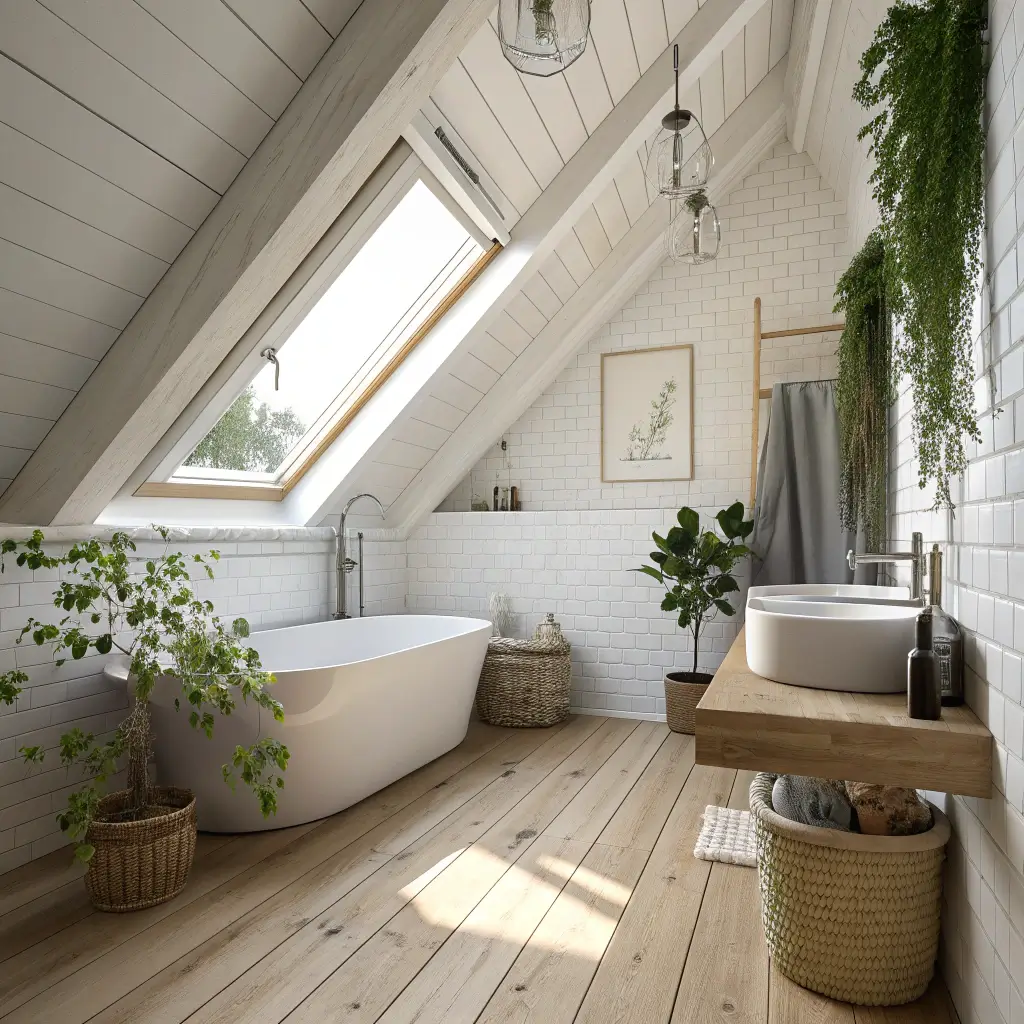
15 Elegant Small Attic Bathroom Ideas and Modern Decor

Let me guess—you’ve got this awkward attic space with sloped ceilings, weird angles, and you’re wondering if it’s even possible to create a bathroom that doesn’t feel like a cramped cave. I’ve been there, staring at my own attic space for months before finally taking the plunge. And you know what? That funky little room became my favorite spot in the entire house.
Here’s the thing about attic bathrooms: they’re challenging, sure. But those quirky angles and cozy nooks that seem like obstacles? They’re actually your secret weapons for creating something truly special.
I’ve spent countless hours researching, designing, and yes, making mistakes along the way. So grab your coffee (or wine, I won’t judge), and let me walk you through 15 elegant small attic bathroom ideas that’ll transform your forgotten upstairs space into a stunning retreat.
1. Skylight-Enhanced Cozy Bathroom

Nothing—and I mean nothing—transforms an attic bathroom quite like natural light streaming through a well-placed skylight. Ever noticed how hotel bathrooms always feel more luxurious when they’re flooded with daylight? That’s not an accident.
Why Skylights Work Magic in Attic Spaces
When you’re dealing with limited wall space due to sloped ceilings, traditional windows aren’t always an option. Skylights solve this problem beautifully while adding a touch of drama to your morning routine. Imagine taking a shower while watching clouds drift by or soaking in a tub under the stars. Yeah, it’s as dreamy as it sounds.
Key considerations for skylight installation:
- Operable vs. fixed skylights: Operable versions allow ventilation, which is crucial for moisture control
- Placement matters: Position directly over the shower or tub for maximum impact
- Privacy glass options: Frosted or tinted glass maintains privacy without sacrificing light
- Energy efficiency: Look for double-paned, low-E coated options to prevent heat loss
I installed a venting skylight in my own attic bathroom, and honestly, it cut my electricity bill since I rarely need artificial lighting during the day. Plus, that natural ventilation? Game-changer for preventing mold.
Styling Tips for Skylight Bathrooms
Keep your color palette light and reflective to maximize the natural light bouncing around the room. Whites, soft grays, and pale blues work wonderfully. Add some trailing plants—pothos or a small fern—to create that indoor-outdoor connection. Trust me, your Instagram will thank you.
2. Minimalist White Attic Bath
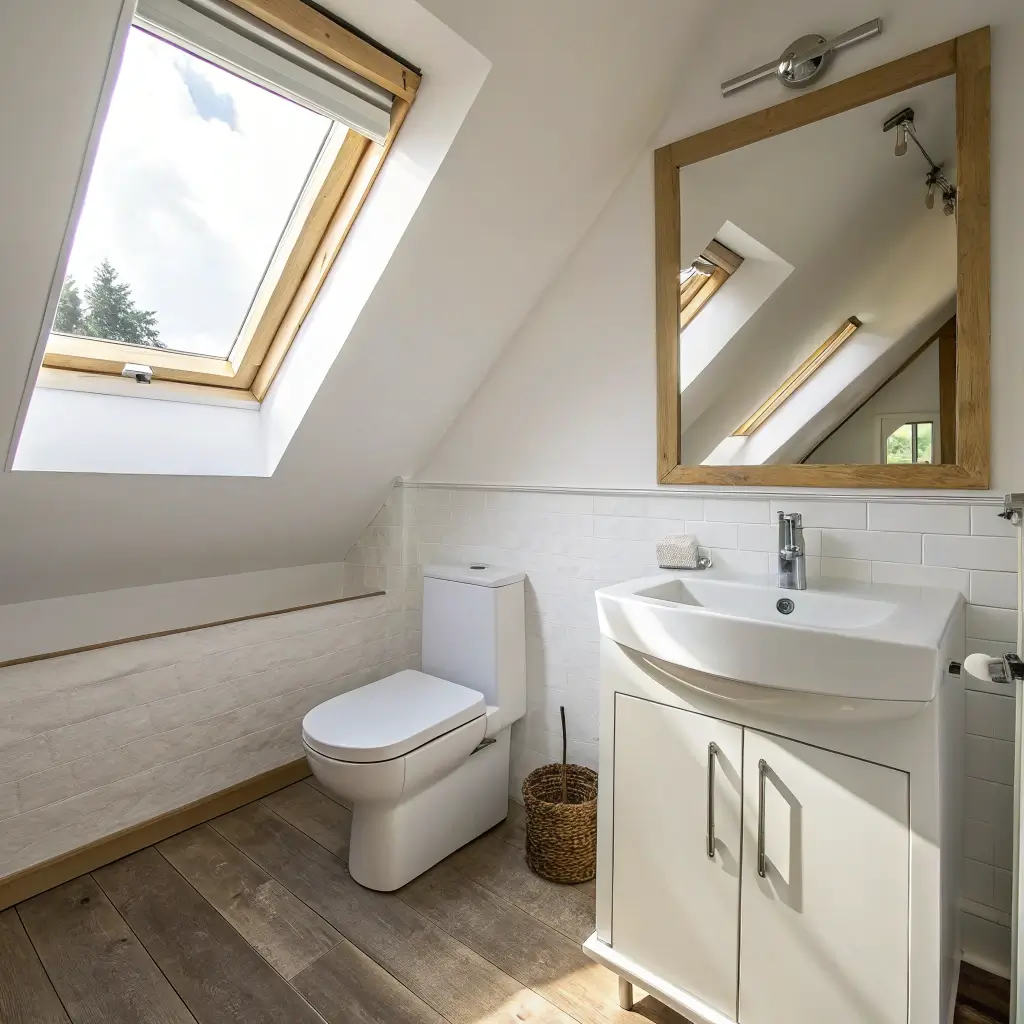
Okay, I know what you’re thinking: “White? Boring.” But hear me out. When you’re working with a small, oddly-shaped space, a minimalist white palette is basically your best friend. It creates the illusion of space, reflects every bit of available light, and provides a clean canvas that never goes out of style.
The Psychology Behind White Bathrooms
White spaces feel larger, cleaner, and more serene. In a cramped attic bathroom, these psychological effects become even more valuable. The key to pulling off an all-white bathroom without it feeling sterile is texture. Think matte tiles paired with glossy fixtures, fluffy white towels against smooth marble countertops.
Elements to incorporate:
- White subway tiles with white grout for seamless walls
- Floating white vanity to create visual floor space
- Frameless glass shower enclosure
- Chrome or brushed nickel hardware for subtle contrast
- White stone or quartz countertops
Adding Warmth to White
Here’s where people mess up with white bathrooms—they forget about warmth. Add natural wood elements like a teak bath mat or wooden shelving. Incorporate soft lighting with warm-toned bulbs rather than harsh cool whites. A single piece of greenery or a small vase of fresh flowers brings life without cluttering the space.
3. Rustic Wood Beam Bathroom

If your attic already has exposed wooden beams, you’ve hit the design jackpot. Seriously, do you know how much people pay to add those? Instead of covering them up (please don’t do this), make them the star of your bathroom design.
Working With Existing Architecture
Those beams tell a story—the history of your home, the craftsmanship of another era. A rustic wood beam bathroom celebrates imperfection while creating warmth that modern materials simply can’t replicate. The contrast between rough-hewn wood and sleek bathroom fixtures creates visual tension that’s incredibly appealing.
Design elements that complement exposed beams:
- Stone or slate flooring
- Vessel sinks in natural materials
- Wrought iron or matte black hardware
- Vintage-inspired lighting fixtures
- Linen textiles in neutral tones
Balancing Rustic and Modern
The trick here is balance. You don’t want your bathroom looking like a log cabin (unless that’s your thing, no judgment). Pair those rustic beams with modern amenities—a rainfall showerhead, contemporary faucets, or a sleek freestanding tub. This juxtaposition creates a space that feels both timeless and current.
4. Compact Corner Shower Solution
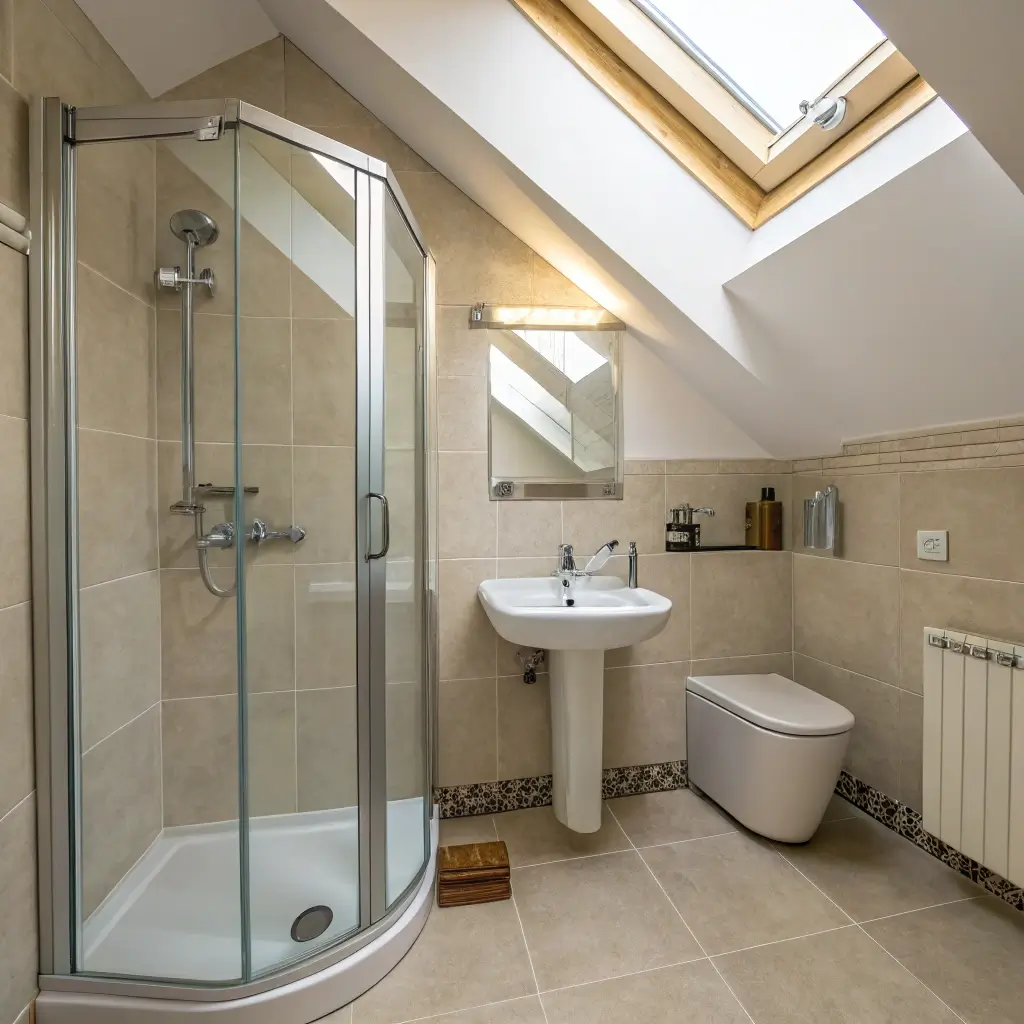
When every square inch counts, corner showers become your MVP. They tuck into those awkward angles that seem unusable, freeing up valuable floor space for other essentials. IMO, a well-designed corner shower can feel just as luxurious as a full-sized one.
Maximizing Small Shower Spaces
Neo-angle shower enclosures work particularly well in attic bathrooms because they fit snugly into corners while providing adequate elbow room. The angled front entry takes up less space than a traditional door swing, which is crucial when you’re working with limited square footage.
Corner shower must-haves:
- Frameless glass enclosure: Creates visual openness and makes the space feel larger
- Built-in niches: Eliminate the need for cluttered shower caddies
- Linear drain: Allows for level entry and modern aesthetics
- Light-colored tiles: Reflect light and expand perceived space
- Quality ventilation: Prevents moisture buildup in tight spaces
Making Small Feel Spacious
Use large-format tiles to reduce grout lines and create a seamless look. Continue the same tile from the shower floor onto the bathroom floor—this visual continuity tricks the eye into perceiving more space. And please, for the love of good design, ditch the shower curtain for a glass enclosure. The transparency makes all the difference.
5. Modern Black & White Attic Bath

Classic, bold, and eternally chic—the black and white bathroom never disappoints. This high-contrast combo works exceptionally well in small attic spaces because it creates visual interest without requiring lots of square footage to make an impact.
Creating Drama With Contrast
The secret to a stunning black and white bathroom lies in the ratio. Too much black can feel oppressive in a small space; too much white might feel bland. I generally recommend a 70-30 split, with white dominating and black serving as the accent. But rules are meant to be broken, right?
Ways to incorporate black accents:
- Matte black hardware and fixtures
- Black-framed mirrors
- Black window frames or shower enclosures
- Patterned black and white floor tiles
- Black accent wall (if ceiling height allows)
Pattern Play in Small Spaces
Here’s where you can get creative. Geometric patterns, classic checkerboards, or bold graphic tiles add personality without overwhelming the space. Just remember to keep patterns to one surface—usually the floor—and let the walls remain relatively calm. Too many competing patterns create visual chaos, and nobody wants their bathroom to feel like an optical illusion.
6. Vintage Clawfoot Tub Attic Style

Can we talk about the romance of a clawfoot tub tucked under a sloped attic ceiling? There’s something impossibly charming about it—like stepping into a period drama, but with modern plumbing. 🙂
Fitting a Tub in Tight Spaces
Now, before you fall completely in love with this idea, let’s get practical. Clawfoot tubs require specific floor reinforcement due to their weight when filled. Your attic floor needs proper structural support—consult a professional before committing. But assuming your floor can handle it, the payoff is absolutely worth the investment.
Clawfoot tub considerations:
- Size options: Smaller slipper tubs (54-60 inches) work well in compact spaces
- Placement: Position under the lowest part of the sloped ceiling
- Exposed plumbing: Part of the charm—embrace it with quality fixtures
- Freestanding faucets: Floor-mounted options add to the vintage aesthetic
- Non-slip solutions: Essential for safety with the tub’s higher profile
Blending Vintage With Modern Comfort
Nobody says vintage style means vintage inconvenience. Pair your clawfoot tub with a modern handheld shower attachment for practicality. Use period-appropriate fixtures but choose ones with modern water-efficiency standards. Add underfloor heating to combat cold tiles on winter mornings. You’re creating an experience, not a museum exhibit.
Also Read: 15 Elegant Small Bathroom Shower Ideas for Modern Homes
7. Lofty Storage-Optimized Bathroom
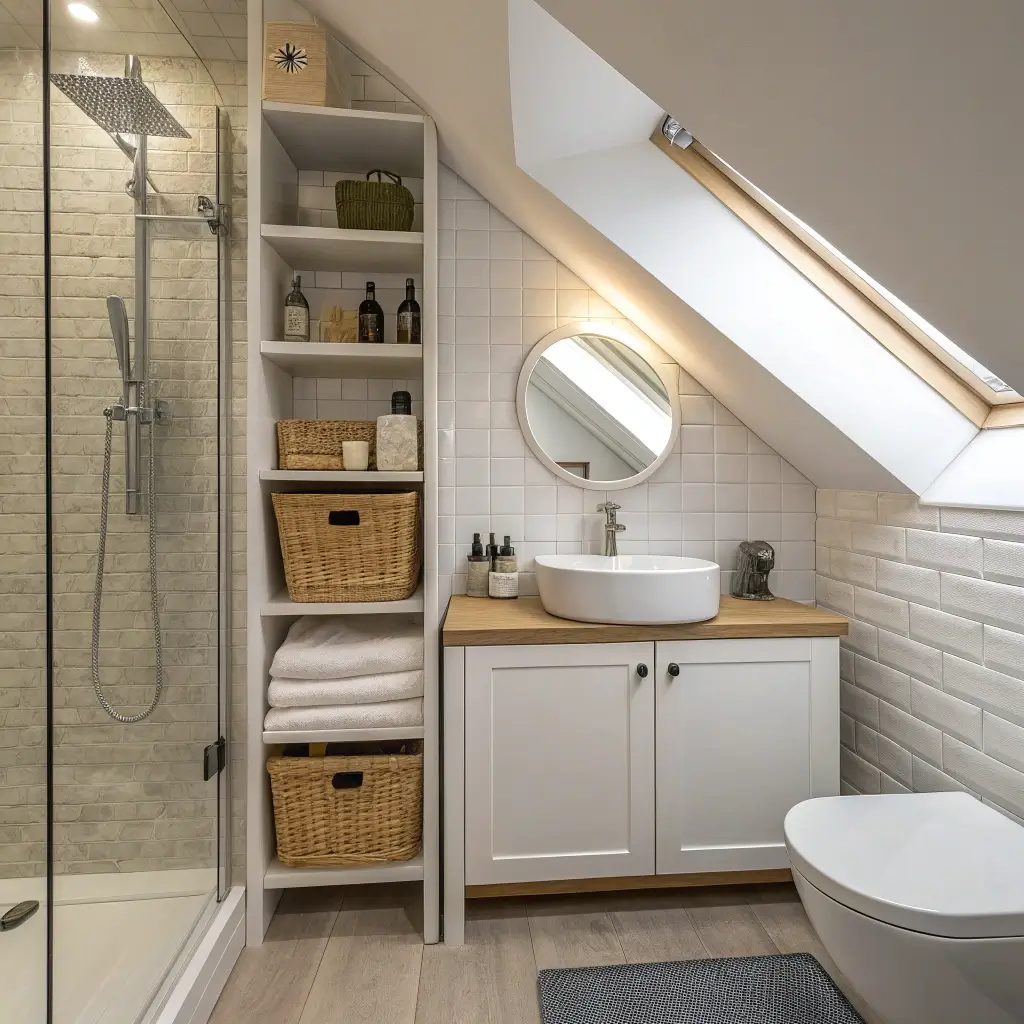
Small bathroom, big storage challenges. But here’s where attic bathrooms actually have an advantage—all those weird nooks and crannies become perfect spots for creative storage solutions. Let’s turn those obstacles into opportunities.
Custom Solutions for Irregular Spaces
Built-in storage designed specifically for your space’s dimensions will always outperform off-the-shelf options. Those knee walls where the ceiling slopes down? Perfect for pull-out drawers. That narrow gap beside the vanity? Hello, vertical storage tower.
Smart storage ideas for attic bathrooms:
- Recessed medicine cabinets: Tuck them between wall studs for zero-footprint storage
- Under-eave storage: Custom cabinets that follow the roofline
- Floating shelves: Maintain floor space while adding display storage
- Over-toilet solutions: Utilize vertical space that often goes wasted
- Hidden hampers: Built into vanity cabinets or custom closets
Aesthetic Storage Options
Storage doesn’t have to be purely functional. Display pretty bottles, rolled towels, and decorative items on open shelving. Use matching containers for a cohesive look. Choose furniture-style vanities with multiple drawers rather than pedestal sinks (as cute as they are, they offer zero storage). Form and function can absolutely coexist.
8. Neutral Tones Space-Saving Bath
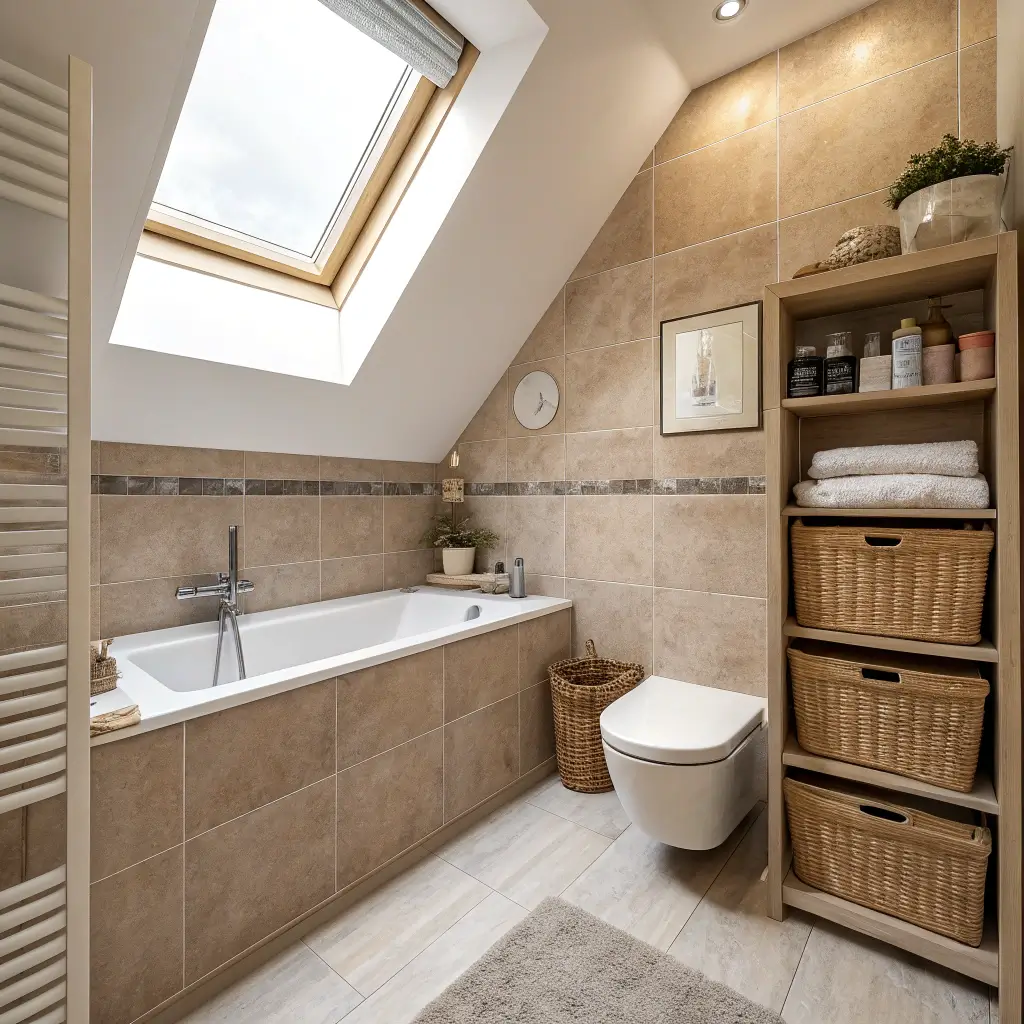
If you’re not ready for bold colors but find pure white too stark, neutral tones offer the perfect middle ground. Think warm beiges, soft grays, greige (yes, that’s a thing), taupe, and cream. These colors create calm, spa-like environments perfect for unwinding.
Building a Cohesive Neutral Palette
The trick with neutrals is variation within the same color family. Layer different shades and textures to prevent the space from feeling flat or monotonous. A beige tile floor, cream walls, and taupe vanity create depth while maintaining harmony.
Neutral bathroom elements:
- Natural stone tiles in limestone or travertine
- Wood-toned cabinetry
- Woven baskets for storage
- Linen shower curtains or textured towels
- Metallic accents in warm brass or gold
Texture Is Everything
When you’re working with a limited color palette, texture becomes your primary design tool. Mix smooth marble with rough natural stone. Combine glossy tiles with matte painted walls. Add woven elements like a jute rug or rattan basket. These tactile differences keep the eye moving and the space interesting.
9. Chic Attic Bathroom with Pendant Lights

Lighting can make or break any room, but in attic bathrooms where natural light might be limited, it becomes absolutely critical. Pendant lights add both function and serious style points to your space.
Choosing the Right Pendant Lighting
Attic bathroom pendant lights need to work within the constraints of sloped ceilings while providing adequate task lighting. Consider the ceiling height where you plan to hang them—you don’t want to knock your head every time you wash your hands.
Pendant lighting tips:
- Hang pendants at varying heights for visual interest
- Use dimmer switches for adjustable ambiance
- Choose moisture-rated fixtures for bathroom safety
- Consider clear glass shades to maintain light flow
- Position task lighting near the vanity for grooming
Creating Layers of Light
Don’t rely solely on pendants. Layer your lighting with recessed ceiling lights for overall illumination, vanity sconces for task lighting, and perhaps a small accent light in a niche or under a floating vanity. This layered approach creates flexibility—bright for morning routines, dim and relaxing for evening soaks.
Also Read: 10 Dreamy Small Coastal Bathroom Ideas for Modern Homes
10. Scandinavian Inspired Small Bath
Clean lines, functional design, and that hygge feeling—Scandinavian style practically invented elegant minimalism. It’s perfect for small attic bathrooms because it emphasizes simplicity and light, two things compact spaces desperately need.
Core Elements of Scandi Design
Scandinavian design prioritizes function without sacrificing aesthetics. Every element serves a purpose, and there’s no room for clutter or unnecessary decoration. This philosophy translates beautifully to small bathroom design.
Scandinavian bathroom essentials:
- White or light wood as the dominant palette
- Natural materials: wood, stone, concrete
- Simple, clean-lined fixtures
- Plants for organic warmth
- Minimal but thoughtful accessories
- Maximum natural light
Adding Warmth to Minimalism
The key to Scandinavian style that feels cozy rather than cold is warmth through natural materials. A wooden bath mat, a teak stool, natural fiber textiles—these elements prevent the space from feeling clinical. Candles are also essential (FYI, Scandinavians practically invented candle obsession) for that warm, ambient glow.
11. Bright Open Concept Attic Bathroom
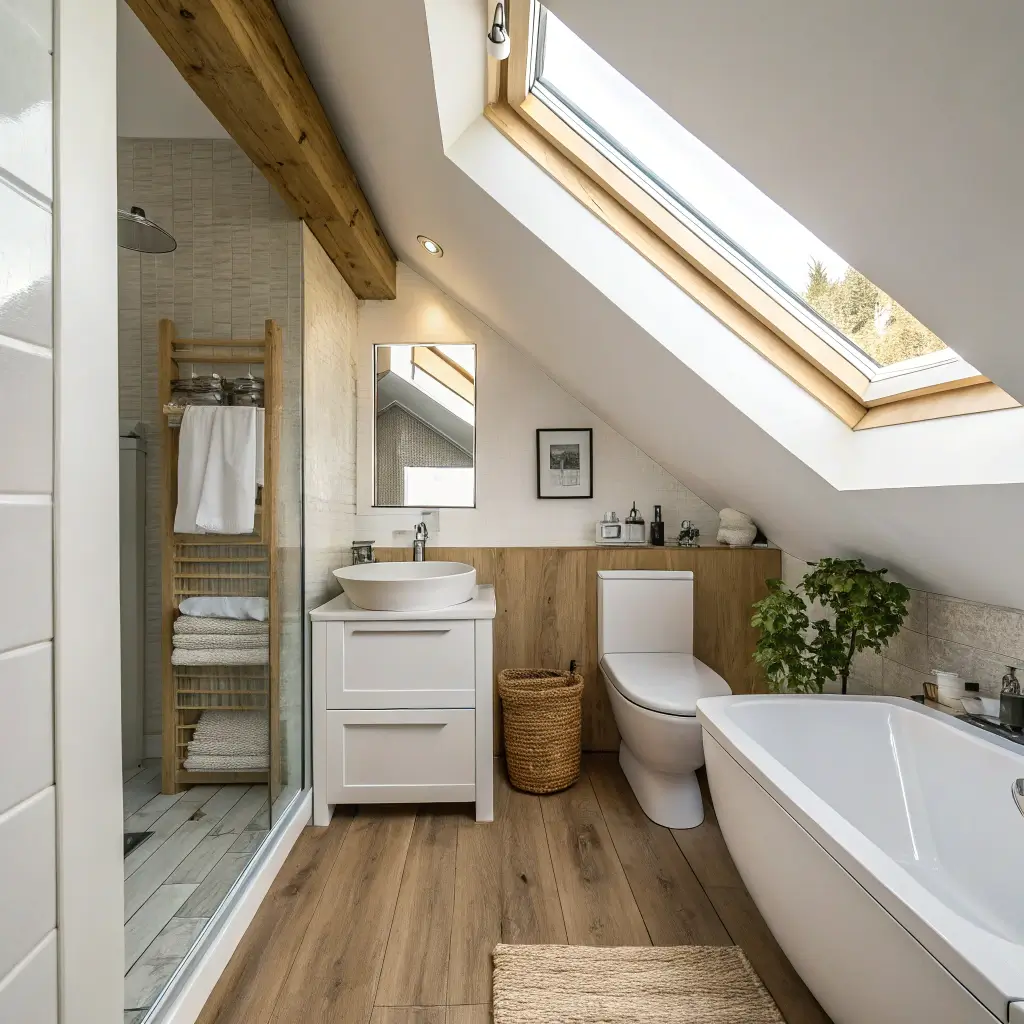
When you can swing it structurally, an open concept attic bathroom connected to a bedroom creates an incredibly luxurious suite feeling. It’s bold, it’s modern, and it maximizes every available inch.
Making Open Concept Work
Privacy becomes the main concern with open concept bathrooms. Consider partial walls, frosted glass partitions, or strategically placed furniture to create separation without closing off the space entirely. The toilet typically gets its own enclosed water closet for obvious reasons.
Open concept considerations:
- Proper ventilation to prevent moisture affecting the bedroom
- Visual cohesion between bathroom and bedroom design
- Adequate sound dampening for plumbing fixtures
- Strategic placement of mirrors and reflective surfaces
- Consistent flooring for seamless flow
Defining Zones Without Walls
Use area rugs, lighting changes, or floor tile transitions to subtly define the bathroom zone within the open space. A freestanding tub can serve as both a functional element and a room divider. The vanity area might align with a partial wall that provides privacy while maintaining openness.
12. Compact Double Vanity Attic Design
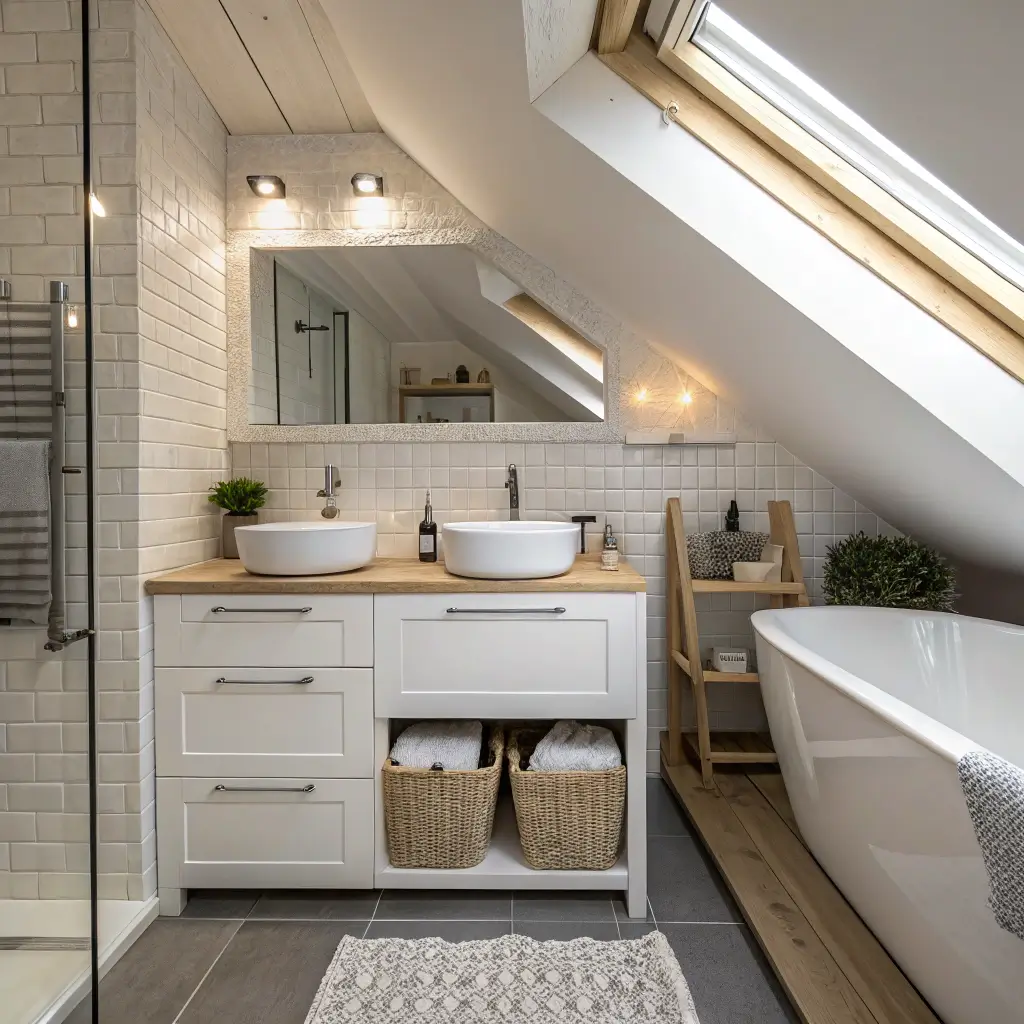
Who says small bathrooms can’t accommodate two sinks? With clever design, even compact attic spaces can include a double vanity—a must for couples who share morning routines without sharing patience.
Strategies for Fitting Double Vanities
Narrow-depth vanities (around 18-21 inches instead of the standard 24) create significant space savings while still providing functionality. Trough sinks—single long basins with two faucets—offer another space-efficient solution for double-sink needs.
Double vanity solutions:
- Wall-mounted floating vanities for visual space
- Single trough sink with dual faucets
- Custom corner configurations
- Narrow-depth cabinets with drawer storage
- Shared countertop with individual vessel sinks
Mirror and Lighting Strategies
With two vanities comes the need for adequate lighting for both users. Individual sconces beside each mirror prevent shadow casting. If space is tight for separate mirrors, one large mirror spanning both sinks creates the illusion of more space while serving both users effectively.
Also Read: 10 Stunning Small Black Bathroom Ideas for Stylish Spaces
13. Glass Partition Shower in Sloped Space
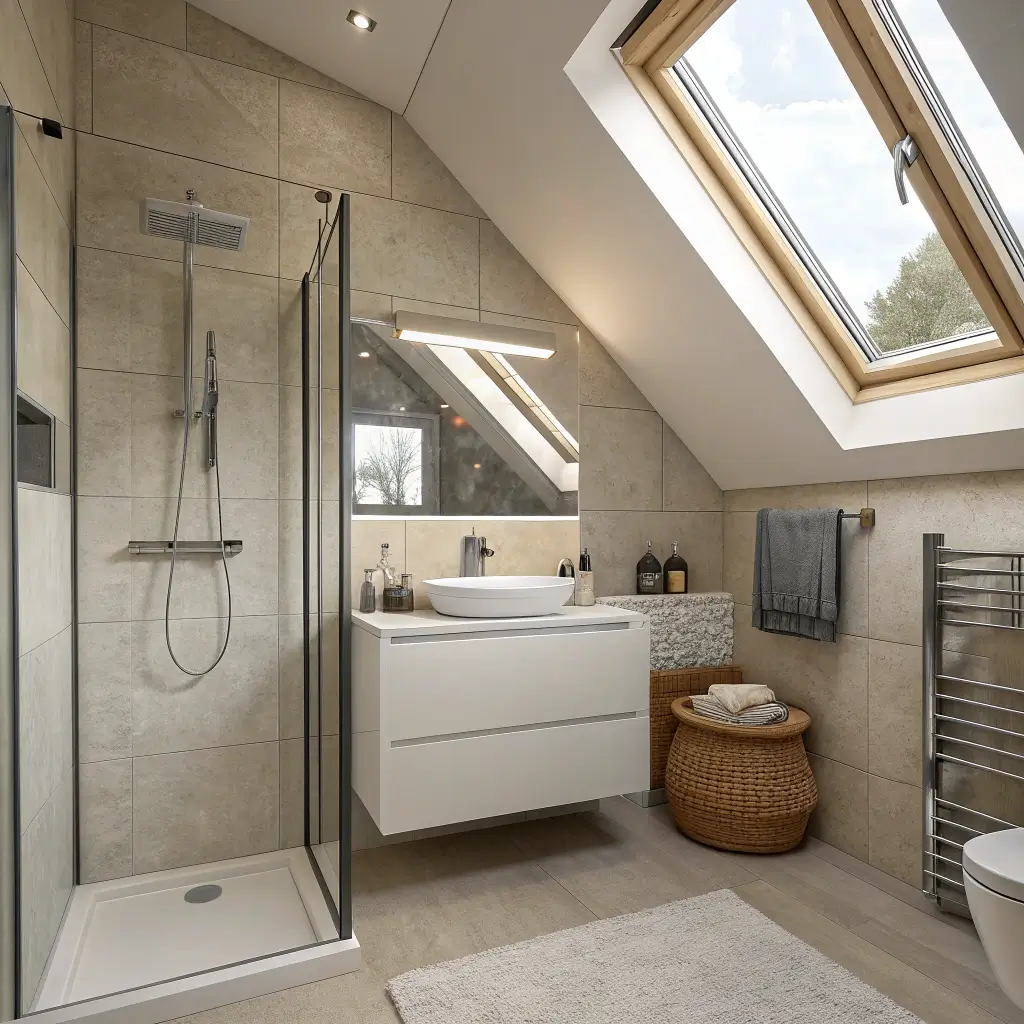
Glass partitions are honestly magic in small attic bathrooms. They contain water while maintaining visual openness—the best of both worlds. And in sloped spaces, custom glass work can follow your unique ceiling lines perfectly.
Custom Glass for Awkward Angles
Unlike prefabricated shower enclosures, custom glass partitions can be cut to fit literally any angle or slope. Yes, custom costs more, but in an attic bathroom where standard sizes simply won’t work, it’s often the only option that looks intentional rather than awkward.
Glass partition benefits:
- Allows light to flow through the entire space
- Creates modern, clean aesthetic
- Easy to clean (if you maintain them)
- Can follow sloped ceilings seamlessly
- Makes small spaces feel larger
Maintaining Glass Shower Walls
Here’s the honest truth: glass showers require regular maintenance to stay beautiful. Squeegee after every shower, treat with rain repellent products, and clean weekly with a good glass cleaner. It’s a bit of work, but the aesthetic payoff justifies the effort. :/
14. Attic Bathroom with Built-in Shelves
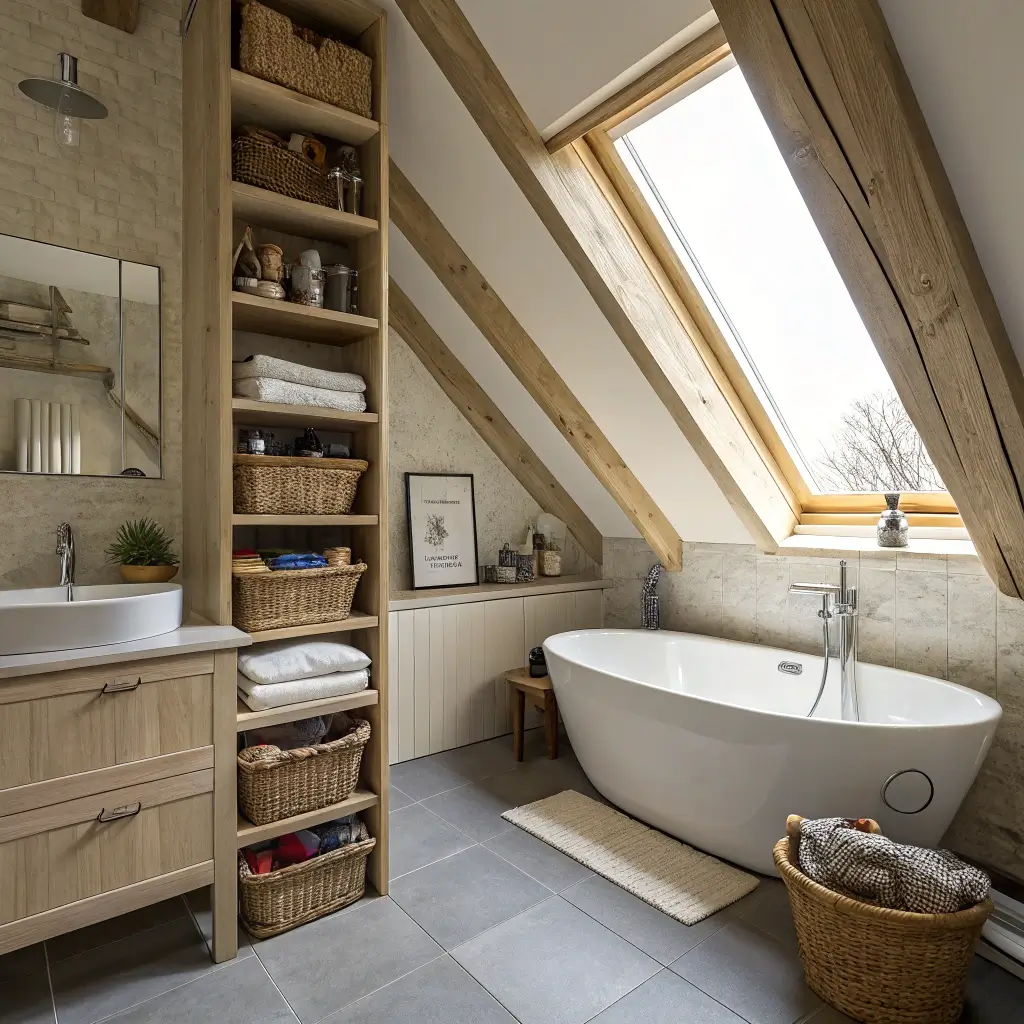
Built-in shelves, particularly in those tricky knee wall areas, solve storage problems while adding architectural interest. They’re the design equivalent of finding extra fries at the bottom of the bag—unexpected bonuses.
Designing Effective Built-in Storage
Recessed shelving between wall studs requires zero additional floor space while providing valuable storage. In shower niches, they eliminate the need for unsightly shower caddies. Around the vanity, they create display opportunities.
Built-in shelf placement ideas:
- Above the toilet in the space between studs
- Inside the shower for products
- Beside the mirror for daily essentials
- Along knee walls for towel storage
- Near the tub for candles and bath products
Styling Your Shelves
Less is more when it comes to displayed items. Curate carefully—a few beautiful bottles, a small plant, neatly rolled towels. Avoid cluttering every inch of shelf space. The negative space between items is just as important as the items themselves. Remember, these shelves should feel intentional and aesthetically pleasing, not like a cluttered drugstore aisle.
Making Your Attic Bathroom Dream a Reality
Alright, we’ve covered a lot of ground here—from skylights to green accents, minimalism to vintage charm. The beauty of attic bathroom design lies in its inherent challenges. Those sloped ceilings and awkward angles that initially seem like problems become your greatest design assets when approached with creativity and intention.
Here’s what I want you to take away from all this:
- Embrace the quirks: Your attic bathroom will never look like a standard bathroom, and that’s actually a good thing
- Prioritize light: Whether natural through skylights or carefully layered artificial lighting, light transforms small spaces
- Think custom: Off-the-shelf solutions rarely work perfectly in attic spaces—invest in custom elements where it matters most
- Storage is non-negotiable: Get creative with built-ins, floating shelves, and hidden solutions
- Choose your style: Whether minimalist, rustic, or vintage, commit to a cohesive vision
My own attic bathroom started as an afterthought—a space I wasn’t sure could become anything special. Now? It’s where I start every morning, watching clouds through the skylight while sipping coffee (yes, I drink coffee in the bathroom, and I’m not ashamed). It’s proof that limitations inspire creativity.
So take that awkward attic space seriously. Measure twice, design thoughtfully, and don’t be afraid to break a few rules along the way. Your elegant attic bathroom is waiting to happen—it just needs someone brave enough to see its potential.
Now go make something beautiful. And hey, send pictures when you’re done. I love seeing these transformations almost as much as I love designing them.