
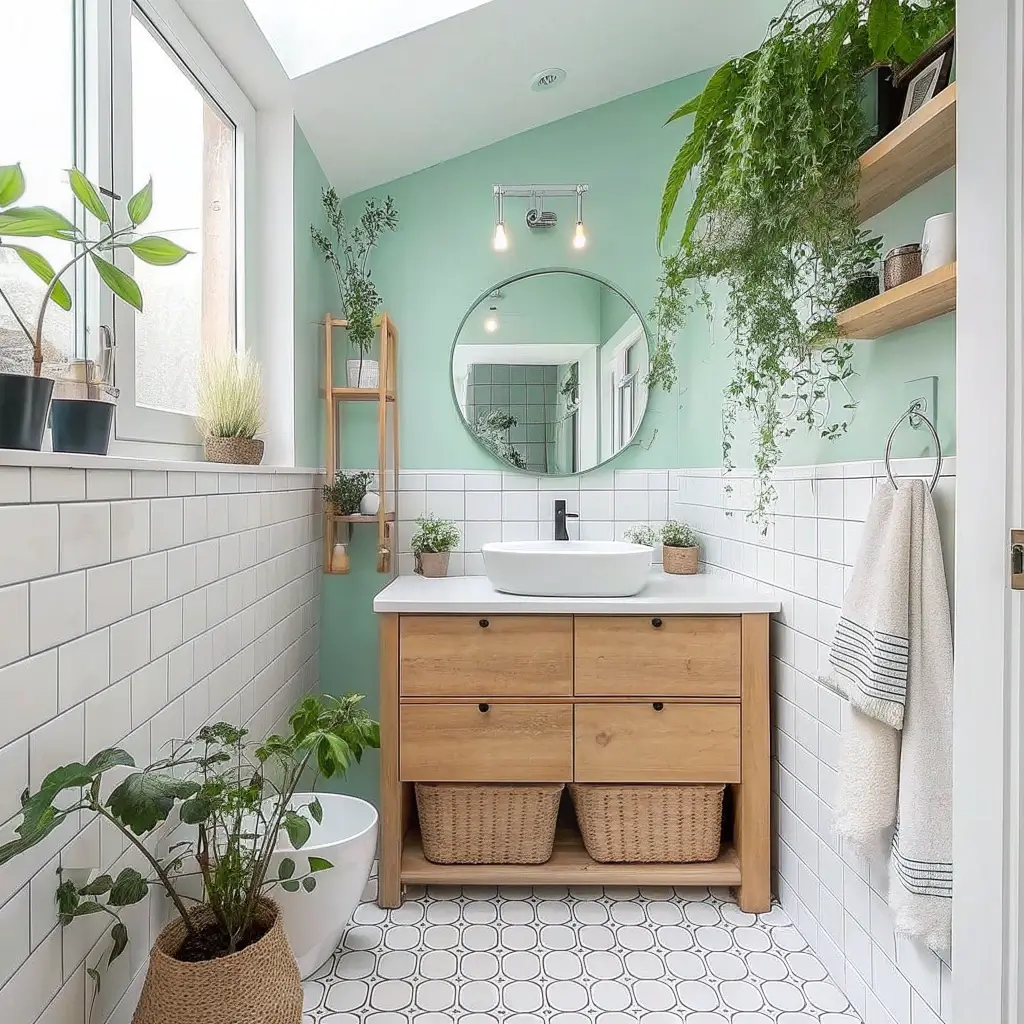
15 Elegant Small Bathroom Color Ideas and Perfect Hues

Let me guess—you’re staring at your tiny bathroom right now, wondering how on earth you’re supposed to make it look anything other than cramped and claustrophobic. Trust me, I’ve been there. My first apartment had a bathroom so small that I practically had to step into the shower just to close the door. But here’s the thing: the right color palette can completely transform even the tiniest of spaces.
I’ve spent years experimenting with different hues, making plenty of mistakes along the way (hello, that unfortunate mustard yellow phase), and I’ve finally cracked the code on what actually works for small bathrooms. So grab your favorite beverage, get comfy, and let’s chat about how you can turn your compact bathroom from “meh” to magnificent.
Why Color Matters More in Small Bathrooms
Before we jump into the specific color ideas, let’s talk about why this matters so much. In a larger space, you can get away with almost any color choice. Dark walls? No problem. Bold patterns everywhere? Sure, why not. But in a small bathroom, every design decision carries more weight.
Color affects our perception of space in ways that might surprise you. Lighter colors reflect more light, making walls appear to recede and creating an illusion of openness. Darker shades do the opposite—they absorb light and can make a room feel more intimate (or cramped, depending on how you look at it).
But here’s where it gets interesting: the “rules” aren’t as rigid as some interior designers would have you believe. Sometimes breaking conventions produces the most stunning results. Ready to explore your options?
1. Bright White Bathroom Ideas for Small Spaces
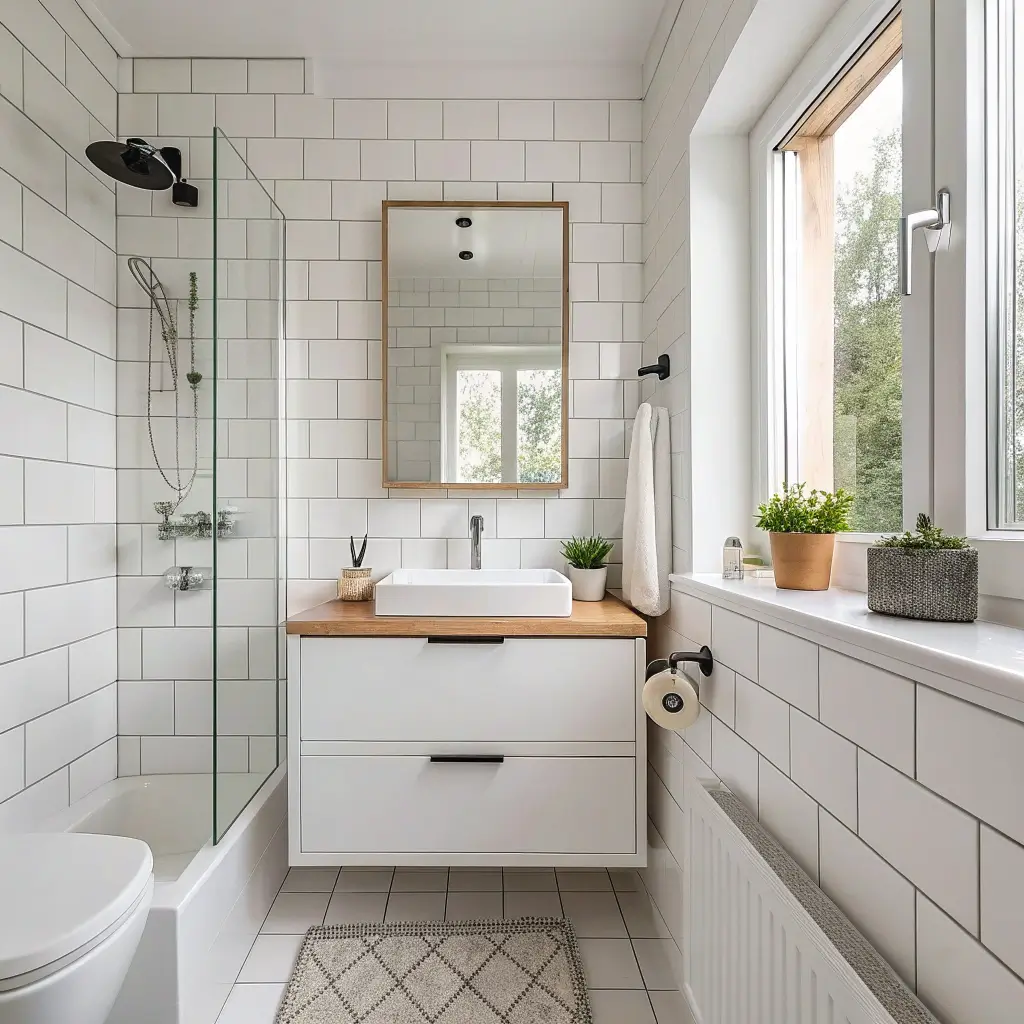
Ah, the classic choice—and for good reason. White bathrooms never go out of style, and they work absolute wonders in small spaces. But before you roll your eyes thinking “boring,” hear me out.
White isn’t just white. You’ve got warm whites with yellow undertones, cool whites with blue hints, and everything in between. The key lies in choosing the right undertone for your lighting situation.
Choosing the Perfect White
Here’s what you need to consider:
- Natural light abundance? Go for cooler whites like Benjamin Moore’s Simply White
- Limited windows? Warmer whites prevent that sterile hospital vibe
- Artificial lighting only? Test samples at different times of day
I once painted my bathroom in what I thought was a gorgeous pure white, only to realize under the fluorescent lighting that it looked distinctly purple. Lesson learned—always test before committing.
Making White Interesting
The trick to a white bathroom that doesn’t feel like a doctor’s office involves layering textures and materials. Think woven baskets, natural wood accents, textured tiles, or matte versus glossy finishes. These elements add visual interest without competing with your space-expanding white walls.
Consider adding:
- Marble or marble-look countertops
- Brass or matte black fixtures
- Natural fiber bath mats
- Plants for a pop of organic color
2. Pastel Hues to Expand Your Tiny Bathroom
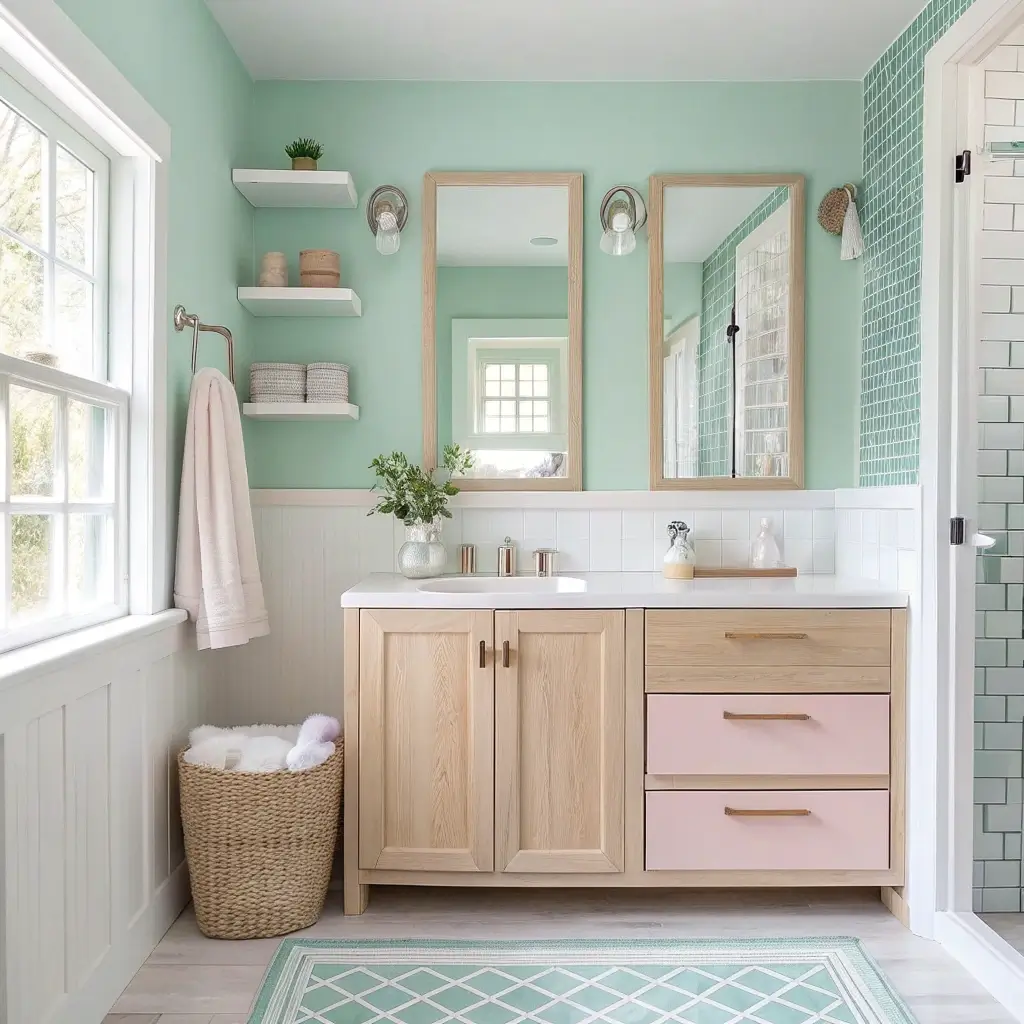
If white feels too safe for your adventurous soul, pastels offer the perfect middle ground. These soft, muted shades maintain that space-expanding quality while adding personality and warmth.
Think whisper-soft lavender, barely-there mint, or the palest blush pink. These colors create a dreamy, spa-like atmosphere that makes your morning routine feel like a retreat rather than a rushed necessity.
Best Pastel Options for Small Bathrooms
My personal favorites include:
- Pale lavender – surprisingly sophisticated and calming
- Soft mint green – fresh without being overwhelming
- Whisper pink – adds warmth without feeling too feminine
- Light peach – creates a warm, welcoming glow
The beauty of pastels lies in their versatility. They pair beautifully with white trim, chrome fixtures, and natural materials. Plus, they photograph amazingly if you’re into that whole Instagram-worthy bathroom aesthetic. 🙂
Pastel Pairing Tips
When working with pastels, keep your accent colors subtle. Metallics work wonderfully—think rose gold with pale pink, or brushed nickel with lavender. Avoid introducing too many competing colors, or your small space will start feeling chaotic rather than cohesive.
3. Bold Accent Walls for Small Bathrooms
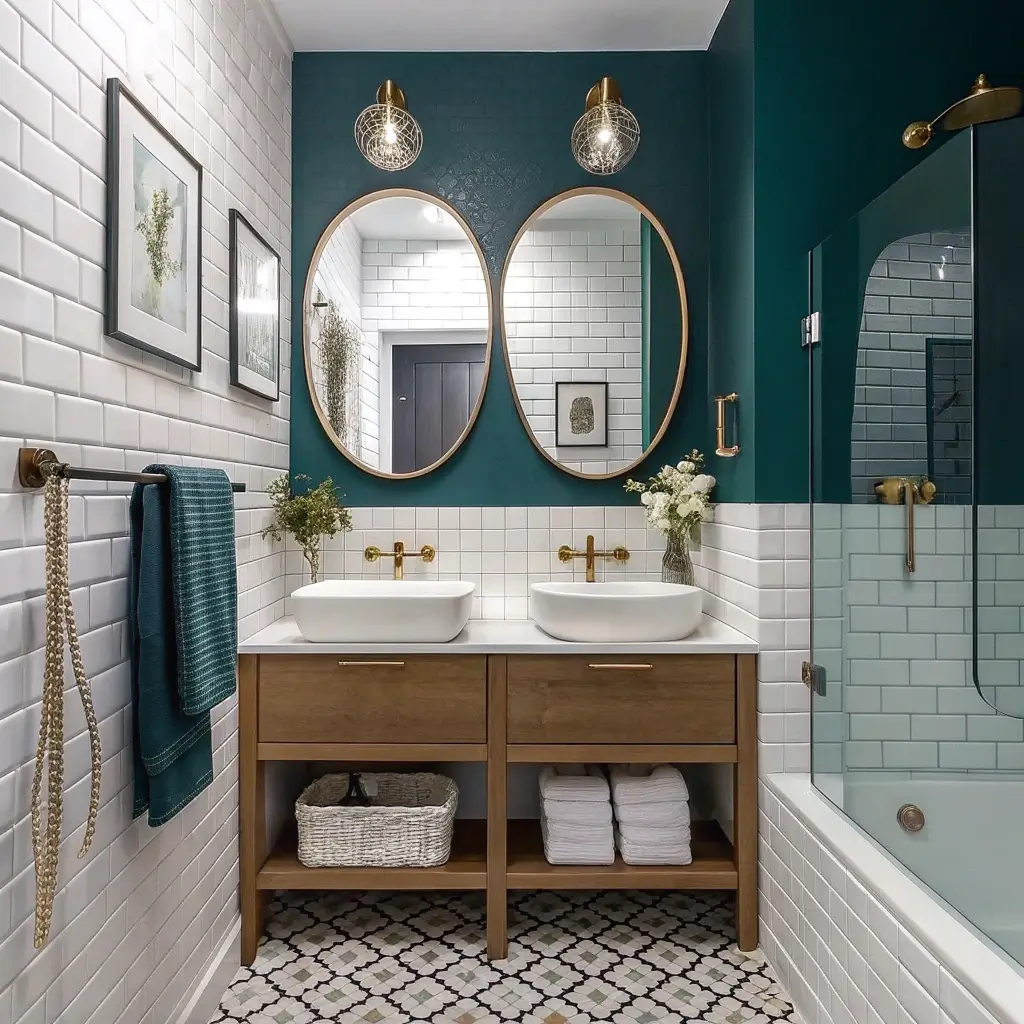
Now we’re getting spicy. Who says small bathrooms can’t handle bold color? The accent wall approach lets you inject drama without overwhelming the entire space.
Here’s my philosophy: one statement wall creates a focal point that actually distracts from the room’s compact dimensions. Your eye goes straight to that gorgeous deep teal or rich navy instead of noticing how close the walls are to each other.
Where to Place Your Accent Wall
Strategic placement matters enormously:
- Behind the vanity – creates a stunning backdrop for your mirror
- The shower wall – draws the eye and adds depth
- Opposite the door – the first thing you see when entering
I painted an accent wall behind my bathroom vanity in a deep forest green last year, and honestly? It transformed the entire space. The room actually feels larger because that bold color creates depth and dimension.
Bold Color Recommendations
For small bathroom accent walls, consider:
- Deep navy blue – sophisticated and timeless
- Emerald green – luxurious without trying too hard
- Rich burgundy – unexpected and dramatic
- Charcoal grey – modern and versatile
Just remember to balance your bold wall with lighter surrounding colors. The contrast creates the magic.
4. Neutral Shades for a Calm Small Bathroom
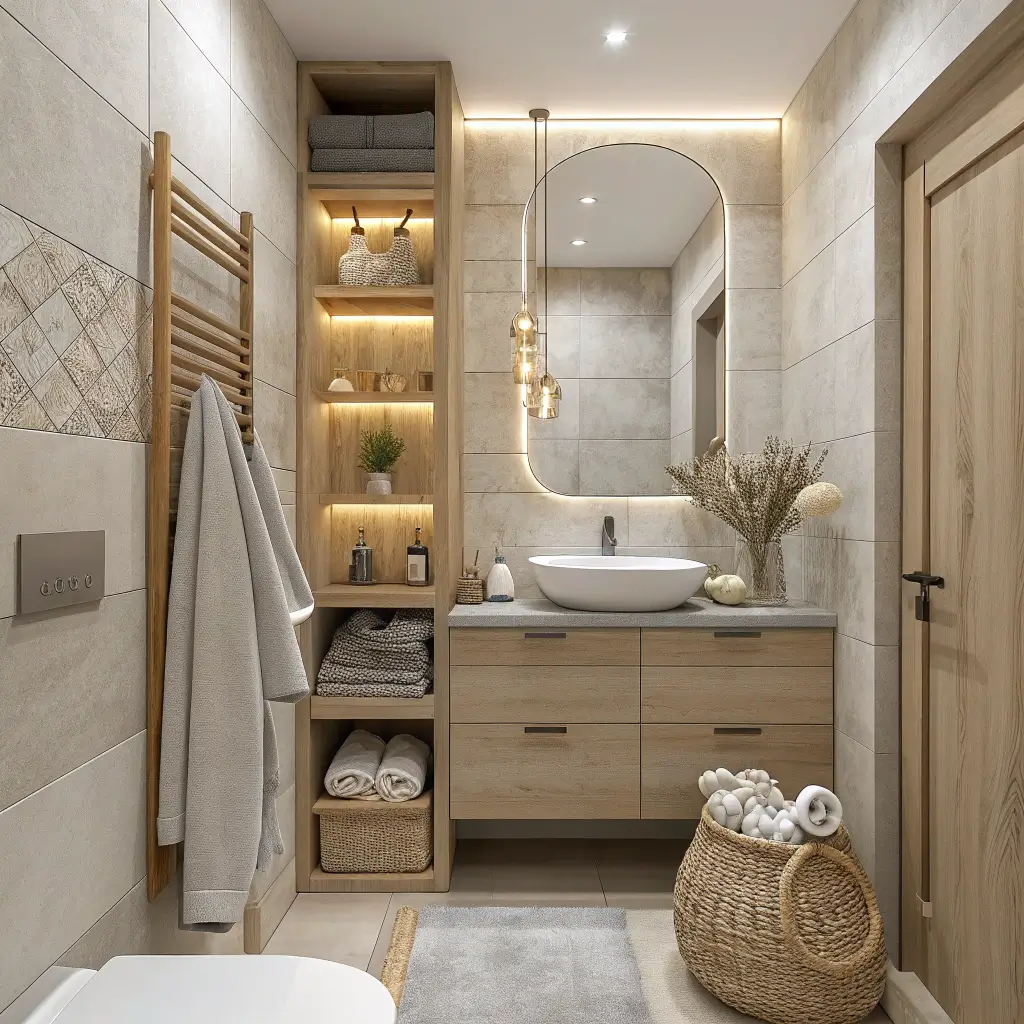
Sometimes you want a bathroom that whispers rather than shouts. Neutral color schemes create that zen-like tranquility we all crave after a long day. Plus, they never date—you won’t be repainting because your trendy color choice went out of style.
Neutrals encompass more variety than people realize. We’re talking warm tans, cool greys, soft greiges (grey-beige hybrids), and earthy tones that ground your space.
Building a Neutral Palette
The secret to a successful neutral bathroom involves layering different neutral tones rather than using just one. This creates depth and prevents the space from feeling flat or boring.
Try combining:
- Light grey walls with cream trim
- Warm taupe with soft white accents
- Greige walls with natural wood elements
- Sandy beige with white and brown accents
Adding Interest to Neutral Schemes
Texture becomes your best friend in neutral spaces. Vary your finishes and materials to create visual interest:
- Matte versus glossy tiles
- Smooth countertops against rough-hewn wood
- Fluffy towels contrasting with sleek fixtures
- Woven baskets adding organic texture
5. Monochrome Magic: Small Bathroom Color Schemes
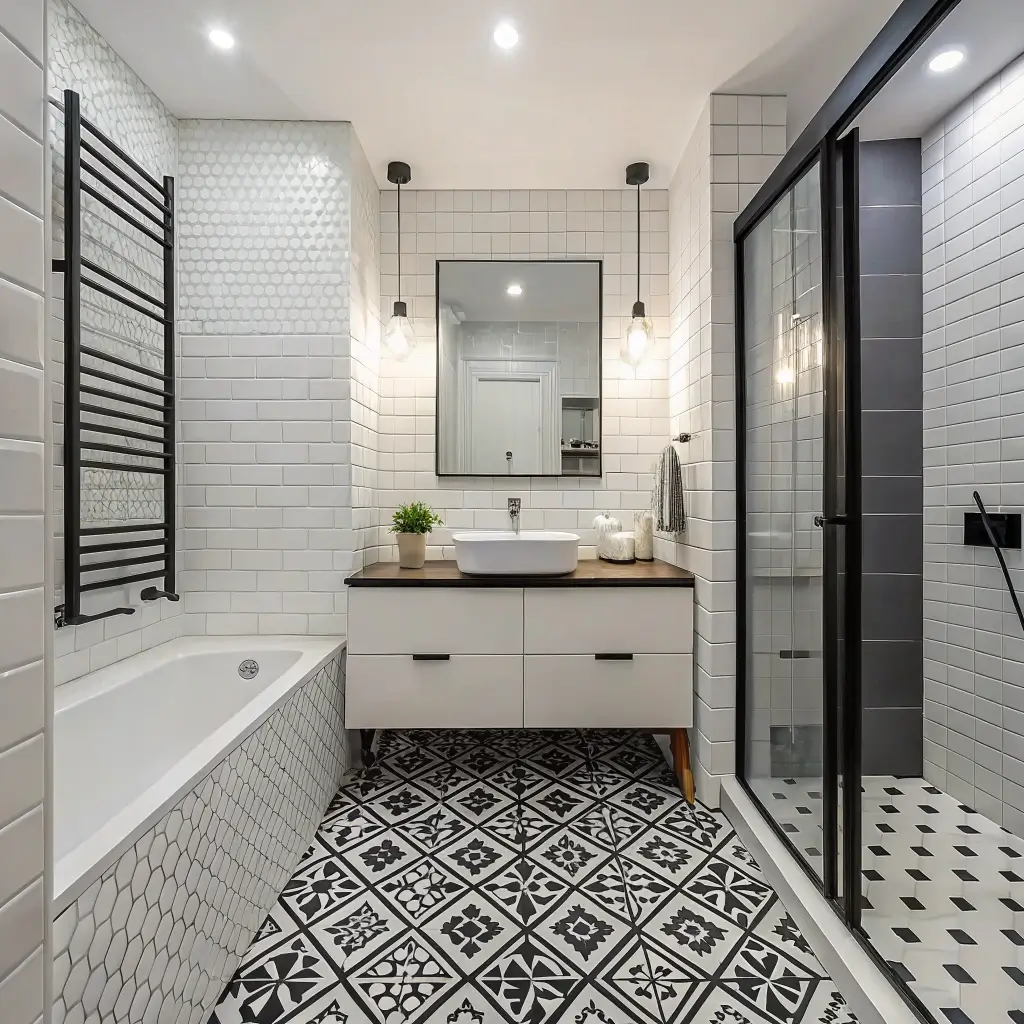
Ever wondered why monochromatic schemes look so darn sophisticated? They create a cohesive, unified appearance that tricks the eye into perceiving the space as larger and more intentional.
Monochromatic doesn’t mean boring—it means using different shades, tints, and tones of the same color family. Think pale grey floors, medium grey walls, and charcoal accents. Everything harmonizes perfectly.
Executing Monochrome Successfully
The key lies in varying your values (how light or dark each shade appears):
- Use lighter shades on walls to maintain that open feeling
- Medium tones work great for larger fixtures and furniture
- Reserve darker shades for accents and accessories
- Incorporate metallic finishes for sparkle and contrast
My Favorite Monochrome Combinations
After experimenting with several options, these combinations consistently impress:
- Blue monochrome – from powder blue to deep indigo
- Green monochrome – sage to forest with everything between
- Grey monochrome – the most versatile option for modern spaces
- Warm brown monochrome – surprisingly sophisticated and cozy
6. Soft Blue Inspirations for Compact Bathrooms
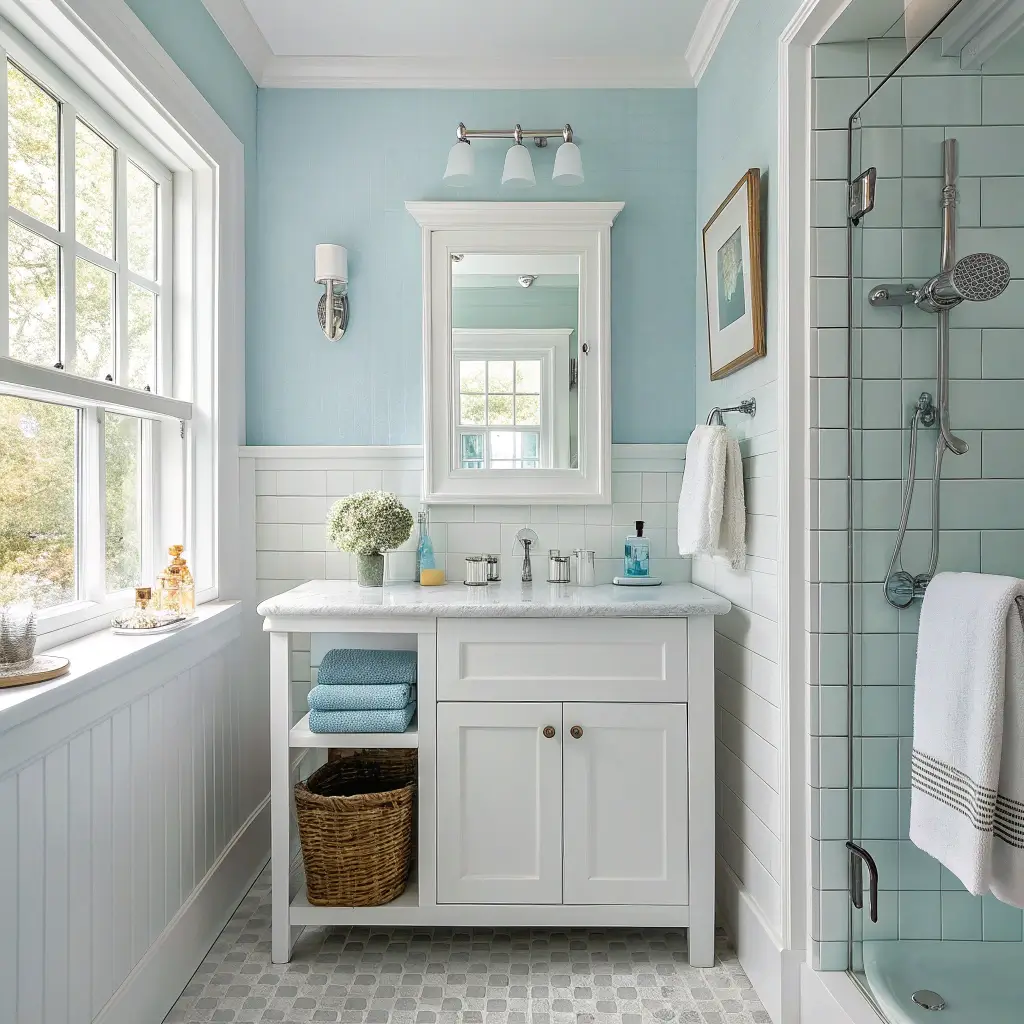
Blue and bathrooms go together like peanut butter and jelly. There’s something inherently logical about water-inspired hues in the room where we bathe and refresh ourselves. FYI, blue also happens to be one of the most universally appealing colors—almost everyone likes some shade of blue.
Soft blues work particularly well in small bathrooms because they maintain that light, airy quality while adding personality that white alone can’t achieve.
Selecting Your Perfect Blue
Not all blues behave the same in small spaces:
- Powder blue – classic, calming, and space-expanding
- Soft periwinkle – adds a touch of purple warmth
- Pale aqua – brings beachy, fresh vibes
- Dusty blue – sophisticated with grey undertones
I’ve found that blues with grey undertones read more modern and sophisticated, while cleaner blues feel fresher and more traditional.
Complementing Your Blue Scheme
Blue pairs beautifully with:
- Crisp white trim and accessories
- Natural wood tones (think teak or oak)
- Chrome or nickel fixtures
- Sandy beige for warmth
- Coral or peach accents for contrast
Also Read: 15 Functional Small Bathroom Vanity Ideas and Smart Layouts
7. Warm Beige Tones to Enlarge Your Bathroom
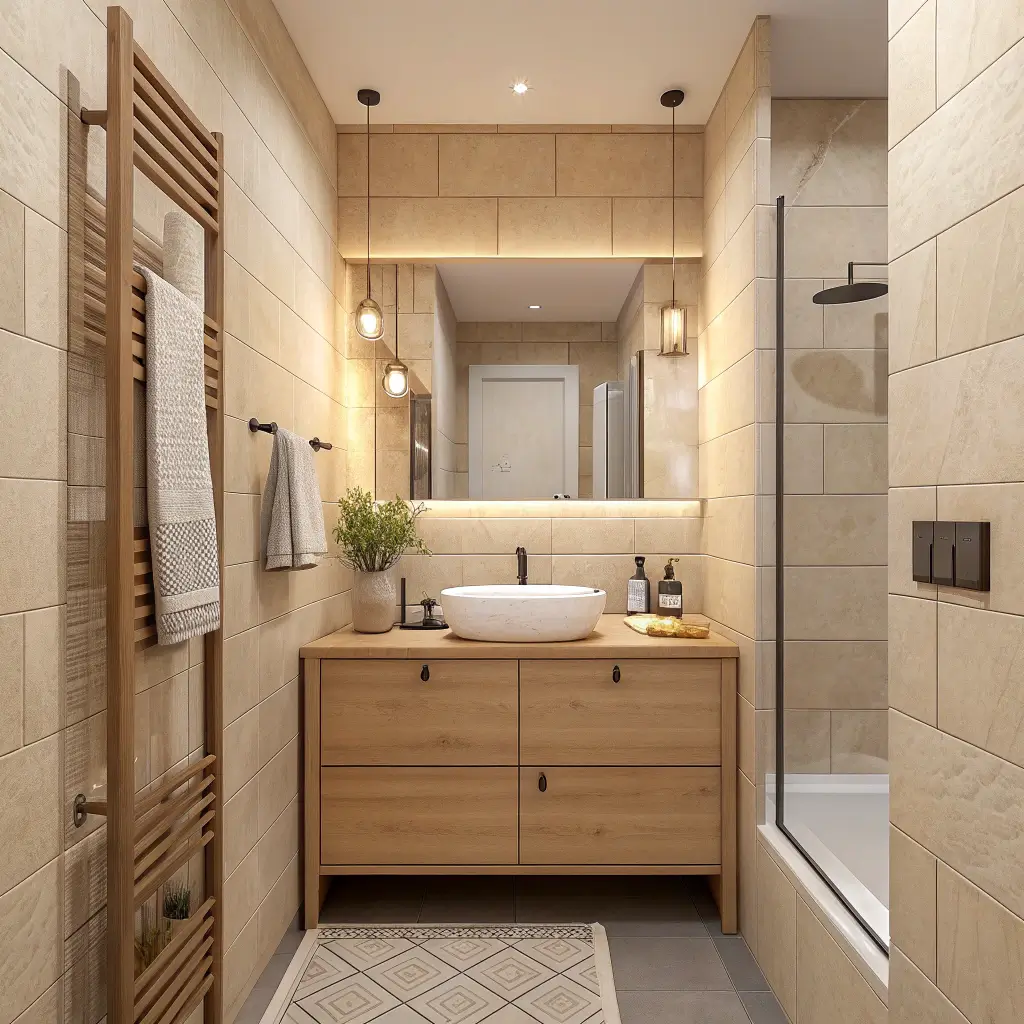
Beige sometimes gets dismissed as the boring choice—but honestly, a well-executed beige bathroom feels warm, inviting, and incredibly elegant. These warm undertones create a cocooning effect that makes your bathroom feel like a cozy retreat.
The trick involves choosing the right beige for your space. Too yellow, and it looks dated. Too pink, and it feels odd. The sweet spot lies somewhere in the middle.
The Best Beige Options
Look for beiges with these characteristics:
- Greige undertones – modern and versatile
- Warm sand tones – reminiscent of beach vacations
- Soft caramel hints – adds richness without heaviness
- Neutral beige – balanced and timeless
Styling Your Beige Bathroom
Warmth amplifies warmth, so lean into it:
- Brass or gold fixtures complement beige beautifully
- Natural stone with beige veining ties everything together
- Terracotta accents add earthy interest
- Cream linens maintain the soft, cohesive feel
Avoid introducing too many cool elements—they’ll fight against your warm palette and create visual tension.
8. Grey and White Combinations for Small Bathrooms
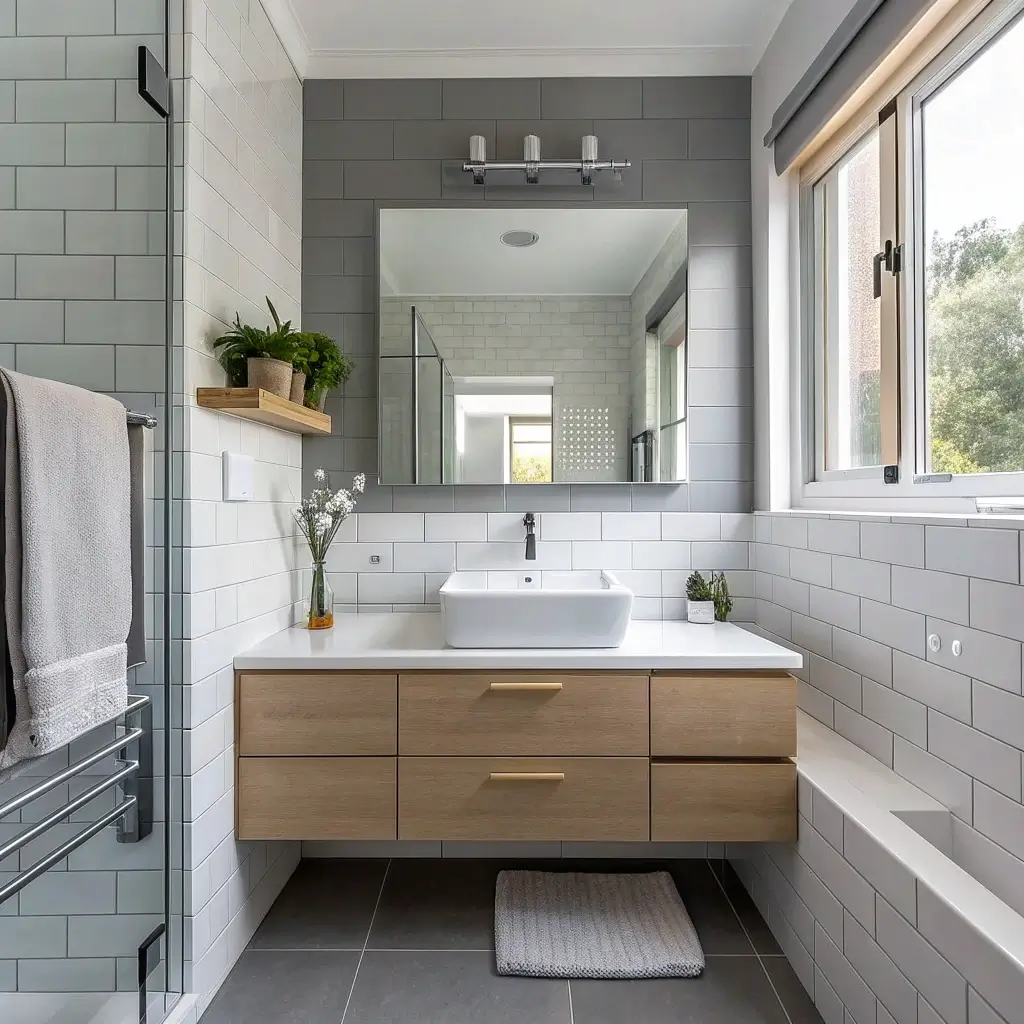
If I had to choose one color combination that works virtually anywhere, grey and white would win every time. This timeless pairing offers endless versatility and adapts to both traditional and contemporary aesthetics.
The ratio you choose determines the mood. More white creates an airy, spacious feel. More grey adds drama and sophistication.
Creating the Perfect Balance
For small bathrooms, I recommend:
- 70% white, 30% grey – maintains openness while adding interest
- Grey floors with white walls – grounds the space
- White tile with grey grout – classic and practical
- Grey accent pieces against white backgrounds – controlled drama
Grey and White Styling Tips
This combination loves metallic accents:
- Chrome fixtures maintain a cool, modern look
- Black hardware adds contemporary edge
- Gold or brass brings warmth to the coolness
- Mixed metals work surprisingly well
Add texture through tiles, textiles, and accessories to prevent the space from feeling sterile or cold.
9. Vibrant Pops of Color in Small Bathrooms
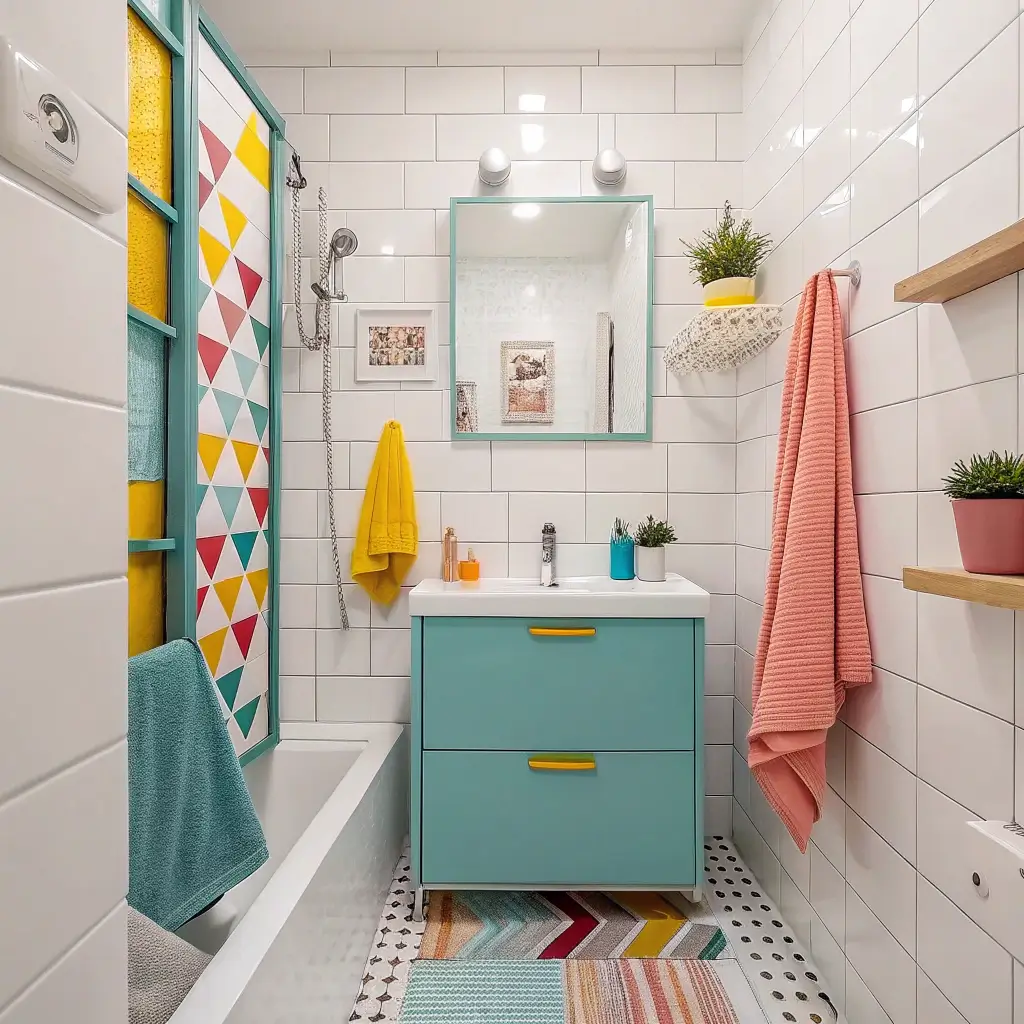
Here’s where things get fun. Who says small bathrooms must play it safe? Strategic color pops can energize a space without overwhelming it. The key word here is strategic—you’re adding accents, not painting every surface hot pink.
This approach works brilliantly because you get the best of both worlds: a space-expanding neutral base with personality-packed color moments.
Where to Add Your Color Pops
Consider these placement options:
- Towels and bath mats – easily changed when you want a refresh
- Shower curtain – instant focal point
- Small accent tiles – permanent but impactful
- Artwork and accessories – flexible and fun
- A painted cabinet or vanity – unexpected and charming
Choosing Your Pop Colors
Go bold or go home with:
- Sunny yellow – cheerful and energizing
- Coral or orange – warm and welcoming
- Turquoise – fresh and playful
- Fuchsia pink – daring and fun
- Lime green – fresh and contemporary
I added bright yellow towels and accessories to my all-white guest bathroom, and visitors consistently comment on how cheerful and inviting it feels. Small changes, big impact.
Also Read: 15 Brilliant Small Bathroom Ideas on a Budget and Design Tricks
10. Two-Tone Walls for Stylish Small Bathrooms
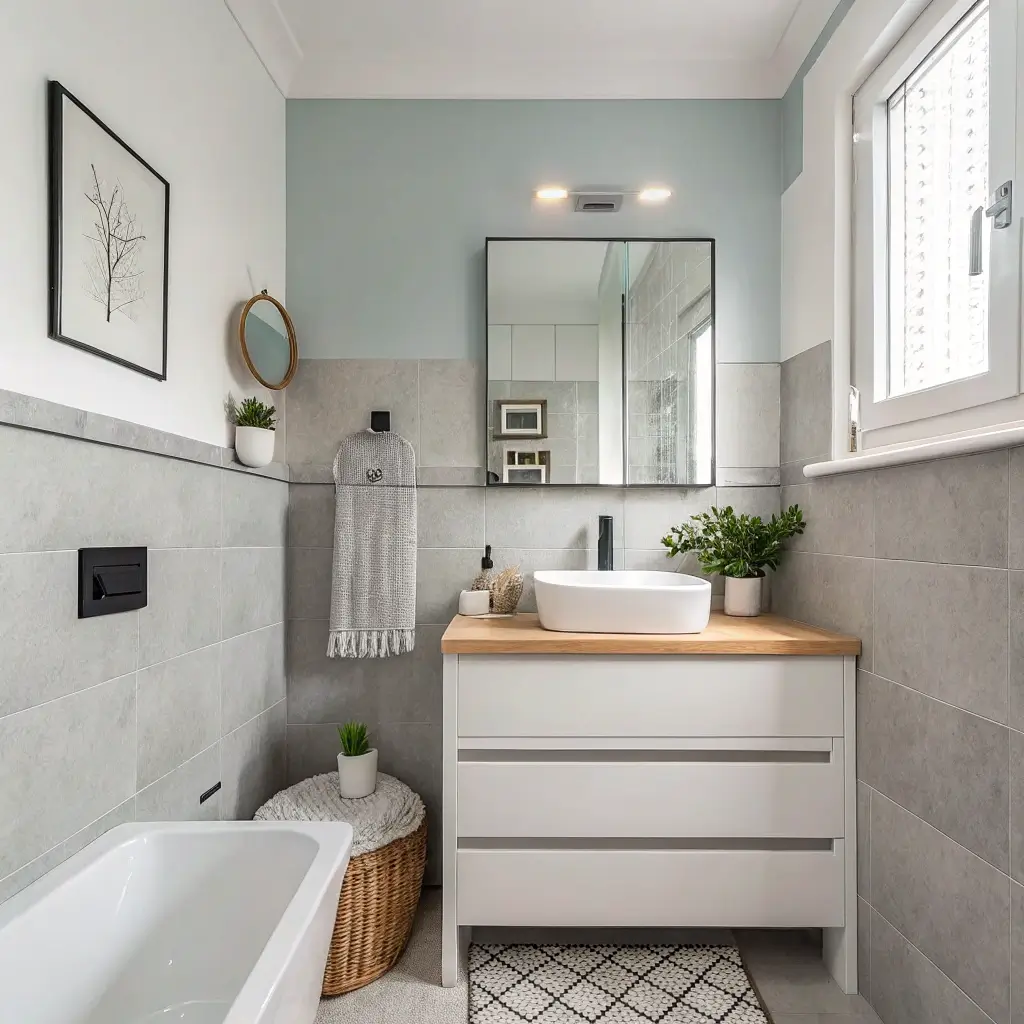
Two-tone walls offer an architectural interest that single-color schemes simply can’t match. This technique involves painting your walls in two different colors, typically divided horizontally by a chair rail, wainscoting, or simply a straight line.
Beyond looking fantastic, two-tone treatments can actually manipulate how tall or wide your bathroom appears.
Two-Tone Strategies
Different approaches create different effects:
- Darker bottom, lighter top – feels grounded and sophisticated
- Lighter bottom, darker top – unexpected and modern
- Equal split – clean and contemporary
- Lower third darker – visually raises the ceiling
My Favorite Two-Tone Combinations
These pairings consistently deliver gorgeous results:
- Navy bottom with white top
- Forest green wainscoting with cream walls
- Charcoal grey lower third with pale grey upper walls
- Deep teal bottom with blush pink top (trust me on this one)
The contrast creates visual interest while the lighter portions maintain that essential sense of spaciousness.
11. Minimalist Black and White Bathroom Ideas
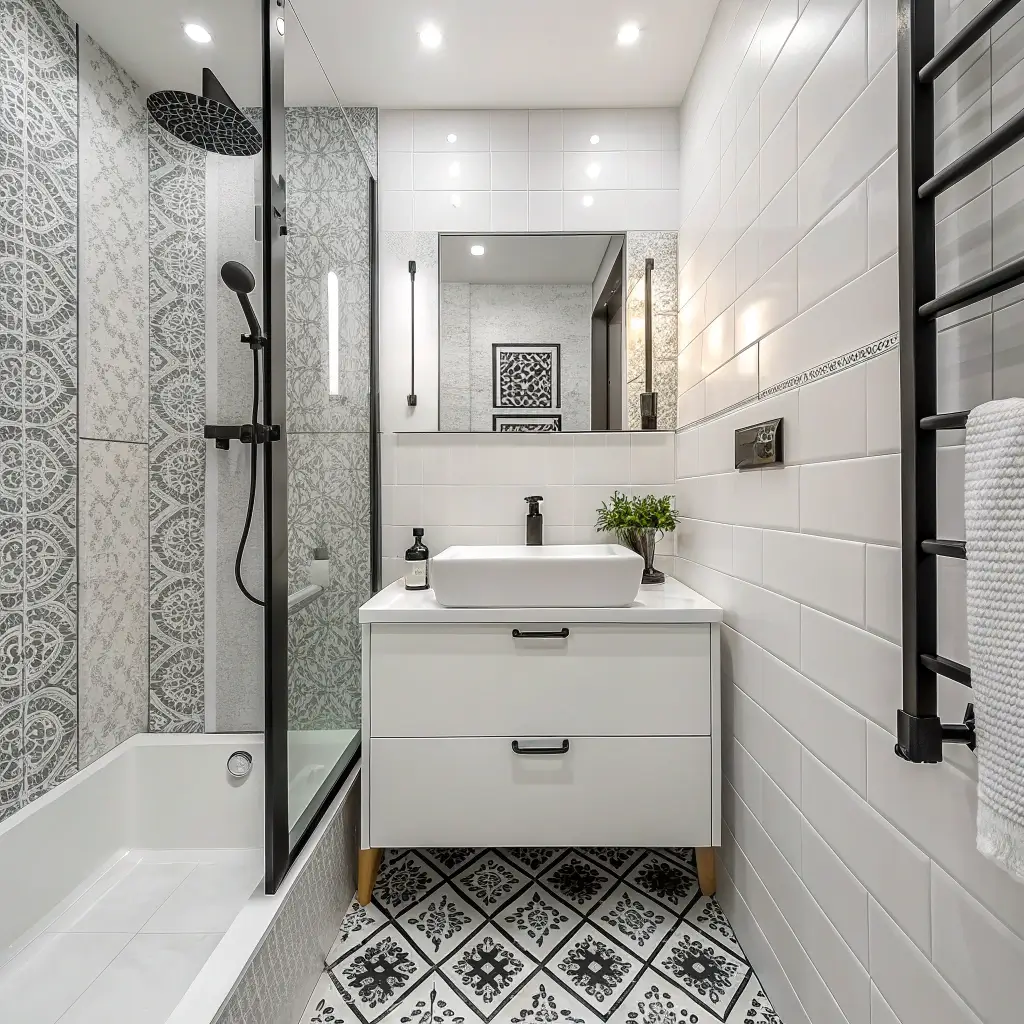
There’s something incredibly chic about a black and white bathroom. This high-contrast combination creates drama, sophistication, and a timeless quality that trendy colors simply can’t match.
But—and this is important—in small spaces, you need to balance these contrasts carefully. Too much black and your bathroom will feel like a cave.
Getting the Balance Right
For compact bathrooms, follow these guidelines:
- Prioritize white – it should dominate the space
- Use black for accents – fixtures, frames, accessories
- Consider black and white patterned tiles – floors or accent walls
- Introduce black through hardware – drawer pulls, towel bars, light fixtures
Pattern Play in Black and White
This is your opportunity to have fun with patterns:
- Classic checkerboard floors
- Moroccan-inspired tile patterns
- Geometric accent walls
- Striped shower curtains
IMO, a black and white patterned floor with simple white walls creates the perfect balance of interest and openness.
12. Light Green Shades to Refresh Tiny Bathrooms
Green might be the most underrated bathroom color out there. These nature-inspired hues bring the outdoors in, creating a fresh, rejuvenating atmosphere perfect for spaces dedicated to self-care.
Light greens particularly excel in small bathrooms because they maintain brightness while adding personality. They also pair incredibly well with natural materials and greenery (hello, shower plants!).
Best Light Greens for Small Spaces
Consider these gorgeous options:
- Sage green – sophisticated with grey undertones
- Mint green – fresh and playful
- Celadon – soft and elegant
- Seafoam – beachy and relaxing
- Pale olive – earthy and grounding
Styling Your Green Bathroom
Green loves natural companions:
- Wood accents – oak, walnut, or teak
- White marble – luxurious and classic
- Brass fixtures – warm and complementary
- Live plants – the obvious but perfect choice
- Natural stone – extends the organic theme
Also Read: 15 Clever Small Bathroom Modern Ideas and Functional Styles
13. Soft Pink Accents for Cozy Small Bathrooms
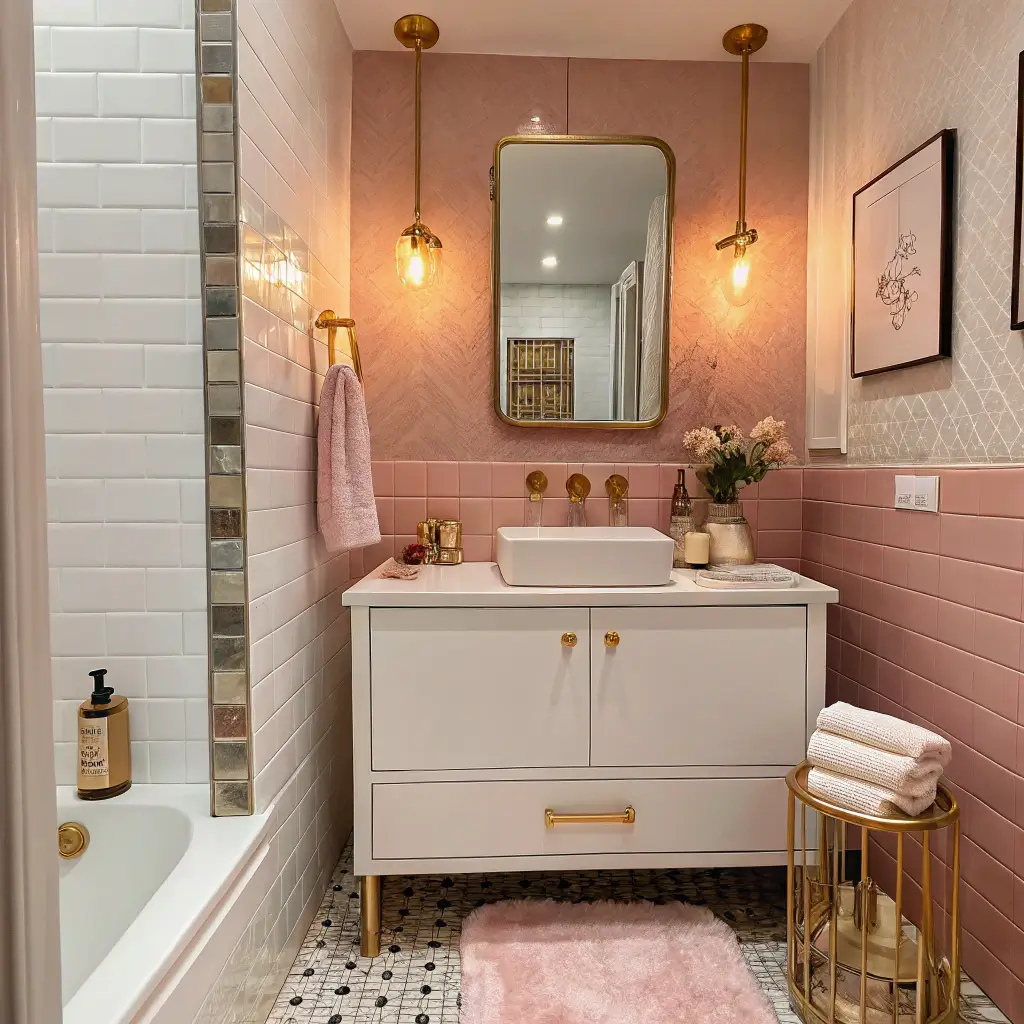
Pink bathrooms have made a serious comeback, and I’m totally here for it. But we’re not talking about that Pepto-Bismol pink from decades past. Modern pink bathrooms embrace sophisticated dusty roses, warm blush tones, and subtle peachy pinks that feel fresh and contemporary.
These warm undertones create an incredibly flattering light—seriously, you’ll look amazing in your bathroom mirror.
Choosing the Right Pink
Navigate the pink spectrum carefully:
- Blush pink – barely there but impactful
- Dusty rose – sophisticated and mature
- Terracotta pink – earthy and warm
- Peachy pink – fresh and vibrant
- Mauve – pink with purple undertones
Making Pink Work for Everyone
If you’re hesitant about committing to pink walls, try:
- Pink tiles in a limited area
- Pink textiles and accessories
- A pink vanity against white walls
- Pink and white patterned wallpaper
- Pink accents with neutral backgrounds
My sister painted her small bathroom a dusty rose, and even her initially skeptical husband admits it looks amazing. Sometimes you just have to trust the process.
14. Coastal Colors to Brighten Small Bathrooms
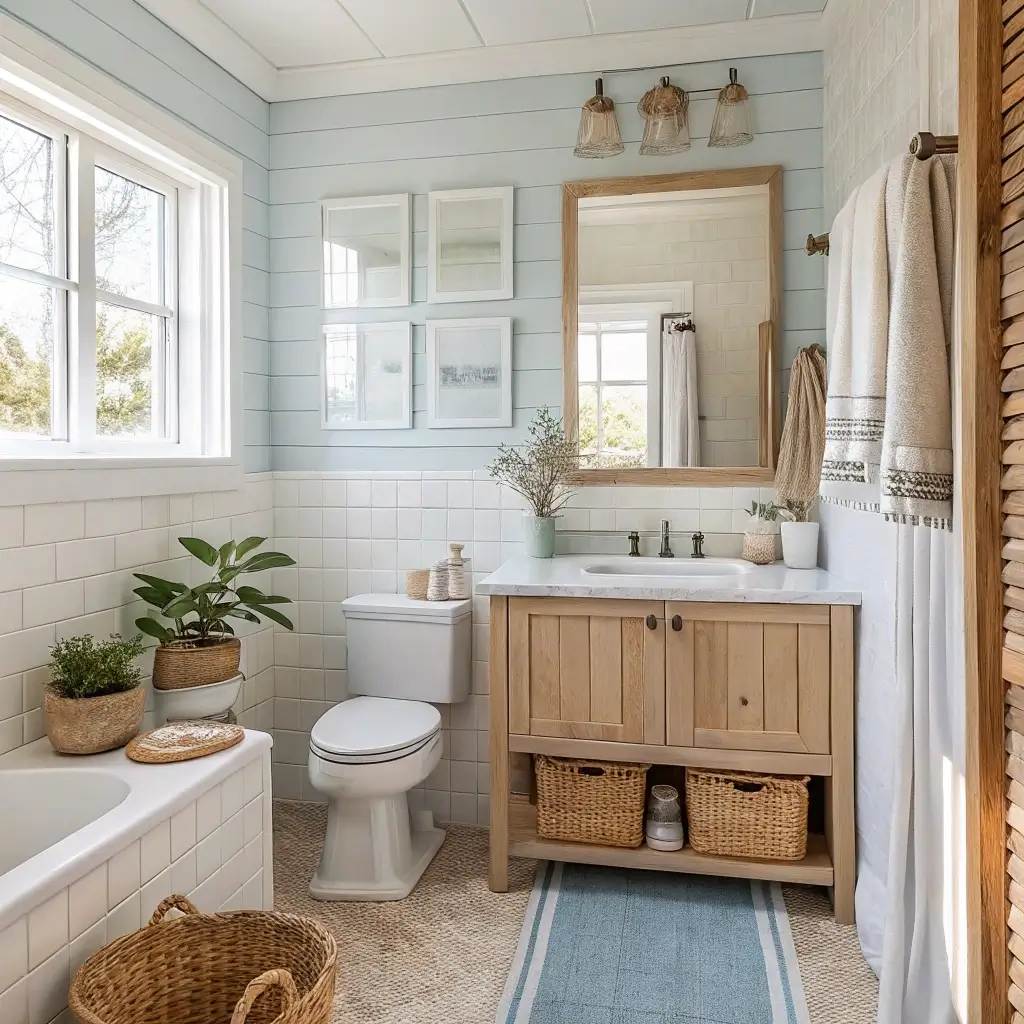
Want to feel like you’re on vacation every time you shower? Coastal color palettes bring that breezy, beachy vibe right into your home. These schemes typically combine soft blues, sandy neutrals, and crisp whites to create a relaxed, vacation-worthy atmosphere.
The best part? These colors naturally suit small bathrooms because they’re inherently light, airy, and space-enhancing.
Building Your Coastal Palette
Start with these foundational colors:
- Soft aqua or turquoise – the ocean inspiration
- Sandy beige or cream – beach-inspired warmth
- Crisp white – foam and clouds
- Pale grey – weathered driftwood vibes
- Sea glass green – that magical in-between shade
Coastal Styling Elements
Complete the look with:
- White shiplap or beadboard walls
- Natural rope and wicker accents
- Beach-inspired artwork
- Shell or coral decorative elements
- Light natural wood finishes
- Blue and white striped textiles
The key involves suggesting the coast without going full-on themed. You want relaxed vacation vibes, not a kitschy beach house covered in seahorse decorations.
15. Elegant Cream and Taupe Bathroom Ideas
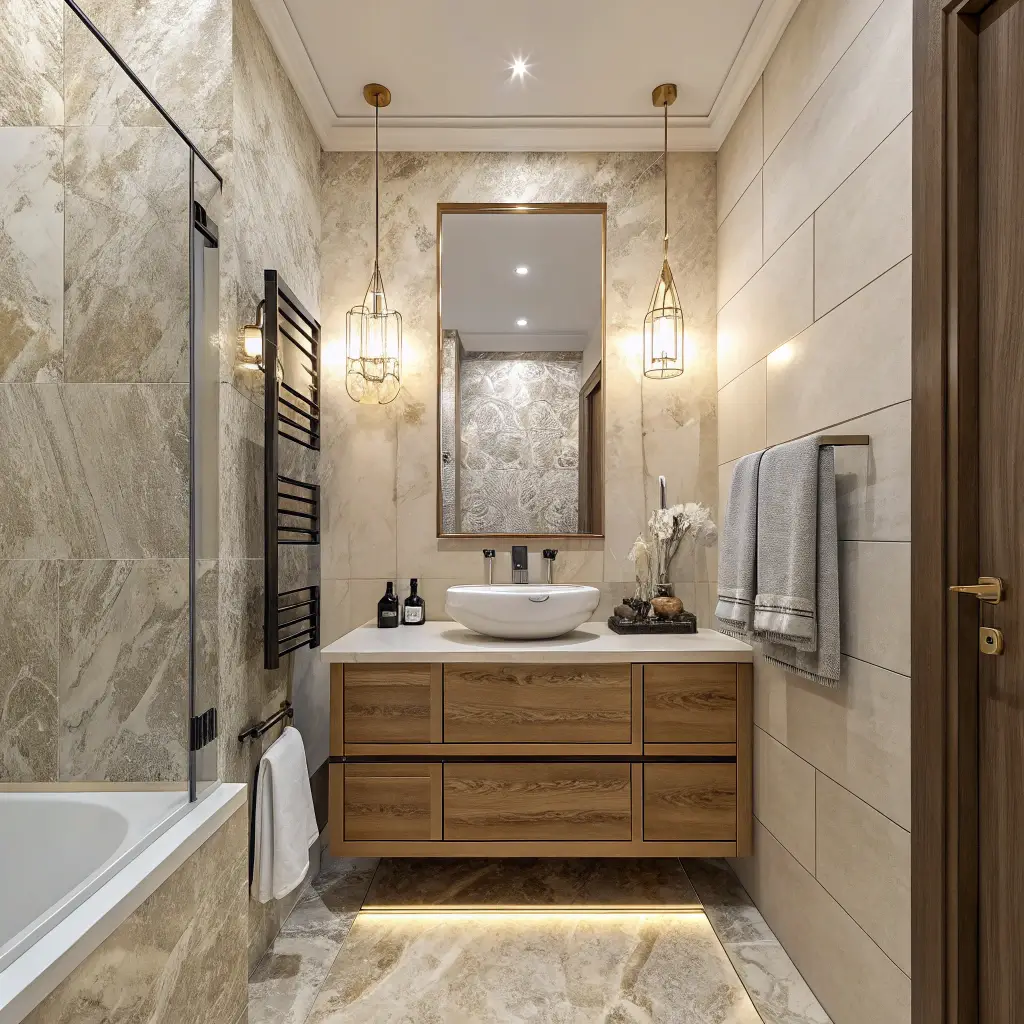
We’re ending with one of my absolute favorite combinations for small bathrooms. Cream and taupe together create an incredibly sophisticated, spa-like atmosphere that feels both luxurious and restful.
These warm neutrals work particularly well in bathrooms with limited natural light, as they prevent that cold, sterile feeling that cooler tones can create.
Understanding Cream and Taupe
Let’s clarify these colors:
- Cream – warm white with yellow undertones
- Taupe – brown-grey hybrid with warm undertones
- Together, they create depth without contrast, resulting in a seamless, enveloping space
Executing This Elegant Combination
For maximum impact:
- Use cream as your dominant wall color
- Introduce taupe through tiles, countertops, or accents
- Add warmth with brass or gold fixtures
- Incorporate natural textures like linen and wood
- Keep accessories minimal and curated
This combination particularly shines with:
- Marble or stone with cream and taupe veining
- Brushed gold hardware
- Linen shower curtains
- Natural wood shelving or accents
- Cream-colored ceramics and accessories
Bringing It All Together
Choosing the right color for your small bathroom doesn’t have to feel overwhelming. The perfect hue depends on several factors: your lighting situation, personal style, the mood you want to create, and how adventurous you’re feeling.
Here’s my honest advice after years of bathroom color experimentation:
Light colors genuinely do expand spaces, but that doesn’t mean you’re stuck with boring white. Pastels, soft neutrals, and pale versions of bolder colors all create that space-enhancing effect while adding personality.
Bold colors can absolutely work in small bathrooms when used strategically. Accent walls, colored vanities, and vibrant accessories let you express your style without overwhelming the space.
Test before committing. I cannot stress this enough. Paint samples look completely different under various lighting conditions. Live with those samples for a few days before making your final decision.
Trust your instincts. At the end of the day, you’re the one using this bathroom multiple times daily. Choose colors that make you genuinely happy, not just colors that follow the “rules.”
Your small bathroom has enormous potential—it just needs the right color palette to unlock it. Whether you gravitate toward serene neutrals, bold accents, or spa-like greens and blues, the perfect hue awaits. Now go transform that tiny space into something truly special. You’ve got this! 🙂