
15 Brilliant Small Modern Bedroom Ideas and Smart Storage Solutions
Let’s be honest here. Living in a small bedroom can feel like you’re playing an endless game of Tetris with your furniture, clothes, and that random collection of books you swear you’ll read someday. But here’s the thing—small doesn’t have to mean cramped, cluttered, or chaotic.
I’ve spent years experimenting with my own tiny bedroom spaces (and made plenty of mistakes along the way), and I’ve learned that the secret isn’t about having less stuff. It’s about being smarter with what you have and how you arrange it.
Whether you’re dealing with a cozy apartment bedroom, a snug guest room, or just trying to maximize every precious square foot, these 15 modern bedroom ideas will transform your space from “help, I can’t breathe” to “wow, this actually feels amazing.”
Ready to make your small bedroom work harder for you? Let’s get into it.
1. Minimalist Scandinavian Small Bedroom
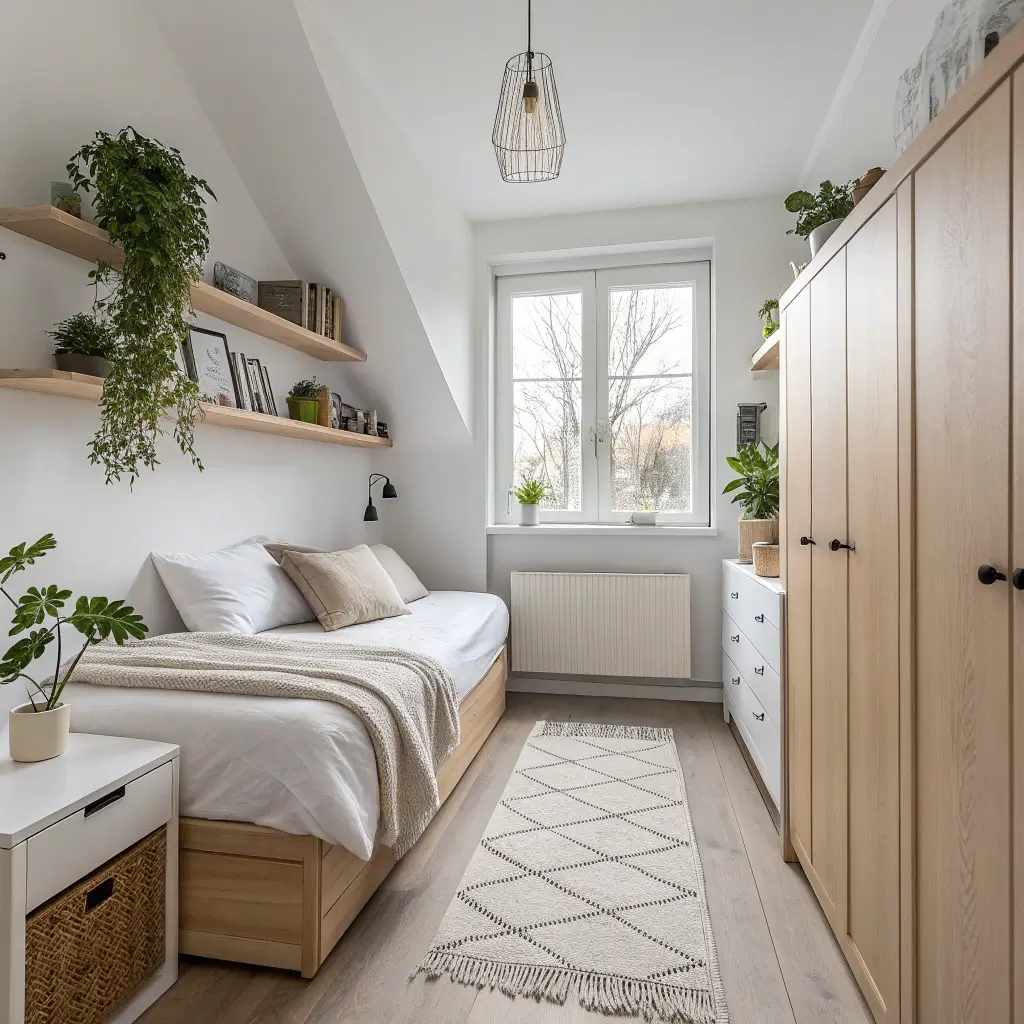
There’s a reason Scandinavian design has taken over Instagram, Pinterest, and basically every home magazine out there. It works. Especially in small spaces.
The Scandinavian approach strips everything back to the essentials while keeping things warm and inviting. Think clean lines, functional furniture, and a color palette that whispers rather than shouts.
Why Scandinavian Works in Tiny Spaces
The philosophy behind Scandinavian design centers on “lagom”—a Swedish concept meaning “just the right amount.” Not too much, not too little. Perfect for when you’re working with limited square footage.
Here’s what makes this style a small bedroom champion:
- Light color palettes (whites, creams, soft grays) make rooms feel larger
- Natural materials like light wood and linen add warmth without visual clutter
- Intentional furniture choices mean every piece earns its spot
- Plenty of negative space gives your eyes room to rest
I once transformed a 9×10 bedroom using this approach, and guests constantly commented that it felt twice its actual size. The secret? A simple white platform bed, one wooden nightstand, and absolutely nothing that didn’t serve a purpose.
Key Elements to Include
Start with a low-profile bed frame in light oak or birch. Add crisp white bedding with maybe one textured throw blanket. Keep your nightstand minimal—just a lamp and perhaps a small plant.
The walls should stay mostly bare, but one piece of simple artwork or a small round mirror works beautifully. Remember, in Scandinavian design, less truly is more.
2. Floating Furniture Layout for Tiny Rooms
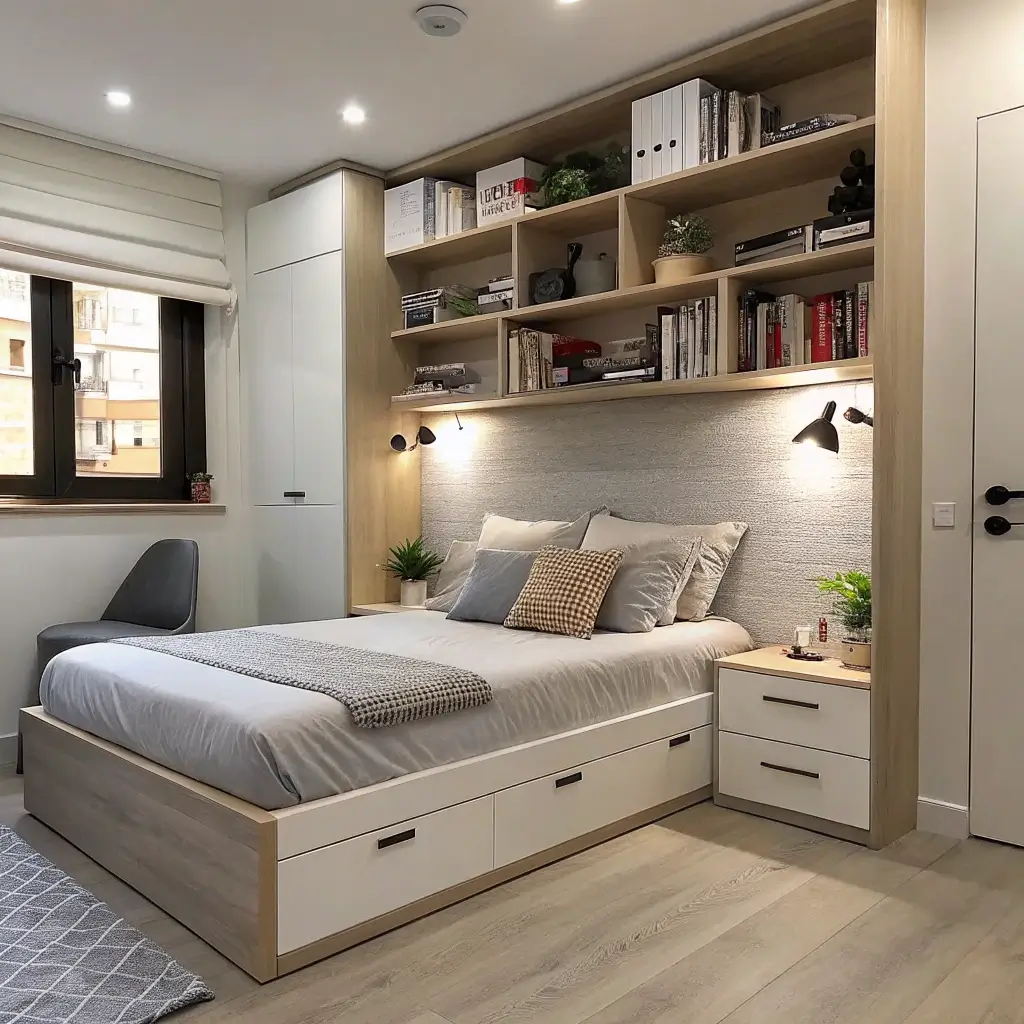
Here’s a counterintuitive tip that blew my mind when I first learned it: pulling furniture away from the walls can actually make a room feel bigger.
I know, I know. Your instinct screams “push everything against the walls to maximize floor space!” But that approach often creates a cramped, tunnel-like feeling.
The Psychology Behind Floating Furniture
When you float your bed even six inches from the wall, or angle your nightstand slightly, you create breathing room around each piece. Your eye travels around the furniture rather than stopping abruptly at each wall.
This layout trick also improves traffic flow. Instead of awkwardly squeezing between your bed and dresser, you create intentional pathways that make the room feel more spacious and organized.
How to Execute This in a Small Bedroom
Start by centering your bed on the main wall, leaving equal space on both sides if possible. Even small gaps of 8-12 inches on each side create symmetry and openness.
Consider these floating layout strategies:
- Angle your bed slightly in the corner for an unexpected, dynamic look
- Leave space behind your headboard for a slim console or bookshelf
- Float a small bench at the foot of the bed instead of pushing it against the wall
- Position your dresser away from walls with a mirror behind it to double the visual depth
The key is intentionality. Every gap and every angle should feel purposeful, not accidental.
3. Neutral Toned Cozy Modern Bedroom
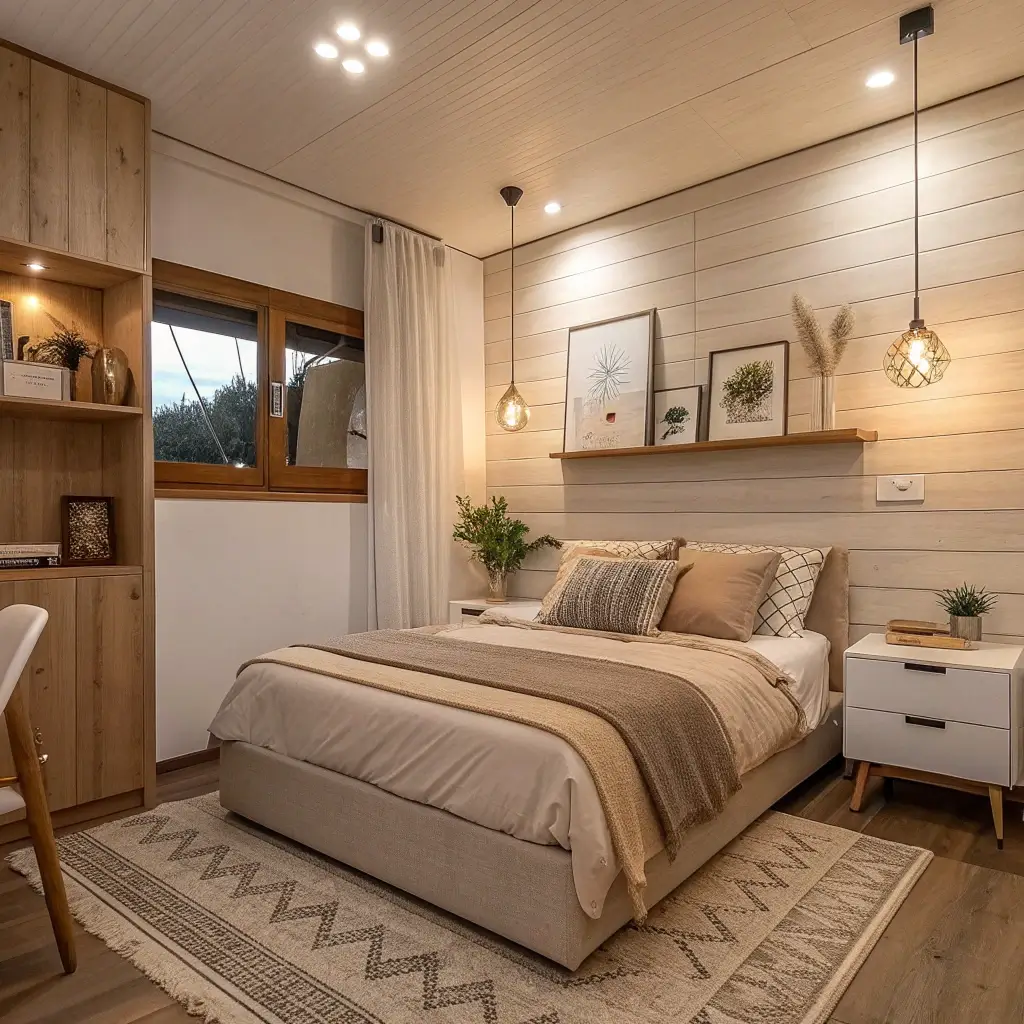
Not everyone wants a stark white bedroom, and that’s totally valid. Neutral tones offer warmth and sophistication while still maintaining that open, airy feeling essential for small spaces.
Building a Neutral Palette That Doesn’t Bore
The trick with neutrals is layering different tones and textures. A room with five shades of beige sounds boring, but a room with cream walls, taupe bedding, cognac leather accents, and natural wood furniture? That’s a vibe.
Think about neutrals as a spectrum:
- Cool neutrals: Grays, blue-grays, and silver tones
- Warm neutrals: Beiges, tans, and cream tones
- Earthy neutrals: Browns, terracotta, and olive undertones
Pick one family and stick with it. Mixing cool and warm neutrals often creates visual confusion in small spaces.
Texture is Your Best Friend
Since you’re limiting your color palette, texture becomes the star of the show. This is where you get to have fun.
Layer a chunky knit throw over linen sheets. Add a woven jute rug under a velvet bench. Mix matte ceramics with polished brass lamp fixtures. Each texture catches light differently and adds depth without adding visual chaos.
IMO, this approach creates the coziest small bedrooms because you engage multiple senses. The room doesn’t just look inviting—it feels inviting.
4. Multi-Functional Loft Bed Design
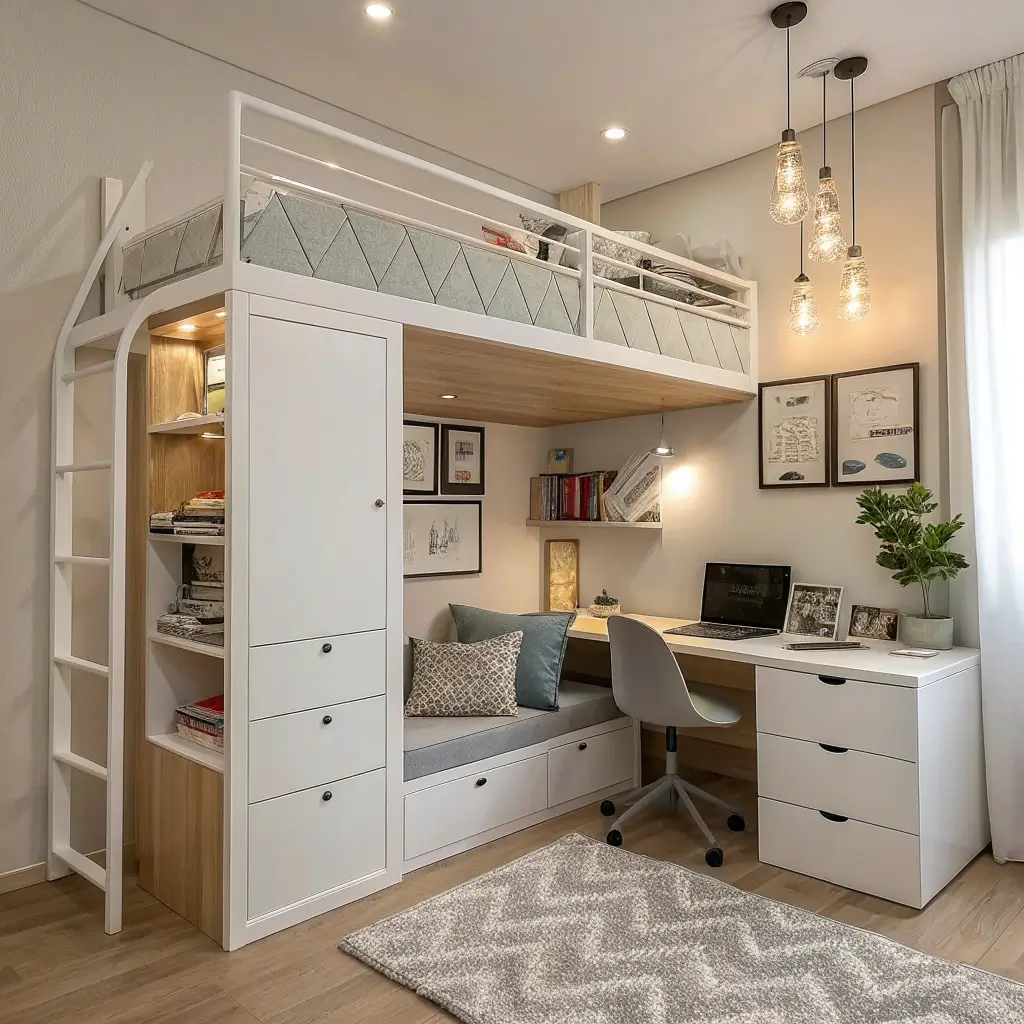
Remember when loft beds were just for kids and college dorms? Those days are over. Modern loft bed designs have evolved into legitimate adult furniture that maximizes vertical space like nothing else.
Who Should Consider a Loft Bed
If your bedroom is under 100 square feet, a loft bed might genuinely change your life. You’re essentially doubling your usable floor space by stacking functions vertically.
Loft beds work brilliantly for:
- Studio apartments where the bedroom IS the living room
- Home offices that need to double as guest rooms
- Teen bedrooms that need study and sleep zones
- Any space where you need more than a bed
Modern Loft Bed Ideas That Actually Look Good
Gone are the rickety metal frames of your dorm days. Today’s loft beds feature solid wood construction, built-in staircases with storage, and sleek powder-coated steel designs that look intentional and sophisticated.
Here’s what to put underneath:
- A compact home office with a desk, chair, and shelving
- A cozy reading nook with a small loveseat and floor lamp
- Built-in storage like a wardrobe or dresser system
- A lounge area with floor cushions and a small coffee table
The height you choose matters too. Standard loft beds leave about 5-6 feet of clearance underneath, but you can find lower “mid-loft” options that work in rooms with shorter ceilings.
5. Smart Storage Under-Bed Solutions
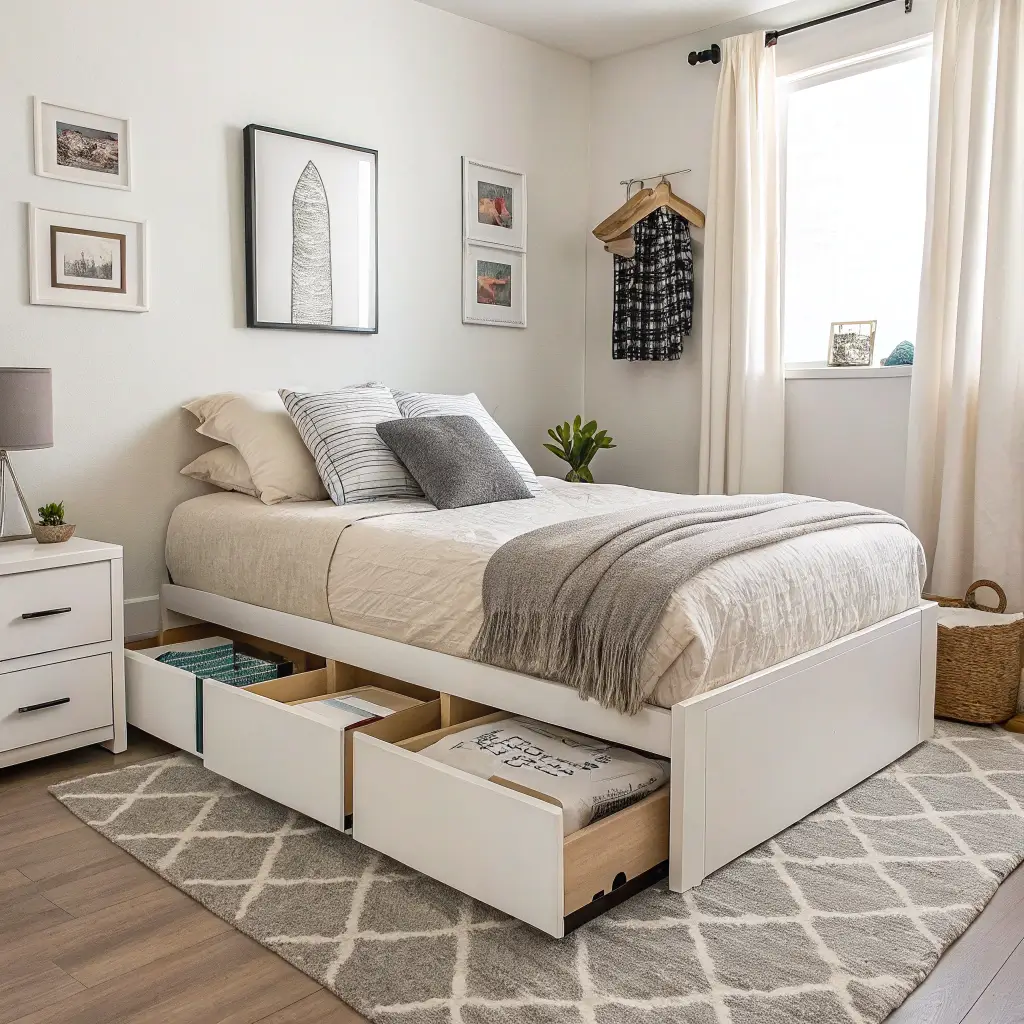
Let’s talk about that forgotten real estate under your bed. If you’re just shoving random boxes under there and hoping for the best, you’re missing a massive storage opportunity.
The Under-Bed Storage Revolution
Under-bed storage has gone from afterthought to engineered solution. Modern options include hydraulic lift mattresses, built-in drawer systems, and custom organizers that transform this dead space into prime storage territory.
The average queen bed has roughly 30 cubic feet of potential storage space underneath. That’s basically an extra closet you’re probably wasting right now.
Best Under-Bed Storage Options
Platform beds with built-in drawers offer the most seamless solution. These beds look like regular platform beds but hide two to six deep drawers on the sides. No dust, no mess, just clean accessible storage.
Other smart options include:
- Hydraulic lift beds: The entire mattress lifts to reveal a massive storage cavity—perfect for bulky items like luggage or seasonal bedding
- Rolling bins with lids: Budget-friendly and flexible, though less elegant
- Vacuum storage bags: Compress off-season clothes to maximize space
- Custom drawer inserts: Divide space for specific items like shoes or accessories
Pro tip: Measure the clearance under your bed before buying any storage solutions. Nothing’s more frustrating than containers that don’t quite fit.
6. Compact Modern Boho Bedroom
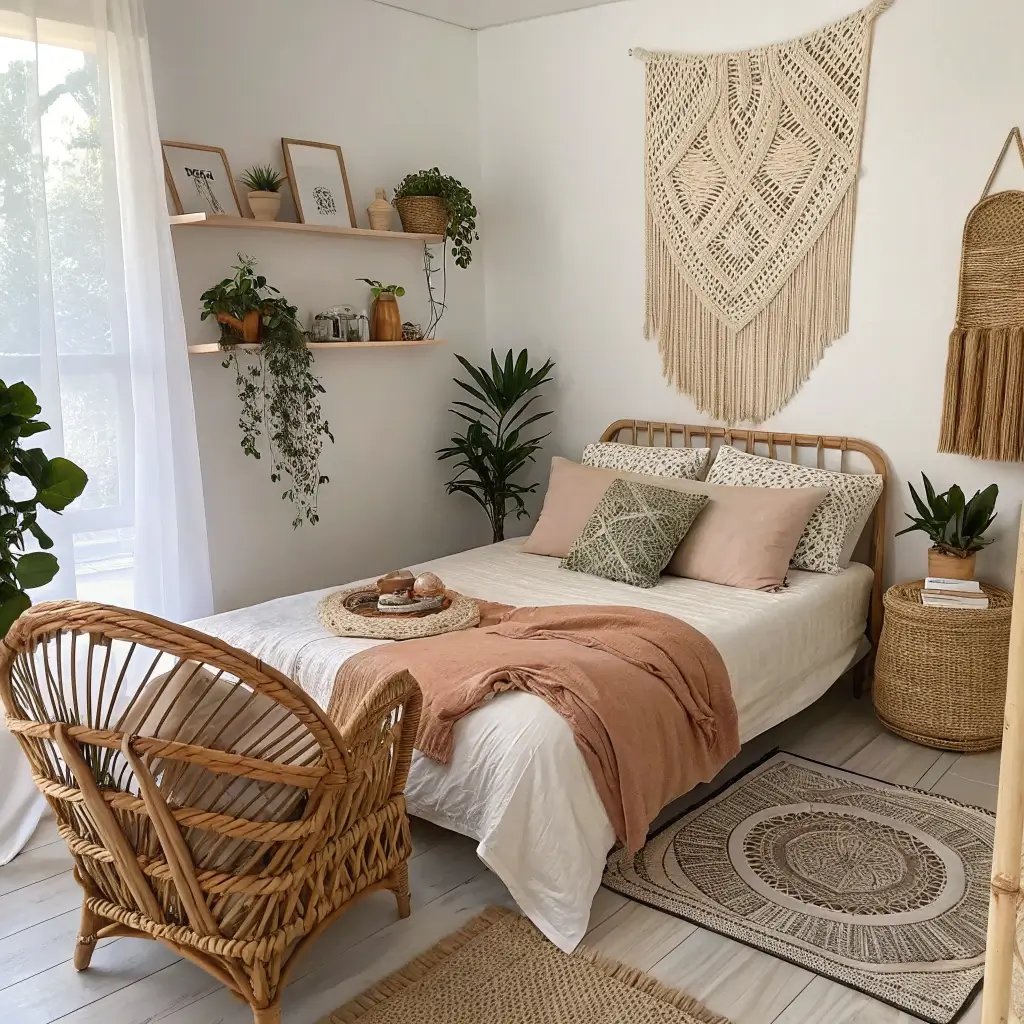
Who says small bedrooms can’t have personality? The bohemian aesthetic brings warmth, character, and collected-over-time charm that makes any space feel lived-in and loved.
Boho Without the Clutter
The challenge with boho in small spaces is obvious—traditional boho leans maximalist. We’re talking layers upon layers of textiles, plants everywhere, and eclectic collections covering every surface.
In a tiny bedroom, that approach equals chaos. Instead, aim for “boho lite”—the warmth and personality of bohemian style with disciplined restraint.
Creating Controlled Boho Vibes
Focus on these curated elements:
- One statement textile: A macramé wall hanging OR a vintage rug, not both
- Intentional plant placement: One large plant or two small ones, strategically placed
- Mixed textures in bedding: Layer a kilim throw or mud cloth pillows over simple white sheets
- Warm metallic accents: Brass or copper touches in your lamp and hardware
- Natural materials: Rattan, jute, or wicker in one or two pieces
The secret is choosing fewer pieces but making each one count. Instead of twelve small boho items scattered around, invest in two or three beautiful statement pieces that capture the essence of the style.
Also Read: 15 Inviting Modern Farmhouse Bedroom Ideas for Warm Atmosphere
7. Monochrome Small Bedroom Makeover
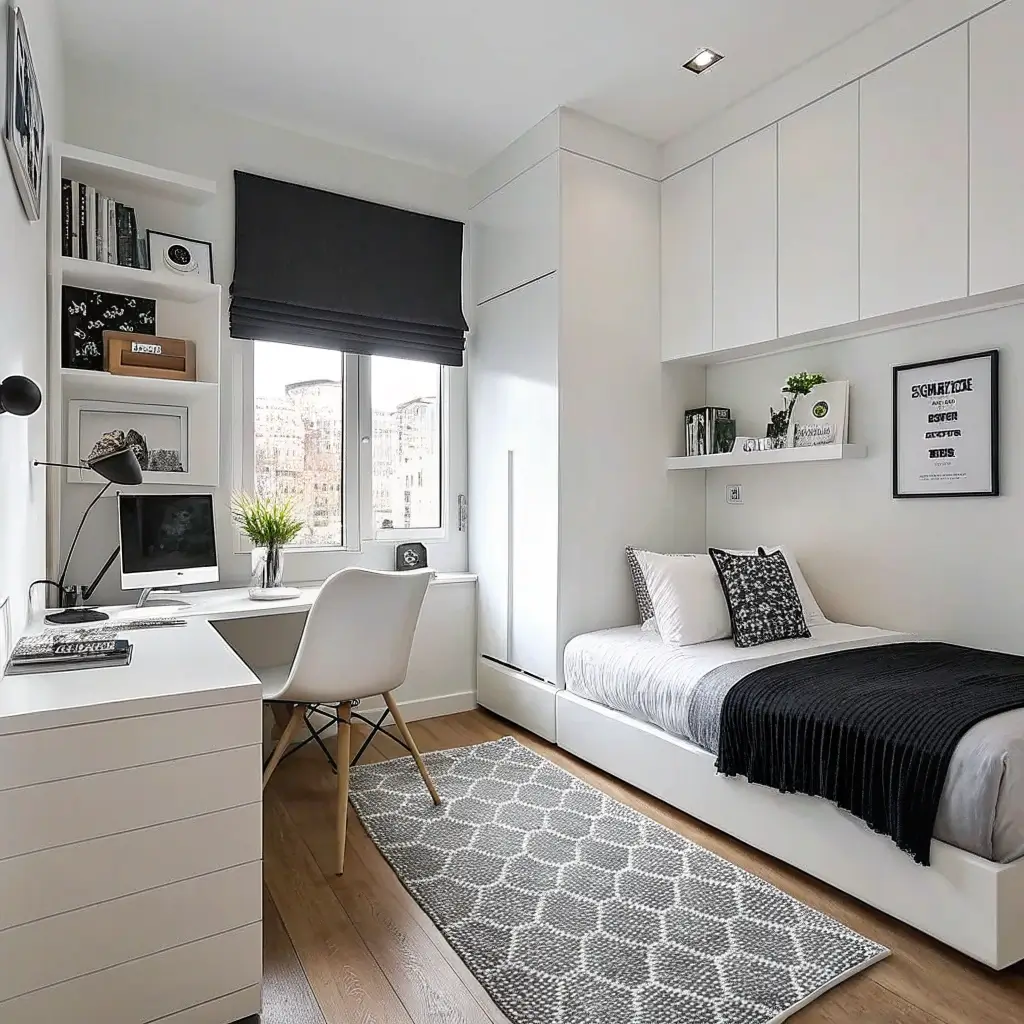
There’s something incredibly sophisticated about a bedroom that commits to one color family. Monochrome design creates visual continuity that makes small spaces feel larger and more cohesive.
Choosing Your Monochrome Palette
You’re not limited to black and white (though that’s a classic choice we’ll cover later). Consider these monochrome options:
- All-white: Crisp, clean, and maximizes light reflection
- Navy throughout: Moody, sophisticated, and surprisingly spacious-feeling
- Sage green: Calming, nature-inspired, and currently very on-trend
- Warm gray: Modern yet cozy, works with any style
- Blush pink: Soft, romantic, and not as juvenile as you might think
Executing Monochrome Without Monotony
The key is varying shades and textures within your chosen color family. A monochrome room should have depth, not flatness.
If you choose blue:
- Paint walls a soft sky blue
- Add a navy velvet headboard
- Layer bedding in chambray and denim tones
- Include throw pillows in indigo and powder blue
- Keep metallics consistent (silver or chrome complements blue)
Every element stays in the same color family while offering enough variation to keep things interesting. Your eye moves smoothly around the room without jarring transitions.
8. Space-Saving Wall-Mounted Shelves
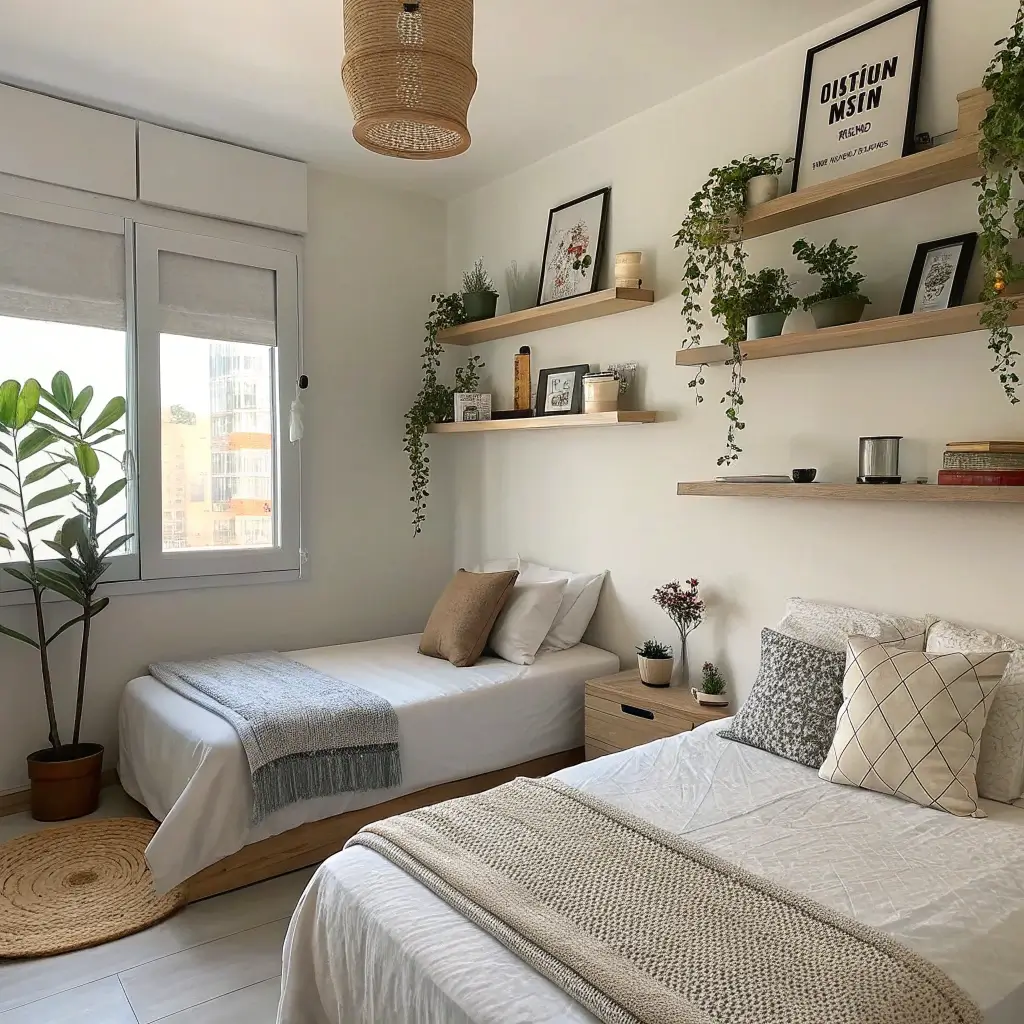
Floor space is precious. Wall space? That’s often completely underutilized. Wall-mounted shelves transform vertical real estate into functional storage while keeping your floors clear.
Strategic Shelf Placement
Not all shelf placement is created equal. Random shelves look cluttered and disorganized. Strategic shelving looks intentional and designed.
Best locations for wall shelves in small bedrooms:
- Above the headboard: Creates a pseudo-built-in look and eliminates the need for nightstands
- Flanking the bed: Replace bulky nightstands with floating shelves
- Above a desk: Perfect for office supplies and reference materials
- High along the ceiling perimeter: Use the “dead space” near the ceiling for storage and display
- Inside closets: Double your closet capacity with additional shelving
Choosing the Right Shelf Style
Floating shelves create the cleanest look since the mounting hardware stays hidden. They work in virtually any aesthetic.
Bracket shelves add visual interest and can become design elements themselves—especially with decorative metal or leather strap brackets.
Box shelves or cubbies offer organizational structure and prevent the “everything sliding around” problem.
FYI, when styling shelves in a small bedroom, less is more. A few beautiful objects look curated. Too many objects look cluttered. Aim for 30% empty space on each shelf.
9. Bright Airy Modern Minimal Bedroom
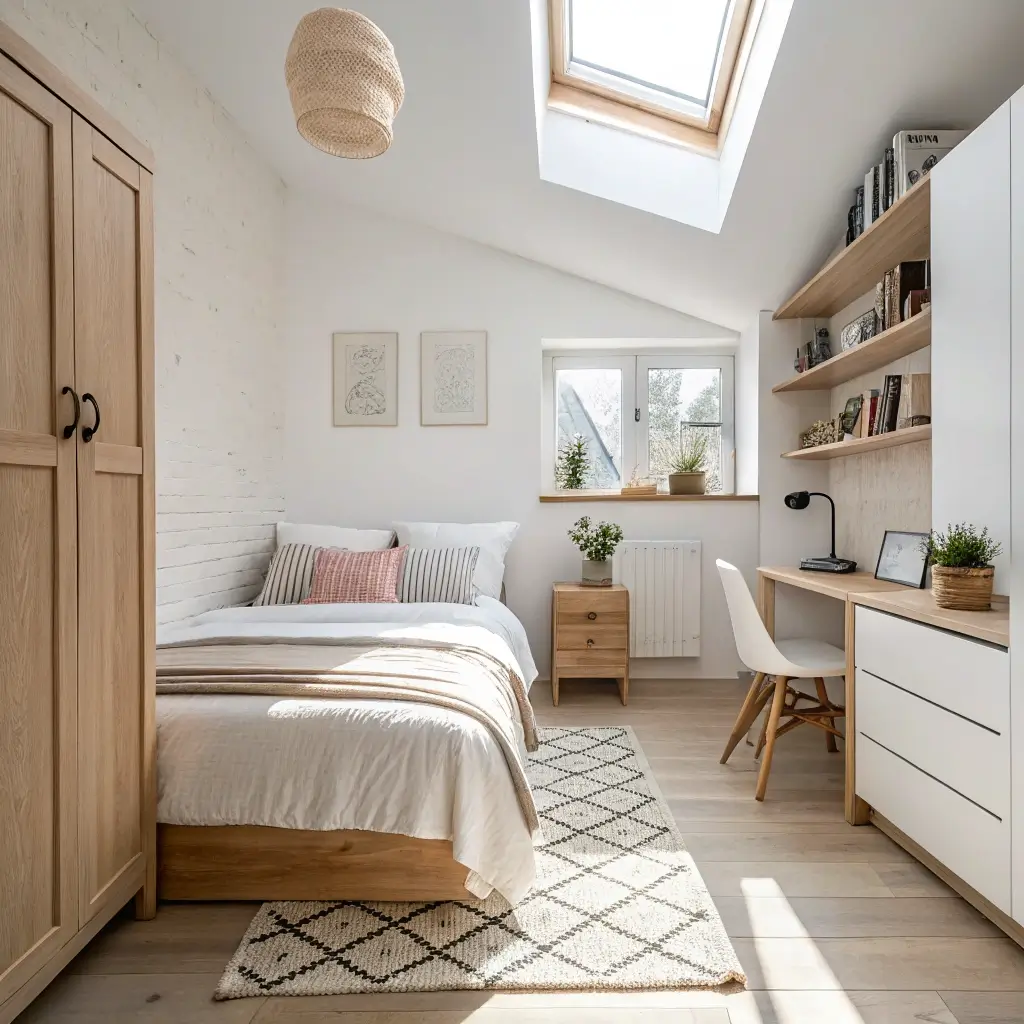
Ever walked into a room and immediately felt like you could breathe easier? That’s the power of a bright, airy bedroom design. It’s not just aesthetically pleasing—it genuinely affects how you feel in the space.
Maximizing Natural Light
Light is your most powerful tool for making a small bedroom feel larger. Every design decision should consider how to maximize, reflect, and preserve natural light.
Start with your windows:
- Ditch heavy curtains for sheer panels or sleek roller shades
- Mount curtain rods high and wide to create the illusion of larger windows
- Keep windowsills clear so light can flow unobstructed
- Clean your windows (seriously, dirty glass blocks more light than you’d think)
Design Choices That Enhance Airiness
Beyond lighting, these choices contribute to that open, breathable feeling:
- Low-profile furniture with visible legs allows light to pass underneath
- Mirrors opposite windows bounce natural light deeper into the room
- Glass or lucite accents add function without visual weight
- Cool white paint (not yellow-whites) maximizes light reflection
- Minimal window treatments keep the eye moving to the outdoors
The goal is reducing visual barriers. Every heavy piece of furniture, every dark color, every thick curtain creates a subtle psychological barrier. Remove those barriers, and even the tiniest bedroom starts to breathe.
Also Read: 10 Trendy Modern Cozy Bedroom Neutral Ideas for Modern Homes
10. Industrial Chic Small Bedroom
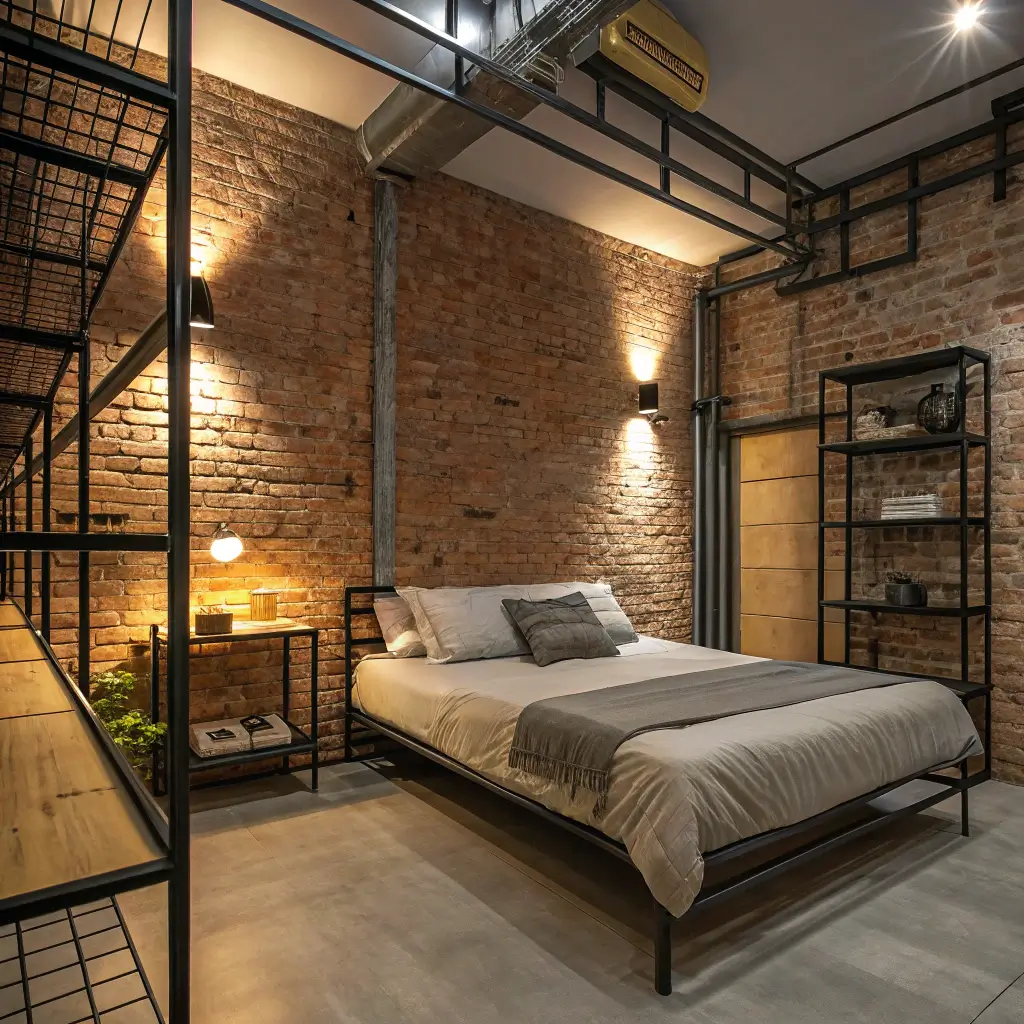
Who doesn’t love exposed brick, metal accents, and that effortlessly cool warehouse vibe? Industrial style brings urban edge to small bedrooms while actually working with space limitations rather than against them.
Why Industrial Works in Small Spaces
Industrial design naturally favors minimal, functional pieces over ornate decorative items. The aesthetic prioritizes purpose over prettiness, which aligns perfectly with small space living.
Industrial furniture tends to feature slim metal frames, open shelving, and multipurpose functionality. A metal pipe clothing rack, for example, provides storage while serving as a design element.
Key Industrial Elements for Bedrooms
Metals: Black iron, brushed steel, and copper accents define the industrial look. Incorporate these through bed frames, lighting, and hardware.
Raw materials: Exposed brick (or brick wallpaper), concrete elements, reclaimed wood, and unfinished surfaces add authenticity.
Edison bulbs: These warm, vintage-style bulbs provide that quintessential industrial glow.
Functional pieces: Wire baskets, metal lockers repurposed as nightstands, and factory-style pendant lights emphasize the utilitarian aesthetic.
Leather accents: A leather headboard, bench, or even leather drawer pulls add warmth to balance the cooler metal elements.
The trick is balancing industrial edges with enough soft elements (bedding, rugs, curtains) to keep the room comfortable for sleeping. All hard surfaces might look cool, but they won’t feel cozy. 🙂
11. Modern Pastel Tiny Bedroom Retreat
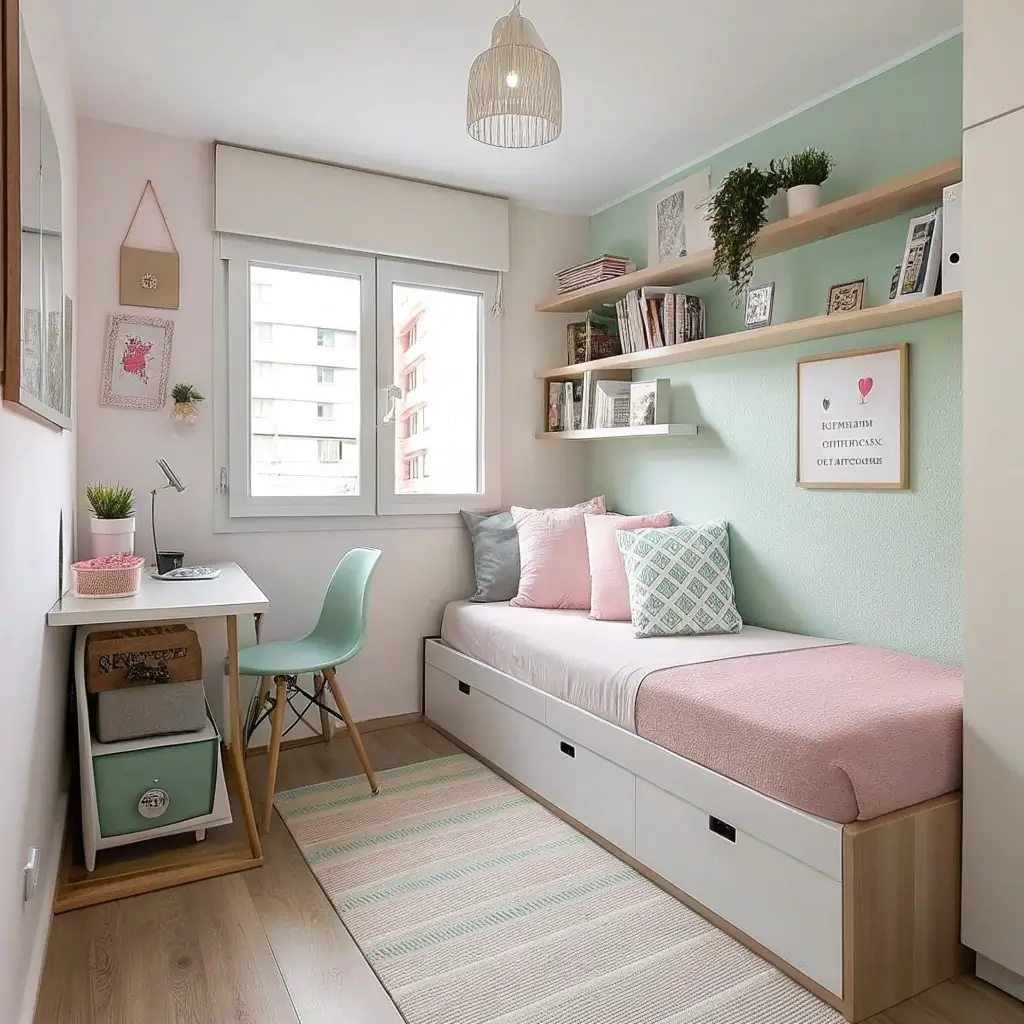
Pastels aren’t just for nurseries. Done right, a pastel bedroom creates a soothing retreat that feels fresh, modern, and surprisingly sophisticated.
Choosing Grown-Up Pastels
The key is selecting muted, dusty pastels rather than bright candy colors. Think sage rather than mint. Dusty rose rather than bubblegum pink. Slate blue rather than baby blue.
These softer versions of pastels feel mature and intentional while still providing color and personality.
Pastel Combinations That Work
Complementary pastels create dynamic energy:
- Dusty rose + soft sage
- Lavender + pale yellow
- Blush + powder blue
Tonal pastels create cohesion:
- Varying shades of pink from blush to mauve
- Blues from powder to periwinkle
- Greens from mint to sage
Ground your pastels with neutral anchors like white bedding, natural wood furniture, or black accents. Without these grounding elements, pastel rooms can feel too sweet or unfinished.
For a truly modern approach, pair pastels with unexpected materials like concrete, brass, or marble. The contrast between delicate colors and substantial materials creates sophistication.
12. Mirrored Furniture to Expand Space
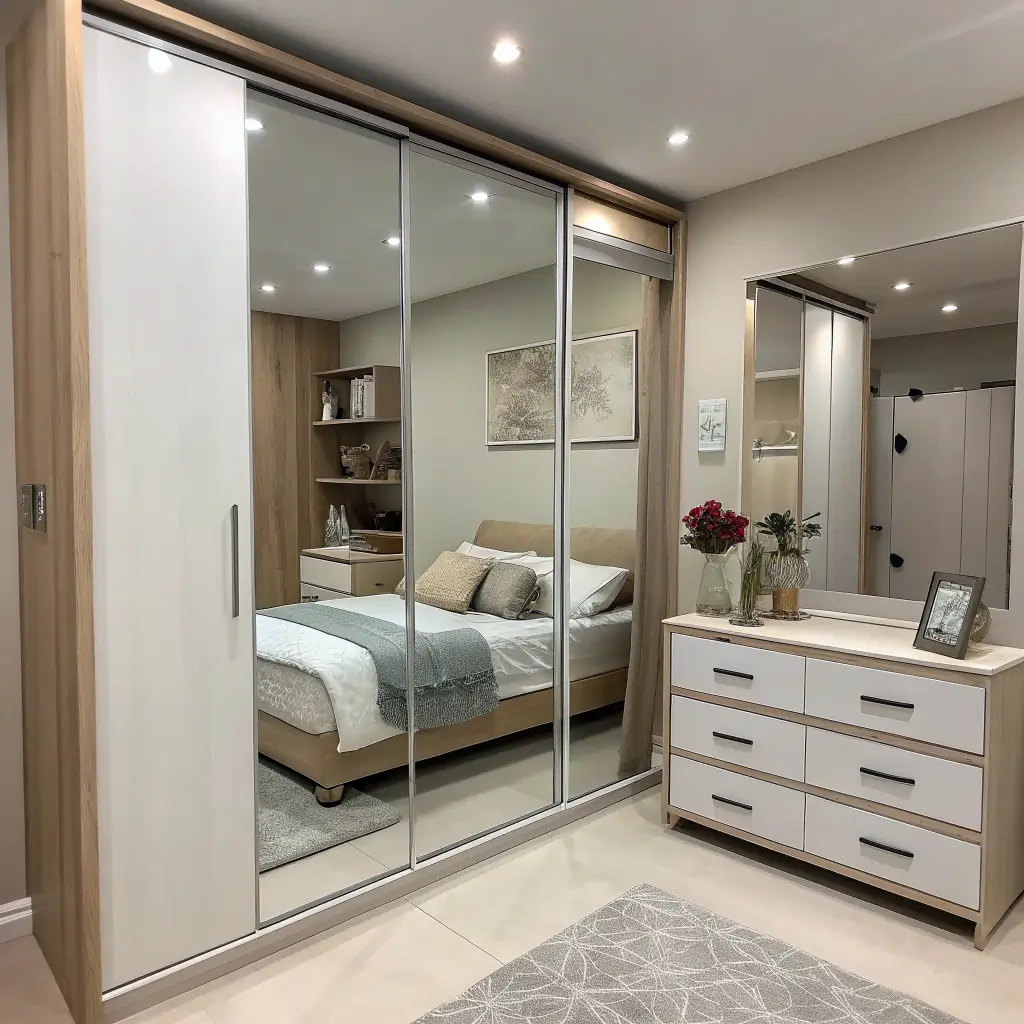
This is one of the oldest tricks in small space design, and there’s a reason designers keep returning to it: mirrors genuinely make rooms feel larger.
The Science of Mirrors in Small Rooms
Mirrors work their magic in two ways. First, they reflect light, bouncing natural and artificial light throughout the room. Second, they create visual depth by reflecting the space back at itself, essentially doubling what your eye perceives.
Strategic mirror placement can make a 10×10 room feel noticeably more spacious.
Beyond Wall Mirrors: Mirrored Furniture Options
Wall mirrors are great, but mirrored furniture takes the effect further by integrating reflective surfaces throughout the room:
- Mirrored nightstands reflect light at bedside level and add glamour
- Mirrored dresser tops or full mirrored dressers multiply storage areas visually
- Mirrored closet doors dramatically expand perceived space
- Mirrored headboards create drama while opening up the bed wall
- Mirrored trays and accessories add smaller pops of reflection
A word of caution: mirrored furniture requires commitment to tidiness. Every smudge and fingerprint shows. If you’re not into regular cleaning, perhaps limit mirrors to one statement piece rather than throughout the room.
Also Read: 10 Dreamy Modern Organic Bedroom Ideas to Rejuvenate Your Room
13. Compact Corner Workspace Integration
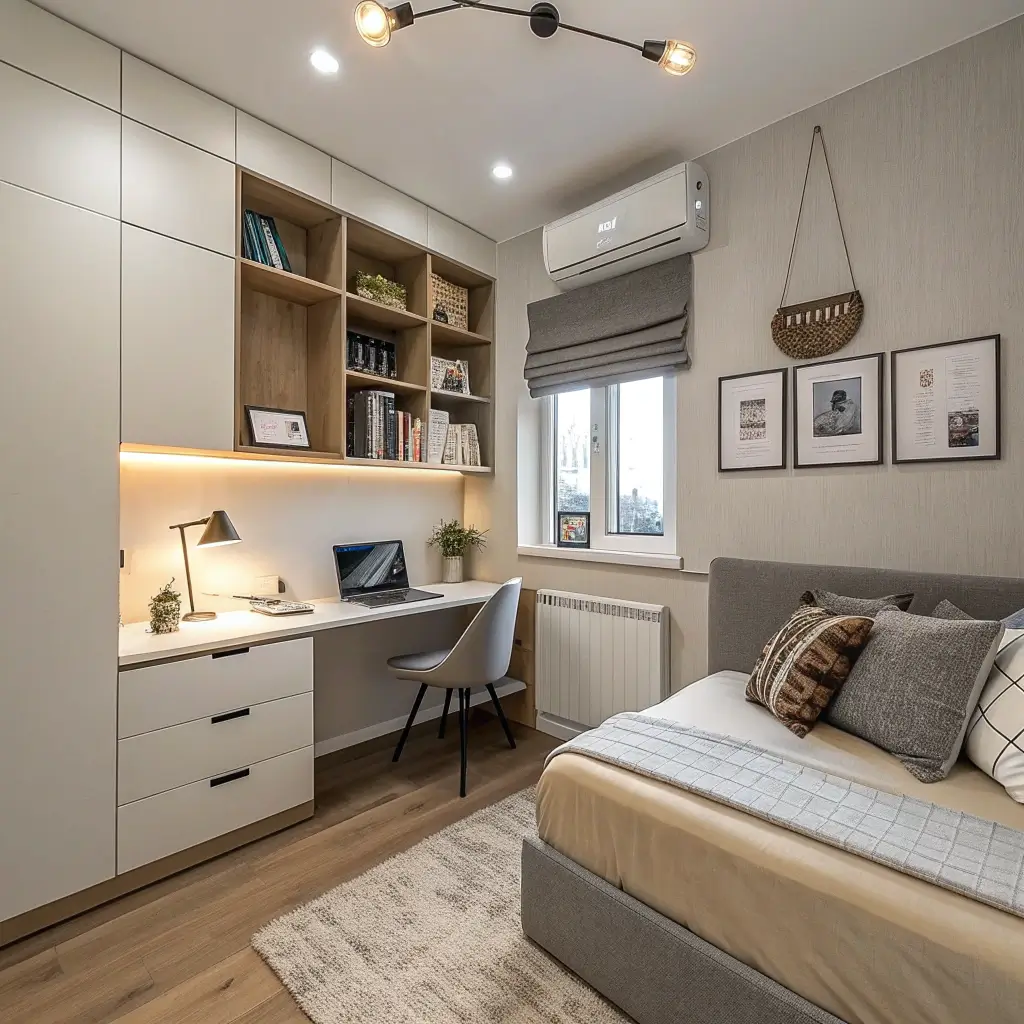
Working from home is apparently never going away, and many of us need to squeeze a functional workspace into our bedrooms. The corner desk setup makes this possible without sacrificing your sanity or style.
Why Corners Work for Small Bedroom Offices
Corners are typically wasted space in bedrooms. They’re too awkward for furniture placement and often become dumping grounds for random items.
A corner workspace transforms this dead zone into productive real estate while keeping the rest of the room dedicated to rest and relaxation.
Creating an Effective Corner Office
The furniture: Look for corner desks specifically designed to fit into 90-degree angles. These L-shaped or triangle-shaped desks maximize workspace while minimizing footprint.
Wall-mounted options: Floating corner desks attached to the wall take up zero floor space and can fold up when not in use.
Essential elements for a functional corner office:
- Adequate lighting (add a clip-on desk lamp if needed)
- Vertical storage (shelves above the desk)
- Cable management solutions
- A comfortable chair that tucks completely under the desk
- Visual separation from the bed (even a small curtain helps)
The psychological trick: Face your desk toward the corner rather than into the room. This reduces distractions and mentally separates work time from sleep time.
Bringing It All Together
Small bedroom living doesn’t mean compromising on style, comfort, or functionality. It means getting creative, thinking vertically, and being intentional about every single item that earns a spot in your space.
Whether you’re drawn to the clean simplicity of Scandinavian design, the urban edge of industrial style, or the playful personality of modern boho, there’s a small bedroom solution that fits your aesthetic and your square footage.
The most important takeaways:
- Edit ruthlessly: If it doesn’t serve a purpose or bring you joy, it doesn’t deserve space
- Think vertically: Your walls and ceiling are underutilized storage goldmines
- Light is everything: Maximize natural light and choose reflective surfaces
- Quality over quantity: One perfect piece beats three mediocre ones
- Multipurpose is your mantra: Every piece should ideally serve more than one function
I’ve lived in my share of tiny bedrooms, and I can honestly say the smallest one—once properly designed—ended up being my favorite. There’s something incredibly satisfying about a space where everything has its place and every design choice is intentional.
Now go measure your bedroom, pick your favorite ideas from this list, and start transforming your small space into something that actually works for you. Your cramped bedroom days are officially over. 😉