
15 Clever Small Bathroom Interior Ideas to Save Space
Let me guess—you’re staring at your tiny bathroom right now, wondering how on earth you’re supposed to make this cramped space feel like anything other than a glorified closet. Trust me, I’ve been there.
When I moved into my first apartment, my bathroom was so small I could practically wash my hands while sitting on the toilet. Not exactly the spa-like retreat I’d dreamed about, right?
But here’s the thing: small bathrooms don’t have to feel like punishment. With the right tricks, clever design choices, and a little creativity, you can transform even the most claustrophobic bathroom into a space that actually feels good to spend time in. I’ve spent years experimenting, making mistakes (so many mistakes), and finally figuring out what actually works.
So grab your measuring tape and maybe a cup of coffee, because we’re about to explore 15 genius ideas that’ll make your small bathroom work harder than it ever has before. These aren’t just Pinterest-pretty suggestions—they’re practical, tested strategies that real people use in real tiny bathrooms.
1. Minimalist Small Bathroom Makeover
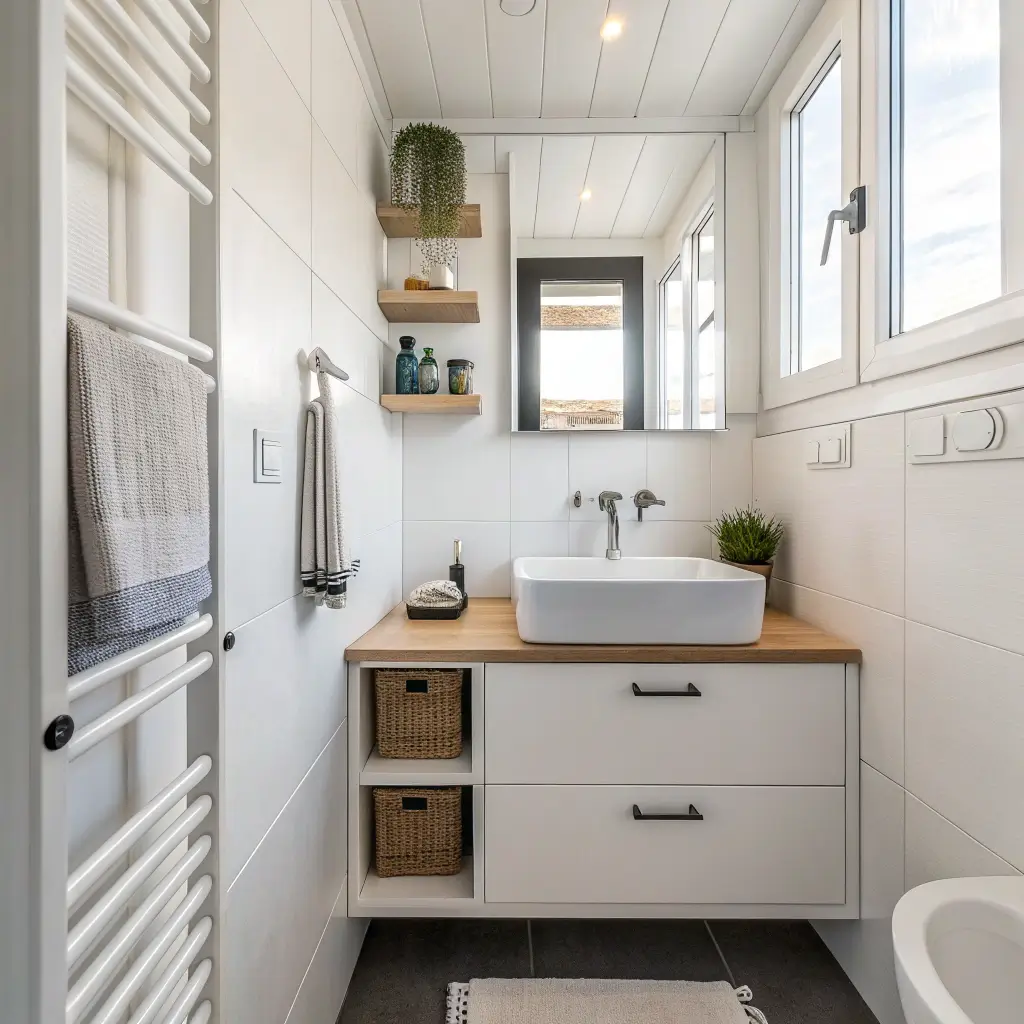
Ever walked into a cluttered bathroom and immediately felt your stress levels spike? There’s a reason minimalism has taken the design world by storm, and it works particularly well in small spaces.
Why Less Really Is More
The minimalist approach strips away everything unnecessary, leaving only what you truly need. In a small bathroom, this philosophy becomes your best friend. Every item you remove creates visual breathing room, making the space feel larger than its actual square footage suggests.
I remember when I finally committed to minimalism in my bathroom. I ruthlessly edited my products, keeping only what I used daily. Those seventeen half-empty shampoo bottles? Gone. The collection of hotel toiletries I’d been hoarding since 2015? Donated. The result was almost shocking—my bathroom looked twice as big.
Key Elements of a Minimalist Bathroom
When creating your minimalist sanctuary, focus on these essentials:
- Clean lines everywhere—choose fixtures with simple, geometric shapes
- Limited color palette—stick to two or three colors maximum
- Hidden storage—keep surfaces completely clear
- Quality over quantity—invest in fewer, better items
- Negative space—embrace empty walls and surfaces
The beauty of minimalism lies in its honesty. You can’t fake it. Either you commit to owning less, or the cluttered reality reveals itself immediately. But once you make the leap, maintaining a tidy bathroom becomes almost effortless.
2. Tiny Bathroom Storage Hacks
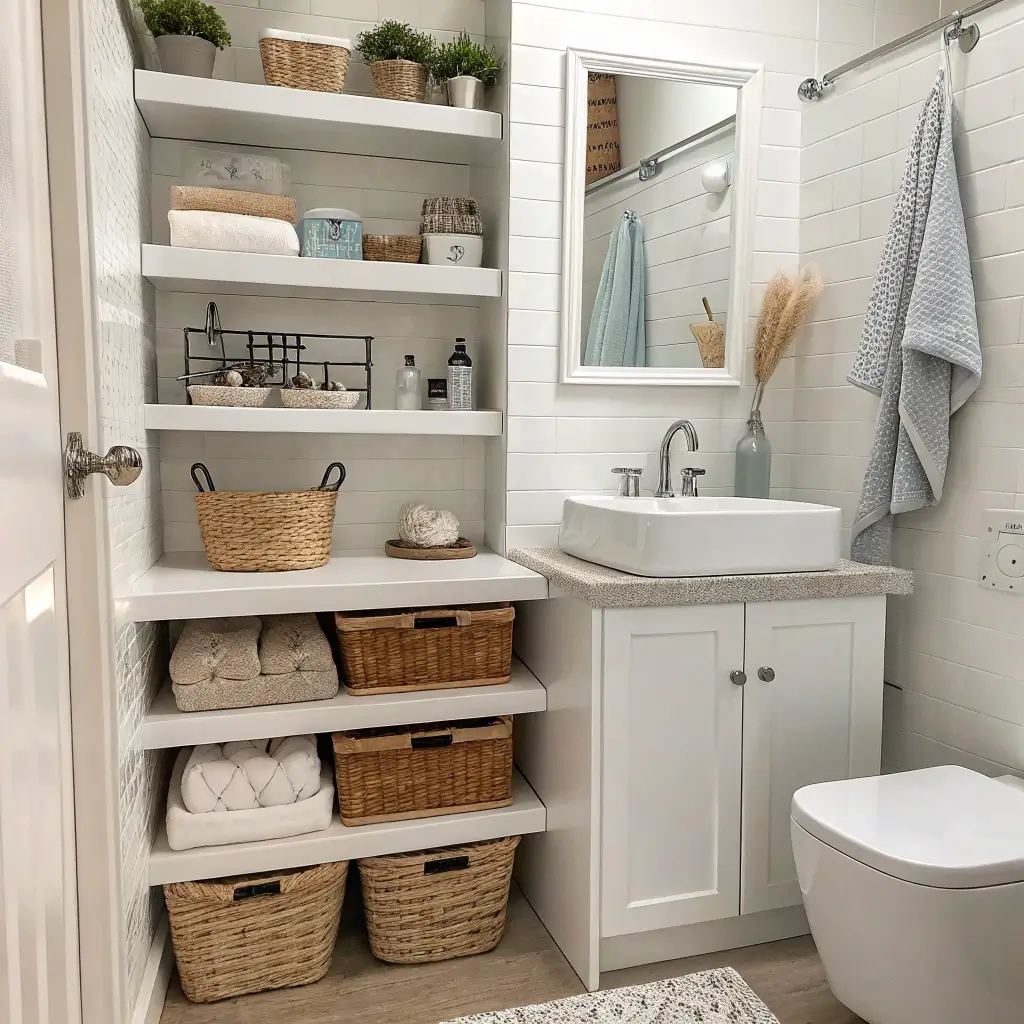
Storage in a small bathroom feels like trying to solve an impossible puzzle. Where exactly are you supposed to put all your stuff when there’s barely room to turn around?
Think Vertical, Not Horizontal
The secret weapon for tiny bathroom storage? Your walls are prime real estate. Stop thinking about floor space and start looking up. Tall, narrow shelving units take up minimal floor space while providing tons of storage. Over-the-toilet shelving units are practically mandatory in small bathrooms—that dead space above your toilet is just begging to be utilized.
I installed floating shelves above my toilet last year, and honestly, it changed everything. Suddenly I had a place for extra toilet paper, a small plant, and those fancy hand towels I only bring out when guests come over.
Hidden Storage Solutions That Actually Work
Consider these clever storage hacks:
- Medicine cabinet with mirror—double-duty functionality at its finest
- Recessed shelving in shower walls—built-in niches save tons of space
- Over-door organizers—perfect for hair tools and products
- Magnetic strips—mount them inside cabinet doors for bobby pins and tweezers
- Tension rod under sink—hang spray bottles to free up cabinet floor space
- Tiered organizers—maximize every inch of cabinet depth
The key here is finding storage that doesn’t announce its presence. The best storage solutions in small bathrooms are the ones you barely notice.
3. Bright and Airy Small Bathroom Designs
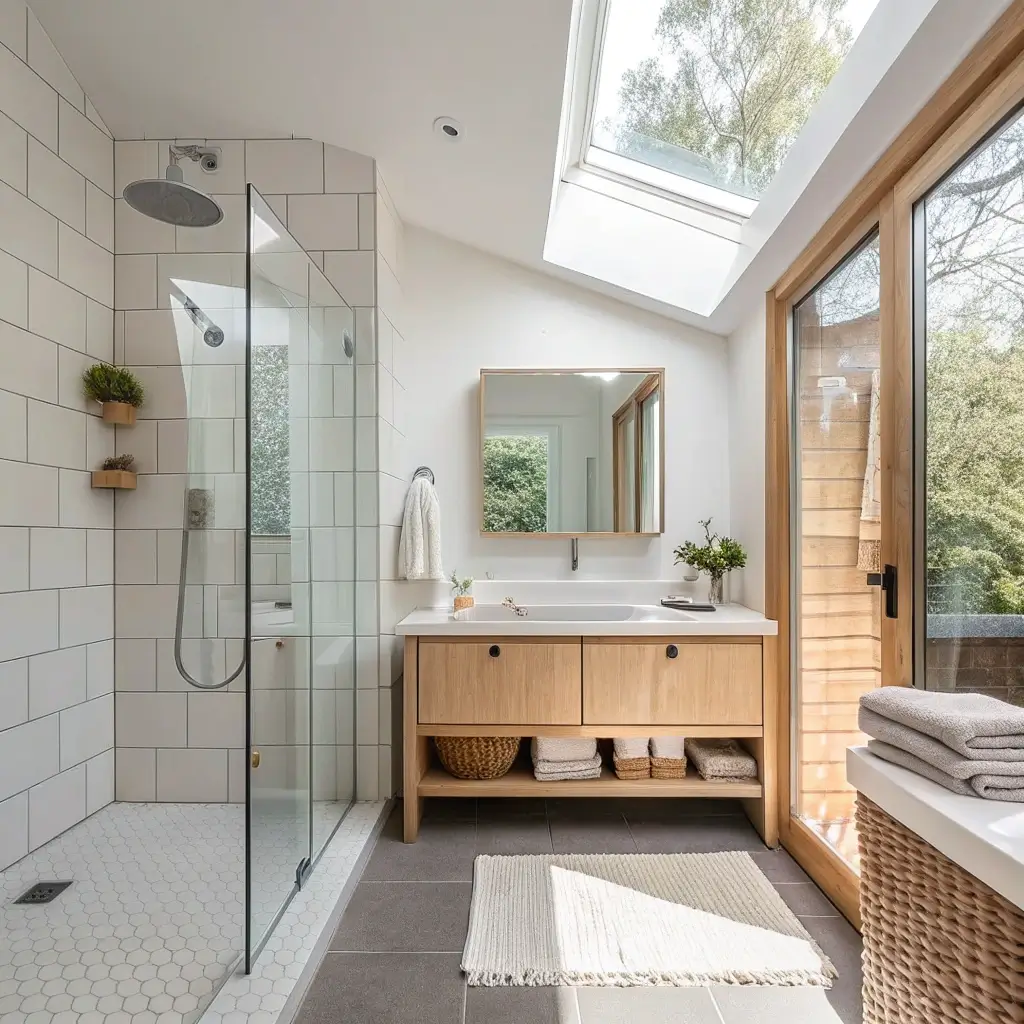
Nothing makes a small bathroom feel more oppressive than poor lighting and dark colors. If your bathroom feels like a cave, we need to talk about brightening things up.
Natural Light Is Your Best Friend
If you’re lucky enough to have a window in your bathroom, maximize it. Skip the heavy curtains and opt for frosted glass or sheer window treatments that let light pour in while maintaining privacy. Natural light makes any space feel larger and more welcoming.
No window? No problem. You can fake the effect of natural light with the right artificial lighting choices. Cool white LED bulbs mimic daylight beautifully and make your bathroom feel fresh rather than dingy.
Creating the Illusion of Space
Here’s how to make your bathroom feel bright and spacious:
- White or light-colored walls—they reflect light and visually expand the room
- Large mirrors—they bounce light around and create depth
- Glass shower doors instead of curtains—clear glass doesn’t break up the visual space
- Glossy tiles—reflective surfaces amplify available light
- Avoid visual clutter—busy patterns can make spaces feel smaller
I painted my dark gray bathroom walls white last summer, and the transformation was ridiculous. Same square footage, completely different vibe. It went from feeling like a basement to feeling like an actual room where humans might want to spend time.
4. Budget-Friendly Small Bathroom Ideas
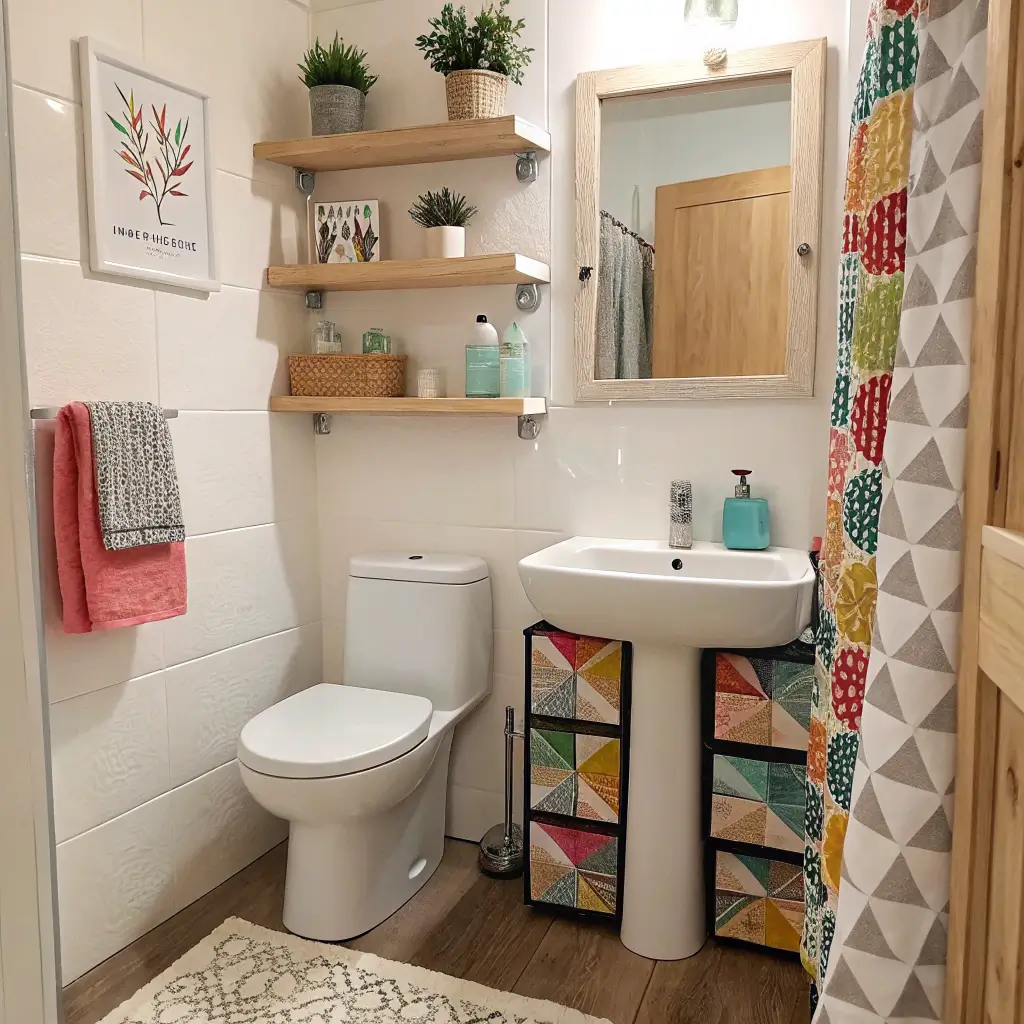
Let’s be real—not everyone has thousands of dollars to throw at a bathroom renovation. Good news: you don’t need a huge budget to create a beautiful small bathroom.
High-Impact, Low-Cost Changes
The smartest budget renovators focus on changes that deliver maximum visual impact for minimum investment. Painting your walls or cabinets costs almost nothing compared to replacing fixtures, yet it completely transforms the look of your space.
FYI, changing out hardware is another budget-friendly win. New cabinet pulls, a modern faucet, or updated towel bars can make your bathroom look refreshed without a major overhaul. I spent about fifty bucks on new brushed gold hardware for my bathroom, and suddenly the whole space looked intentionally designed rather than builder-basic.
Budget Renovation Priorities
Focus your limited funds on these high-impact areas:
- Paint—walls, cabinets, even tile can be painted
- Hardware—knobs, pulls, and fixtures
- Lighting—swap dated fixtures for modern options
- Textiles—new towels, shower curtain, and bath mat
- Organization—better storage solutions often cost less than new furniture
- Accessories—soap dispensers, toothbrush holders, and small decorative items
The secret is working with what you have rather than starting from scratch. A strategic refresh almost always beats a complete gut renovation when you’re watching your wallet.
5. Modern Compact Bathroom Layouts
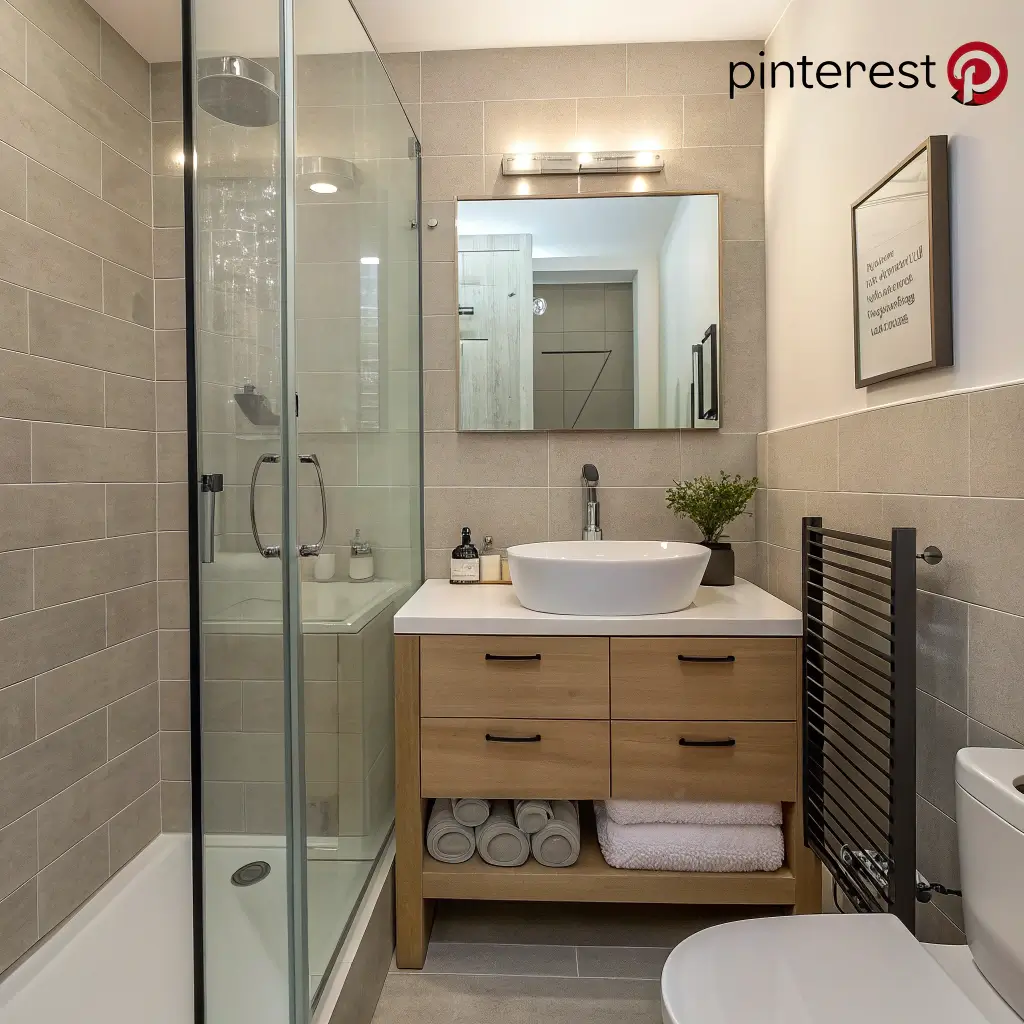
The layout of your small bathroom might be the single most important factor in how functional it feels. A smart layout maximizes every inch, while a poor one wastes precious space.
Rethinking Traditional Arrangements
Who says the toilet has to go where the builder originally put it? Okay, plumbing makes relocation expensive, but sometimes even small adjustments to your layout make a huge difference. Consider whether your current arrangement actually serves you or just follows convention.
Modern compact layouts prioritize flow and accessibility. You should be able to move through your bathroom without bumping into things or feeling cramped. If you’re constantly banging your elbow on the vanity or can’t fully open a drawer, your layout needs work.
Layout Strategies for Tiny Spaces
Consider these modern layout approaches:
- Corner sinks—they free up floor space and improve traffic flow
- Wall-mounted toilets—they create visual space beneath and are easier to clean
- Pocket doors or barn doors—they don’t require swing clearance like traditional doors
- Floating vanities—visible floor space makes rooms feel larger
- Linear arrangements—placing fixtures along one wall opens up the opposite side
I’ve seen bathrooms smaller than walk-in closets feel surprisingly spacious simply because someone thought carefully about where things went. Layout matters more than square footage in many cases.
6. Scandinavian Small Bathroom Inspiration

There’s a reason Scandinavian design dominates small space inspiration. People in Nordic countries have mastered the art of making compact homes feel warm, functional, and beautiful.
The Scandinavian Approach
Scandinavian design combines minimalism with warmth—a tricky balance that works incredibly well in small bathrooms. The style emphasizes functionality without sacrificing coziness, using natural materials and thoughtful design choices to create spaces that feel intentional and inviting.
The color palette typically stays neutral, featuring whites, grays, and natural wood tones. This simplicity allows the quality of materials and craftsmanship to shine through. Nothing feels cheap or frenetic in a well-designed Scandinavian bathroom.
Key Scandinavian Elements
To achieve this aesthetic, incorporate these elements:
- Light wood accents—shelving, accessories, or vanity details
- White walls with texture—subway tile, beadboard, or painted brick
- Black fixtures—for contrast and visual interest
- Live plants—bringing nature indoors is essential
- Woven textures—baskets, bath mats, and textile storage
- Simple, functional hardware—nothing ornate or fussy
IMO, Scandinavian style works better in small bathrooms than almost any other design approach. It’s practical, it’s beautiful, and it doesn’t require buying a bunch of stuff you don’t need.
Also Read: 15 Fabulous Small Bathroom Ideas and Elegant Design Tips
7. Space-Saving Vanity Ideas for Small Bathrooms
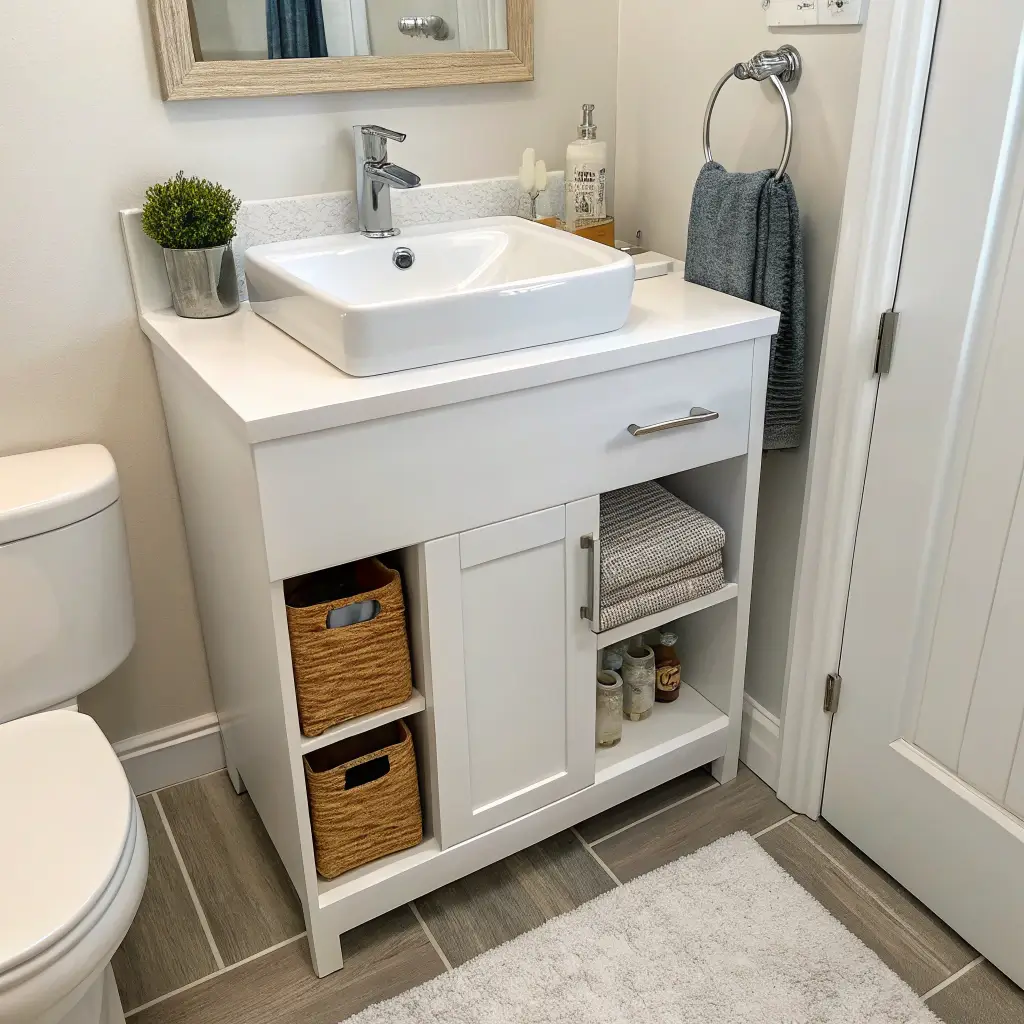
The vanity typically dominates bathroom real estate, making it a critical piece to get right in a small space. Choose wisely, and your vanity becomes a functional powerhouse. Choose poorly, and it eats up half your bathroom.
Rethinking the Traditional Vanity
Standard vanities often waste space. Those big cabinet boxes take up floor area that could remain open and make your bathroom feel larger. Floating vanities change the game completely—by mounting the vanity to the wall, you free up visible floor space beneath it, creating the illusion of more room.
I switched to a wall-mounted vanity two years ago, and the difference surprised me. Suddenly my tiny bathroom had breathing room. Plus, cleaning the floor became infinitely easier without cabinet legs in the way.
Vanity Options for Compact Spaces
Consider these space-saving vanity solutions:
- Wall-mounted floating vanities—available in surprisingly small sizes
- Corner vanities—utilize often-wasted corner space
- Pedestal sinks with shelf—minimalist footprint with some storage
- Narrow console sinks—open bases keep the look airy
- Custom built-ins—sometimes the only way to maximize weird layouts
- Single-basin designs—unless you truly need two sinks, don’t waste the space
The vanity sets the tone for your entire bathroom, so don’t rush this decision. Measure carefully, consider your actual storage needs, and choose something that won’t overwhelm the space.
8. Luxury Small Bathroom Designs on a Budget
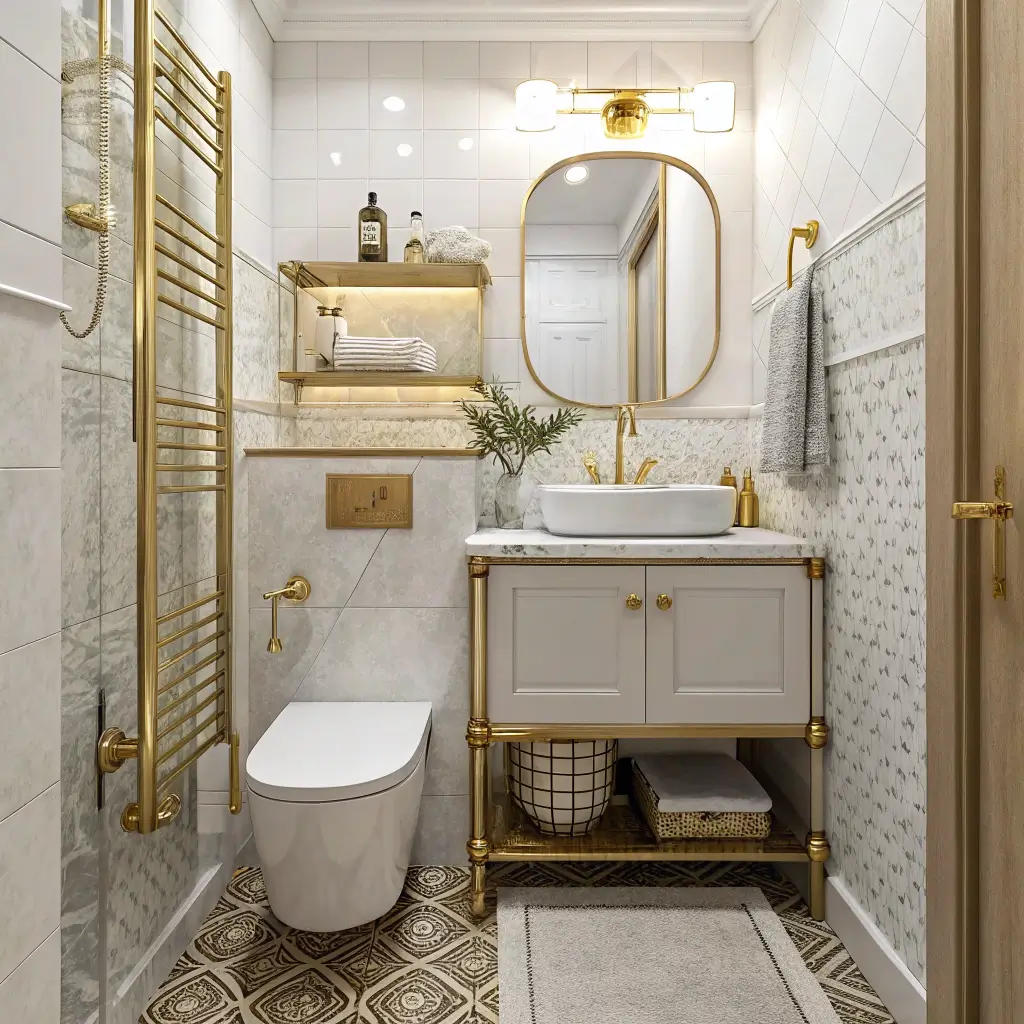
Who says luxury requires a massive budget or a massive bathroom? Some of the most stunning bathrooms I’ve seen were tiny spaces designed with clever attention to detail and strategic splurges.
Where to Invest and Where to Save
The secret to affordable luxury lies in knowing where your money makes the biggest impact. Invest in what you touch and see daily—faucets, hardware, towels—and save on what hides behind walls or under cabinets.
A beautiful faucet costs the same whether your bathroom is 40 square feet or 400 square feet. That fancy rainfall showerhead you’ve been eyeing? It works identically in a compact shower. Small bathrooms actually make luxury more affordable because you need less of everything.
Budget Luxury Strategies
Create a high-end look without the high-end price:
- Statement lighting—one beautiful fixture elevates the whole room
- Quality towels—hotel-worthy textiles feel luxurious daily
- Upgraded fixtures—faucets and hardware make a huge visual impact
- Real plants—they add life and sophistication
- Cohesive design—a planned aesthetic looks more expensive than random choices
- Spa-like accessories—a nice soap dispenser costs little but adds polish
I spent most of my bathroom budget on a gorgeous matte black faucet and matching hardware. Everything else came from budget stores or stayed from the previous design. Guests always compliment my “expensive-looking” bathroom, and I just smile and nod. 🙂
9. Small Bathroom Tile Patterns That Wow

Tile choices can make or break a small bathroom design. The wrong pattern overwhelms the space, while the right one creates visual interest without chaos.
Scale Matters More Than You Think
Conventional wisdom says small tiles work best in small spaces. I’m here to tell you that’s not always true. Large-format tiles can actually make small bathrooms feel bigger because fewer grout lines means less visual interruption. The space reads as more continuous and open.
That said, small tiles work beautifully in certain applications—penny rounds in a shower niche, for example, or herringbone patterns on a feature wall. The key is intentionality rather than defaulting to what seems safe.
Tile Patterns That Work in Compact Spaces
Consider these tile strategies:
- Large-format tiles with minimal grout lines—creates seamless, expansive feeling
- Vertical herringbone—draws the eye upward, adding height
- Continuous floor-to-wall tile—eliminates visual breaks
- Light-colored tiles with light grout—maintains bright, open appearance
- Bold tile in limited areas—make a statement without overwhelming
- Textured white tiles—adds interest while keeping things light
The shower wall is often the perfect place to take a risk with pattern or color. Because it’s contained within the shower, even a bold choice won’t dominate the entire bathroom.
Also Read: 15 Stylish Dark Wallpaper Bathroom Ideas and Chic Transformations
10. Clever Mirror and Lighting Ideas for Tiny Bathrooms
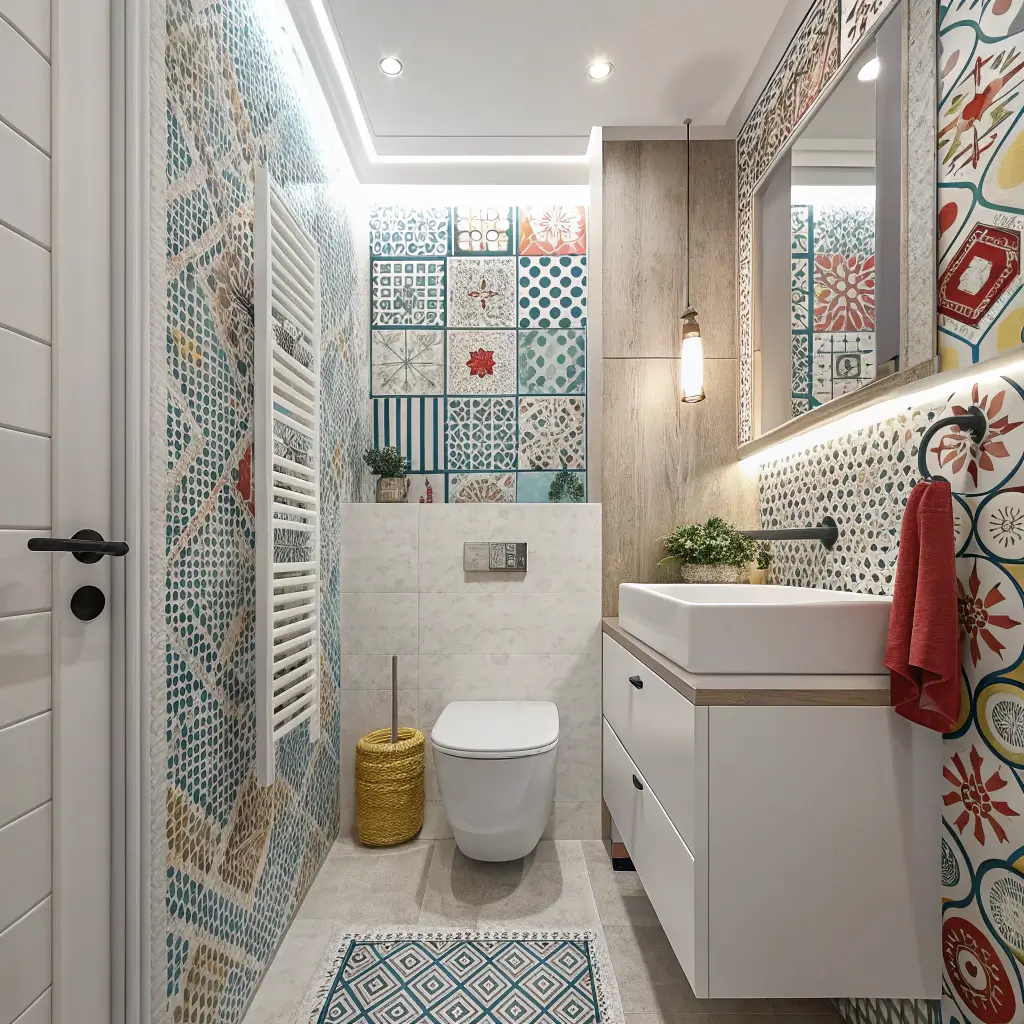
Mirrors and lighting work together to define how spacious your bathroom feels. Get them right, and your tiny bathroom suddenly seems much larger. Get them wrong, and even a decent-sized space feels cramped.
Maximizing Mirror Magic
Mirrors are basically magic in small bathrooms. They reflect light, create depth, and trick the eye into perceiving more space than actually exists. The larger the mirror, the more dramatic the effect.
I replaced my small medicine cabinet mirror with a full-width mirror that spans the entire vanity wall. The difference was honestly shocking. My bathroom looks nearly twice as wide now, and the additional light reflection makes the whole space feel brighter.
Strategic Lighting Choices
Layer your lighting for the best results:
- Ambient lighting—overall room illumination from ceiling fixtures
- Task lighting—focused light at the vanity for grooming
- Accent lighting—LED strips under floating vanities or behind mirrors
- Natural light maximization—avoid blocking windows
- Backlit mirrors—provide even, flattering task lighting without extra fixtures
- Dimmer switches—control mood and create spa-like atmosphere when desired
Avoid relying on a single overhead light source—it creates harsh shadows and unflattering reflections. Side lighting at the vanity provides the most even, flattering illumination for daily tasks like applying makeup or shaving.
11. Small Bathroom Color Schemes That Expand Space

Color psychology plays a huge role in how we perceive space. The right color scheme can visually expand your bathroom, while the wrong choices make it feel like the walls are closing in.
The Case for Light Colors
Light colors reflect light and recede visually, making spaces feel larger and more open. White remains the classic choice for small bathrooms for good reason—it maximizes the sense of space and creates a clean, fresh foundation.
But “light” doesn’t mean “boring.” Soft blues, pale greens, light grays, and warm creams all expand space while adding personality. The key is keeping the overall palette light and avoiding stark contrasts that chop up the visual flow.
Color Strategies That Work
Build your color scheme thoughtfully:
- Monochromatic schemes—variations of one color create seamless flow
- Light walls, lighter ceiling—maintains visual height
- One bold accent—a colored vanity or feature wall without overwhelming
- Warm vs. cool considerations—match your lighting and desired mood
- Natural tones—wood and stone colors add warmth without visual weight
- Limited palette—stick to 2-3 colors maximum
Dark bathrooms can absolutely work, but they require skill to execute in small spaces. If you’re set on a dramatic look, make sure your lighting game is strong enough to prevent the space from feeling like a cave.
12. Compact Shower and Bathtub Designs

The shower or tub typically claims the most real estate in any bathroom. In a small space, this fixture choice becomes particularly crucial.
Shower vs. Tub: The Eternal Debate
Here’s the honest truth: if your bathroom is truly tiny, a shower-only design usually makes more sense than trying to cram in a tub. A well-designed walk-in shower feels luxurious, while a too-small tub feels cramped and awkward.
That said, some people need or strongly prefer tubs. Small soaking tubs exist for exactly this reason—they’re shorter and deeper than standard tubs, allowing for actual submersion without requiring as much floor space.
Space-Efficient Options
Consider these compact bathing solutions:
- Frameless glass shower enclosures—maintain visual openness
- Corner showers—utilize often-wasted space
- Neo-angle shower designs—provide more interior room than square corners
- Walk-in curbless showers—eliminate visual barriers entirely
- Japanese soaking tubs—deep but compact footprint
- Shower-tub combos—standard small bathroom solution
The shower door choice matters tremendously. Shower curtains work fine functionally but break up visual space. Glass doors let your eye travel through to the back wall, making the bathroom feel more continuous and open.
Also Read: 15 Serene Coastal Bathroom Wallpaper Ideas for Peaceful Ambiance
13. Multi-Functional Small Bathroom Furniture
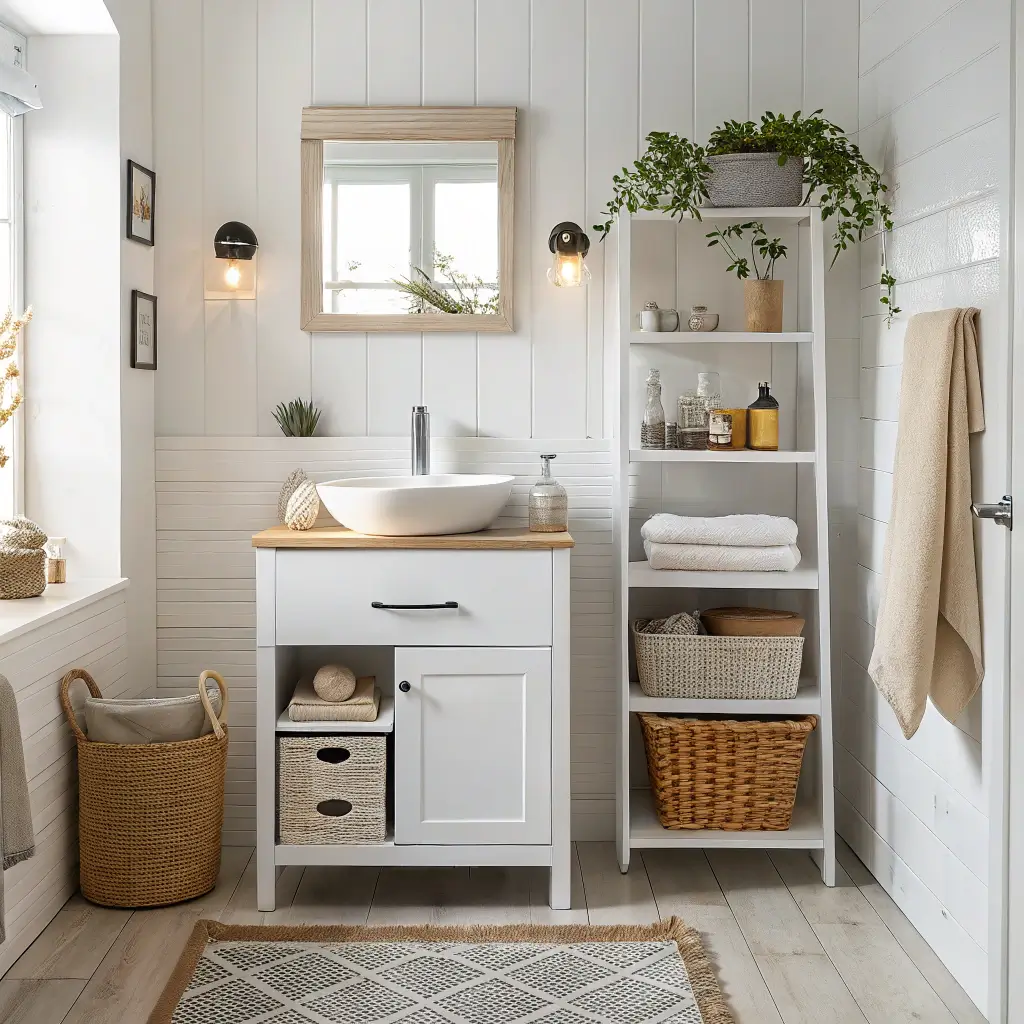
When square footage is limited, every piece of furniture needs to work overtime. Single-purpose items are a luxury small bathrooms can’t afford.
Double-Duty Everything
The best small bathroom furniture serves multiple functions simultaneously. A vanity with built-in storage, a mirror with hidden cabinet space behind it, a stool that also works as a hamper—these pieces earn their footprint by doing more than one job.
I have a small ladder shelf in my bathroom that holds towels, displays a plant, and stores my hairdryer in a basket on the bottom shelf. One piece, three functions, minimal footprint. That’s the small bathroom furniture mindset.
Multi-Functional Furniture Ideas
Look for pieces that multitask:
- Storage ottomans or stools—seating plus hidden storage
- Vanities with built-in hampers—clothes storage without extra furniture
- Medicine cabinets with outlets—electrical storage for shavers or toothbrushes
- Towel bars with shelves—hanging and surface storage combined
- Rolling carts—moveable storage that tucks away when not needed
- Fold-down shelving—appears when needed, disappears when not
Think critically about every item in your bathroom. If something only does one thing, ask whether you could replace it with something that does two or three things instead.
14. Stylish Accessories for Small Bathrooms
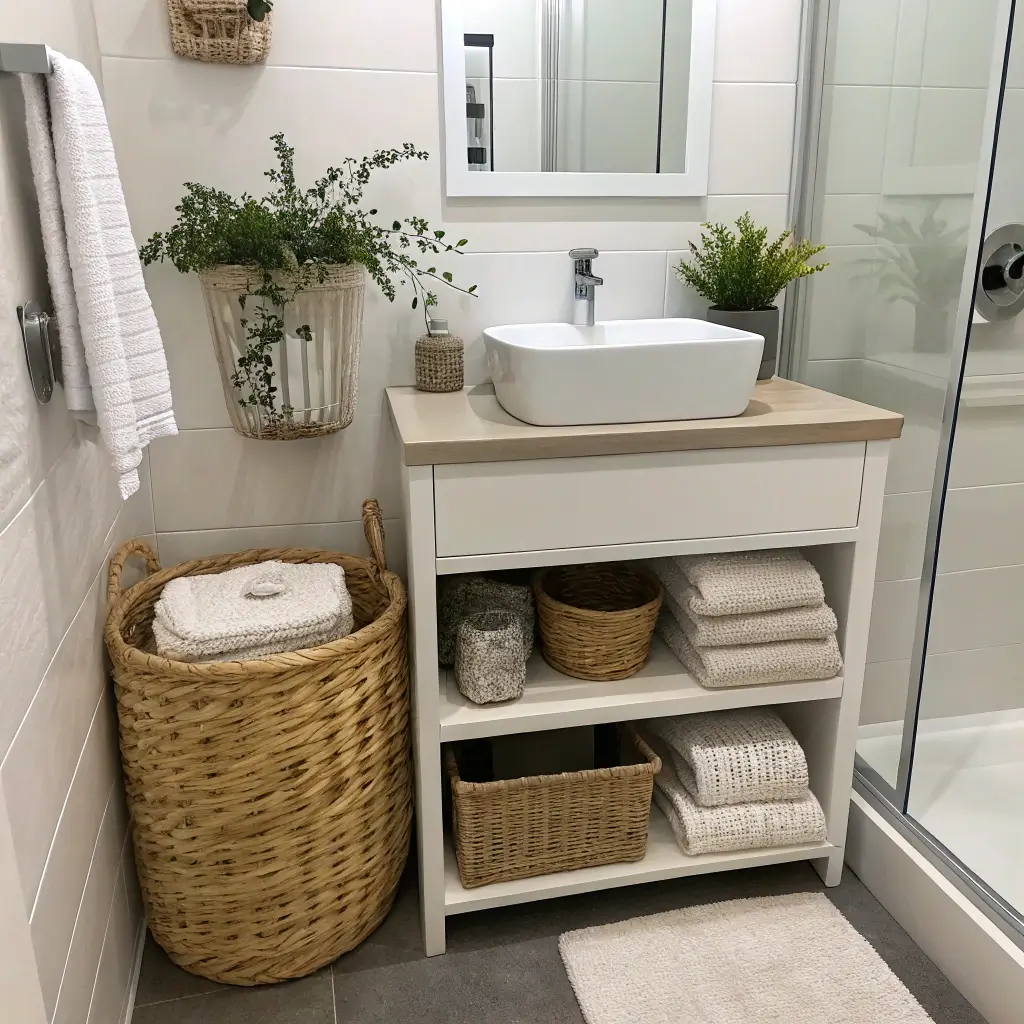
Accessories might seem like afterthoughts, but in small bathrooms, they make an outsized impact. The right accessories tie your design together and add personality without cluttering the space.
Quality Over Quantity (Again)
In small bathrooms, you can’t hide mediocre accessories behind visual noise. Every item you display needs to earn its spot through both function and beauty. This means investing in fewer, nicer pieces rather than accumulating cheap clutter.
A beautiful soap dispenser, a coordinated set of containers for cotton balls and swabs, an elegant toothbrush holder—these small touches add up to a cohesive, intentional look. Random freebies and mismatched containers, on the other hand, just add visual chaos.
Accessories That Elevate Small Spaces
Consider these finishing touches:
- Matching soap and lotion dispensers—cohesive look on the vanity
- Coordinated towel sets—hotel-like polish
- Small potted plants or succulents—life and color without bulk
- Attractive storage containers—beautiful organization
- Quality bath mat—texture and comfort underfoot
- Art or small prints—personality without requiring floor space
Here’s my controversial opinion: skip the decorative towels. Those fancy hand towels nobody actually uses just take up space and require maintenance. Buy beautiful everyday towels instead and let people actually use them.
15. Transform Your Tiny Bathroom with DIY Decor
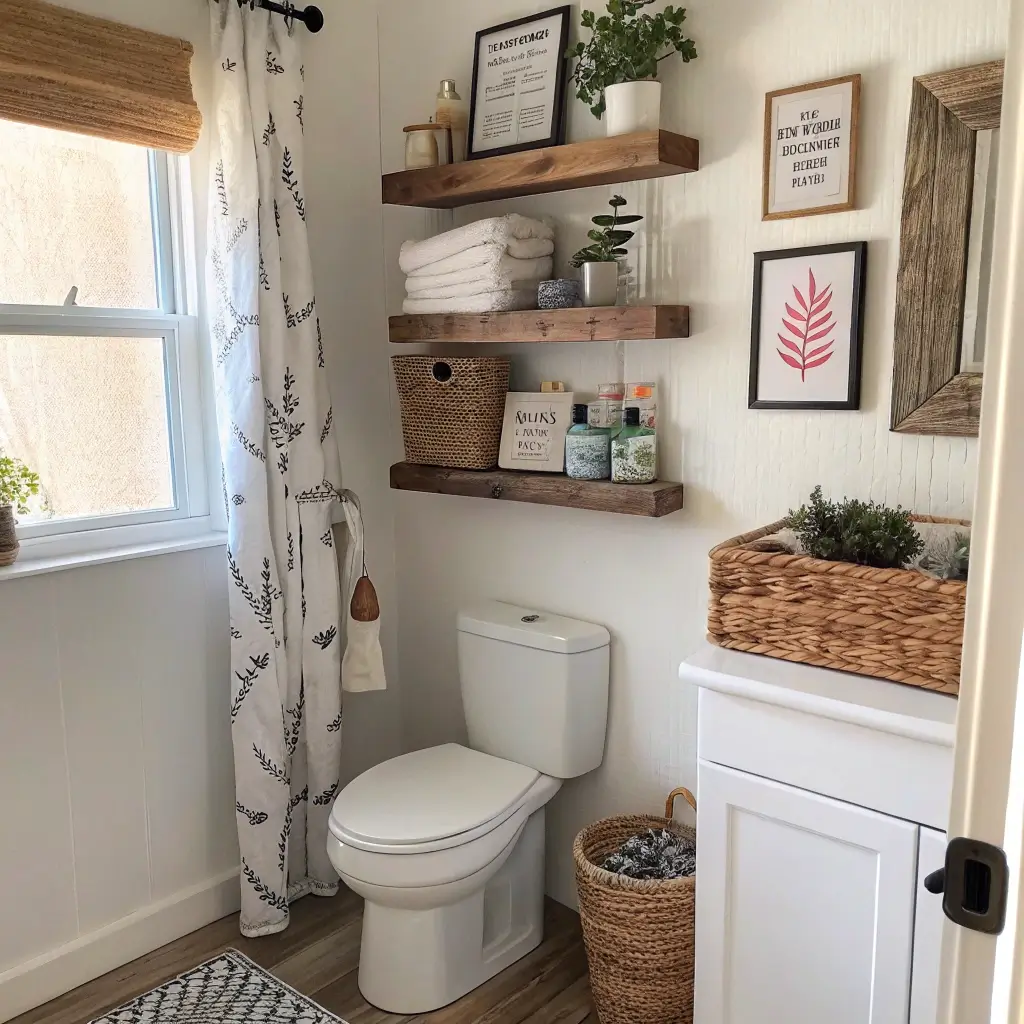
You don’t need to hire a contractor to dramatically improve your small bathroom. DIY projects offer affordable ways to customize your space and add personal touches.
DIY Projects That Make a Difference
Some of the most impactful bathroom updates require nothing more than basic tools and a weekend. Painting is obviously the biggest bang for your DIY buck—walls, cabinets, even tile can be refreshed with the right paint and prep work.
Beyond painting, consider building simple shelving, creating custom storage solutions, or refinishing existing fixtures. The satisfaction of improving your bathroom with your own hands adds an extra layer of appreciation every time you use the space.
DIY Ideas for Small Bathrooms
Try these approachable projects:
- Painted cabinets or vanity—complete transformation for minimal cost
- New hardware installation—requires only a screwdriver
- Floating shelf installation—basic tools and wall anchors
- Mirror frame addition—dress up a plain builder mirror
- Peel-and-stick tile backsplash—temporary or permanent depending on product
- Custom organization solutions—PVC pipe hair tool holders, magnetic strips, etc.
YouTube tutorials make even complex-seeming projects accessible to beginners. Before paying someone else, spend an hour researching whether you could tackle the project yourself. You might surprise yourself with what you’re capable of doing.
Wrapping It All Up
Okay, we’ve covered a lot of ground here. From minimalist makeovers to DIY projects, these fifteen ideas prove that small bathrooms don’t have to feel limiting. The size of your bathroom matters far less than the thoughtfulness of your design choices.
If I had to boil everything down to a few core principles, here’s what I’d emphasize:
- Think vertically—your walls are valuable storage real estate
- Embrace light colors and good lighting—they visually expand any space
- Choose multi-functional furniture and fixtures—everything should earn its footprint
- Edit ruthlessly—minimalism isn’t just an aesthetic, it’s a necessity in small spaces
- Invest strategically—spend on what you touch and see daily
The bathroom you’re stuck with today doesn’t have to stay that way. Even renters can make significant improvements with temporary solutions like peel-and-stick tiles, removable wallpaper, and upgraded accessories.
Start with one or two ideas from this list and see how they transform your space. You might find that your tiny bathroom becomes your favorite room in the house—stranger things have happened. Trust me, I never thought I’d actually enjoy spending time in a bathroom smaller than most walk-in closets, but here we are.
Now go measure your walls, browse some floating vanities, and start dreaming about what your small bathroom could become. You’ve got this! 🙂