
15 Inspiring Simple Bedroom Interior Design Ideas to Try Now
Let me guess—you’re scrolling through Pinterest at 2 AM, saving bedroom inspiration photos like your life depends on it, but your actual bedroom still looks like a chaotic mess of mismatched furniture and that lamp you bought in college? Yeah, I’ve been there. We all have.
Here’s the thing about bedroom design that nobody tells you: simple actually works better. I spent years thinking I needed elaborate headboards, seventeen throw pillows, and some abstract art I couldn’t afford to have a “stylish” bedroom. Spoiler alert: I was wrong. My bedroom looked like a furniture store exploded, and I never felt relaxed in it.
That’s why I’ve pulled together these 15 simple bedroom interior design ideas that actually make sense for real people living real lives. No complicated DIY projects requiring power tools you don’t own. No suggestions to “just knock down that wall for an open concept feel.” Just practical, beautiful ideas you can implement starting today.
Ready to transform your bedroom from “meh” to “ahh, this is my sanctuary”? Let’s get into it.
1. Neutral Color Palette Bedroom
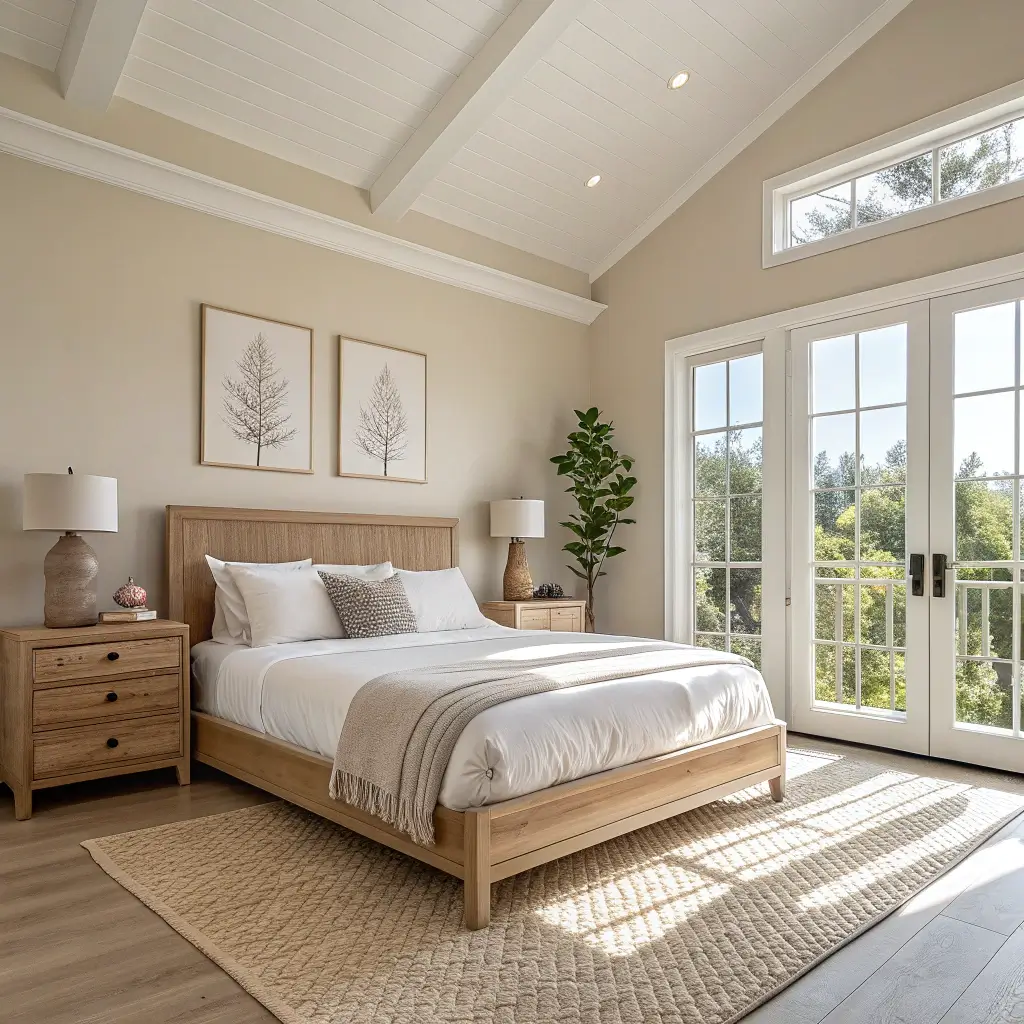
Why do neutral colors work so ridiculously well in bedrooms? Because your brain literally relaxes when it’s not being visually assaulted by seventeen different colors competing for attention.
A neutral color palette bedroom uses shades like white, gray, beige, taupe, and soft browns as the foundation. Think of it as giving your eyes a vacation every time you walk into the room. I switched my bedroom from a bold blue accent wall to a warm greige (that’s gray + beige for the uninitiated), and honestly? My sleep improved. Coincidence? Maybe. But I’m not changing it back.
How to Pull Off the Neutral Look
The key to making neutrals interesting lies in layering different tones and textures. A completely monochromatic room can feel flat and boring—like a hospital waiting room, and nobody wants that vibe where they sleep.
Here’s what works:
- Mix warm and cool neutrals together for depth
- Incorporate different textures like linen, wool, and cotton
- Add metallic accents in gold, brass, or matte black for visual interest
- Use varying shades of the same color family to create dimension
The beauty of neutral bedrooms? They’re incredibly forgiving. You can swap out accessories, change your bedding seasonally, and everything still coordinates. It’s like having a capsule wardrobe, but for your room.
2. Minimal Bed and Side Table Setup
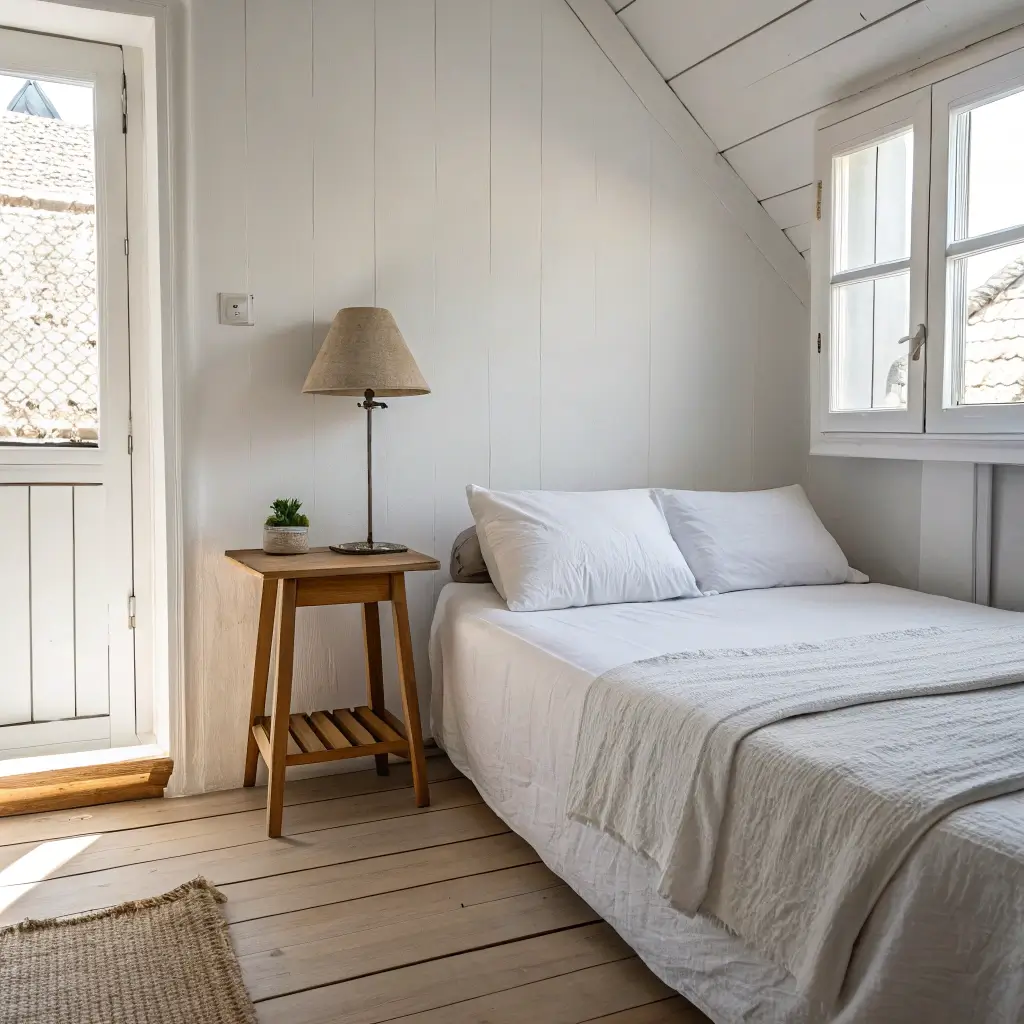
Sometimes the most powerful design statement is knowing when to stop adding stuff. A minimal bed and side table setup embraces the philosophy that less really is more—and your cluttered nightstand probably could use this reminder.
I used to have a nightstand that looked like a crime scene of half-empty water glasses, three books I was “currently reading” (lies), phone chargers, and random receipts. The minimal approach changed everything. Now I have a simple platform bed, one sleek side table, and exactly three items on it: a lamp, my phone, and whatever book I’m actually reading.
Essential Elements for Minimal Bed Setup
The bed itself matters most. Choose a clean-lined frame without ornate details. Platform beds work beautifully here because they sit low and look uncluttered. Skip the footboard if possible—it just adds visual weight you don’t need.
For your side table, consider these options:
- Simple wooden cube or rectangular table
- Metal frame nightstand with minimal shelving
- Floating wall-mounted shelf (my personal favorite—it makes cleaning the floor so much easier)
- Small round accent table with slim legs
The goal? Create visual breathing room around your bed. When your sleep space feels open and uncluttered, your mind follows suit.
3. Soft White Bedroom with Natural Light
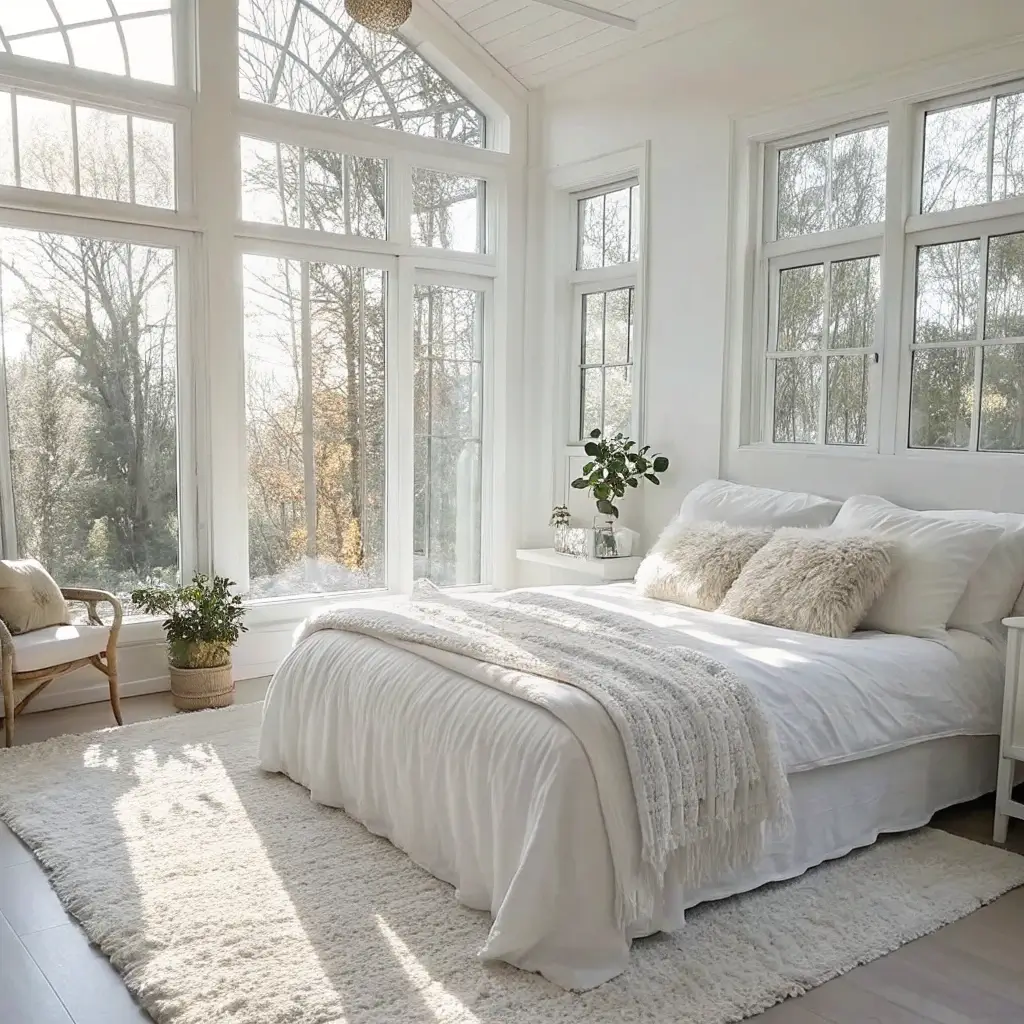
Okay, I’ll admit it—I used to think all-white bedrooms were boring and impractical. Who wants to stress about every speck of dust? But then I actually tried it, and holy transformation, Batman. A soft white bedroom flooded with natural light feels like waking up inside a cloud. A really chic, well-designed cloud.
The secret isn’t using stark, cold white everywhere. That’s how you get “psychiatric ward” instead of “serene retreat.” You want soft whites with warm undertones—think ivory, cream, and barely-there beiges that read as white but feel cozy.
Maximizing Natural Light
Natural light makes or break this look. Here’s how to get the most of what you’ve got:
- Keep window treatments light and airy—sheer curtains work wonderfully
- Position mirrors strategically to bounce light around the room
- Choose furniture with lighter finishes that reflect rather than absorb light
- Skip heavy, dark bedding that creates visual heaviness
If your bedroom doesn’t get tons of natural light (been there—my first apartment faced a brick wall), you can fake it. Use warm-toned LED bulbs, add mirrors opposite whatever light sources you have, and stick to truly bright whites on walls and ceilings to maximize reflection.
4. Simple Wooden Furniture Bedroom
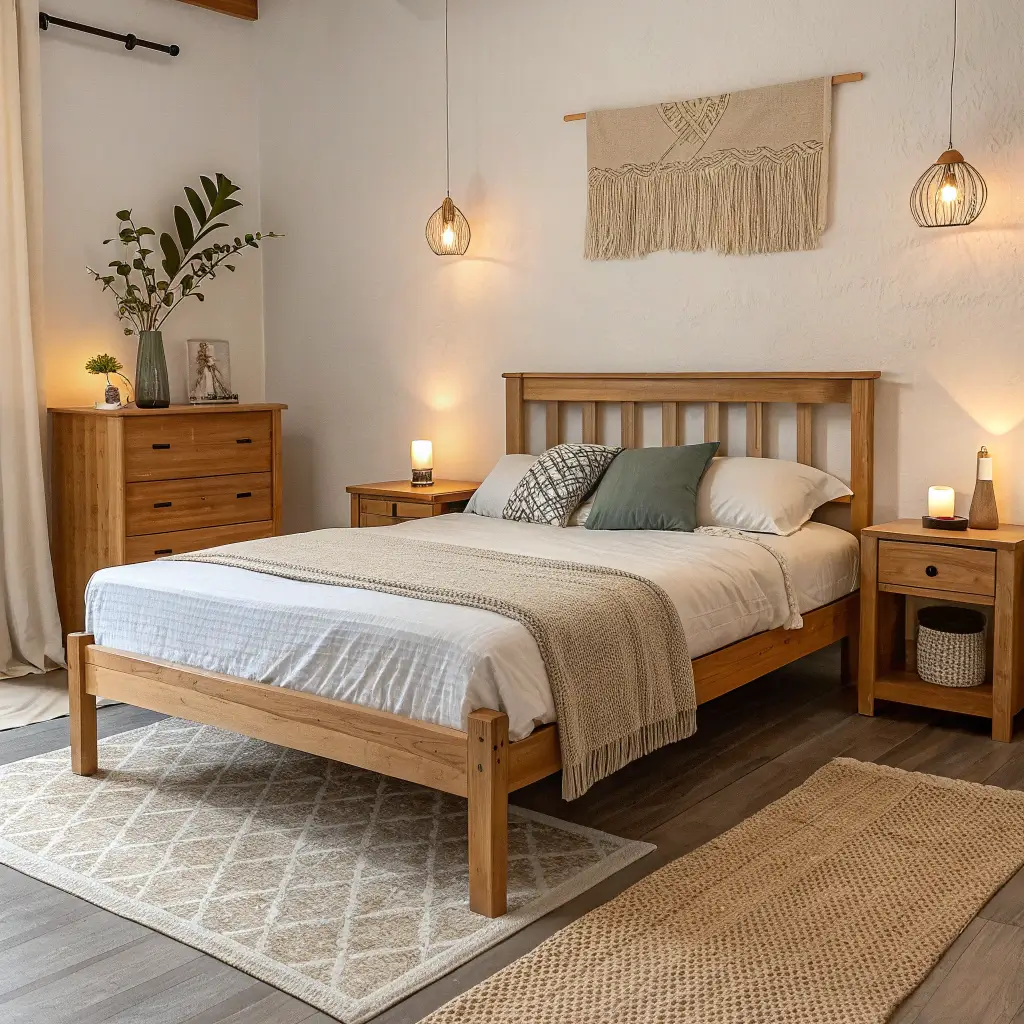
There’s something about wooden furniture that instantly makes a bedroom feel grounded and timeless. Maybe it’s the natural warmth, or maybe it’s the fact that wood never really goes out of style. Either way, I’m here for it.
A simple wooden furniture bedroom doesn’t mean your room looks like a log cabin (unless that’s your thing—no judgment). It means choosing quality wooden pieces with clean lines and letting them be the stars of the show.
Choosing the Right Wood Tones
This is where people mess up. They buy a blonde oak bed, a dark walnut dresser, and a cherry wood nightstand, then wonder why their room looks chaotic. Stick to one wood tone family for cohesion.
Consider these popular options:
- Light oak or ash for Scandinavian vibes
- Walnut for mid-century modern warmth
- White-washed wood for coastal or farmhouse feels
- Teak for a richer, more traditional look
My honest opinion? Light to medium wood tones photograph better and make rooms feel larger. Dark wood can feel heavy in smaller bedrooms, though it looks stunning in larger spaces with plenty of natural light.
5. Cozy Minimal Bedroom with Textured Bedding
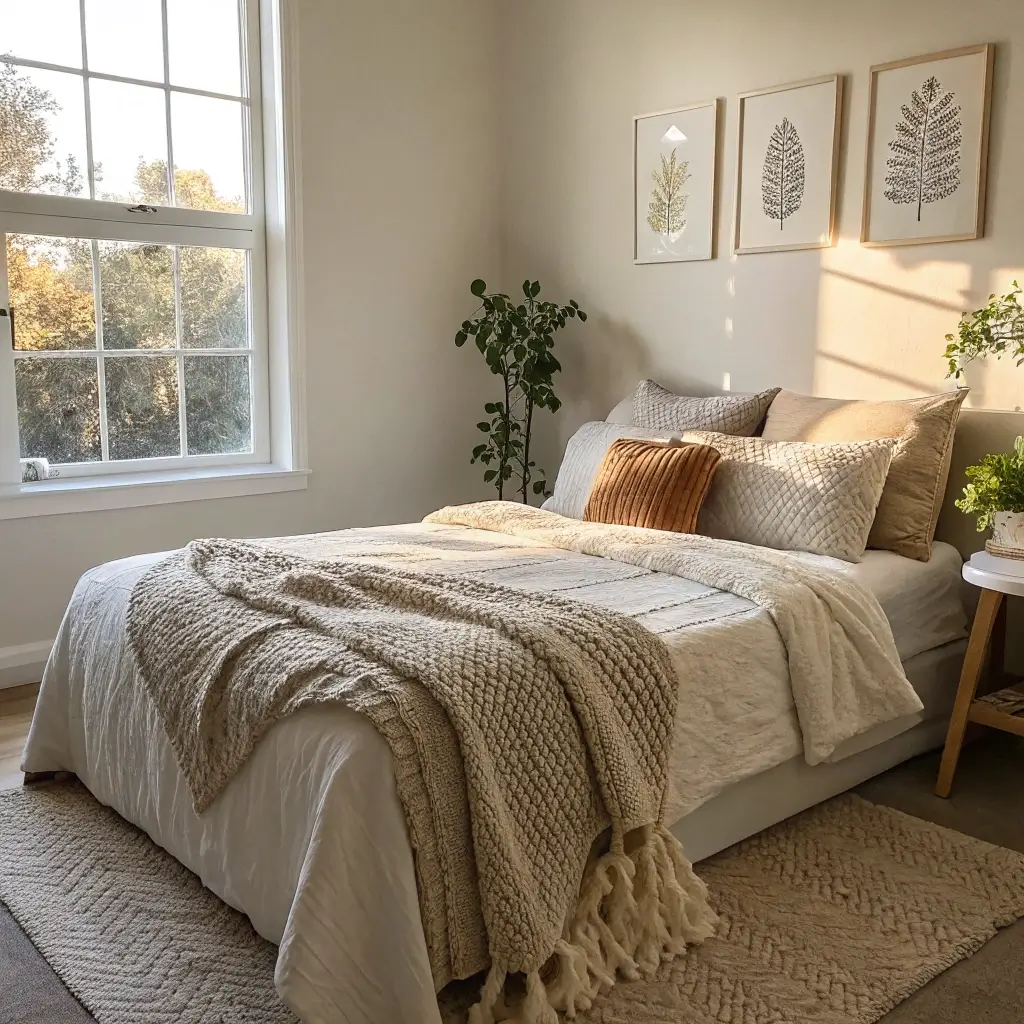
Here’s a secret the minimalism gurus don’t always share: minimal doesn’t have to mean cold or sterile. You can absolutely have a stripped-back, simple bedroom that also feels like a warm hug. The magic ingredient? Textured bedding.
FYI, I used to think “textured bedding” meant those awful chenille bedspreads my grandma had. Nope. We’re talking chunky knit throws, linen duvet covers with that perfectly rumpled look, waffle-weave blankets, and pillows with subtle patterns woven into the fabric.
Layering Textures Like a Pro
The key to cozy minimal is layering different textures while keeping colors consistent. Think of it like building a sandwich—but make it stylish.
Start with your base:
- Fitted sheet in soft cotton or linen
- Flat sheet in the same material
- Duvet or comforter in a natural fabric
Then add your layers:
- Lightweight blanket at the foot of the bed
- Chunky throw casually draped across one corner
- Mix of pillow textures—smooth, ribbed, and maybe one with a subtle pattern
The result? A bed that looks like it belongs in a boutique hotel but actually feels lived-in and comfortable. That’s the sweet spot we’re aiming for.
6. Clean Scandinavian Style Bedroom
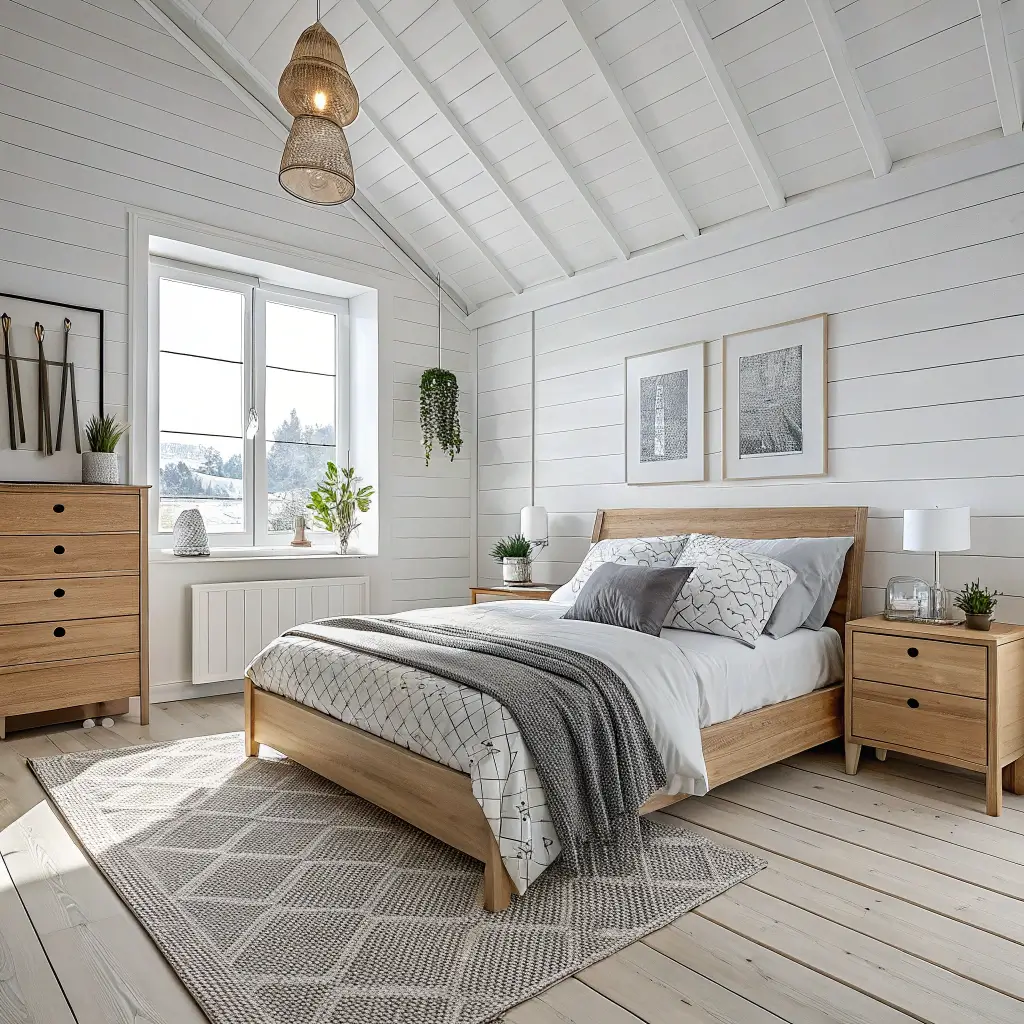
If you’ve spent any time on interior design websites, you’ve seen Scandinavian style—and there’s a reason it’s everywhere. It’s simple, functional, beautiful, and somehow makes even the tiniest bedroom look spacious and serene.
Scandinavian design originated in Nordic countries where winter nights last forever and people needed their homes to feel cozy and bright. The result? A design philosophy centered on light colors, natural materials, and functional simplicity.
Core Elements of Scandi Bedroom Design
To nail the Scandinavian look, focus on these essentials:
- White or light gray walls as your foundation
- Light wood floors (or a light rug if you’re stuck with darker flooring)
- Simple, functional furniture with clean lines
- Cozy textiles in natural materials like wool and cotton
- Minimal decor that serves a purpose
- Plants to add life and color
One thing I love about Scandi style? It’s budget-friendly. You don’t need expensive pieces—the aesthetic actually celebrates simplicity and practicality. That IKEA bed frame you were embarrassed about? Totally Scandinavian. Embrace it.
Also Read: 15 Aesthetic 70s Interior Design Bedroom Ideas with Retro Flair
7. Small Bedroom with Smart Layout
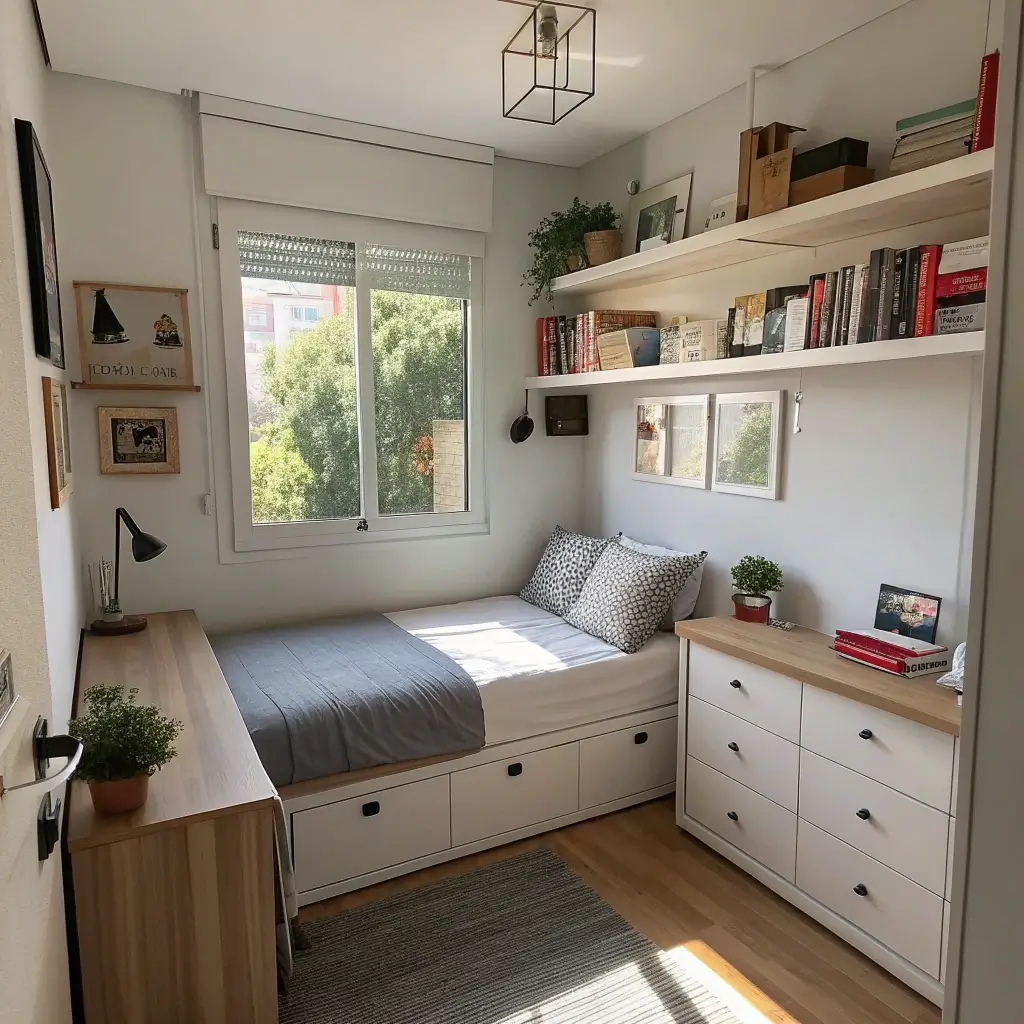
Not everyone has a master suite the size of a studio apartment, and that’s okay. Small bedrooms can be incredibly cozy and stylish when you get the layout right. I’ve lived in more tiny bedrooms than I can count, and I’ve learned that smart furniture placement changes everything.
The biggest mistake people make in small bedrooms? Pushing all furniture against the walls. I know, I know—it seems logical. But it often makes the room feel like a waiting room instead of a cozy retreat.
Layout Strategies That Actually Work
Here’s what I’ve learned through trial and error (so much error):
Float your bed slightly away from the wall if possible. Even six inches creates a sense of intentionality rather than desperation.
Use vertical space like your life depends on it:
- Tall, narrow dressers instead of wide, short ones
- Wall-mounted shelving for storage
- Hooks behind doors for bags and robes
- Over-door organizers for accessories
Choose furniture that multitasks:
- Beds with built-in storage drawers
- Nightstands with shelves or drawers
- A small bench that provides seating AND storage
Skip the bulky furniture entirely when possible. Do you really need a full dresser, or could a closet organization system work better? Question everything.
8. Simple Bedroom with One Statement Wall
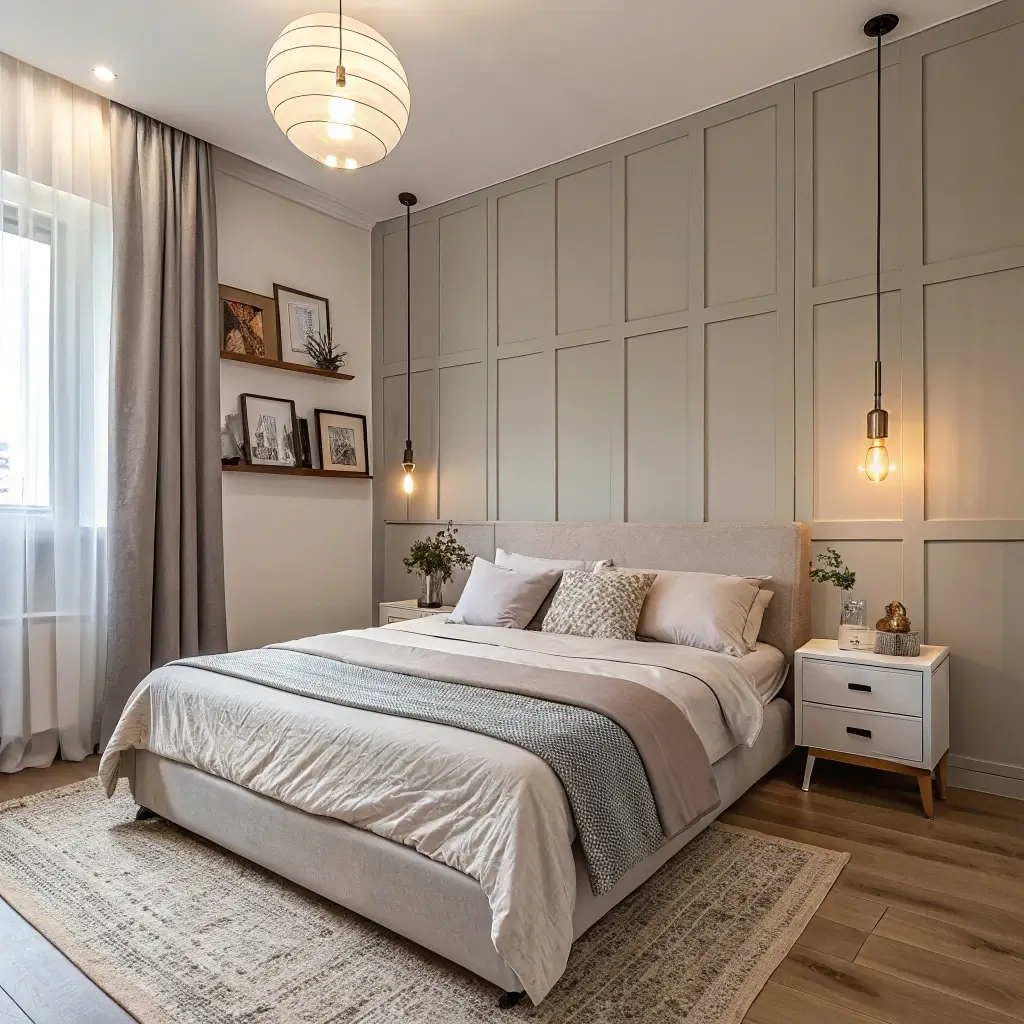
Ever heard the phrase “too much of a good thing”? That’s what happens when you try to make every wall in your bedroom interesting. A single statement wall gives your eye somewhere to land without overwhelming the space. It’s basically the Goldilocks approach to bedroom design—just right.
Your statement wall should typically be the wall behind your headboard. It’s the natural focal point of any bedroom, and enhancing it makes design sense.
Statement Wall Ideas That Work
You don’t need to hire a muralist or become a DIY expert. Some of my favorite simple statement wall options:
- Paint it a deeper shade of your room’s main color
- Add simple wood paneling (vertical slats are very on-trend)
- Use removable wallpaper for pattern without commitment
- Create a gallery wall with minimal, cohesive frames
- Install floating shelves with curated objects
- Try a fabric headboard that extends up the wall
IMO, the most foolproof option is simply painting your headboard wall two to three shades darker than your other walls. It creates depth, looks intentional, and you can do it yourself in an afternoon.
9. Modern Simple Bedroom with Soft Lighting
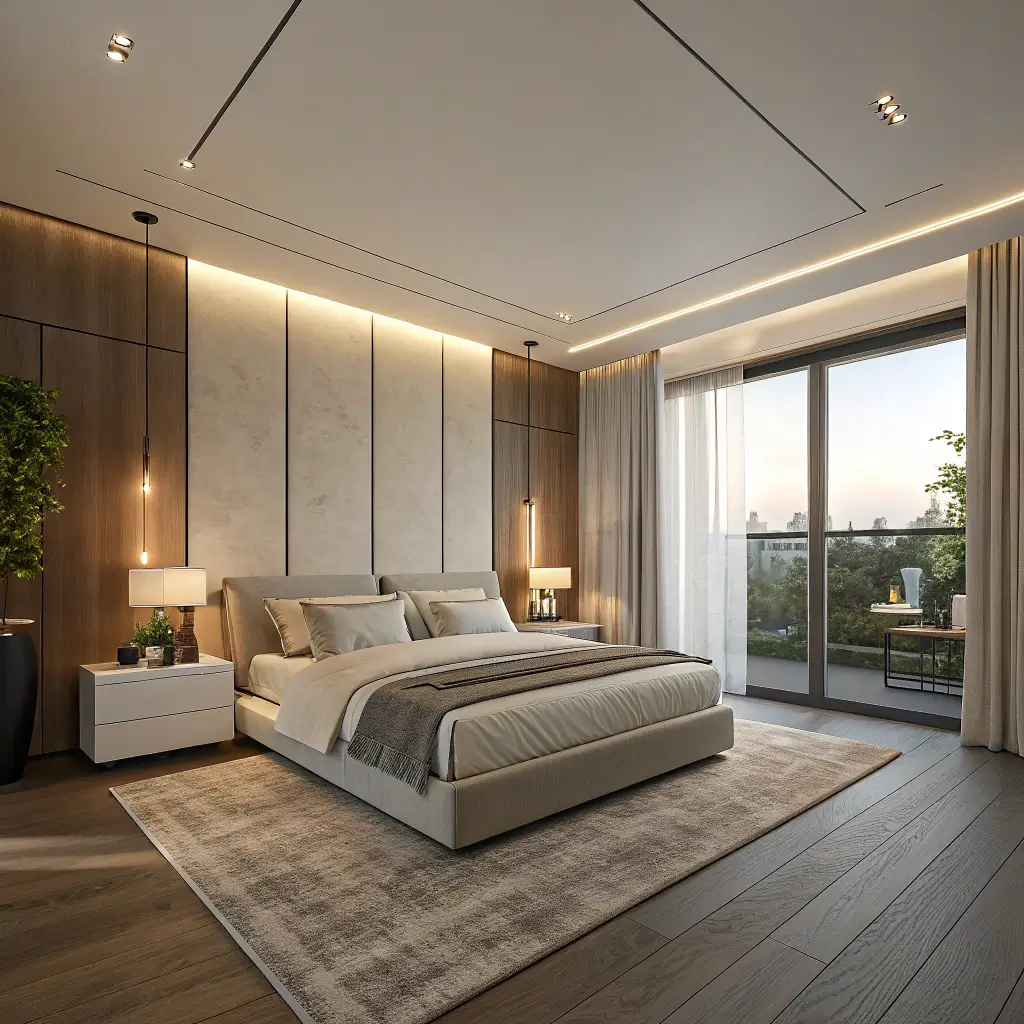
Lighting can make or break your bedroom’s ambiance—and I’m not being dramatic here. You could have the most beautiful furniture and perfect color palette, but if you’re relying on one harsh overhead light, your room will never feel quite right.
A modern simple bedroom with soft lighting uses multiple light sources at different heights to create warmth and dimension. Think of it as sculpting your room with light. Sounds fancy, but it’s actually pretty straightforward.
Building Your Lighting Layers
Here’s the formula that works:
Ambient lighting (your main light source):
- Flush-mount ceiling fixture with a soft bulb
- Recessed lighting on a dimmer
- Central pendant with a diffused shade
Task lighting (for reading, getting ready, etc.):
- Bedside table lamps
- Wall-mounted reading lights
- Adjustable desk lamp if you work in your bedroom
Accent lighting (the mood-makers):
- LED strip lights behind headboards
- Small accent lamps on dressers
- Candles (real or LED—I won’t judge)
The game-changer? Dimmer switches. Install them on your main light source and suddenly you have complete control over your room’s mood. Bright for morning routines, dim for evening wind-down. It’s a small investment that makes a huge difference.
Also Read: 13 Chic Minimal Bedroom Interior Ideas with Natural Light
10. Clutter-Free Bedroom Storage Design
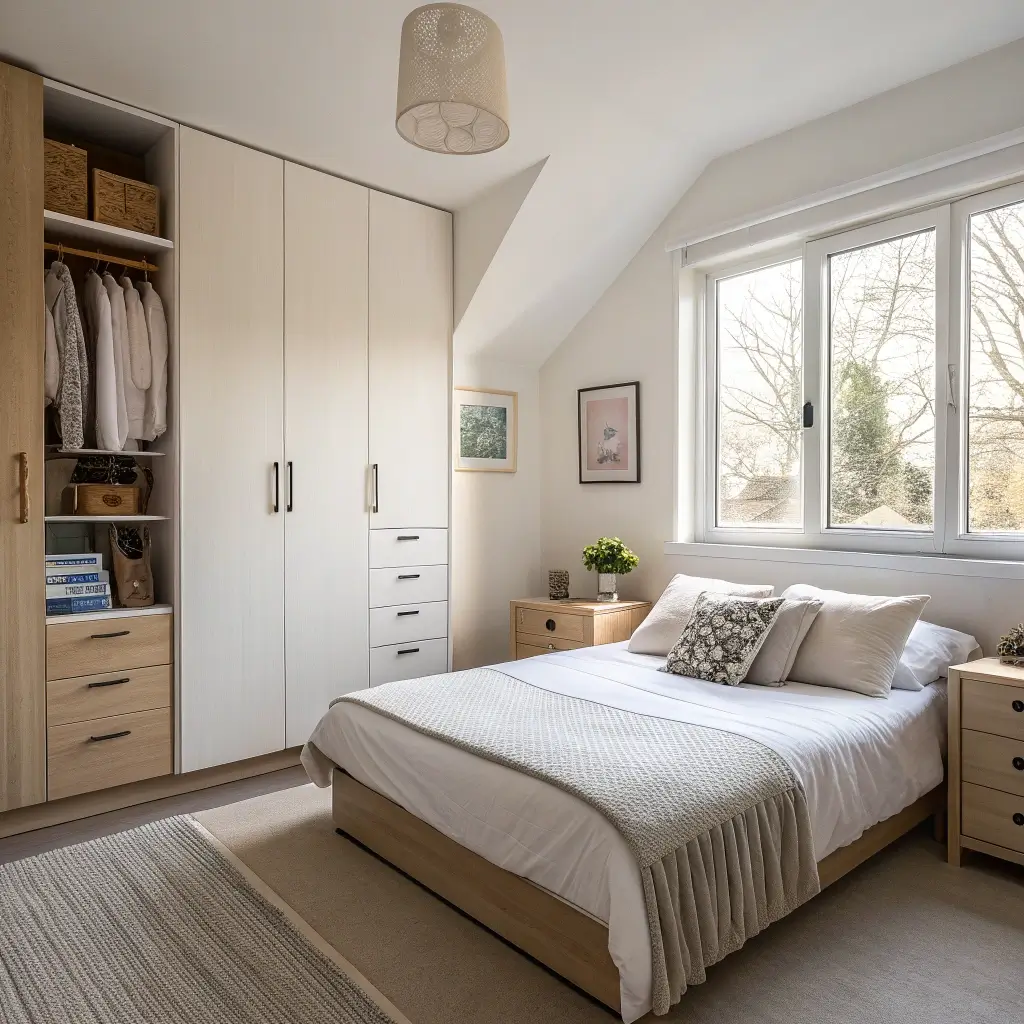
Let’s be real for a second—most bedroom clutter isn’t because we own too much stuff (okay, sometimes it is). It’s because we don’t have good systems for storing what we have. A clutter-free bedroom requires intentional storage design, not just willpower.
I used to think I was just a messy person. Turns out, I had a storage problem. Once I redesigned my storage situation, maintaining a clean bedroom became almost automatic. Almost. 🙂
Storage Solutions That Hide the Chaos
The goal is giving everything a home while keeping surfaces clear. Here’s how:
Maximize closet efficiency:
- Double hanging rods for shorter items
- Shelf dividers for sweaters and bags
- Door-mounted organizers for accessories
- Drawer units on the floor for folded items
Choose furniture with built-in storage:
- Beds with drawers or lift-up mattress platforms
- Nightstands with enclosed storage (not just open shelves)
- Benches with hidden compartments
- Dressers that actually fit your wardrobe
Use the space under your bed wisely:
- Flat storage containers for seasonal items
- Rolling drawers for easy access
- Vacuum bags for bulky bedding
The key insight? Visible storage creates visual clutter, even when it’s organized. Opt for closed storage whenever possible, and your bedroom will always look cleaner than it actually is. That’s a win in my book.
11. Beige and Cream Simple Bedroom
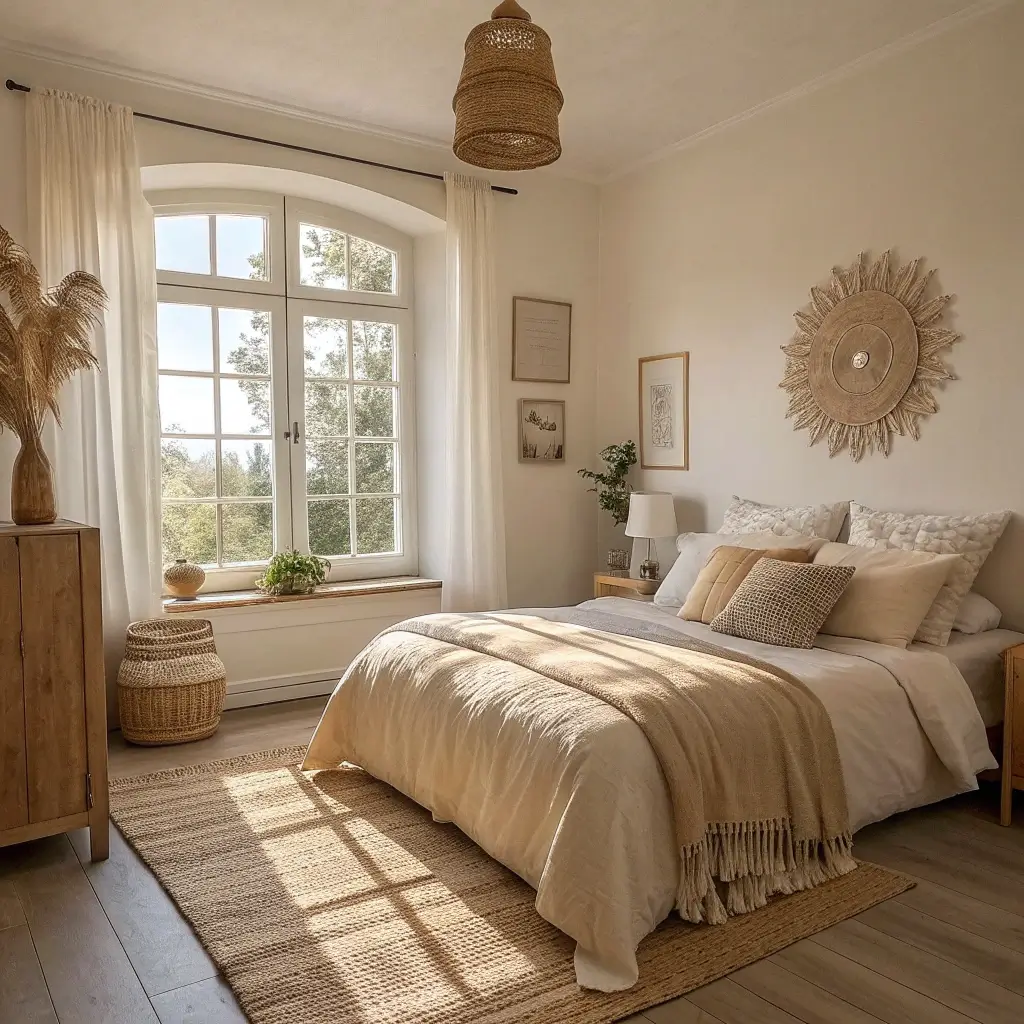
If white feels too stark but you still want that airy, neutral vibe, beige and cream might be your perfect middle ground. This color combo has made a massive comeback recently, and honestly, it deserves the hype.
Beige got a bad reputation in the early 2000s when every builder-grade home came with “builder beige” walls that looked more sad than sophisticated. But today’s beige? It’s warm, intentional, and incredibly versatile.
Making Beige Look Intentional
The difference between “boring beige” and “beautiful beige” comes down to a few factors:
Choose the right undertones:
- Pink undertones for warmth
- Yellow undertones for coziness
- Gray undertones for a more modern feel
Vary your tones:
- Darker beige for furniture pieces
- Lighter cream for walls and bedding
- Ivory and off-white for layered textiles
Add contrast intentionally:
- Black accents for grounding
- Warm metallics like brass or gold
- Natural wood tones
- Greenery for a pop of color
A beige and cream bedroom feels like a warm embrace. It’s sophisticated without trying too hard, and it photographs beautifully—if you care about that sort of thing (no shame, we all do a little).
12. Minimal Bedroom with Indoor Plants
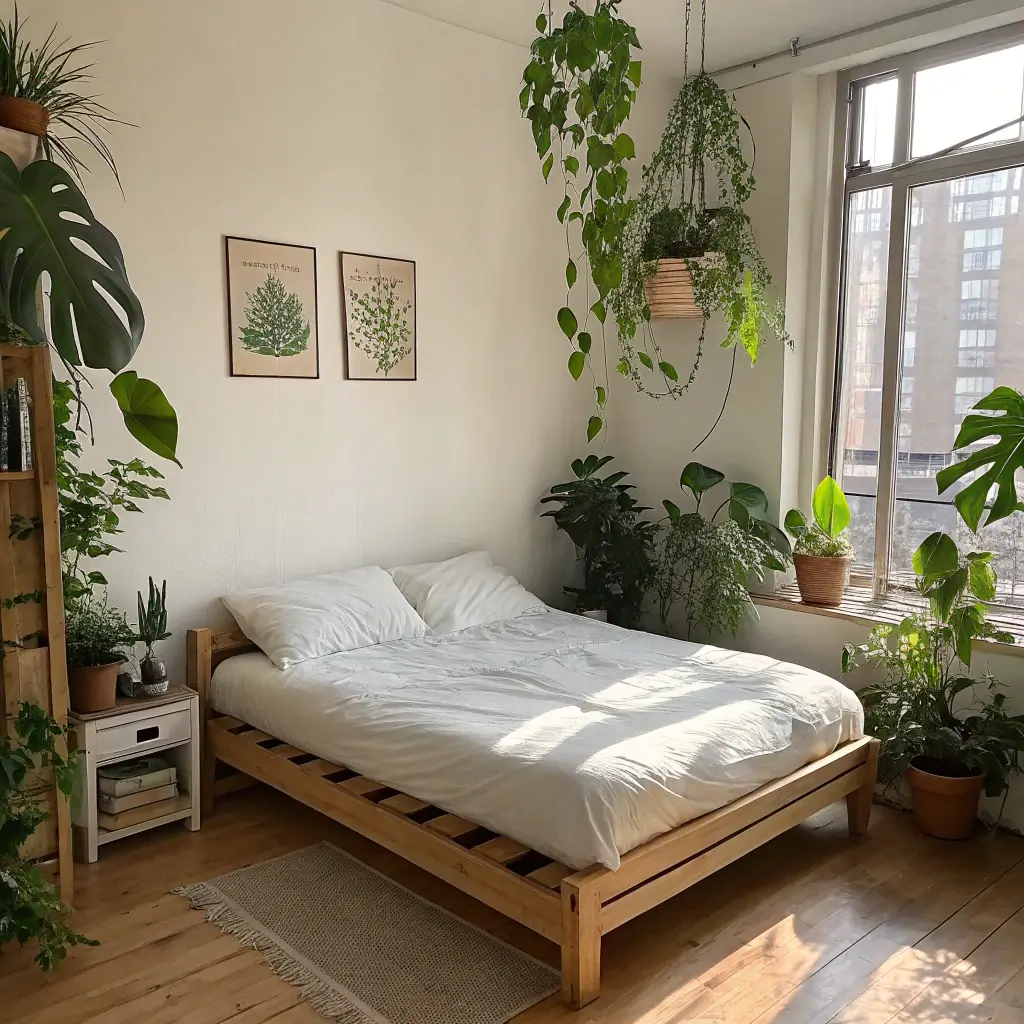
Nothing breathes life into a minimal bedroom quite like indoor plants. They add color, texture, and literally clean your air—what’s not to love? A few well-placed plants transform a stark minimal room into one that feels alive and nurturing.
Now, I’ll be honest: I’ve killed more plants than I care to admit. But even I’ve managed to keep a few varieties alive, and they make my bedroom feel so much more complete.
Best Plants for Bedrooms
Not all plants thrive in bedroom conditions. Choose varieties that tolerate lower light and don’t mind if you occasionally forget to water them:
Low-maintenance winners:
- Snake plant (practically unkillable)
- Pothos (grows in basically any light)
- ZZ plant (thrives on neglect)
- Rubber plant (dramatic but easy)
- Peace lily (tells you when it needs water by drooping)
Placement ideas:
- Trailing plants on high shelves or hanging planters
- A medium-sized floor plant in an empty corner
- Small succulents on your nightstand
- A single statement plant on your dresser
Pro tip: Get matching pots for a cohesive look. Random nursery pots from the hardware store undermine the “styled” aesthetic you’re going for. Simple terracotta, white ceramic, or woven baskets all work beautifully.
Also Read: 15 Trendy 1 Bedroom Condo Interior Design Ideas for Chic Spaces
13. Simple Bedroom with Floor-Length Curtains
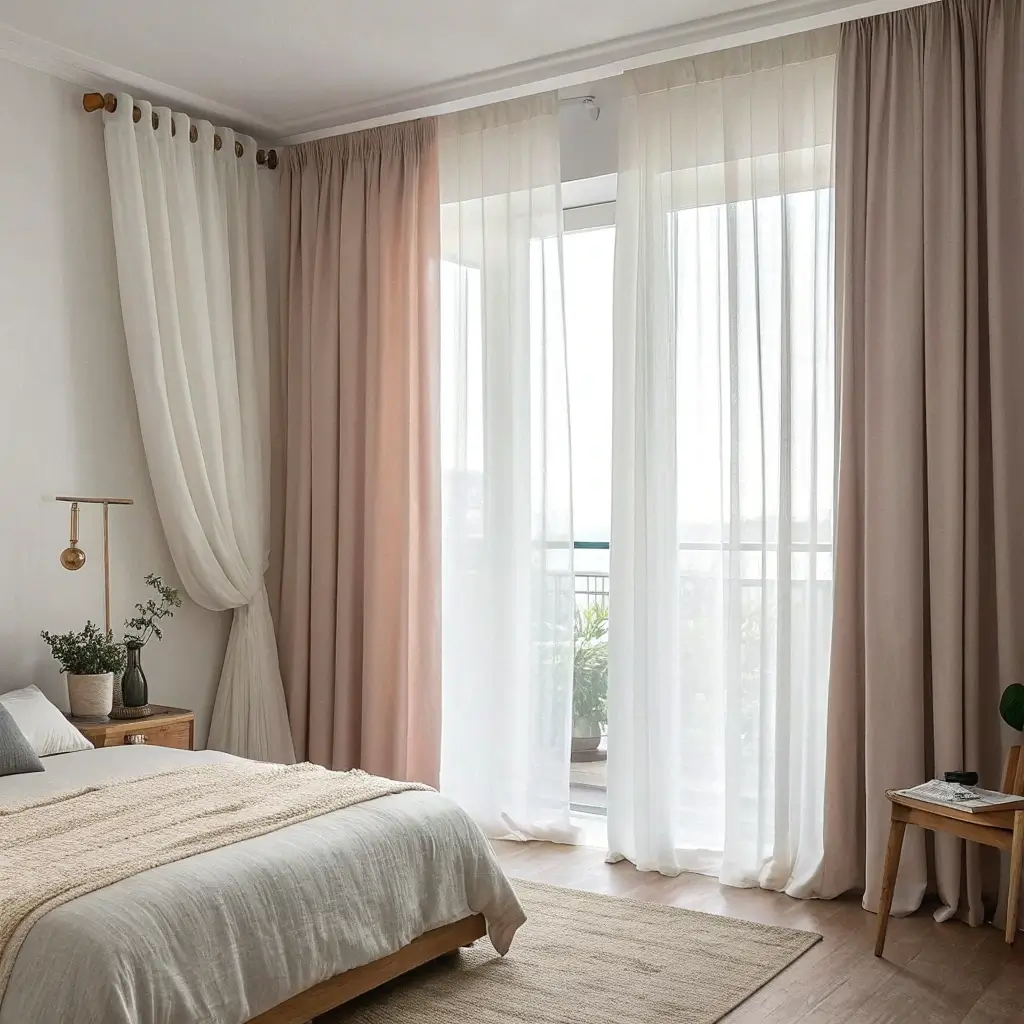
Want to know one of the easiest design tricks that instantly makes any bedroom look more expensive and pulled-together? Floor-length curtains hung close to the ceiling. That’s it. That’s the secret.
Most people hang curtains wrong—directly above the window frame at the curtain rod, with fabric that just barely brushes the window sill. This makes windows look smaller and rooms feel squat. We’re going for the opposite effect.
The Curtain Formula That Works
Here’s the formula designers use:
Mount your curtain rod 4-6 inches below the ceiling (or as high as possible). This draws the eye up and makes ceilings appear higher.
Extend the rod 8-12 inches beyond each side of the window frame. This makes windows appear wider and lets more light in when curtains are open.
Choose curtains that puddle slightly on the floor (about 1 inch of extra fabric) or hang exactly to the floor. No “high water” curtains, ever.
For simple bedrooms, stick to solid colors or very subtle patterns. Linen and cotton curtains work beautifully—they’re light, airy, and add texture without visual noise. Sheer curtains layered with heavier drapes give you light control options throughout the day.
14. Calm Japandi Style Bedroom
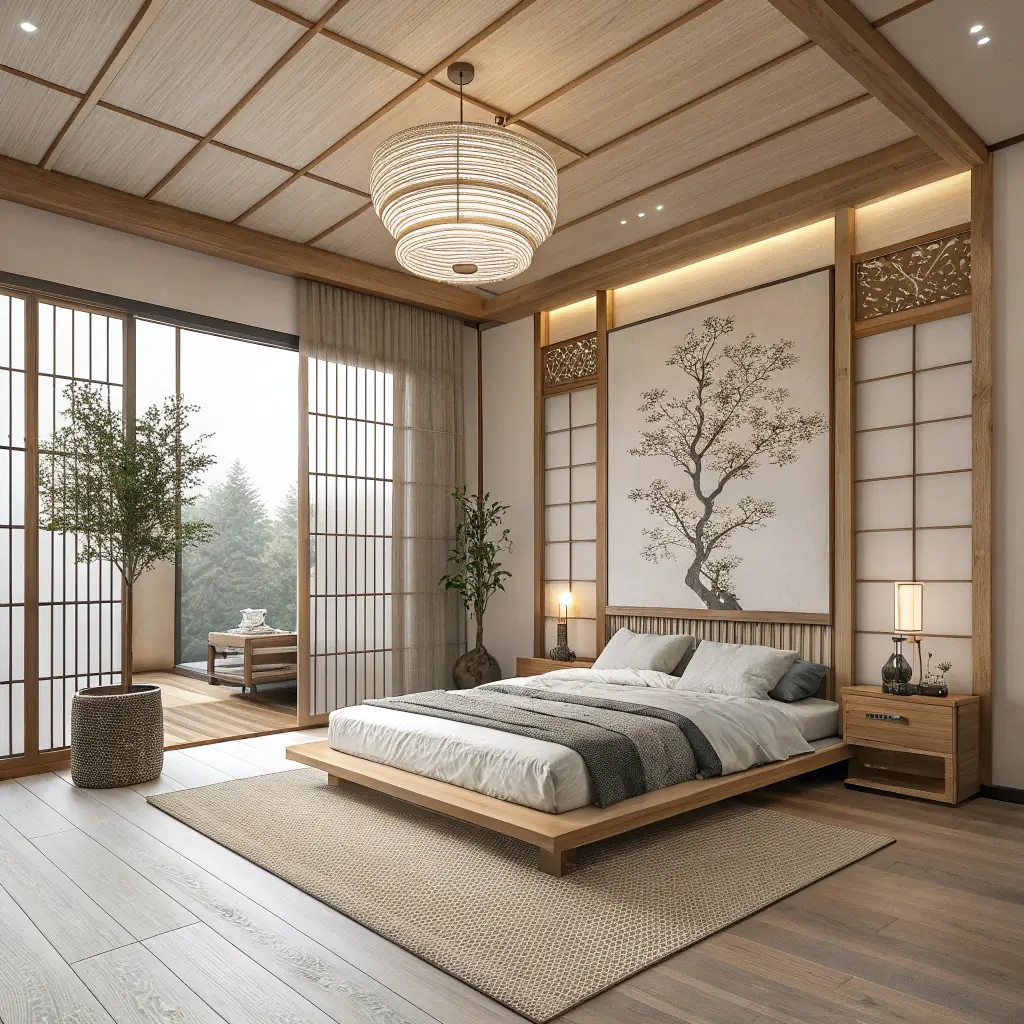
Japandi combines Japanese minimalism with Scandinavian functionality, and the result is pure bedroom perfection. If you love clean lines, natural materials, and a sense of peaceful simplicity, this style is basically your soulmate.
The philosophy behind Japandi is about intentionality and finding beauty in imperfection. Every item in the room should have purpose and meaning. There’s no room for meaningless decor or trendy pieces you don’t actually love.
Core Principles of Japandi Bedrooms
To create an authentic Japandi bedroom, embrace these concepts:
Wabi-sabi (the beauty of imperfection):
- Handmade ceramics with slight irregularities
- Natural wood with visible grain
- Linen bedding that wrinkles beautifully
- Vintage or well-worn pieces with character
Functionality first:
- Every piece serves a purpose
- Clutter is eliminated ruthlessly
- Storage is built-in and hidden
Natural materials only:
- Wood, bamboo, rattan
- Linen, cotton, wool
- Stone, ceramic, paper
- No plastic or synthetic materials
Muted, nature-inspired color palette:
- Soft whites and grays
- Warm browns and tans
- Sage greens and dusty blues
- Black accents for contrast
A Japandi bedroom feels like a meditation space. It’s calming, grounding, and incredibly photogenic—though that’s just a bonus.
15. Simple Bedroom with Warm Neutral Tones
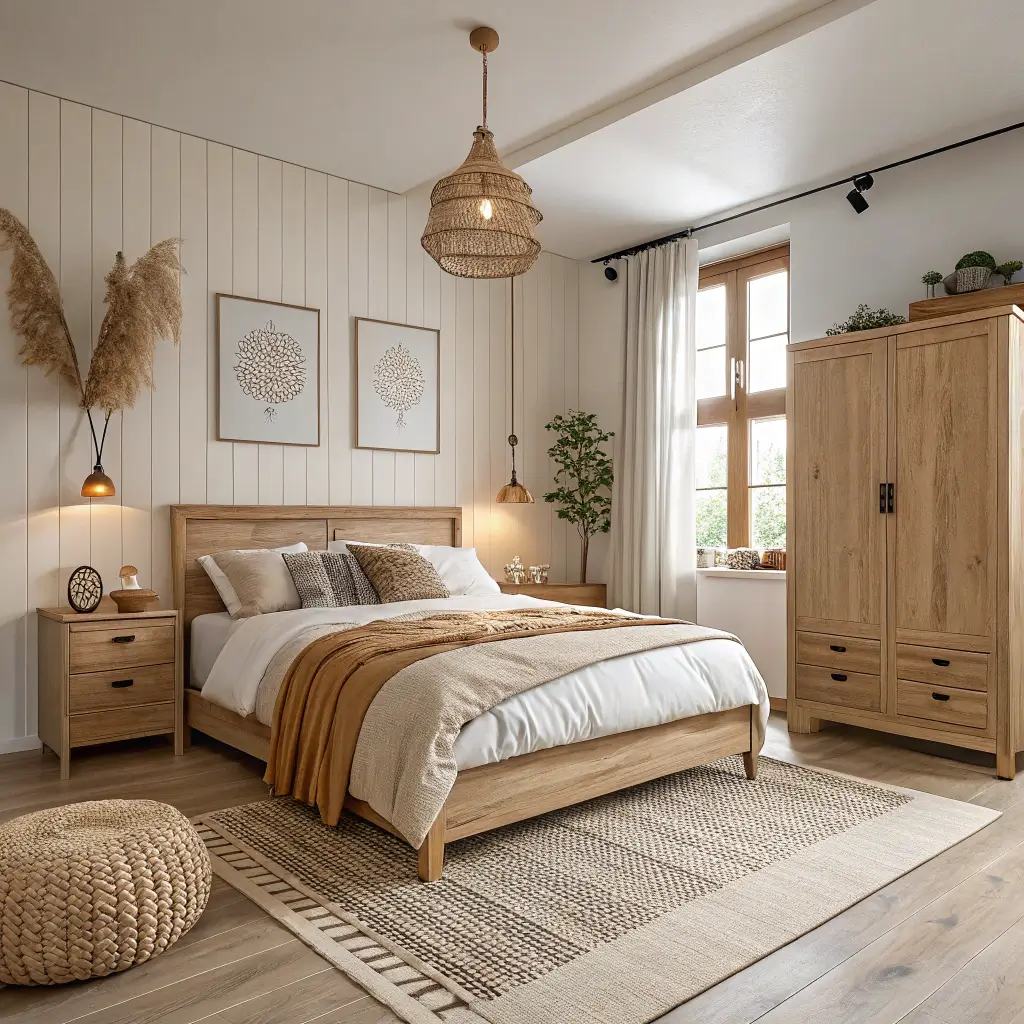
We started with neutrals, and we’re ending with neutrals—because they really are that good. But this time, we’re focusing specifically on warm neutral tones that create a cozy, inviting atmosphere you’ll never want to leave.
Think of warm neutrals as neutrals with yellow, orange, or red undertones. Colors like camel, terracotta, rust, warm brown, cream, and mustard yellow. They’re versatile enough to feel simple but rich enough to feel interesting.
Creating Warmth Through Color
The key to a warm neutral bedroom is balancing temperatures. Too many warm tones can feel overwhelming—like you’re living inside a pumpkin spice latte. (Some people might be into that, actually.)
Start with a warm neutral base:
- Walls in warm white or light beige
- Flooring in warm wood tones
Layer in richer warm accents:
- Terracotta or rust throw pillows
- Camel or cognac leather accessories
- Mustard or ochre blankets
- Warm wood furniture
Add cool elements to balance:
- Green plants for freshness
- Small touches of black for grounding
- White or cream bedding to brighten
Use warm lighting to enhance the effect. Cool white bulbs will fight against your color palette, so opt for warm white (2700K-3000K) bulbs throughout the room.
Wrapping It All Up
So there you have it—15 simple bedroom interior design ideas that prove you don’t need a huge budget or professional help to create a beautiful, restful space. The common thread through all of these ideas? Intentionality. Choosing what you add to your bedroom carefully, keeping what works, and having the courage to get rid of what doesn’t.
Here’s my honest take after years of bedroom experimentation: the best bedroom design is the one that makes YOU feel calm and happy. Ignore trends that don’t resonate with you. Skip colors you hate just because they’re popular. Choose pieces that make sense for your life, your habits, and your aesthetic preferences.
The ideas in this list work because they’re flexible. You can combine elements from multiple styles—maybe you want the Japandi philosophy with the warm neutral palette, or the Scandinavian simplicity with more indoor plants. There are no design police coming to check your bedroom for style violations.
Start small if you’re feeling overwhelmed. Maybe swap out your harsh overhead light for softer options this week. Update your curtain situation next month. Slowly declutter your nightstand and see how much calmer you feel. Simple bedroom design is a journey, not a weekend project.
Now close this article and go look at your bedroom with fresh eyes. What’s one thing you could change today? I’m betting you already know the answer. Trust your instincts, start with what bothers you most, and enjoy the transformation. Your future well-rested self will thank you. 🙂