
15 Fabulous Modern Kids Bedroom Ideas for Functional Fun
Let me guess—you’ve scrolled through Pinterest at 2 AM, saved approximately 847 bedroom ideas, and now you’re completely overwhelmed. Been there, done that, bought the throw pillows I didn’t need. Designing a kids’ bedroom that actually works (and doesn’t look like a toy store exploded) feels like trying to solve a Rubik’s cube blindfolded, right?
Here’s the thing: creating a modern kids bedroom doesn’t require a design degree or a trust fund. What it does require is smart thinking, a dash of creativity, and understanding that kids need spaces that grow with them. I’ve spent years obsessing over interior design, redesigning my nephew’s room twice (sorry, sis), and learning what actually works versus what just looks good on Instagram.
This guide breaks down 15 genuinely fabulous modern kids bedroom ideas that blend style with function. We’re talking about spaces where kids can sleep, play, learn, and dream—without driving you absolutely crazy with clutter. Ready to transform that chaotic cave into something magical? Let’s get into it.
1. Minimalist Scandinavian Kids Bedroom
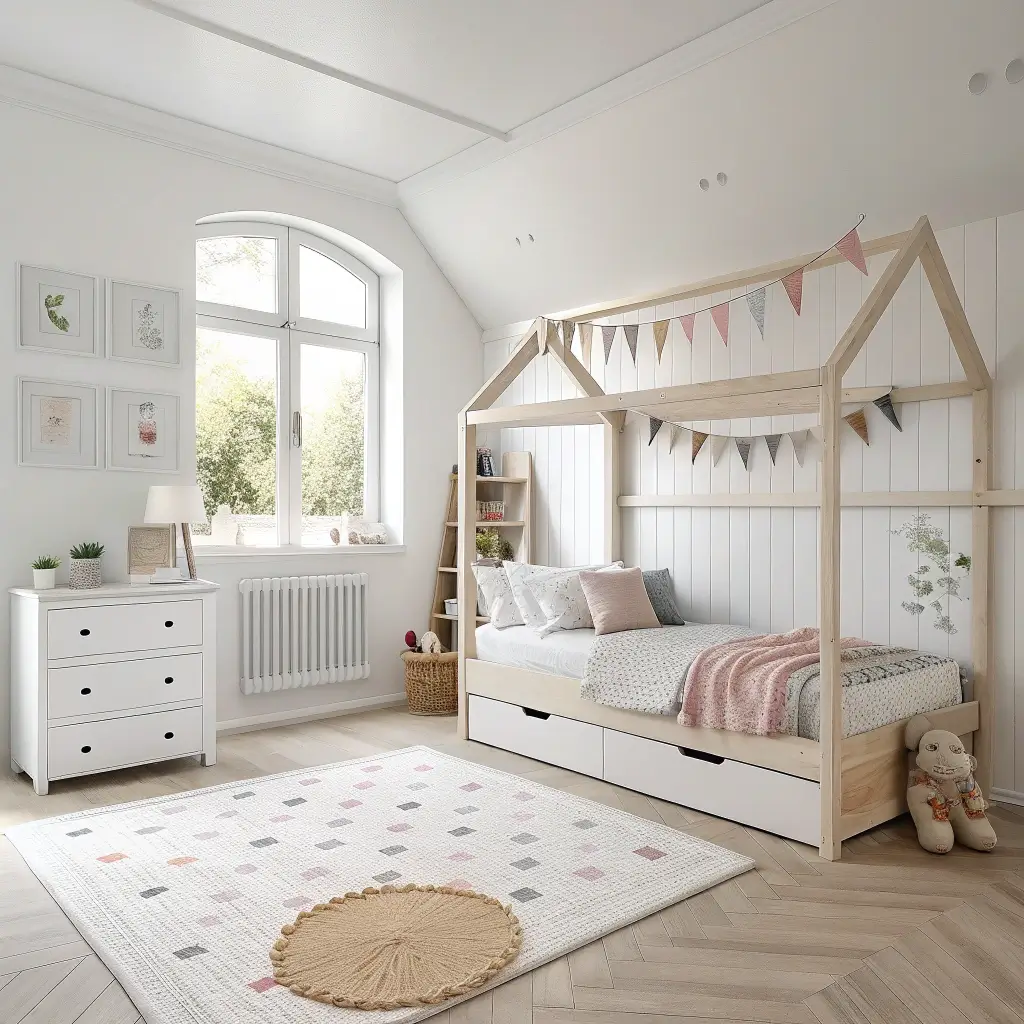
The Scandinavian aesthetic has completely dominated the design world, and honestly? It deserves the hype. This style proves that less really can be more, even in a kids’ space where “more” seems to be the default setting.
Why Scandi Works for Kids
The beauty of Scandinavian design lies in its simplicity and functionality. You’re working with a neutral color palette—think whites, soft grays, and natural wood tones—that creates a calm environment perfect for sleep and concentration. And let’s be honest, anything that promotes calmness in a child’s space is worth its weight in gold.
What I love most about this approach is how it grows with your child. That minimalist white bed frame? Still relevant when they’re fifteen. The natural wood furniture? Timeless. You’re not redecorating every two years because unicorn themes went out of style.
Key Elements to Include
- Light wood furniture with clean lines and no ornate details
- White or light gray walls to maximize natural light
- Cozy textiles like chunky knit blankets and linen curtains
- Simple, purposeful storage (baskets, wooden crates, floating shelves)
- One or two statement pieces like a unique pendant light or minimal wall art
The trick is resisting the urge to over-accessorize. Every item should earn its place in the room. If it doesn’t serve a purpose or bring genuine joy, it doesn’t belong. Marie Kondo would be proud.
2. Space-Themed Adventure Room

Every kid goes through a space phase, but some never grow out of it (looking at you, NASA enthusiasts). A space-themed bedroom taps into that sense of wonder and exploration while still looking sophisticated enough that you won’t cringe walking past it.
Making It Modern, Not Cheesy
Here’s where most parents go wrong: they buy every rocket-shaped item they can find and end up with a room that screams “discount party store.” The key to a modern space-themed bedroom is subtlety and quality over quantity.
Think deep navy walls that mimic the night sky rather than cartoon planets plastered everywhere. Consider a constellation mural instead of glow-in-the-dark star stickers (though honestly, those stickers hit different when you’re eight years old). The goal is creating an atmosphere, not a theme park.
Design Elements That Work
- Deep blue or black accent wall as your cosmic backdrop
- Metallic accents in silver or copper for that futuristic feel
- Strategic lighting like LED strips or a moon-shaped lamp
- Quality bedding with subtle star patterns or geometric designs
- Educational elements like a telescope or solar system mobile
IMO, the best space rooms I’ve seen incorporate learning opportunities. A real star map, books about astronomy, or a small telescope near the window turns the theme into an educational experience. Now that’s a win-win.
3. Gender-Neutral Pastel Bedroom

Can we collectively agree that the pink-for-girls, blue-for-boys era is officially over? Gender-neutral design isn’t just trendy—it’s practical, especially if you’re planning for future siblings or simply want to avoid stereotypical color schemes.
The New Neutral Palette
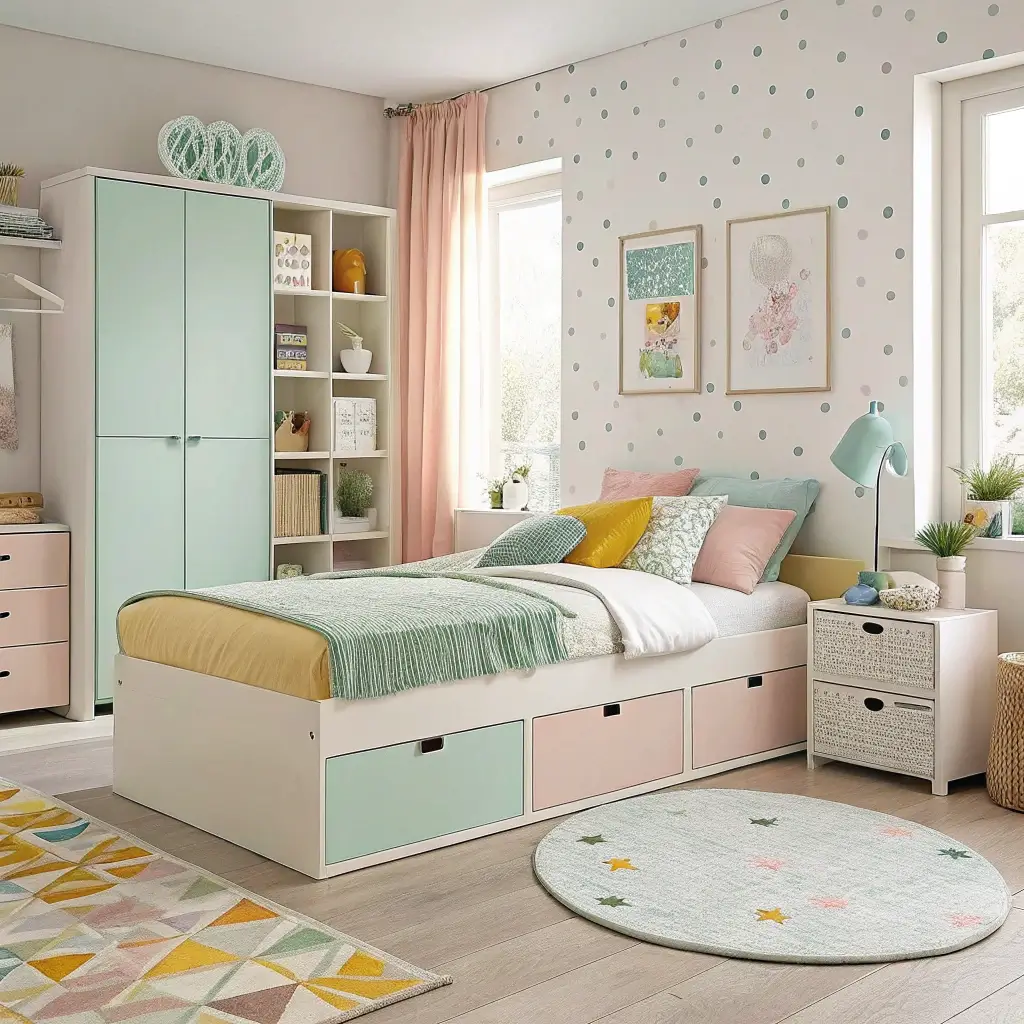
Forget boring beige. Modern gender-neutral rooms embrace soft pastels like sage green, dusty rose, warm terracotta, and muted yellows. These colors feel fresh and contemporary while creating a soothing environment for any child.
The magic happens when you layer these soft tones together. A sage green wall paired with blush pink textiles and natural wood furniture creates depth without chaos. It’s sophisticated enough that you’d actually want to spend time in there yourself.
Building the Perfect Palette
- Choose one dominant pastel for walls or large furniture pieces
- Add 2-3 complementary soft tones through bedding, rugs, and curtains
- Ground the room with neutrals like white, cream, or light gray
- Incorporate natural materials (wood, rattan, cotton) for warmth
- Use geometric patterns sparingly for visual interest
The result? A room that feels intentional and designed rather than defaulting to gender expectations. Plus, it photographs beautifully—not that we’re designing for Instagram or anything… 🙂
4. Loft Bed with Study Nook
If you’re working with limited square footage (and who isn’t these days?), a loft bed setup might be your new best friend. This configuration literally creates space where none existed before. It’s basically magic, but make it furniture.
Maximizing Vertical Space
The concept is simple: elevate the bed to create usable space underneath. But the execution is where things get interesting. That under-bed area can become a dedicated study zone, a cozy reading spot, or even a play area depending on your child’s needs.
I’ve seen this setup transform tiny bedrooms into surprisingly functional spaces. One friend installed a loft bed for her seven-year-old, and suddenly there was room for a proper desk, bookshelf, and still space to move around. It was honestly mind-blowing.
Essential Components
- Sturdy loft bed frame with safety rails (non-negotiable)
- Proper lighting for the study area below—no dark cave vibes
- Compact desk that fits the space without overwhelming it
- Comfortable seating (ergonomic chair for homework, bean bag for casual reading)
- Wall-mounted storage to keep the floor clear
The key is ensuring the space underneath feels intentional, not like an afterthought. Good lighting transforms everything—consider LED strips along the bed frame or a stylish desk lamp that provides adequate illumination for homework.
5. Smart Storage Modular Bedroom
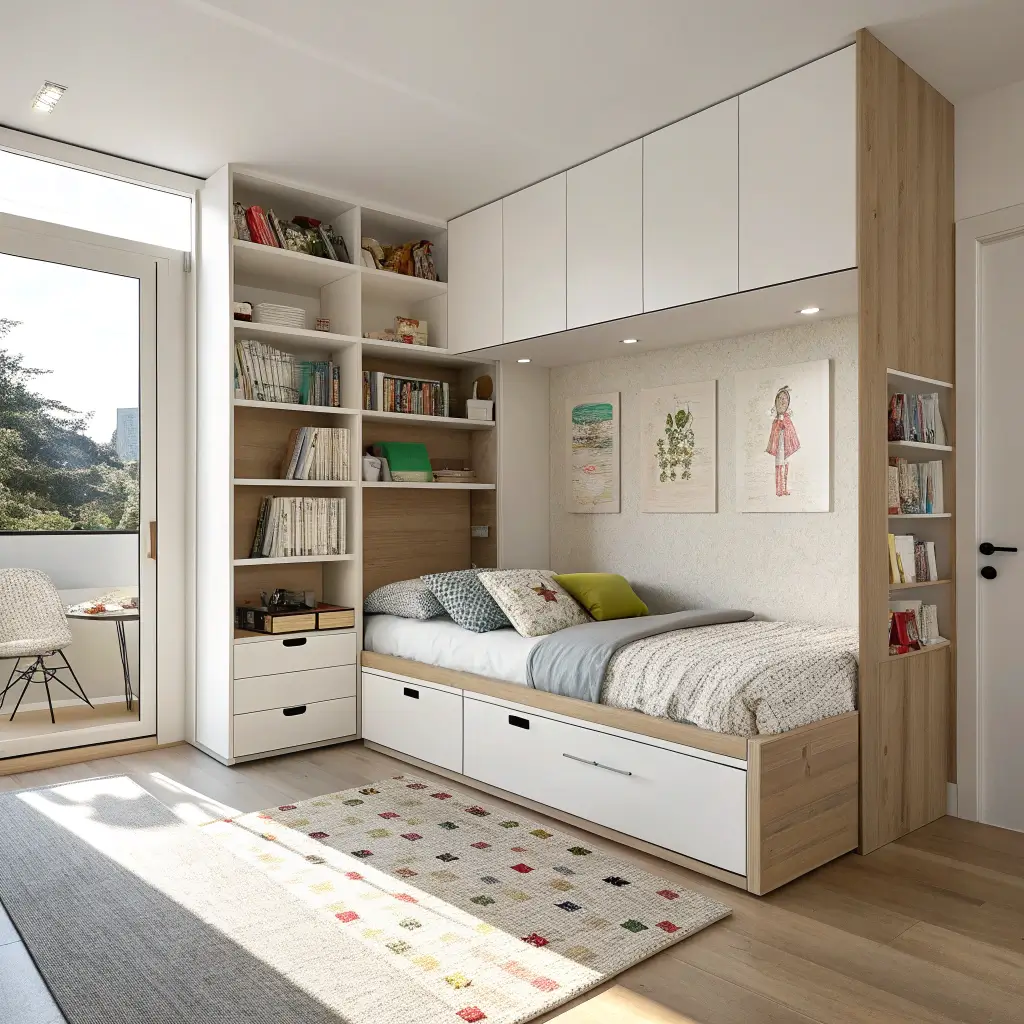
Storage. The eternal struggle of every parent’s existence. Kids accumulate stuff at an alarming rate, and without a solid storage strategy, even the most beautiful room descends into chaos within days. Sometimes hours. Let’s be real—sometimes minutes.
The Modular Advantage
Modular storage systems adapt as your child grows and their needs change. What works for a toddler’s toys won’t work for a teenager’s tech gadgets, but modular pieces can be reconfigured endlessly. You’re investing in flexibility.
Think cube storage units that can be stacked horizontally when kids are small and vertically as they grow taller. Consider drawer inserts that change from toy compartments to clothing organizers. The system evolves without requiring complete replacement.
Smart Storage Solutions
- Cube storage systems with interchangeable bins and baskets
- Under-bed drawers for seasonal clothing or extra bedding
- Wall-mounted pegboards that grow with changing interests
- Labeled containers (teach organization early—future you will thank you)
- Multi-functional furniture like ottomans with hidden storage
FYI, the secret weapon here is accessibility. Storage that kids can actually reach and use independently means they’re more likely to put things away. Revolutionary concept, I know.

6. Nature-Inspired Woodland Room
There’s something deeply calming about bringing the outdoors inside, and kids respond to natural elements in incredible ways. A woodland-themed room creates a nurturing environment that stimulates imagination while promoting relaxation.
Creating an Indoor Forest
This theme goes way beyond slapping some tree decals on the wall (though those can work if done well). True woodland design incorporates natural materials, earthy colors, and organic shapes throughout the entire space.
Think wooden furniture with visible grain, woven baskets for storage, and textiles in forest greens and warm browns. The room should feel like a cozy cabin in the woods—inviting, natural, and quietly magical.
Woodland Design Elements
- Natural wood furniture with minimal finish to show grain patterns
- Earthy color palette including forest green, brown, beige, and mustard
- Botanical prints or murals featuring trees, leaves, or woodland creatures
- Organic textures like linen, wool, cotton, and rattan
- Real or realistic faux plants for that living element
Ever noticed how kids gravitate toward nature even in urban environments? This design taps into that innate connection. Plus, it’s incredibly forgiving—natural materials age beautifully and minor wear just adds character.
Also Read: 15 Beautiful Modern Bedroom Interior Ideas and Trendy Designs
7. Monochrome Modern Playroom
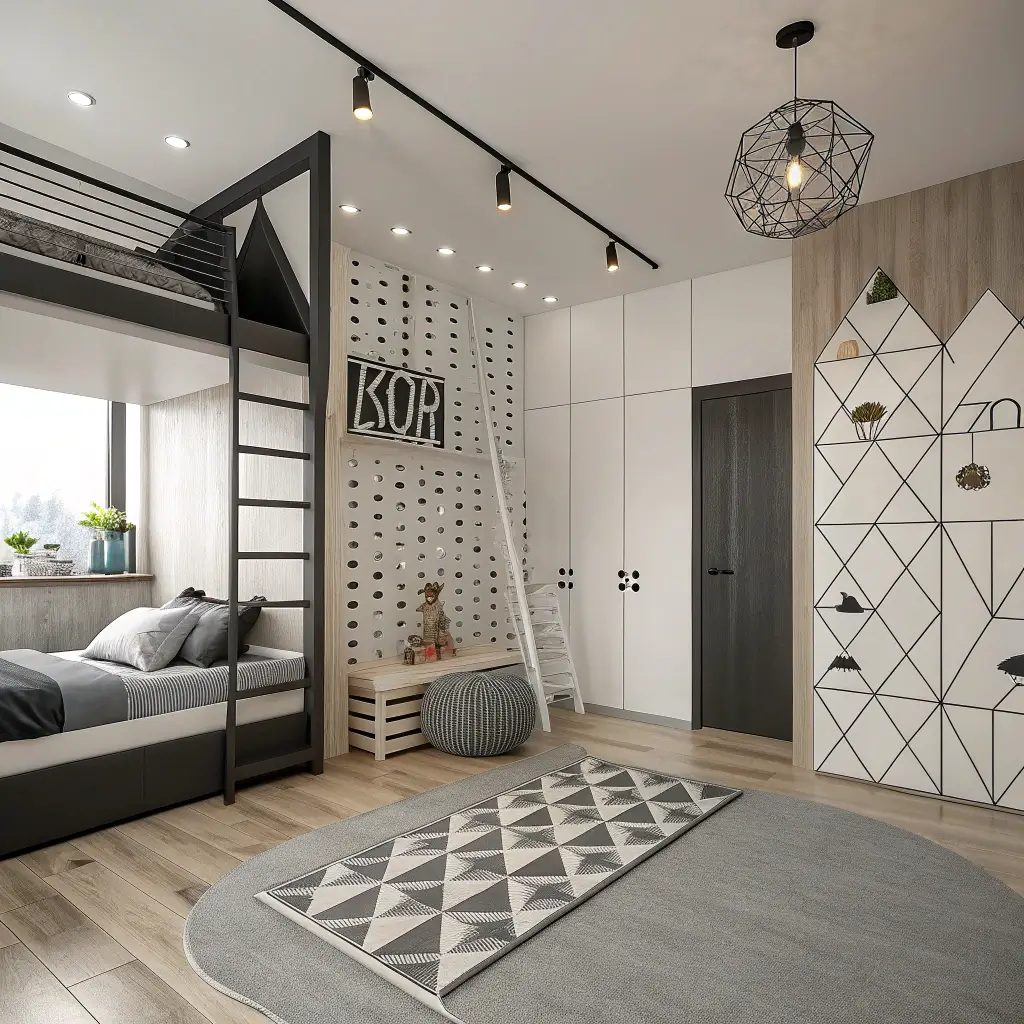
For the design-forward parents who want their kid’s space to actually complement their home aesthetic, monochrome is your answer. This approach proves that kids’ rooms don’t have to be rainbow explosions to be engaging.
The Power of One Color
A monochrome room uses varying shades and tones of a single color family to create depth and visual interest. Black and white is the classic choice, but you can also go monochrome with grays, blues, or even blush pinks.
The key is playing with texture and tone. Different materials in the same color family—a velvet pillow, a cotton rug, a wooden shelf all in varying shades of gray—create a sophisticated space that still feels dynamic and playful.
Making Monochrome Work
- Choose your base color and commit to it fully
- Layer different shades from light to dark throughout the room
- Mix textures to prevent the space from feeling flat
- Add one metallic accent (gold or silver) for a touch of glamour
- Include graphic patterns like stripes or geometric shapes for visual interest
The toys will inevitably add color—and that’s actually okay. Against a monochrome backdrop, colorful toys become accidental art rather than visual chaos. Clever, right?
8. Artistic Wall Mural Bedroom
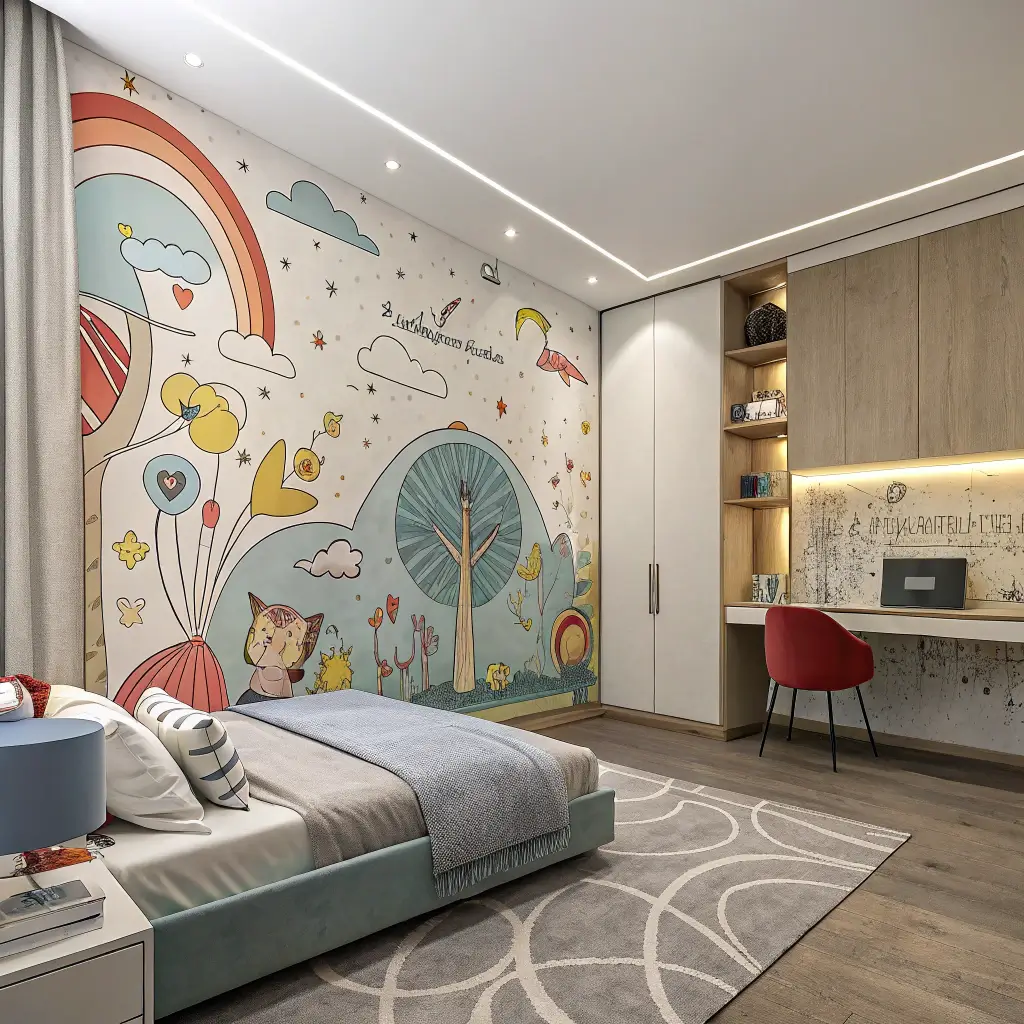
Nothing transforms a room quite like a statement mural. We’re not talking about those peel-and-stick cartoon characters from the early 2000s (no shade, they served their purpose). Modern murals are legitimate art pieces that turn walls into conversation starters.
Choosing Your Mural
The mural should reflect your child’s interests while being timeless enough to remain relevant for years. Abstract art, mountain landscapes, ocean scenes, and architectural drawings all work beautifully. They’re not age-specific, so they won’t feel juvenile as your child grows.
I recently saw a room with a watercolor mountain mural that literally took my breath away. The soft grays and blues created this serene atmosphere that worked for a toddler but would still be cool for a teenager. That’s the sweet spot you’re aiming for.
Mural Tips and Tricks
- Commission a local artist for something truly unique (supporting small business too!)
- Use high-quality peel-and-stick murals for a budget-friendly option
- Choose removable options if you want flexibility to change things up
- Keep the rest of the room simple to let the mural be the star
- Consider the room’s lighting when selecting mural colors
One wall is usually enough. You want the mural to be an accent, not overwhelming. The other walls can stay neutral, allowing that statement piece to really shine.
9. Convertible Toddler-to-Teen Room

Here’s a radical thought: what if you designed the room once and it actually lasted? Convertible design focuses on investment pieces that adapt through childhood stages, saving money and reducing waste in the long run.
Planning for the Long Game
This approach requires thinking ahead—way ahead. That adorable toddler bed might be perfect now, but in three years, you’ll be shopping again. A convertible crib that transforms into a toddler bed and eventually a full-size bed? Now we’re talking smart design.
The same principle applies to furniture and decor. Neutral walls allow for easily changeable accents. Quality furniture in classic styles works for any age. Storage systems that reconfigure adapt to changing needs without replacement.
Investment Pieces Worth It
- Convertible beds that grow from crib to full-size
- Quality dressers and desks in timeless styles
- Adjustable shelving that repositions as kids grow
- Neutral base colors for walls and large furniture
- Changeable soft goods (bedding, curtains, rugs) for easy updates
Think of it like a capsule wardrobe for rooms. The foundations stay consistent while accessories change with trends and preferences. Your future self—and wallet—will appreciate this strategy.
Also Read: 10 Sophisticated Modern Bedroom Design Ideas and Smart Storage
10. Industrial Chic Kids Bedroom
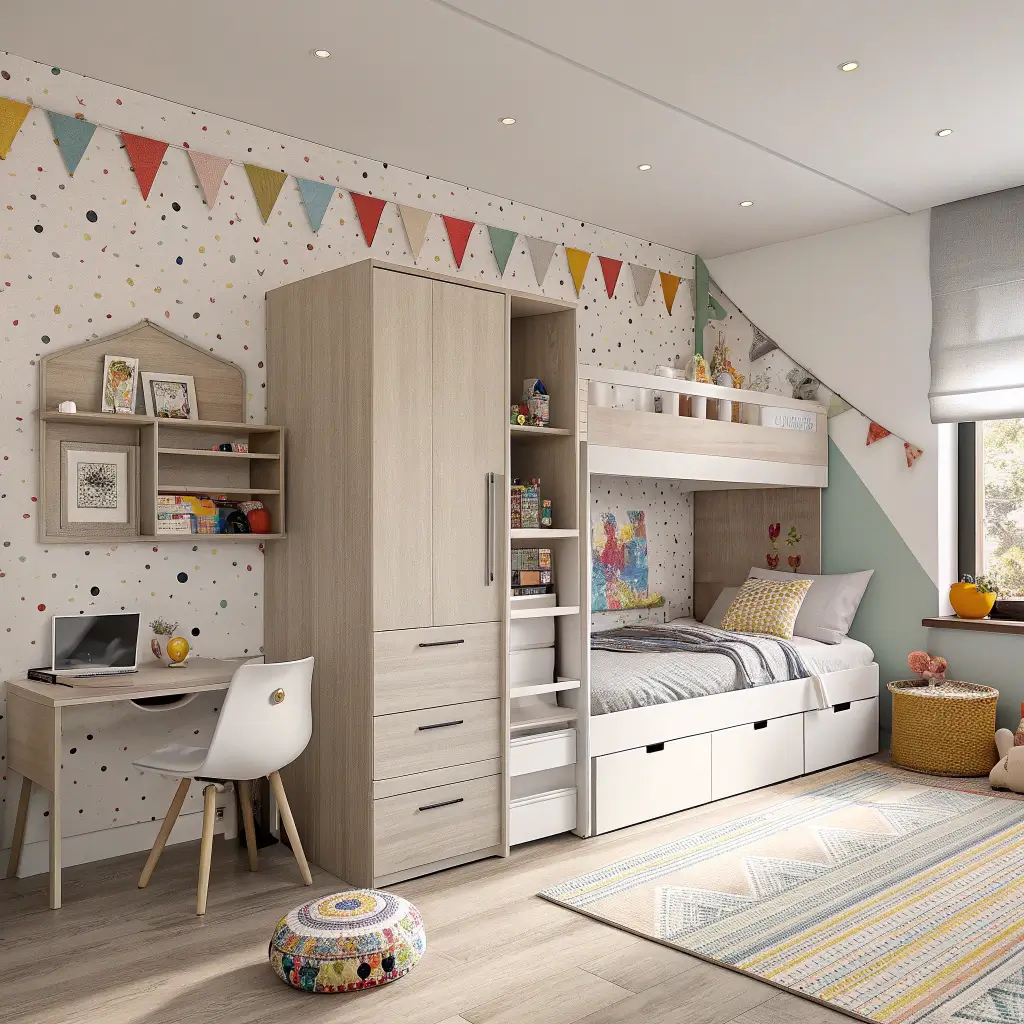
Industrial style might seem too “adult” for a kids’ room, but when done thoughtfully, it creates an incredibly cool space that feels mature without being boring. This aesthetic works especially well for older kids and tweens who want something edgier.
Softening the Industrial Edge
The trick is balancing raw industrial elements with softer, more playful touches. Metal bed frames and exposed bulb lighting get tempered by cozy textiles, colorful accents, and age-appropriate art. The result is urban-cool without feeling cold or unwelcoming.
Brick accent walls (real or faux), metal shelving, and concrete-look finishes create that industrial backbone. Then you layer in warmth through thick rugs, soft bedding, and personal touches that make it feel lived-in and loved.
Industrial Elements to Include
- Metal bed frames in black or matte finishes
- Open shelving with industrial-style brackets
- Edison bulb or cage lighting for that factory aesthetic
- Exposed brick or concrete (faux options work great)
- Leather accents through poufs, storage bins, or headboards
The beauty of this style? It’s practically indestructible. Industrial design celebrates imperfections, so scuffs and wear just add to the character. Perfect for kids who are, shall we say, enthusiastic about their environment.
11. Cozy Reading & Play Corner
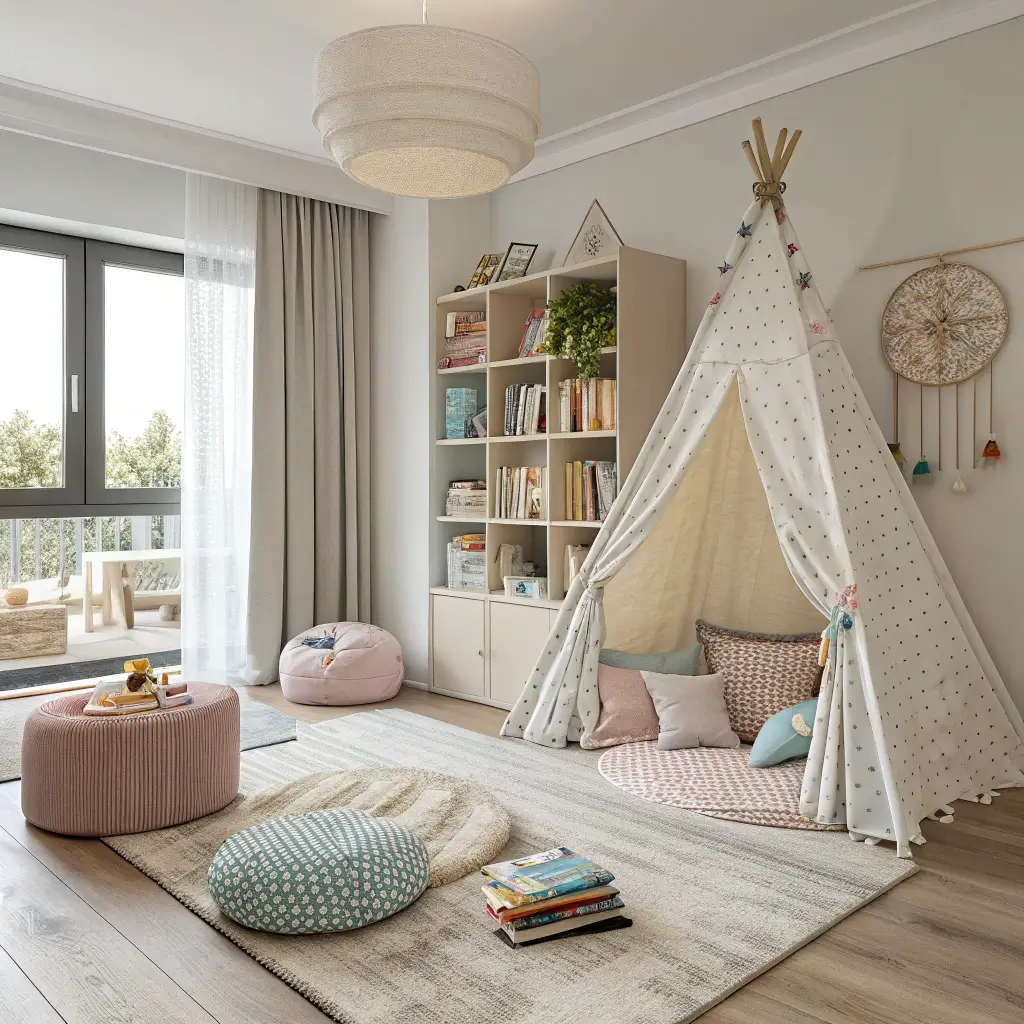
Not every bedroom needs a complete overhaul. Sometimes the most impactful change is creating a dedicated zone within the existing space. A cozy corner for reading and play becomes a sanctuary within the room, a special spot that’s entirely their own.
Designing the Perfect Nook
The best reading corners feel like secret hideaways. Think canopy tents, floor cushions, and soft lighting that creates an intimate atmosphere separate from the rest of the room. Kids gravitate toward these cozy spaces naturally—they’re basically building blanket forts without the structural engineering challenges.
Position the corner near a window for natural light during daytime reading, but include ambient lighting for evening use. Low bookshelves keep favorites within reach, encouraging independent reading habits. It’s functional and adorable. :/
Corner Essentials
- Comfortable seating (bean bags, floor cushions, or a small loveseat)
- Soft lighting like string lights or a low-wattage lamp
- Accessible book storage at child height
- Canopy or tent element for that enclosed, cozy feeling
- Plush rug to define the space and add warmth
This addition often becomes a child’s favorite spot in the entire house. It’s their retreat, their reading sanctuary, their imagination station. And it takes up minimal space while making maximum impact.
12. Futuristic Tech-Integrated Room
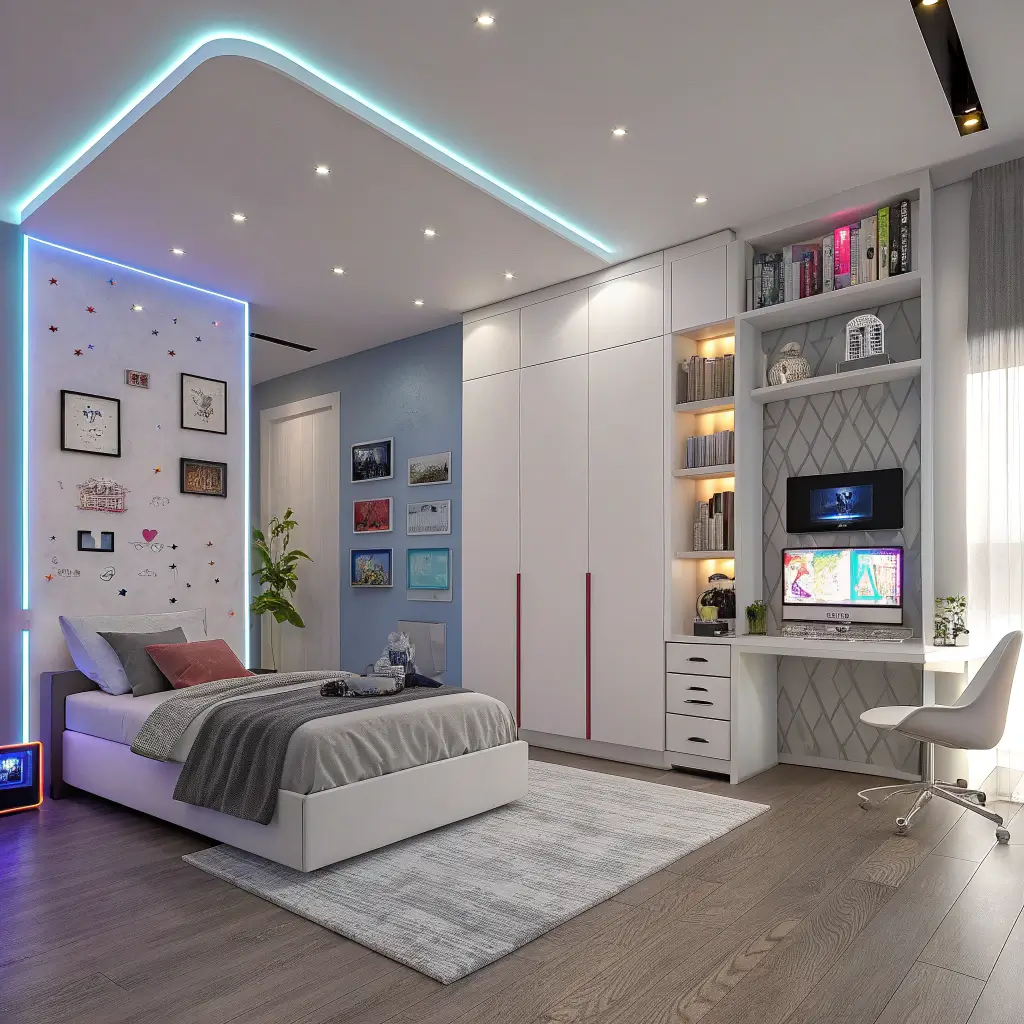
Like it or not, technology is part of modern childhood. Rather than fighting it, smart design integrates tech thoughtfully into the bedroom while maintaining boundaries around screen time and digital wellness.
Smart Tech Integration
We’re talking beyond just a tablet charging station. Modern tech-integrated rooms include smart lighting that adjusts for homework versus relaxation, voice-controlled elements for accessibility, and built-in solutions for managing devices without cords everywhere.
Color-changing LED strips controlled by an app allow kids to customize their space’s mood. Smart speakers play bedtime stories or morning wake-up routines. Charging stations keep devices organized and out of sight when not in use. It’s the future, and it’s actually pretty cool.
Tech Features to Consider
- Smart lighting systems with dimming and color options
- Integrated charging stations hidden within furniture
- Voice-controlled devices for music, stories, and alarms
- Quality projection systems for movies or educational content
- Cable management solutions to eliminate cord chaos
The key is balance. Technology should enhance the room’s function without dominating it. Designated tech-free zones (like the bed itself) maintain healthy boundaries while still embracing modern conveniences.
Also Read: 15 Dreamy Modern Luxury Bedroom Ideas That Feel Expensive
13. Vibrant Pop Color Accents

Sometimes you want color—real, bold, unapologetic color—without committing to purple walls for the next decade. The pop color approach keeps the base neutral while using vibrant accents for personality and energy.
Mastering the Pop
This strategy is incredibly flexible. Neutral walls and furniture create a calm foundation, then accessories in bold colors bring life to the space. When your child inevitably moves on from their current favorite color, you’re swapping out pillows and art, not repainting entire rooms.
Choose one or two bold accent colors and commit to them throughout the space. A bright yellow paired with electric blue, or coral combined with emerald green—these combinations pop against neutral backgrounds and create cohesive, energetic rooms.
Where to Add Color
- Bedding and pillows (easily changeable as tastes evolve)
- Area rugs that define zones and add visual interest
- Statement furniture pieces like a colorful chair or dresser
- Wall art and prints that can rotate with changing interests
- Storage bins and accessories for practical color pops
The beauty of this approach is its adaptability. Your base investment stays constant while accessories rotate. It’s like having a new room every few years without the renovation costs.
14. Boho Modern Creative Space
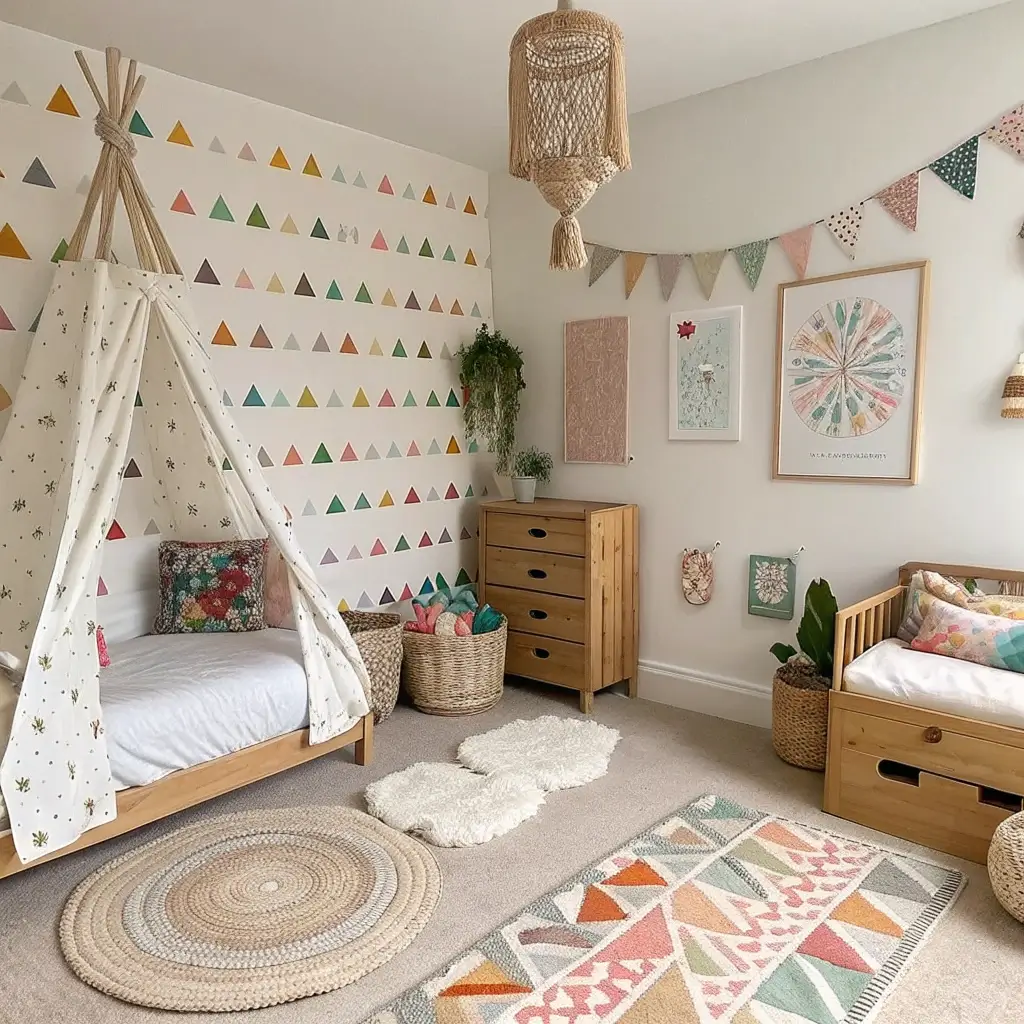
For the free-spirited kid who marches to their own drumbeat, a boho-modern room provides the perfect creative haven. This style celebrates individuality, artistic expression, and collected treasures—basically everything that makes kids wonderfully unique.
Blending Boho and Modern
Pure bohemian can veer toward cluttered; pure modern can feel sterile. The magic happens when these styles meet in the middle. Clean lines and organized spaces from modern design balance the layered textiles, eclectic art, and handmade elements of bohemian style.
Think a simple white bed frame dressed with a colorful, textured bedspread. Add a macramé wall hanging, some potted plants, and a collection of globally-inspired accessories. The room feels curated and intentional while still celebrating personality.
Boho-Modern Must-Haves
- Layered textiles including throw blankets, pillows, and rugs
- Woven and macramé elements for that handmade touch
- Plants (real or high-quality faux) for life and color
- Eclectic art collection that grows with your child
- Natural materials like rattan, jute, and wood
This style practically begs for personal touches. Kids can add their own creations, travel souvenirs, or collected treasures without disrupting the aesthetic. It’s a room that tells their story.
15. Minimalist Bunk Bed Setup
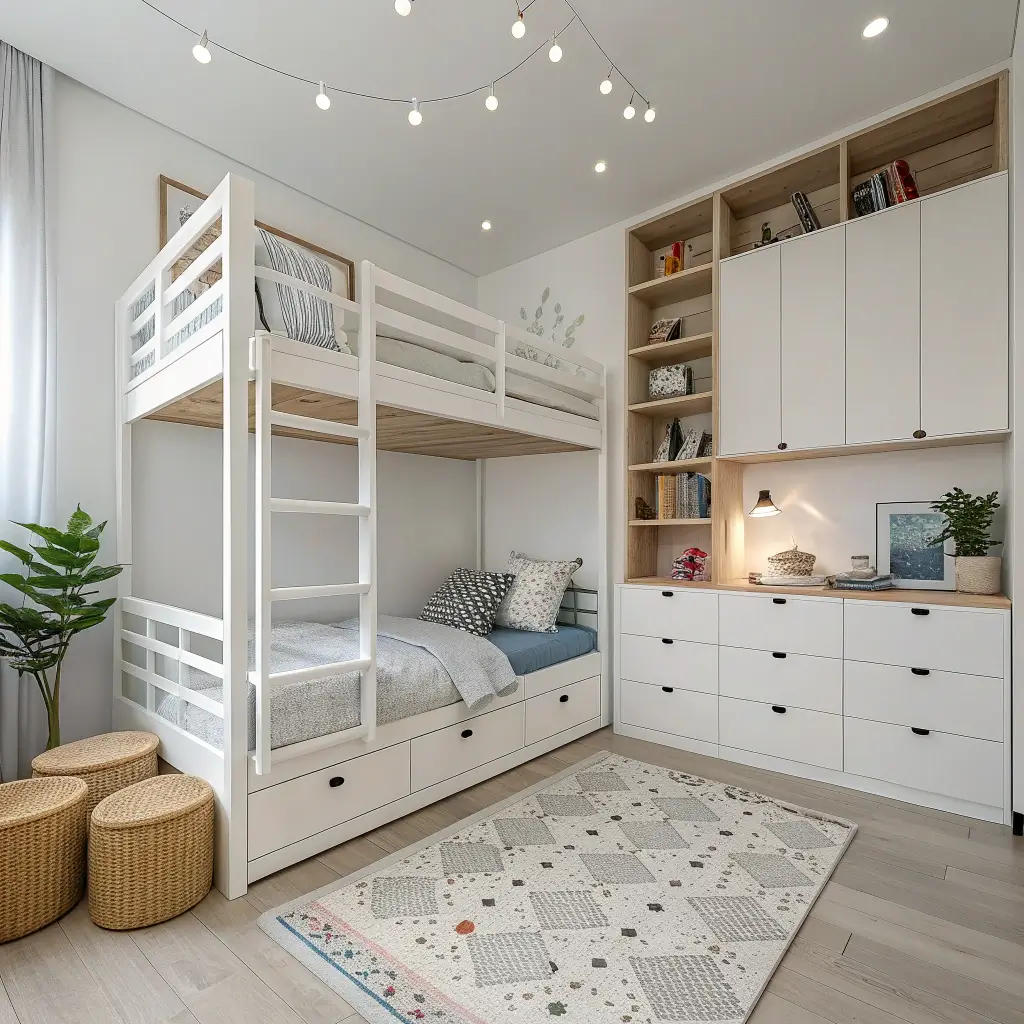
When siblings share a room or sleepovers are frequent, bunk beds make obvious sense. But modern bunk setups have evolved far beyond basic metal frames—today’s designs are architectural statements that maximize every inch.
Elevating the Bunk Bed
Contemporary bunk beds incorporate built-in storage, integrated lighting, and privacy features that make shared spaces actually work. Each child gets their own defined zone within the larger room, reducing conflicts and creating personal sanctuaries.
Look for designs with curtain options for privacy, individual reading lights, and small shelves for personal items. These features transform basic bunks into bedroom-within-a-bedroom setups that give each child ownership of their space.
Features to Prioritize
- Solid construction from quality materials (safety first, always)
- Built-in storage including drawers, shelves, or cabinets
- Individual lighting for each sleeping area
- Privacy options like curtains or partial walls
- Easy access with sturdy ladders or stairs
A well-designed bunk setup can make a shared room feel spacious rather than cramped. The key is treating each bunk as a mini-room and providing the amenities needed for genuine comfort and personalization.
Bringing It All Together
Creating a modern kids bedroom that balances function with fun isn’t about following a single trend—it’s about understanding your child’s needs, your space’s limitations, and your own aesthetic preferences. The best rooms I’ve encountered blend multiple ideas, taking elements from different styles to create something uniquely suited to their occupants.
Remember these core principles regardless of which direction you choose:
- Prioritize function without sacrificing style
- Invest in quality pieces that grow with your child
- Build in adequate storage (then add more because you’ll need it)
- Create zones for sleeping, playing, and learning
- Leave room for personalization so kids feel ownership of their space
The perfect kids’ bedroom doesn’t exist in magazine spreads—it exists in the lived experience of the child who inhabits it. It’s messy sometimes, constantly evolving, and absolutely, wonderfully theirs.
So which idea resonated most with you? Maybe it’s the calm simplicity of Scandinavian design, or perhaps the creative energy of a boho space calls to you. Whatever direction you choose, approach it with flexibility and a sense of adventure. Design is meant to be fun, even when it’s for the smallest members of your household.
Now stop scrolling for inspiration and start creating. Your little one’s dream room is waiting to happen. And hey—if it doesn’t turn out perfect the first time? There’s always next weekend and a fresh coat of paint. Good luck! 🙂