
15 Stunning Minimalist Living Room Ideas and Stylish Modern Touches
You know that feeling when you walk into someone’s living room and it just breathes? No clutter screaming for attention, no random knick-knacks collecting dust, just pure, intentional calm.
That’s what we’re chasing here, and trust me, I’ve made every mistake in the book trying to get there.
After transforming my own chaotic living space into something that actually makes me want to spend time in it (shocking, right?), I’ve learned that minimalism isn’t about having nothing – it’s about having exactly what you need and loving every bit of it.
So grab your coffee, and let’s chat about 15 minimalist living room ideas that won’t leave your space feeling like a sterile hospital waiting room.
Scandinavian Minimalist Living Room
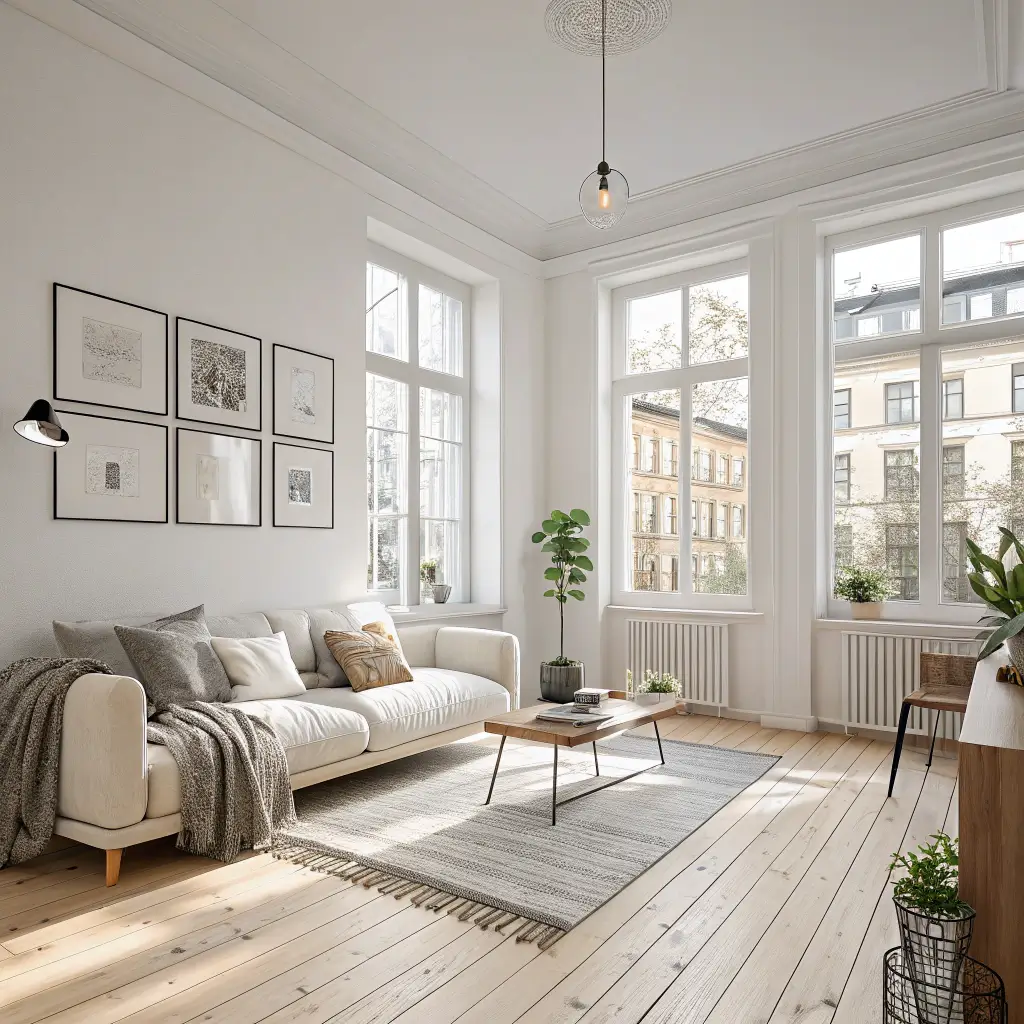
Let me tell you, the Scandinavians really cracked the code on this one. I spent three weeks in Copenhagen last year, and every single living room I saw made me want to throw out half my stuff immediately. The secret? They master the art of hygge meets functionality like nobody else.
Picture this: white walls that somehow don’t feel boring, a low-profile gray sofa that looks impossibly comfortable, and maybe one gorgeous wooden coffee table that costs more than your monthly rent (but totally worth it, IMO). The Scandi approach focuses on:
- Light wood tones – think bleached oak or birch
- Cozy textiles in neutral shades
- Maximum natural light exploitation
- One or two statement pieces max
What really sells this style? The way Scandinavians layer textures without adding clutter. You’ll see a chunky knit throw casually draped over that minimalist sofa, or a single sheepskin rug that somehow ties everything together. They prove you don’t need twenty decorative pillows to make a space feel inviting.
Making It Work in Your Space
Start with your biggest furniture pieces and keep them low to the ground. Scandinavian design loves that horizontal emphasis – it makes your ceiling feel higher and your room more spacious. Paint everything white (yes, even that accent wall you’re emotionally attached to), then add warmth through natural materials.
Monochrome Minimalist Lounge
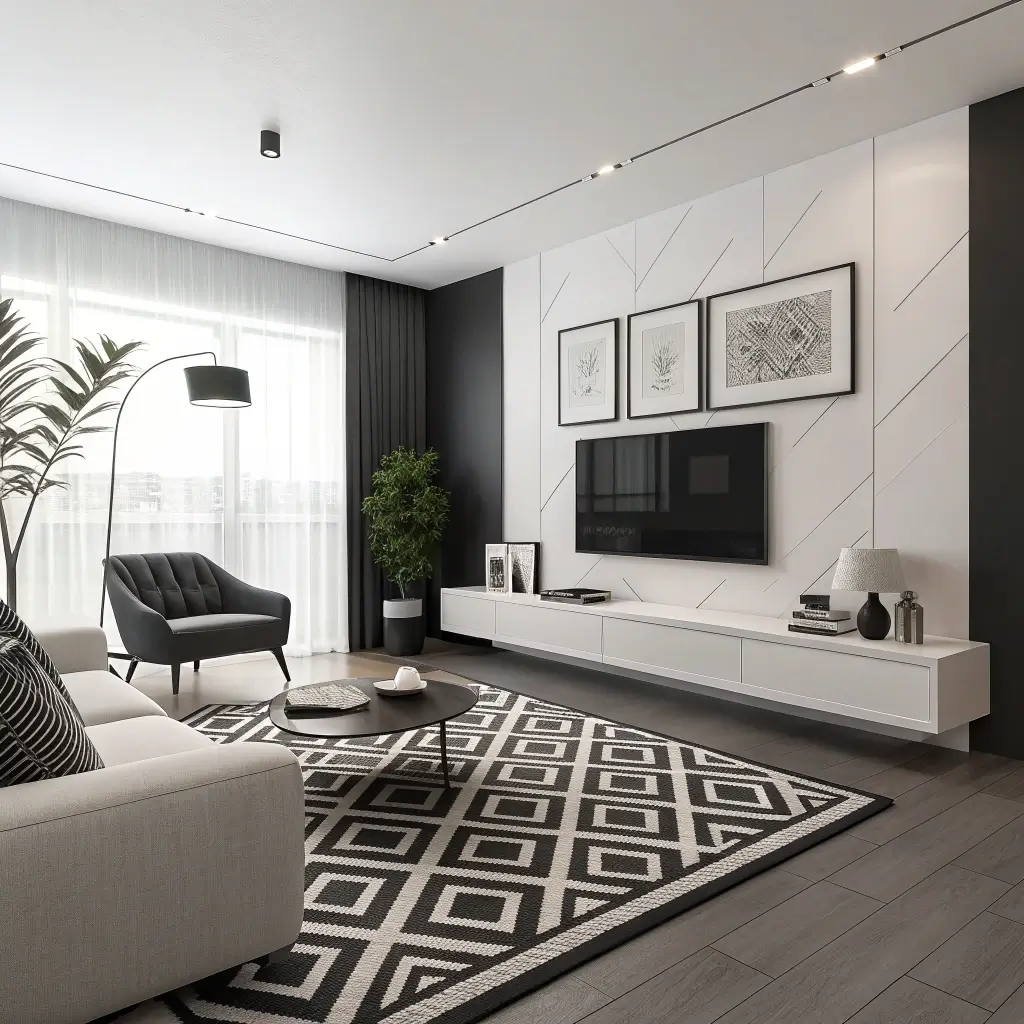
Black and white rooms used to terrify me. Seemed like you’d need to be some kind of design genius to pull it off without looking like a chess board exploded. Turns out, I was overthinking it (shocker).
The monochrome minimalist approach strips away the decision fatigue of choosing colors. You’re working with shades, not hues, and that simplification changes everything. Here’s what makes it work:
Your base stays white – walls, ceiling, maybe even floors if you’re feeling brave. Then you layer in black through furniture and select accessories. The magic happens in the gray zones between these extremes. Think charcoal sofas, slate coffee tables, or ash-colored rugs.
The Psychology Behind Monochrome
Ever noticed how luxury hotels often use monochrome palettes? There’s psychology at play here. Without color distractions, your brain processes the space more calmly. You focus on shapes, textures, and light instead of trying to make sense of competing colors.
I switched my living room to monochrome six months ago, and my anxiety levels dropped noticeably. Coincidence? Maybe. But I’m not changing it back.
Small Space Minimalist Living Room
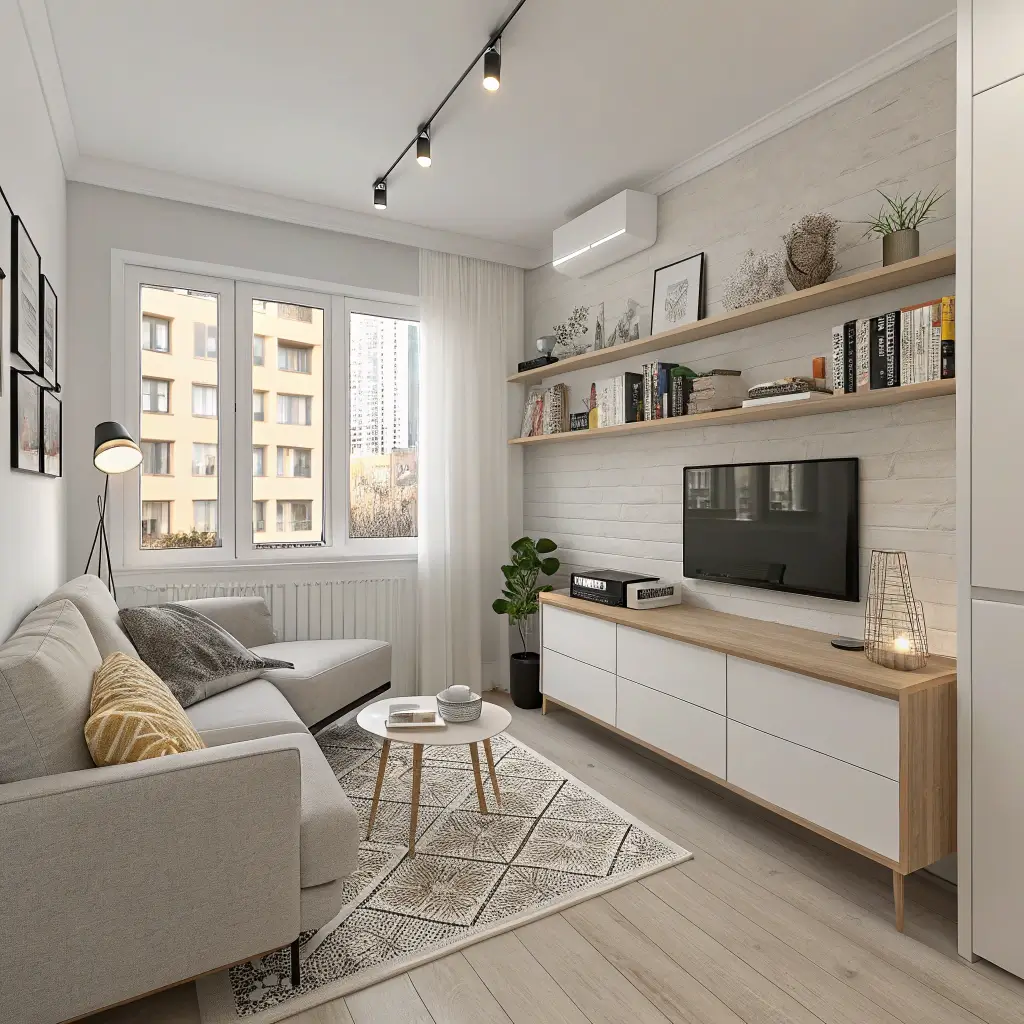
Ah, the eternal struggle of city living. How do you create a minimalist paradise when your entire living room could fit in someone’s walk-in closet? Been there, survived that, got the organizational bins to prove it.
Small spaces actually benefit more from minimalism than large ones. Every single item needs to earn its keep. No room for that decorative bowl that serves no purpose except catching dust and old receipts.
Here’s what works:
- Multi-functional furniture is your best friend
- Wall-mounted everything (seriously, get that TV off the console)
- Light colors to maximize perceived space
- One focal point only – pick your battle
The Art of Vertical Living
When you can’t go out, go up. I discovered this after stubbornly trying to cram furniture along my walls for years. Vertical storage changes the game entirely. Floor-to-ceiling shelving (the open kind, we’ll talk about that later) draws the eye upward and makes your ceiling seem miles high.
Skip the coffee table if your space is truly tiny. I know, controversial opinion, but hear me out. Side tables or nesting tables give you surface space when needed without permanently eating up your floor real estate.
Also Read: 15 Stunning Luxury Living Room Ideas for Elegant Home Style
Minimalist Living Room with Natural Light
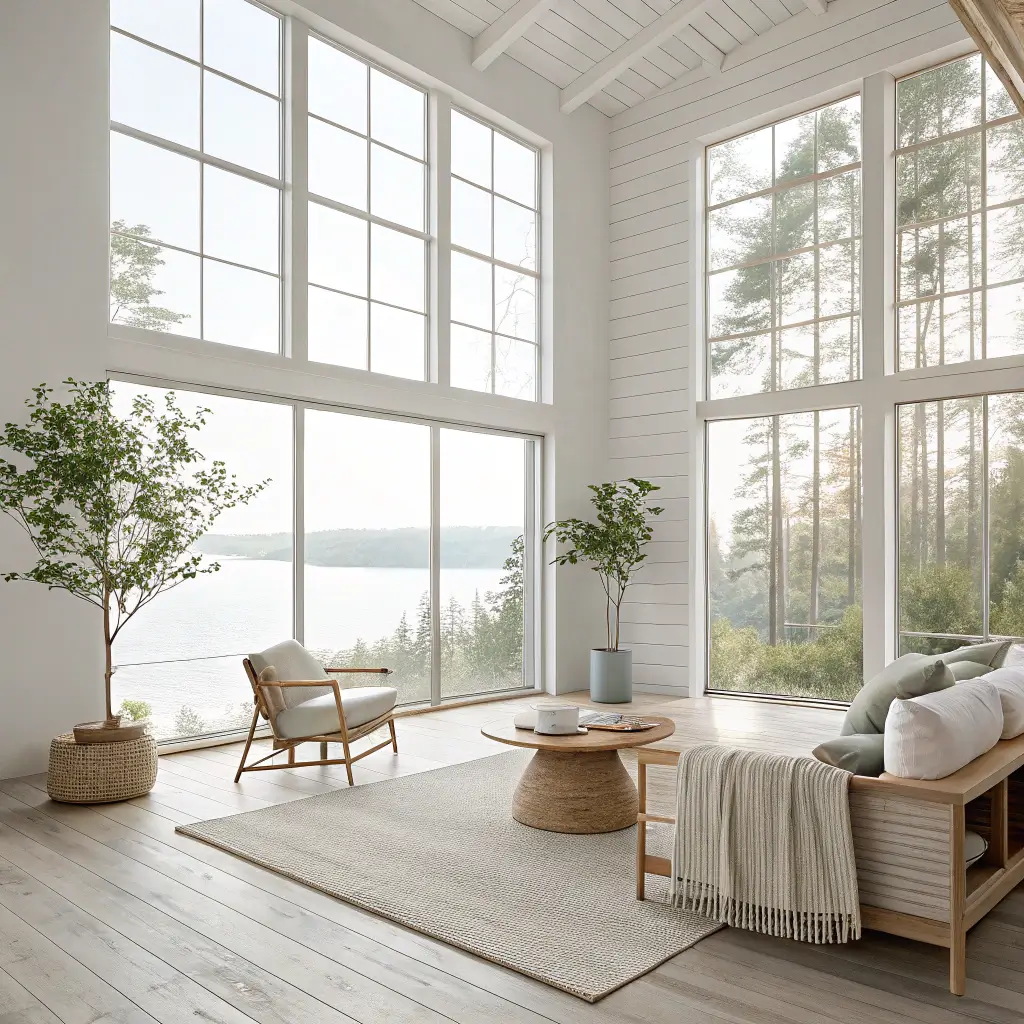
Natural light costs exactly zero dollars and does more for your minimalist living room than any expensive furniture ever could. Yet most of us block it like we’re vampires afraid of bursting into flames.
Remove those heavy curtains immediately. I’m serious. Take them down right now if you can. Replace them with sheer panels or, even better, simple blinds that disappear when raised. You want every photon of sunlight flooding your space.
Position your main seating to take advantage of natural light patterns. I rearranged my entire living room once I realized my sofa was facing away from the best light source. Game changer. Morning coffee became a spiritual experience instead of a groggy necessity.
Maximizing What You’ve Got
Even north-facing rooms (the traditionally dark ones) can work with natural light if you play it smart:
- Mirrors opposite windows literally double your light
- Glossy or semi-gloss paint reflects more than matte
- Light-colored floors bounce light upward
- Keep window areas completely clear
Modern Minimalist Living Room with Wood Accents
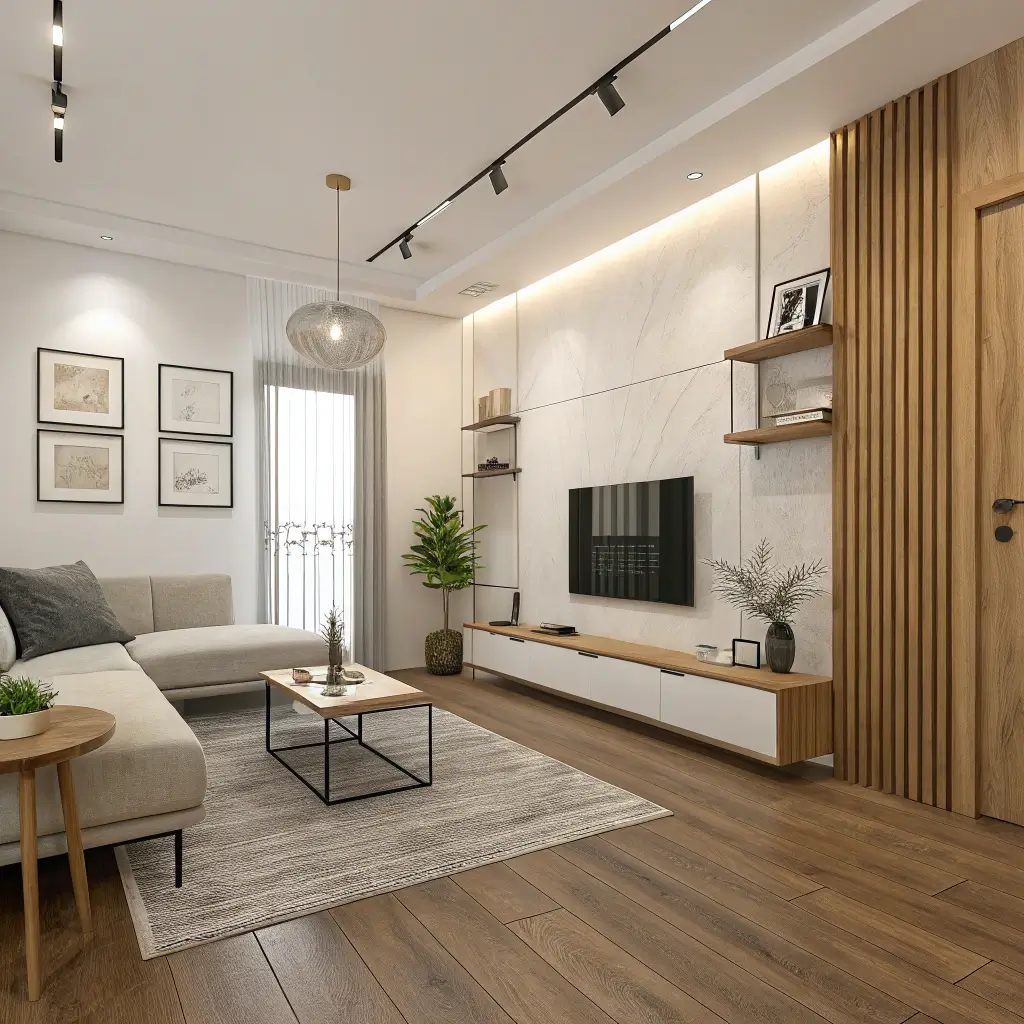
Wood warms up minimalist spaces like nothing else can. But we’re not talking about your grandmother’s mahogany situation here. Modern minimalist design uses wood as punctuation, not the whole sentence.
I learned this lesson the expensive way. Bought a massive wooden entertainment center thinking it would add “warmth.” Instead, it dominated the entire room like a bossy relative at Thanksgiving. Sold it, bought a sleek media console with just wooden legs, and suddenly the space could breathe again.
The key? Choose one wood tone and stick with it. Mixing oak, walnut, and pine isn’t eclectic – it’s chaotic. Pick your fighter and commit.
Strategic Wood Placement
Think about where wood makes the most impact:
- Floating wooden shelves against white walls
- A single wooden accent chair
- Wood-framed mirrors or artwork
- Natural wood coffee table as the sole wooden element
Minimalist Living Room with Open Shelving
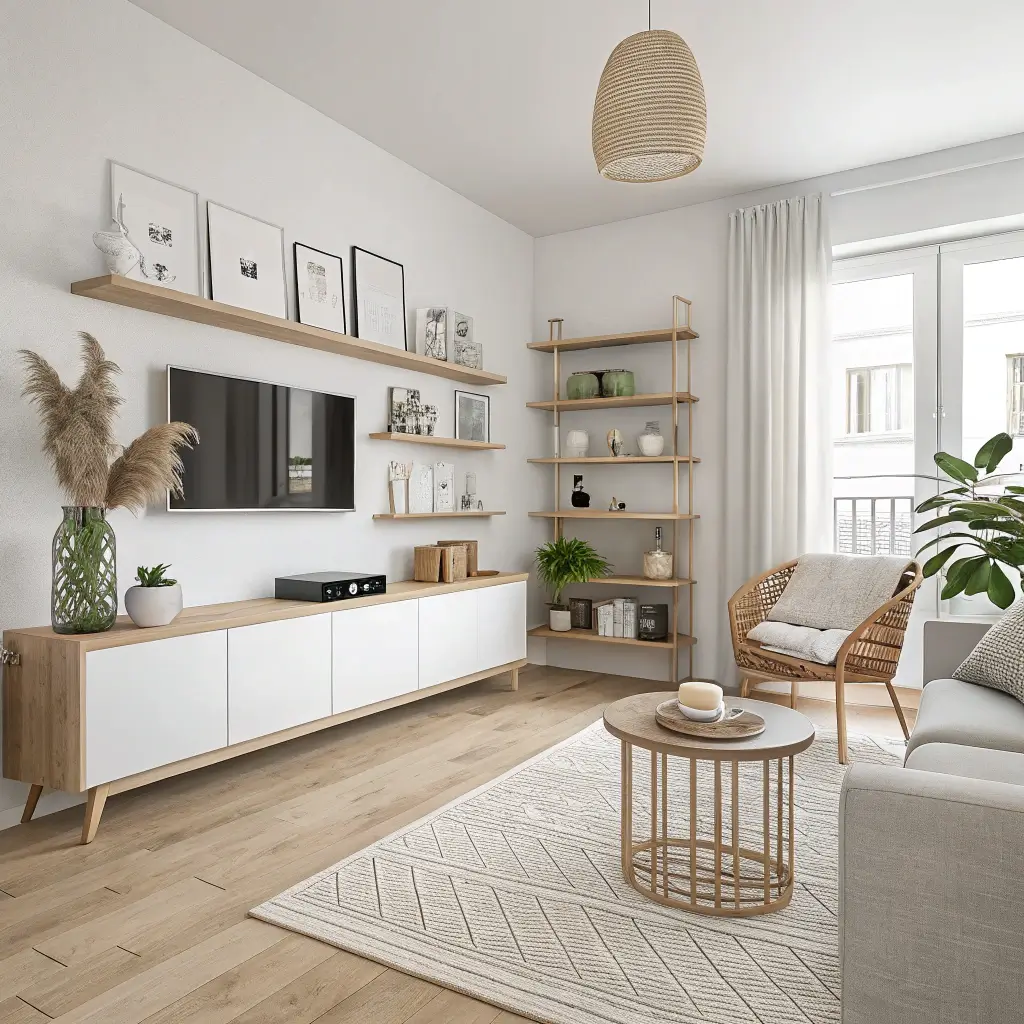
Open shelving terrifies people. “But where will I hide my stuff?” they cry. Here’s the thing: if you need to hide it, you probably don’t need it.
Open shelving forces honesty about what you actually want in your space. Those random DVDs from 2003? Gone. The seventeen almost-empty candles? See ya. What remains gets curated like a personal gallery.
I installed open shelving last year and yes, it was scary at first. But it transformed how I think about possessions. Everything visible needs to be either beautiful, functional, or both. No exceptions.
Styling Open Shelves
The trick isn’t filling every inch. Leave breathing room – lots of it:
- Rule of thirds applies here like photography
- Group items in odd numbers
- Mix horizontal and vertical elements
- Books spine-in sometimes looks amazing (controversial, I know)
Also Read: 15 Stunning Black and White Living Room Decor Ideas for Modern Homes
Neutral-Toned Minimalist Living Room
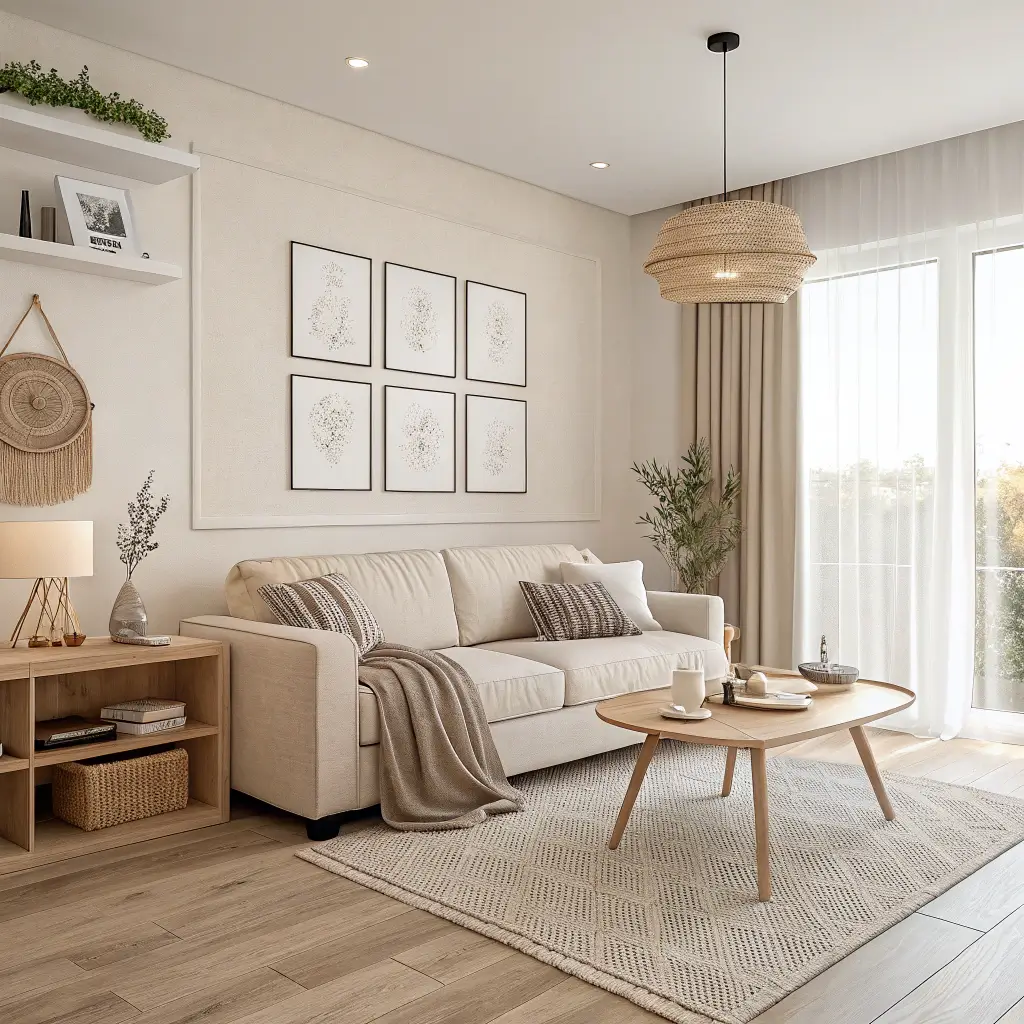
Beige gets a bad rap. People act like choosing neutral tones means giving up on personality. Wrong. Neutrals create the canvas – what you do with it shows personality.
My living room runs the full neutral spectrum from warm ivory to cool greige (that’s gray-beige, FYI). Sounds boring? It’s actually incredibly sophisticated when done right. The lack of color competition lets textures and shapes become the stars.
Think about it: ever noticed how expensive, high-end spaces tend toward neutrals? There’s a reason. Neutral palettes age gracefully. That trendy teal accent wall? You’ll hate it in two years. A perfectly chosen greige? Timeless.
Building Depth with Neutrals
Without color variation, you need other ways to create visual interest:
- Layer different textures obsessively
- Mix warm and cool neutrals carefully
- Use lighting to create shadows and depth
- Add organic shapes to break up straight lines
Minimalist Living Room with Statement Art
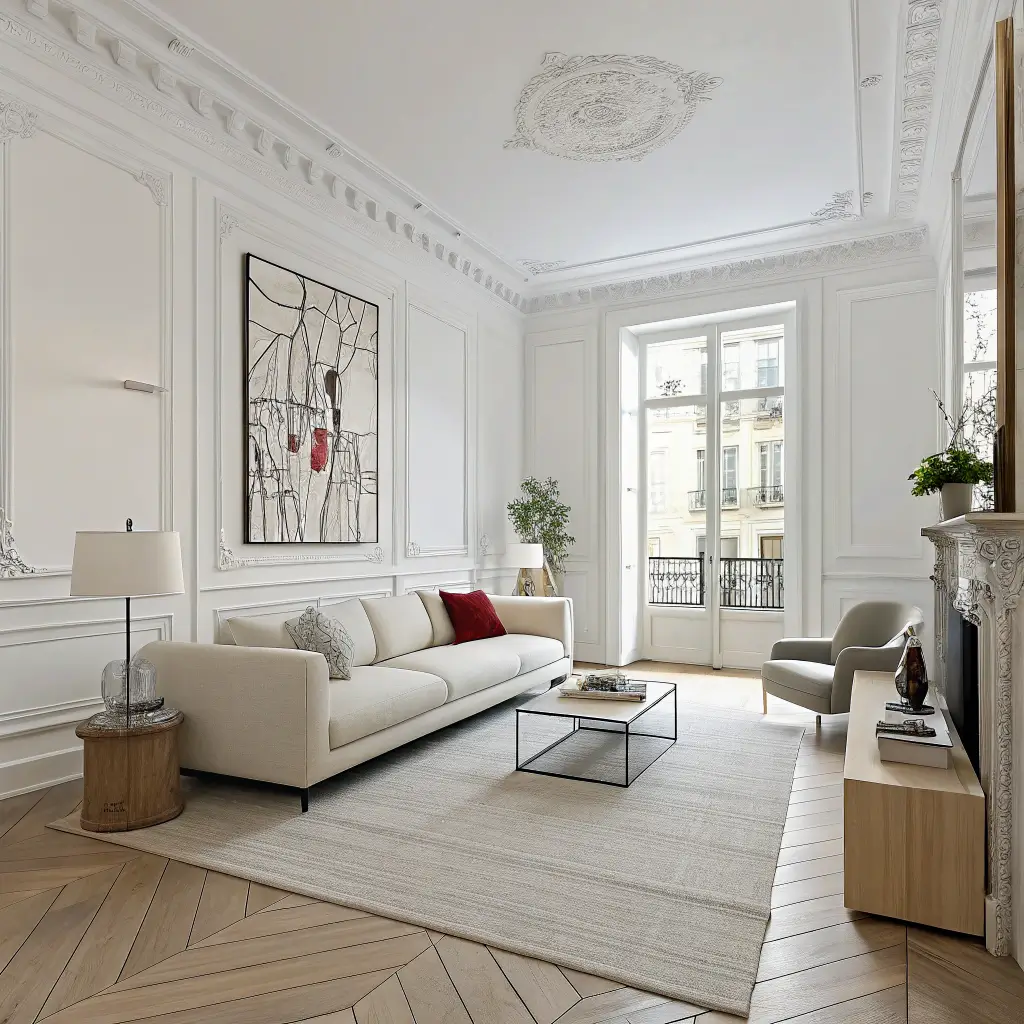
One piece of killer art beats twenty mediocre prints every single time. This took me forever to learn. I used to create these gallery walls thinking more was more. Spoiler: it’s not.
A single, large-scale artwork becomes a focal point that actually means something. It’s the difference between shouting and speaking clearly. Your eye knows exactly where to land instead of ping-ponging around trying to process multiple pieces.
Choosing Your Statement
What makes art “statement” worthy?
- Size matters – go bigger than feels comfortable
- Strong graphic elements or bold simplicity
- Personal connection (buy what you love, not what matches)
- Quality over quantity always
I splurged on one large abstract piece last year. Cost more than all my previous art combined. Zero regrets. It anchors the entire room and starts more conversations than anything else I own.
Cozy Minimalist Living Room with Textures
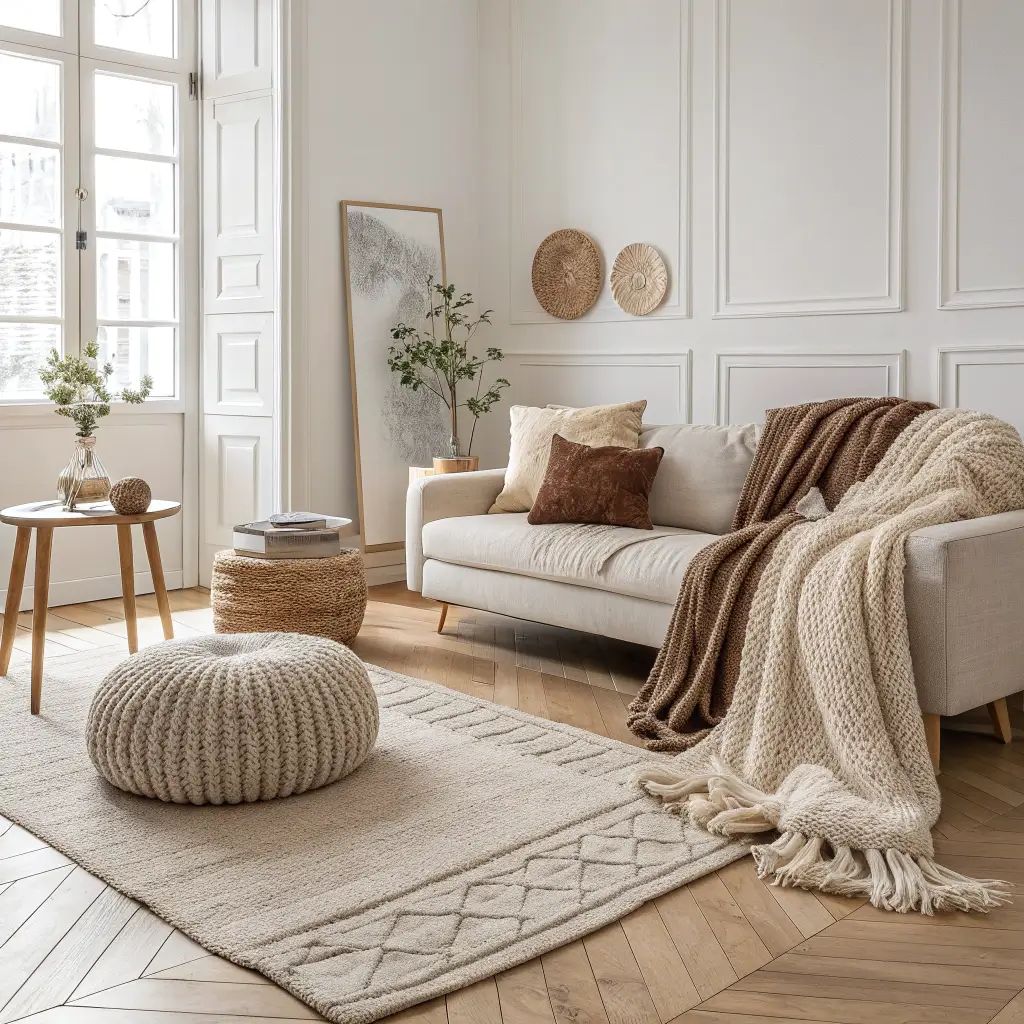
Who said minimalist means cold? The coziest room I ever experienced had maybe five pieces of furniture total. The secret? Texture layering that would make a fashion designer weep.
Start with your base layer – usually your largest furniture pieces. Then build up: a nubby linen throw here, a chunky knit pillow there, maybe a jute rug grounding everything. Each texture adds warmth without adding clutter.
My personal combination that never fails:
- Smooth leather (sofa or chair)
- Rough linen (curtains or pillows)
- Soft wool (throw or rug)
- Natural fiber (jute or sisal somewhere)
Temperature Through Texture
Different textures literally change how warm or cool a room feels. Smooth, hard surfaces read as cool. Soft, fuzzy textures warm things up. Balance these based on your climate and preferences.
Also Read: 12 Stunning Black Couch Living Room Decor Ideas for Cozy Spaces
Minimalist Living Room with Indoor Plants
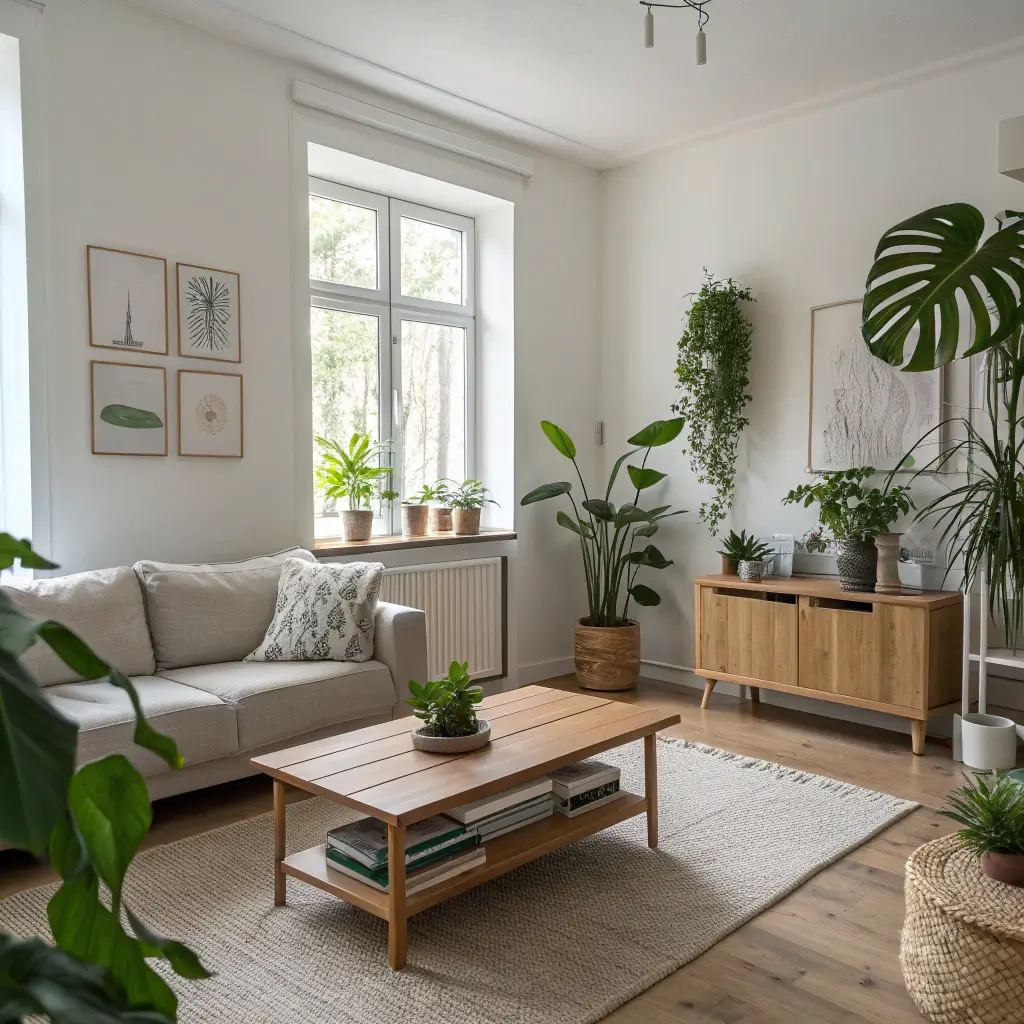
Plants in minimalist spaces work like punctuation in writing – used sparingly but purposefully. Not the jungle aesthetic (though respect if that’s your thing), but rather one or two specimens that could win a plant beauty pageant.
Forget those tiny succulents scattered everywhere. We’re talking about statement plants that command attention. A single fiddle leaf fig in the corner. A massive monstera that basically becomes furniture. These living sculptures add organic shapes that softness all those clean lines.
Plant Selection for Minimalists
Choose plants that match your commitment level:
- Snake plants for serial plant killers
- Fiddle leaf figs for drama queens
- Monsteras for that Instagram-worthy split leaf
- A single orchid for elegant simplicity
I killed three fiddle leaf figs before admitting I needed something harder to murder. My snake plant has survived two years of neglect and still looks incredible. Know yourself 🙂
Minimalist Living Room with Sleek Furniture
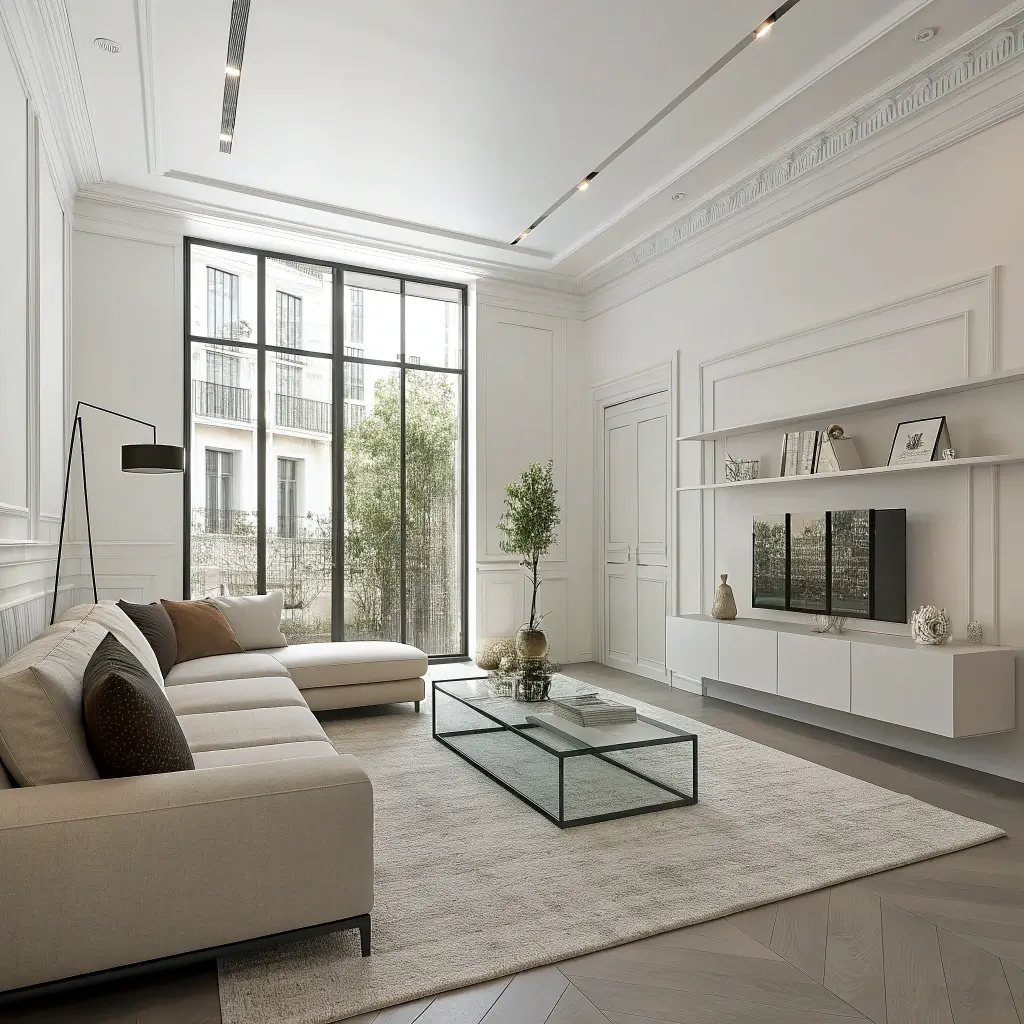
Sleek doesn’t mean uncomfortable, despite what your back might assume. Modern minimalist furniture focuses on clean lines and hidden details that make life easier, not harder.
Look for pieces where the engineering is invisible. No visible screws, no chunky mechanisms, nothing that interrupts the flow. My current sofa looks like it’s floating because the legs are recessed. Tiny detail, massive impact.
Investment Pieces Worth Considering
Some furniture deserves your money:
- A quality sofa with clean lines and durable fabric
- Coffee table with hidden storage
- Media console that hides all the ugly cables
- Accent chair that’s actually comfortable
Skip anything described as “ornate,” “decorated,” or “embellished.” You want furniture that whispers, not shouts.
Minimalist Living Room with Hidden Storage
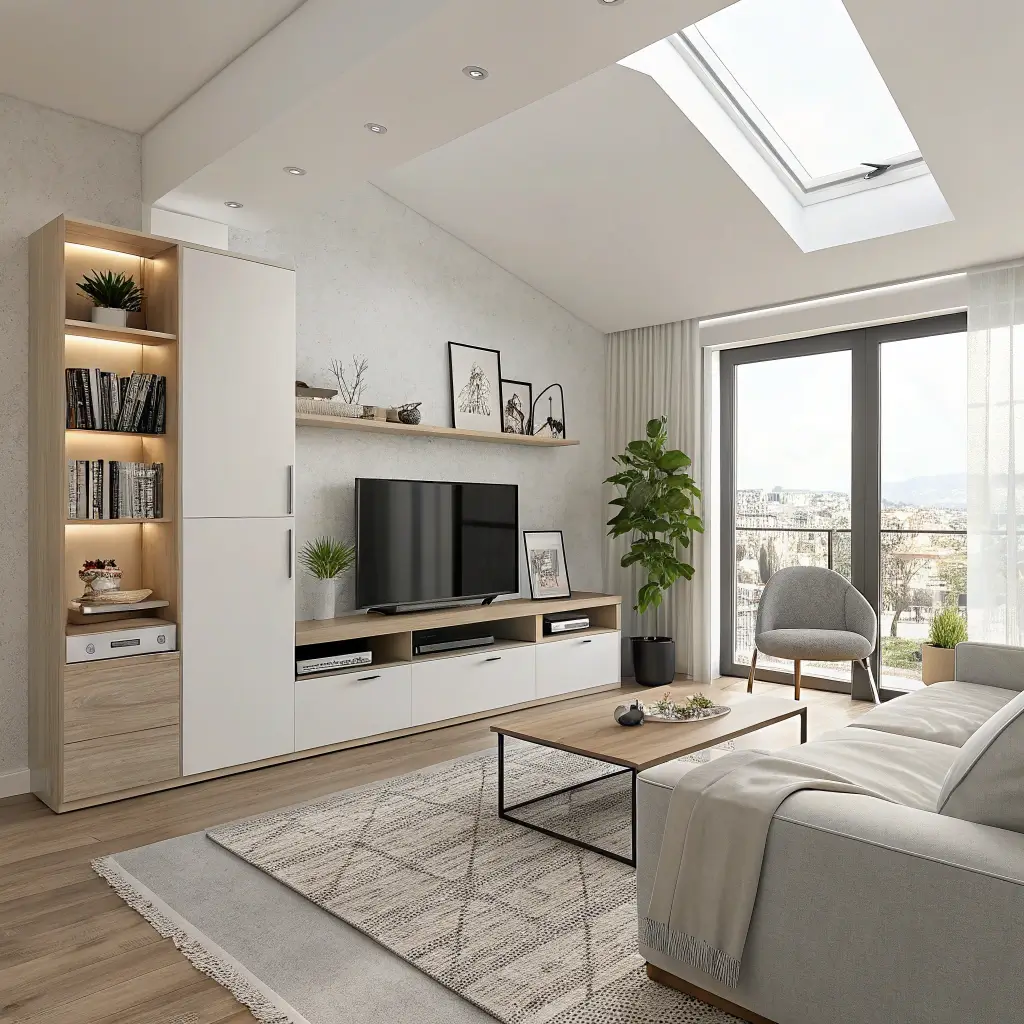
The holy grail of minimalist living: stuff disappears when not in use. Hidden storage transforms even the messiest person into a minimalist maven (at least visually).
Ottoman with storage inside? Yes. Coffee table with drawers? Absolutely. Built-in cabinets that look like walls? Living the dream. Every surface that could hide storage should hide storage.
I converted to the hidden storage religion after realizing my “minimalist” living room was just me shoving everything into the bedroom before guests arrived. Now, everything has a hidden home. Marie Kondo would be proud.
Clever Hiding Spots
Think beyond traditional storage:
- Bench seating with lift-up tops
- Floating shelves with hidden brackets
- Side tables that are actually storage cubes
- Wall-mounted desks that fold flat
Minimalist Living Room with Black and White Theme
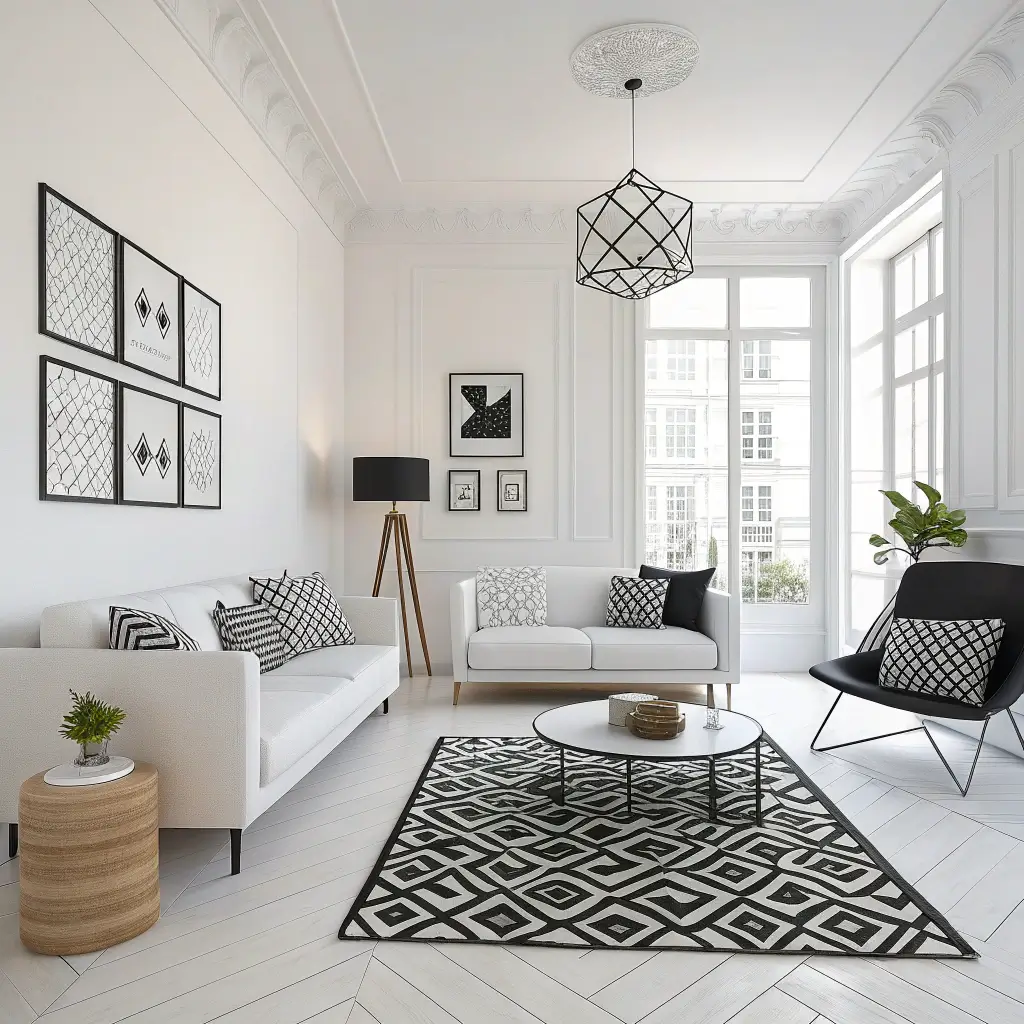
Already touched on monochrome, but a true black and white theme deserves its own moment. This isn’t just limiting color – it’s embracing contrast as your main design element.
High contrast creates drama without complexity. A black leather sofa against white walls. White shelving with black brackets. It’s graphic, bold, and impossible to ignore.
Making Black and White Liveable
The key to living with black and white? Ratios matter:
- 70% white, 20% black, 10% gray usually works
- Too much black feels heavy
- Too much white feels sterile
- Gray is your mediator
Minimalist Living Room with Soft Pastel Accents
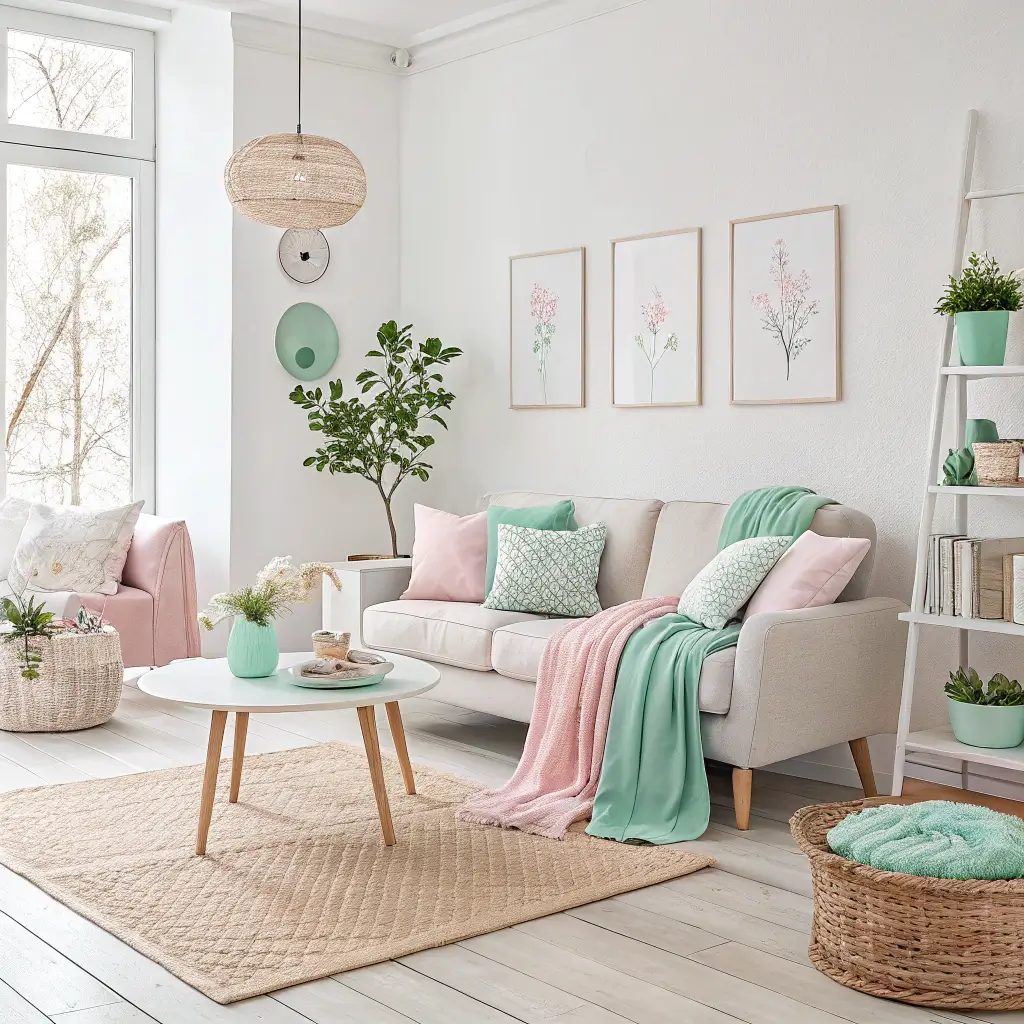
Plot twist: minimalism doesn’t ban all color. Soft pastels can work if you handle them like expensive perfume – a tiny bit goes far.
Think one blush pink throw pillow. A single sage green vase. A barely-there lavender in your artwork. These whispers of color add personality without overwhelming the minimalist aesthetic.
The Pastel Rules
Keep it subtle:
- One pastel only (maybe two if you’re skilled)
- Keep it muted – nothing bright or saturated
- Use it as accent, never as base
- Natural materials in pastel shades work best
Minimalist Living Room Inspired by Japanese Design
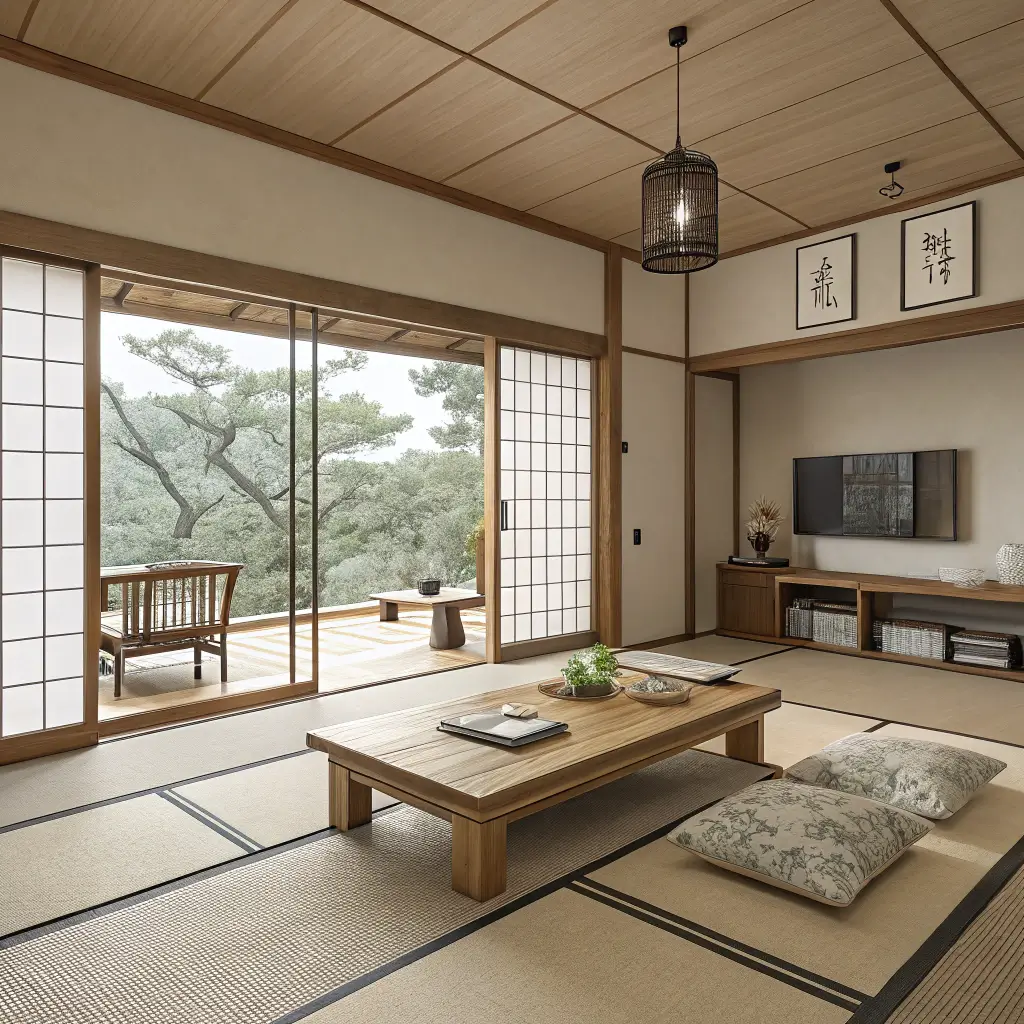
Japanese minimalism makes Scandinavian design look cluttered. We’re talking about spaces that embrace emptiness as a design element. And before you panic, empty doesn’t mean boring.
The Japanese concept of “ma” (negative space) treats emptiness as important as objects. Your room breathes. Your mind calms. Everything serves a purpose or brings joy – nothing exists just because.
Low furniture keeps everything grounded. A low table, floor cushions, maybe a platform sofa. Your living room becomes a sanctuary, not just a room with a TV.
Bringing Japan Home
Essential elements:
- Natural materials only – wood, paper, stone
- Extremely limited color palette
- Everything close to the ground
- Sliding panels instead of doors when possible
- One single focal point (like a piece of calligraphy or simple artwork)
I tried the full Japanese approach for a month. Sitting on floor cushions wasn’t for me (my knees protested), but keeping the low furniture and empty space philosophy? Life-changing.
Making It All Work Together
Here’s the thing about minimalist living rooms – they’re not about deprivation. They’re about intention. Every single item in your space should make you feel something positive. If it doesn’t serve you or spark joy (yes, that’s a cliché, but it works), it goes.
Start small. Pick one of these ideas and commit for a month. Remove one unnecessary item per day. See how it feels. Your perfect minimalist living room won’t look like mine or anyone else’s. It’ll be uniquely yours, just with a lot less stuff getting in the way.
Remember, minimalism isn’t about living with nothing. It’s about living with everything you need and nothing you don’t. The hardest part isn’t getting rid of stuff – it’s being honest about what actually adds value to your life. But once you crack that code? Your living room becomes more than just a room. It becomes your personal retreat from a world that never stops shouting for your attention.
Now excuse me while I go stare at my single piece of statement art and feel unnecessarily accomplished about my life choices. Because that’s what we minimalists do, right? Find joy in the space between things. And honestly? It’s pretty great.