
15 Magical Kids Bedroom Interior Design Ideas to Brighten Rooms
Let me tell you something—designing a kid’s bedroom might just be the most fun (and slightly chaotic) project you’ll ever tackle. I’ve spent countless hours scrolling through Pinterest at 2 AM, arguing with my partner about whether neon green walls are “too much,” and ultimately learning that creating a magical space for kids doesn’t require a massive budget or a degree in interior design.
Here’s the thing: kids’ bedrooms aren’t just places to sleep. They’re where imaginations run wild, where blanket forts become castles, and where the floor is perpetually lava. So why settle for boring beige walls and basic furniture when you can create something truly spectacular?
I’ve rounded up 15 incredible kids bedroom interior design ideas that’ll transform any room from “meh” to magnificent. Whether you’re working with a shoebox-sized space or you’ve got a massive room to fill, there’s something here for every family, every budget, and every wild childhood dream.
Ready to create some magic? Let’s get into it.
1. Magical Fairy Tale Kids Bedroom Ideas
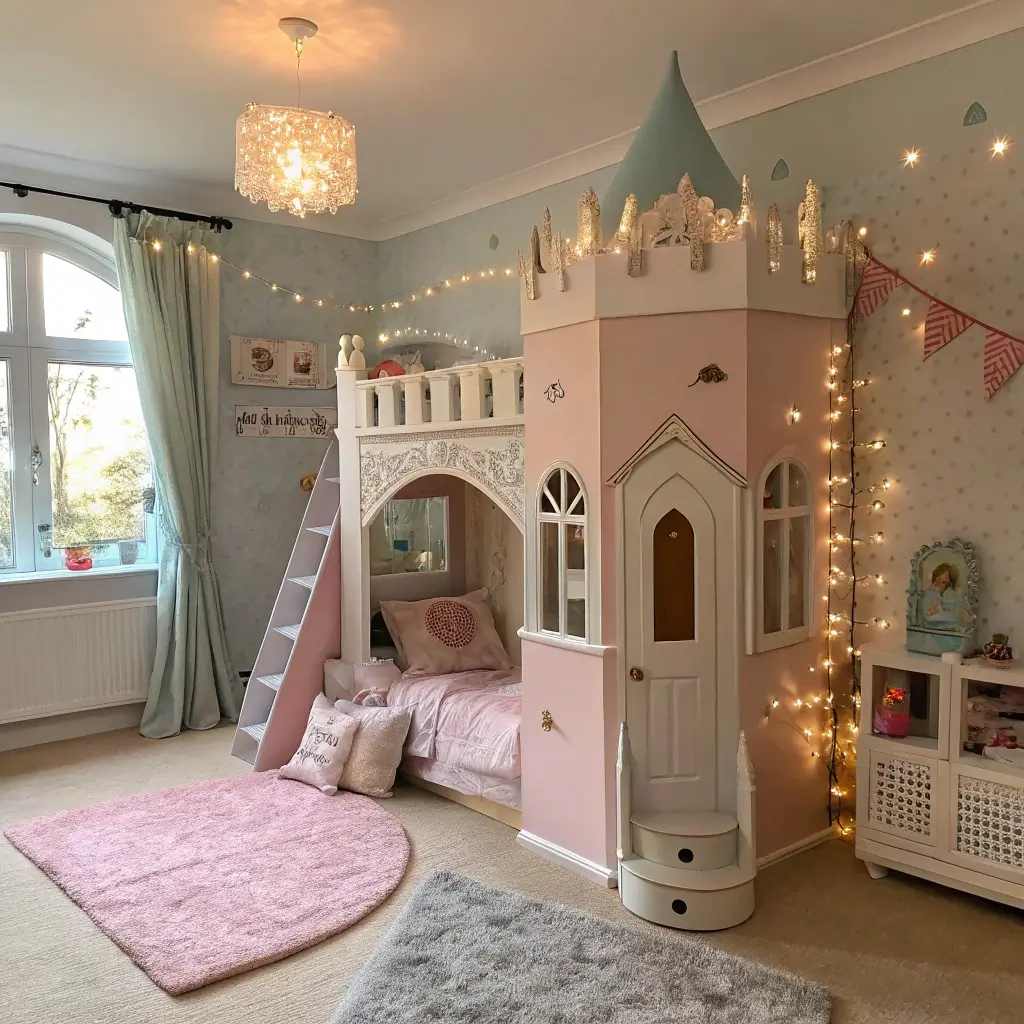
Ever watched your child’s eyes light up during their favorite bedtime story? Now imagine capturing that enchantment and spreading it across their entire bedroom. Fairy tale-themed bedrooms tap into that pure, unbridled wonder that makes childhood so special.
Creating the Foundation
Start with a dreamy color palette—think soft lavenders, blush pinks, mint greens, or enchanted forest hues. I personally love pairing dusty rose walls with gold accents because it creates that “once upon a time” vibe without screaming “theme park.”
Consider these essential elements:
- Canopy beds or draped fabric above the bed for that princess tower effect
- Twinkling fairy lights woven through the canopy or around window frames
- Murals or decals featuring castles, enchanted forests, or friendly dragons
- Vintage-style furniture with ornate details and curved edges
The Magic Details
The secret sauce? It’s all in the accessories. Add some sparkly throw pillows, a plush unicorn or two, and maybe a bookshelf shaped like a castle turret. I once found a lamp at a thrift store that looked like it belonged in Cinderella’s bedroom—best $12 I ever spent.
Pro tip: Let your kid pick their favorite fairy tale character or story, then build the room around that. It makes them feel involved and guarantees they’ll actually love the final result.
2. Modern Minimalist Kids Room Designs

I know what you’re thinking: “Minimalist? With kids? Good luck with that.” And honestly, fair point. But hear me out—modern minimalist designs aren’t about having zero stuff. They’re about intentional choices and smart organization.
Why Minimalism Works for Kids
Surprisingly, kids thrive in uncluttered spaces. Less visual chaos means:
- Better focus during playtime and homework
- Easier cleanup (which, let’s be real, benefits everyone)
- More room for imaginative play
- A calming environment for better sleep
Executing the Look
Stick to a neutral base palette—whites, grays, and natural wood tones work beautifully. Then add pops of color through carefully chosen toys, artwork, or textiles.
Key furniture pieces should be clean-lined and functional. Think platform beds with built-in storage, simple floating shelves, and streamlined desks. I’m a huge fan of Scandinavian-inspired pieces because they’re timeless and won’t look dated in three years.
The golden rule? Everything needs a home. Invest in quality storage solutions—bins, baskets, and boxes that actually look good while hiding the chaos. Because let’s face it, the chaos is inevitable.
3. Adventure-Themed Bedroom Ideas for Kids
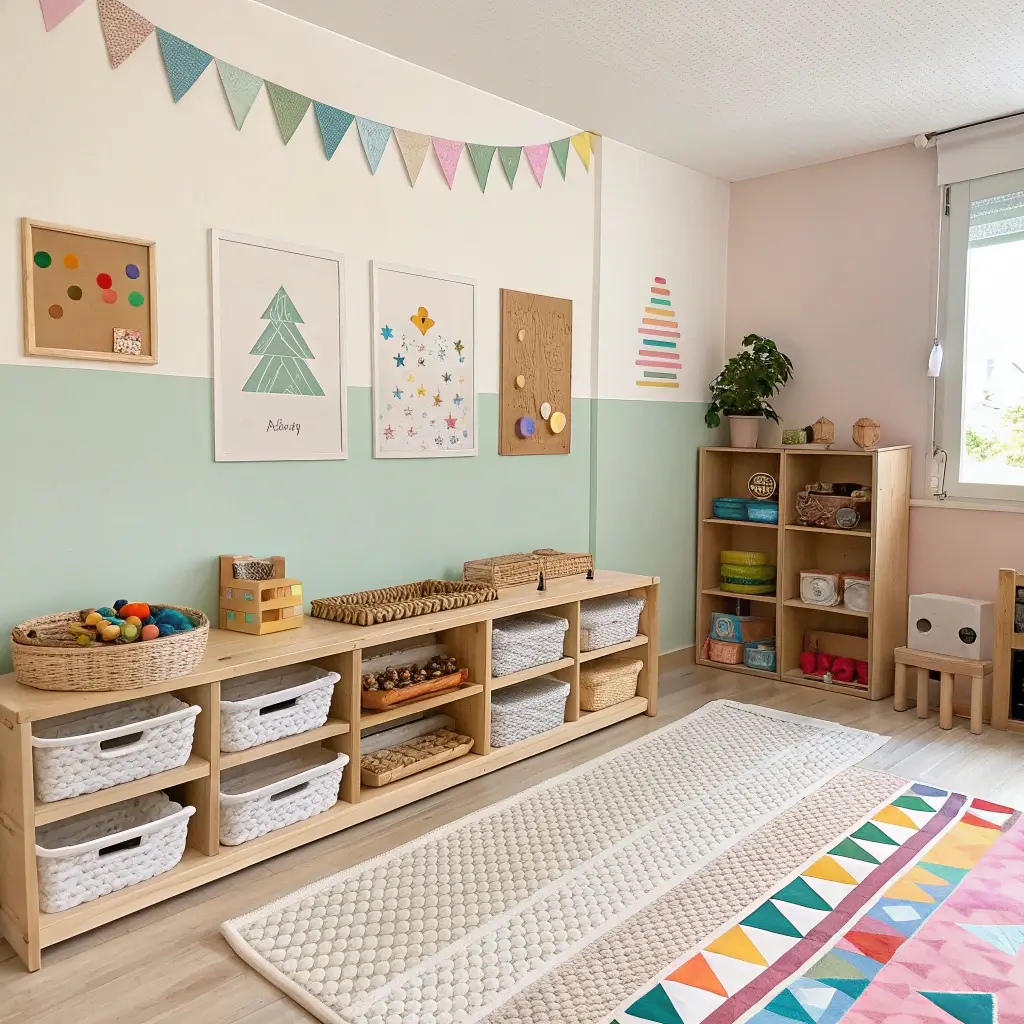
For the little explorer who dreams of scaling mountains, sailing the seven seas, or discovering hidden treasures, an adventure-themed bedroom is pure gold.
Choosing Your Adventure
First, figure out what kind of adventure speaks to your child:
- Jungle explorer: Think safari animals, leafy plants, and earthy tones
- Ocean voyager: Deep blues, ship wheels, and marine life
- Mountain climber: Rugged textures, mountain murals, and cozy cabin vibes
- World traveler: Maps, globes, and vintage suitcase storage
Bringing It to Life
My nephew’s room has a massive world map mural on one wall, and he spends hours pointing to places he wants to visit someday. It’s educational AND adorable—total win.
Bunk beds work perfectly here, especially if you style them like treehouse platforms or ship bunks. Add rope ladders, cargo nets, or a small climbing wall if space allows. For bedding, look for patterns featuring compasses, animals, or topographic designs.
Don’t forget practical touches like a sturdy bookshelf stocked with adventure stories and a cozy reading corner where they can plan their next imaginary expedition.
4. Colorful Montessori-Inspired Kids Rooms

The Montessori approach isn’t just for classrooms—it translates beautifully into bedroom design. The philosophy centers on child-sized everything and encouraging independence from an early age.
Core Montessori Principles for Bedrooms
The foundation of a Montessori bedroom is accessibility. Everything should be within your child’s reach:
- Floor beds or low-profile beds that kids can get in and out of independently
- Low shelves displaying a rotating selection of toys
- Child-height mirrors for self-exploration
- Accessible clothing storage so they can dress themselves
Adding Color and Warmth
While traditional Montessori rooms lean neutral, I believe thoughtful color choices enhance the space without overwhelming it. Consider soft, nature-inspired hues—sage green, warm terracotta, or sunny yellow.
The key is intentionality. Rather than plastering the walls with cartoon characters, choose a few beautiful pieces of artwork at your child’s eye level. Rotate toys and books regularly to maintain interest without creating clutter.
IMO, the Montessori approach creates incredibly empowered little humans who feel ownership over their space. And isn’t that the goal?
5. Space-Saving Kids Bedroom Hacks
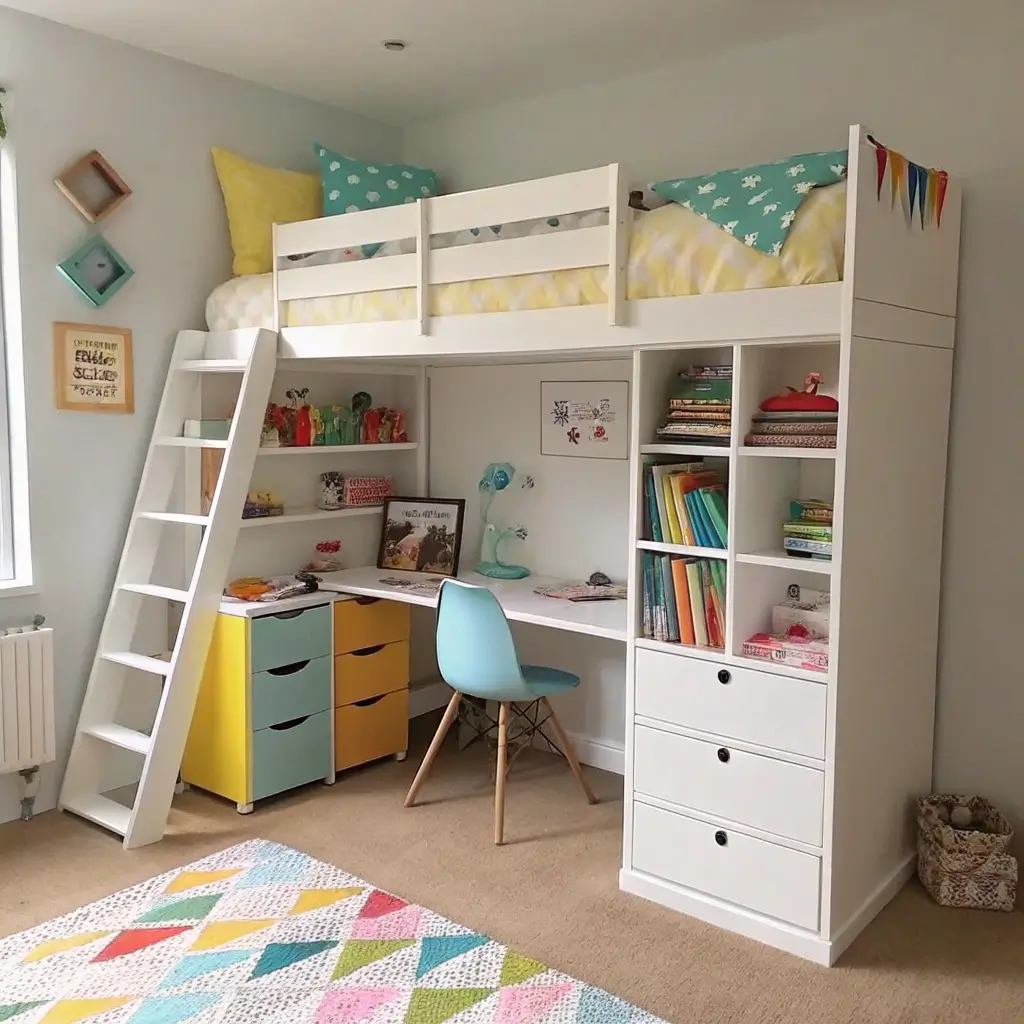
Working with a tiny bedroom? Join the club. My first apartment had a “bedroom” that was basically a glorified closet, and I’ve carried those space-maximizing lessons ever since.
Vertical Is Your Best Friend
When floor space is limited, think upward:
- Loft beds free up the entire area underneath for desks, play zones, or storage
- Tall bookshelves draw the eye up and create the illusion of height
- Wall-mounted desks fold away when not in use
- Hanging organizers on doors and walls keep essentials accessible
Multi-Functional Furniture
Every piece of furniture in a small room should earn its keep:
- Storage ottomans double as seating and toy bins
- Trundle beds hide extra sleeping space for sleepovers
- Desks with built-in shelving maximize workspace efficiency
- Beds with drawers eliminate the need for bulky dressers
The Illusion of Space
Light colors make rooms feel larger—stick to whites, creams, and pale pastels on walls and major furniture pieces. Use mirrors strategically to bounce light around the room. And please, for the love of all things design, declutter regularly. Nothing makes a small space feel tinier than too much stuff.
6. Cozy Reading Nook Bedroom Ideas
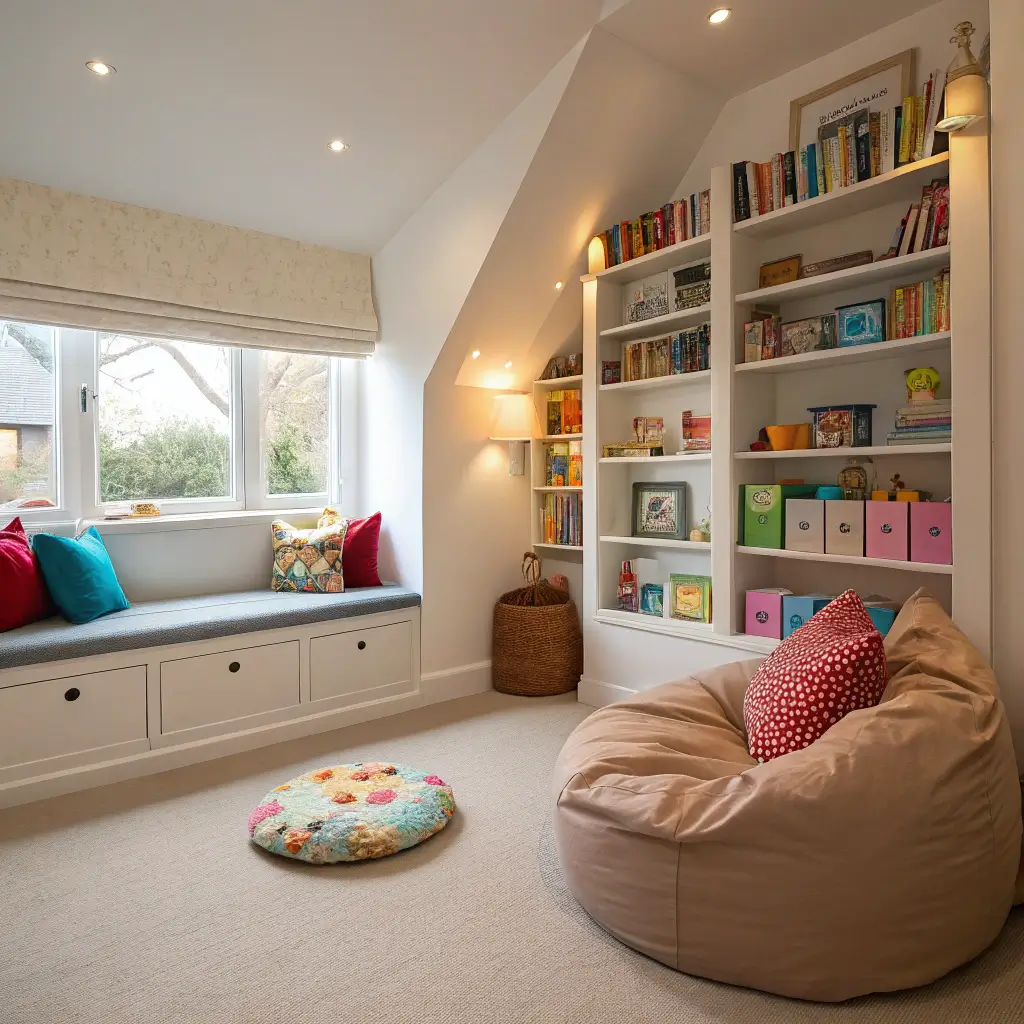
Every bookworm deserves a dedicated reading sanctuary, and honestly, most adults are jealous of kids who get these magical corners.
Finding the Perfect Spot
Look for underutilized spaces:
- Under the window with a built-in bench
- Inside a closet transformed into a book cave
- A corner with a canopy tent or teepee
- Beneath a loft bed with proper lighting
Essential Elements
A proper reading nook needs:
- Comfortable seating—bean bags, floor cushions, or a mini armchair
- Excellent lighting—natural light plus a quality reading lamp
- Book storage—forward-facing shelves let kids see covers easily
- Cozy textiles—soft blankets, plush rugs, and lots of pillows
I created a reading nook for my goddaughter using a $30 canopy tent, some string lights, and approximately seventeen thousand pillows. She calls it her “book castle,” and it’s become her favorite spot in the entire house.
Add personal touches like a “currently reading” display, a small plant, or artwork featuring their favorite literary characters. The goal is creating a space so inviting that they choose books over screens. (It works more often than you’d think!)
Also Read: 15 Amazing Contemporary Bedroom Interior Design Ideas to Copy
7. DIY Fun Kids Bedroom Decor Projects

Here’s where things get hands-on—and potentially messy. DIY projects add personality, save money, and create memories. Plus, kids love having stuff they helped make in their rooms.
Easy Weekend Projects
You don’t need to be crafty to pull these off:
- Painted furniture makeovers—transform thrift store finds with fun colors
- Fabric banner garlands—simple sewing or no-sew options available
- Personalized name signs—wooden letters plus paint and creativity
- Cork board art displays—frame cork tiles for a rotating gallery
Getting Kids Involved
Age-appropriate projects make the room feel truly theirs:
- Handprint or footprint art for younger kids
- Painted canvases featuring their artwork
- Decorated storage boxes using washi tape, stickers, or paint
- Dream catchers or mobiles with beads and feathers
My Favorite DIY Win
Last summer, my kids and I painted an old bookshelf in rainbow stripes. Was it perfect? Absolutely not. Did paint end up in places paint should never be? Obviously. But that bookshelf is now their favorite piece of furniture because they created it.
The imperfections tell a story, and that’s worth more than any store-bought piece.
8. Nature-Inspired Kids Room Designs
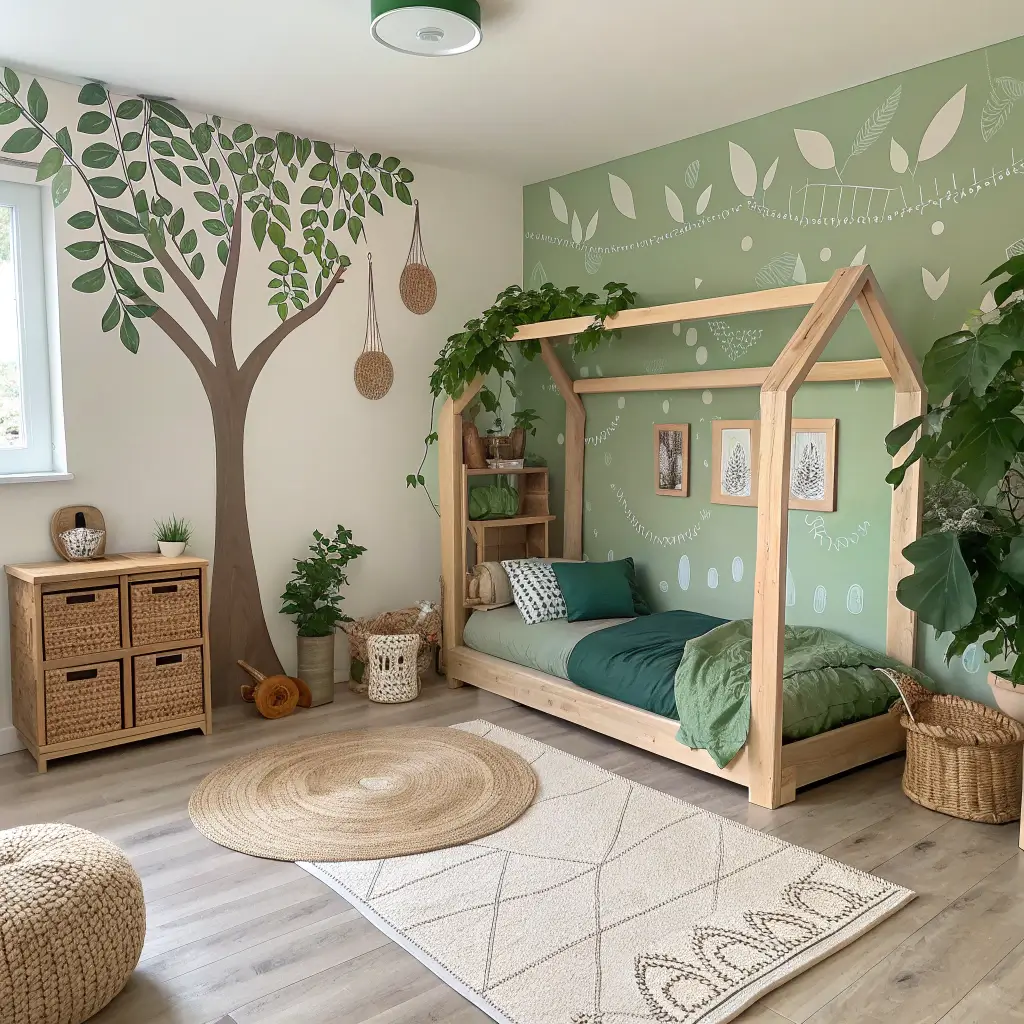
Bringing the outdoors inside creates calming, beautiful spaces that never go out of style. Nature-themed rooms work for all ages and easily evolve as kids grow.
Natural Elements to Incorporate
- Real or high-quality faux plants—even kids’ rooms deserve greenery
- Wood accents—furniture, wall art, or decorative branches
- Nature-patterned textiles—leaves, flowers, animals, or landscapes
- Stone or natural fiber accessories—woven baskets, ceramic planters
Color Palettes from Nature
Draw inspiration from specific natural settings:
- Forest: Deep greens, browns, and touches of gold
- Beach: Sandy neutrals, ocean blues, and seafoam greens
- Garden: Floral pinks, sunny yellows, and fresh greens
- Desert: Terracotta, sage, cream, and dusty rose
Creating Atmosphere
Add a large-scale nature mural or wallpaper on one accent wall—forests, mountains, or botanical prints work beautifully. Include natural textures through jute rugs, linen curtains, and wooden blinds.
FYI, this theme grows incredibly well with your child. A nature room that works for a toddler can easily mature into a sophisticated tween space with just a few updates.
9. Cartoon & Character-Themed Bedrooms
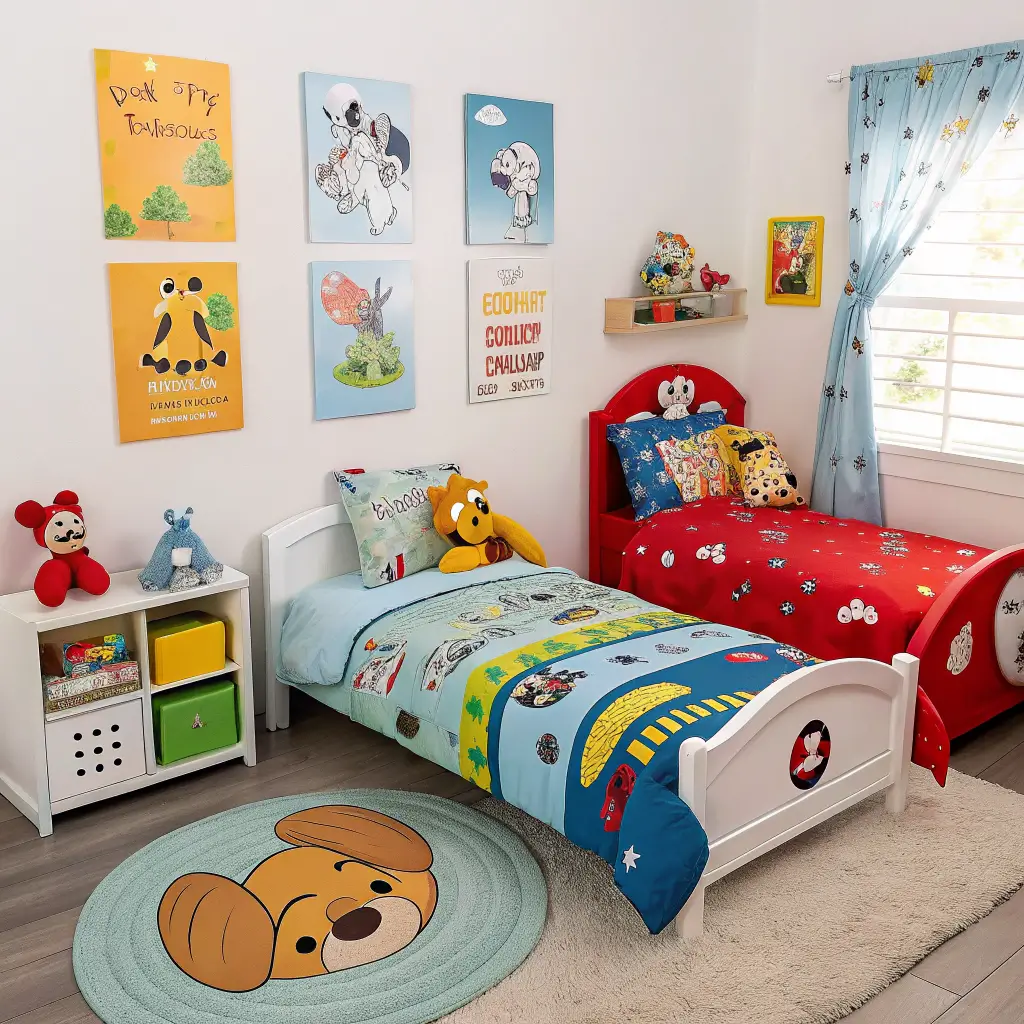
Let’s address the elephant in the room: character-themed bedrooms get a bad rap. Yes, kids’ interests change faster than you can say “but we just bought that bedding,” but there are smart ways to incorporate beloved characters without committing to a full room makeover every six months.
The Strategic Approach
Keep permanent elements neutral. Walls, flooring, and major furniture should work with any theme. Then layer character elements through easily changeable items:
- Bedding and pillows—swap these when interests shift
- Wall decals—removable options leave no damage
- Posters in frames—switch artwork easily
- Themed accessories—lamps, rugs, and curtain tiebacks
Making It Tasteful
Here’s my unpopular opinion: character rooms can actually look cohesive and stylish when done right. The secret is restraint. Choose a color palette pulled from the character’s world, then use that palette throughout the room. Add just a few key character pieces rather than plastering the character on every surface.
For example, a Bluey-inspired room might feature blues, oranges, and warm neutrals with strategically placed Bluey artwork and one statement bedding set. Sophisticated and kid-approved.
Also Read: 15 Glamorous Bedroom Interior Design Luxury Master Suite Tips
10. Gender-Neutral Kids Bedroom Ideas
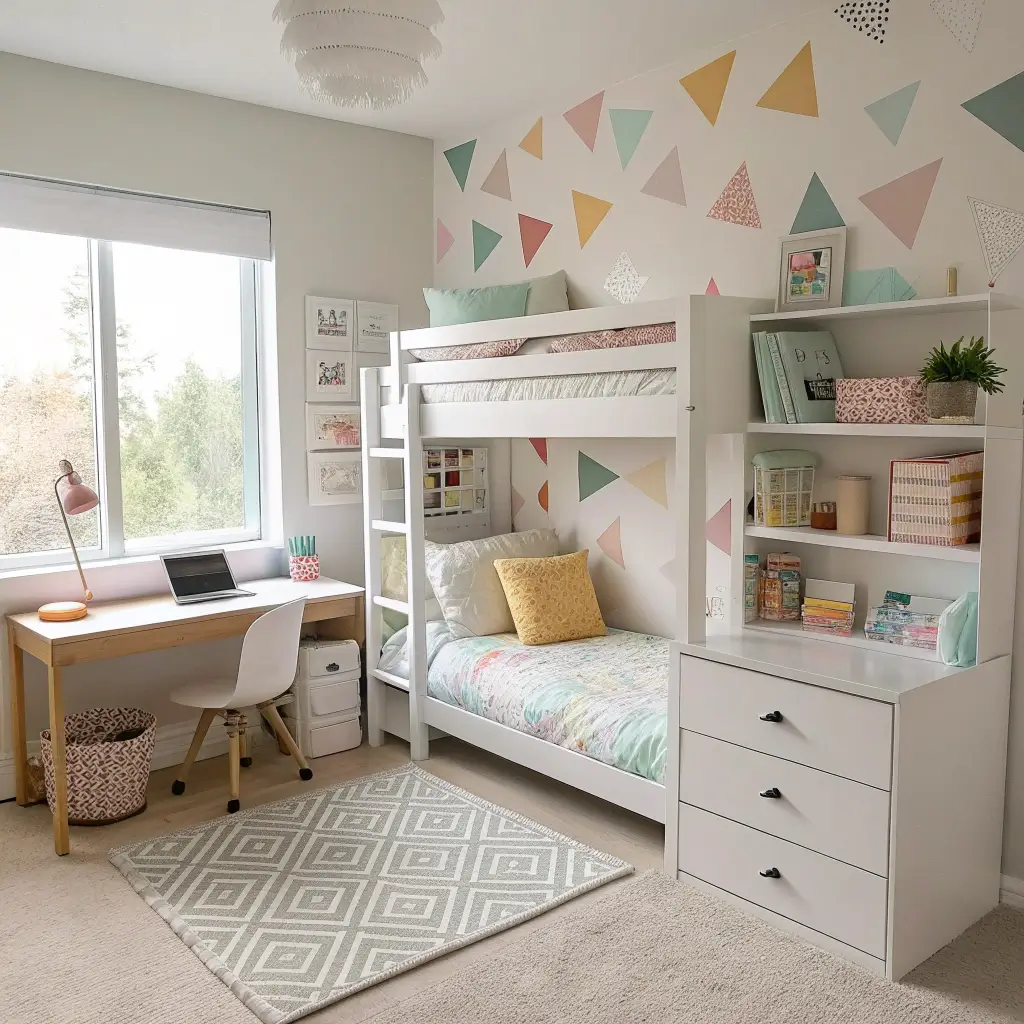
Gender-neutral design isn’t just trendy—it’s practical, timeless, and honestly refreshing. These rooms focus on creating spaces that celebrate individual personalities rather than checking stereotype boxes.
Breaking Free from Pink and Blue
Embrace the entire color spectrum:
- Warm yellows and oranges for energetic vibes
- Calming greens and teals for peaceful spaces
- Bold reds and purples for dramatic flair
- Classic neutrals for sophisticated foundations
Themes That Work for Everyone
- Animals: From dinosaurs to puppies, wildlife appeals universally
- Space: Stars, planets, and galaxies fascinate all kids
- Adventure: Travel, camping, and exploration themes transcend gender
- Nature: Forests, oceans, and gardens offer endless possibilities
- Geometric patterns: Modern and timeless
My Two Cents
The best kids’ rooms reflect the actual child living there, not some outdated idea of what boys or girls “should” like. When my son wanted a purple room with butterflies, we made it happen. When my daughter requested monster trucks, same deal.
Kids know what they love. Our job is simply to help them express it. 🙂
11. Creative Wall Art Ideas for Kids Rooms
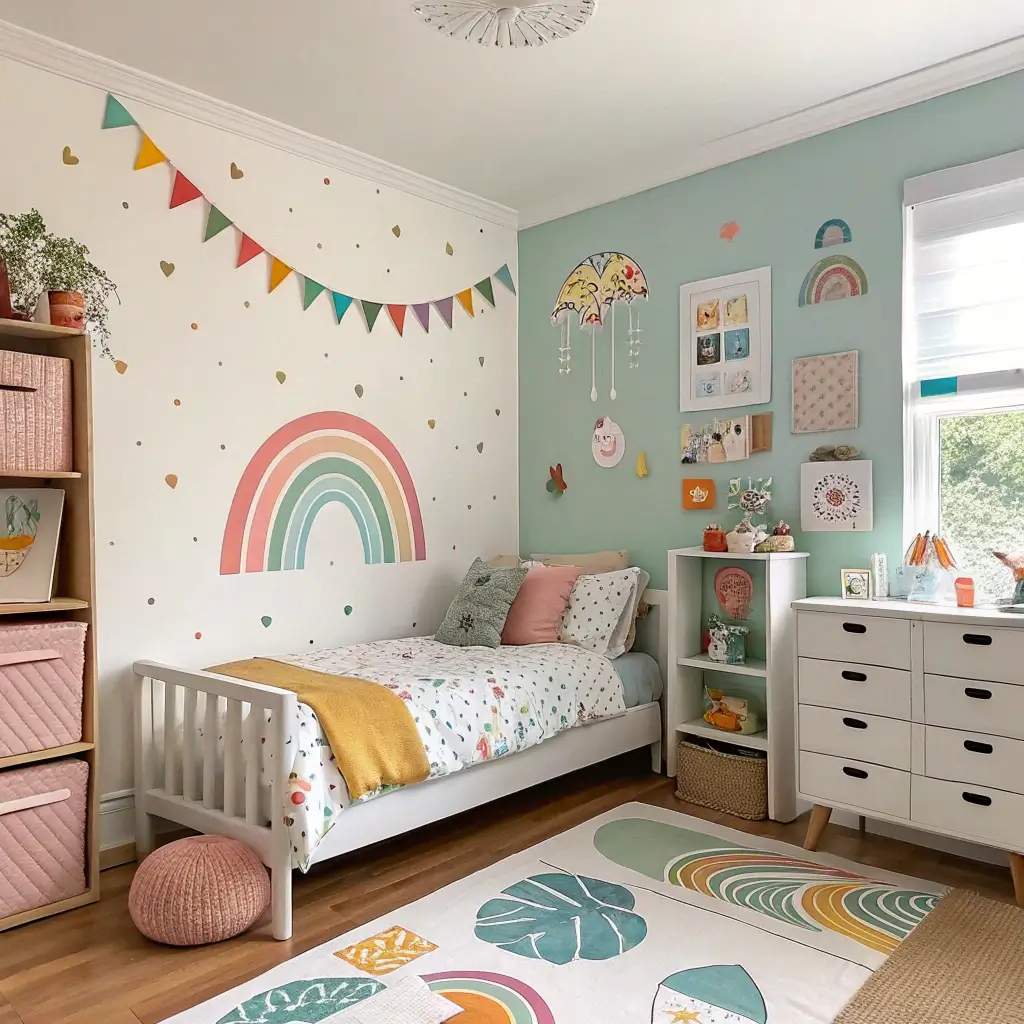
Blank walls are wasted opportunities. Creative wall treatments add personality, stimulate imagination, and can easily evolve as kids grow.
Beyond Basic Posters
Consider these elevated wall art options:
- Gallery walls mixing photos, artwork, and dimensional pieces
- Murals (painted, wallpaper, or decal versions)
- Floating shelves displaying rotating collections
- Fabric wall hangings adding texture and color
- Chalkboard or whiteboard walls for creative expression
Displaying Kids’ Artwork
Your child creates approximately one million pieces of art per week. Here’s how to display it without drowning:
- Clipboards on the wall for easy rotation
- Wire display systems with clips
- Magnetic frames that swap artwork easily
- Dedicated art wall with washi tape borders
Making It Special
Commission a custom piece featuring your child’s name, create a growth chart that doubles as decor, or frame special items like a baby blanket, first shoes, or handwritten notes.
One idea I absolutely love: having kids’ artwork professionally printed on canvas. It elevates their creations into “real” art and makes them feel incredibly proud.
12. Small Bedroom Layout Solutions for Kids
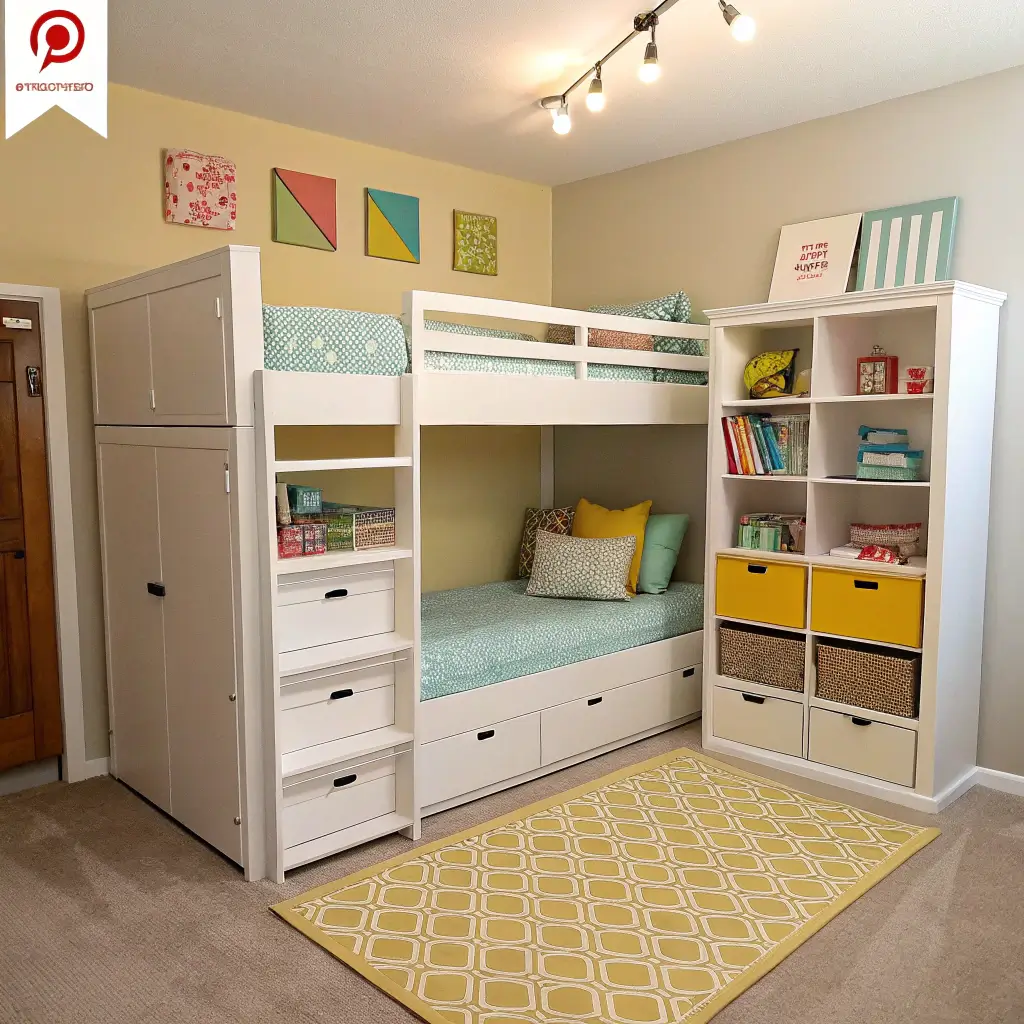
Layout can make or break a small bedroom. Strategic furniture placement maximizes every inch and creates functional zones within limited square footage.
Zone Planning
Even tiny rooms can accommodate multiple functions:
- Sleep zone: Positioned for privacy and minimal distractions
- Study zone: Near natural light when possible
- Play zone: Open floor space for activities
- Storage zone: Concentrated along walls or in closets
Furniture Placement Rules
Follow these layout guidelines:
- Float furniture away from walls when possible—it creates visual flow
- Anchor the bed on the longest wall
- Use corners for desks, reading nooks, or storage towers
- Keep pathways clear—kids need room to move
Layout Solutions That Work
- L-shaped arrangements maximize corner space
- Symmetrical layouts create calm, balanced rooms
- Diagonal bed placement adds visual interest in square rooms
- Under-window configurations utilize often-wasted space
Measure twice, arrange once. I learned this the hard way after wrestling a heavy bed frame into three different positions before finding the right one. My back still hasn’t forgiven me. :/
Also Read: 14 Trendy French Mens Bedroom Ideas and Luxe Masculine Interiors
13. Bright and Playful Color Schemes
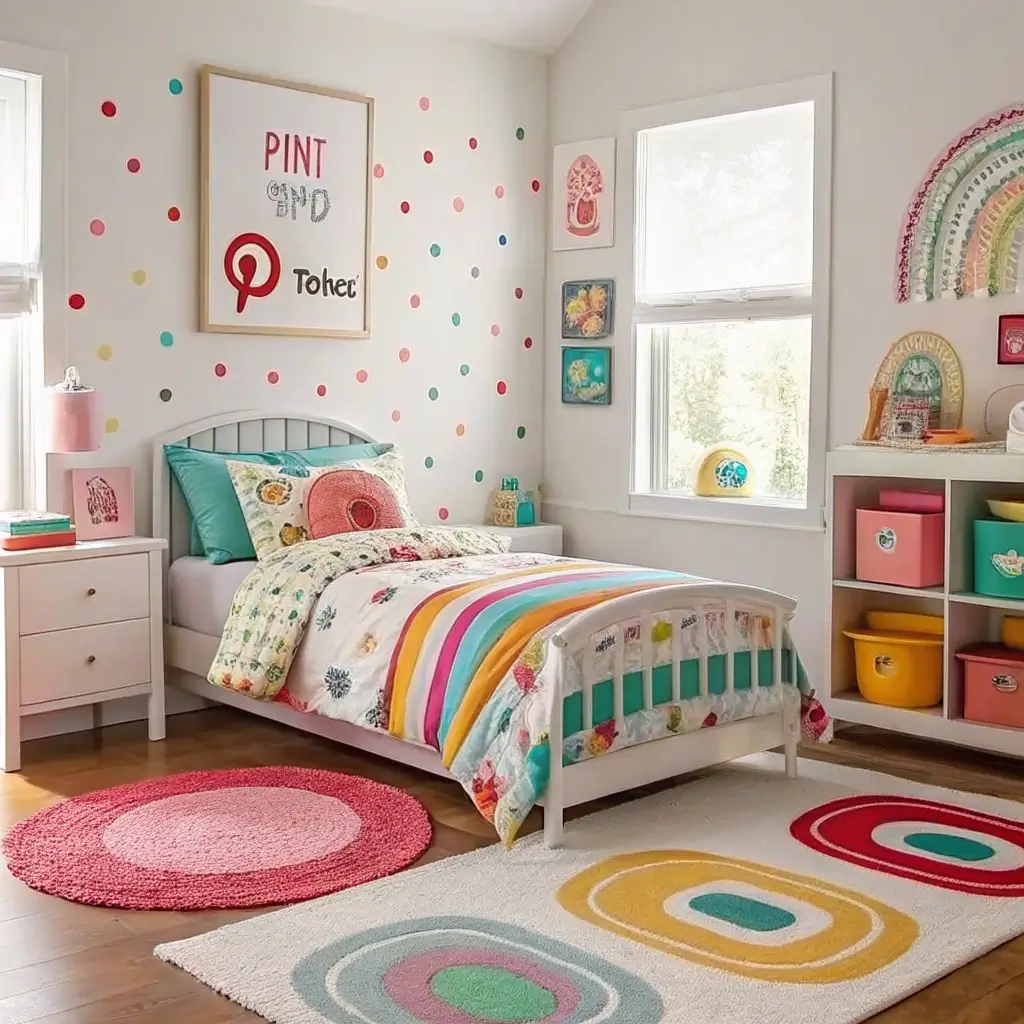
Color transforms rooms faster than any other design element. Bold, playful color schemes inject energy and personality into kids’ spaces.
Color Psychology Basics
Different colors create different moods:
- Yellows and oranges: Energizing and cheerful
- Blues and greens: Calming and focusing
- Pinks and purples: Warm and imaginative
- Reds: Stimulating (best used sparingly)
Creating Cohesive Palettes
Pick one hero color, then build around it:
- Choose 2-3 supporting colors in varying intensities
- Include neutrals for balance
- Add accent colors for pops of interest
Bold Approaches That Work
- Color blocking: Paint sections of walls in contrasting colors
- Rainbow gradients: Progressive color that flows around the room
- Ceiling color: Often overlooked but highly impactful
- Painted furniture: Inject color through pieces rather than walls
Don’t fear bold choices—kids’ rooms are the perfect place to experiment. If that electric blue doesn’t work out, it’s just paint. You can always change it.
14. Rustic and Farmhouse Kids Bedroom Designs
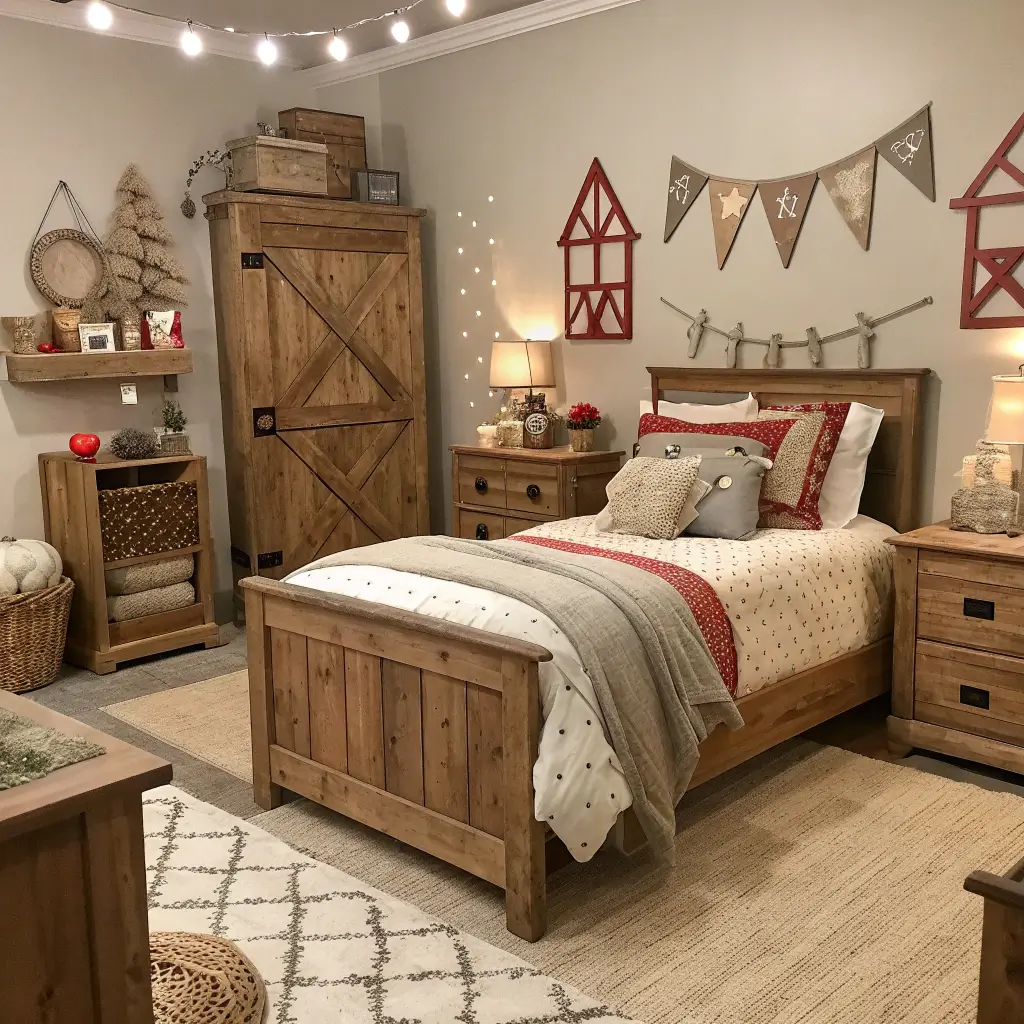
Rustic and farmhouse aesthetics create warm, timeless kids’ spaces that age beautifully. Think natural materials, vintage-inspired pieces, and cozy textiles.
Key Elements
- Reclaimed wood accents on walls, furniture, or decor
- Wrought iron bed frames or light fixtures
- Vintage finds with character and history
- Natural textiles like cotton, linen, and wool
- Muted color palettes with warm undertones
Balancing Rustic with Playful
The challenge? Keeping it kid-friendly without veering into “miniature adult room” territory. Add playful elements:
- Animal motifs (barn animals work perfectly with the aesthetic)
- Bright accent colors through accessories
- Fun patterns mixed with classic checks and stripes
- Age-appropriate artwork in rustic frames
Creating Warmth
Layer textiles generously—chunky knit blankets, quilted bedspreads, and plenty of pillows. Add warm lighting through table lamps with fabric shades or vintage-style string lights. Include natural elements like cotton stems, wooden toys, or small potted plants.
This aesthetic works especially well for shared rooms and grows with kids through their teen years.
15. Stylish Storage Ideas for Kids Rooms
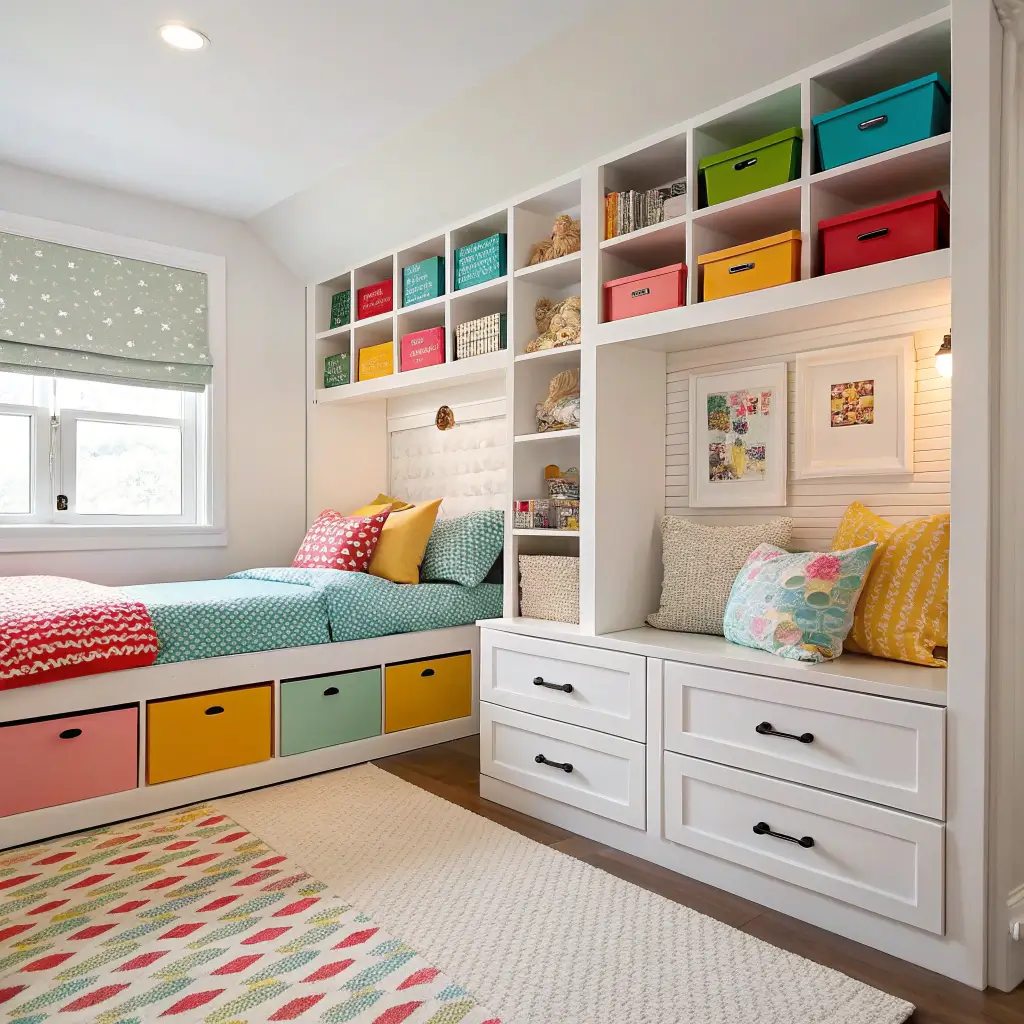
Let’s end with arguably the most important topic: storage. Because no matter how gorgeous a room looks, it’s useless if toys, clothes, and random treasures have nowhere to go.
Storage Categories to Address
Every kids’ room needs solutions for:
- Clothing: Dressers, closet systems, or wardrobes
- Toys: Bins, baskets, shelves, or toy chests
- Books: Shelving that encourages reading
- School supplies: Desks with organization or dedicated zones
- Collections: Display storage for special items
Stylish Solutions
Storage doesn’t have to look boring:
- Woven baskets add texture while hiding clutter
- Colorful bins turn storage into decor
- Open shelving creates display opportunities
- Vintage crates stack for rustic appeal
- Built-in cabinetry maximizes awkward spaces
Teaching Organization
Labeled storage helps kids maintain their own rooms. Use picture labels for non-readers and word labels for older kids. Create dedicated homes for everything—when kids know where things belong, they’re more likely to put them away.
Invest in kid-height solutions. If they can’t reach it themselves, they can’t use it independently. This is the philosophy that finally got my kids to actually put their toys away (most of the time).
Wrapping It Up
Designing a kids’ bedroom is one of those parenting adventures that’s equal parts exciting and overwhelming. But here’s what I’ve learned through trial, error, and more furniture rearranging than I care to admit: there’s no single “right” way to create a magical space.
The best kids’ bedrooms share a few things in common—they reflect the child living there, they function well for real life, and they spark joy. Whether you go full fairy tale fantasy, embrace minimalist calm, or create an adventure-ready explorer’s paradise, the goal is the same: giving your child a space that feels uniquely theirs.
Remember these key takeaways:
- Involve your child in the design process
- Think practically about storage and function
- Plan for growth—interests change, and rooms should adapt
- Balance bold choices with timeless elements
- Don’t stress perfection—lived-in rooms are happy rooms
Start with one or two ideas from this list that resonate with you and your child. Maybe it’s adding a cozy reading nook this weekend, or finally tackling that storage disaster. Small changes add up to big transformations.
Now go create some magic. Your kids are counting on you—and honestly, you’re going to have more fun than you expect. Trust me on this one. 🙂