
15 Tranquil Japandi Bedroom Interior Design Ideas for Relaxation
Let me guess—you’re tired of waking up in a bedroom that feels more like a cluttered storage unit than a peaceful retreat? Yeah, I’ve been there too. That moment when you realize your “cozy” bedroom has become a chaotic mess of mismatched furniture, random decor, and way too many throw pillows that serve zero purpose.
Here’s the thing: your bedroom should feel like a sanctuary. A place where stress melts away the second you walk through the door. And that’s exactly why I fell head over heels for Japandi design. This gorgeous hybrid of Japanese minimalism and Scandinavian coziness creates spaces that are simultaneously calming, functional, and ridiculously beautiful.
I first stumbled upon Japandi style about three years ago while doom-scrolling Pinterest at 2 AM (we’ve all been there, right?). One image stopped me cold—a serene bedroom with clean lines, warm wood tones, and this incredible sense of intentional simplicity. I was hooked. Fast forward to today, and I’ve completely transformed my own sleeping space using these principles.
So grab your favorite beverage, get comfortable, and let’s explore 15 tranquil Japandi bedroom interior design ideas that’ll turn your bedroom into the relaxation haven you deserve.
1. Minimalist Japandi Zen Retreat
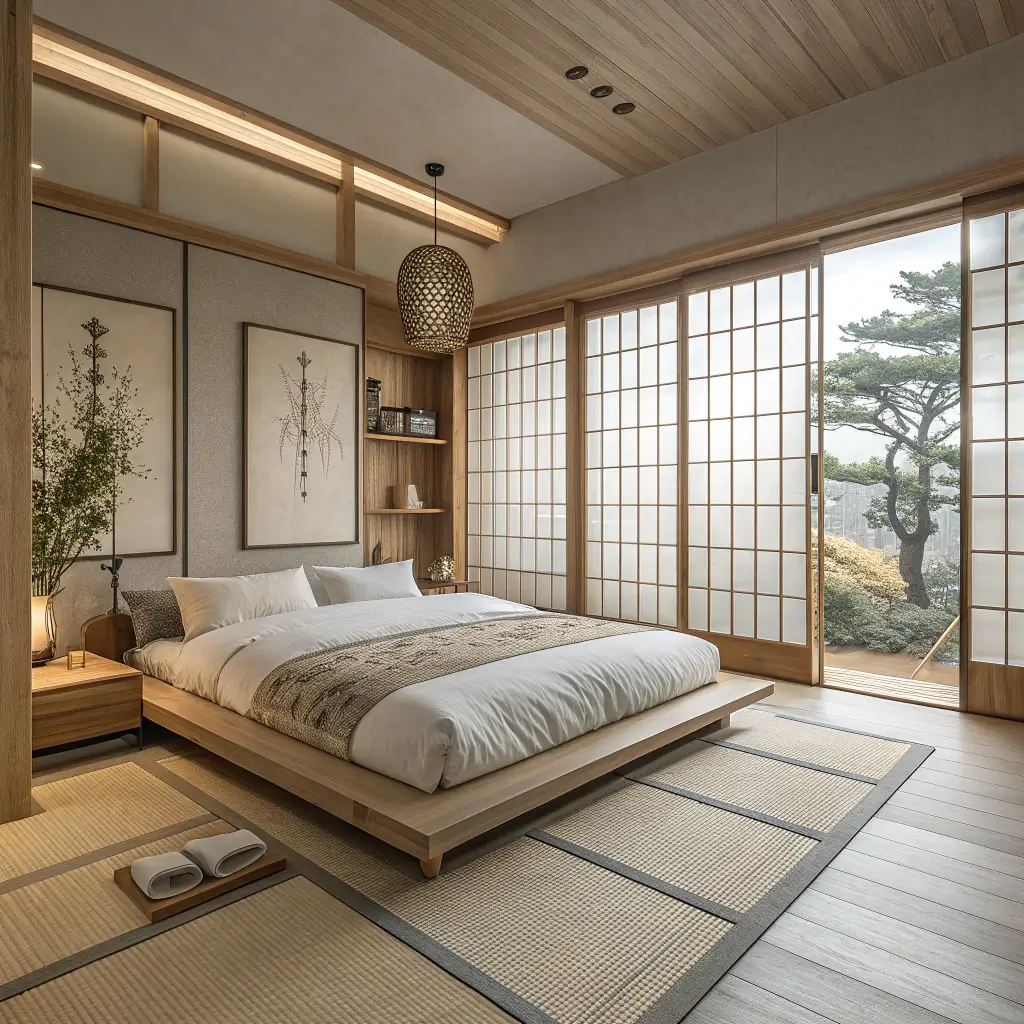
The Foundation of True Relaxation
Creating a minimalist Japandi zen retreat starts with one crucial mindset shift: less really is more. I know, I know—you’ve heard that phrase a million times. But in Japandi design, this concept becomes almost spiritual.
The Japanese philosophy of “Ma” (negative space) plays a huge role here. It’s about appreciating emptiness as much as the objects you keep. Your bedroom shouldn’t feel cramped or overwhelming. Every piece of furniture, every decorative element should earn its place.
Key Elements for Your Zen Retreat
Here’s what you need to nail this look:
- A low-profile bed frame in natural wood or muted black
- Crisp, high-quality bedding in white, cream, or soft gray
- One or two meaningful decorative pieces (think handmade ceramics or a single sculptural plant)
- Plenty of open floor space for that airy, breathing-room feel
- Soft, diffused lighting to create warmth without harshness
I transformed my guest bedroom into a zen retreat last spring, and honestly? Guests now fight over who gets to stay there. The secret sauce is restraint—resist the urge to fill every corner. Empty space is your friend, not your enemy.
2. Neutral Tones with Natural Wood Accents
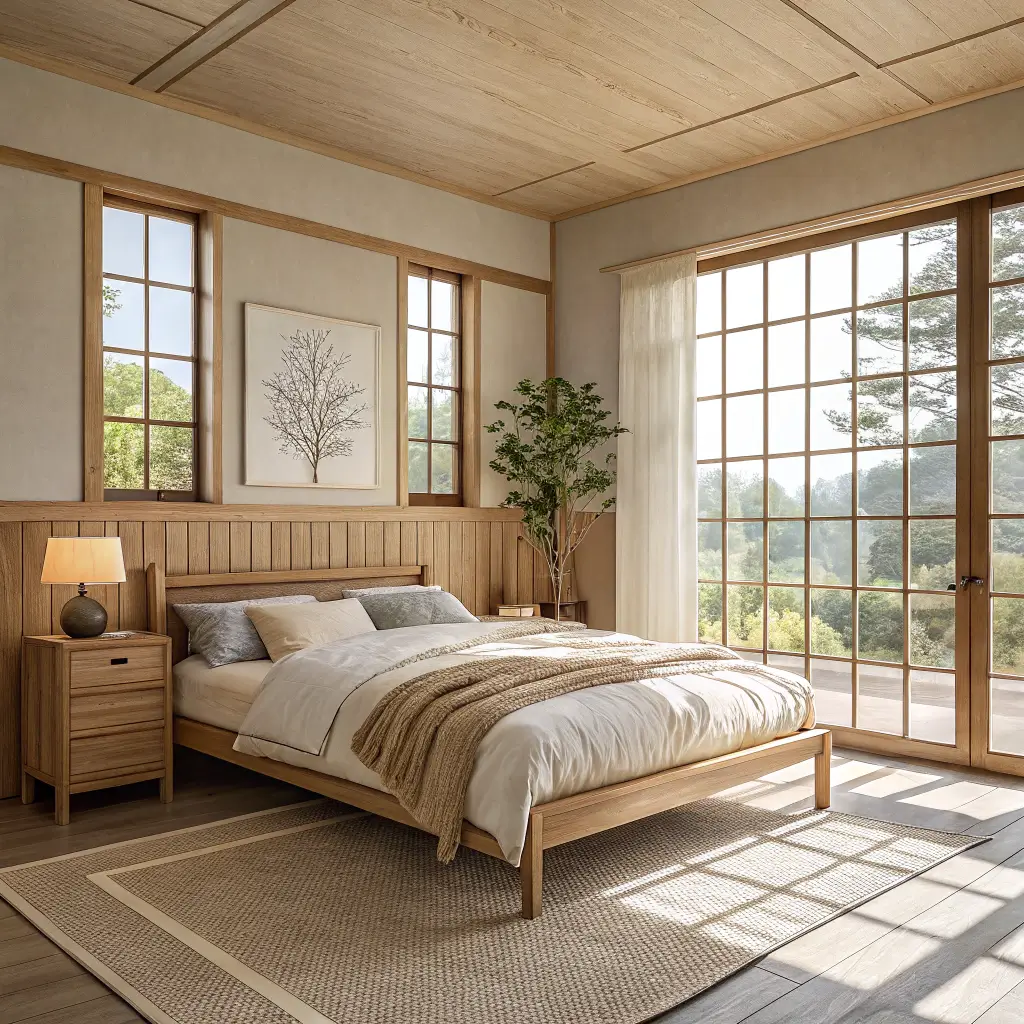
Why This Combo Works Like Magic
Ever noticed how certain rooms just feel instantly calming? Nine times out of ten, it’s because they’re rocking a neutral color palette with natural wood accents. This combination is basically the backbone of Japandi design.
Neutral tones—think warm whites, soft beiges, gentle grays, and muted taupes—create a soothing backdrop that doesn’t compete for your attention. They let your brain relax instead of processing a dozen different colors.
Choosing Your Wood Tones
Not all woods are created equal in Japandi design. Here’s my quick guide:
Light Woods (Scandinavian influence):
- Ash
- Birch
- Light oak
- Maple
Darker Woods (Japanese influence):
- Walnut
- Dark oak
- Teak
- Cherry
Personally, I lean toward light oak with warm undertones. It bridges both aesthetics beautifully and makes smaller bedrooms feel more spacious. But if you’re working with a larger room and want more drama, don’t shy away from darker walnut pieces.
The key? Consistency. Don’t mix five different wood tones unless you want your bedroom to look like a furniture showroom sample sale.
3. Scandinavian Cozy Meets Japanese Simplicity
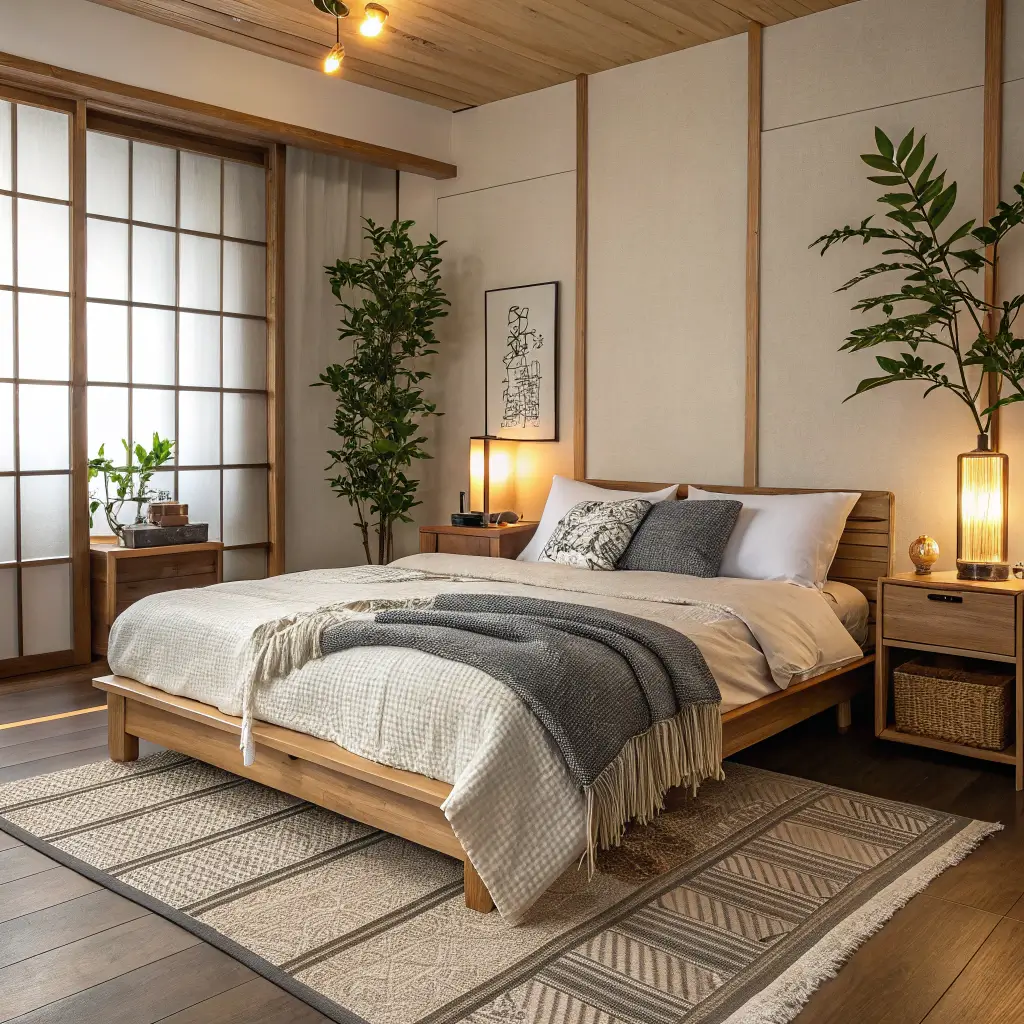
The Perfect Marriage of Two Design Philosophies
Here’s where Japandi gets really interesting. You’re essentially blending hygge (that Danish concept of cozy contentment) with wabi-sabi (the Japanese appreciation of imperfection and transience). Sounds like they shouldn’t work together, right? But they absolutely do.
The Scandinavian side brings warmth, comfort, and those irresistible textured throws you want to snuggle with. The Japanese side contributes discipline, intentionality, and refined simplicity.
Striking the Right Balance
Getting this balance right requires some thought:
- Layer textures, not clutter – A chunky knit throw? Yes. Seven decorative pillows? Hard pass.
- Choose furniture with clean lines but add soft textiles to prevent coldness
- Embrace natural imperfections in materials (knots in wood, handmade ceramic irregularities)
- Keep color schemes cohesive but don’t be afraid of one muted accent color
I made the mistake early on of going too minimal—my bedroom felt like a hotel room, not a home. Adding a wool throw blanket and a couple of linen cushions instantly transformed the space from sterile to inviting.
4. Light-Filled Japandi Sanctuary
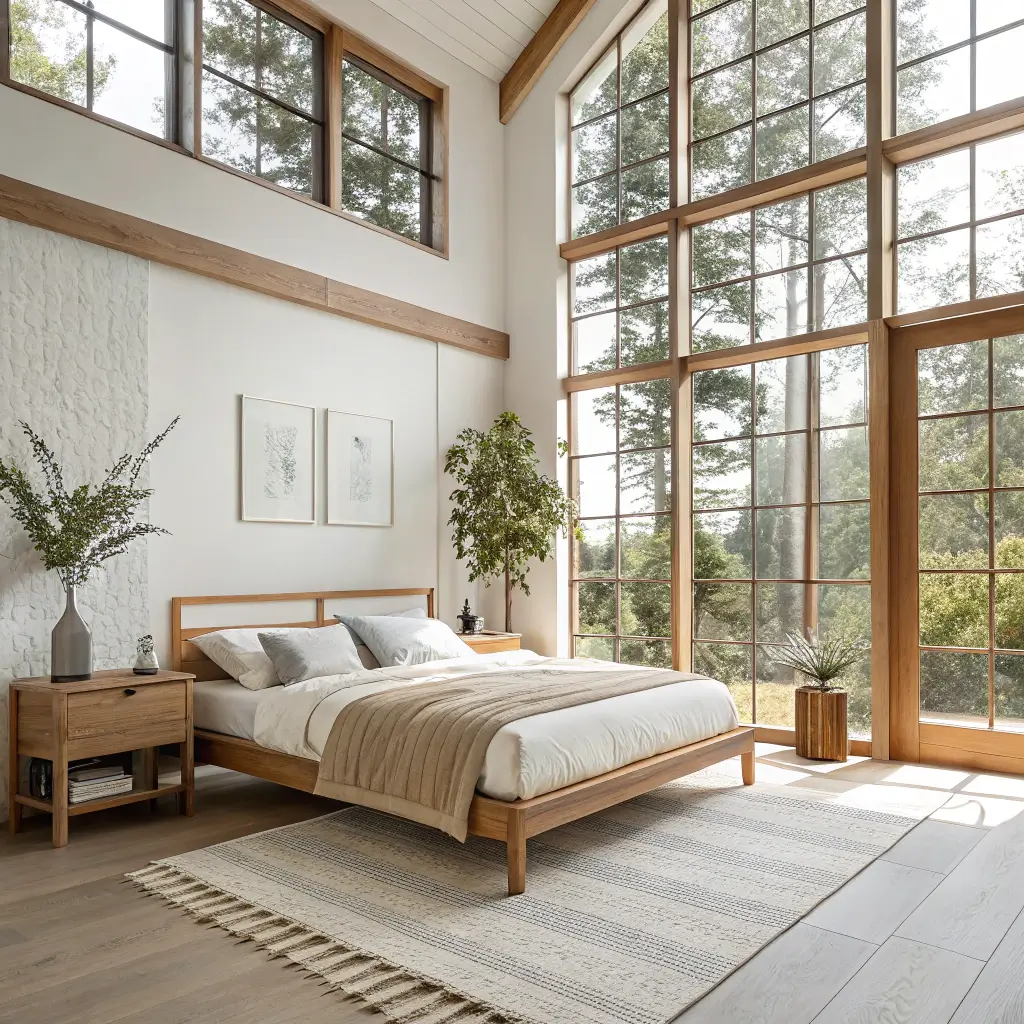
Harnessing Natural Light Like a Pro
Natural light is basically free therapy for your bedroom. Seriously—it regulates your circadian rhythm, boosts your mood, and makes any space feel more welcoming. In Japandi design, maximizing natural light isn’t just a nice-to-have; it’s essential.
Japanese design traditionally uses translucent screens (shoji) to filter and diffuse light beautifully. Scandinavian design, coming from countries with limited winter daylight, treats every ray of sunshine like precious gold.
Practical Tips for a Light-Filled Space
Transform your bedroom into a bright sanctuary with these strategies:
- Swap heavy curtains for sheer linens or light-filtering Roman shades
- Position your bed to benefit from morning light (trust me, it beats any alarm clock)
- Use mirrors strategically to bounce light around the room
- Keep window areas clear of bulky furniture
- Choose light-colored walls and flooring to reflect rather than absorb light
If you’re stuck with a naturally dark room (been there—my first apartment had exactly one tiny window), supplement with warm-toned artificial lighting. Layer your light sources—ambient, task, and accent lighting—to mimic the feel of natural daylight.
5. Low-Profile Platform Bed with Tatami Mat

Grounding Your Sleep Space
Want to know the single most impactful change I made to my bedroom? Switching to a low-profile platform bed. This design choice screams Japandi and completely transforms the room’s proportions and energy.
Low beds create a grounded, stable feeling that’s incredibly calming. They also make ceilings feel higher and rooms feel more spacious. Plus, there’s something almost primal about sleeping closer to the ground—it just feels right.
Platform Bed Options to Consider
When shopping for your Japandi bed, look for these features:
- Solid wood construction (avoid MDF or particleboard if possible)
- Clean, simple lines without ornate headboards or footboards
- A height of 8-14 inches from floor to mattress top
- Slatted bases for breathability
Now, let’s talk tatami mats. Traditional Japanese tatami is made from woven rush grass and adds incredible texture and authenticity. You don’t need to cover your entire floor—placing a tatami mat under or beside your bed creates that Japanese essence without major renovation.
FYI, tatami mats require some maintenance (they’re natural materials, after all), so consider this before committing. But the aesthetic payoff? Totally worth it.
6. Soft Textures and Organic Fabrics
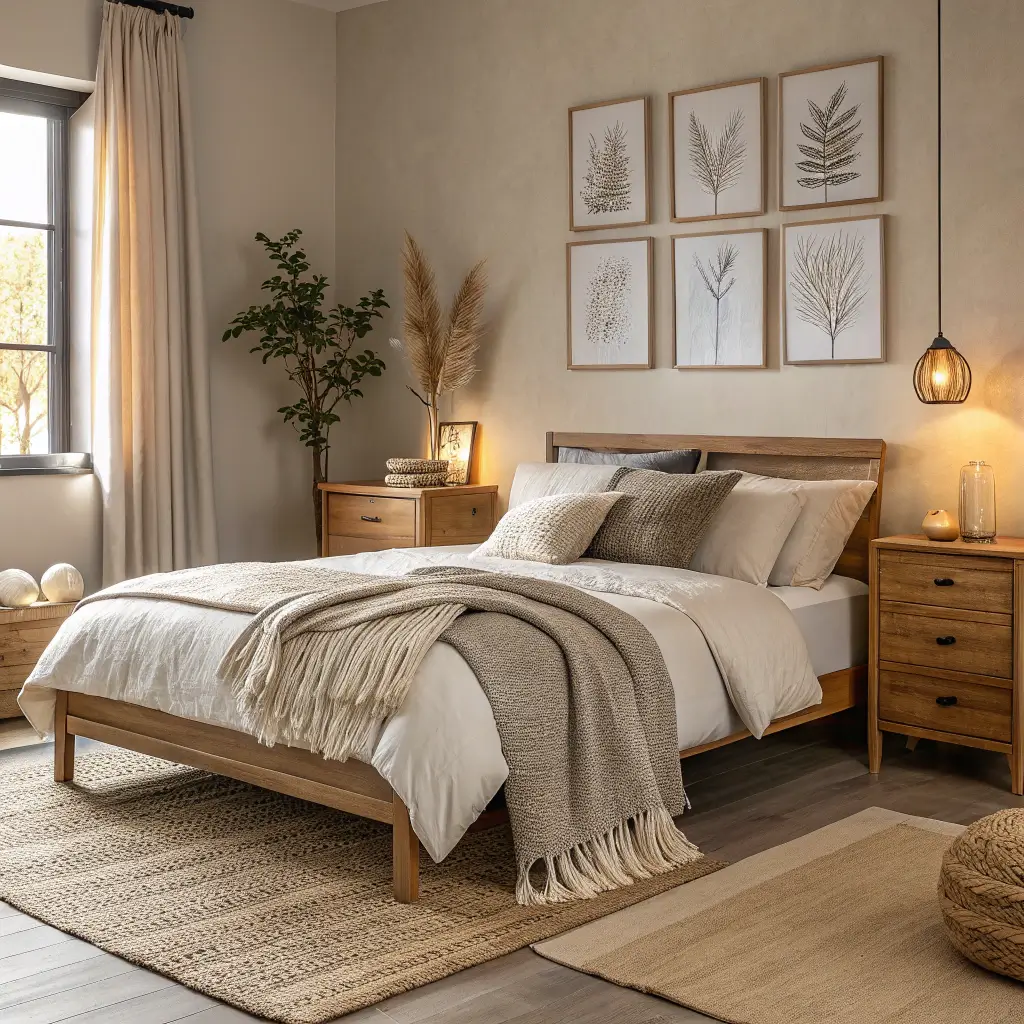
Creating Tactile Comfort Without Visual Clutter
One of the biggest misconceptions about minimalist design? That it has to feel cold or uncomfortable. Nope. Japandi design proves you can create a visually simple space that feels incredibly cozy through strategic use of textures and fabrics.
The trick is layering different textures within a cohesive color palette. When everything’s roughly the same color family, you can go wild with textural variety without creating chaos.
Fabrics That Nail the Japandi Vibe
Here are my go-to organic fabrics for bedroom bliss:
- Linen – Slightly rumpled, naturally textured, breathable perfection
- Cotton – Crisp or soft, depending on the weave; always classic
- Wool – Chunky throws and blankets add warmth and visual interest
- Hemp – Sustainable, durable, and beautifully imperfect
- Organic cotton canvas – Great for accent pillows or upholstery
I’m currently obsessed with stonewashed linen bedding. It’s got this beautiful lived-in quality that embodies wabi-sabi perfectly. Yes, it wrinkles—that’s the point. Stop ironing your bedding and embrace the natural texture. 🙂
Also Read: 15 Magical Kids Bedroom Interior Design Ideas to Brighten Rooms
7. Japandi Boho Minimal Bedroom
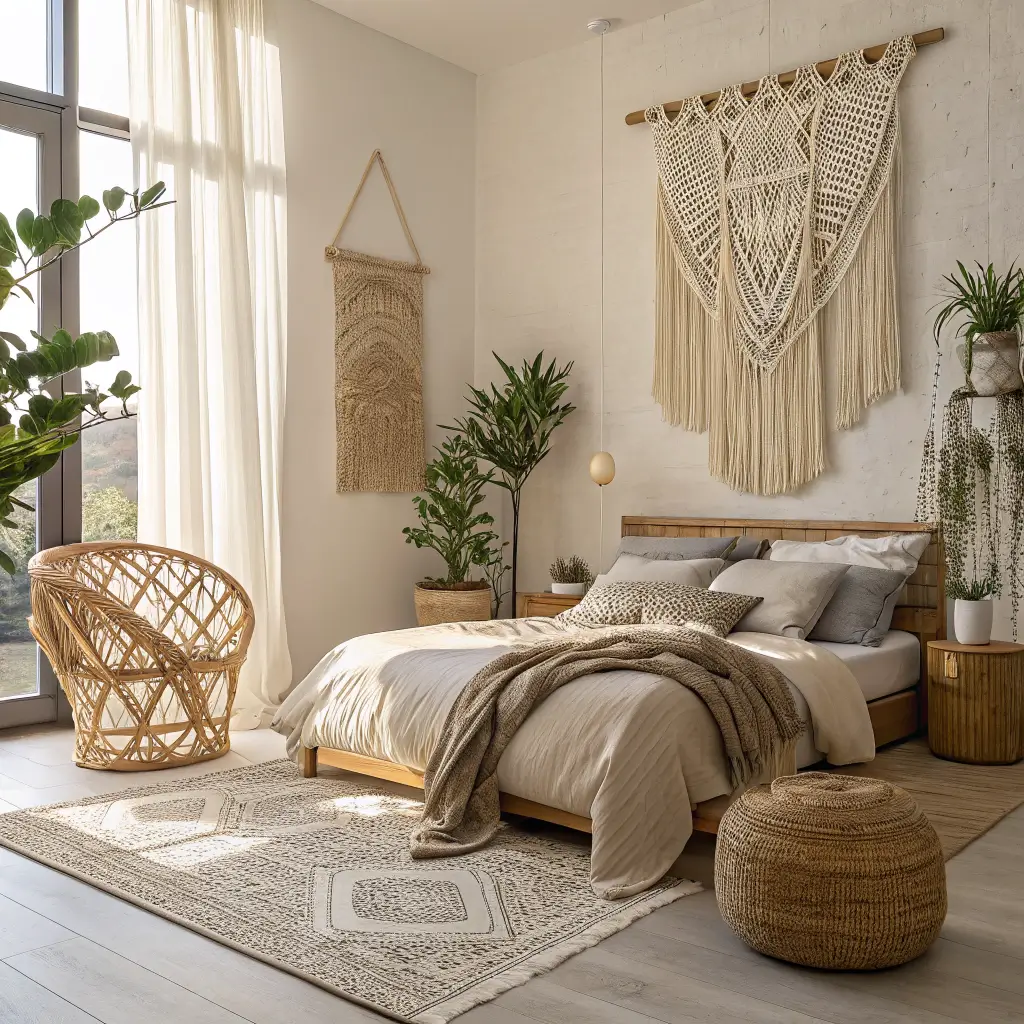
When Free Spirit Meets Intentional Design
Okay, this one’s for my fellow design rule-breakers. Japandi Boho sounds like an oxymoron, but it’s actually a gorgeous style evolution that keeps the intentionality of Japandi while adding bohemian warmth and personality.
Think of it as Japandi’s slightly more relaxed cousin. You’re still prioritizing quality over quantity and maintaining clean lines. But you’re also incorporating more artisanal elements, handmade textiles, and perhaps a touch more visual interest.
Elements That Define Japandi Boho
Blend these elements carefully:
- Macrame or woven wall hangings (one statement piece, not a gallery wall)
- Rattan or cane furniture accents
- Handwoven textured throws in natural colors
- Dried botanical arrangements like pampas grass or dried eucalyptus
- Artisan-made ceramics with organic shapes
The key difference between full-on boho and Japandi Boho? Restraint. You’re still editing ruthlessly. Every piece needs to serve a purpose or bring genuine joy—no random tchotchkes just because they’re cute at the store.
8. Earthy Accent Wall with Simple Decor
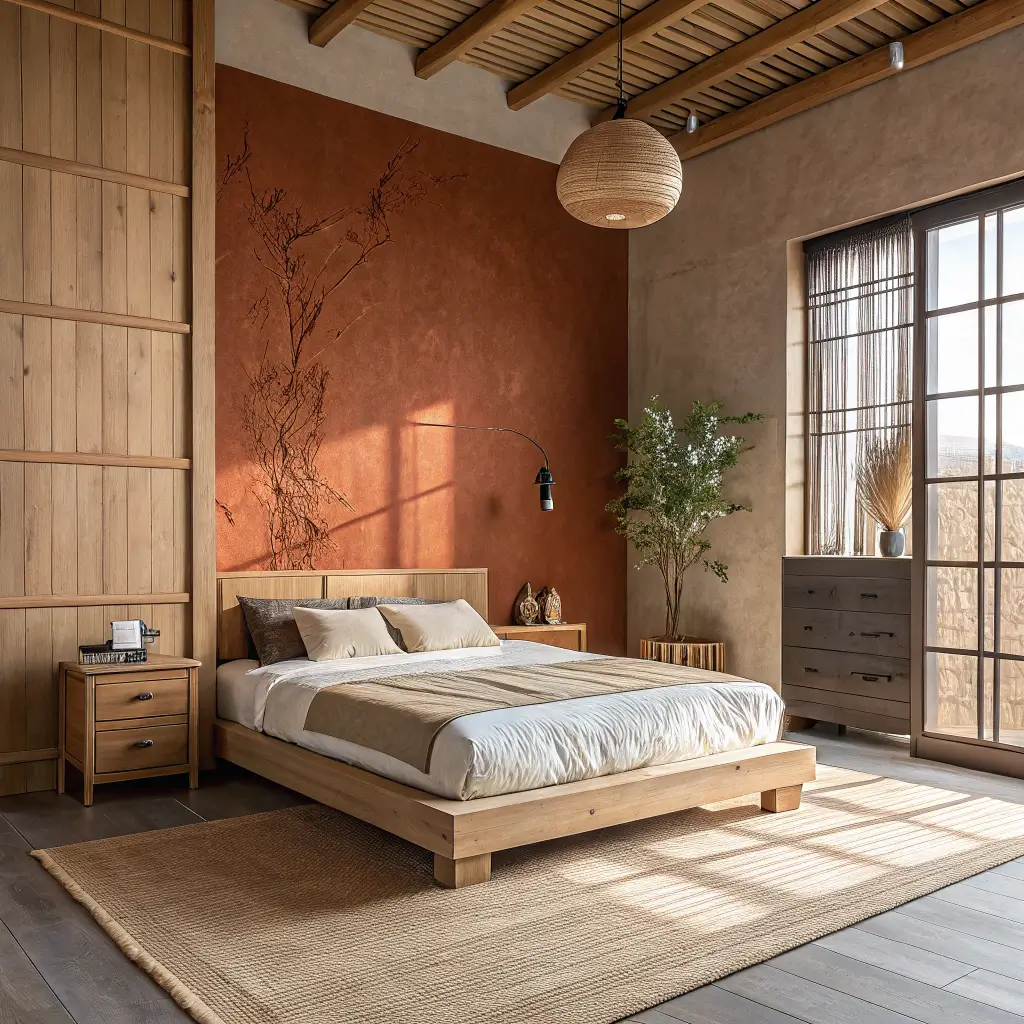
Making a Statement While Staying Serene
Accent walls in Japandi bedrooms? Absolutely—but we’re talking earthy, muted tones, not bright feature colors that’ll have you crawling the walls (pun intended) after six months.
An earthy accent wall adds depth and visual interest without disrupting the peaceful atmosphere. Think terracotta, sage green, soft clay, mushroom brown, or deep moss. These colors connect your space to nature and create a cocooning effect.
Creating Your Accent Wall
Here’s how to nail the accent wall without overdoing it:
- Choose the wall behind your bed – It’s the natural focal point
- Consider texture – Limewash, plaster finishes, or natural clay paint add dimension
- Keep other walls neutral – Typically white, cream, or soft gray
- Limit wall decor – One simple piece of art or nothing at all
I went with a limewash finish in a warm terracotta tone for my accent wall, and honestly, it changed everything. The subtle texture catches light differently throughout the day, creating this organic, almost living quality. Highly recommend.
9. Neutral Color Palette with Black Contrasts
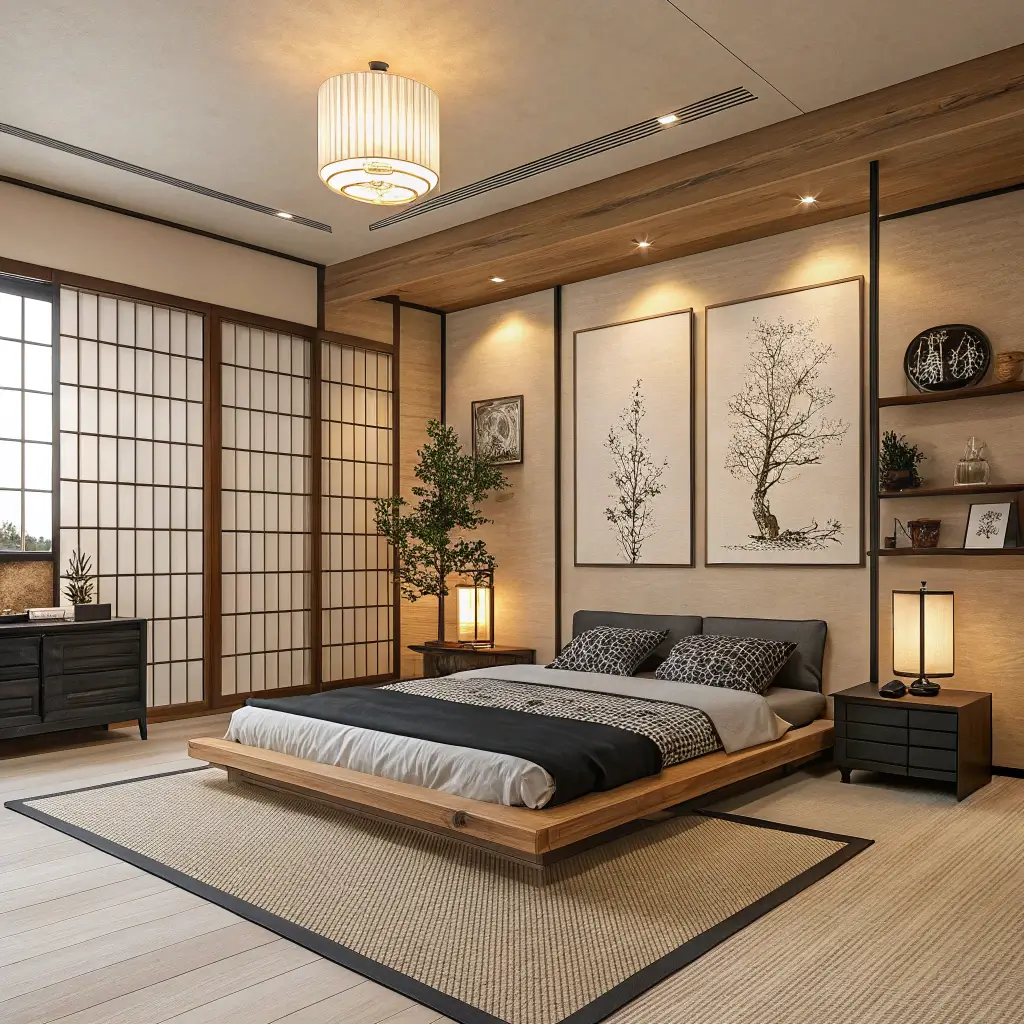
Adding Drama Without Sacrificing Serenity
Ready to add some edge to your Japandi bedroom? Strategic black accents provide grounding contrast against neutral backgrounds without veering into industrial or modern territory.
Japanese design has always embraced black—think ink paintings, lacquerware, and charcoal elements. When used sparingly against Scandinavian-inspired neutral backgrounds, black creates sophisticated focal points that anchor the room.
Where to Incorporate Black
Be intentional with your black elements:
- Picture frames or simple artwork in black frames
- Pendant lights or bedside lamps with black fixtures
- Window hardware or curtain rods
- Small furniture pieces like side tables or accent chairs
- Decorative objects like vases or sculptures
IMO, the trick is distribution. Don’t cluster all your black accents in one area—scatter them throughout the room so your eye moves naturally around the space. And remember: we’re talking accents, not dominant features. A little black goes a long way.
Also Read: 15 Amazing Contemporary Bedroom Interior Design Ideas to Copy
10. Minimalist Storage Solutions for Small Bedrooms

Clutter-Free Living in Compact Spaces
Real talk: most of us aren’t working with sprawling bedrooms. We’re dealing with compact spaces that need to function as sleeping quarters, sometimes offices, and definitely relaxation zones. Minimalist storage solutions make this possible without sacrificing Japandi aesthetics.
The goal is storage that’s either invisible or beautiful enough to display. Hidden storage keeps visual clutter at bay, while thoughtfully designed visible storage becomes part of your decor.
Smart Storage Ideas
Maximize your small bedroom with these solutions:
- Platform beds with built-in drawers – Eliminate the need for dressers
- Floating nightstands – Create floor space and visual lightness
- Wall-mounted shelving – Simple wooden shelves for books and minimal decor
- Closed wardrobes with minimal hardware – Keep clothing hidden behind clean doors
- Under-bed storage containers – Use low-profile containers in neutral tones
- Multi-functional furniture – Benches with storage, ottomans that open up
I’m a huge fan of floor-to-ceiling built-in wardrobes with push-to-open doors. Zero visible hardware, maximum storage, and completely seamless with the walls. Worth every penny if you’re serious about the minimalist life.
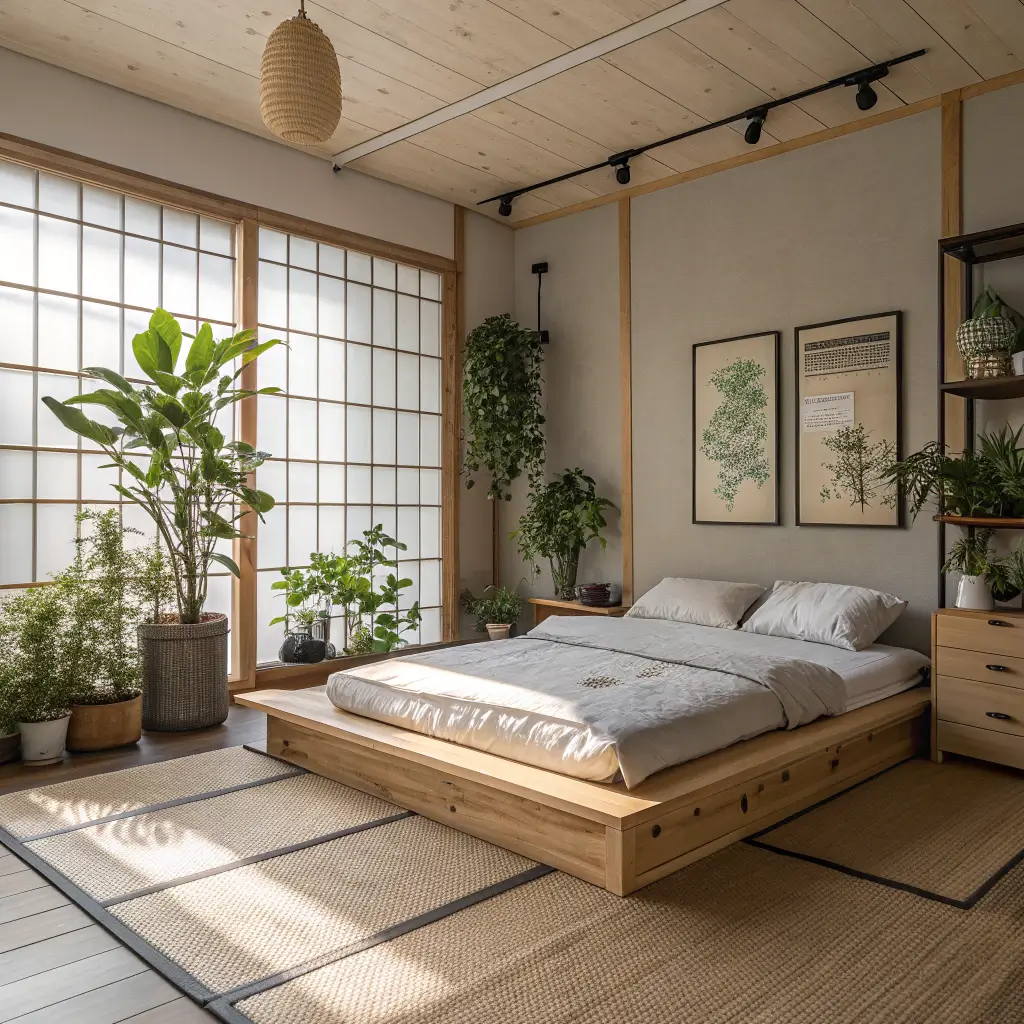
11. Indoor Plants in Japandi Style
Bringing Nature Inside (The Right Way)
Plants in a Japandi bedroom? Absolutely. But we’re not creating a jungle here. The approach is intentional and sculptural—each plant chosen for its form, not just to fill space.
Japanese design often features single, carefully selected plants treated almost like living sculptures. Scandinavian design embraces greenery for its connection to nature and health benefits. Combine these approaches for plant styling that enhances rather than overwhelms.
Best Plants for Japandi Bedrooms
Choose plants that complement the aesthetic:
- Japanese maple bonsai – The ultimate statement plant (requires commitment)
- Snake plant – Architectural, low-maintenance, air-purifying
- Fiddle leaf fig – Sculptural and sophisticated
- Peace lily – Elegant white blooms, tolerates low light
- Monstera – Dramatic leaves, tropical but not busy
- Pothos – Simple trailing vines, nearly impossible to kill
- Japanese peace grass – Delicate and authentic
Container selection matters as much as the plants themselves. Stick with handmade ceramic pots in neutral tones—terracotta, cream, black, or natural stoneware. Avoid plastic at all costs.
Position plants strategically: one statement plant on a credenza, a small pot on your nightstand, or a hanging plant in a corner. That’s really all you need.
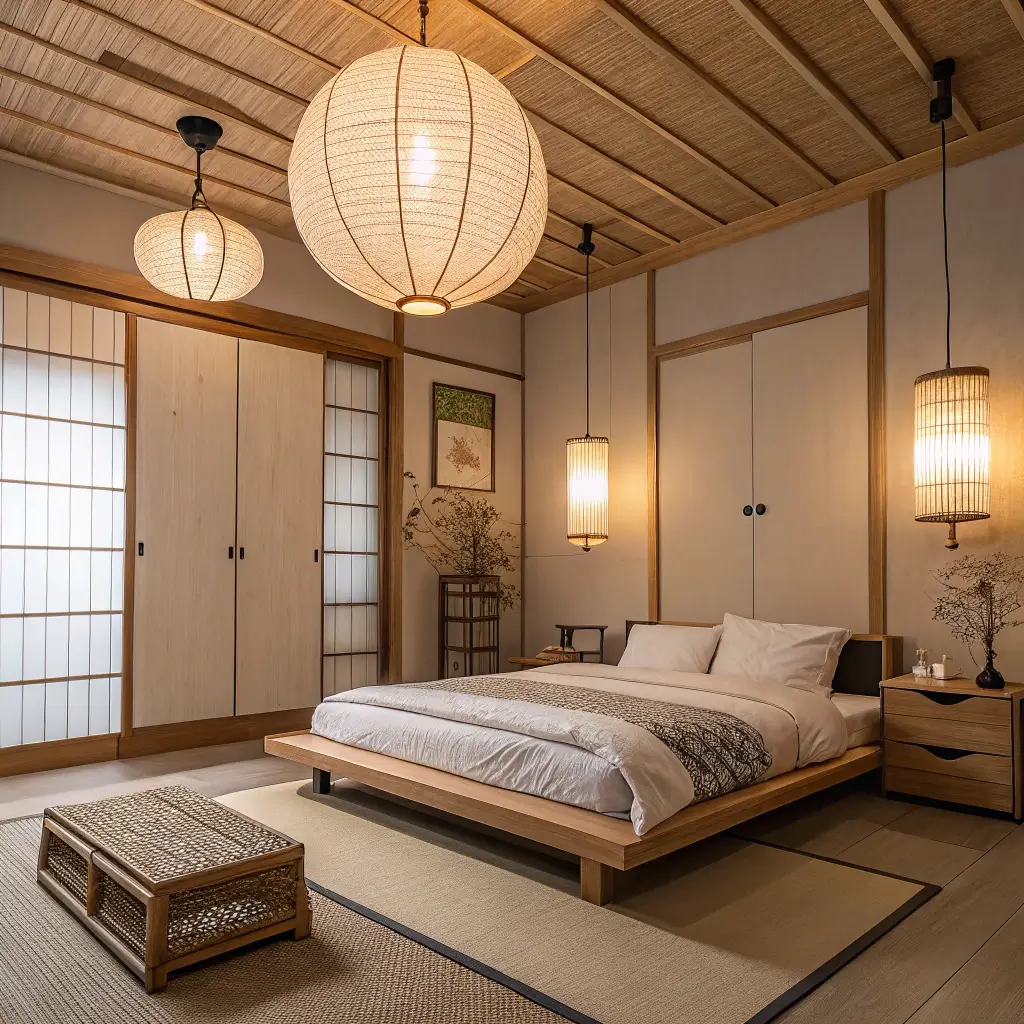
12. Scandinavian Lighting with Japanese Simplicity
Illuminating Your Sanctuary
Lighting can make or break a bedroom’s atmosphere. In Japandi design, you’re aiming for warm, diffused lighting that mimics candlelight or soft natural light. No harsh overhead lights that make you feel like you’re in an interrogation room.
Scandinavian design brought us iconic pendant lamps and the concept of layered lighting. Japanese design contributes paper lanterns and the appreciation for soft, filtered light. Together? Lighting perfection.
Creating Your Lighting Plan
Layer these light sources for maximum atmosphere:
Ambient Lighting:
- Paper lantern pendant lights (authentic Japanese or Scandinavian designs)
- Flush-mount fixtures with warm-toned bulbs
- Indirect ceiling lighting
Task Lighting:
- Simple wooden or ceramic table lamps
- Adjustable reading lights with minimal profiles
- Wall-mounted swing-arm sconces
Accent Lighting:
- LED strip lights behind headboards (keep them warm-toned)
- Battery-operated candles for evening ambiance
- Small sculptural lamps as decorative objects
Pro tip: Install dimmer switches everywhere. Being able to adjust light levels throughout the day completely transforms how your bedroom feels. Trust me on this one.
Also Read: 15 Glamorous Bedroom Interior Design Luxury Master Suite Tips
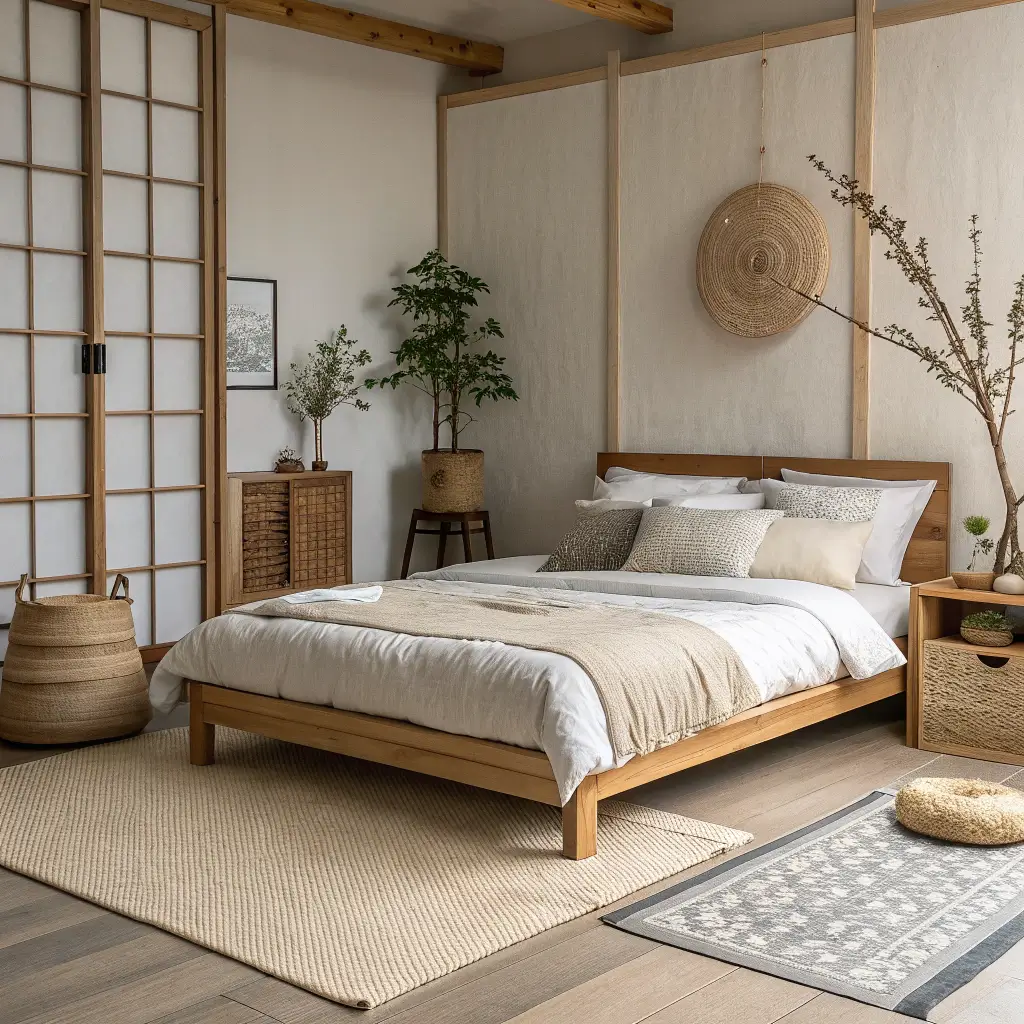
13. Natural Materials and Handmade Decor
Authenticity Over Mass Production
Here’s where Japandi design really separates itself from big-box store minimalism: the emphasis on natural materials and artisanal craftsmanship. Mass-produced perfection has no place here—we’re celebrating the human touch and natural imperfections.
Both Japanese and Scandinavian cultures have deep traditions of craftsmanship. This shared value means Japandi spaces feel authentic and connected to human creativity, not sterile or impersonal.
Materials to Prioritize
Fill your bedroom with these natural elements:
- Solid wood (not veneers) for furniture
- Stone for decorative objects or small surfaces
- Bamboo for blinds, baskets, or accent pieces
- Natural fibers like jute, sisal, or wool for rugs
- Ceramic and stoneware for vases and containers
- Paper for light fixtures or wall art
- Leather (if you’re not vegan) for small accent details
For decor, seek out handmade pieces. Visit local potters, check Etsy for artisan sellers, or explore vintage shops for one-of-a-kind finds. Yes, handmade costs more than mass-produced. But one beautiful handmade vase beats ten cheap ones every single time.
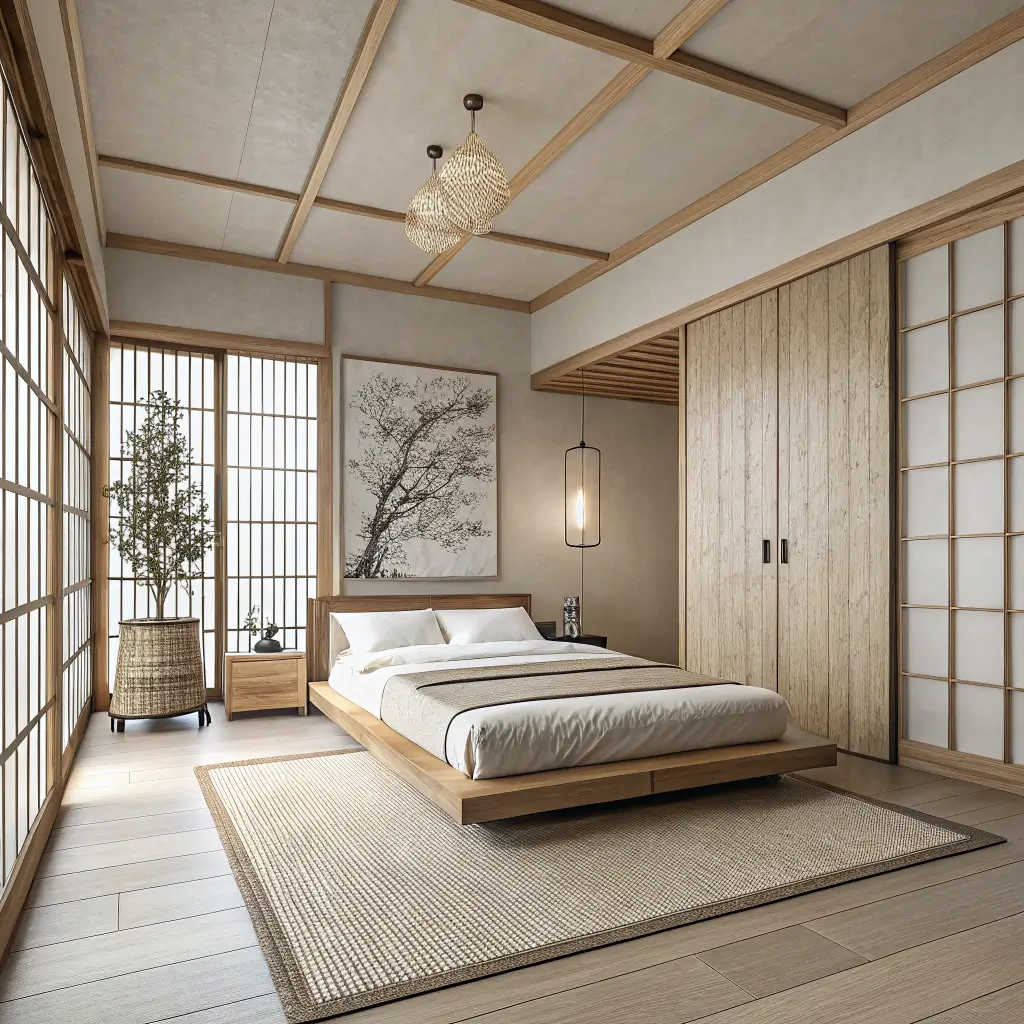
14. Serene Monochrome Japandi Bedroom
Mastering the Shades of Neutral
A monochromatic Japandi bedroom takes the neutral palette concept to its logical extreme—and the results are stunning. By working within a single color family, you create incredible visual harmony that’s deeply calming.
Don’t confuse monochrome with boring. When you limit your colors, texture and form become even more important. Every element needs to hold its own, which forces you to be more intentional about your choices.
Building Your Monochromatic Scheme
Choose your monochromatic approach:
All-White:
- Layer different whites and creams
- Emphasize texture variation (linen vs. cotton vs. wool)
- Add warmth through natural wood tones
Warm Neutrals:
- Range from pale beige to deep camel
- Include touches of cream and ivory
- Perfect for creating cozy warmth
Cool Grays:
- Span from pale silver to charcoal
- Can feel sophisticated or cozy depending on execution
- Pair well with black accents
Earthy Tones:
- Build around terracotta, clay, and mushroom
- Create a grounded, nature-inspired feel
- Works beautifully with raw wood
Whatever direction you choose, vary your values (light to dark) within the color family. A room with ten items in the exact same shade feels flat. A room with lights, mediums, and darks within one color family feels dynamic and interesting.
15. Modern Japandi Bedroom with Minimalist Art
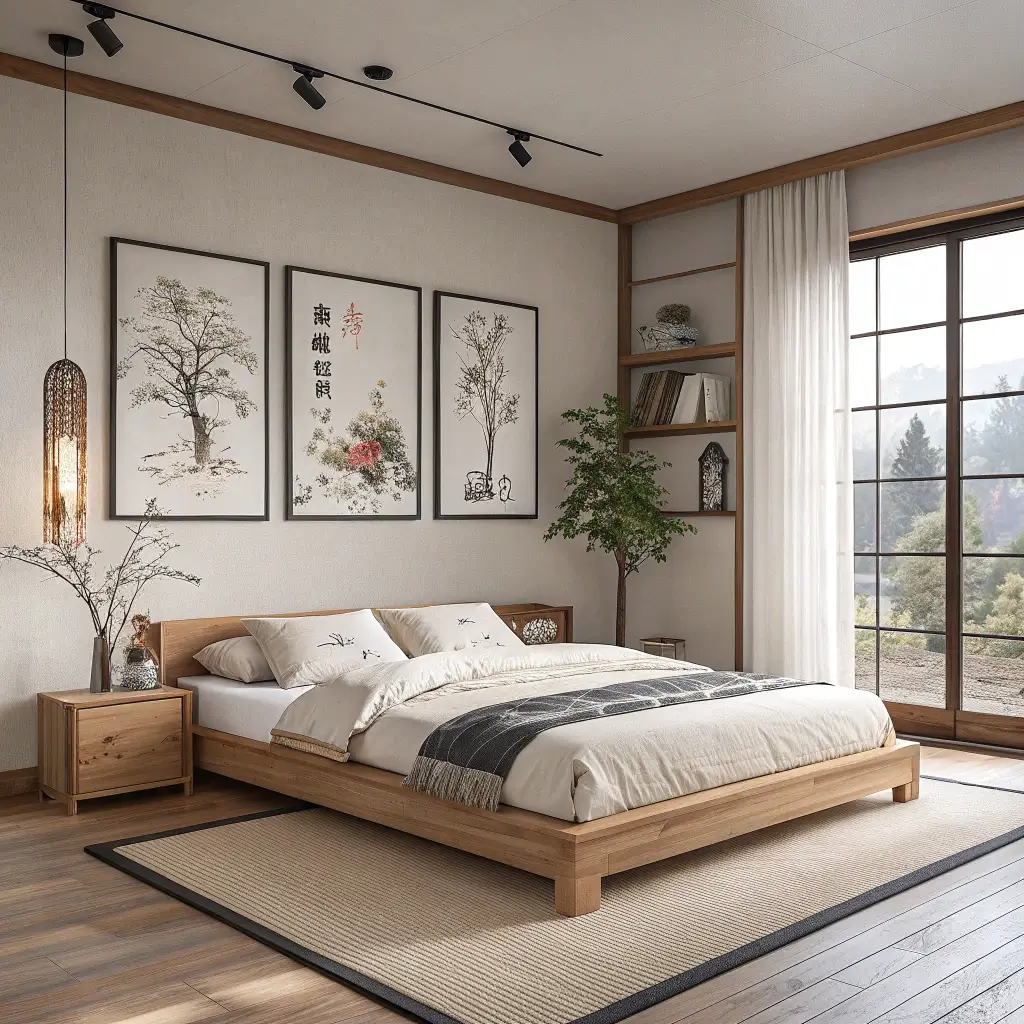
Curating Your Visual Environment
Let’s wrap up with one of my favorite elements: art in the Japandi bedroom. Art adds personality and serves as a visual focal point—but in Japandi spaces, we approach it with the same intentionality we apply to everything else.
Forget gallery walls with fifteen different frames. Think one or two carefully selected pieces that speak to you and complement your space. Quality over quantity, always.
Choosing Art for Your Space
Consider these minimalist art directions:
- Abstract line drawings – Simple, elegant, universally appealing
- Japanese ink paintings (sumi-e) – Traditional and authentic
- Nature photography – Especially close-ups in muted tones
- Minimalist geometric prints – Clean lines, limited colors
- Textile art – Woven wall hangings or simple fabric pieces
- Original ceramics – Three-dimensional art with sculptural presence
Framing matters too. Choose simple frames in natural wood or thin black metal. Avoid ornate or chunky frames that compete with the artwork itself. Sometimes, frameless mounting or minimal clips work even better.
Position your art thoughtfully—typically above the bed or on a facing wall where you’ll see it as you enter. Leave plenty of wall space around it. Remember that beautiful concept of Ma? Empty space makes your art more powerful, not less.
Bringing It All Together
So there you have it—15 tranquil Japandi bedroom interior design ideas that’ll transform your sleeping space into the relaxation sanctuary you deserve. Whether you’re drawn to the zen minimalism of a low platform bed, the warmth of organic textiles, or the drama of black accents against neutral walls, there’s a Japandi approach that’ll work for you.
Here’s what I want you to remember: Japandi isn’t about perfection. It’s about intentionality. It’s about choosing fewer, better things and creating space for peace in your daily life. Your bedroom doesn’t need to look like a magazine spread to feel like a retreat.
Start small if you’re feeling overwhelmed. Maybe declutter one surface, or swap out your busy patterned curtains for simple linen ones. Add a single beautiful plant. Replace harsh lighting with softer options. These small changes compound into major transformation.
And honestly? The best Japandi bedroom is one that actually helps you relax and sleep better. All the aesthetic perfection in the world means nothing if you’re not getting quality rest. So take what resonates, leave what doesn’t, and create a space that genuinely serves your well-being.
Now go forth and create your own tranquil Japandi sanctuary. Your future well-rested self will thank you. :/
Happy designing!