
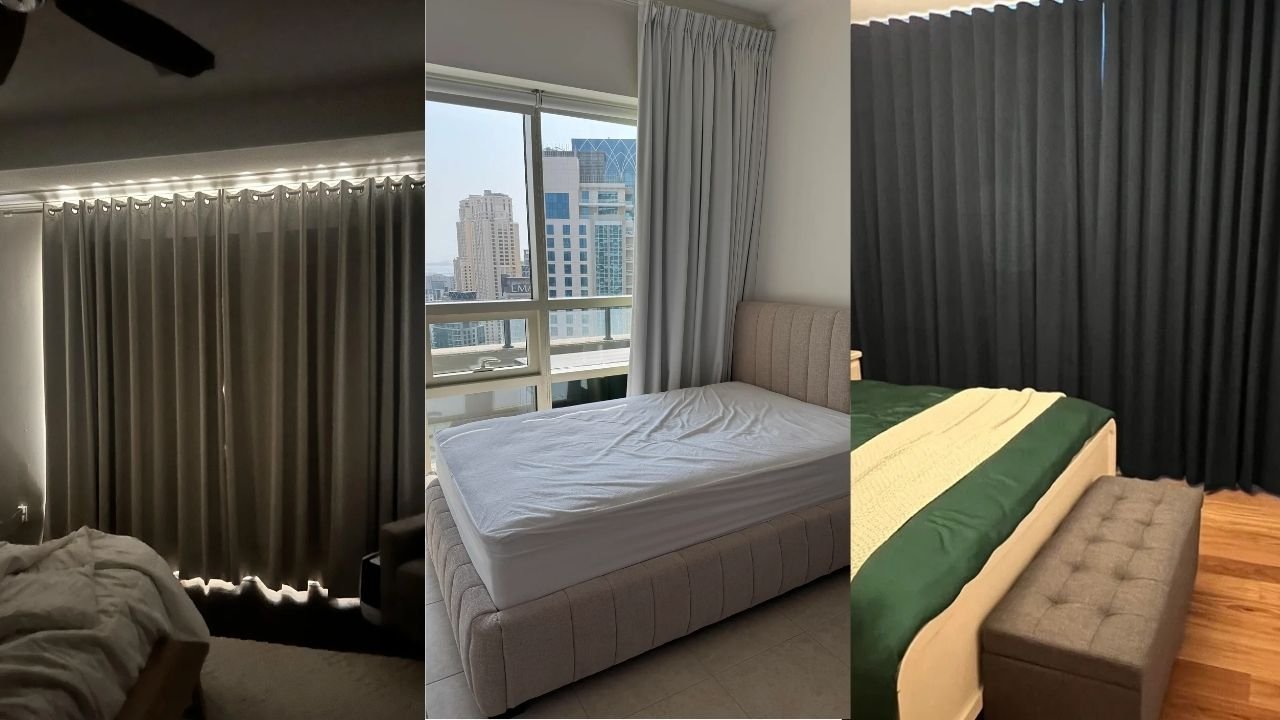
8 Dark Curtains Bedroom Ideas That Actually Work
Ever walked into a room and felt instantly calmer? That’s what dark curtains can do for a bedroom. They’re not just about blocking light—though they’re brilliant at that. They add weight, drama, and a sense of quiet that lighter fabrics just can’t match.
But here’s the thing: dark curtains can go wrong fast. Too heavy-handed and your room feels like a cave. Too matchy-matchy and it’s flat. The trick is knowing how to balance them with the rest of your space.
We’ve pulled together eight real bedrooms that prove dark curtains aren’t just functional—they’re transformative. Whether you’re after full blackout vibes or just a touch of moody contrast, these ideas will show you exactly how to make it work.
Why Dark Curtains Work in Bedrooms
Before we dive into the rooms, let’s talk about why dark curtains make sense in the first place.
Sleep quality improves when light is blocked out properly. Dark curtains—especially in charcoal, navy, or black—create that darkness our bodies need for deep rest. Street lights, early morning sun, even the glow from a neighbor’s porch can mess with your sleep cycle. Dark curtains fix that.
Then there’s the style factor. Dark curtains anchor a room. They create a focal point that draws the eye and makes everything feel more intentional. White walls and light bedding suddenly have something to push against. The space feels balanced instead of washed out.
And let’s be honest—they’re forgiving. Light curtains show every bit of dust and sunlight fade. Dark ones? They hide the wear and keep looking good longer.
Now, let’s look at how real rooms put this into practice.
Grey Curtains with Natural Wood Warmth
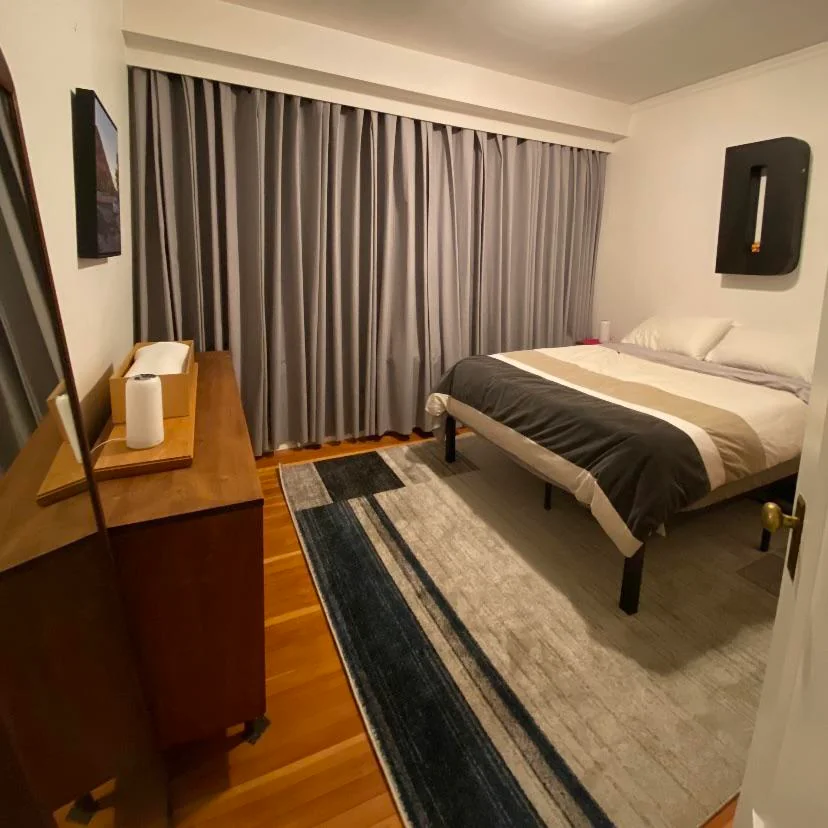
The first bedroom proves that dark doesn’t mean cold. Floor-to-ceiling grey curtains frame a large window, but what makes this space work is the warm honey-toned wood furniture scattered throughout.
There’s a mid-century dresser, a wooden desk with clean lines, and a striped area rug that bridges the gap between the grey curtains and the golden oak flooring. The bedding is simple—white with a dark runner across the foot—letting the curtains and wood do the heavy lifting.
A modern wall sculpture in matte black echoes the curtain’s depth without overdoing it. The whole room feels calm but grounded. It’s the kind of space where you’d actually want to spend a Sunday morning.
What makes it work: The contrast between cool grey fabric and warm wood tones keeps the room from feeling too sterile. Dark curtains can handle bold wood finishes—in fact, they need them. Without that warmth, the grey would feel flat.
How to steal this look: If you’re working with grey curtains, bring in natural wood wherever you can. Bedside tables, picture frames, even a wooden tray on your dresser. The wood doesn’t need to match perfectly—mixed tones actually add more interest.
Layered Lighting Behind Moody Drapes
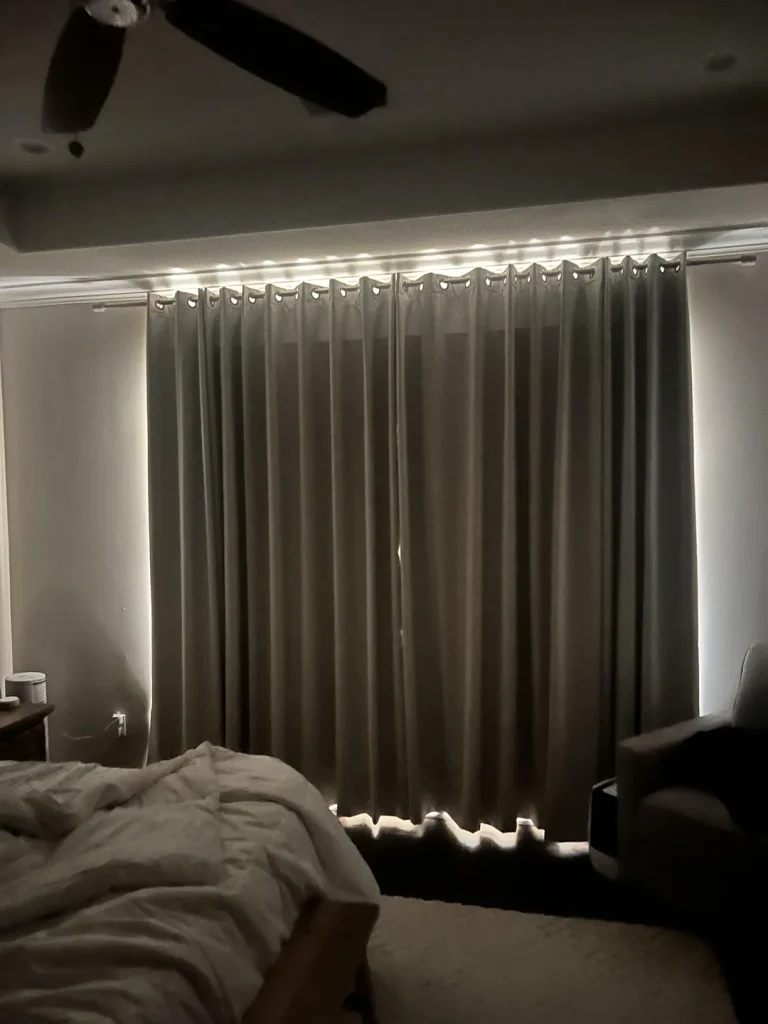
The second bedroom is all about mood lighting, and those dark grey curtains play a starring role. Behind the curtains, soft LED strip lighting creates a gentle glow that filters through the fabric at night.
The room itself leans modern with a low-profile bed, sleek ceiling fan with black blades, and warm-toned pendant lights flanking the bed. The curtains are grommet-style, hung high and wide to make the window feel larger than it is.
What’s clever here is how the lighting setup changes the curtain’s job. During the day, they block harsh light. At night, they become a diffuser for that hidden LED strip, creating a soft backdrop that’s easier on the eyes than overhead lighting.
The bedding is neutral—taupes and soft browns—with a few throw pillows in forest green and charcoal. It’s cozy without trying too hard.
What makes it work: The layered lighting approach means the curtains serve double duty. They’re functional blackout panels when closed, but they also become part of the room’s ambient lighting design. That hidden glow makes the fabric feel softer and less harsh.
How to steal this look: Install a simple LED strip along the top of your curtain rod or tucked behind the valance. Use warm white bulbs, not cool ones. When the curtains are drawn at night, switch off the overhead light and let that soft glow take over. It’s instant atmosphere.
Minimalist Luxury with Upholstered Comfort

The third bedroom takes a more luxurious approach. A large upholstered bed frame in soft beige faces floor-to-ceiling windows dressed in simple grey curtains. The view outside—a city skyline—becomes part of the design rather than competing with it.
The floor is pale tile, keeping things cool and clean. The bedding is crisp white, barely made, which actually adds to the lived-in luxury vibe. There’s no clutter, no fuss—just clean lines and quality materials.
The curtains here aren’t trying to make a statement. They’re doing their job quietly, softening the hard edges of the window frames and providing privacy when needed. When open, they stack neatly to the sides, letting that view shine.
What makes it work: Sometimes the best move is restraint. These curtains aren’t competing with the upholstered bed or the view. They’re supporting players that let the room breathe. The pale floor and walls need that touch of grey to keep things from feeling too stark.
How to steal this look: If you’ve invested in a statement bed frame, let your curtains take a back seat. Choose a mid-tone grey or charcoal that complements your palette without demanding attention. Keep the fabric simple—linen or cotton blends work beautifully and soften over time.
Also Read: 10 Yellow Curtains Bedroom Ideas That’ll Brighten Your Space (Without the Overwhelm)
Black Curtains with Textural Contrast
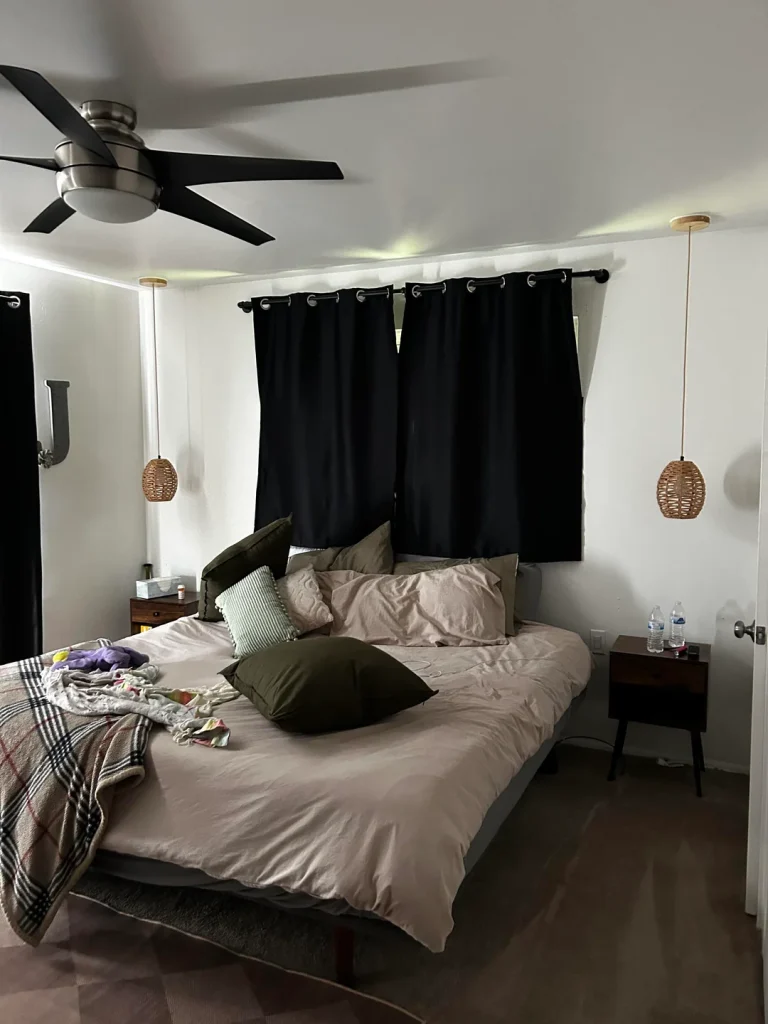
Now we’re getting into the bolder territory. The fourth bedroom features solid black curtains paired with warm wood furniture and ambient lighting that changes everything.
The bed sits low to the ground with neutral linens in taupe and grey. Black curtains hang from grommet rings, pooling slightly at the floor. But here’s where it gets interesting: woven pendant lights in natural rattan hang on either side of the bed, and there’s a black ceiling fan with a brushed metal finish overhead.
The lighting is warm—almost golden—and it plays beautifully against those black curtains. Without that warm glow, the black would feel heavy. With it, the room feels moody and inviting.
A small nightstand in dark wood holds just a few essentials. The floor appears to be a warm-toned laminate or engineered wood. There’s a throw blanket in olive green draped casually across the bed.
What makes it work: Black curtains need warm lighting to keep them from feeling oppressive. This room nails it with those rattan pendants and the soft ambient glow. The natural textures—woven lights, wood furniture, that olive throw—soften the boldness of the black fabric.
How to steal this look: If you’re going with black curtains, invest in warm-toned lighting. Think Edison bulbs, brass or gold fixtures, or natural materials like rattan or wood. Layer your lighting—bedside lamps, overhead fixtures, maybe even a string of soft lights tucked somewhere unexpected.
Bold Bedding Against Dark Drapery
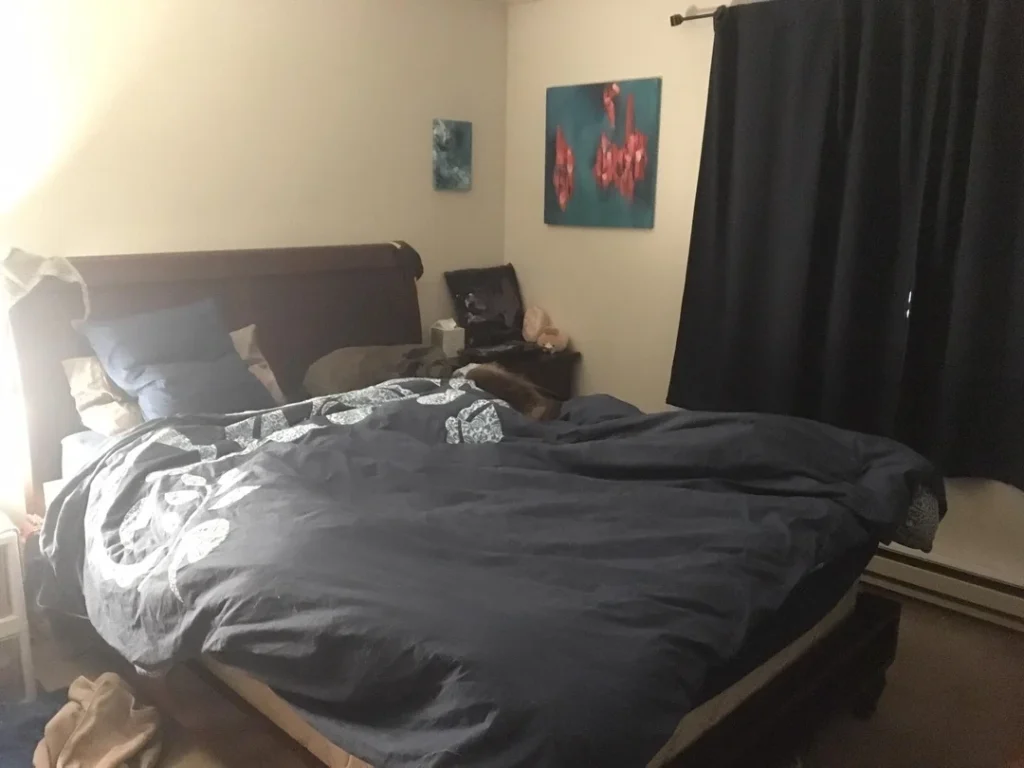
The fifth bedroom shows what happens when you let your bedding do the talking. Dark grey curtains hang behind a bed dressed in rich, moody linens—charcoal, deep grey, and black with subtle pattern details.
The room is photographed in softer light, almost backlit, which gives everything a dreamy quality. There’s artwork on the walls—abstract pieces in teal and coral that pop against the pale walls. A black nightstand sits beside the bed, simple and functional.
The curtains here create a dark backdrop that makes the bed the clear focal point. Without them, the room would feel scattered. With them, everything has a purpose and place.
What makes it work: When your bedding has depth and texture, dark curtains enhance that rather than competing. The grey tones in both elements create a cohesive look that feels intentional. Those bright art pieces add just enough color to keep things interesting without overwhelming the palette.
How to steal this look: Match your curtain tone to your darkest bedding shade. If you’ve got charcoal sheets, go with charcoal or black curtains. Then bring in one or two accent colors through art, throws, or cushions. Keep it simple—too many colors will dilute the impact.
Green Curtains for Unexpected Depth
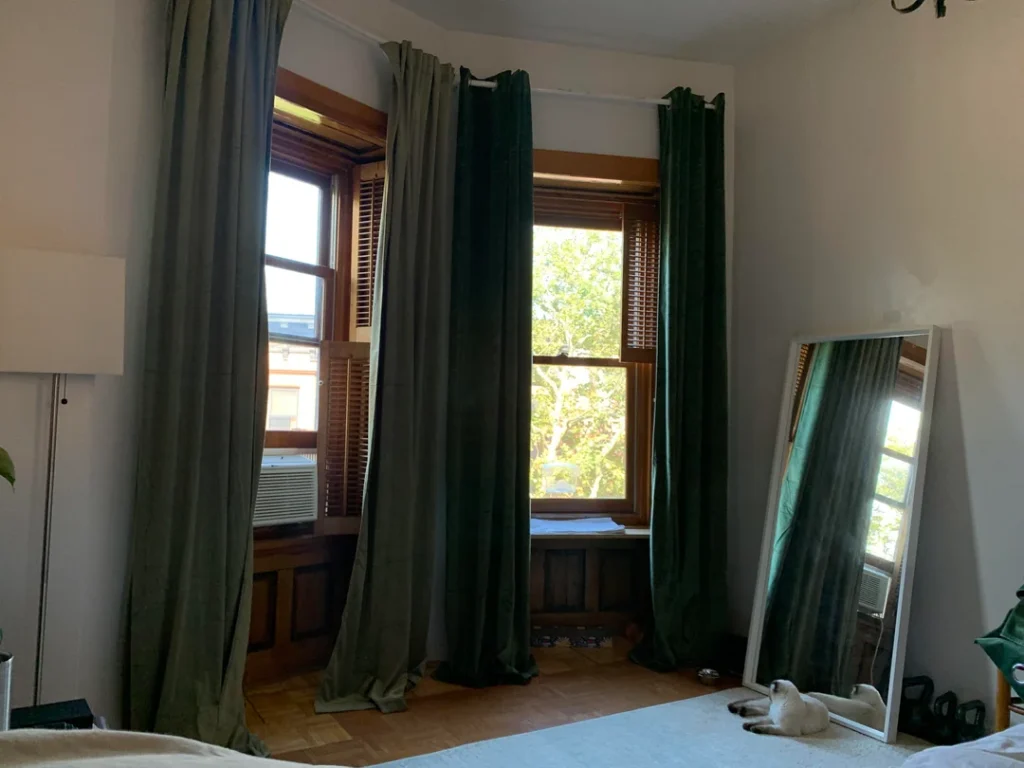
The sixth bedroom breaks from the grey-and-black pattern with deep green curtains, and it’s a beautiful shift. Forest green panels hang from two windows, with one curtain pulled open to reveal wooden blinds and a view of trees outside.
The walls are pale, almost cream, which lets that green really stand out. Natural wood window frames add warmth. A tall mirror leans against the wall, reflecting light and making the space feel larger. The floor is warm-toned hardwood.
There’s a lamp in the corner, a chair partially visible, and what looks like a dresser or storage unit nearby. The room feels lived-in and comfortable, not staged.
What makes it work: Green curtains bring in a natural element that feels calming without being boring. This shade—somewhere between forest and emerald—has enough depth to work like black or charcoal but with more personality. The pale walls and natural wood keep it grounded.
How to steal this look: If black or grey feels too safe, try deep green, navy, or even a rich burgundy. The key is choosing a saturated, deep tone rather than something bright or pastel. Pair with natural materials—wood, linen, jute—to keep the organic feeling going.
Also Read: 8 Boho Curtains Bedroom Ideas That Transform Your Space
Navy Curtains with Classic Elegance
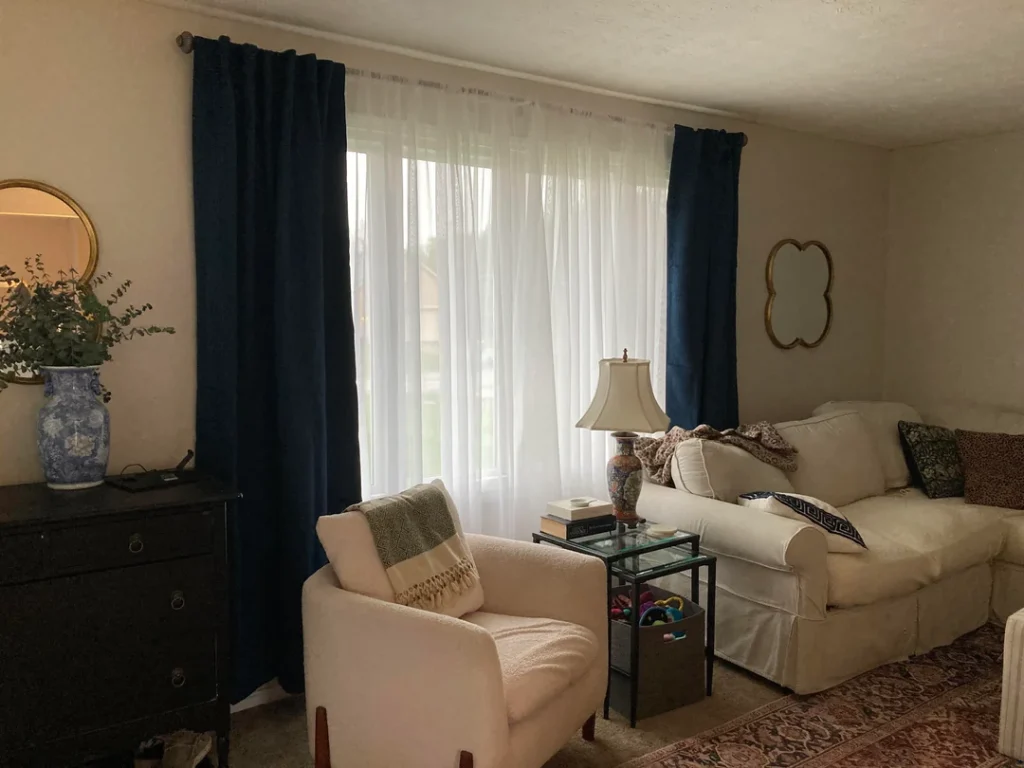
The seventh bedroom leans traditional with navy blue curtains flanking white sheers. The setup is classic: heavy navy panels on either side, sheer white curtains underneath that filter light during the day.
The room has a more formal feeling with decorative mirrors, a dark wood dresser, and ornate lamps. A plush armchair sits near the window. The color palette is calm—navy, white, cream, and dark wood.
What’s smart here is the layering. The sheers provide daytime privacy and soft light, while the navy panels add weight and drama when drawn. It’s a setup that works morning to night.
What makes it work: Layering curtains gives you options. You can have privacy with filtered light, or you can close everything for complete darkness. The navy is formal enough to match the room’s traditional style but not so heavy that it overwhelms.
How to steal this look: Install a double curtain rod and hang sheers on the inner rod, heavier panels on the outer. Choose a deep, rich color for the outer curtains—navy, charcoal, deep plum—and keep the sheers simple in white or cream. This setup works in almost any room style.
Charcoal Drama with Bold Bedding
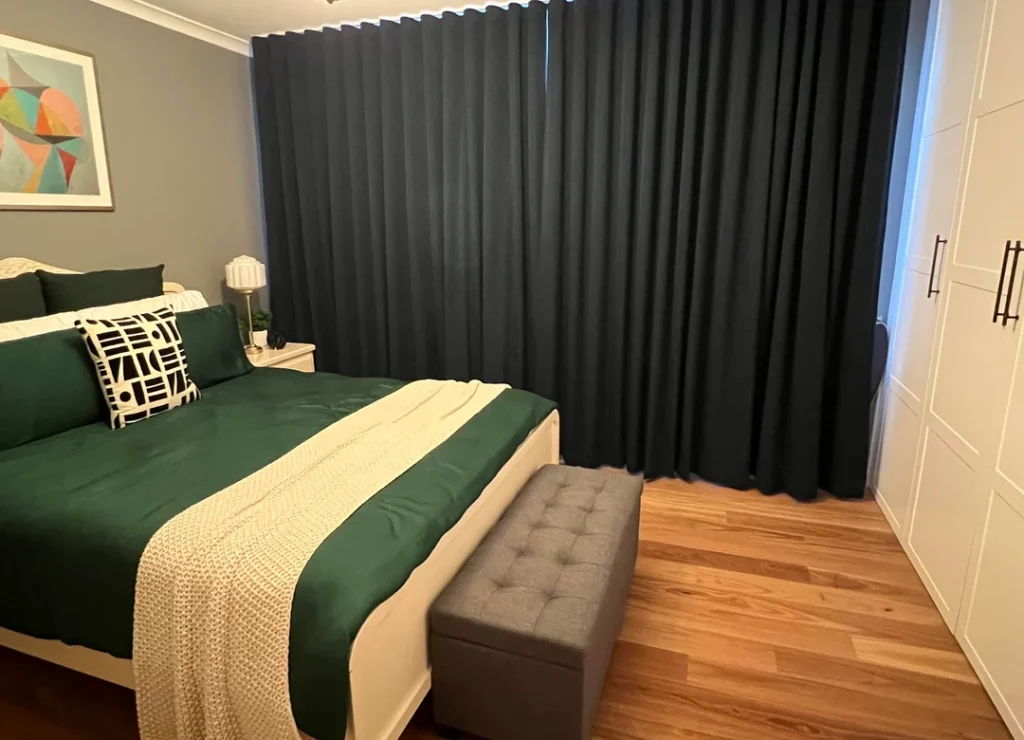
The eighth bedroom goes all in with charcoal grey curtains and a bed dressed in deep green linens. The contrast is striking—that rich emerald green against the dark grey creates instant visual interest.
The walls are grey as well, creating a cocoon-like feeling. The floor is natural hardwood. A textured bench in grey sits at the foot of the bed. There’s minimal decor—a cream-colored throw draped across the bench, built-in storage visible on the right.
The curtains here are doing more than blocking light. They’re creating a dramatic backdrop that makes the green bedding pop. Without that dark grey, the green wouldn’t have nearly the same impact.
What makes it work: This room proves you can go dark on multiple surfaces—walls, curtains, even some furniture—as long as you bring in a bold accent color. That green is the hero, and everything else is designed to support it. The natural wood floor and cream throw keep it from feeling too closed in.
How to steal this look: If you’re ready to commit to dark walls and dark curtains, choose one element to be your focal point. In this case, it’s the bedding. Pick a rich, saturated color you love and build around it. Keep other decor minimal so that color can shine.
Making Dark Curtains Work in Your Space
Now that you’ve seen how different rooms handle dark curtains, let’s talk about making them work for you.
Get the length right. Dark curtains look best when they’re long—either just kissing the floor or pooling slightly. Curtains that hang too short can look choppy and unfinished. If your curtains are meant to be functional and open frequently, let them just touch the floor. If they’re more decorative, a slight puddle adds softness.
Mind your hardware. Dark curtains are heavy, both visually and literally. Make sure your rod and brackets can handle the weight. Black, bronze, or brass rods tend to look best with dark fabrics. White or light wood can work too if you want contrast, but make sure it’s intentional.
Balance with light elements. Every room with dark curtains needs something to lift it—white bedding, light walls, natural wood, metallic accents. Without that balance, dark curtains can make a space feel cave-like.
Layer your lighting. This can’t be stressed enough. Overhead lighting alone won’t cut it with dark curtains. You need bedside lamps, wall sconces, maybe even some hidden LED strips. Warm-toned bulbs work better than cool ones—they make dark fabrics feel cozy instead of cold.
Consider your wall color. Dark curtains against light walls create contrast and definition. Dark curtains against dark walls create drama and intimacy. Neither is wrong, but they give very different feelings. Think about what mood you’re after.
Don’t forget texture. Flat, smooth dark curtains can look heavy. Linen, velvet, or textured cotton add depth and visual interest. The fabric catches light differently and feels richer.
Test before committing. If possible, get a sample of your curtain fabric and hang it in your space for a few days. Look at it in morning light, afternoon light, and evening light. Make sure you actually like living with it before ordering full panels.
The Bottom Line
Dark curtains aren’t just practical—they’re powerful design tools when used right. They create contrast, add drama, and give a room structure. But they need balance.
The eight bedrooms we’ve looked at all handle dark curtains differently, but they share common threads: warm lighting, textural variety, and thoughtful color choices. None of them feel heavy or oppressive because the dark curtains are just one part of a bigger picture.
Whether you’re drawn to the minimalist luxury of grey curtains with city views, the bold statement of black panels with warm lighting, or the unexpected richness of deep green drapes, there’s a way to make dark curtains work in your space.
Start with one element you love—maybe it’s those forest green curtains or that charcoal-and-emerald combo—and build from there. Add warm lighting, bring in natural materials, keep some surfaces light, and let the curtains do their thing.
Your bedroom should be a place that helps you rest, and sometimes that means embracing the dark. Done right, dark curtains don’t just block out the world—they help you create your own.