
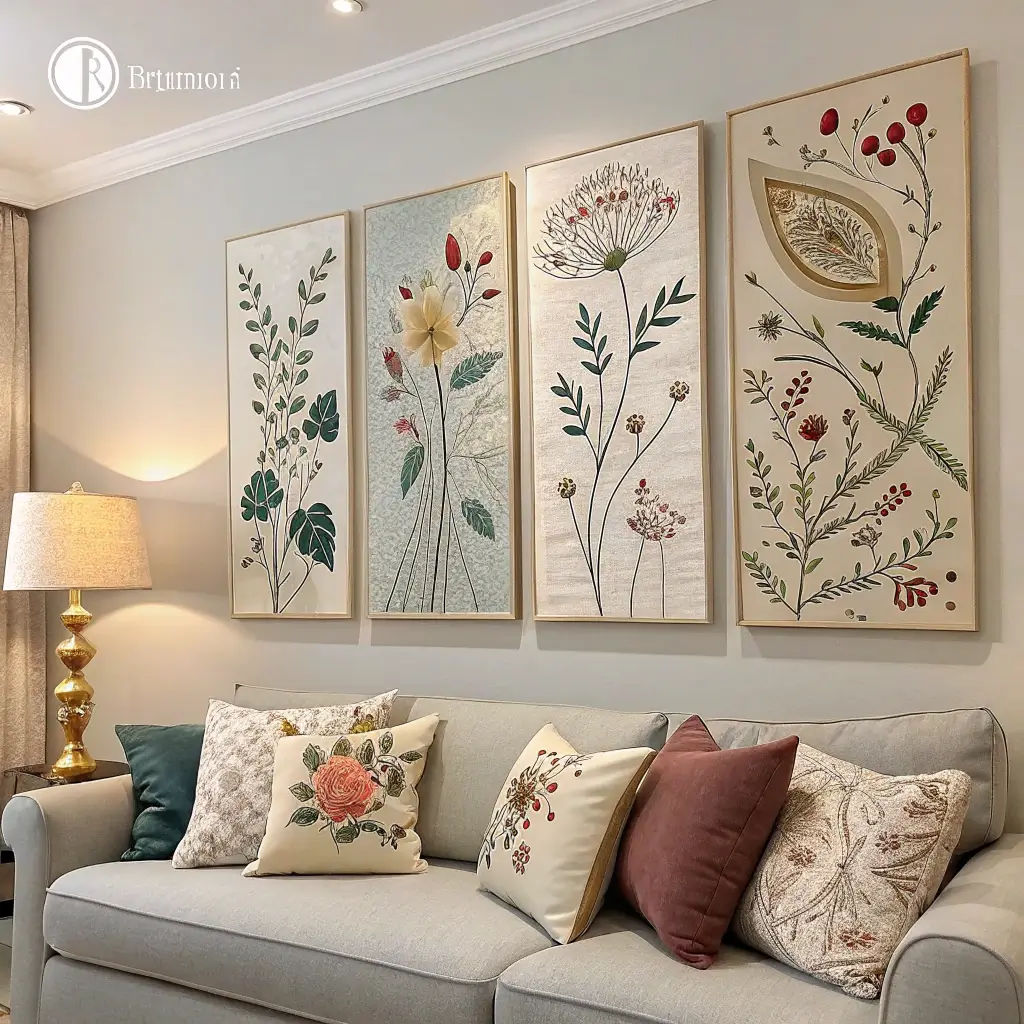
15 Modern Fabric Wall Decor Ideas and DIY Home Projects

Remember that one time you walked into someone’s place and their walls just… spoke to you? Not literally (that would be weird), but you know what I mean. The fabric wall decor caught your eye and suddenly you’re thinking, “Why are my walls so boring?” Well, friend, you’ve come to the right place because we’re about to transform those blank canvases into something worth Instagram-ing.
I’ve spent the last few years experimenting with fabric wall decor, and let me tell you – it’s addictively fun. You start with one macrame hanging, and before you know it, you’re hoarding fabric scraps like they’re going out of style. The best part? You don’t need to be some kind of textile genius to pull these off.
Boho Macrame Fabric Wall Hangings
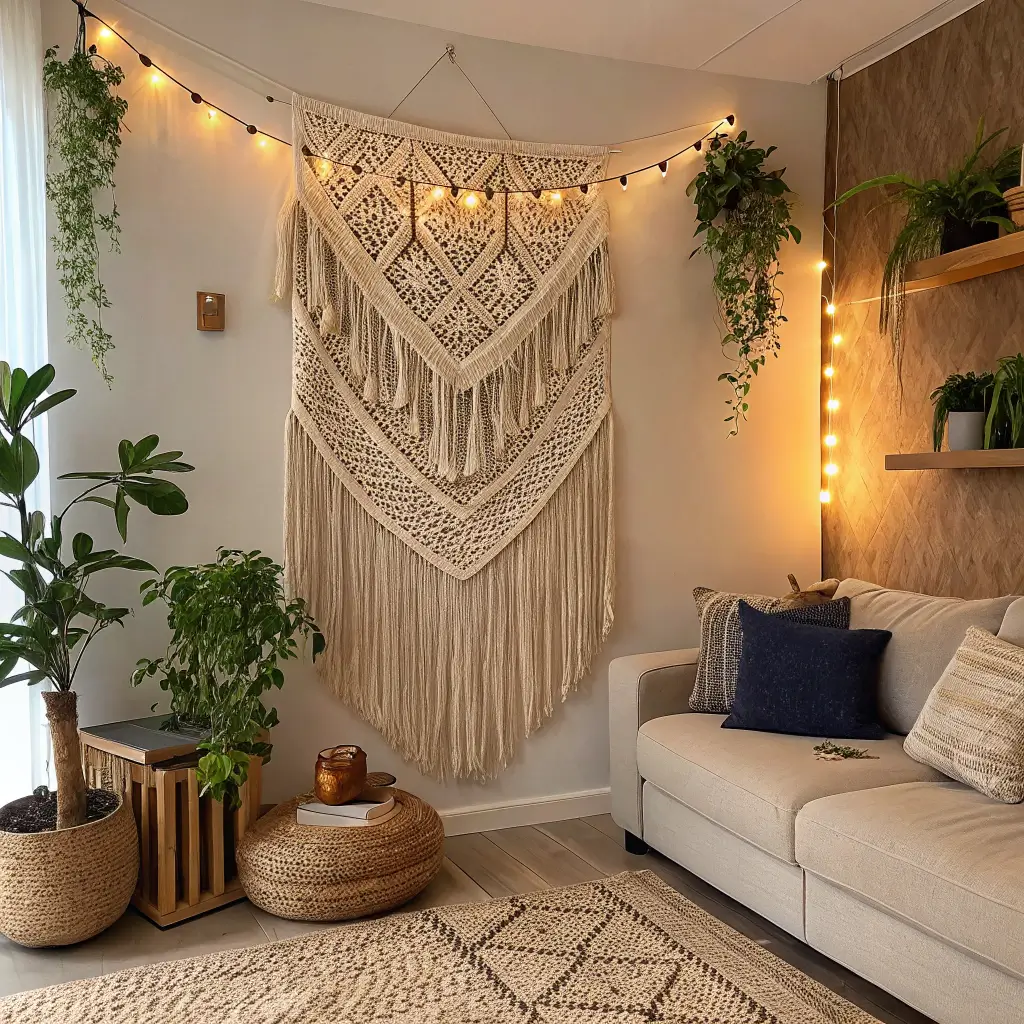
Let’s kick things off with the queen of wall decor – macrame wall hangings. I know what you’re thinking: “Isn’t macrame just fancy knots?” Well, yes, but also so much more! These beauties bring that perfect boho vibe that makes everyone ask where you got them.
The magic happens when you combine traditional macrame techniques with fabric strips. Instead of using just rope or cord, I like to weave in strips of linen, cotton, or even old t-shirts. Trust me, that worn-out band tee from 2008 makes excellent macrame material (and gives you major nostalgia points).
Getting Started with Your First Macrame Piece
Here’s what makes fabric macrame special:
- Softer texture than traditional rope macrame
- More color options (hello, tie-dye strips!)
- Easier on your hands during long crafting sessions
- Creates fuller, more dramatic pieces
Start with a simple wall hanging using basic knots. You’ll need a wooden dowel, fabric strips about 1-2 inches wide, and maybe three hours of your weekend. The square knot and spiral knot are your best friends here. Once you master those, you can create patterns that’ll make your friends think you bought it from some fancy boutique.
Pro Tips for Fabric Selection
Choose fabrics that won’t fray easily – jersey knit works beautifully because it naturally rolls at the edges. Old sheets? Perfect. That dress you never wear? Even better. I once made an entire wall hanging from a single oversized flannel shirt, and honestly, it’s still my favorite piece.
Color-Blocked Fabric Panels
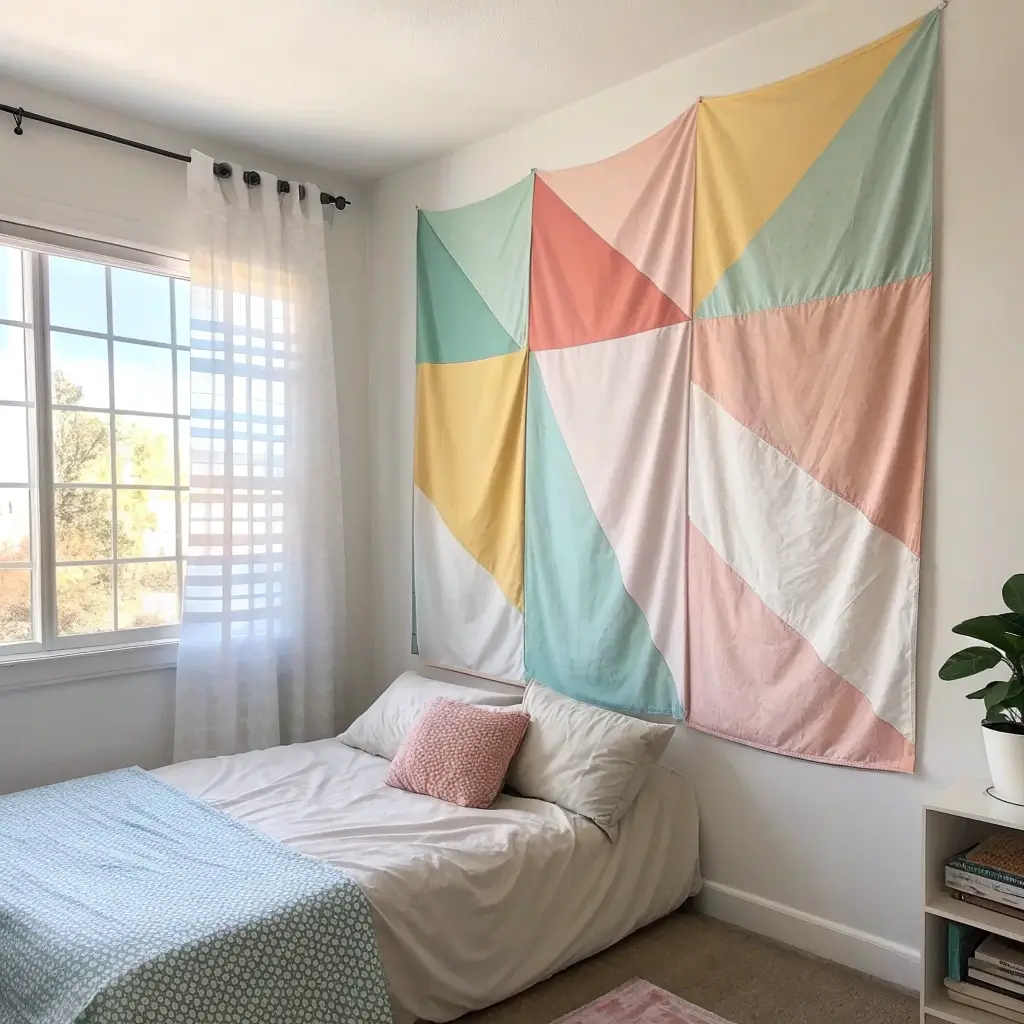
Now we’re talking modern minimalism with a punch! Color-blocked panels bring that contemporary art gallery feel without the gallery price tag. What’s not to love about that?
I discovered this technique accidentally when I couldn’t decide between two fabric colors for a project. Why not use both, right? The result was so striking that I immediately made three more panels. The key here is choosing colors that complement but don’t match perfectly.
Creating Your Color-Block Masterpiece
Think about these combinations:
- Navy blue + mustard yellow + cream
- Blush pink + sage green + terracotta
- Black + white + one bold accent color
- Different shades of the same color (monochromatic magic!)
You’ll want to stretch your fabric over canvas frames or wooden boards. Make sure the fabric is taut – nobody likes saggy wall art. I use a staple gun on the back, pulling the fabric tight as I go around the edges. The corners can be tricky, but folding them like you’re wrapping a present works every time.
Size and Arrangement Matter
Don’t just make one panel and call it a day. Create a series of three or five (odd numbers look better, IMO) in varying sizes. Arrange them asymmetrically on your wall for that effortlessly curated look. Play with the spacing between panels – sometimes leaving more breathing room creates more impact.
Tapestry Gallery Wall Ideas
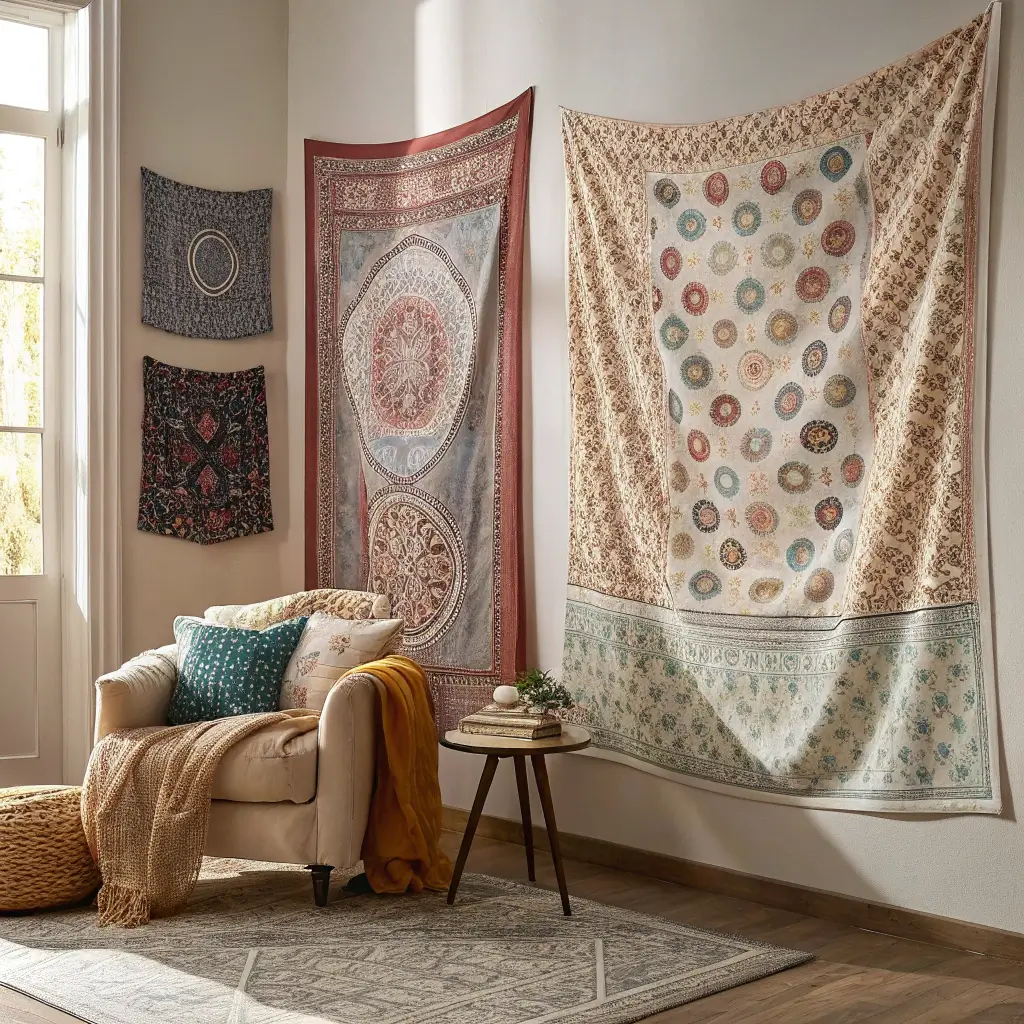
Ever walk into a room and feel like you’ve been transported somewhere else? That’s the power of a well-done tapestry gallery wall. Mix different sizes, textures, and styles for a collected-over-time vibe that tells your story.
I started my gallery wall with one vintage tapestry from a thrift store. Now it’s grown into this eclectic mix that makes everyone stop and stare. The trick? Don’t overthink it. Seriously, the best gallery walls have that slightly chaotic energy that just works.
Building Your Gallery Wall
Start with these elements:
- One large anchor piece (this sets the tone)
- 2-3 medium-sized tapestries
- Several smaller accent pieces
- Mix woven and printed fabrics
- Include different hanging methods (rods, clips, pins)
Remember to step back frequently while arranging. What looks good up close might feel off from across the room. Take photos with your phone to see how it photographs – if it looks good on camera, it’ll look good in person.
Quilted Fabric Wall Art
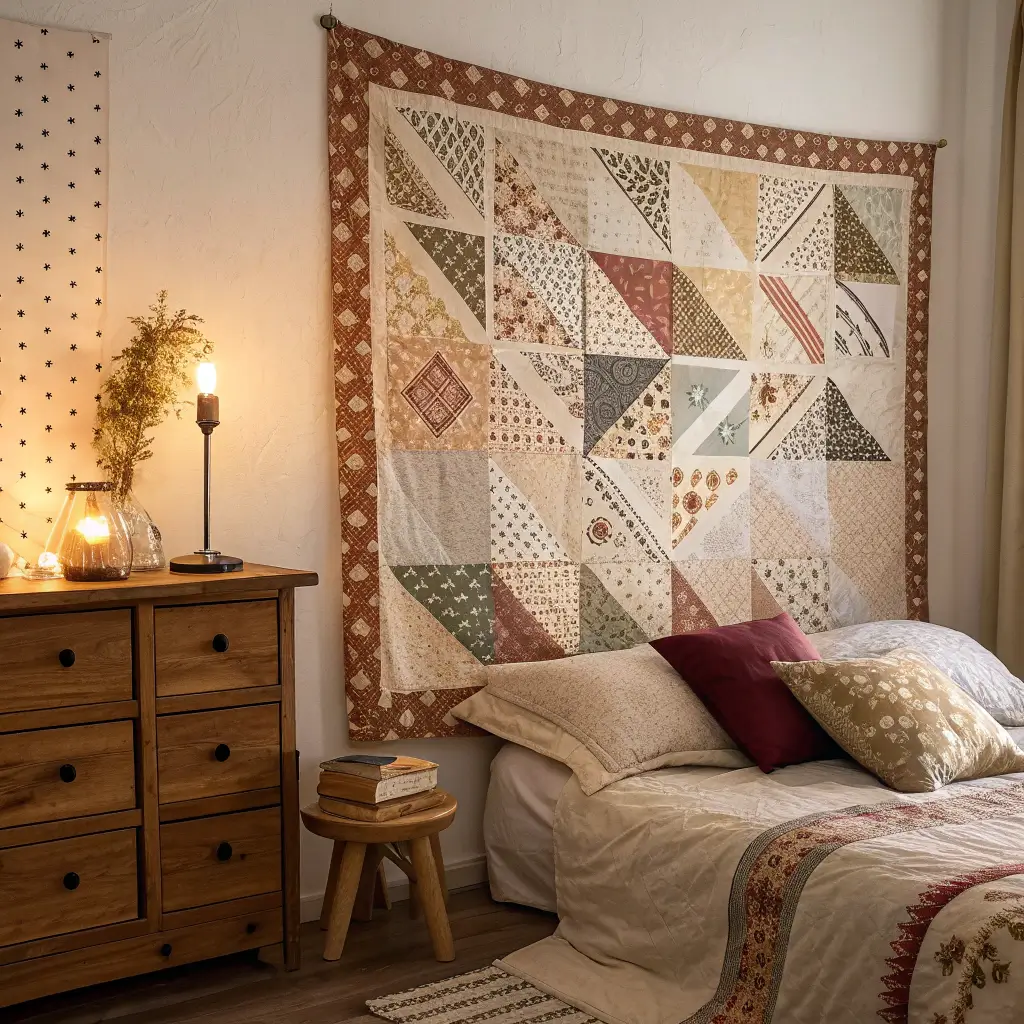
Who says quilts belong only on beds? Quilted wall art brings warmth and texture that paintings just can’t match. Plus, you get to use up all those fabric scraps you’ve been hoarding (we all do it, no judgment).
My grandmother’s vintage quilt squares inspired my first wall quilt. Instead of making a full-sized quilt, I created smaller pieces perfect for hanging. The geometric patterns and color play make them conversation starters every single time.
Modern Quilting Techniques
You don’t need a sewing machine for simple quilted pieces:
- Hand-stitch for a rustic, authentic look
- Use fabric glue for no-sew options
- Try English paper piecing for precise shapes
- Experiment with raw-edge appliqué for modern flair
Bold patterns work best for wall display. Think big triangles, hexagons, or even abstract shapes. The quilting stitches themselves become part of the design – make them visible with contrasting thread colors.
Fabric-Wrapped Wooden Frames
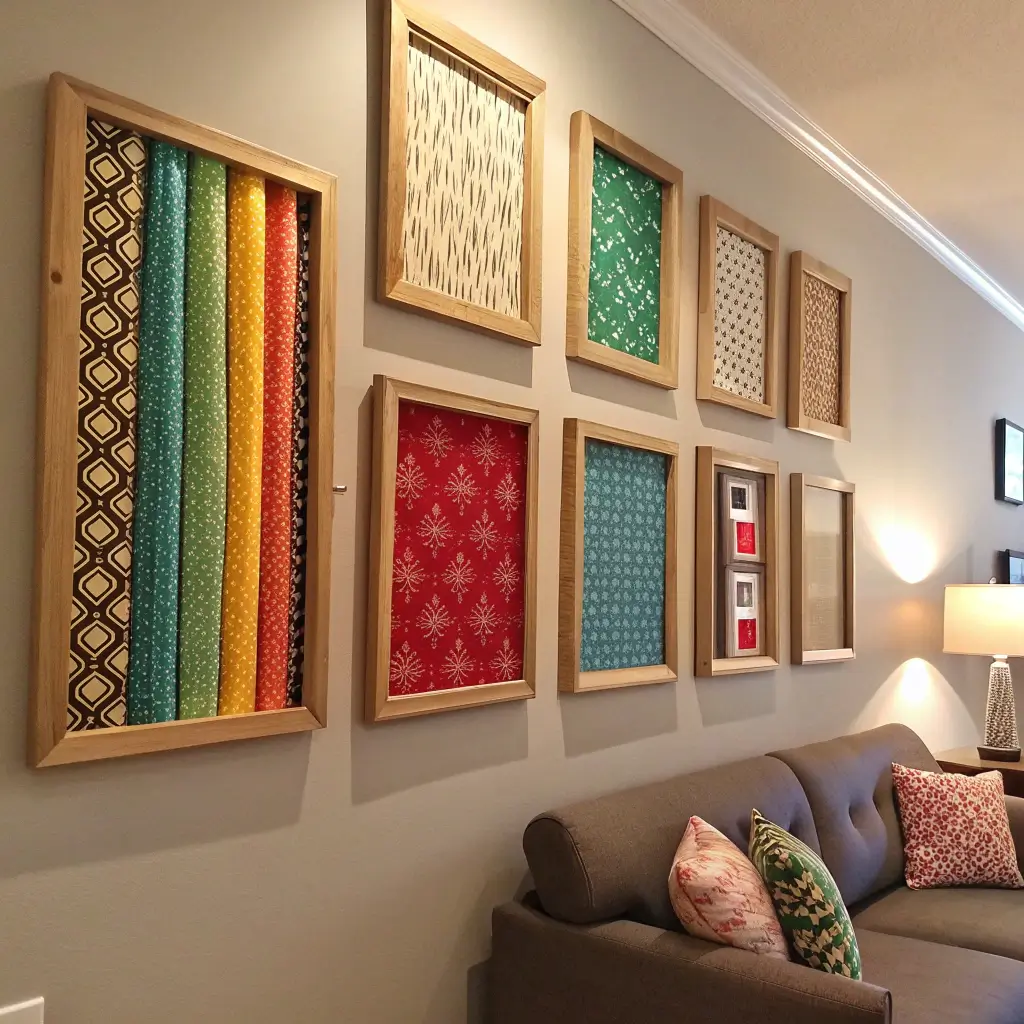
This might be the easiest project on our list, but don’t let that fool you – the impact is huge. Transform cheap wooden frames into custom art pieces with just fabric and a hot glue gun. Yep, that’s it.
I discovered this hack when I broke the glass in a picture frame. Instead of tossing it, I wrapped the frame in a gorgeous botanical print fabric. Now people ask if it’s from West Elm 🙂
Frame Wrapping 101
Here’s your game plan:
- Choose frames with interesting shapes (hexagons, anyone?)
- Iron your fabric first (wrinkled fabric = amateur hour)
- Cut fabric strips 2 inches wider than frame width
- Wrap tightly, securing with hot glue on the back
- Overlap corners neatly for professional finish
Mix wrapped frames with regular artwork for an layered gallery wall. Or go all-in and create an entire wall of wrapped frames in coordinating fabrics. The textural interest is absolutely worth it.
Geometric Fabric Wall Patterns
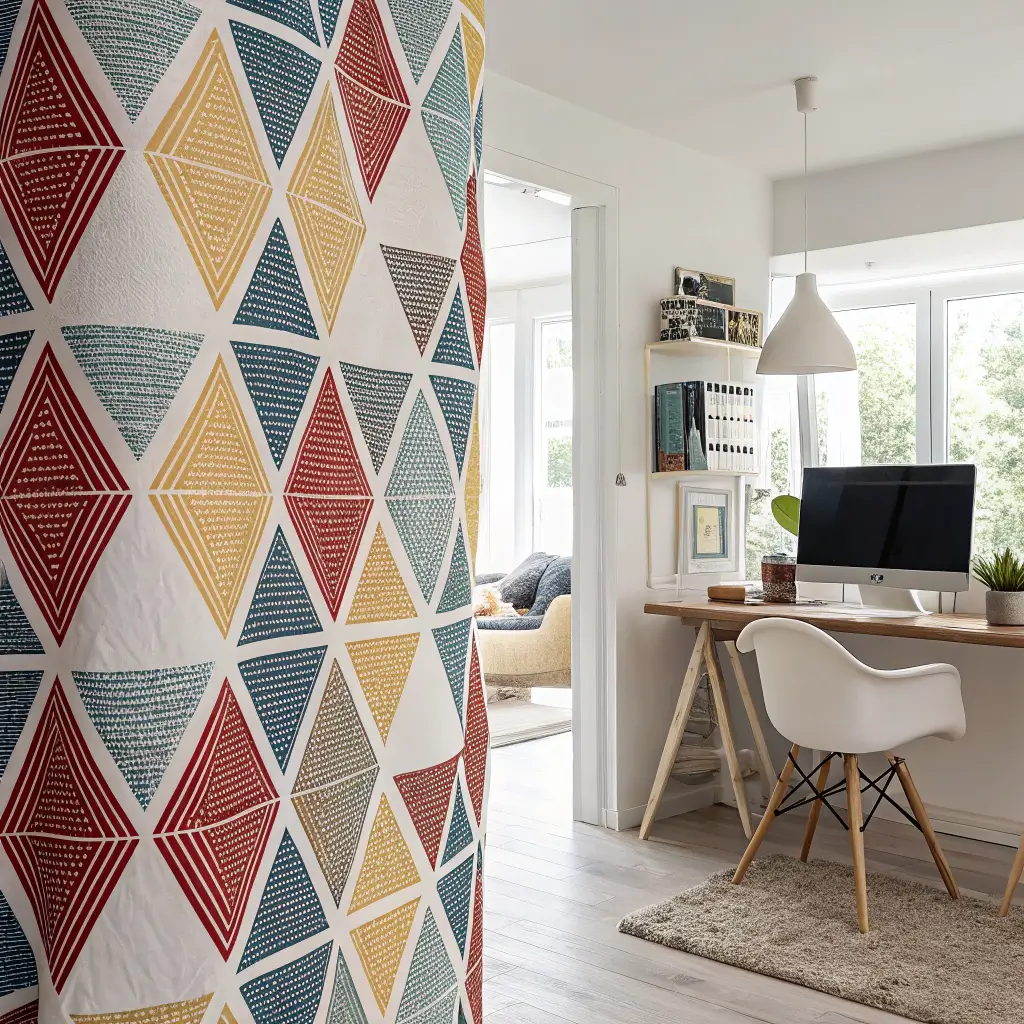
Mathematics meets art, and honestly, they make a great couple. Geometric patterns using fabric create visual interest that draws the eye without overwhelming the space.
My first attempt at geometric fabric art involved triangles. Lots and lots of triangles. But once I figured out the pattern, it became almost meditative to create. The precision required forces you to slow down and focus – something we could all use more of, right?
Creating Perfect Geometric Patterns
Essential tips for geometric success:
- Use a ruler and fabric chalk (eyeballing it never works)
- Start with simple shapes before attempting complex patterns
- Consider negative space as part of the design
- Stick to 3-4 colors maximum for cohesion
Try these pattern ideas:
- Chevron stripes using fabric strips
- Diamond patterns with contrasting colors
- Hexagon honeycomb designs
- Abstract geometric color blocking
Also Read: 15 Modern Wooden Wall Decor Ideas for Trendy Interiors
Hanging Fabric Pocket Organizers
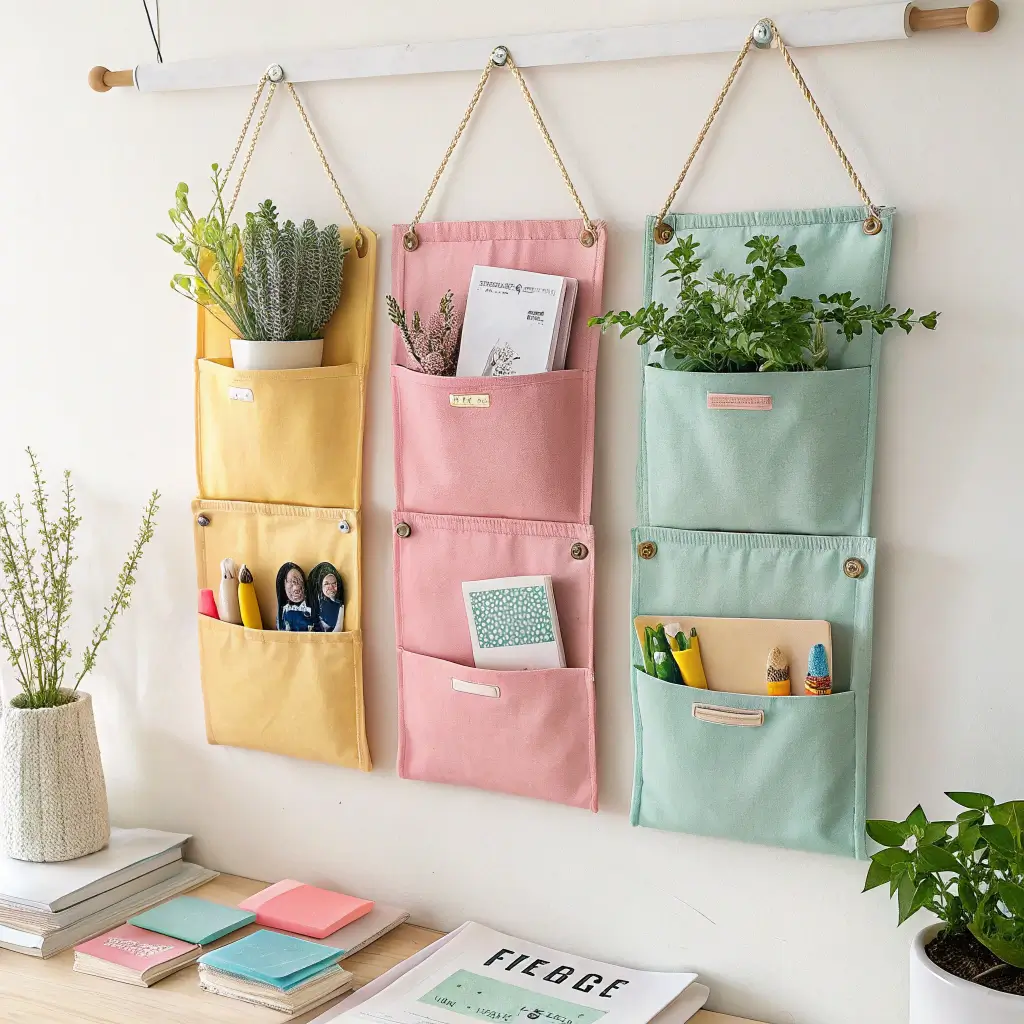
Functional art? Yes, please! Fabric pocket organizers solve storage problems while looking absolutely gorgeous. Kill two birds with one stone, as they say (though no birds were harmed in making these organizers).
I made my first pocket organizer for my craft room. Now I have them everywhere – bathroom for toiletries, kitchen for mail, office for supplies. The best part? They’re completely customizable to your needs and style.
Designing Your Pocket System
Consider these factors:
- Pocket size based on intended use
- Weight capacity (reinforce seams for heavy items)
- Mounting method (dowel rod vs. direct wall mount)
- Accessibility (lower pockets for frequently used items)
Pro tip: Use clear vinyl for some pockets so you can see contents at a glance. Mix it with patterned fabric pockets for a modern, functional look that actually makes you want to stay organized.
Embroidered Fabric Wall Pieces
Embroidery isn’t just for your grandma’s pillowcases anymore. Modern embroidered wall art brings handmade charm that mass-produced decor can’t touch. Plus, the repetitive stitching is surprisingly therapeutic.
Started with a simple “Home” embroidery hoop and now I’m stitching abstract designs that would make Picasso jealous (okay, maybe not, but they’re pretty cool). The texture and dimension of embroidery adds depth that flat prints lack.
Modern Embroidery Techniques
Level up your embroidery game:
- Mix thread weights for varied texture
- Combine embroidery with painting or printing
- Leave some areas unfinished for artistic effect
- Use unconventional materials (ribbon, yarn, metallic thread)
Don’t stress about perfect stitches. Some of my favorite pieces have intentionally messy areas that give them character. Imperfection is what makes handmade special.
Layered Sheer Fabric Panels
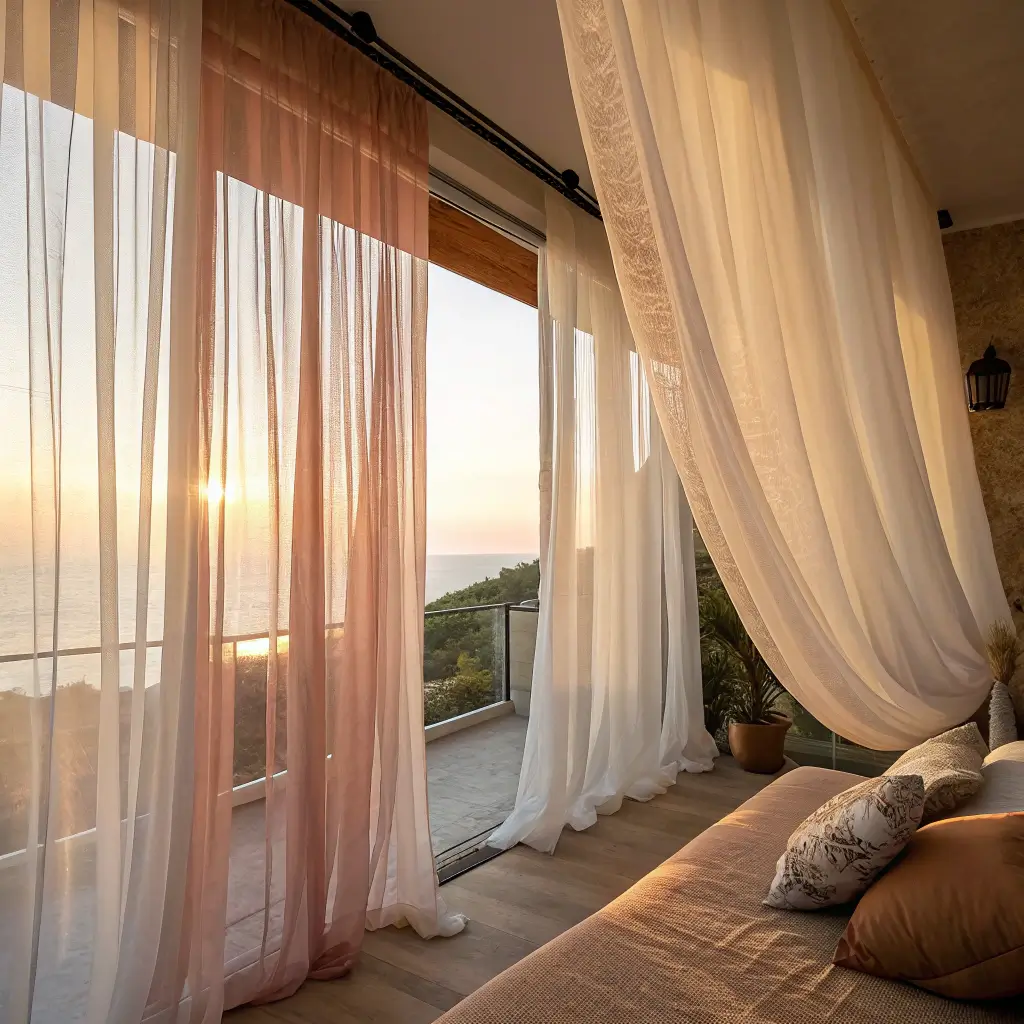
Want to add ethereal beauty to your space? Layered sheer panels create dreamy, light-catching installations that change appearance throughout the day. Morning light hits different than evening glow, trust me.
I hung my first sheer panel installation in front of a window. The way light filtered through multiple layers of organza was absolutely magical. Now I use them even on walls without windows – the layering creates depth that tricks the eye.
Mastering the Layer Game
Key layering principles:
- Start with lightest colors in back
- Vary the lengths for visual interest
- Use 3-5 layers for optimal effect
- Consider how colors blend when overlapped
Hanging methods matter here. Tension rods work great for temporary installations. For permanent pieces, I prefer curtain wire systems that keep everything taut and clean-looking.
Also Read: 15 Inspiring Staircase Wall Decor Ideas to Refresh Your Home
Fabric-Covered Cork Boards
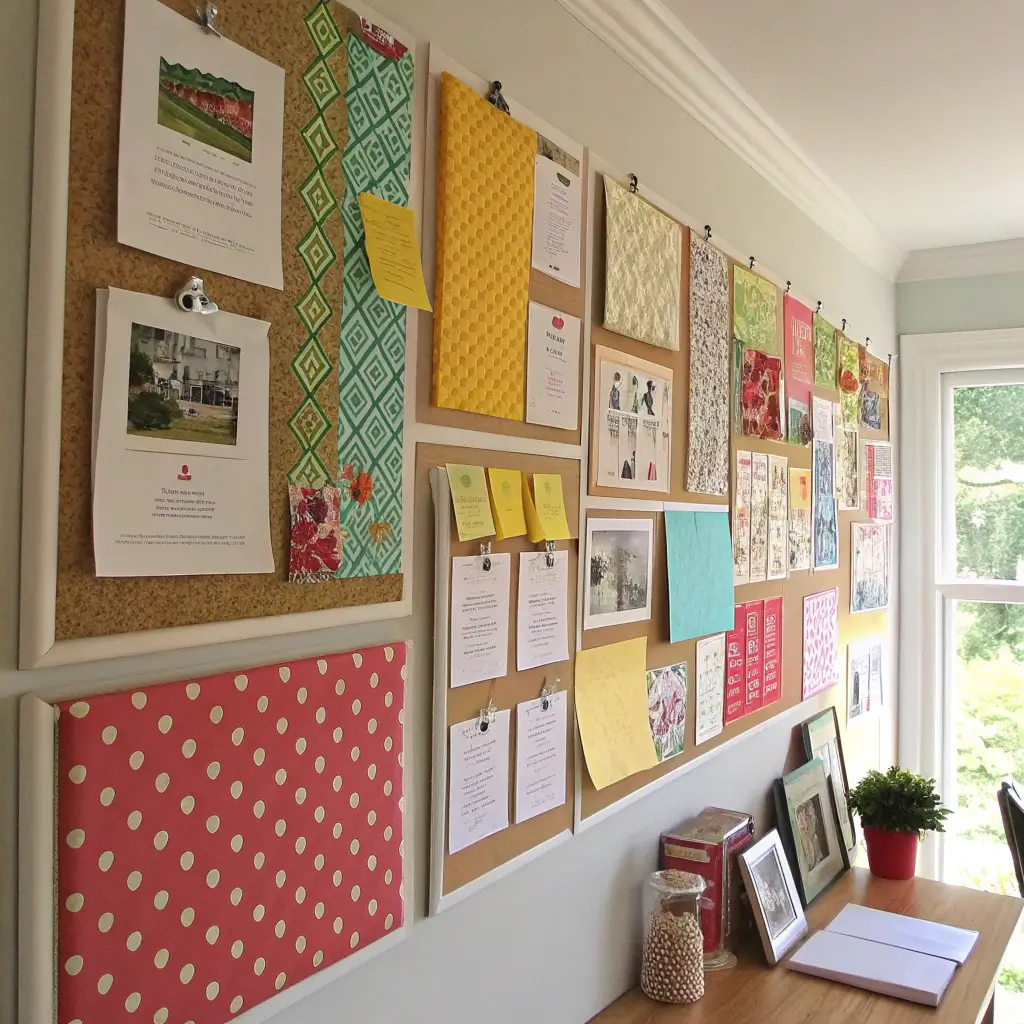
Forget those boring brown cork boards. Fabric-covered versions are both functional and beautiful enough to leave out in the open. No more hiding your organization system in the closet!
My home office cork board gets compliments from every Zoom call. People don’t even realize it’s functional until they see me pinning notes to it. The fabric covering makes it feel intentional, not just utilitarian.
Cork Board Transformation Tips
Make yours stand out:
- Choose fabric that complements your room’s color scheme
- Add ribbon or trim around edges for finished look
- Create patterns with multiple fabric pieces
- Use batting underneath for extra cushion effect
FYI, the fabric should be pulled tight but not so tight that pins won’t go through easily. Test with a pushpin before securing everything permanently.
Minimalist Fabric Wall Strips
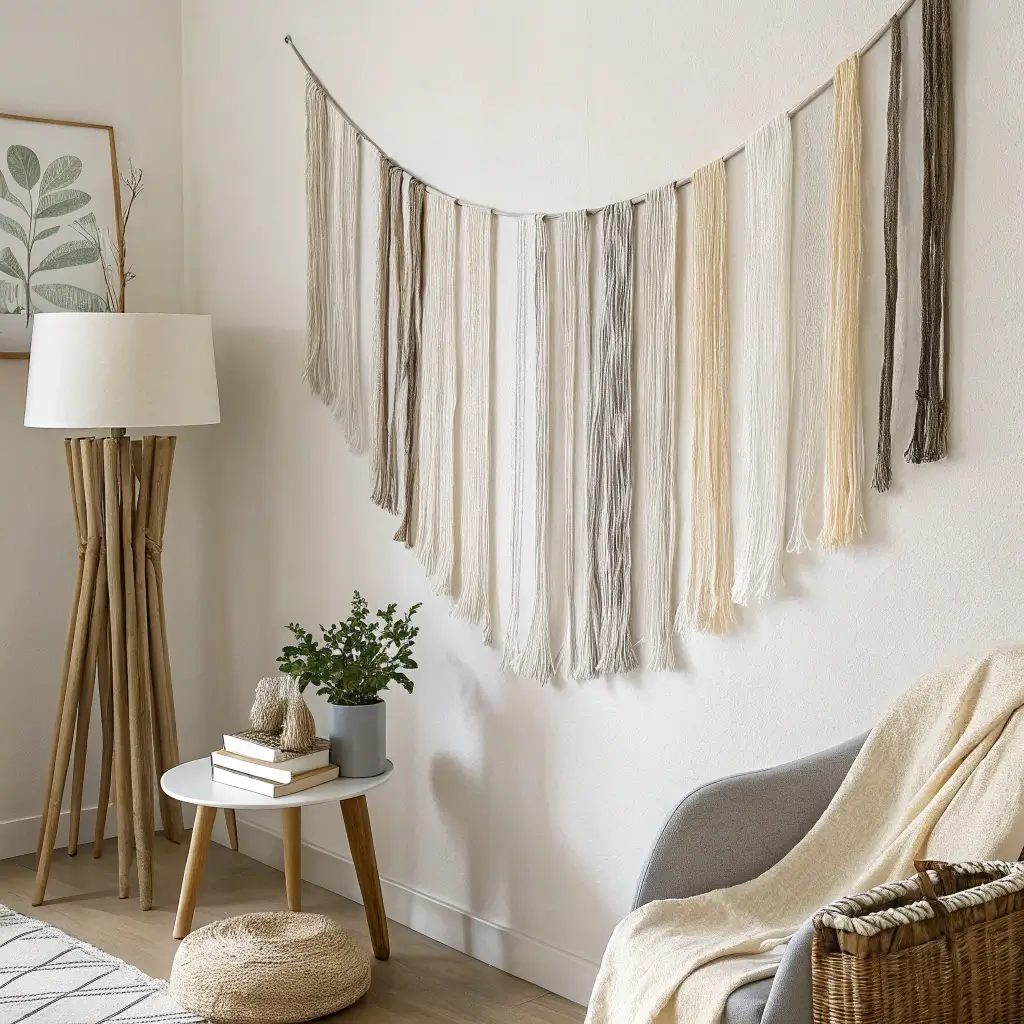
Sometimes less really is more. Vertical fabric strips create movement and height without overwhelming your space. Perfect for renters who can’t paint or wallpaper!
I hung my first fabric strips to hide an ugly wall crack (landlord special, you know?). Turned out so good that I added more strips just for the aesthetic. The vertical lines draw the eye upward, making ceilings feel higher.
Strip Installation Strategy
Getting it right:
- Space strips evenly (use a measuring tape, seriously)
- Vary widths for dynamic look
- Mix textures within same color family
- Consider fraying vs. finished edges
Weight matters here. Lighter fabrics move with air currents, creating subtle animation. Heavier fabrics hang straighter for a more structured look. Choose based on your room’s vibe.
Floral Fabric Wall Installations
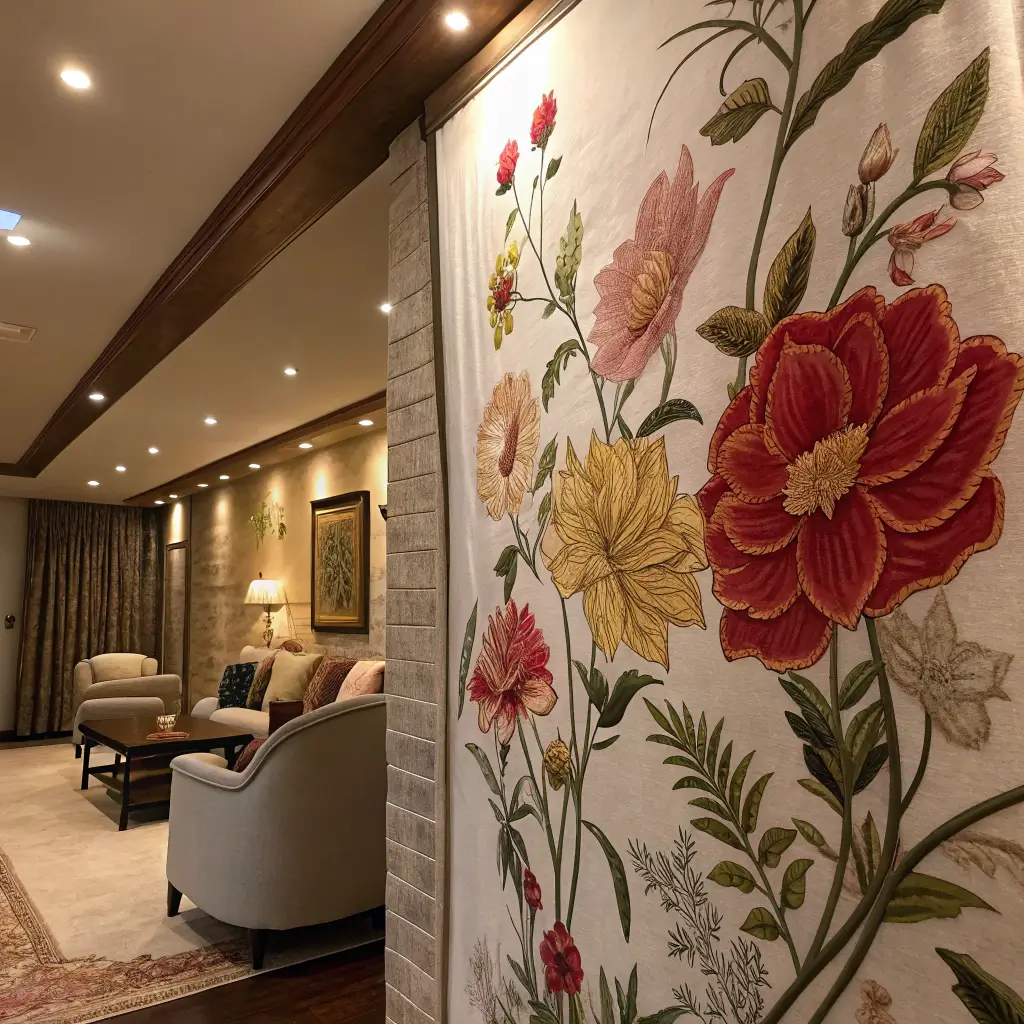
Bring the garden inside with dimensional floral installations that never need watering. These aren’t your grandmother’s silk flowers – we’re talking modern, artistic interpretations.
My dining room installation started as a single fabric flower. Now it’s this cascading garden that makes every dinner feel special. The 3D elements cast interesting shadows that change throughout the day.
Creating Fabric Florals
Flower-making techniques:
- Roll and gather for roses
- Layer circles for peonies
- Fold and cut for geometric flowers
- Mix sizes for natural appearance
Don’t aim for botanical accuracy. Stylized flowers often look better than realistic ones for wall art. Play with scale – oversized blooms make serious statements.
Also Read: 15 Modern Large Wall Decor Living Room Ideas for a Fresh Look
DIY Fabric Wall Banners
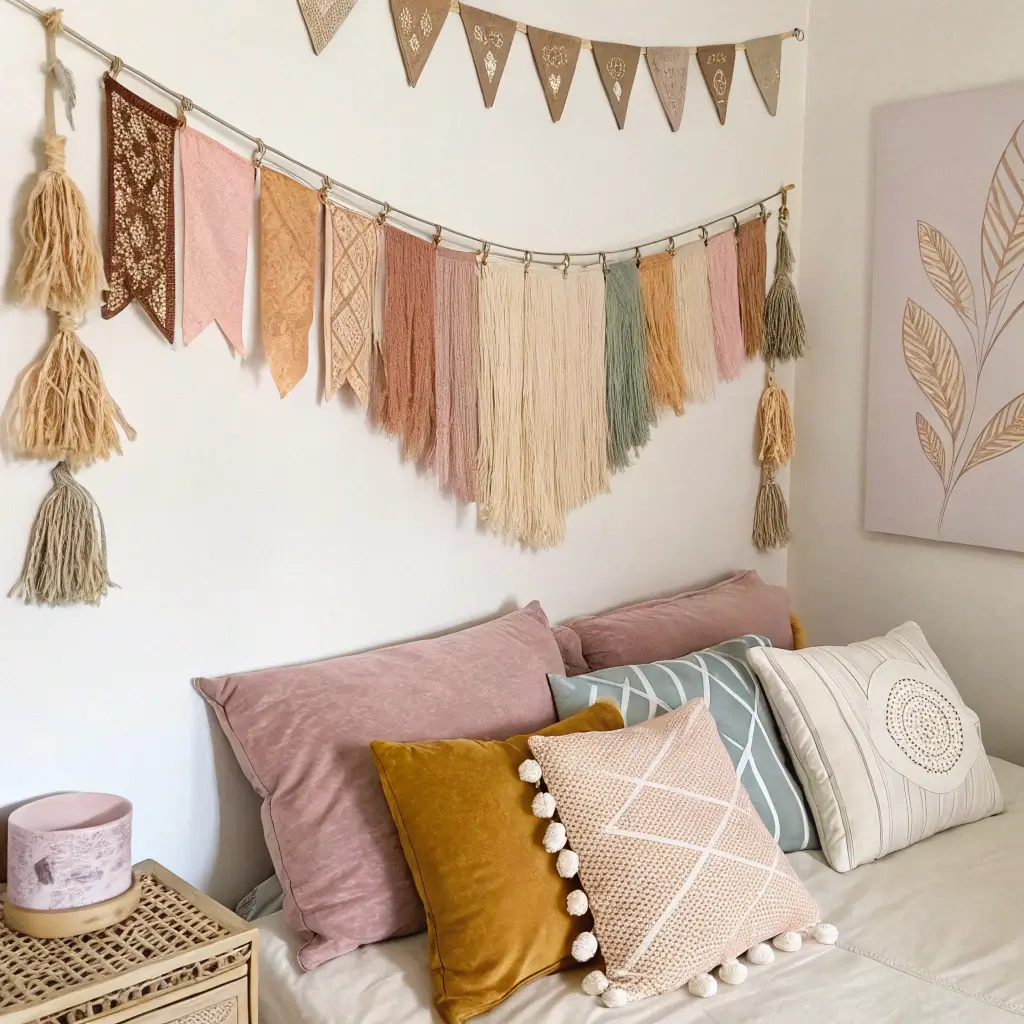
Banners aren’t just for parties anymore. Permanent fabric banners add personality without commitment. Change them seasonally or whenever you’re bored – that’s the beauty of banner life.
Made my first banner for my daughter’s nursery with alphabet letters. Now I make them for every room because they’re so versatile. Typography, patterns, or abstract designs – anything goes with banners.
Banner Design Ideas
Consider these approaches:
- Single long banner with repeated pattern
- Multiple short banners at varying heights
- Pennant style for playful vibe
- Rectangular for modern look
- Mix shapes for eclectic feel
The hanging method impacts the overall look. Dowels give structure, while clips create casual draping. Match the hanging style to your design for cohesive results.
Textured Fabric Wall Tiles
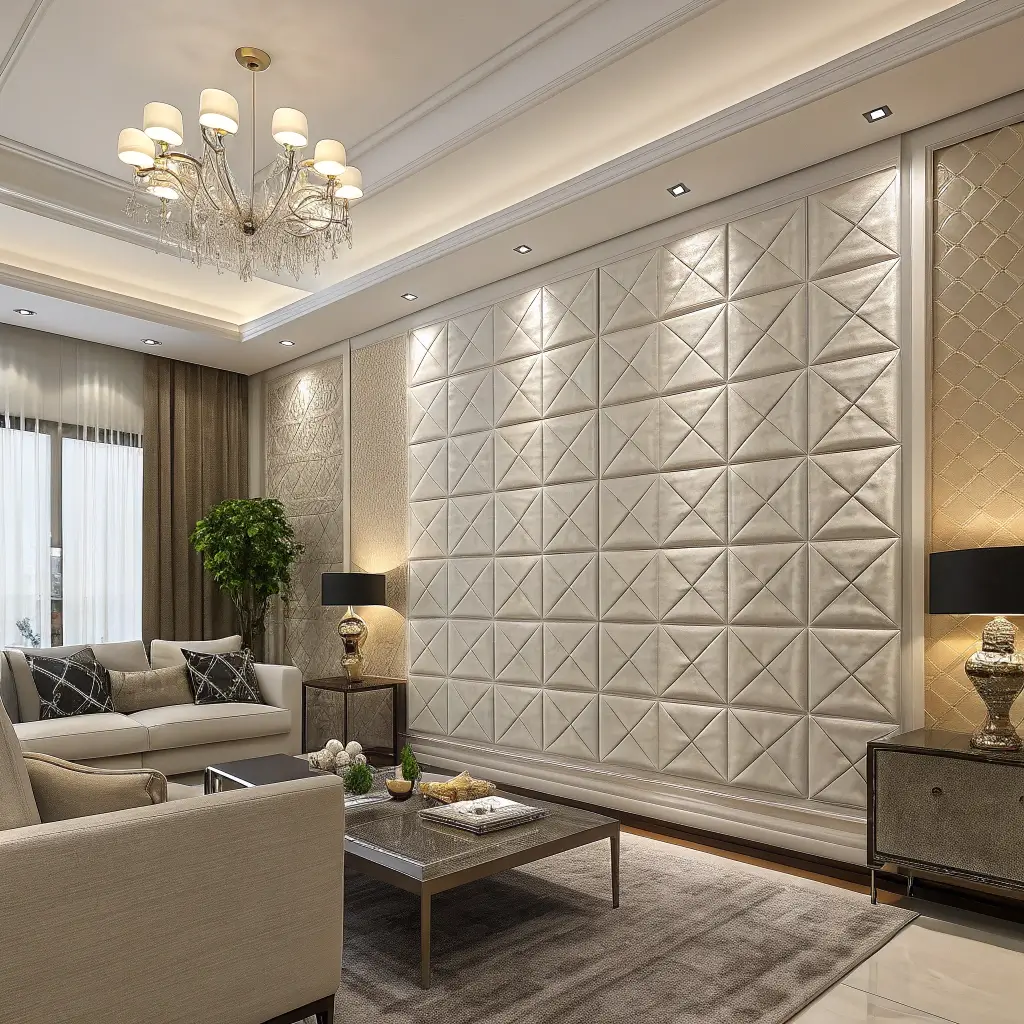
Think beyond flat fabric. Textured tiles create touchable art that begs for interaction. Warning: guests will want to touch these, so make them sturdy!
I started experimenting with fabric tiles after seeing a restaurant installation. Mine aren’t quite restaurant-quality, but they definitely make people stop and look twice. The play of light on different textures creates visual interest that changes based on viewing angle.
Building Textured Tiles
Texture techniques to try:
- Ruching for gathered effect
- Pleating for geometric texture
- Smocking for vintage charm
- Quilting for subtle dimension
- Appliqué for layered interest
Mount tiles on canvas squares or foam boards. Arrange in grids for modern look or scattered placement for organic feel. Leave space between tiles – the wall showing through is part of the design.
Vintage Fabric Scrap Collage
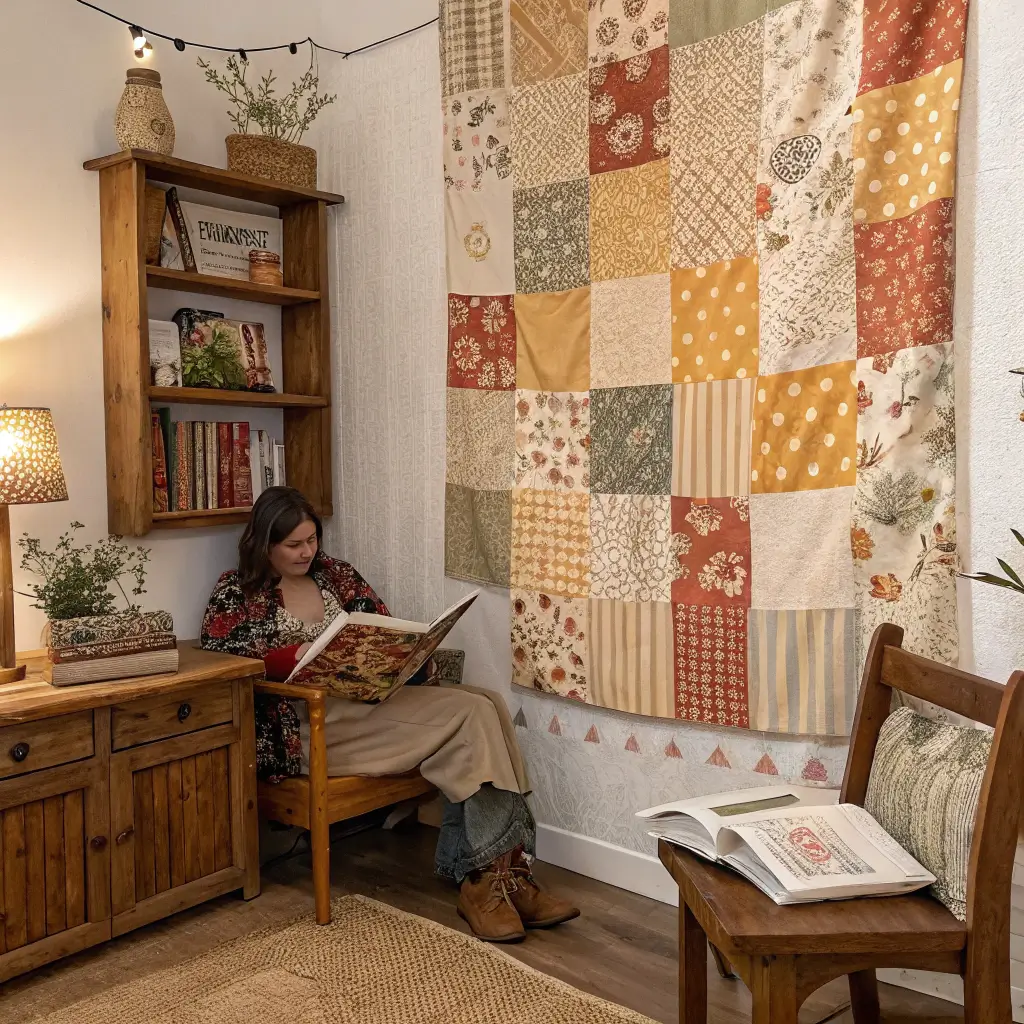
Got a fabric stash that’s getting out of control? Time for a scrap collage! Mix patterns, textures, and colors for unique art that tells your crafting story.
My collage includes pieces from old clothes, vintage linens, and failed sewing projects. Each scrap has a memory, making it deeply personal. Plus, it’s basically guilt-free hoarding since you’re actually using the scraps!
Collage Composition Tips
Make it work:
- Start with a color palette to unify different patterns
- Vary piece sizes for dynamic composition
- Layer transparents over prints
- Include unexpected elements (lace, buttons, trim)
- Don’t overthink placement – intuition often wins
Mount your collage on stretched canvas or directly on the wall with removable adhesive. The imperfect, organic arrangement is what makes it special. Embrace the chaos!
Bringing It All Together
So there you have it – fifteen ways to transform your walls from boring to brilliant. The best part about fabric wall decor? You can change it whenever the mood strikes. Unlike paint or wallpaper, these projects offer flexibility for us commitment-phobes.
Start with one project that speaks to you. Maybe it’s the instant gratification of wrapped frames or the meditative process of macrame. Once you see how much personality fabric adds to your space, you’ll be hooked. Trust me, I started with one small project and now my entire house looks like a textile museum (in the best way possible).
Remember, perfection isn’t the goal here. Handmade means human-made, complete with little quirks that make each piece unique. Those slightly uneven stitches or not-quite-straight lines? That’s character, friend. That’s what makes your space yours.
Whether you’re covering every wall or just adding one statement piece, fabric decor brings warmth and personality that no flat print can match. So grab some fabric, clear your weekend schedule, and let’s make those walls sing! Who knows? You might just inspire someone else to ask, “Where did you get that?” And you’ll get to say those magic words: “I made it myself.”