

12 Amazing Open Concept Kitchen Living Room Layout Ideas Revealed

So you’re thinking about knocking down that wall between your kitchen and living room, huh? Or maybe you’ve already got an open concept space and you’re staring at it wondering what on earth to do with all that glorious square footage. Either way, I’ve got you covered.
I’ve spent the last five years obsessing over open concept layouts—renovating my own home, helping friends with theirs, and honestly, spending way too many hours scrolling through Pinterest at 2 AM
What I’ve learned is that getting an open concept kitchen living room right isn’t just about removing walls and hoping for the best. It’s about creating a cohesive space that flows naturally while still defining distinct zones for cooking, lounging, and everything in between.
Here’s the thing: the layout you choose sets the entire vibe of your home. Get it wrong, and you’ve got an awkward, cavernous space that feels neither cozy nor functional. Get it right, and you’ve created the heart of your home where memories happen.
Let me walk you through twelve incredible open concept kitchen living room layout ideas that actually work. I’m talking real solutions for real homes—not those magazine spreads with $50,000 kitchen islands that nobody actually cooks on.
Cozy Minimalist Open Concept Kitchen Living Room

Ever walked into a space and immediately felt your shoulders drop? That’s what a cozy minimalist open concept layout does. It’s not about having nothing—it’s about having exactly what you need and loving every single piece.
The Philosophy Behind Cozy Minimalism
The cozy minimalist approach combines two concepts that might seem contradictory at first glance. You want clean lines and uncluttered surfaces, but you also want warmth and invitation. The secret sauce? Intentional furniture placement and warm neutral tones.
I tried the cold, stark minimalist thing in my first apartment. Spoiler alert: it felt like living in a showroom where nobody was allowed to sit down. Cozy minimalism fixes that problem by focusing on:
- Warm wood tones instead of pure white everything
- Soft textiles like chunky knit throws and plush area rugs
- Curved furniture pieces that soften the space
- A few meaningful decorative items rather than bare surfaces
Layout Strategies for Cozy Minimalism
Position your sofa to face the kitchen island—this creates natural conversation flow between the two zones. Keep the color palette restricted to three main colors, with at least one being a warm neutral like cream, camel, or soft gray.
The kitchen should feature handleless cabinets for that sleek look, but in a warm wood finish rather than high-gloss white. Add pendant lights with warm-toned bulbs over the island to create an intimate glow during evening hours.
What makes this layout work is restraint with purpose. Every piece of furniture earns its spot. That accent chair? It’s not just pretty—it’s comfortable enough for a two-hour reading session.
Modern Farmhouse Open Concept Layout

Okay, I know what you’re thinking. “Modern farmhouse? Isn’t that trend over?” Here’s my hot take: done right, modern farmhouse never actually gets old because it’s based on timeless elements. Done wrong—with sixteen pieces of “gather” signage and shiplap covering every surface—yeah, that looks dated.
Authentic Modern Farmhouse Elements
The key to making modern farmhouse work in an open concept space is balancing rustic character with contemporary function. Think of it as your grandmother’s cozy kitchen meeting your minimalist friend’s living room and somehow getting along perfectly.
Essential elements include:
- A statement range hood in natural wood or painted with visible grain
- Open shelving in the kitchen displaying practical, beautiful items
- Mixed metals—black hardware with brass accents keeps things fresh
- Natural materials like reclaimed wood, stone, and linen
Creating Flow in Modern Farmhouse Layouts
The living room area should anchor the space with a substantial sectional or two large sofas facing each other. Add a rustic coffee table—maybe something with iron legs and a wood top—and you’ve created a gathering spot that feels lived-in without being messy.
For the kitchen, consider a large island with seating for four or more. This becomes the bridge between cooking and socializing. Install a farmhouse sink (the real deal, not a lookalike) and pair it with a modern faucet to nail that balance between old and new.
I renovated my sister’s kitchen using this approach last summer. We kept the existing layout but swapped out the cabinets for shaker-style ones in a sage green. Added open shelving on one wall, installed a butcher block island, and suddenly her 1990s kitchen felt both fresh and timeless.
Scandinavian Inspired Open Concept Space
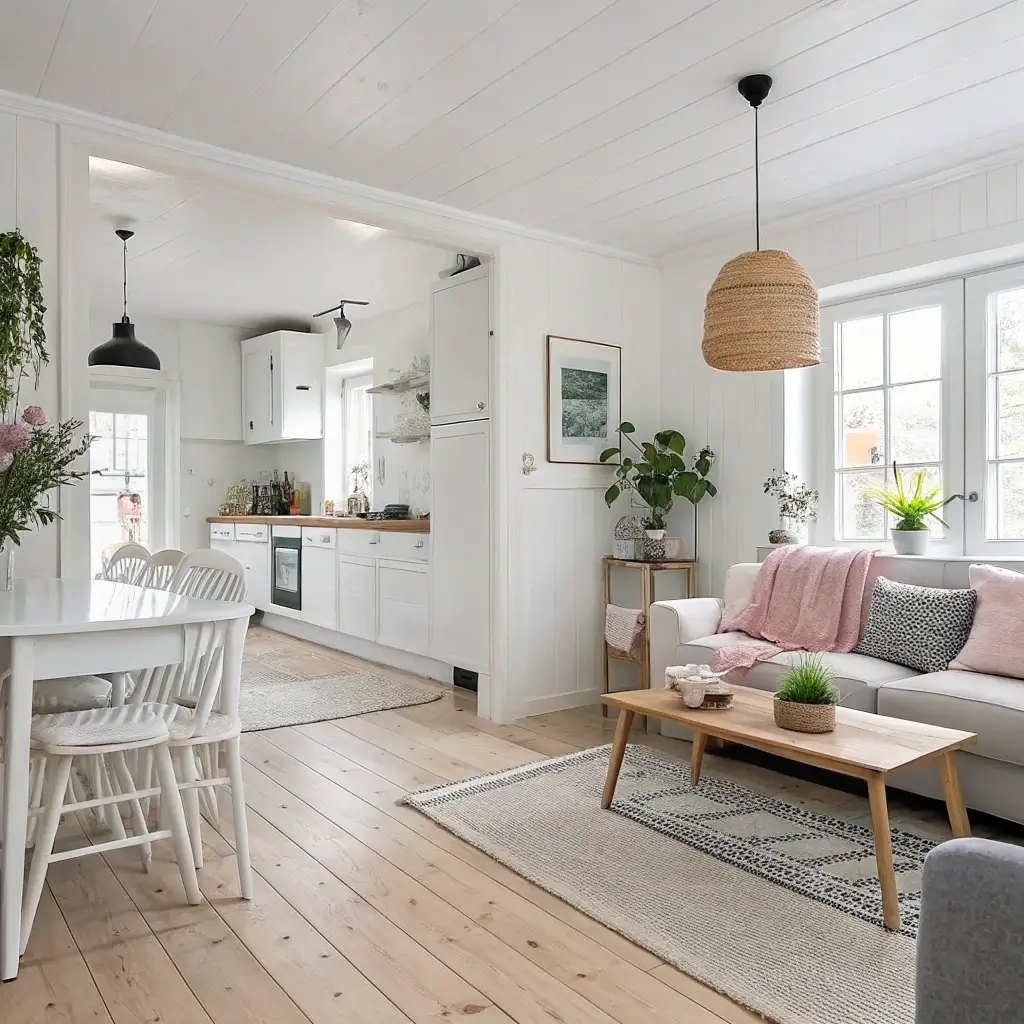
If cozy minimalism and modern farmhouse had a baby that moved to Copenhagen, you’d get Scandinavian design. This layout style prioritizes light, function, and hygge—that Danish concept of cozy contentment that I’m absolutely obsessed with.
Core Scandinavian Design Principles
Scandinavian interiors work exceptionally well in open concept layouts because they naturally create visual continuity. The palette stays neutral but never boring, featuring:
- Whites and light grays as the dominant colors
- Natural wood in lighter tones like oak, ash, or birch
- Pops of muted color in textiles and art
- Organic shapes in furniture and decor
Making Scandinavian Style Work for You
The living area should feature a low-profile sofa in a neutral fabric paired with one or two statement chairs in a subtle pattern or accent color. Keep the coffee table simple—round is very Scandi—and add texture through layered rugs and throws.
Your kitchen cabinets should be flat-panel in white or light wood. Open shelving works beautifully here, especially when you display a curated collection of ceramics in earthy tones. The island should be functional first, pretty second—storage is everything in Scandinavian design.
Here’s a pro tip: lighting makes or breaks Scandinavian interiors. You need multiple light sources at varying heights. Think pendant lights over the island, a sculptural floor lamp by the sofa, and candles everywhere. Scandinavians know how to survive dark winters, and their lighting game is unmatched.
Also Read: 10 Stylish Open Space Living Room and Kitchen Ideas for Modern Homes
Sleek Industrial Open Concept Kitchen Living Room
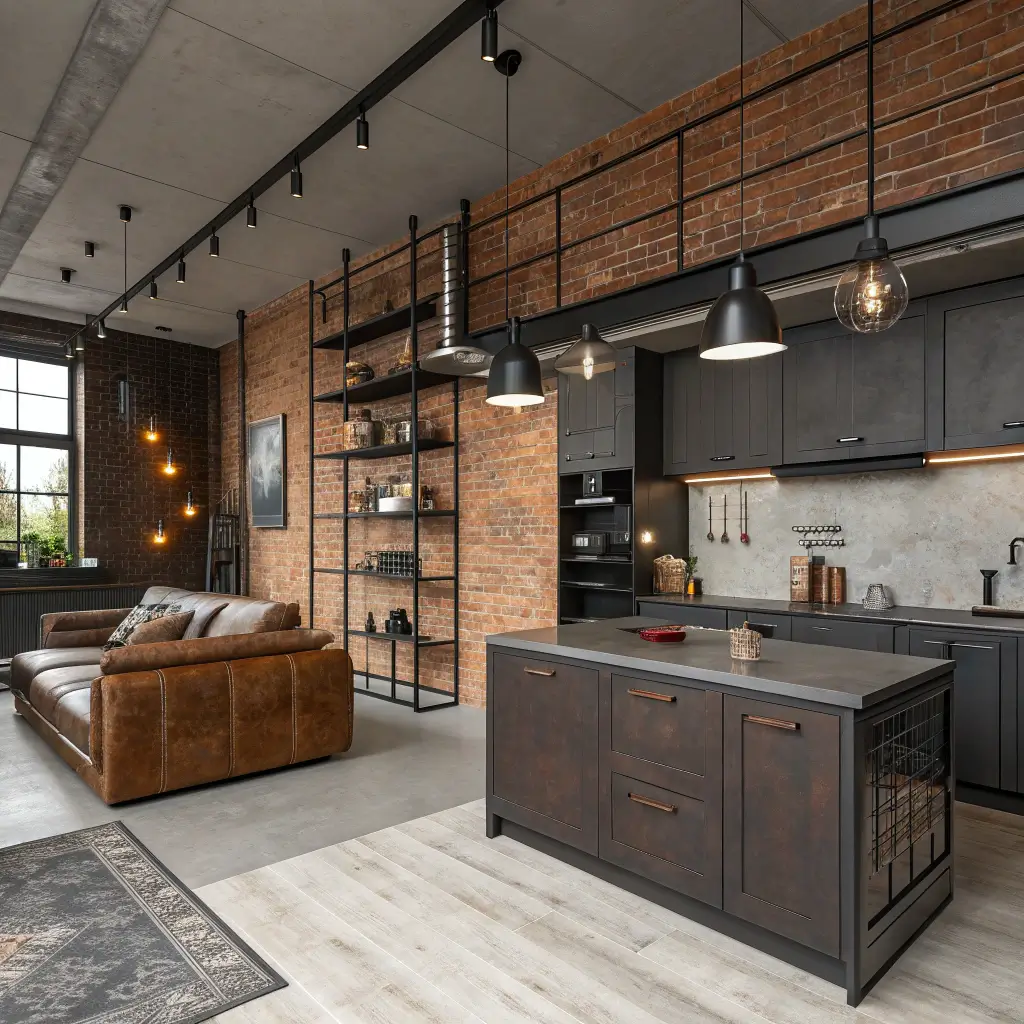
Want your home to feel like a converted Brooklyn loft? Industrial style delivers that urban edge while remaining surprisingly livable. FYI, you don’t need exposed ductwork or original brick to pull this off—the look is absolutely achievable in suburban homes and new construction.
Industrial Design Elements That Actually Work
Industrial interiors celebrate raw materials and architectural honesty. In an open concept space, this translates to:
- Exposed elements like beams, pipes, or ductwork (or faux versions)
- Metal accents in black, brushed steel, or copper
- Concrete or concrete-look flooring
- Large-scale statement lighting with visible Edison bulbs
- Leather furniture that adds warmth to hard surfaces
Balancing Industrial Edge with Comfort
The biggest mistake people make with industrial design is forgetting about comfort. Sure, a metal stool looks cool, but you still need to sit on it. Layer in soft elements to prevent your space from feeling like an auto repair shop.
In the living area, choose a large leather sofa or a chunky fabric sectional in a deep charcoal or cognac. Add throw pillows in unexpected textures—velvet works surprisingly well against industrial backdrops. An oversized area rug grounds the seating area and adds necessary warmth underfoot.
The kitchen can go bold with black cabinets and stainless steel countertops, or you can tone it down with dark wood cabinets and concrete counters. Open metal shelving instead of upper cabinets maintains the industrial vibe while displaying your curated cookware collection.
Bright Coastal Open Concept Layout
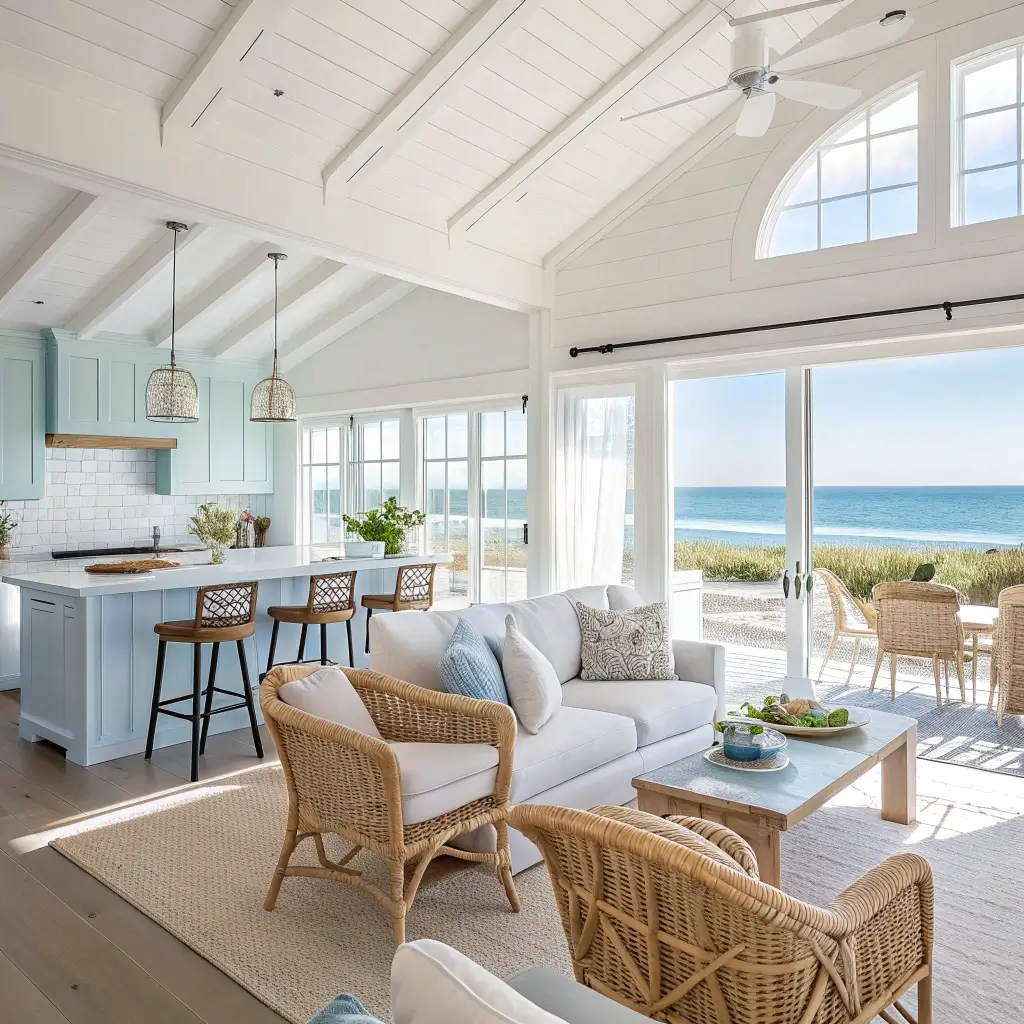
There’s something about coastal design that immediately makes me want to take a deep breath. Even if you’re landlocked in Ohio, a coastal open concept layout can transport you to that beachy vacation state of mind. And honestly? We could all use more of that energy in our homes.
Defining Modern Coastal Style
Let me be clear: coastal doesn’t mean seashells in every corner and anchor motifs on every pillow. Modern coastal design is about capturing the feeling of being near water—the light, the air, the relaxed atmosphere.
Key elements include:
- A predominantly white base with blue accents (from navy to soft aqua)
- Natural textures like rattan, jute, linen, and weathered wood
- Abundant natural light amplified by sheer window treatments
- Organic materials that reference the natural world
- Uncluttered surfaces that mimic the openness of beach landscapes
Creating Coastal Flow in Your Open Concept Space
Position furniture to maximize window views and natural light. The living area should feature slipcovered sofas in white or natural linen—they’re casual, comfortable, and scream beach house. Add accent chairs in a woven material like rattan or seagrass.
The kitchen works beautifully with white shaker cabinets, a natural wood floating island, and open shelving to display white dishes and glassware. Blue glass pendant lights over the island add that perfect pop of ocean color.
Here’s what I love about coastal layouts: they force you to edit. You can’t clutter a coastal space and maintain the vibe. Every item needs to earn its place, which naturally keeps your home feeling calm and organized.
Rustic Chic Open Concept Design
Rustic chic takes the warmth and character of rustic design and adds a layer of sophistication that prevents your home from looking like a hunting lodge. It’s cabin-in-the-woods meets Restoration Hardware, and when done right, it’s absolutely stunning.
The Rustic Chic Aesthetic
This style celebrates imperfection and history. Furniture has visible character—distressing, patina, and obvious craftsmanship. But unlike pure rustic design, rustic chic incorporates refined elements that elevate the overall look.
Essential components include:
- Reclaimed wood in beams, flooring, or furniture
- Stone accents on fireplaces or accent walls
- Luxurious textiles like faux fur, velvet, and cashmere
- Antique or vintage finds mixed with new pieces
- Natural color palette with deep, rich accent colors
Layout Tips for Rustic Chic Spaces
The fireplace should serve as the focal point of the living area—stone-clad and substantial. Arrange seating to face both the fireplace and the kitchen, creating that sense of togetherness that open concept layouts do best.
Furniture should mix oversized, comfortable pieces with more refined antiques. A massive leather sectional pairs surprisingly well with a delicate antique side table. This contrast keeps the space interesting and prevents it from feeling heavy.
In the kitchen, natural wood cabinets with visible grain work perfectly. Add iron hardware for an authentic touch. The island can be a showpiece—consider a vintage workbench converted to kitchen use, or a custom piece featuring reclaimed wood.
Also Read: 10 Smart Open Plan Kitchen Dining Living Ideas for Open Spaces
Contemporary Luxury Open Concept Space

Sometimes you want your home to feel like a boutique hotel. Not in a cold, impersonal way, but in that “everything here is intentionally beautiful and exceptionally comfortable” way. Contemporary luxury delivers exactly that. 🙂
What Defines Contemporary Luxury
Contemporary luxury isn’t about spending the most money—it’s about creating an experience of quality and refinement. The look is current but not trendy, sophisticated but not stuffy.
Hallmarks of this style include:
- High-quality materials throughout—natural stone, premium woods, rich metals
- Sculptural furniture pieces that double as art
- Layered lighting with architectural fixtures
- Art and accessories that feel collected, not decorated
- Neutral palette with moments of drama
Executing Luxury in Open Concept Layouts
The key to contemporary luxury is proportion and balance. Furniture should be substantial without crowding the space. That means fewer pieces, but each one should be the best quality you can afford.
In the living area, invest in a statement sofa with clean lines and impeccable craftsmanship. Add a luxe area rug—think silk or high-pile wool—that anchors the space. Art should be gallery-worthy, even if that means saving for one perfect piece rather than filling walls with random prints.
The kitchen in a contemporary luxury space features integrated appliances, waterfall edge countertops in marble or quartz, and custom cabinetry that looks more like furniture than kitchen storage. The island often extends into a dining surface, creating seamless entertaining flow.
Compact Small Space Open Concept Layout
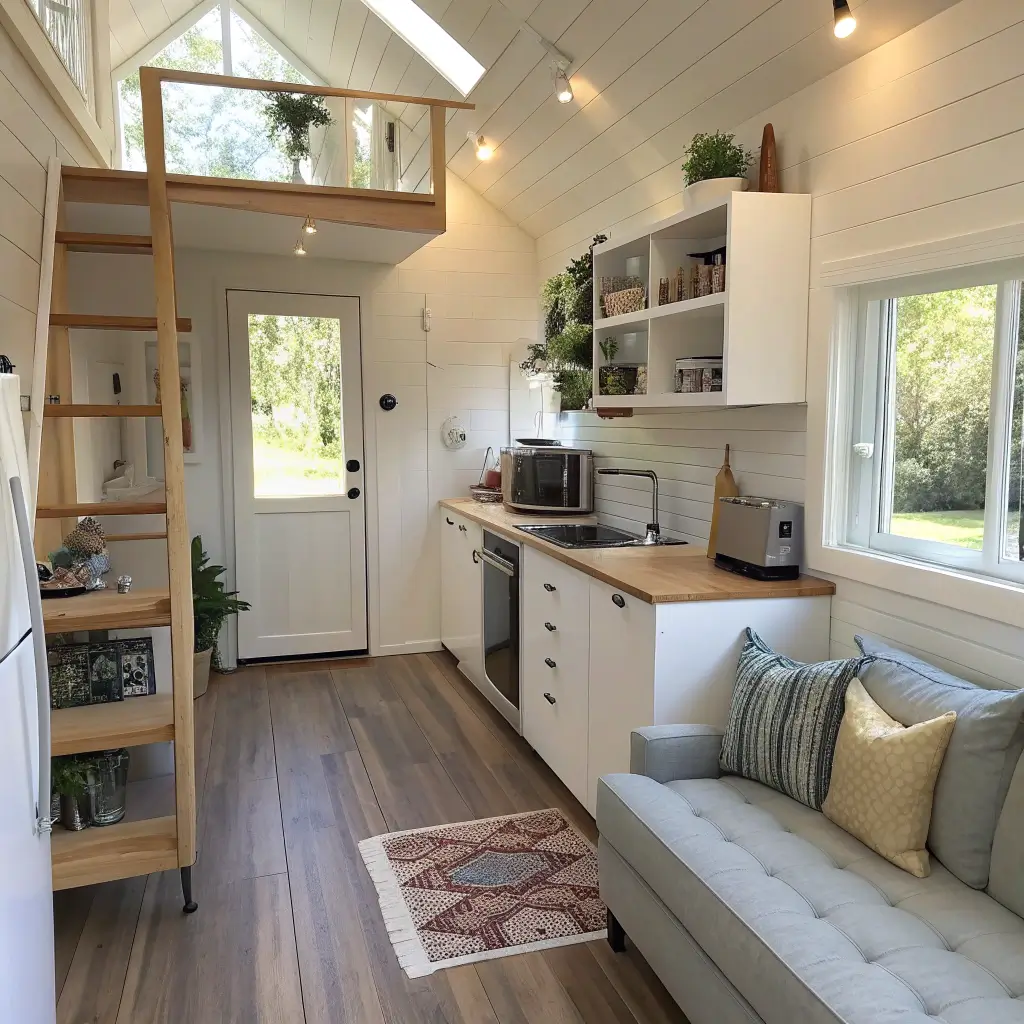
Not everyone has 2,000 square feet to work with, and honestly? Small open concept spaces can be just as functional and beautiful as sprawling ones. They just require smarter planning and more intentional choices. IMO, small spaces actually force better design decisions.
Small Space Design Principles
When square footage is limited, every inch matters. You need furniture that works harder, storage that’s invisible, and a layout that maximizes flow without sacrificing comfort.
Strategies that work include:
- Multi-functional furniture like storage ottomans and extendable tables
- Visual continuity through consistent flooring and color palette
- Vertical storage that draws the eye up and maximizes floor space
- Light colors that expand the visual footprint
- Strategic mirrors that reflect light and create depth
Layout Solutions for Small Open Concept Spaces
Forget the traditional sofa-facing-TV setup. In small spaces, consider a love seat with two accent chairs that can swivel to face the kitchen during gatherings. Or try a sectional that defines the living area while providing ample seating without requiring additional pieces.
The kitchen should prioritize upper cabinets that reach the ceiling—that dead space above standard cabinets is wasted storage in a small home. Choose a compact island on casters that can move when needed, or opt for a peninsula that doesn’t block flow.
I lived in a 600-square-foot apartment with an open concept layout for three years. The secret to making it work was ruthless editing. If an item didn’t serve a purpose or bring me joy, it had to go. And you know what? That constraint made my space infinitely more livable.
Mid-Century Modern Open Concept Kitchen Living Room
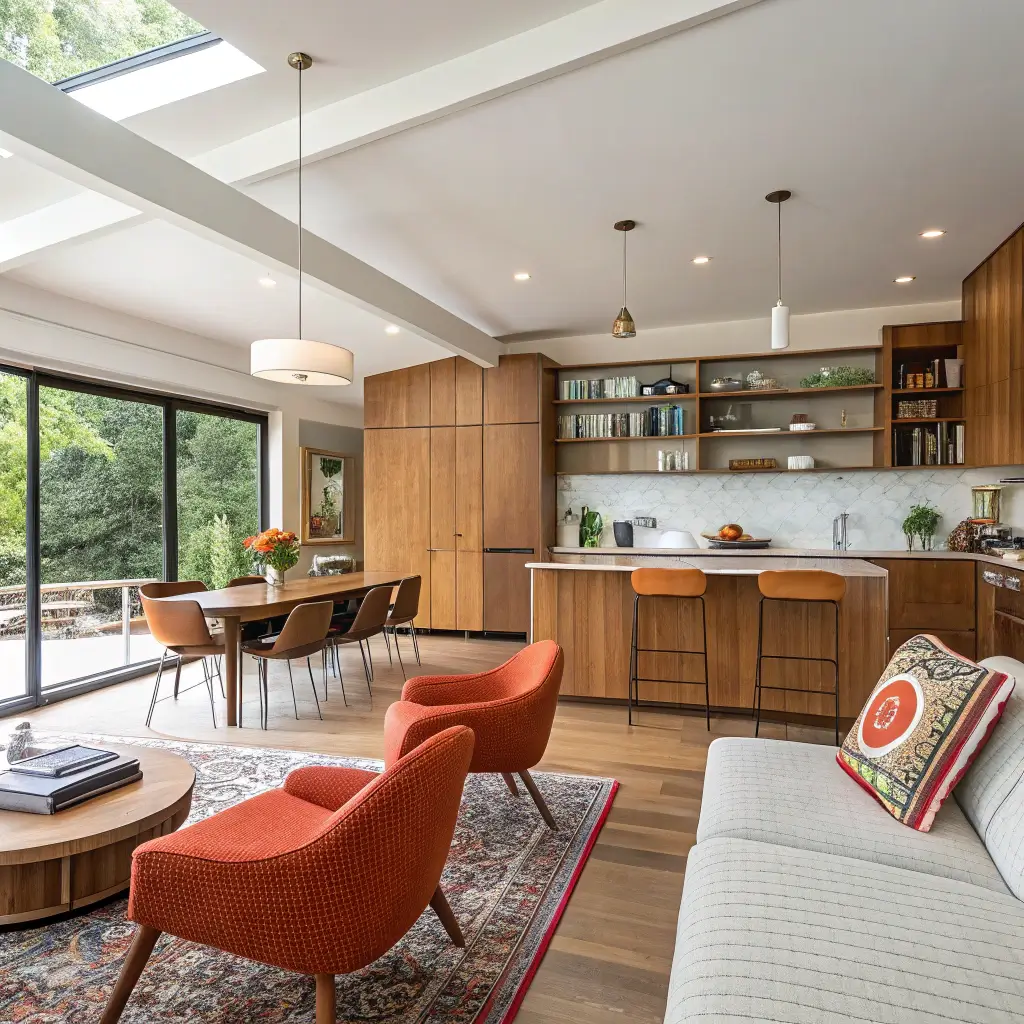
Mid-century modern never really went away, and there’s a reason for that. The clean lines, organic shapes, and focus on function that defined design from the 1940s through 1960s translates perfectly to contemporary open concept living.
Authentic Mid-Century Elements
Mid-century modern is more than just an Eames chair. It’s a design philosophy that prioritizes honest materials, clean silhouettes, and connection to nature.
Core elements include:
- Furniture with visible legs creating visual lightness
- Organic, sculptural forms in seating and decor
- Warm wood tones especially walnut and teak
- Pops of color in mustard, teal, orange, and olive
- Minimal ornamentation with function driving form
Creating Mid-Century Flow
The open concept layout should feel effortlessly connected. Use consistent flooring throughout—hardwood in a warm tone is ideal. Furniture placement should create clear zones without physical barriers.
In the living area, anchor the space with an iconic sofa in a period-appropriate style—think clean lines, tapered legs, and quality upholstery. Add a classic credenza along one wall for storage and display. Lighting matters here: sculptural pendant lights and floor lamps become focal points.
The kitchen can incorporate mid-century elements through flat-panel cabinets in warm wood, colorful appliances (those retro-style refrigerators are actually functional now), and simple hardware in brass or black. Keep counters clutter-free to maintain that clean aesthetic.
Also Read: 12 Trendy Open Kitchen and Living Room Ideas for Chic Interiors
Eclectic Colorful Open Concept Design
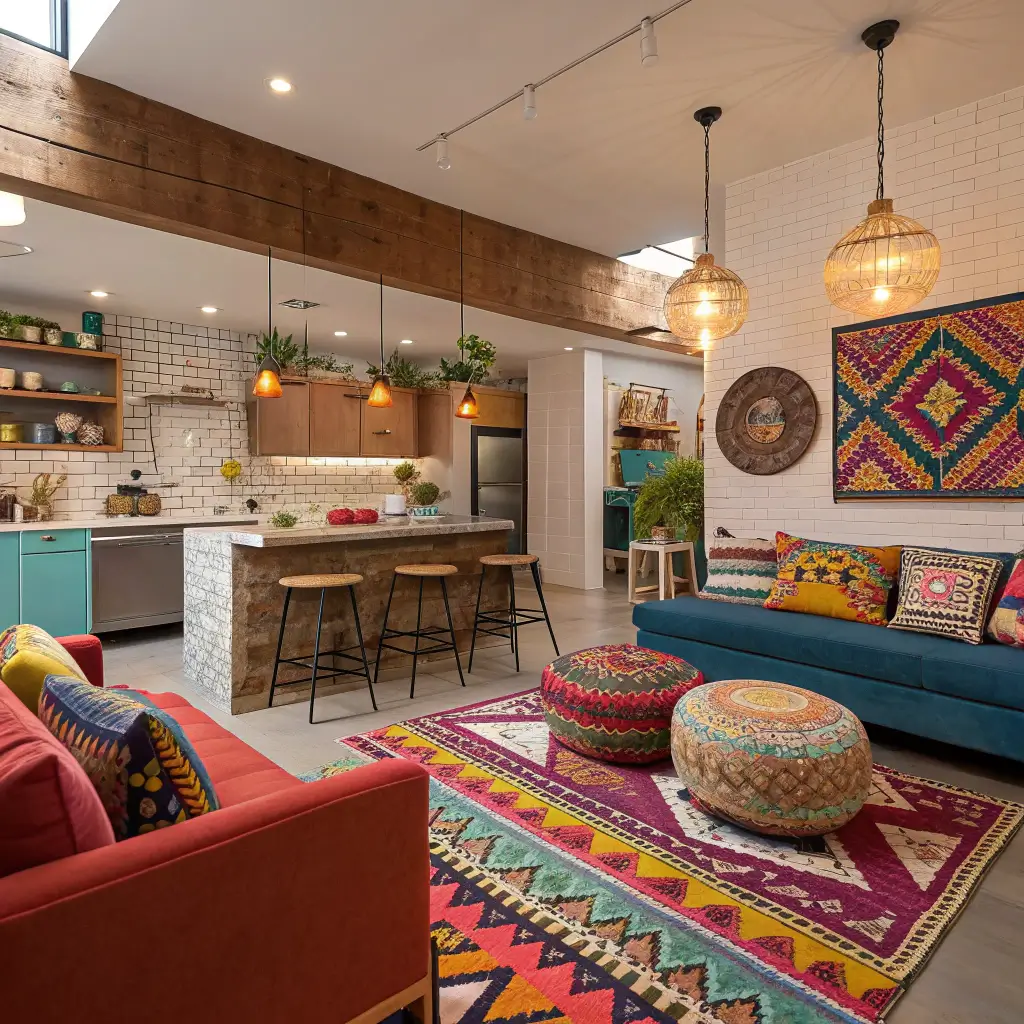
Here’s where things get fun. Eclectic design throws the rulebook out the window—or rather, it creates its own rules. An eclectic colorful open concept space combines patterns, periods, and palettes in ways that shouldn’t work but absolutely do.
Understanding Eclectic Design
Eclectic doesn’t mean chaotic. The best eclectic spaces have an underlying structure that holds the disparate elements together. Think of it as controlled chaos—there’s method to the madness.
What makes eclectic spaces work:
- A unifying color story that ties different elements together
- Intentional contrast between old and new, high and low
- Personal meaning behind collected items
- Balanced visual weight so no area overwhelms another
- Confident mixing of patterns and textures
Making Eclectic Work in Open Concept
The challenge with eclectic design in open concept spaces is maintaining cohesion across the larger area. Start with a neutral base—walls, floors, larger furniture pieces—then layer in color and pattern through art, textiles, and accessories.
The living area might feature a velvet sofa in emerald green paired with a vintage Moroccan rug and a lucite coffee table. Add throw pillows in complementary patterns (mix scales—one large, one small) and artwork that spans multiple styles.
The kitchen in an eclectic space can be surprisingly bold. Colored cabinets work beautifully here—think deep blue or terracotta. Add a patterned tile backsplash that picks up colors from the living area, and don’t be afraid of open shelving displaying your collection of mismatched vintage dishes.
The secret to pulling this off? Edit mercilessly. Eclectic works when each piece is intentional. It fails when it looks like you kept everything you’ve ever owned.
Warm Traditional Open Concept Layout

Traditional design gets unfairly dismissed as outdated, but warm traditional style offers something that trendier aesthetics sometimes lack: timeless elegance and undeniable comfort. In an open concept layout, traditional elements create a sense of permanence and welcome.
Defining Warm Traditional Style
Warm traditional is not your grandmother’s formal living room. It takes classic design elements and relaxes them, focusing on livability without sacrificing sophistication.
Key characteristics include:
- Rich, warm colors like burgundy, forest green, navy, and camel
- Quality wood furniture in traditional silhouettes
- Layered window treatments that add softness
- Patterned fabrics including florals, plaids, and toile
- Antiques or antique-inspired pieces mixed with comfortable upholstery
Layout Strategies for Traditional Spaces
Symmetry matters in traditional design, but open concept layouts require flexibility. Create symmetrical moments within the larger asymmetrical space—matching lamps on either side of the sofa, balanced art arrangements, or paired dining chairs.
The living area should feel collected over time. A traditional rolled-arm sofa in a rich fabric anchors the space. Add wingback chairs, a substantial coffee table (maybe a dark wood with turned legs), and layers of textiles including throw blankets and decorative pillows.
The kitchen can maintain traditional elements through raised-panel cabinets, elegant hardware in brass or bronze, and classic pendant lights. The island might feature decorative legs rather than a flat base, adding architectural interest. Natural stone countertops complete the look.
Monochrome Minimal Open Concept Kitchen Living Room
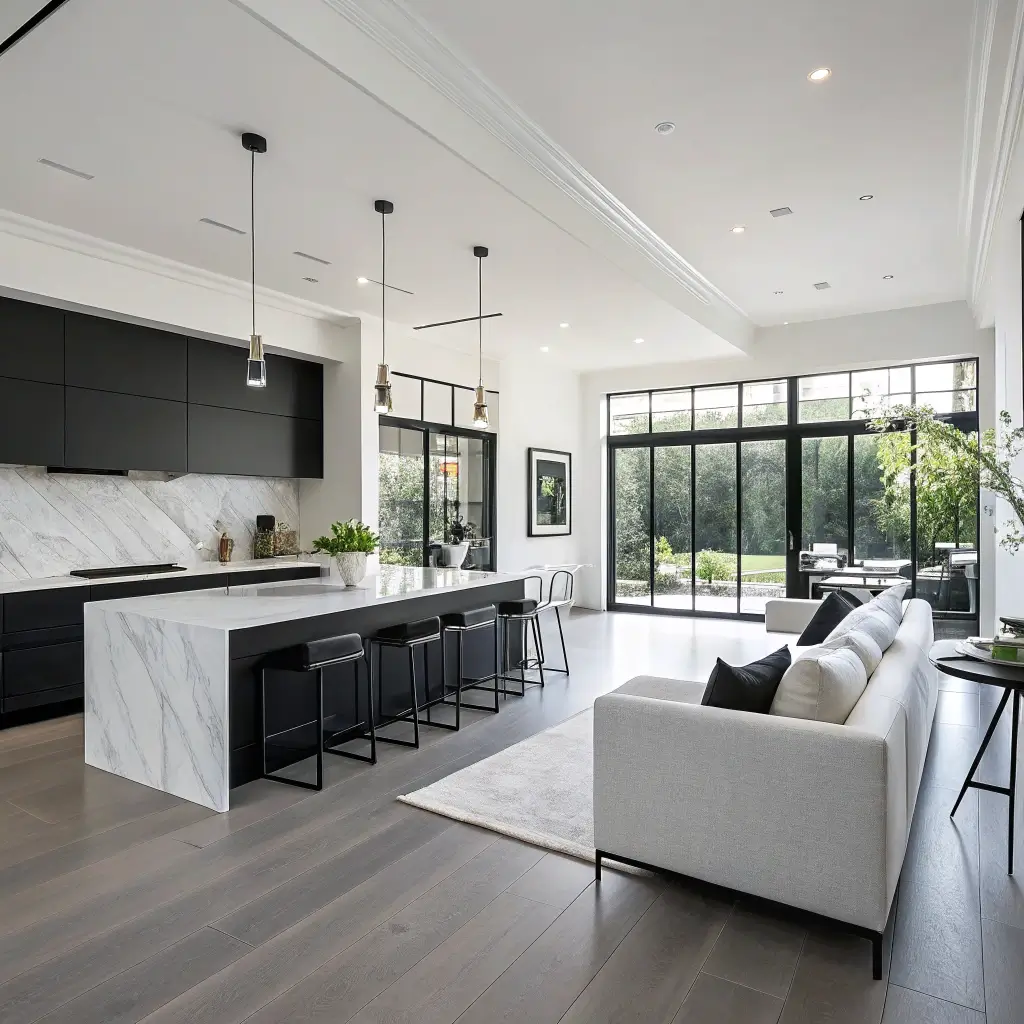
For those who find peace in simplicity, a monochrome minimal open concept layout offers the ultimate in visual calm. This isn’t boring—it’s intentionally restrained, allowing architecture and quality to take center stage.
The Power of Monochrome
Monochrome doesn’t have to mean all white (though it can). It means working within one color family and creating interest through texture, tone, and material variation rather than color contrast.
Elements of monochrome minimal include:
- A restricted color palette with variations in shade and texture
- Premium materials that shine without colorful competition
- Sculptural furniture that becomes art
- Careful attention to negative space
- Lighting as a design element rather than afterthought
Executing Monochrome in Open Concept Spaces
The success of a monochrome space depends on material quality and textural contrast. A white marble countertop reads differently from white painted walls, which reads differently from a white linen sofa. These subtle differences create visual interest without introducing color.
In the living area, choose furniture with architectural presence. A sofa with interesting proportions or a chair with a sculptural form becomes a focal point even in a neutral palette. Add texture through a shaggy wool rug, smooth leather accessories, and matte ceramic decorative objects.
The kitchen should feel almost invisible—integrated appliances, handleless cabinets, and consistent materials throughout. The island might be a single slab of stone with waterfall edges, creating a monolithic presence that anchors the space. :/
Here’s the challenge: monochrome minimal requires constant editing. Every new item you introduce disrupts the palette, so think carefully before adding anything. The payoff is a space that feels like a gallery for daily life.
Making Your Open Concept Dreams a Reality
So there you have it—twelve completely different approaches to open concept kitchen living room layouts, each with its own personality and requirements. The question isn’t which one is “best” (they all work when executed properly) but which one speaks to how you actually want to live.
Here’s what I’ve learned from years of obsessing over these spaces: the best open concept layout is the one that supports your real life. Not your Instagram life, not your aspirational life, but how you actually cook, relax, and gather with people you love.
Before you commit to a style, ask yourself these questions:
- How do you really use your kitchen? Are you a serious cook or more of a reheater?
- What does relaxation look like for you? Reading? Movies? Conversation?
- Do you entertain frequently, and if so, what’s your style?
- What level of visual stimulation do you find comfortable?
- What maintenance level can you realistically sustain?
Your answers should guide your design choices. The person who loves bold color and collected objects will be miserable in a monochrome minimal space, no matter how beautiful it photographs. The minimalist will feel anxious in an eclectic environment, even if others find it charming.
Trust your instincts, invest in quality where it matters most, and don’t be afraid to break the “rules” if something feels right. At the end of the day, you’re creating a home—not a showroom. And the best homes feel like they belong to the people who live in them.
Now go knock down some walls. (Metaphorically, at least. Check with a structural engineer before touching actual walls.) Your dream open concept kitchen living room is waiting.