

15 Functional Small Bathroom Vanity Ideas and Smart Layouts

Let’s be honest—small bathrooms can feel like a cruel joke from the universe. You’re standing there, toothbrush in hand, elbows hitting walls, wondering how anyone expects you to function in what essentially amounts to a glorified closet. But here’s the thing: I’ve spent years obsessing over small bathroom solutions (yes, I’m that person at dinner parties), and I can tell you that the right vanity changes everything.
Your bathroom vanity isn’t just a sink holder. It’s the command center of your morning routine, the storage savior for all those products you swear you’ll use someday, and honestly? It’s probably the first thing guests notice when they use your bathroom. So why settle for something that makes your already-tiny space feel even more cramped?
I’ve renovated three small bathrooms in my lifetime, and each time I learned something new about maximizing space without sacrificing style. Today, I’m sharing 15 vanity ideas that actually work in small bathrooms—no Pinterest-perfect fantasies that look great in photos but fail miserably in real life.
1. Floating Wall-Mounted Vanity
Ever walked into a small bathroom and immediately felt like you could breathe? Chances are, they had a floating vanity. Wall-mounted vanities create the illusion of more floor space by literally hovering above the ground, making your bathroom appear larger than it actually is.
I installed a floating vanity in my first apartment bathroom, and the difference was night and day. Suddenly, I could actually see the floor tiles I’d carefully picked out, and cleaning underneath became a breeze—no more awkward mopping around cabinet legs.
Why Floating Vanities Work
The magic lies in visual perception. When your eye can travel uninterrupted from wall to wall at floor level, your brain registers the space as larger. It’s basically an optical illusion you can wash your hands in.
Key benefits include:
- Increased perceived floor space that makes the room feel open
- Easy cleaning access underneath the unit
- Adjustable height installation to suit your needs
- Modern, streamlined aesthetic that works with most decor styles
The only real downside? You’ll lose whatever storage that floor-level cabinet space would have provided. But honestly, if you pair your floating vanity with smart storage solutions elsewhere (more on that later), you won’t miss it.
Installation Considerations
Here’s something nobody tells you: floating vanities require proper wall support. You can’t just slap one onto drywall and hope for the best. Make sure you’re mounting into studs or using appropriate wall anchors rated for the weight. Trust me, a collapsing vanity is not the bathroom surprise anyone wants.
2. Corner Bathroom Vanity
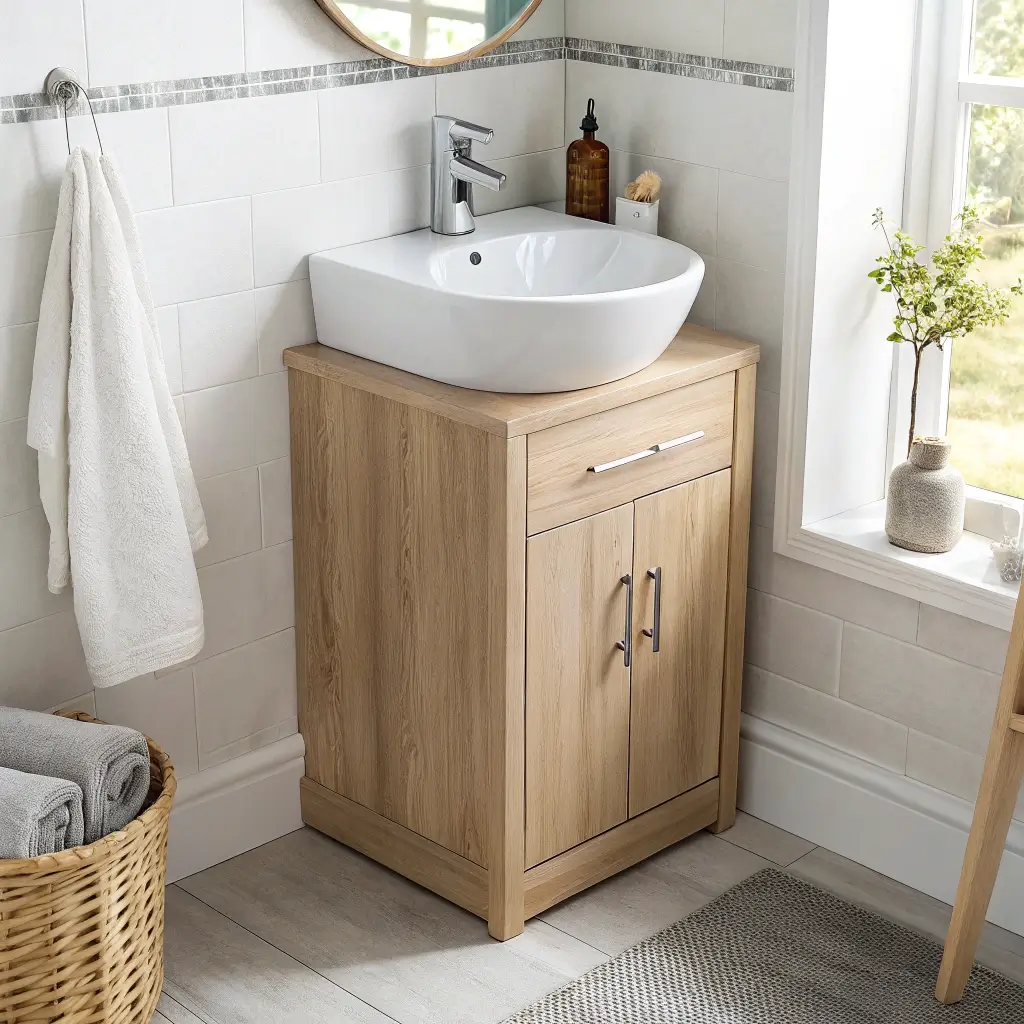
That awkward corner in your bathroom? Stop pretending it doesn’t exist. Corner vanities transform dead space into functional real estate, and they’re absolute game-changers for tiny bathrooms where every square inch matters.
I’ll admit, I was skeptical about corner vanities at first. They seemed gimmicky, like something you’d find in a camper van. But after seeing one in my friend’s 40-square-foot bathroom, I became a believer. She’d turned what was essentially a triangle of nothing into a fully functional wash station.
Making Corners Count
Corner vanities come in various configurations:
- Triangular units that fit snugly into 90-degree corners
- L-shaped designs that wrap around the corner for extra counter space
- Curved front options that soften the angular look
The biggest advantage? You’re using space that would otherwise sit empty. In a small bathroom, that’s not just smart—it’s essential.
Choosing the Right Size
Measure twice, order once. Corner vanities need precise measurements because they’re designed for specific angles. Most work with standard 90-degree corners, but if your bathroom has any quirks (and older homes often do), custom might be your only option.
3. Minimalist Single-Sink Vanity

Sometimes, less really is more. A minimalist single-sink vanity strips away unnecessary bulk and focuses on what you actually need: a sink, some counter space, and maybe a drawer or two.
I’ve seen people cram oversized vanities into small bathrooms, thinking more storage equals better. Wrong. All it does is make you feel like you’re washing your face inside a furniture store. A clean, simple vanity keeps the room feeling open and intentional.
The Minimalist Mindset
Going minimalist means being honest about your needs. Do you really need five drawers in your bathroom vanity? Or could you store most of that stuff in a hallway closet?
What to look for in a minimalist vanity:
- Clean lines without ornate details
- Simple hardware or push-to-open mechanisms
- Neutral colors that don’t overwhelm the space
- Quality materials because simplicity highlights imperfections
Practical Minimalism
Here’s my hot take: minimalism shouldn’t mean sacrificing function. Look for designs that hide complexity behind simple facades—maybe a single deep drawer instead of multiple shallow ones, or a cabinet that opens to reveal organized compartments.
4. Rustic Wooden Vanity with Open Shelves

Want warmth in your bathroom without eating up visual space? Open shelving on a rustic wooden vanity gives you storage while keeping things airy and accessible.
I have a soft spot for these. There’s something about natural wood grain in a bathroom that feels simultaneously cozy and spa-like. Plus, open shelves force you to keep things organized (or at least arranged in pretty baskets).
The Open Shelf Trade-Off
Let’s be real: open shelves mean your stuff is visible. This works beautifully if you’re the type who folds towels into perfect rectangles and decants shampoo into matching bottles. If you’re more of a “shove everything behind closed doors” person (no judgment—I’m one of you), this style might stress you out.
Open shelving works best for:
- Neatly folded towels and washcloths
- Decorative items like plants or candles
- Woven baskets containing bathroom essentials
- Items you use daily and want within easy reach
Protecting Wood in Wet Environments
Bathroom moisture and wood aren’t natural friends. Make sure any wooden vanity is properly sealed with water-resistant finish. Teak, oak, and reclaimed barn wood tend to hold up well, but even they need protection. Wipe up water splashes promptly, and your rustic beauty will last for years.
5. Compact Double-Sink Vanity
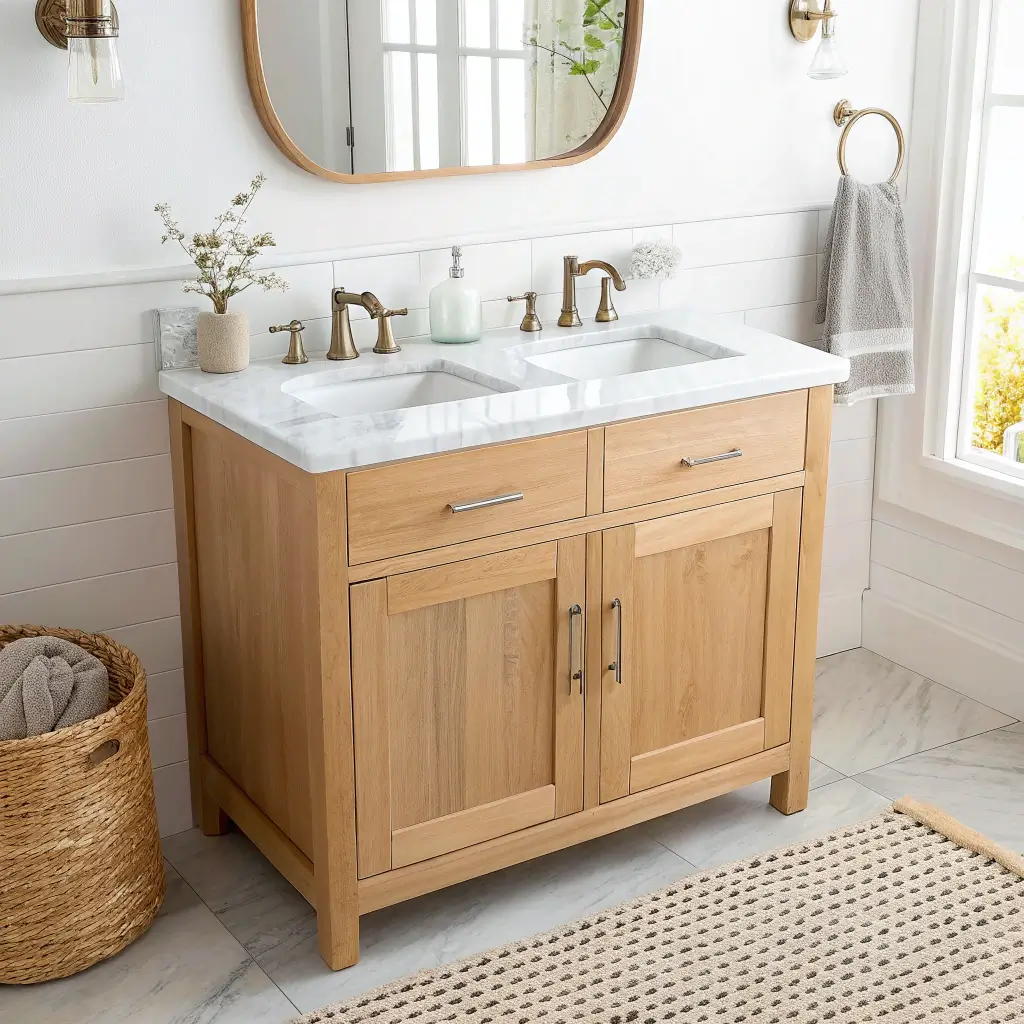
Think you can’t have two sinks in a small bathroom? Think again. Compact double-sink vanities exist specifically for couples who refuse to share sink space but don’t have a master bathroom the size of a studio apartment.
My partner and I nearly broke up over bathroom sink territory before we discovered narrow double vanities. Okay, slight exaggeration, but our mornings became significantly less hostile after the upgrade.
Making Double Sinks Work
The key is finding vanities designed for tight spaces. We’re talking 48 to 60 inches wide instead of the standard 72-plus you see in showrooms.
Space-saving features to look for:
- Vessel sinks that sit on top of the counter, allowing narrower cabinet width
- Wall-mounted faucets that free up counter space
- Single-hole faucets instead of widespread models
- Shallow basins that don’t require deep cabinet cutouts
Is It Worth It?
IMO, if both of you get ready at the same time regularly, a compact double vanity is absolutely worth the investment. The peace it brings to morning routines cannot be overstated. Just make sure you measure your space carefully—these vanities need clear walkway room on both sides.
6. Vanity with Pull-Out Storage Drawers
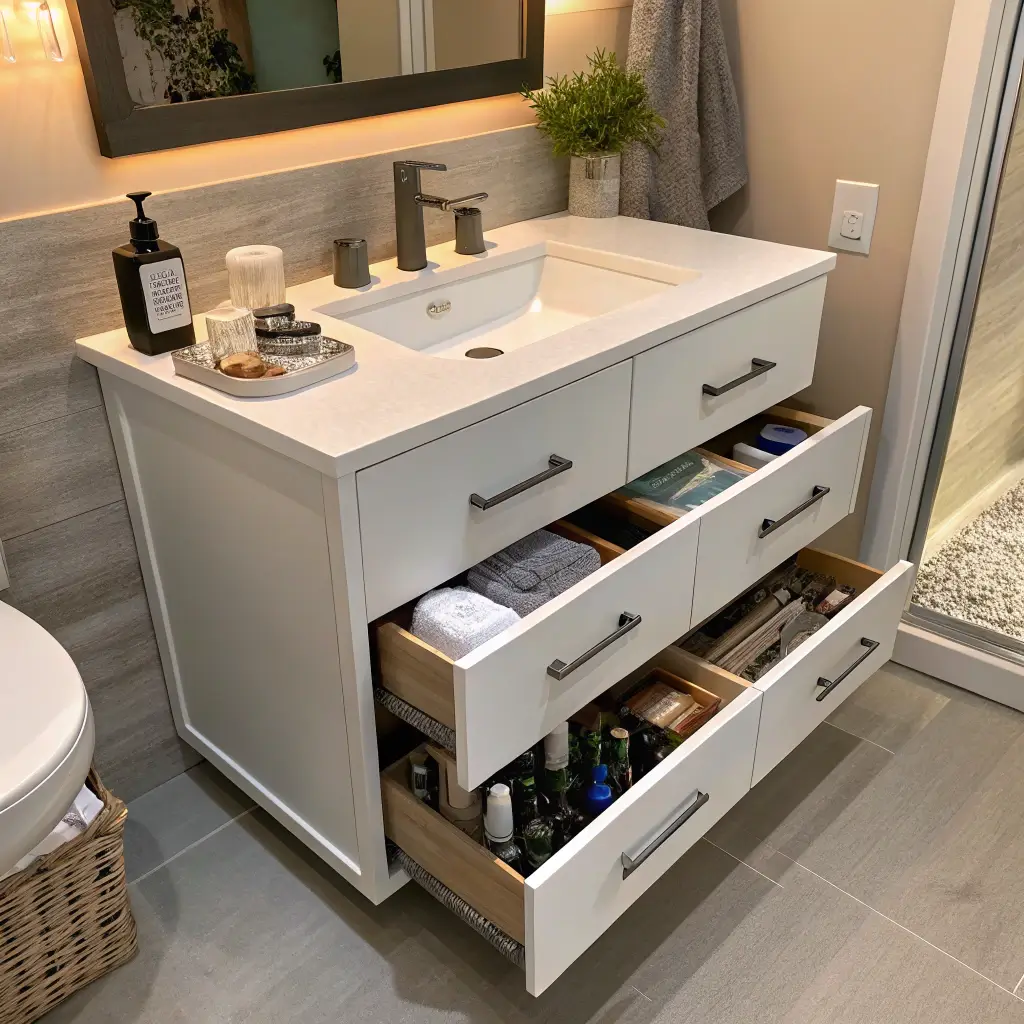
Cabinets with doors are so last century. Pull-out drawers let you see and access everything without getting on your knees and rooting around in dark cabinet depths like some kind of bathroom archaeologist.
After years of losing products in the back of under-sink cabinets, I converted to team drawers and never looked back. Suddenly, I could find my backup toothpaste without a flashlight and minor contortions.
Drawer Organization Strategies
Not all drawers are created equal. Look for vanities with drawer dividers or modular organizers that prevent your stuff from becoming a jumbled mess every time you close them too hard.
Smart drawer organization tips:
- Use shallow top drawers for daily items like toothbrushes and razors
- Dedicate deeper bottom drawers to bulky items and backup supplies
- Install drawer organizers designed for bathroom products
- Consider tiered inserts that maximize vertical space within drawers
Pull-Out vs. Traditional Cabinets
Here’s the honest comparison: drawers cost more than basic cabinets. They have more hardware, more moving parts, and more potential failure points. But the convenience factor is unmatched, especially in small bathrooms where you can’t afford to waste storage space on items you forget exist.
Also Read: 15 Brilliant Small Bathroom Ideas on a Budget and Design Tricks
7. Modern Glass & Metal Vanity

Want your small bathroom to feel sleek and contemporary? Glass and metal vanities project an airy, sophisticated vibe that makes cramped spaces feel almost gallery-like.
These vanities work through transparency and reflection. Glass shelves don’t block sightlines, and metal frames tend to be thinner than wooden structures, taking up less visual real estate.
Style Considerations
Glass and metal vanities range from industrial (think exposed pipes and iron frames) to ultra-modern (chrome everything with tempered glass surfaces). Match your choice to your overall bathroom aesthetic.
Popular combinations include:
- Tempered glass countertop with chrome legs
- Vessel sink on a glass shelf with minimal metal support
- Metal frame with glass shelf underneath for towels
- Floating glass platform mounted on concealed brackets
Practical Reality Check
Glass shows water spots and toothpaste splatters like nothing else. If you’re not someone who wipes down surfaces regularly, this look might drive you crazy. Also, glass can feel cold—literally—in winter months. Just something to consider before committing. 🙂
8. Vintage-Inspired Small Vanity

Who says small bathrooms can’t have character? Vintage-style vanities bring charm and personality without requiring massive square footage.
I’m talking about those adorable repurposed furniture pieces, antique-looking consoles, and classic pedestal variations that make your bathroom feel like it has a story to tell.
Finding the Right Vintage Piece
You have two options: buy a reproduction made for bathroom use, or repurpose an actual vintage piece. Both have pros and cons.
Reproductions offer:
- Proper plumbing cutouts already done
- Water-resistant finishes appropriate for bathrooms
- Standardized sizes that fit modern fixtures
- Warranties and customer support
Authentic vintage pieces offer:
- Unique character you can’t replicate
- Eco-friendly repurposing
- Potential cost savings (depending on the piece)
- Bragging rights at dinner parties
Converting Vintage Furniture
If you’re repurposing genuine vintage furniture, waterproofing is non-negotiable. Seal every surface, reinforce the structure to handle sink weight, and consider adding a moisture barrier behind the piece. Done right, these conversions become stunning focal points. Done wrong, they become expensive firewood.
9. Narrow Vanity with Tall Storage Cabinet

Here’s a layout strategy that changed my small bathroom life: go vertical instead of horizontal. Pair a narrow vanity with an adjacent tall storage cabinet, and suddenly you have tons of storage without sacrificing floor space.
This combo works because it leverages wall height—something most small bathrooms have plenty of but rarely use effectively.
Layout Planning
The ideal arrangement places the tall cabinet at the end of the vanity or on an adjacent wall where it won’t block movement or make the space feel cramped.
Things to measure before committing:
- Vanity width: Narrow models run 18-24 inches wide
- Cabinet depth: Should match or be slightly shallower than the vanity
- Height clearance: Make sure the tall cabinet doesn’t hit light fixtures or medicine cabinets
- Door swing: Ensure cabinet doors don’t block other doors or fixtures
Storage Maximization
Tall cabinets can hold an absurd amount of bathroom supplies if you organize them properly. Use shelf risers, door-mounted organizers, and labeled bins to maximize every inch. Your future self will thank you when everything has a designated home.
Also Read: 15 Clever Small Bathroom Modern Ideas and Functional Styles
10. Marble Top Floating Vanity
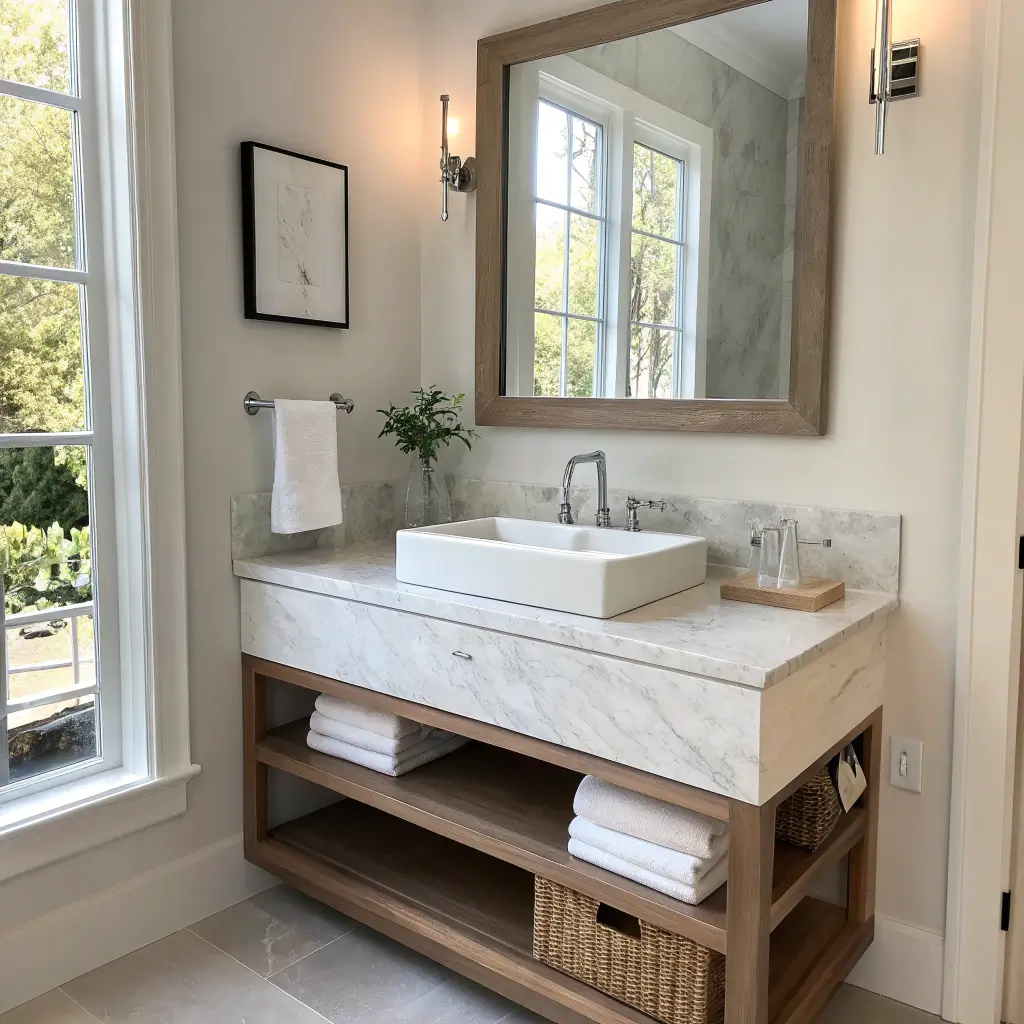
Want luxury in a small package? A marble-topped floating vanity delivers elegance without overwhelming tiny spaces. The combination of floating design (visual lightness) with marble (sophisticated weight) creates an interesting tension that reads as intentional and expensive.
FYI, marble doesn’t have to break the bank. Marble remnants from stone yards often cost a fraction of full slabs and work perfectly for small vanity tops.
Marble Realities
Let’s talk about marble honestly. It’s beautiful, but it’s also porous and can stain if not properly sealed. Bathroom products, especially acidic ones, can etch the surface.
Marble maintenance requirements:
- Seal the surface annually (or more often in high-use bathrooms)
- Wipe up spills immediately, especially colored liquids
- Use coasters under bottles that might drip
- Avoid harsh chemical cleaners
Marble Alternatives
If you love the marble look but not the maintenance, consider quartz or porcelain alternatives that mimic marble veining. They’re more durable, less maintenance-intensive, and virtually indistinguishable from the real thing in many cases. No judgment here—I use marble-look quartz in my own bathroom.
11. Vanity with Hidden Laundry Hamper

Small home, small bathroom, no laundry room? A vanity with an integrated hidden hamper solves problems you didn’t know you could solve. Instead of a standalone hamper eating up precious floor space, your dirty towels disappear into a pull-out compartment.
This is one of those features that sounds minor but feels revolutionary once you have it. Suddenly, your bathroom looks tidier, and you’ve eliminated one more piece of visual clutter.
How They Work
Most integrated hamper vanities feature a tilt-out door or pull-out drawer with a removable bag or basket inside.
Key features to look for:
- Ventilated design to prevent mildew in damp items
- Removable liner for easy transport to the washing machine
- Sturdy hinge or slide mechanism that handles daily use
- Adequate capacity for your household’s towel turnover
DIY Possibility
If you have an existing vanity with a cabinet door, you might be able to retrofit a hamper solution. Tilt-out hamper hardware kits cost $20-50 and install relatively easily. Just make sure your cabinet interior can accommodate the mechanism and a reasonably sized bag.
12. Scandinavian Style Minimal Vanity
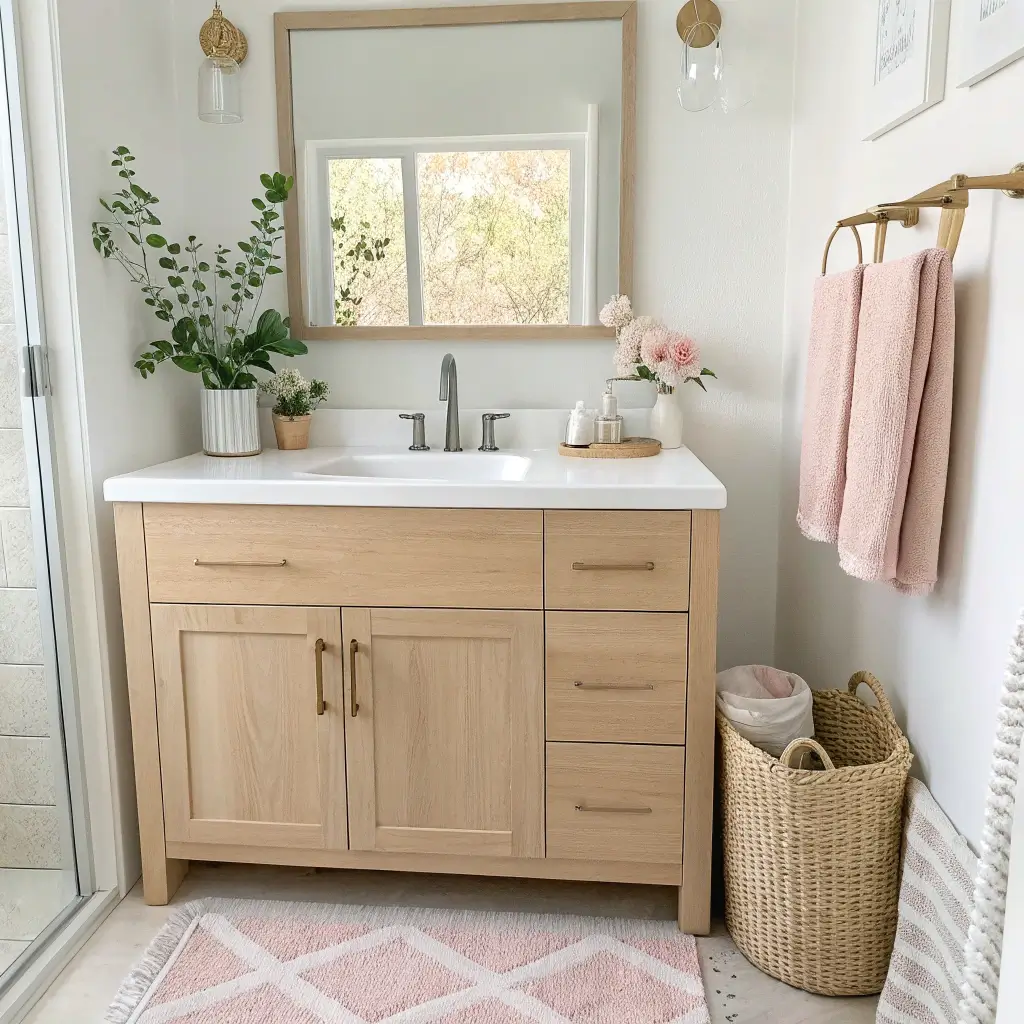
Scandinavian design philosophy—simplicity, functionality, natural materials—translates perfectly to small bathrooms. These vanities typically feature light wood tones, clean lines, and no-nonsense storage solutions.
There’s a reason Scandinavian design dominates small-space living inspiration. In countries where homes tend to be compact and winters are long, people figured out how to make interiors feel open, bright, and calm. We can steal their secrets.
Defining Characteristics
What makes a vanity “Scandinavian” exactly?
Look for these elements:
- Light wood species like oak, birch, or ash
- White or soft gray accents that keep things airy
- Simple, functional hardware (or integrated handles)
- Thoughtful storage that prioritizes daily use items
- Natural material pairings like ceramic, stone, or linen
Creating the Full Look
A Scandi vanity works best when the entire bathroom embraces the aesthetic. Pair it with white walls, simple geometric tiles, and minimal accessories. Plants are encouraged—Scandinavian design loves bringing nature indoors. A small potted plant on your vanity adds life without cluttering.
Also Read: 10 Smart Small Narrow Bathroom Ideas and Functional Layouts
13. Vanity with Integrated Mirror & Lighting
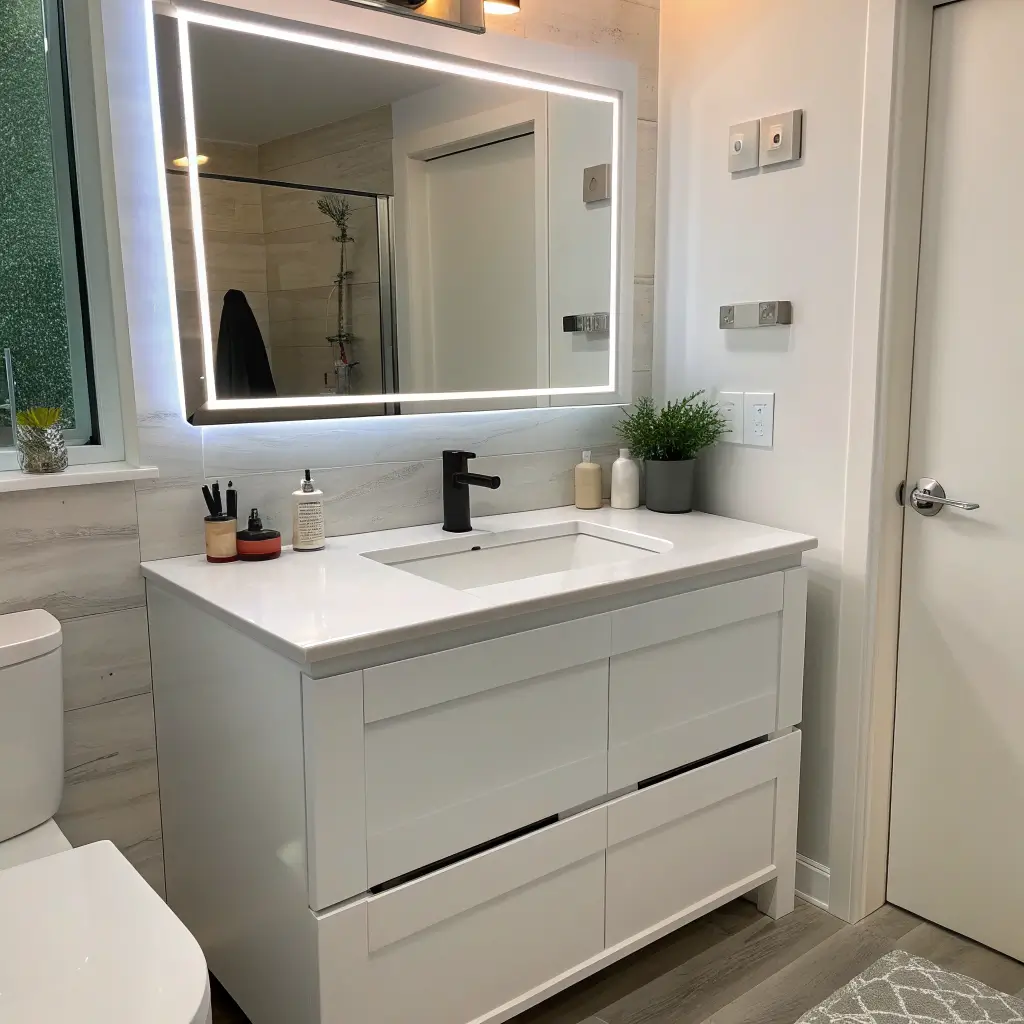
Why buy three separate pieces when one does everything? Vanities with built-in mirrors and lighting streamline small bathrooms by eliminating the need to coordinate separate fixtures.
These integrated units are particularly valuable in tiny bathrooms where every installation decision affects everything else. When the vanity, mirror, and lighting all come together, you eliminate compatibility headaches and often achieve a more cohesive look.
Lighting Options
Good bathroom lighting is non-negotiable for daily grooming tasks. Integrated options include:
- LED strips around the mirror perimeter for even, shadow-free illumination
- Sconce-style lights built into the mirror or cabinet sides
- Backlit mirrors that create ambient glow plus functional lighting
- Adjustable color temperature for different times of day (warm for relaxation, cool for makeup application)
Installation Simplification
Here’s a practical benefit: fewer separate installations mean fewer holes in walls and potentially lower labor costs if you’re hiring help. The electrical work is consolidated, and you’re not trying to center a mirror over a vanity that’s not quite where you expected it to be. Less room for error, less frustration overall.
14. Colorful Accent Vanity for Small Bathrooms

Whoever decided all bathroom vanities must be white, gray, or wood-toned was clearly lacking imagination. A colorful vanity becomes the focal point of your small bathroom, drawing attention to deliberate design choices rather than square footage limitations.
I painted my powder room vanity navy blue three years ago, and guests comment on it constantly. It transformed a forgettable space into a memorable one.
Choosing Your Color
Bold colors work better than you’d expect in small bathrooms because they create visual interest that distracts from size constraints.
Popular accent colors include:
- Deep blues and teals for a sophisticated, spa-like feel
- Forest or sage greens for organic, calming vibes
- Terracotta or rust for warmth and personality
- Black for dramatic contrast (surprisingly, doesn’t make rooms feel smaller if done right)
- Bright colors like yellow or coral for playful, energetic spaces
Balance Is Key
When your vanity is the colorful star, keep everything else relatively neutral. White or light gray walls, simple tile, minimal accessories. This lets the vanity shine without creating visual chaos. Too many colors in a small space can feel overwhelming—learned that lesson the hard way in my first apartment. :/
15. DIY Reclaimed Wood Vanity

For the hands-on types: building your own reclaimed wood vanity lets you create something perfectly sized for your space while adding unique character that mass-produced furniture can’t match.
I built one from old barn wood two years ago, and the imperfections—the nail holes, the weathered gray patches, the slightly uneven edges—make it my favorite thing in the house.
Getting Started
Reclaimed wood sources include:
- Architectural salvage stores
- Old barn and building demolitions
- Pallet wood (be careful—some pallets are treated with chemicals)
- Online marketplaces from sellers dismantling old structures
- Your own property’s outbuildings or fences
Construction Basics
You don’t need to be a master carpenter, but you do need basic skills and tools.
Essential steps include:
- Designing your vanity based on actual bathroom measurements
- Preparing the wood by cleaning, removing nails, and lightly sanding
- Building a sturdy frame that can support sink weight
- Creating the top and cutting for sink and plumbing
- Sealing everything with water-resistant finish
- Installing plumbing (consider hiring a professional for this part)
Realistic Time Investment
A DIY reclaimed wood vanity is a weekend project at minimum, more likely spanning a few weeks if you’re fitting it around work and life. Don’t rush it—proper sealing and curing times matter for longevity in a wet environment. But the satisfaction of using something you built with your own hands? Absolutely worth the effort.
Smart Layout Tips for Any Small Bathroom Vanity
Regardless of which vanity style speaks to you, certain layout principles apply universally.
Consider traffic flow: You need clear paths to the toilet, shower, and door. A beautiful vanity means nothing if you’re constantly bumping into it.
Maximize vertical space: Whatever floor space your vanity doesn’t take up, look above and beside it for additional storage opportunities.
Mind the door swing: Both the bathroom entry door and any cabinet doors need room to open. Measure clearances before purchasing.
Think about lighting: Your vanity should have good lighting for grooming tasks. Factor this into your layout planning early.
Final Thoughts
Small bathrooms don’t have to feel like punishment. With the right vanity choice and smart layout thinking, you can create a space that functions beautifully and actually looks like somewhere you want to spend time.
Whether you’re drawn to the airy feel of a floating vanity, the clever use of corner space, the luxury of marble, or the satisfaction of a DIY project, there’s a perfect option for your bathroom and your lifestyle.
My biggest piece of advice? Don’t just think about how a vanity looks in photos—think about how you’ll actually use it every single day. Storage needs, cleaning habits, counter space requirements, and personal style all matter. The best vanity is one that makes your daily routine easier while making you smile when you walk into the room.
Now go transform that tiny bathroom into something you’re actually proud of. Your mornings will thank you.