
15 Aesthetic 70s Interior Design Bedroom Ideas with Retro Flair
Picture this: you walk into a bedroom that immediately wraps you in warmth, nostalgia, and undeniable style. The colors are rich, the textures are inviting, and everything just feels right. That’s the magic of 70s interior design, and honestly? It’s making one heck of a comeback.
I’ve been obsessed with retro aesthetics for years now. There’s something about that era—the boldness, the earthiness, the unapologetic embrace of pattern and texture—that modern minimalism just can’t replicate. And let me tell you, transforming my own bedroom into a 70s-inspired sanctuary was one of the best design decisions I’ve ever made. Waking up in a space that feels like a groovy time capsule? Absolutely priceless.
So whether you’re ready to go full-on disco fever or just want to sprinkle some retro charm into your existing setup, I’ve got fifteen killer ideas that’ll help you nail that authentic 70s bedroom vibe. Let’s get into it!
1. Sunken 70s Conversation Bedroom
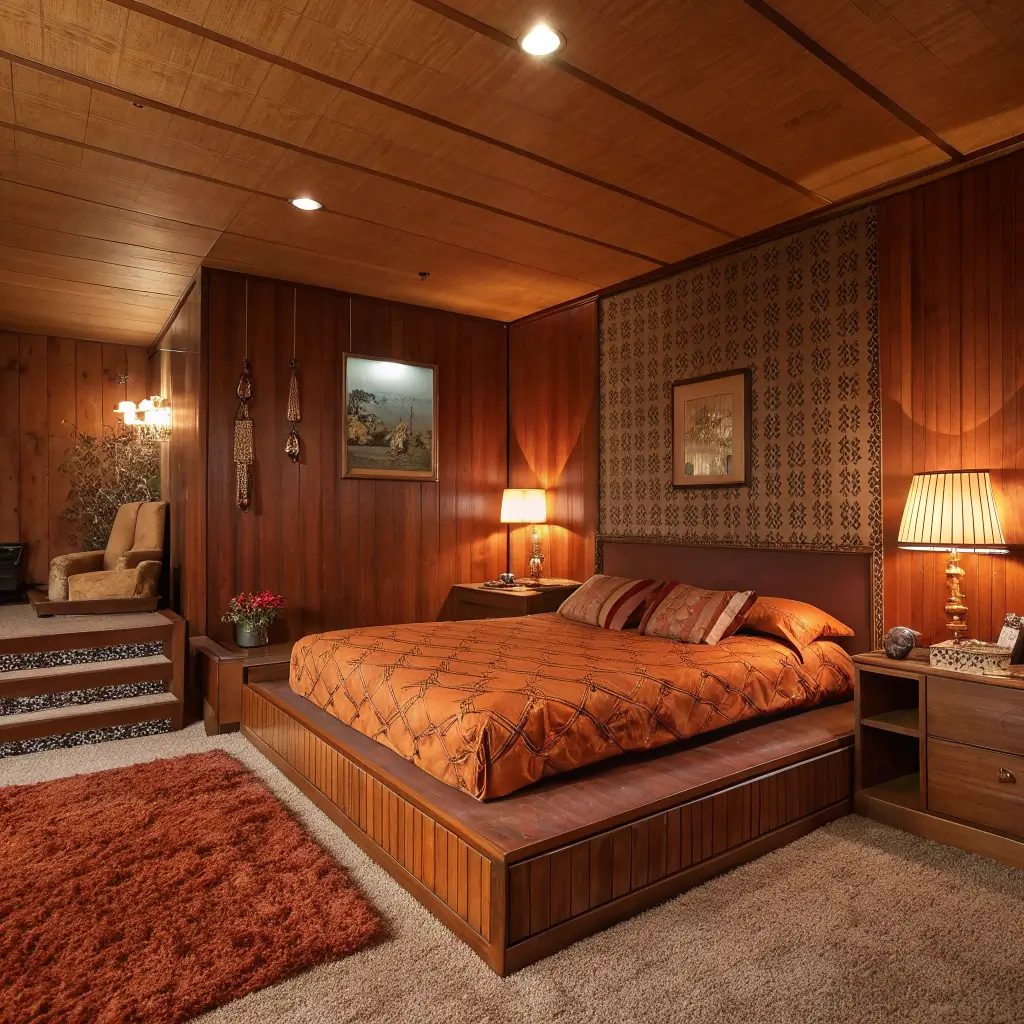
Remember those sunken living rooms from old movies that made everything look impossibly chic? Well, who says you can’t bring that concept into your bedroom?
A sunken conversation bedroom creates an intimate, cozy atmosphere that screams vintage luxury. The idea revolves around creating a lowered central area—typically where your bed sits—that naturally draws people in and encourages relaxation.
How to Achieve This Look
Now, I know what you’re thinking: “I can’t exactly excavate my floor.” Fair point. But here’s the thing—you can absolutely fake this effect without any construction work.
Key elements to consider:
- Platform staging around your bed creates the illusion of a sunken center
- Step-down visual effects using different flooring materials or area rugs
- Low-profile furniture throughout the space enhances the sunken aesthetic
- Plush floor cushions arranged around the bed area for that conversation pit vibe
The trick lies in playing with levels and perception. I’ve seen people use thick area rugs with raised platform borders to simulate that recessed feeling. Throw in some oversized floor pillows in burnt orange or avocado green, and you’ve basically transported yourself to 1973.
Making It Modern
The beauty of this concept? You can update it for contemporary living. Think clean lines for your platform elements while keeping the cozy, gathered feeling of the original sunken spaces. Add some pendant lighting that hangs low over the “pit” area, and you’ve created something truly special.
2. Earth-Tone Retro Bedroom Palette
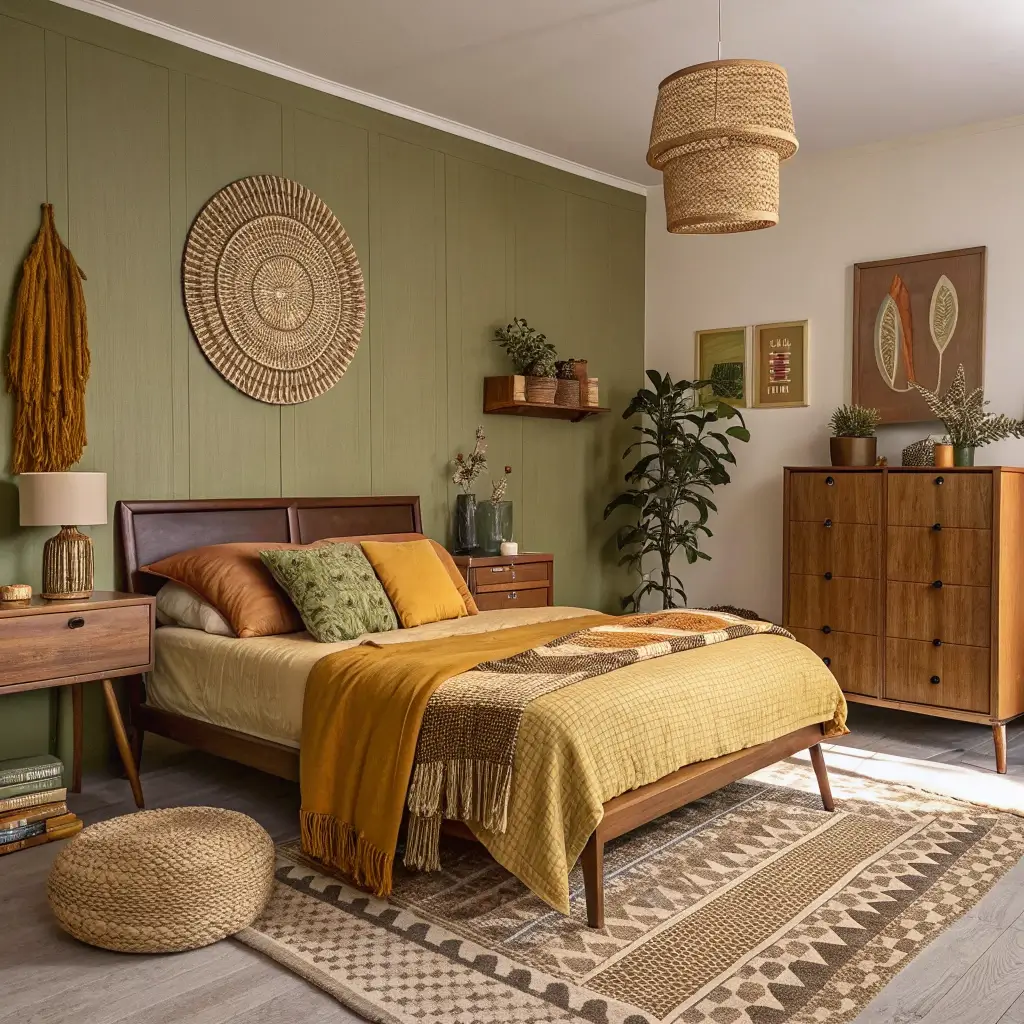
If there’s one thing the 70s absolutely nailed, it’s color palette. Forget the sterile grays and whites that dominated the 2010s—we’re talking rich, grounding earth tones that make a room feel alive.
Think terracotta, olive green, warm browns, rusty reds, and golden yellows. These colors don’t just look good together; they actually affect how you feel in a space. There’s a reason why earth tones create such a calming atmosphere—they connect us to nature.
Building Your Palette
When I redesigned my bedroom, I started with a base of warm cream walls and layered from there. Here’s a palette breakdown that works beautifully:
Primary colors:
- Warm brown (think chocolate or coffee tones)
- Terracotta or rust
- Cream or warm white
Accent colors:
- Mustard yellow
- Olive or sage green
- Burnt orange
Metallics:
- Brass and gold (never chrome—that’s too 80s)
The key? Balance. You don’t want to overwhelm the space with too many competing colors. Pick one or two dominant tones and use the others as accents in textiles, artwork, and accessories.
Practical Application
Start with your largest pieces—walls, bedding, and major furniture—in your base colors. Then introduce accents through throw pillows, curtains, artwork, and decorative objects. This layered approach prevents the space from feeling flat while maintaining that cohesive 70s warmth.
3. Wood-Paneled 70s Bedroom Walls
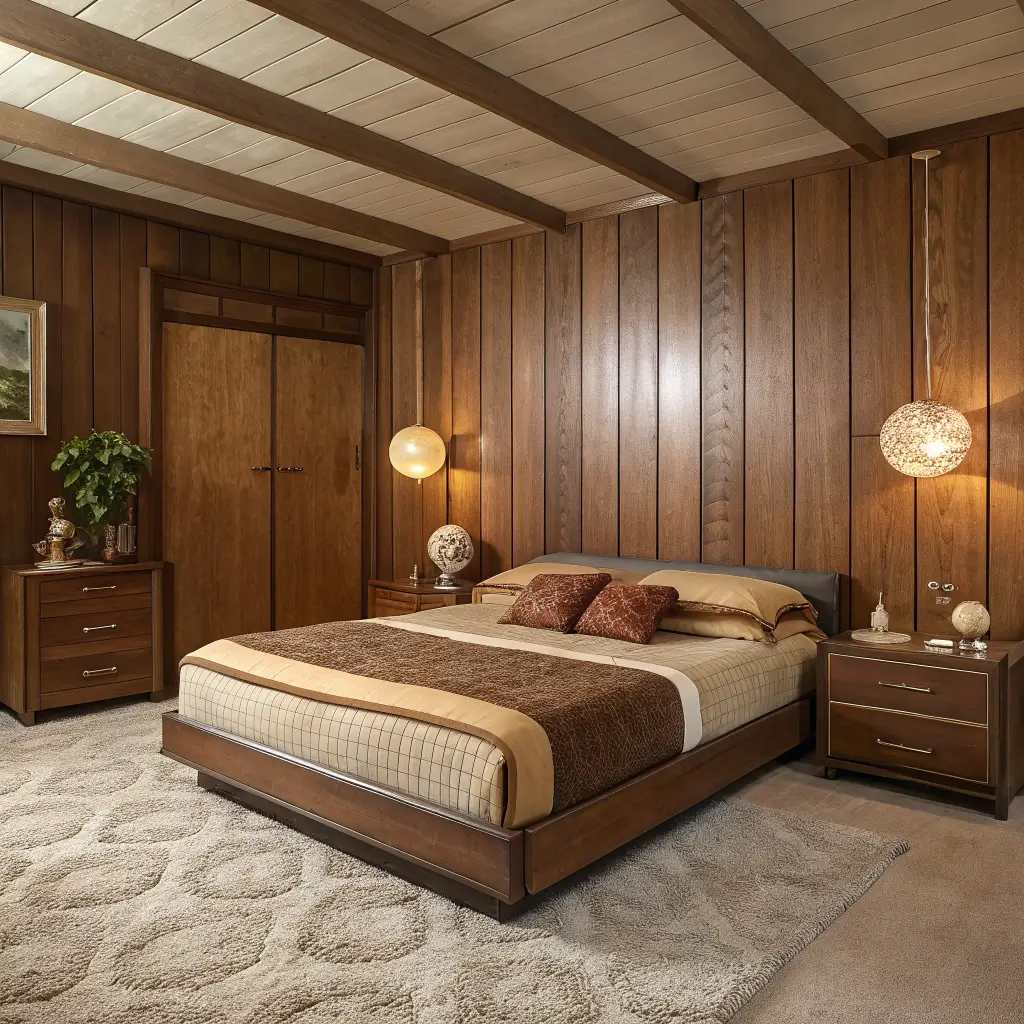
Oh, wood paneling. It went from “dated eyesore” to “highly coveted design element” faster than you can say “mid-century revival.” And honestly? I’m here for it.
Wood-paneled walls add instant warmth, texture, and character to any bedroom. They create a cabin-like coziness that’s perfect for sleeping spaces.
Types of Wood Paneling to Consider
Not all wood paneling screams 70s in a good way—some definitely leans more “grandma’s basement.” Here’s what to look for:
- Vertical slat paneling (clean lines, very on-trend)
- Natural walnut tones (rich and sophisticated)
- Light oak or pine (for a more bohemian, natural feel)
- Reclaimed wood (adds character and sustainability points)
I’d personally avoid the super dark, almost black paneling that can make spaces feel like caves. Unless you have amazing natural light, stick to medium tones that reflect some brightness back into the room.
Modern Interpretations
Here’s a pro tip: you don’t need to cover every wall. A single accent wall behind your bed creates major impact without overwhelming the space. This approach works especially well in smaller rooms where full paneling might feel claustrophobic.
Pair your wood walls with soft textiles in complementary earth tones, and you’ve created a bedroom that feels both retro and refreshingly current.
4. Mustard & Burnt Orange 70s Bedroom
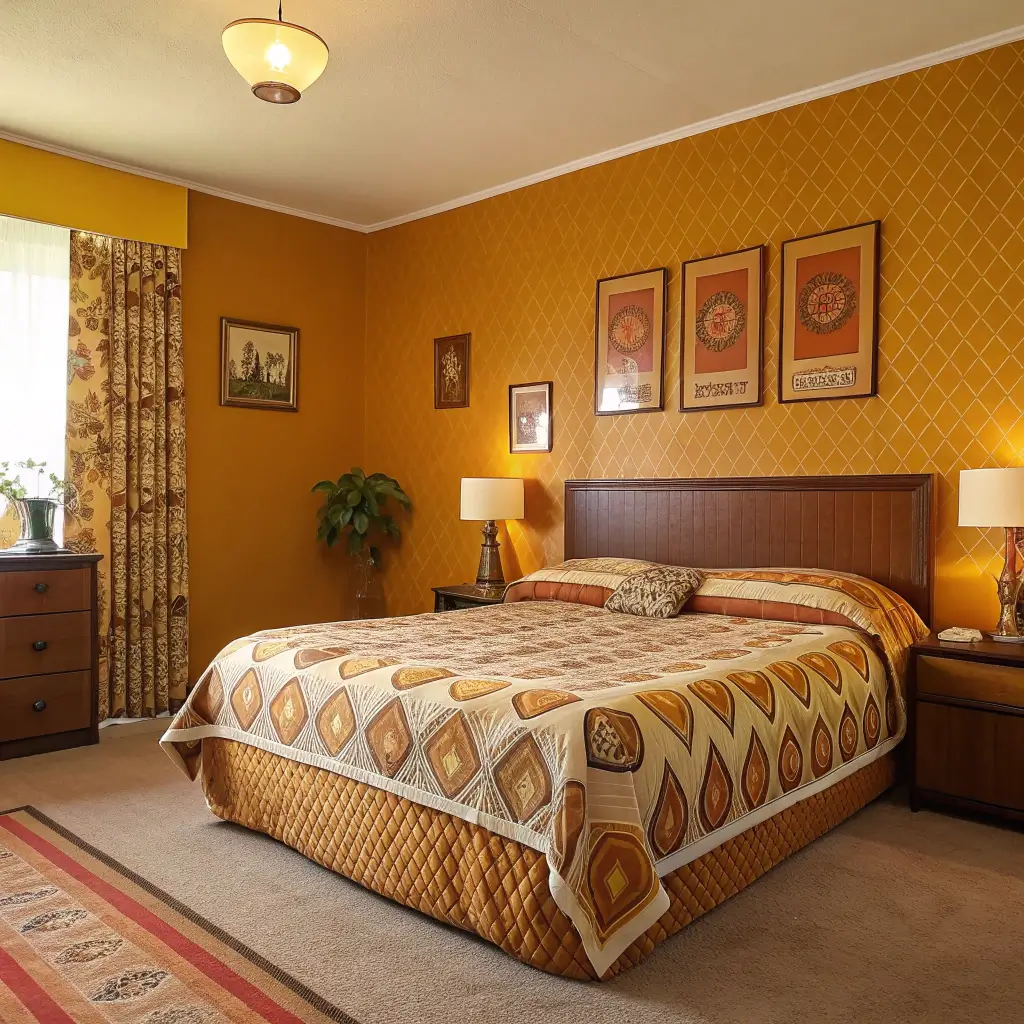
Can we just take a moment to appreciate the absolute audacity of 70s color choices? While we’ve been playing it safe with neutrals for years, our parents and grandparents were out here living their best lives surrounded by mustard yellow and burnt orange.
These colors together are basically the 70s in a nutshell. They’re warm, they’re bold, and they make a statement without being overwhelming.
Balancing Bold Colors
The secret to pulling off this color combo without your bedroom looking like a fast-food restaurant? Proportions and neutrals.
Here’s how I’d approach it:
- Use burnt orange as your statement color (think bedding, curtains, or an accent wall)
- Incorporate mustard as secondary accents (throw pillows, artwork, a chair)
- Ground everything with warm neutrals (cream, tan, warm gray)
- Add natural wood tones to break up the color blocks
Ever wondered why some rooms with bold colors feel sophisticated while others feel chaotic? It’s all about intentional placement and breathing room. Don’t let your bold colors touch each other directly—separate them with neutral zones.
Texture Matters
When working with such strong colors, texture becomes your best friend. A mustard velvet pillow reads completely differently than a mustard cotton one. Mix textures like velvet, bouclé, linen, and wool to add depth and prevent the space from feeling flat or cartoonish.
5. Vintage Rattan 70s Bedroom Style
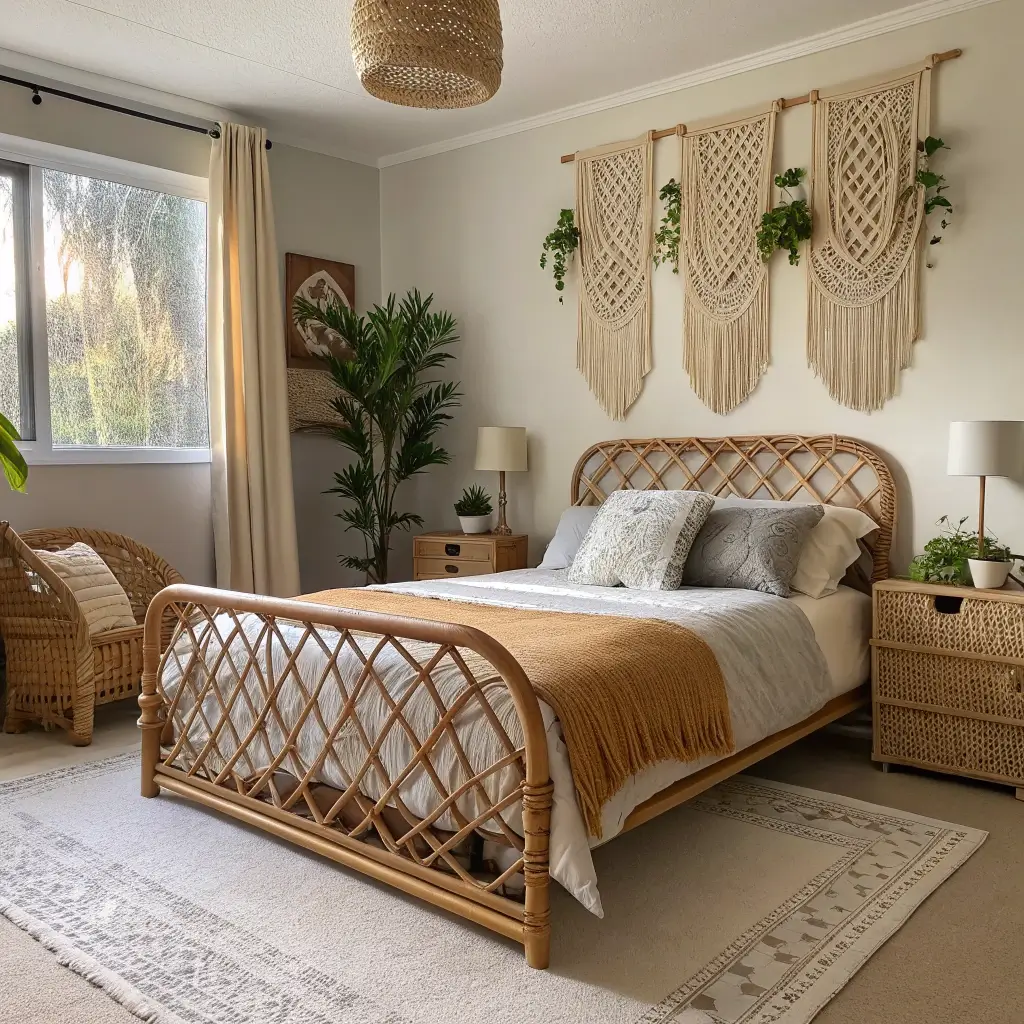
Rattan furniture hit peak popularity in the 70s, and honestly, it deserved every bit of that hype. There’s something about natural rattan and wicker pieces that immediately makes a space feel relaxed and inviting.
The texture, the organic shapes, the way it catches light—rattan brings life to a bedroom in ways that solid furniture just can’t match.
Key Rattan Pieces to Consider
If you’re going for this aesthetic, here are the pieces that’ll give you the most bang for your buck:
- Rattan headboard (instant 70s vibes, statement-making)
- Peacock chair (the iconic throne of the era)
- Rattan mirror frames (adds texture without taking floor space)
- Hanging rattan pendant lights (functional and beautiful)
- Wicker storage baskets (practical and aesthetic)
I picked up a vintage rattan headboard at an estate sale last year, and it completely transformed my space. The natural material softens all the hard lines and adds that organic element that every bedroom needs.
Sourcing Authentic Pieces
Here’s the thing about rattan: vintage pieces are often better quality than modern reproductions. Check estate sales, thrift stores, Facebook Marketplace, and antique shops. The craftsmanship on older pieces tends to be superior, and they’ve got that authentic patina you just can’t fake.
FYI, if you’re buying new, look for hand-woven pieces from reputable manufacturers. The cheap stuff falls apart quickly and looks, well, cheap.
6. 70s Boho-Retro Bedroom Fusion
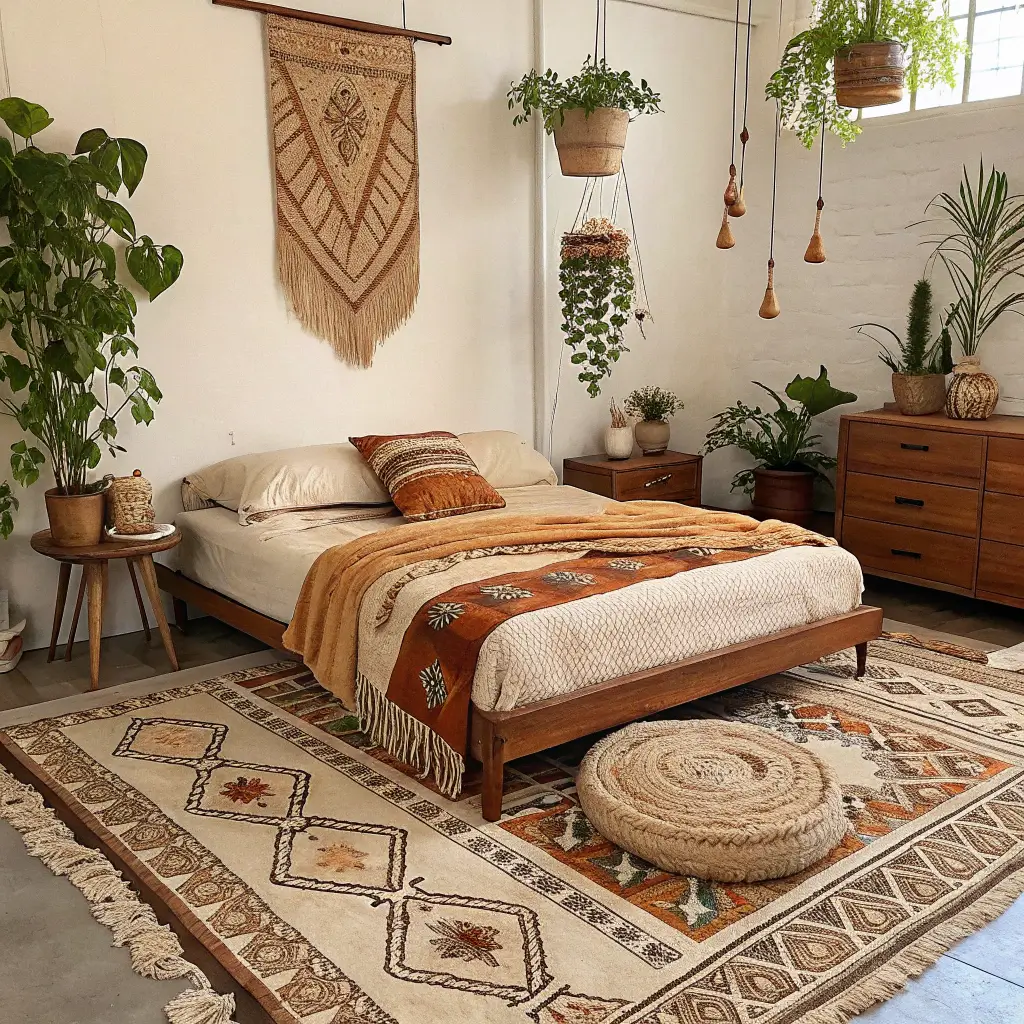
What happens when you combine the free-spirited bohemian aesthetic with authentic 70s design elements? Pure magic, that’s what.
The boho-retro fusion takes the best of both worlds: the eclectic, collected-over-time feel of bohemian style meets the bold colors and distinctive patterns of 70s design.
Creating the Fusion
This style works because both aesthetics share common DNA—they both embrace natural materials, warm colors, and a “more is more” approach to decorating. Here’s how to blend them:
From the 70s, borrow:
- Bold geometric patterns
- Earth tone color palettes
- Retro furniture silhouettes
- Macramé wall hangings
- Shag textures
From boho, incorporate:
- Layered textiles
- Global-inspired accents
- Plants, plants, and more plants
- Mixed patterns and prints
- Collected, curated accessories
The result? A bedroom that feels personal, warm, and effortlessly stylish. It looks like you’ve been collecting beautiful things for years—even if you just put it together last weekend.
Avoiding the Clutter Trap
One word of caution: both boho and 70s styles can lean cluttered if you’re not careful. Keep your larger pieces clean-lined and let the accessories do the talking. Your eye needs places to rest, so make sure you’ve got some visual breathing room between your statement pieces.
Also Read: 13 Chic Minimal Bedroom Interior Ideas with Natural Light
7. Psychedelic Pattern 70s Bedroom
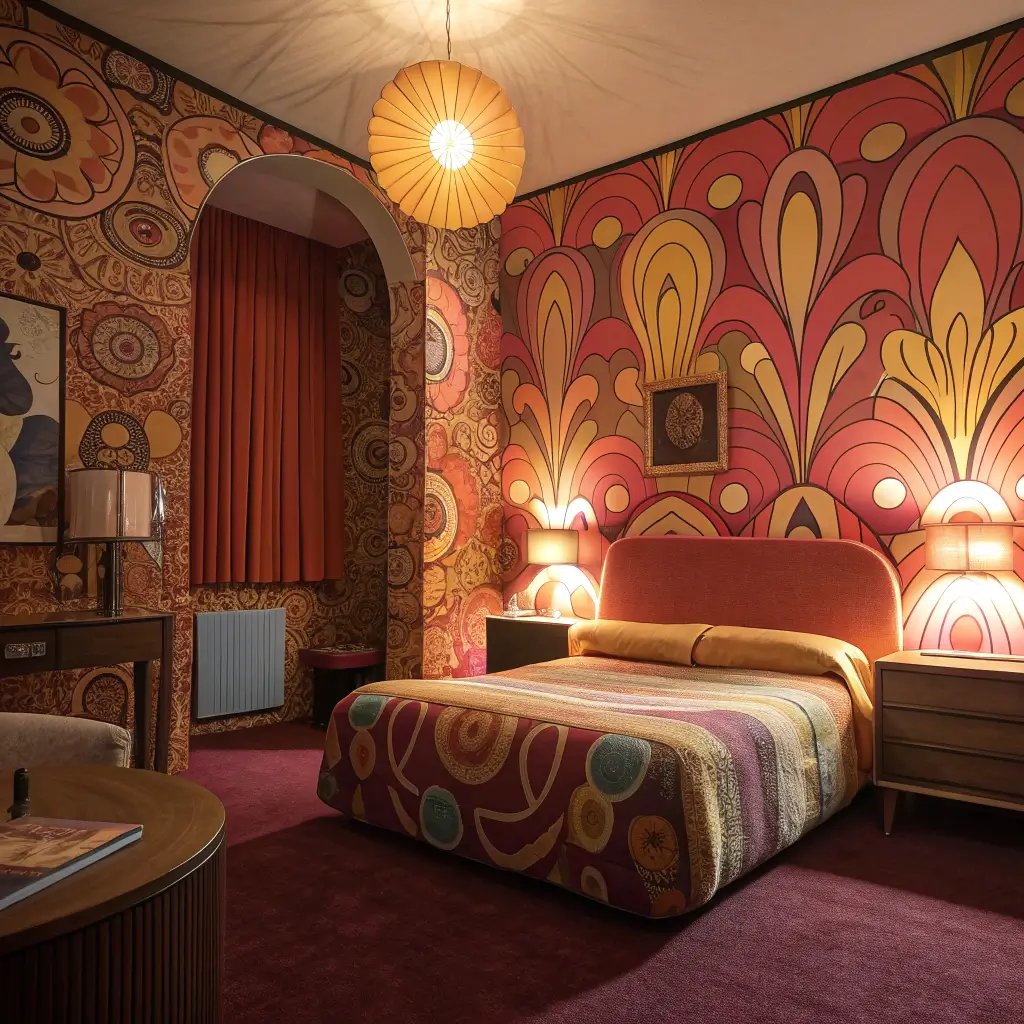
Ready to get a little wild? The psychedelic pattern bedroom isn’t for the faint of heart, but when done right, it’s absolutely show-stopping.
We’re talking bold geometric prints, swirling patterns, and color combinations that make a statement from across the room. This was the era of Verner Panton and his mind-bending interiors, after all.
Choosing Your Patterns
The key to psychedelic patterns that work lies in intentional repetition and scale variation. Here’s what I mean:
- Pick a cohesive color story (no more than 3-4 colors)
- Vary the scale of your patterns (one large-scale, one medium, one small)
- Repeat patterns in different applications (wallpaper pattern echoed in a smaller throw pillow)
- Balance busy with calm (patterned walls need simpler bedding)
I personally love using a bold geometric wallpaper on one wall and keeping everything else relatively subdued. It creates a focal point without making the room feel like a carnival funhouse.
Modern Takes on Psychedelic
Contemporary designers have reimagined psychedelic patterns in sophisticated ways. Look for:
- Gradient color patterns
- Op-art inspired geometrics
- Curved, flowing shapes
- Retro-modern hybrid prints
These updated versions capture the spirit of 70s psychedelia without feeling like a costume party.
8. Minimal Modern 70s Bedroom Revival
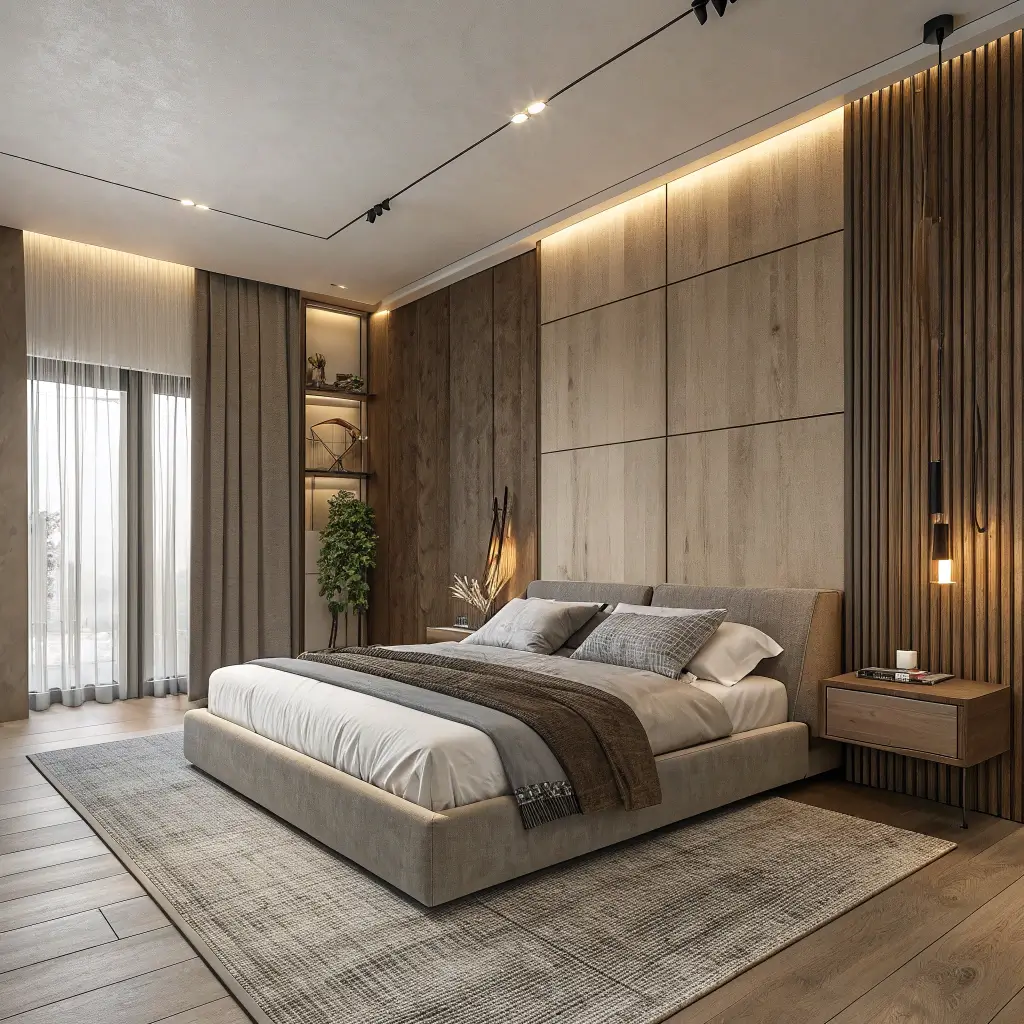
Wait, minimal and 70s in the same sentence? I know it sounds contradictory, but hear me out.
The minimal modern 70s revival takes the essence of 70s design—the warmth, the organic shapes, the quality materials—and strips away the excess. It’s 70s for people who appreciate the era but prefer a cleaner aesthetic.
Core Elements of This Approach
This style focuses on:
- Quality over quantity (fewer pieces, but each one matters)
- Warm minimalism (no cold, stark whites here)
- Iconic 70s furniture (statement pieces that speak for themselves)
- Natural materials (wood, leather, wool, linen)
- Earth tone palette (simplified to 2-3 colors)
Think a beautiful walnut bed frame, crisp white bedding, a single piece of 70s-inspired artwork, and warm wood floors. Every element earns its place.
Making It Work
The trick lies in choosing your 70s references carefully. Pick one or two unmistakably retro elements—maybe a curved headboard or a brass arc lamp—and let those pieces shine against a simplified backdrop.
This approach works especially well in smaller spaces where full-on 70s maximalism might overwhelm.
9. Dark Moody 70s Master Bedroom
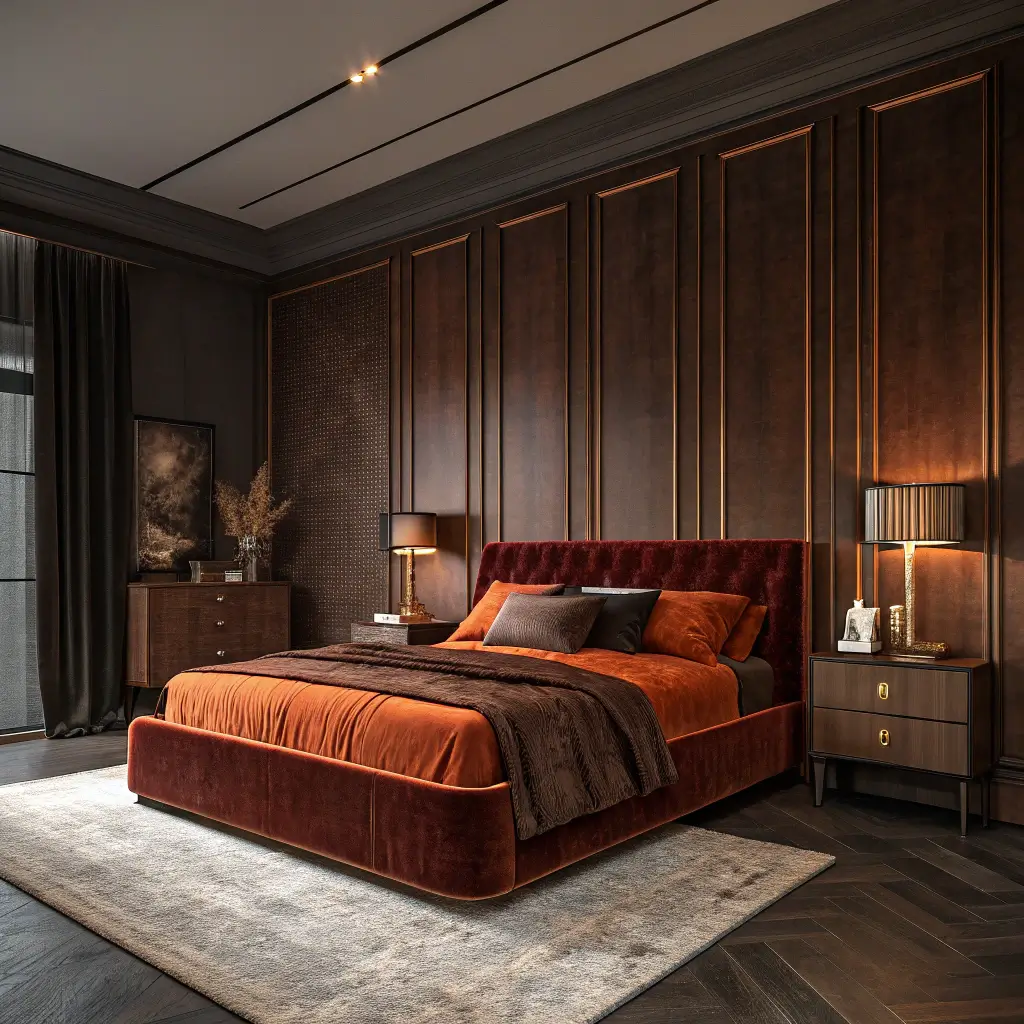
If you want drama, the dark moody 70s bedroom delivers in spades. We’re talking rich chocolate browns, deep forest greens, burnt umber, and touches of black creating a cocoon-like sanctuary.
This look challenges the “bedrooms should be light and airy” convention—and honestly? It works brilliantly.
Creating the Mood
Dark bedrooms work when you pay attention to depth and texture. A flat dark room feels depressing; a layered dark room feels luxurious.
Elements that make this work:
- Varying depths of dark colors (not just one flat shade)
- Rich textures (velvet, leather, thick wool)
- Warm metallic accents (brass, copper, gold)
- Strategic lighting (layered, dimmable, intentional)
- Natural elements (wood grains, plants, stone)
I’ve seen dark bedrooms that feel like sleeping in a hug—the walls wrap around you, the lighting creates intimacy, and the whole space just invites rest.
Lighting Considerations
Here’s where dark rooms either succeed or fail: lighting is everything. You need multiple light sources at different heights and intensities. Think:
- Ambient overhead lighting (dimmable, please)
- Task lighting for reading
- Accent lighting for atmosphere
- Warm bulbs only (2700K-3000K range)
Without proper lighting, a dark room becomes a cave. With it? Pure sophistication.
Also Read: 15 Trendy 1 Bedroom Condo Interior Design Ideas for Chic Spaces
10. Retro Floral 70s Bedroom Décor
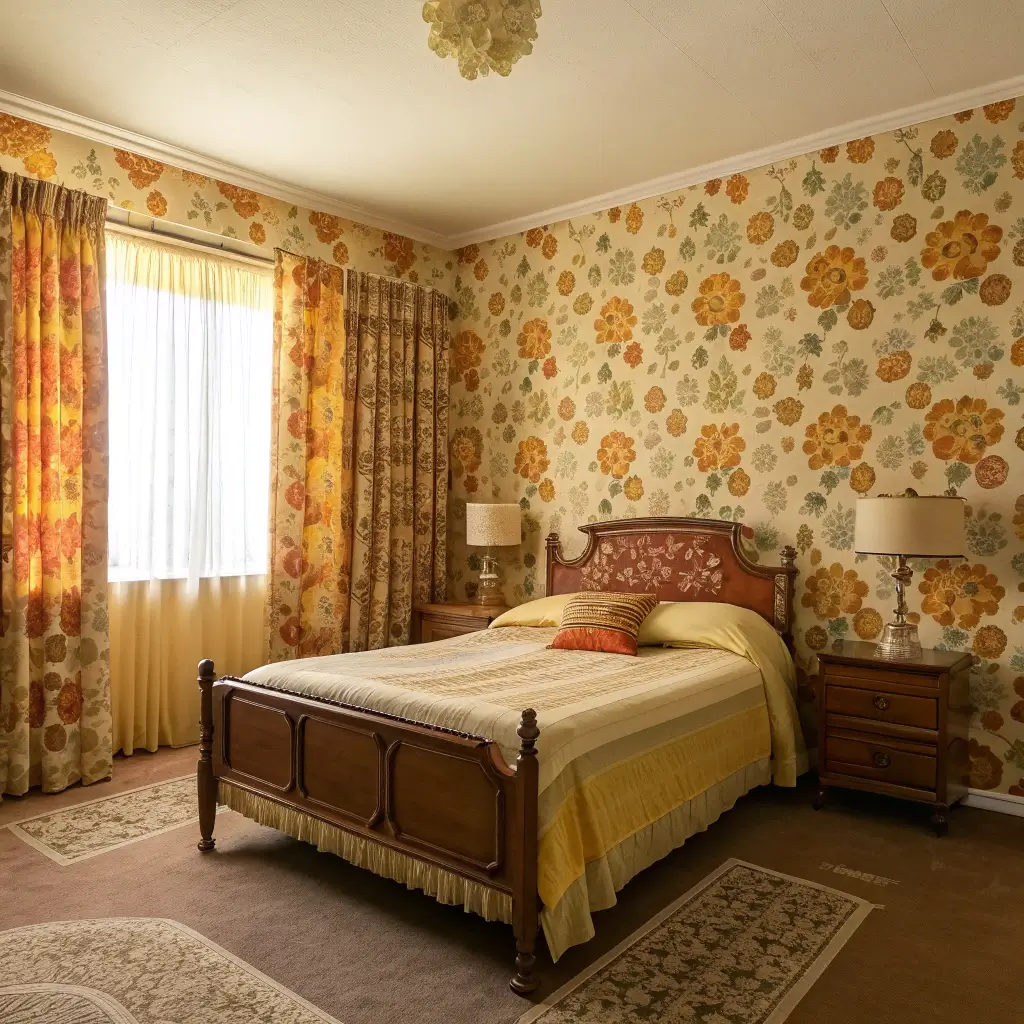
Florals in the 70s weren’t your grandmother’s delicate rose prints (okay, sometimes they were, but bear with me). The era embraced bold, stylized florals in unexpected colors that felt fresh and modern.
Think oversized blooms, graphic interpretations of flowers, and color palettes that ranged from earthy to psychedelic.
Incorporating Retro Florals
The best way to use retro florals today? Go big or go home with one element, then balance with solids.
Consider these applications:
- Statement floral wallpaper on an accent wall
- Vintage floral bedding as your focal point
- Floral upholstered headboard for subtle impact
- Framed vintage floral prints as artwork
- Floral curtains for a softer approach
I made the mistake once of mixing multiple floral patterns in one room. Don’t be like me. Pick your floral moment and let it breathe. 🙂
Finding Authentic Prints
Vintage fabric shops and Etsy are goldmines for authentic 70s floral patterns. You can find original textiles and have them made into pillow covers, framed art, or even upholstery. The authentic stuff has a quality and character that reproductions often lack.
11. Low-Profile Platform 70s Bed Setup

The low-profile platform bed might be the most defining furniture piece of 70s bedroom design. These beds sat close to the ground, often featured built-in nightstands, and completely changed how people thought about bedroom furniture.
Why Platform Beds Work
There’s something about sleeping closer to the ground that feels grounding and modern simultaneously. Platform beds:
- Make rooms feel larger (lower furniture = higher ceilings visually)
- Create a clean, uncluttered look (no dust ruffle drama)
- Often eliminate the need for a box spring (cost savings!)
- Pair perfectly with 70s aesthetics
IMO, a good platform bed is one of the best investments you can make for a retro-inspired bedroom.
Choosing Your Platform
When shopping for the right platform bed, consider:
- Wood type (walnut reads most 70s, oak works for lighter schemes)
- Profile height (8-14 inches is ideal for the low-slung look)
- Headboard style (curved options feel especially period-appropriate)
- Built-in features (floating nightstands, integrated lighting)
Look for quality construction—you want solid wood or at minimum, well-made engineered wood. This piece anchors your entire room.
12. Shag Rug Statement 70s Bedroom
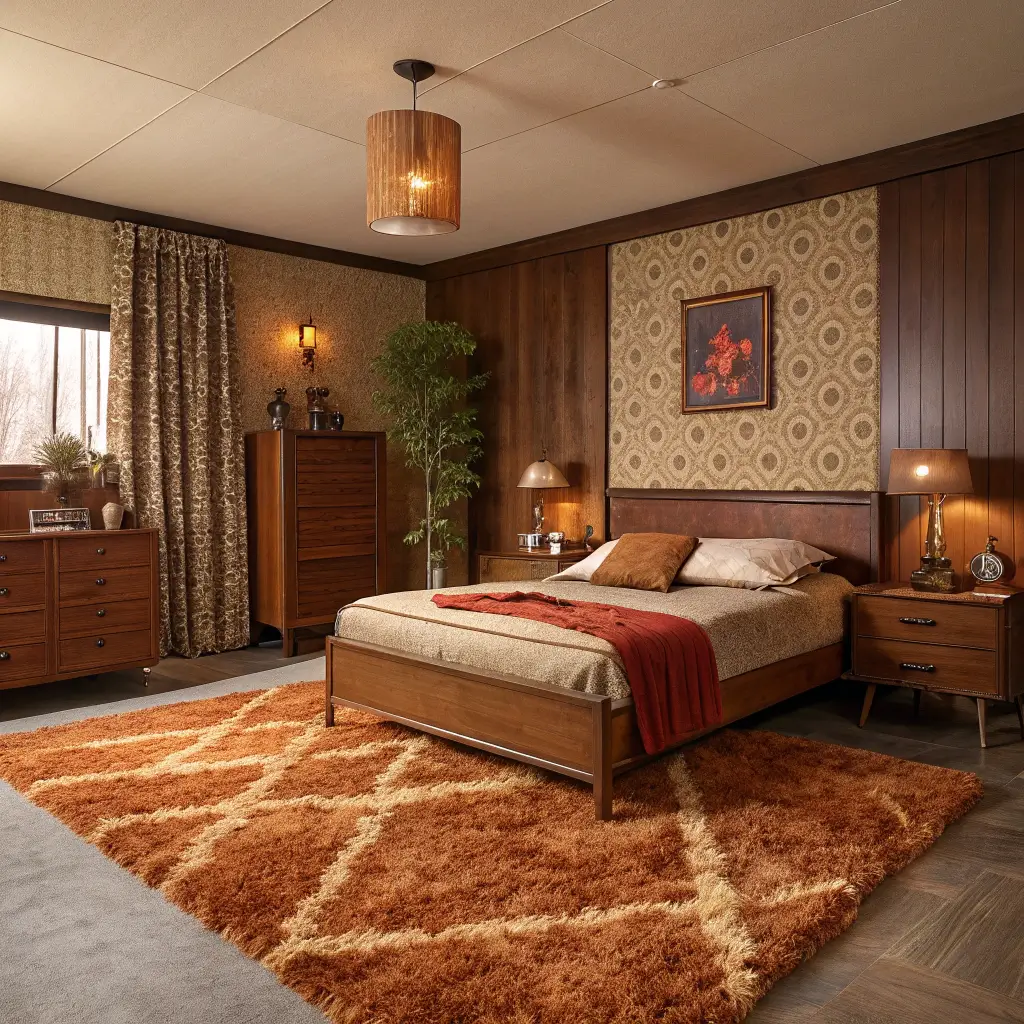
Nothing says 70s quite like sinking your feet into a luxurious shag rug. These high-pile beauties were everywhere in the era, and they’re making a well-deserved comeback.
Selecting the Right Shag
Not all shag is created equal. Here’s what to look for:
Pile height:
- Low shag (1-1.5 inches) for practical everyday use
- Medium shag (2-3 inches) for cozy bedrooms
- High shag (4+ inches) for maximum impact and impracticality
Materials:
- Wool (natural, durable, expensive)
- Synthetic (affordable, easy to clean, less luxurious)
- Blends (best of both worlds)
Colors:
- Earth tones for authentic 70s vibes
- Cream or ivory for a modern take
- Bold colors for statement pieces
I have a deep-pile shag in warm cream next to my bed, and I’m not exaggerating when I say it improved my mornings by approximately 47%.
Placement and Sizing
For bedrooms, place your shag:
- Beside the bed where your feet land
- Under the bottom two-thirds of the bed (extending out the sides)
- As a centered focal point in a seating area
Size up—a too-small rug looks awkward. When in doubt, go bigger.
Also Read: 12 Luxurious Masters Bedroom Interior Design Ideas for Homes
13. Brass & Globe Light 70s Bedroom

Brass fixtures and globe lights define 70s lighting design. The warm glow of brass combined with the soft diffusion of globe shades creates an atmosphere that’s impossible to replicate with modern finishes.
Embracing Brass
Brass went out of fashion for a while (thanks, 90s chrome obsession), but it’s back and better than ever. In a 70s-inspired bedroom, use brass for:
- Light fixtures (ceiling, wall, and table)
- Hardware (drawer pulls, door handles)
- Accessories (frames, trays, plant stands)
- Furniture accents (table legs, bed frames)
The key? Consistency without matchy-matchy. Your brass elements should feel collected, not bought as a set.
Globe Light Options
Globe lights come in various forms:
- Pendant globes (hanging spheres in various sizes)
- Wall-mounted globes (perfect for bedside lighting)
- Table lamps with globe shades (classic and functional)
- Sputnik-style multi-globe fixtures (major statement pieces)
Look for opal glass for the most authentic vintage feel—it diffuses light beautifully and glows warmly when lit.
14. Apartment-Friendly 70s Bedroom Ideas
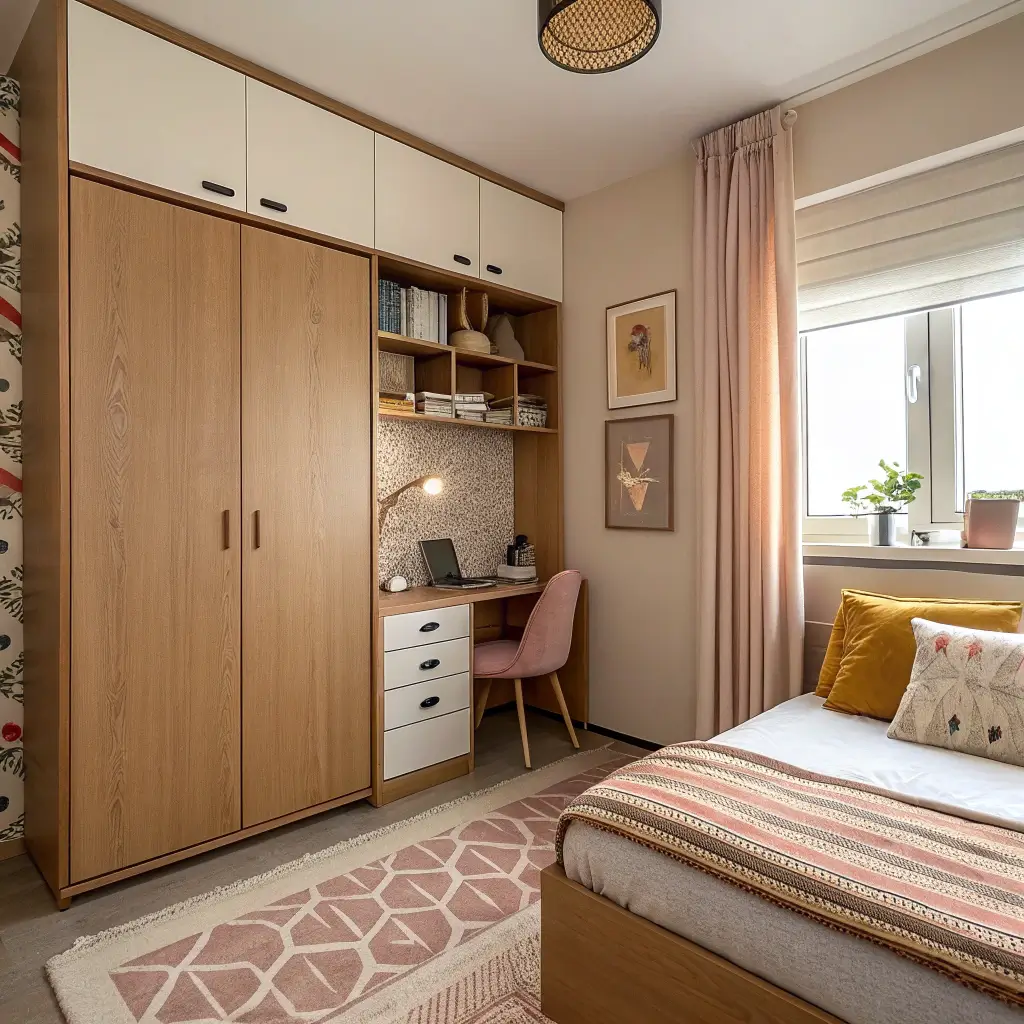
Living in a rental or small space doesn’t mean you can’t embrace 70s style. You just need to be strategic about temporary, high-impact changes.
Renter-Friendly Approaches
Here’s how to get the look without losing your security deposit:
Walls:
- Removable wallpaper (the technology has improved dramatically)
- Large-scale artwork or tapestries
- Leaning mirrors with vintage frames
- Temporary wood slat accent walls
Textiles:
- 70s-inspired bedding sets
- Vintage or vintage-style curtains
- Layered rugs in earth tones
- Throw pillows galore
Furniture:
- Thrifted vintage pieces (they move with you!)
- Rattan accents
- Brass table lamps
- Platform beds (easy to assemble/disassemble)
Accessories:
- Macramé plant hangers
- Vintage pottery
- Retro clocks
- Plants in 70s-style planters
Small Space Solutions
For compact bedrooms:
- Stick to a simplified 70s palette (fewer colors feel less chaotic)
- Choose one statement piece and keep the rest simple
- Use mirrors to enhance light and space
- Go vertical with plants and wall décor
You can absolutely nail the 70s vibe in a 10×10 bedroom—it just requires editing.
15. Warm Brown Monochrome 70s Bedroom
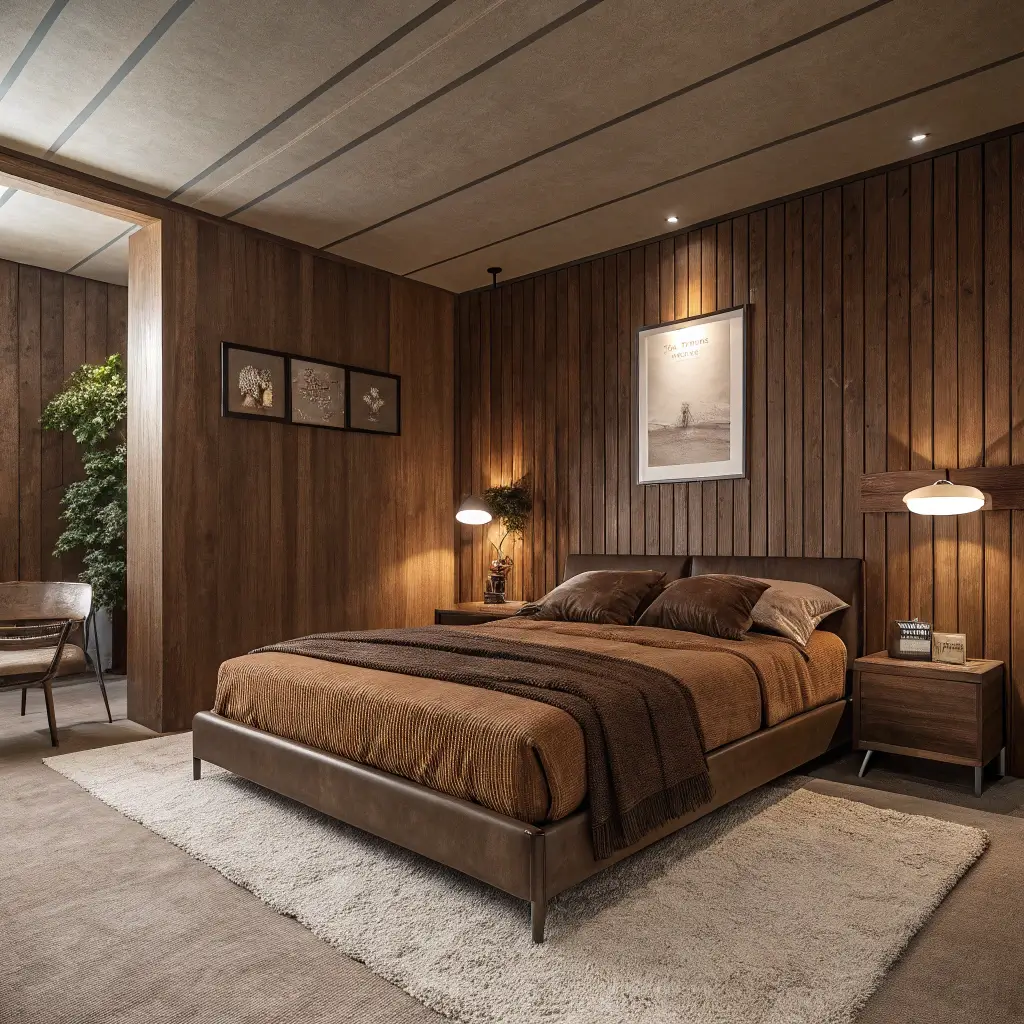
There’s something incredibly sophisticated about a warm brown monochrome bedroom. By working within a single color family, you create a cohesive, enveloping space that feels intentional and luxurious.
Building Your Brown Palette
Monochrome doesn’t mean boring—it means varied tones, textures, and depths of one color family.
For warm browns, consider:
- Light tones: Tan, camel, sand, warm beige
- Medium tones: Caramel, toffee, saddle brown
- Dark tones: Chocolate, espresso, walnut
- Accent neutrals: Cream, warm white, black
Layer these throughout your room, varying the depth from piece to piece. Light walls with darker furniture, or dark walls with lighter textiles—the contrast creates visual interest.
Adding Dimension
In a monochrome space, texture becomes your best friend:
- Leather adds richness
- Wool adds coziness
- Linen adds lightness
- Velvet adds luxury
- Wood adds organic variation
Mix at least four different textures to prevent the space from feeling flat. And don’t forget about sheen variation—matte, satin, and subtle shine all play differently in the same color.
Making It Your Own
Here’s the thing about 70s interior design that I love most: it wasn’t about following strict rules. The era celebrated personal expression, warmth, and comfort above all else.
So while these fifteen ideas give you a solid foundation, don’t be afraid to mix, match, and make them your own. Maybe you love the idea of wood paneling but want psychedelic bedding. Perhaps you’re drawn to the dark moody aesthetic but want to incorporate pops of mustard yellow.
That’s the beauty of design—there are no rules you can’t break if you do it intentionally.
What I’ve learned from years of playing with retro aesthetics is this: the best rooms feel personal. They tell a story about who lives there. They don’t look like they were pulled straight from a catalog or a Pinterest board.
So take these ideas as starting points. Visit thrift stores, estate sales, and vintage shops. Look for pieces that speak to you, even if they don’t fit perfectly into a prescribed style. The 70s were all about self-expression, after all.
Now go create a bedroom that makes you feel something when you walk through the door. One that’s warm, welcoming, and unapologetically retro. One that makes your friends say, “Wow, this is so you.”
Because that’s the ultimate goal of any interior design project—creating a space that feels like home. And if that home happens to look like it was decorated by someone with really great taste in 1975? Well, that’s just a bonus. 🙂