
15 Cozy 70s Bedroom Aesthetic Ideas for Retro Vibes
So, you’ve caught the vintage bug, huh? Welcome to the club! There’s something absolutely magical about the 1970s aesthetic that keeps pulling us back like a moth to a lava lamp. Maybe it’s the warm, earthy tones that make you feel like you’re wrapped in a giant hug.
Or perhaps it’s the bold patterns that scream personality without saying a word. Whatever your reason, transforming your bedroom into a 70s sanctuary is one of the best design decisions you’ll ever make.
I stumbled into my own 70s obsession about three years ago when I inherited my grandmother’s mustard yellow velvet chair.
That single piece completely changed how I viewed my bedroom, and before I knew it, I was hunting for macramé wall hangings and vintage record players like my life depended on it. Trust me, once you start, there’s no going back—and honestly, why would you want to?
Let me walk you through 15 incredible ways to bring those groovy, nostalgic vibes into your sleeping space. Whether you’re going full retro or just sprinkling in some vintage touches, I’ve got you covered with ideas that actually work in real life, not just on Pinterest boards.
1. Cozy 70s Boho Bedroom Vibes
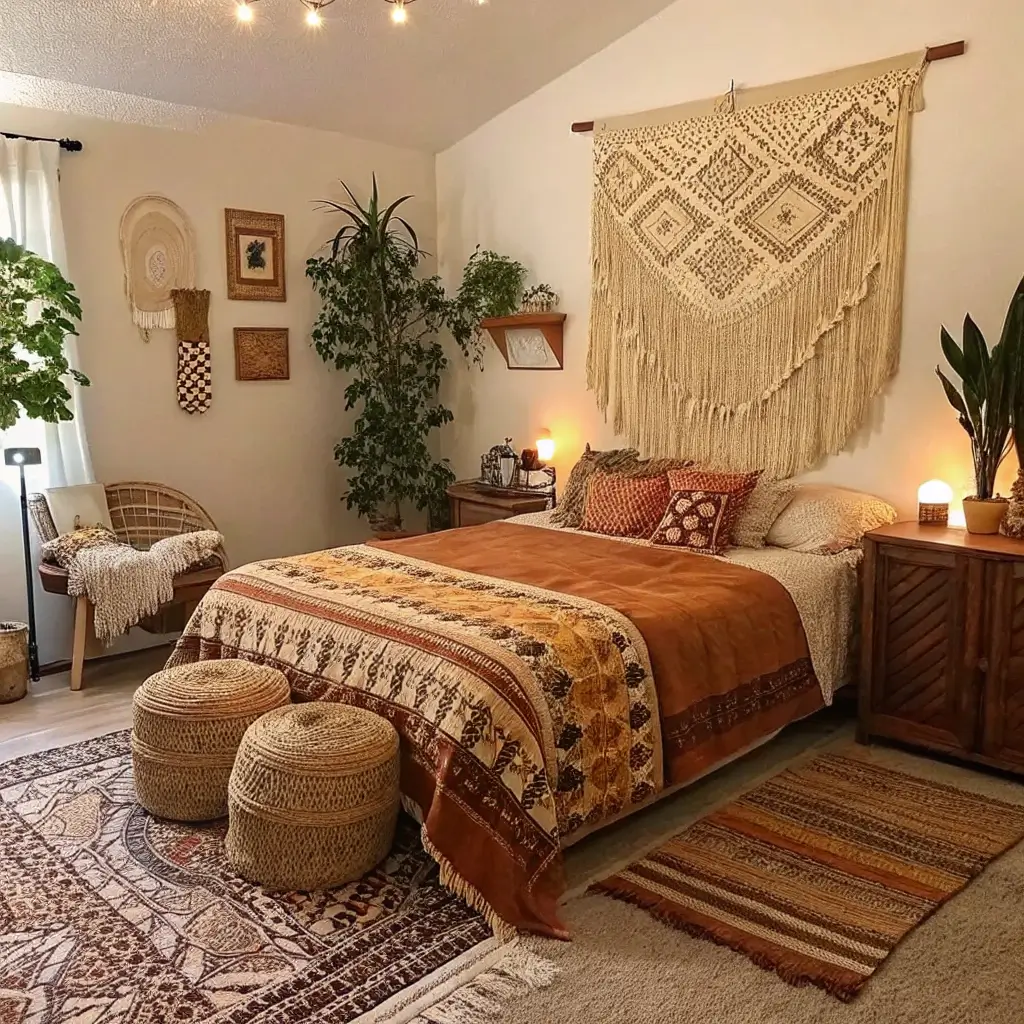
Let’s kick things off with the quintessential 70s look that never goes out of style. The boho bedroom aesthetic from this era is all about creating a space that feels collected, layered, and effortlessly cool. Think of it as organized chaos that somehow works perfectly together.
The foundation of a great 70s boho bedroom starts with textiles. I’m talking about chunky knit throws, woven blankets, and pillows in every shape and size imaginable. Layer them on your bed until it looks like a cloud made of texture and warmth. Don’t be shy—more is more in this case.
Key Elements to Incorporate
Here’s what you’ll need to nail this look:
- Macramé everything: Wall hangings, plant hangers, even curtains
- Rattan and wicker furniture: Headboards, chairs, or storage baskets
- Indoor plants galore: The more greenery, the better
- Low-level seating: Floor cushions and poufs for that relaxed vibe
- Natural materials: Jute rugs, wooden accents, and ceramic pottery
The color palette should lean toward warm neutrals with pops of terracotta, burnt orange, and sage green. Ever noticed how these colors just make you want to curl up with a good book? That’s the magic of 70s boho—it’s designed for comfort first, aesthetics second.
One thing I learned the hard way: don’t buy everything at once. The beauty of boho style comes from pieces that look like you’ve collected them over time. Mix vintage finds with new items, and your space will feel authentic rather than like you bought a “boho bedroom kit” from some catalog.
2. Retro Disco Bedroom Makeover
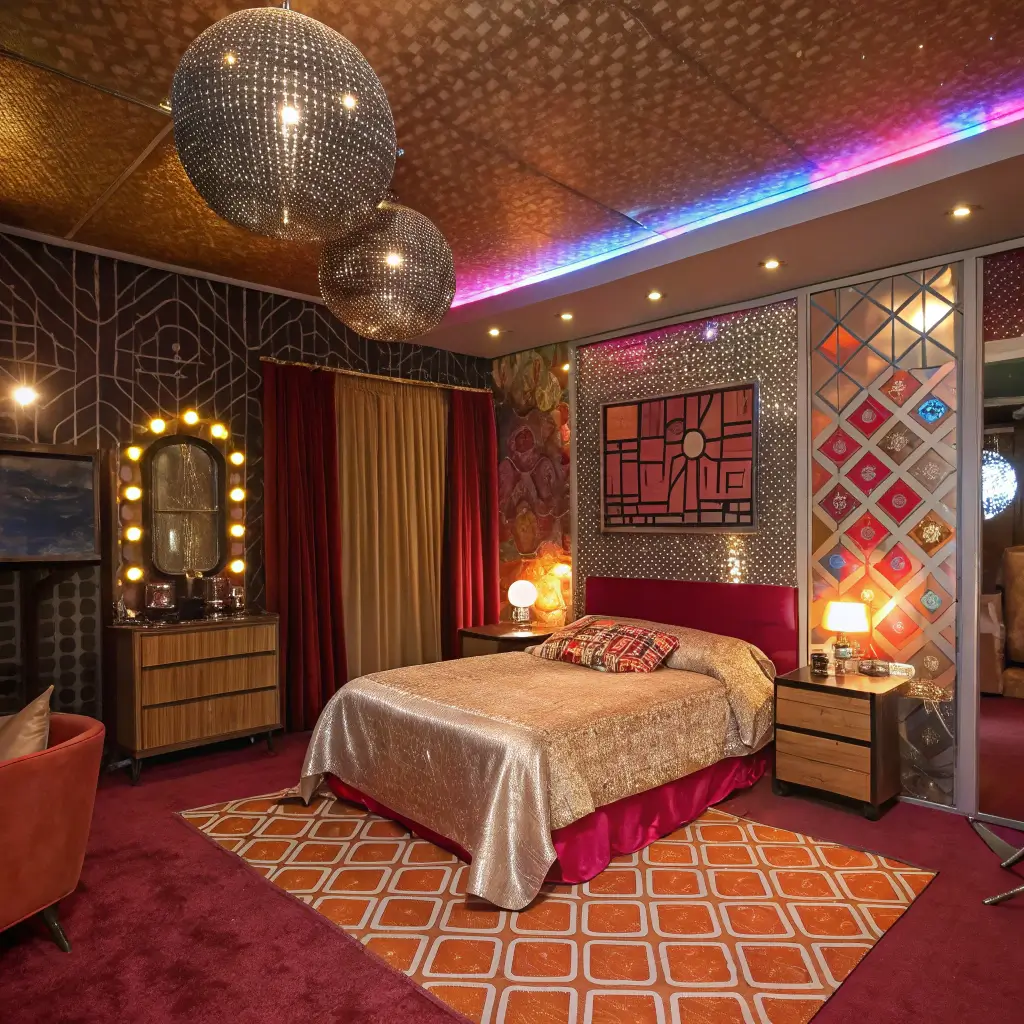
Okay, this one’s for my bold friends who aren’t afraid to make a statement. The disco era of the 70s brought us glitz, glamour, and unapologetic maximalism. If the boho vibe is a warm hug, the disco aesthetic is a high-five at a party where everyone’s having the time of their lives.
The key to pulling off a disco-inspired bedroom without it looking like a nightclub? Balance and intentionality. You want to capture the energy and sparkle without overwhelming the space.
Disco Elements That Actually Work
Start with a statement mirror—and I mean statement. Oversized, geometric, or even a vintage mirrored wall panel can instantly transport your room to Studio 54. Mirrored furniture pieces also work wonders here, catching light and creating that signature disco shimmer.
Metallics are your best friend in this makeover. Consider:
- Gold or chrome accent pieces: Lamps, frames, or drawer pulls
- Velvet in jewel tones: Think emerald green, sapphire blue, or deep purple
- Shag rugs: Preferably in white or cream to keep things grounded
- Geometric patterns: On bedding, curtains, or accent walls
Lighting is absolutely crucial for this aesthetic. Invest in a dimmer switch (seriously, it’s a game-changer) and layer your lighting with table lamps, floor lamps, and maybe even some LED strips hidden behind furniture. The goal is to create a moody, atmospheric glow that channels those late-night disco vibes.
IMO, the disco bedroom works best when you commit to it in one area—like a statement wall or a seating corner—rather than going full Saturday Night Fever on every surface. Your sleep quality will thank you for showing some restraint.
3. Minimalist 70s Inspired Bedroom
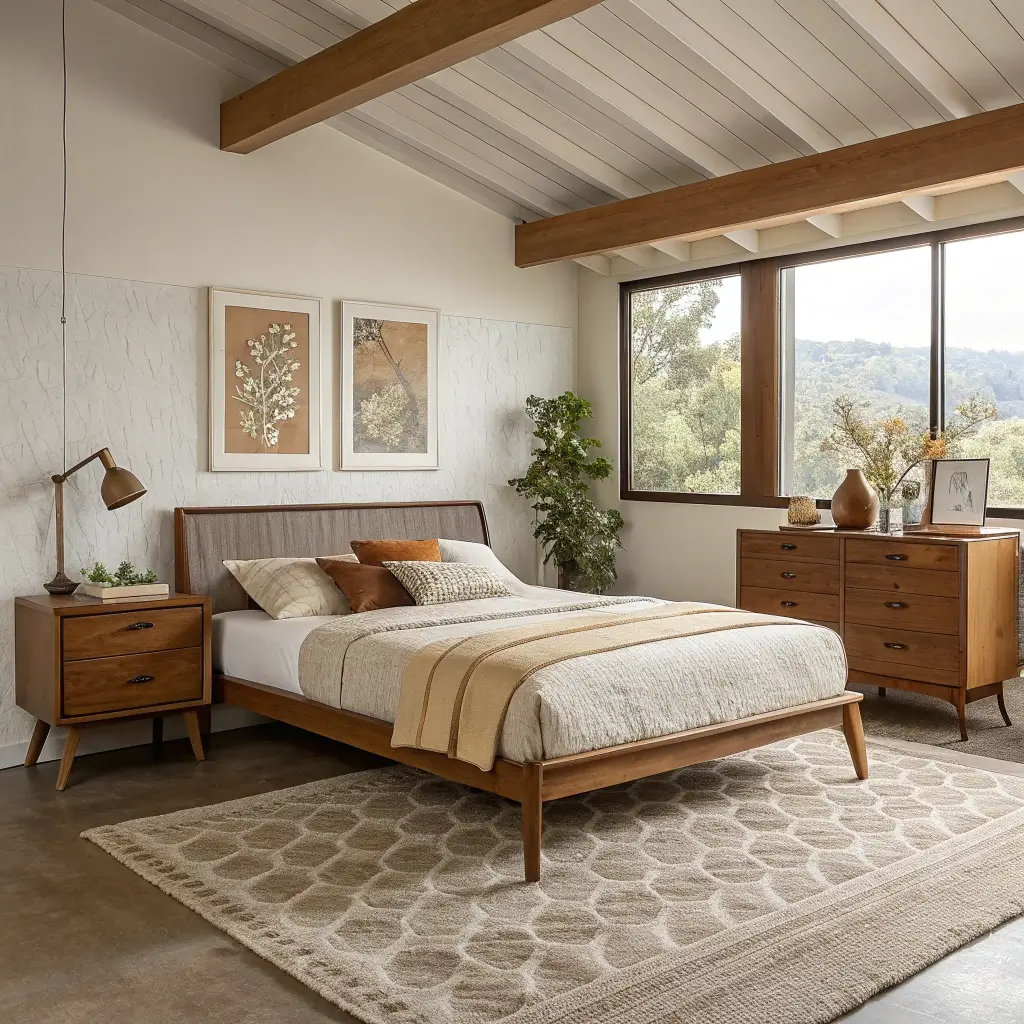
Wait, minimalism and the 70s in the same sentence? I know, it sounds contradictory, but hear me out. The 1970s wasn’t just about pattern overload and excessive layering. There was also a strong minimalist movement influenced by Scandinavian and Japanese design principles.
This approach focuses on clean lines, natural materials, and intentional simplicity. It’s perfect if you love the warmth of 70s aesthetics but your brain craves visual calm.
Creating Minimalist 70s Magic
The secret lies in choosing fewer pieces with more impact. Select furniture with those distinctive 70s curves and organic shapes, but keep the color palette simple and cohesive.
Here’s how to achieve this look:
- Platform beds: Low to the ground with clean geometric lines
- Warm wood tones: Walnut, teak, or oak in their natural state
- Neutral color palette: Cream, tan, warm gray, and soft white
- One or two statement pieces: A vintage lamp or a single piece of art
- Negative space: Let your walls and floors breathe
The beauty of minimalist 70s design is that each piece gets to shine on its own. That gorgeous teak nightstand you found at an estate sale? It becomes the star of the show rather than getting lost in a sea of stuff.
I’ve found this approach works especially well for people who want the nostalgic feeling of the 70s without the visual overwhelm. You still get those warm, inviting vibes, but your bedroom remains a peaceful retreat rather than a sensory explosion.
4. Warm Earthy 70s Bedroom Aesthetic

Now we’re getting to the heart of what makes 70s design so timelessly appealing. The earthy color palette of this decade wasn’t just a trend—it was a philosophy. People were connecting with nature, embracing organic living, and bringing the outdoors inside.
Creating a warm earthy bedroom means working with colors pulled straight from landscapes: rust, terracotta, olive green, mustard yellow, burnt sienna, and rich browns. These hues create an immediate sense of warmth and grounding that’s perfect for a bedroom.
Building Your Earthy Color Story
Start with your walls. You don’t need to paint everything orange (please don’t), but consider:
- An accent wall in a deep terracotta or warm rust
- Warm white or cream on remaining walls to balance bold accents
- Natural wood paneling if you’re feeling ambitious
For textiles and accessories, layer different earthy tones to create depth. A rust-colored duvet paired with olive throw pillows and a mustard knit blanket creates visual interest without chaos.
Natural materials are non-negotiable here. Incorporate:
- Wood in various finishes and grains
- Leather accents (real or faux)
- Clay and ceramic pieces
- Woven baskets and textiles
- Stone or marble accessories
The goal is to make your bedroom feel like a warm, welcoming cave—in the best possible way. When I walk into my own earthy-toned bedroom, my shoulders literally drop and my breathing slows. That’s the power of surrounding yourself with nature-inspired elements.
5. Vintage 70s Patterned Walls Ideas
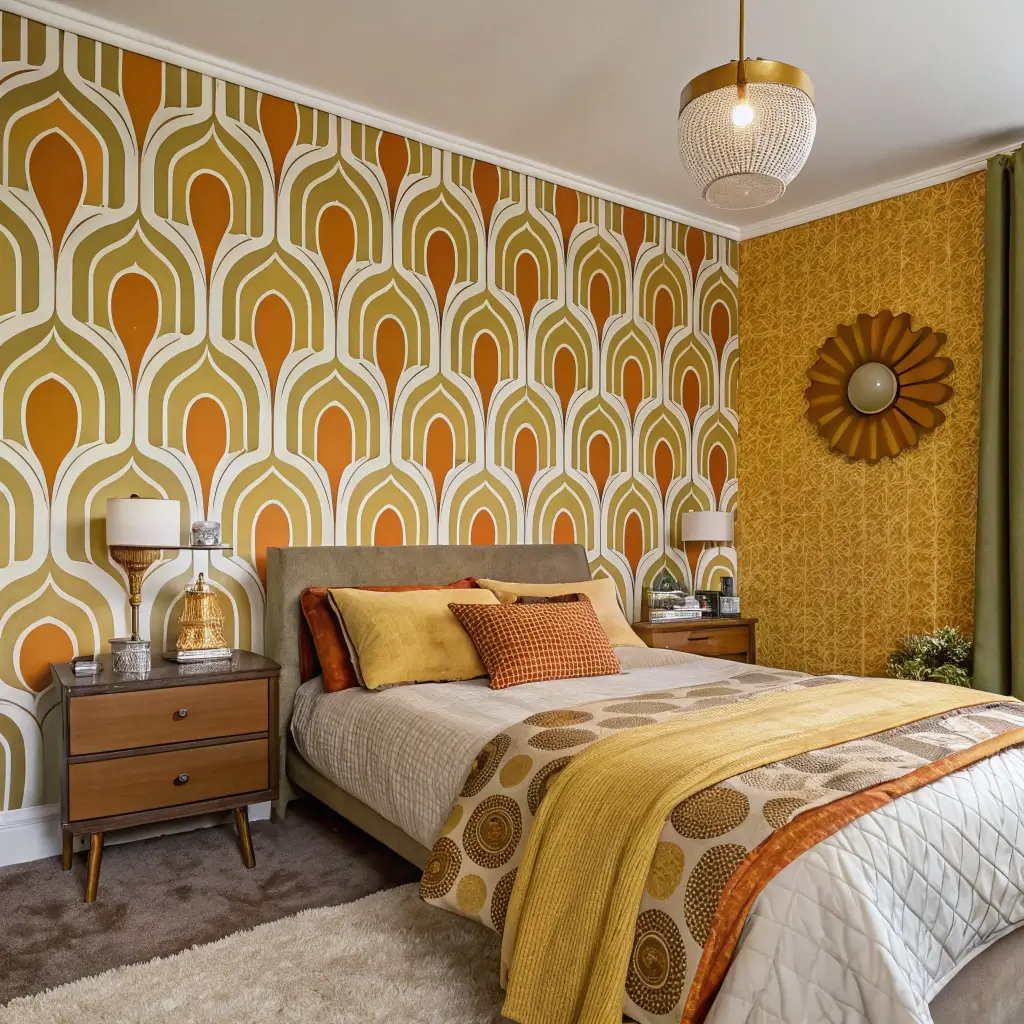
Here’s where things get really fun—and maybe a little scary if you’re pattern-averse. Bold wallpaper was THE signature element of 70s interior design, and it’s making a massive comeback. The difference now? We’ve learned to use it more strategically.
You don’t need to wallpaper every surface like your grandparents did. Instead, focus on creating focal points that capture that retro spirit without giving you a headache.
Pattern Options That Deliver Vintage Vibes
The classic 70s patterns include:
- Geometric designs: Circles, hexagons, and abstract shapes
- Florals: But not your grandmother’s dainty roses—think big, bold, almost psychedelic blooms
- Stripes and waves: Curved lines that suggest movement
- Paisley and damask: For a more bohemian approach
- Nature-inspired prints: Oversized leaves and botanical illustrations
For application, I recommend starting with one accent wall behind your bed. This creates drama without overwhelming the space. If you’re renting or commitment-phobic, peel-and-stick wallpaper is genuinely fantastic now and removes cleanly when you move.
FYI, mixing patterns is totally acceptable—even encouraged—in 70s design, but there’s an art to it. Vary the scale of your patterns (one large, one small) and keep them within the same color family. A large floral wallpaper pairs beautifully with smaller geometric print pillows if they share similar tones.
6. 70s Funky Color Palette Bedroom

Let’s talk about those colors that scream 1970s from across the room. While earthy tones dominated, the decade also embraced avocado green, harvest gold, burnt orange, and yes, that infamous brown. These colors might seem dated at first glance, but when used thoughtfully, they create incredibly stylish spaces.
The trick is treating these colors with modern sophistication while respecting their retro roots.
Making Funky Colors Work Today
Here’s my tried-and-true approach to incorporating bold 70s colors:
Start with a neutral base. Your walls, bed frame, and largest furniture pieces should be neutral—white, cream, warm gray, or natural wood. This gives those funky colors room to breathe.
Choose your hero color. Pick ONE bold 70s shade to dominate. Maybe it’s a gorgeous mustard yellow bedspread or an avocado green velvet headboard. Let this piece be the star.
Add supporting colors. Bring in 2-3 complementary shades through accessories. A burnt orange pillow here, a terracotta vase there. Keep these smaller in scale than your hero color.
Ground everything with plants. Green plants neutralize even the boldest color schemes and add that essential 70s organic element.
I’ll be honest—I was terrified to add a mustard yellow armchair to my bedroom. It felt like such a commitment. But once it was in place, everything else suddenly made sense. It anchored the whole room and gave me direction for every accessory choice that followed. Sometimes you just have to take the color plunge. 🙂
Also Read: 12 Stylish Coastal Bedroom Aesthetic Ideas for Modern Homes
7. Chic Mid-Century 70s Bedroom Decor
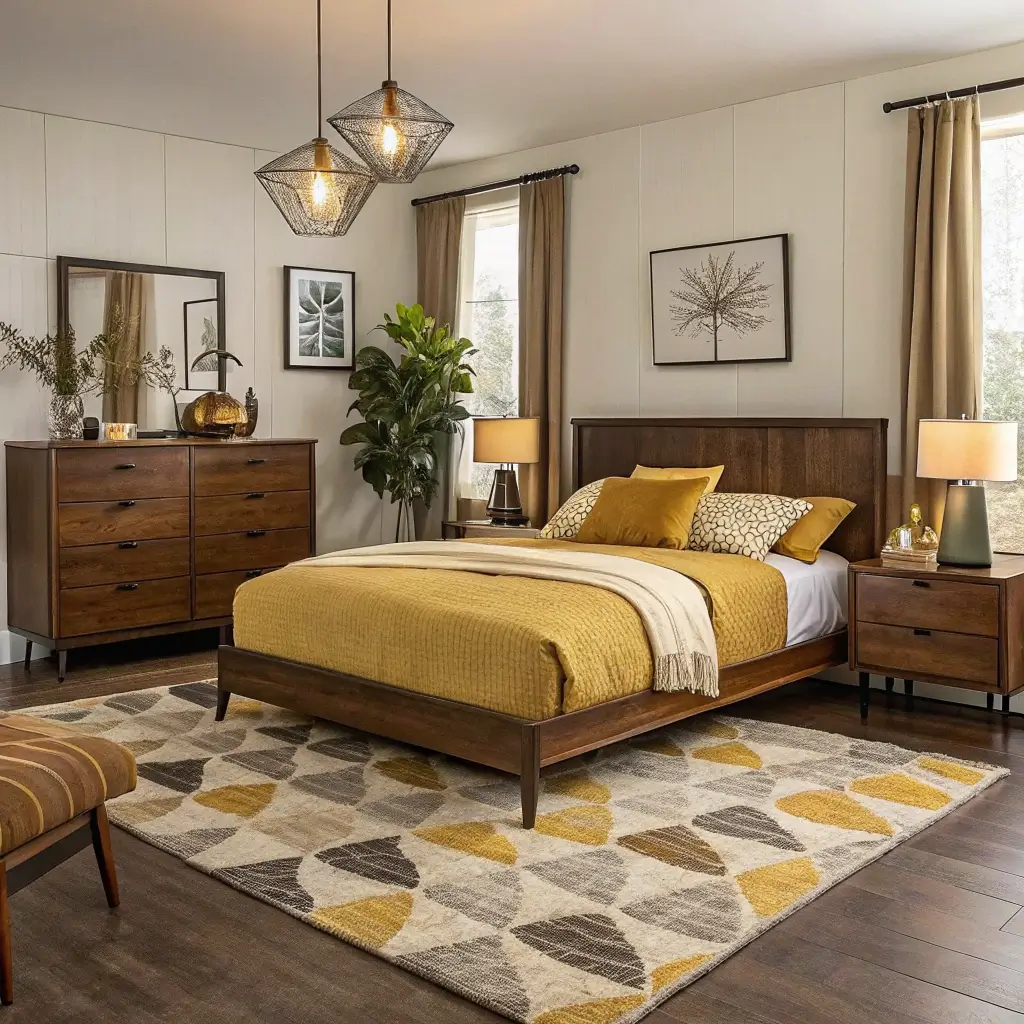
The early 1970s were heavily influenced by mid-century modern design from the previous decades, creating a sophisticated hybrid aesthetic that’s absolutely gorgeous. This style bridges the gap between the sleek 60s and the more eclectic later 70s.
Think clean lines combined with warmer materials, geometric shapes softened by organic forms, and that distinctive furniture style that still looks fresh today.
Mid-Century 70s Essentials
The furniture is everything in this aesthetic:
- Tapered legs: On beds, nightstands, and dressers
- Low-profile pieces: That signature horizontal emphasis
- Mixed materials: Wood paired with metal, leather with fabric
- Statement headboards: Cane, tufted velvet, or carved wood
- Iconic chairs: Think Eames-style or curved lounge chairs
Color-wise, you’ll want to work with warm neutrals punctuated by sophisticated accent colors. Burnt orange, olive green, and dusty pink all work beautifully without overwhelming the space.
Accessories should feel curated, not cluttered:
- Ceramic table lamps with fabric shades
- Abstract art in muted tones
- Brass or bronze accents
- Geometric planters
- Vintage clocks or radios
The mid-century 70s bedroom feels like it belongs to someone interesting—someone who reads books, appreciates good design, and probably makes excellent cocktails. It’s aspirational but achievable, stylish but livable.
8. DIY 70s Retro Bedroom Transformation
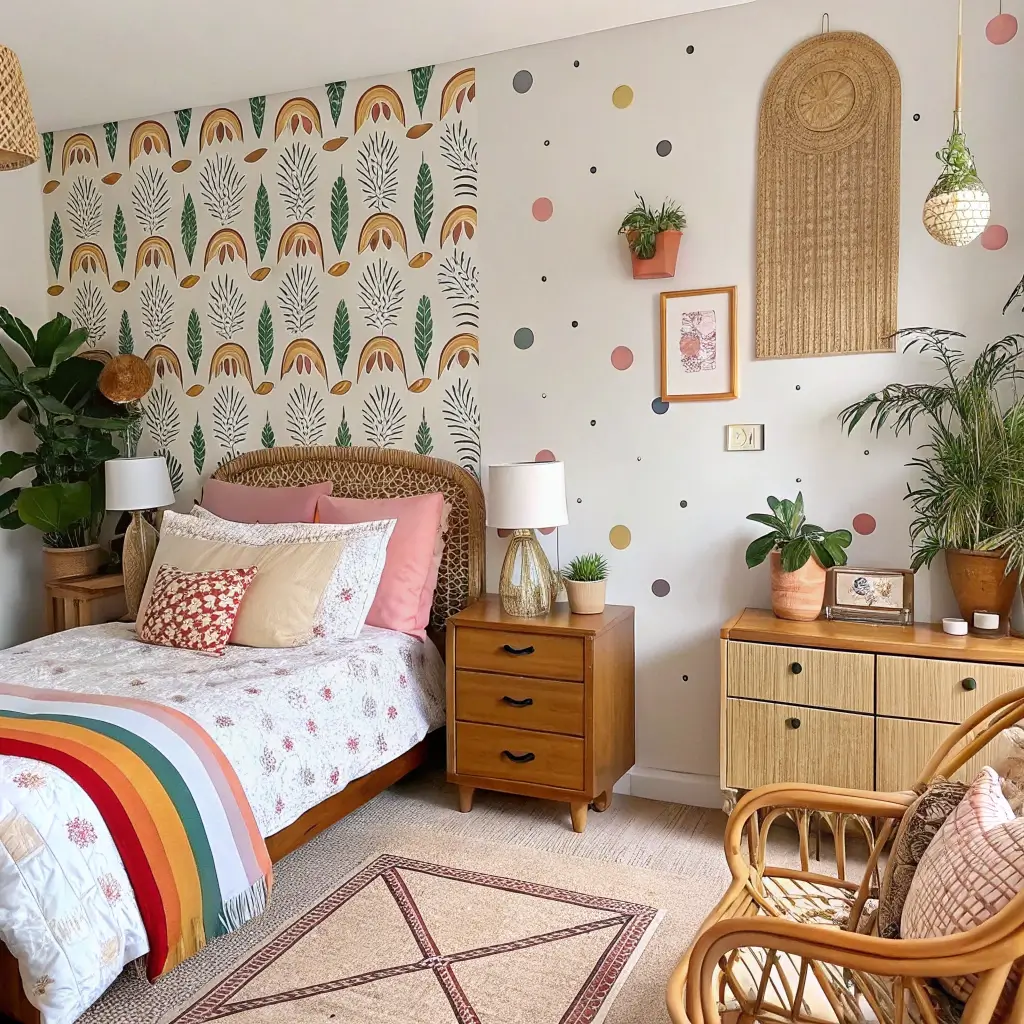
Not everyone has the budget to buy vintage furniture or brand-new retro-inspired pieces. Good news: some of the best 70s bedroom transformations come from DIY projects that anyone can tackle with minimal skills.
I’ve personally done several of these projects, and they’ve made a bigger impact than anything I could have bought.
Easy DIY Projects for Instant Retro Vibes
Create a macramé headboard: Even if you’ve never done macramé before, YouTube tutorials make this incredibly accessible. A large wall hanging behind your bed screams 70s and costs maybe $30 in materials.
Paint something unexpected: Take an old wooden dresser and paint it a bold terracotta or forest green. Add new brass knobs, and suddenly you have a vintage-looking statement piece.
Build a simple platform bed frame: Low platform beds are quintessentially 70s and surprisingly easy to construct with basic lumber. Stain it walnut for that authentic look.
Fabric-wrapped bulletin boards: Cover cork boards in groovy 70s fabric and create a retro gallery wall. Perfect for displaying postcards, photos, or concert posters.
Dip-dyed curtains: Take plain curtains and dip-dye them in an ombre of earthy tones. This technique was huge in the 70s and creates instant visual interest.
Rattan detailing: Add rattan webbing to cabinet doors, headboards, or even plain picture frames for that authentic vintage texture.
The beauty of DIY is that your bedroom becomes truly unique. No one else has exactly what you create, and there’s something deeply satisfying about walking into a room knowing you made it special with your own hands.
9. Eclectic 70s Bedroom Furniture Mix
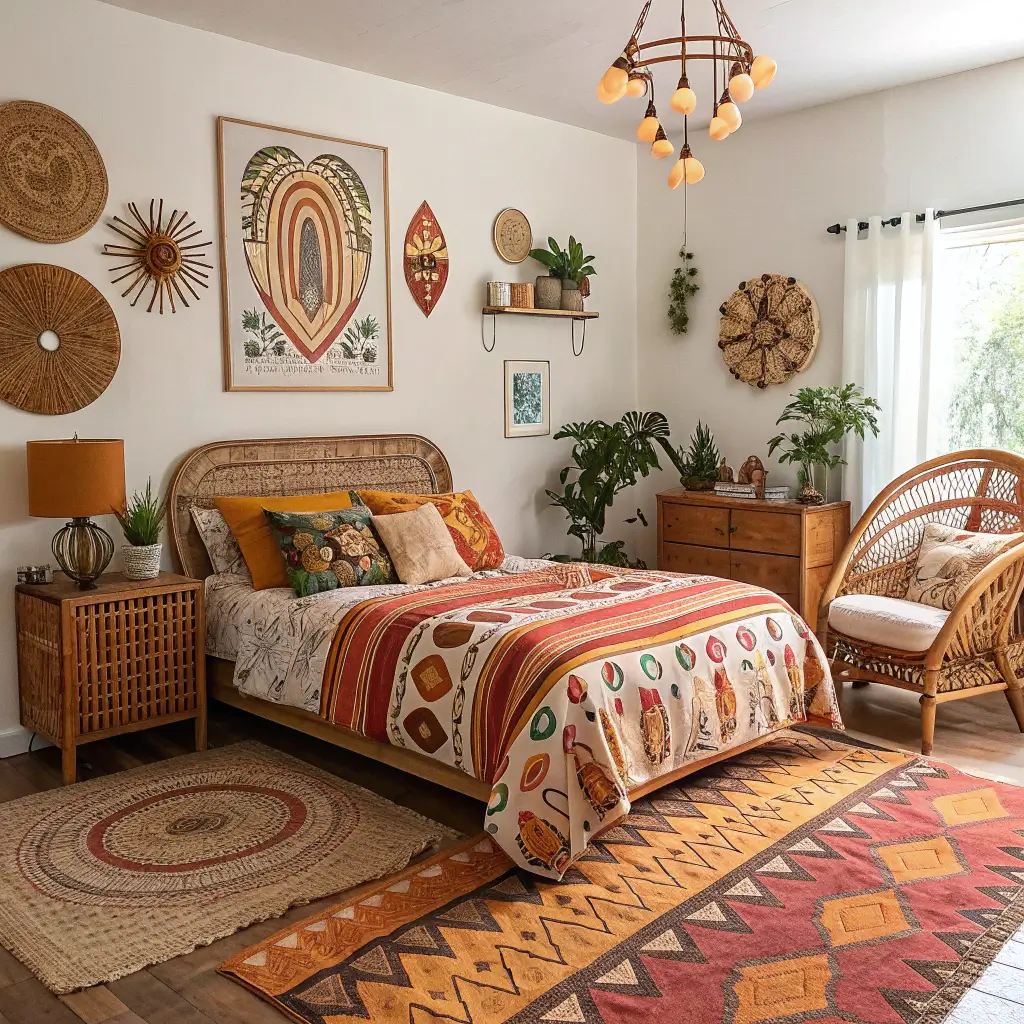
Here’s a secret that interior designers know: the most interesting 70s spaces never looked matchy-matchy. The eclectic approach embraces mixing different styles, eras, and materials to create something that feels collected and personal.
This is honestly my favorite approach because it gives you freedom. You’re not hunting for a complete matching bedroom set—you’re curating individual pieces that speak to you.
Mastering the Eclectic Mix
The key to eclectic success is finding a unifying element. This could be:
- A consistent color palette across different pieces
- Similar material (like wood tones) in varying styles
- A shared era or design movement
- Complementary proportions
For example, you might pair:
- A Victorian iron bed frame with a 70s teak dresser
- A modern minimalist nightstand with a vintage velvet armchair
- A boho woven headboard with mid-century modern side tables
Texture becomes crucial when mixing furniture styles. Make sure you have a variety—smooth alongside rough, shiny next to matte, hard materials balanced with soft. This creates cohesion even when pieces are visually different.
Don’t forget about scale and proportion. A room full of heavy, chunky furniture feels oppressive. Mix lighter pieces with substantial ones. A delicate plant stand can balance a solid wood dresser beautifully.
The eclectic 70s bedroom tells a story. Every piece can be a conversation starter, and the overall effect is a space that feels genuinely lived-in and loved.
Also Read: 15 Dreamy Plant Bedroom Aesthetic Ideas for Relaxing Vibes
10. Soft Retro Pastel 70s Bedroom

Not all 70s aesthetics were about bold, earthy tones. The decade also had a softer side featuring dreamy pastels that feel romantic and nostalgic. Think of those vintage greeting cards with soft pink roses, pale lavender backgrounds, and creamy yellows.
This aesthetic is perfect if you want retro vibes without the visual intensity of typical 70s colors.
Creating a Pastel 70s Paradise
The pastel 70s palette includes:
- Dusty pink: Not baby pink—think muted, almost mauve
- Soft lavender: Gentle and calming
- Butter yellow: Warm but subtle
- Mint green: Fresh without being bright
- Peach: The quintessential 70s pastel
Layer these colors through textiles first: bedding, curtains, and throw pillows. This lets you experiment before committing to paint colors.
Vintage floral patterns work exceptionally well here. Look for bedding or wallpaper with delicate flower designs in your chosen pastels. The slightly faded look of genuine vintage fabrics adds authenticity.
Furniture should lean toward painted pieces in white or cream, or natural light wood tones that won’t compete with the soft colors. Brass accents add a touch of warmth and sophistication.
For accessories, seek out:
- Ceramic vases in pastel glazes
- Vintage perfume bottles and mirrors
- Lace or crochet accents
- Soft floral art prints
- Candles in subtle scents
This bedroom style feels like waking up inside a beautiful dream. It’s romantic, peaceful, and incredibly Instagram-worthy while remaining genuinely comfortable to live in.
11. Bold Geometric 70s Bedroom Style
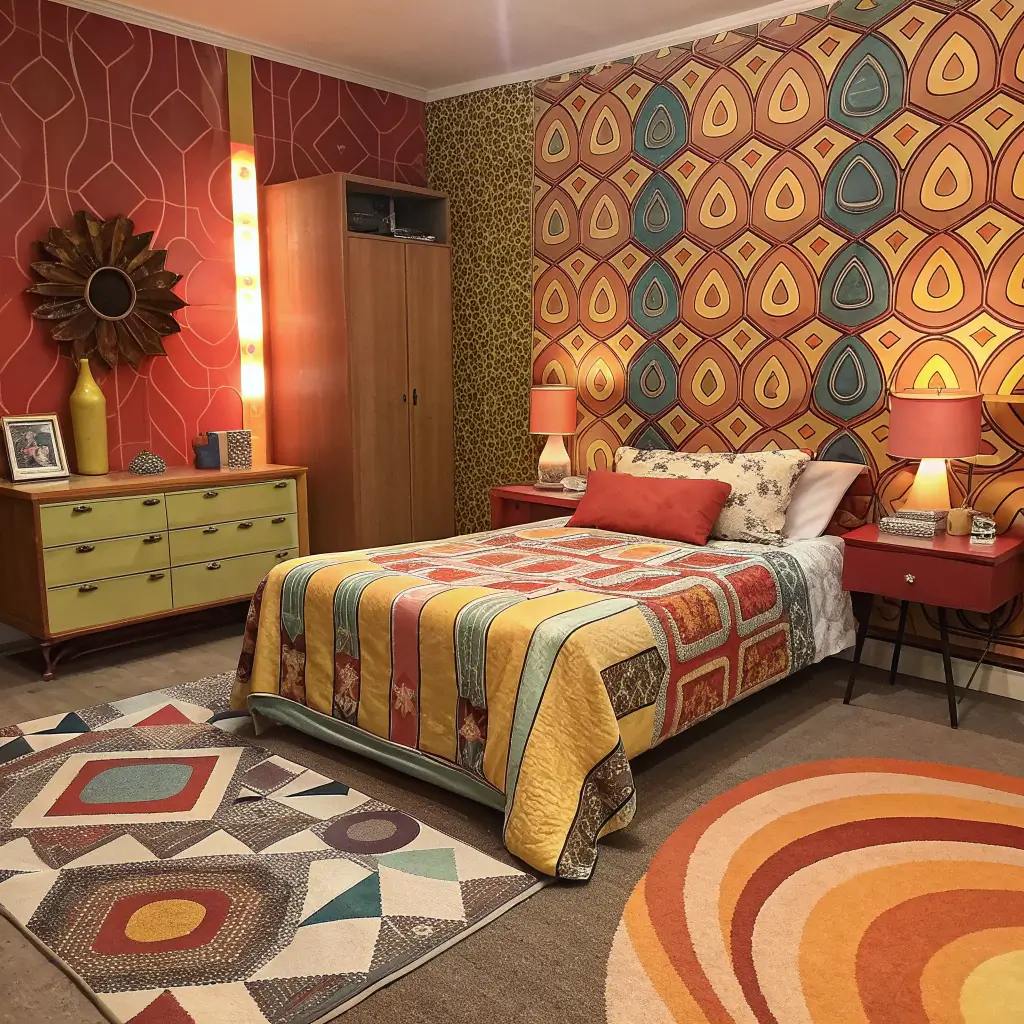
If you love strong visual impact, geometric patterns might be your 70s aesthetic of choice. This era gave us some of the most iconic geometric designs in interior history—think op-art, psychedelic circles, and those mesmerizing repeating patterns that seem to move when you stare at them.
The geometric 70s bedroom makes a bold statement and works particularly well in modern spaces that need some personality.
Incorporating Geometric Elements
Wallpaper is the obvious starting point. A single geometric accent wall can transform an entire room. Popular patterns include:
- Concentric circles and target designs
- Honeycomb and hexagonal patterns
- Wave and stripe combinations
- Abstract interconnected shapes
- Checkerboard and diamond layouts
If wallpaper feels too permanent, consider geometric textiles. A boldly patterned duvet cover or area rug delivers major impact while remaining easily changeable.
Geometric furniture also exists:
- Hexagonal shelving units
- Coffee tables with angular bases
- Mirrors in unusual shapes
- Lighting fixtures with geometric shades
Color choices for geometric 70s bedrooms can go two directions. The high-contrast approach uses bold opposing colors (orange and brown, navy and mustard). The tonal approach uses varying shades of a single color family for a more sophisticated look.
One warning from personal experience: start with one geometric element and live with it before adding more. Geometric patterns are powerful, and too many can create visual chaos rather than deliberate style.
12. 70s Inspired Bohemian Bedroom Corners

Maybe you’re not ready for a complete bedroom overhaul, or perhaps you’re renting and can’t make major changes. Creating a 70s-inspired corner is the perfect solution. These designated zones capture retro magic in a focused, achievable way.
Corner Ideas That Pack a Punch
The Reading Nook: Position a low floor cushion or beanbag chair (yes, they’re back!) near a window. Add a small side table for your drink, a floor lamp with a warm glow, and stack some vintage books nearby. Hang macramé above, and you’ve created a perfect 70s escape.
The Plant Corner: Group multiple plants at varying heights—hanging planters, tall floor plants, and tabletop varieties. Use vintage plant stands, wicker baskets as pot covers, and maybe add a small wicker chair. This corner brings nature indoors exactly as 70s design intended.
The Vanity Area: A vintage or vintage-inspired vanity with a round mirror creates instant retro glamour. Add a velvet stool, some amber glass perfume bottles, and a beautiful table lamp. This functional corner doubles as a decorative focal point.
The Meditation Space: Low floor seating, a sheepskin rug, candles, and perhaps a hanging chair create a peaceful retreat within your bedroom. The 70s embraced spirituality and self-care—this corner honors that tradition.
The Music Corner: Display a record player on a vintage console, add some floating shelves for vinyl storage, position a comfortable chair nearby, and include good speakers. This corner celebrates the cultural revolution of 70s music.
These corners let you experiment with 70s aesthetics without committing your entire space. Plus, they create distinct zones that make your bedroom feel larger and more interesting.
Also Read: 15 Pretty Girly Bedroom Aesthetic Ideas for Pastel Lovers
13. Sustainable Thrifted 70s Bedroom Ideas
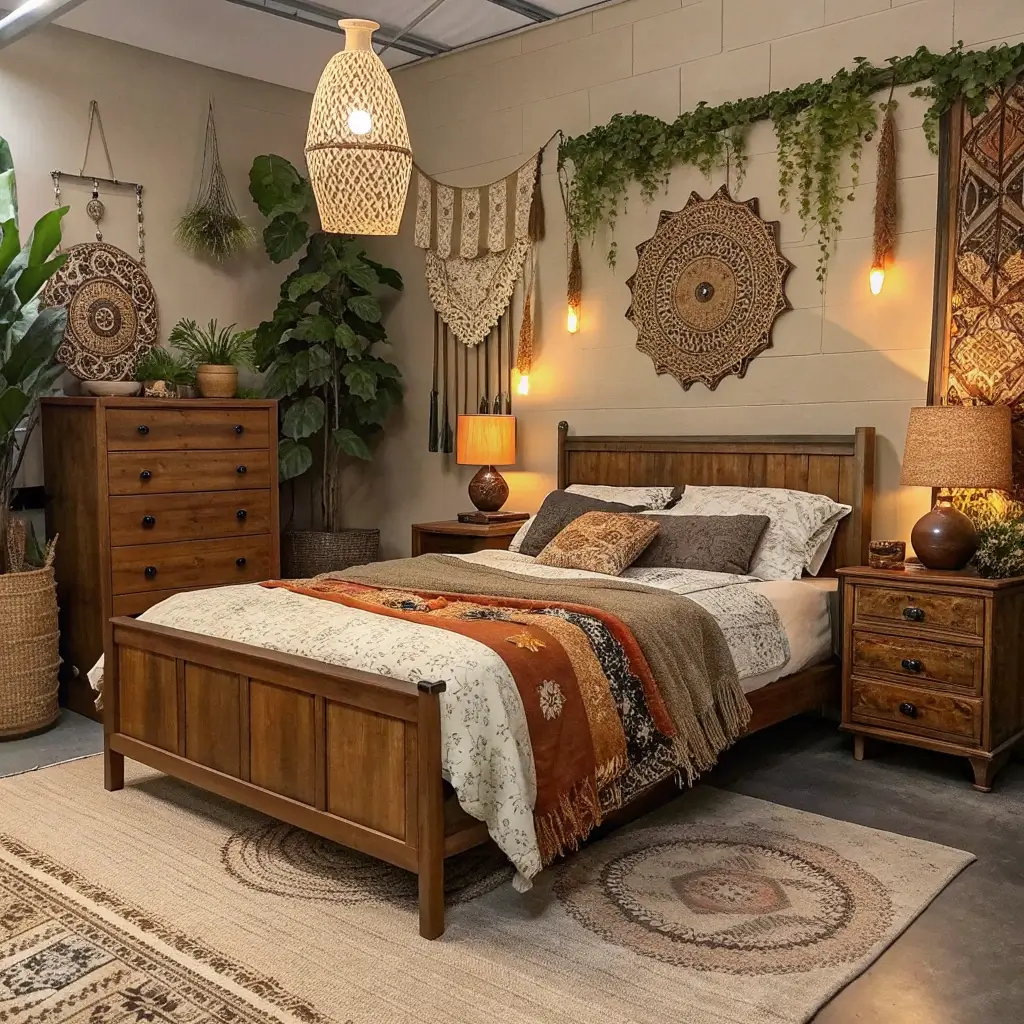
Here’s something beautiful about embracing 70s aesthetics: it naturally lends itself to sustainable design. Instead of buying new pieces manufactured to look vintage, you can source actual vintage items that already exist in the world.
Thrifting for your 70s bedroom is not only environmentally responsible—it’s also way more affordable and authentic.
Where to Find Vintage Treasures
Estate sales are absolute goldmines. People who furnished homes in the 70s are now downsizing, and their authentic pieces are hitting the market daily. I’ve found incredible items—a genuine rattan headboard, original 70s pottery, and a working lava lamp—all at estate sales for fractions of retail prices.
Thrift stores require more patience but yield amazing finds. Visit regularly, as inventory changes constantly. Don’t overlook items that need minor repairs or refinishing.
Online marketplaces like Facebook Marketplace, Craigslist, and OfferUp offer local vintage finds. eBay and Etsy provide broader selection but with shipping costs.
Flea markets and antique malls let you see items in person and often negotiate prices.
What to Look For
Focus on these sustainable vintage pieces:
- Solid wood furniture: Built to last decades, not years
- Ceramic and pottery: Lamps, vases, and decorative pieces
- Genuine textiles: Handmade quilts, woven blankets, macramé
- Artwork and prints: Original 70s art is affordable and authentic
- Hardware and fixtures: Drawer pulls, light switch plates, door handles
The sustainable approach also means repurposing and upcycling. That dated brown dresser from the 70s? Its bones are probably better than anything you’d buy new. Paint it, switch the hardware, and you have a statement piece with minimal environmental impact.
14. Retro Lighting & Accessories for 70s Bedroom
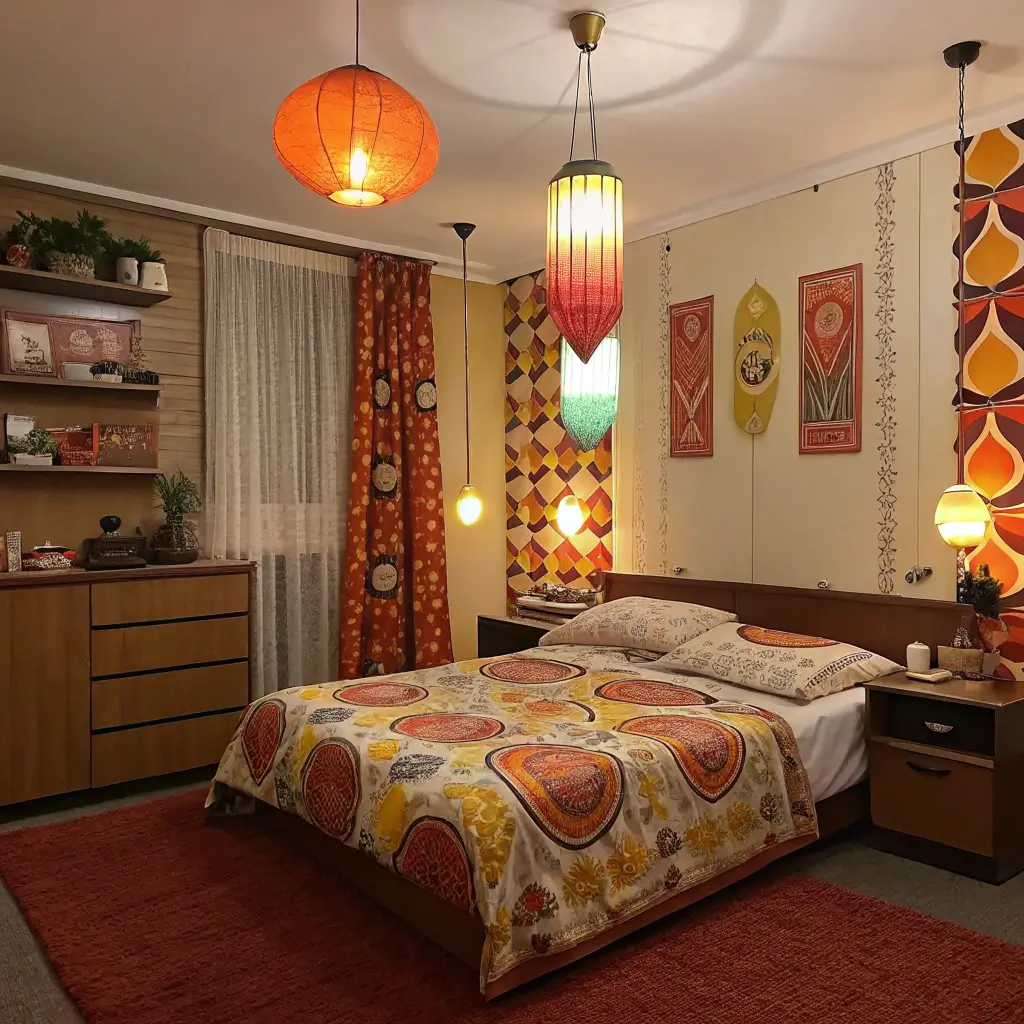
Lighting can make or break your 70s aesthetic. The right fixtures and lamps instantly communicate “retro” while the wrong choices pull you right back to the present. Accessories work similarly—they’re the finishing touches that complete your vision.
Lighting That Screams Seventies
The most iconic 70s lighting options include:
Lava lamps: Obviously. They’re kitsch, they’re fun, and they cast the most beautiful ambient glow. Place one on a nightstand and watch the magic happen.
Arc floor lamps: That distinctive curved stem reaching over seating areas defines mid-century and early 70s style. Chrome or brass finishes work best.
Mushroom lamps: Those rounded, opaque shades on metal or ceramic bases are quintessentially 70s. They produce soft, diffused light perfect for bedrooms.
Pendant lighting: Wicker, rattan, or bamboo pendant shades bring organic texture overhead. They’re particularly impactful when clustered in groups of varying sizes.
Ceramic table lamps: Look for rounded bases with textured surfaces in earthy colors. The fabric shades should be drum-shaped or slightly tapered.
Accessories That Complete the Look
Beyond lighting, these accessories seal the 70s deal:
- Candles in amber glass holders: Essential for that warm, flickering atmosphere
- Vintage ashtrays (repurposed as trinket dishes or plant saucers): Even if you don’t smoke, these are gorgeous
- Macramé plant hangers: Displaying trailing pothos or spider plants
- Woven wall baskets: Arranged in groups on gallery walls
- Vintage alarm clocks and radios: Functional and decorative
- Record players and vinyl: Both for display and actual use
- Stacked vintage books: Grouped by color or size on nightstands and shelves
- Throw pillows in bold prints: Varying sizes and patterns that coordinate without matching
The accessory layer is where your personality truly shines. These pieces tell visitors who you are and what you love.
15. Small Space 70s Bedroom Hacks
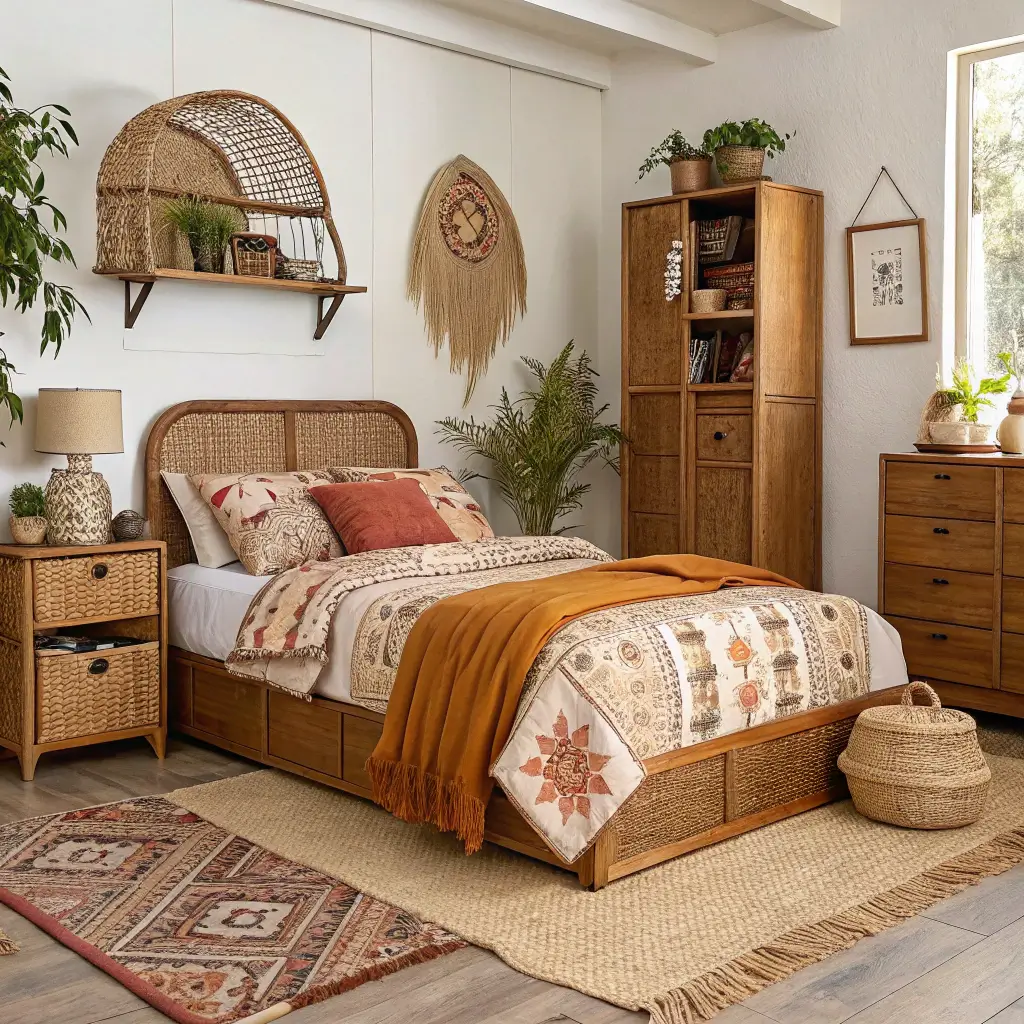
Living in a compact space doesn’t mean sacrificing style. The 70s aesthetic actually adapts beautifully to small bedrooms with some smart modifications.
Strategies for Compact Retro Living
Choose a platform bed with storage: Low platform beds visually expand a room while built-in drawers eliminate the need for additional dressers. This keeps your floor space clear while storing essentials.
Use mirrors strategically: A large vintage mirror (round or sunburst style) reflects light and creates the illusion of more space. Position it opposite a window for maximum impact.
Opt for floating nightstands: Wall-mounted shelves take up zero floor space while providing essential bedside surfaces. Choose warm wood tones for that 70s feel.
Go vertical with plants: Hanging planters and tall, narrow floor plants add greenery without consuming valuable floor space. A macramé plant hanger in a corner takes advantage of unused vertical space.
Select multipurpose furniture: A vintage trunk serves as storage, seating, and a decorative piece. An ottoman with interior storage works as a seat and a place to stash blankets.
Limit your pattern to one statement area: In small spaces, one bold wallpapered wall or patterned headboard provides 70s impact without overwhelming the room.
Use warm, light colors on walls: While bold colors are signature 70s, in small spaces, choose lighter versions (pale terracotta instead of rust, soft olive instead of forest green) to keep the room feeling open.
Declutter ruthlessly: The 70s layered look can overwhelm tiny spaces. Curate your collection carefully, displaying only pieces that truly matter.
Small 70s bedrooms succeed when every item serves both a functional and aesthetic purpose. Quality over quantity becomes your mantra, resulting in a space that feels intentional rather than cramped.
Wrapping It All Up
There you have it—15 genuine ways to bring those cozy 70s bedroom vibes into your life, whether you’re working with a mansion or a studio apartment, a massive budget or spare change from the couch cushions.
The beautiful thing about 70s aesthetics is their flexibility and warmth. This isn’t a cold, precise design style that demands perfection. It’s forgiving, personal, and all about creating a space that feels genuinely good to exist in. Your bedroom should be your sanctuary, and the 70s understood this better than most eras.
Start small if you’re feeling overwhelmed. Maybe it’s just a lava lamp and some terracotta throw pillows to begin. Perhaps it’s repainting your nightstand a groovy green. Whatever your entry point, each addition builds toward that cohesive, nostalgic atmosphere you’re craving.
And remember—the most authentic 70s bedrooms weren’t perfectly curated. They evolved over time as people collected pieces they loved, experimented with colors that made them happy, and created spaces that reflected their unique personalities. Your 70s bedroom should tell your story, not replicate someone else’s perfectly styled photo.
So go forth, hit those thrift stores, embrace those bold colors, and create a bedroom that would make your 1970s ancestors proud. Just maybe skip the shag carpet on the ceiling—some trends deserve to stay in the past. 😉
Happy decorating, fellow retro enthusiast. Your groovy bedroom awaits!